US Dollar
 Euro
Euro
 Australian Dollar
 Canadian Dollar
 Polish Zloty
 British Pound



Product Description
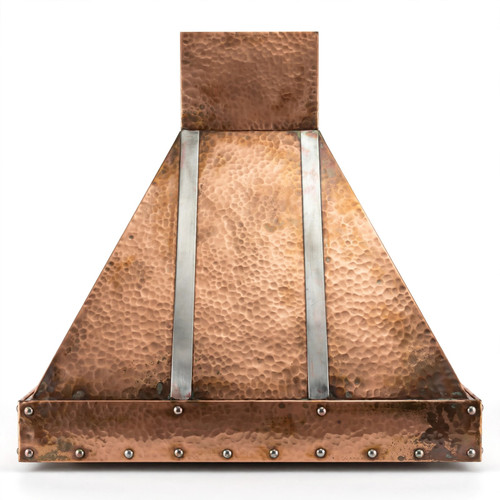
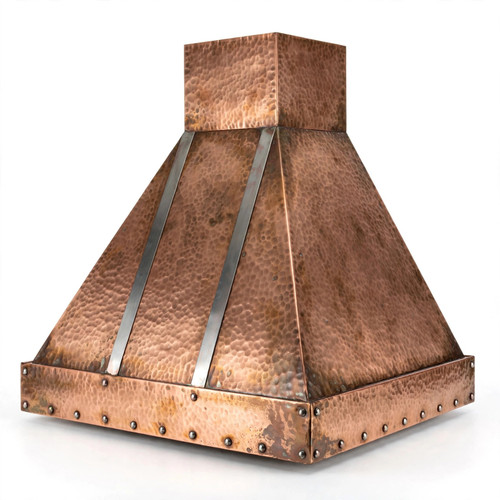
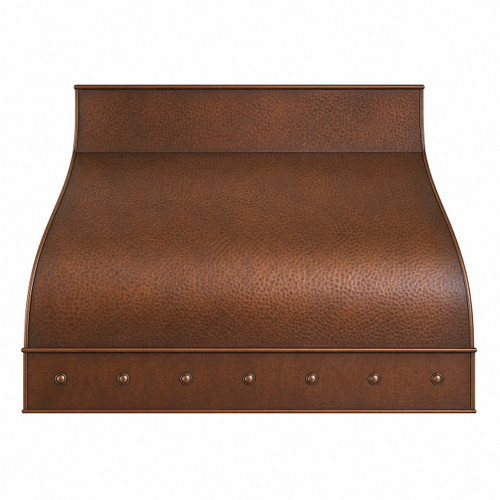
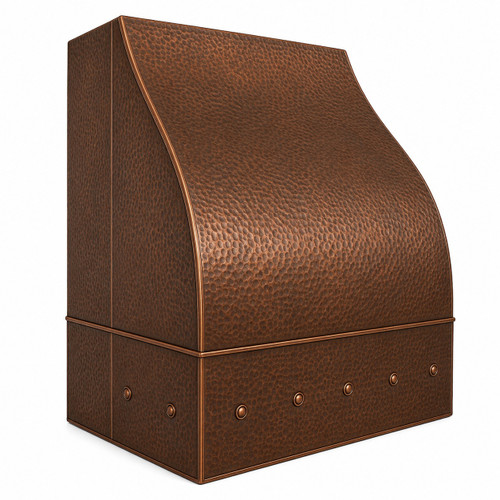
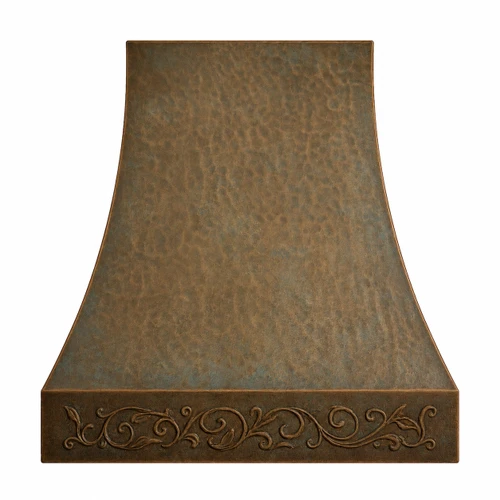
This sloped under-cabinet hammered copper range hood with riveted apron combines a broad angled canopy with a substantial lower copper band detailed by exposed round rivets. Designed specifically for installation beneath upper cabinetry, its straight sloping planes project outward toward the cooking surface, creating useful capture depth without a chimney. The uninterrupted hand-hammered copper canopy gives the natural texture and artisan-applied patina a prominent role, while the deeper lower apron, raised copper edging, and evenly spaced rivets establish a strong horizontal base. Handcrafted from 16-gauge copper in Santa Clara del Cobre, Mexico, each enclosure is made to order with custom dimensions, six copper finish options, and preparation for compatible ventilation equipment. Explore measurements, ventilation, cabinetry coordination, and construction in our sloped-under-cabinet copper hood guide. Request a custom proposal for your kitchen project.
Product Summary
- Sloped under-cabinet profile
- Broad uninterrupted copper canopy
- Hand-hammered copper texture
- Deep horizontal copper apron
- Exposed round copper rivets
- Raised copper apron edging
- Six copper finish options
- Custom dimensions available
- Under-cabinet installation
- Custom ventilation preparation
- 16-gauge copper construction
- Handcrafted in Mexico
Custom Sizing
Each hood is made to order so its width, height, depth, canopy slope, lower projection, apron proportions, and ventilation opening can be coordinated with the available cabinet space. Under-cabinet construction must work within fixed millwork dimensions while maintaining suitable coverage over the cooking surface. When dimensions change, the sloping canopy, lower apron, raised edging, and rivet layout are proportioned together to preserve the original architectural balance.
Measurements Needed
Provide the cooking-surface width, desired hood width, cabinet opening, available hood height, finished depth, mounting height, cabinet depth, backsplash thickness, and duct location. Also identify the selected ventilation equipment. Accurate cabinetry measurements are especially important because the enclosure terminates directly beneath the upper cabinets. Review the copper hood sizing guide when coordinating the hood with surrounding millwork.
Ventilation
The handcrafted copper body functions as an insert-ready enclosure. Rustica House can supply an optional 200 CFM insert. Buyer-supplied internal inserts up to 1,260 CFM and external blowers up to 1,500 CFM can be accommodated when complete equipment specifications are provided before fabrication. Ducted or recirculating configurations depend on the selected equipment, available cabinet space, duct route, and project requirements.
Drawing Approval
Final dimensions and mechanical requirements are confirmed before fabrication. For buyer-supplied equipment, provide the manufacturer, model, cutout dimensions, duct diameter and position, controls, lighting, filters, electrical requirements, and service clearances. The approval drawing allows the buyer, cabinetmaker, contractor, and installer to verify overall dimensions, canopy slope, lower opening, riveted apron proportions, cabinet relationship, and duct position before production begins.
Sloped Architecture
The enclosure is defined by a broad straight-sided canopy that angles outward from the upper cabinet line toward a deeper lower edge. Unlike bell hoods, the body does not use sweeping concave curves, and unlike full-height wall hoods, it requires no vertical chimney. This compact wedge-shaped architecture gives the cooking area substantial visual presence while conserving vertical space. The uninterrupted hammered canopy directs attention toward the copper itself, while the structured riveted apron defines the base.
Sloping Copper Canopy
The large front plane projects outward as it descends, producing the hood's characteristic sloped under-cabinet silhouette. Its surface remains free of vertical straps, embossed motifs, and applied decorative panels. This restraint gives the hand-hammered texture and patina a prominent visual role. Angled side panels follow the same straightforward geometry, connecting the narrower cabinet line to the deeper lower capture area.
Riveted Copper Apron
A deep horizontal copper apron forms the lower section of the hood and creates a substantial architectural base beneath the sloping canopy. Narrow raised copper edging defines its upper and lower boundaries, adding depth without introducing unrelated ornament. The apron may appear darker as the patina, recessed surface, and surrounding edges respond differently to light, creating natural tonal contrast while maintaining an all-copper construction.
Exposed Copper Rivets
A repeated row of exposed round rivets extends across the lower apron, adding dimensional detail and a visible handcrafted fastening pattern. The rivets create rhythm along the horizontal base while remaining secondary to the broad hammered canopy above. Minor differences in placement, surface character, hammer impressions, and surrounding patina are expected in individually handcrafted metalwork and contribute to the character of each finished hood.
Unique Design
This model is distinguished by the combination of a broad sloping hammered copper canopy, deep riveted copper apron, and raised copper edging. Unlike strapped copper hoods, the upper canopy remains visually uninterrupted. It also avoids embossed decoration, elaborate crowns, and applied motifs, concentrating visual interest in the contrast between the expansive hammered surface and structured lower band. This focused architecture differentiates the design from other Rustica House copper hoods defined by vertical straps, decorative relief, tall chimneys, or bell-shaped bodies.
Copper Texture
The copper is hammered by hand with closely spaced impressions that create rich visual movement across the broad front and angled sides. Hammer marks break reflected light into smaller highlights and shadows without obscuring the straight geometry. The textured surface also interacts with the patina, producing subtle tonal variation across each plane. Because every hood is individually worked, hammer-mark size, depth, spacing, and orientation naturally vary.
Copper Finishes
Six copper finish options are available: Natural Fired, Dark Coffee, Antique, Honey, Oxidized, and Hand Polished. Patina selection changes the visual character of the hammered canopy and riveted apron without altering their architecture. Because each finish is applied by hand, color distribution, darker areas, highlights, and tonal transitions naturally vary. Compare the available surfaces in the copper patina finish guide before selecting a finish.
Under-Cabinet Mounting
This model is designed specifically for installation beneath upper cabinetry. Cabinet structure, available height, hood depth, cooking-surface position, ventilation equipment, and duct routing should therefore be planned together. The upper edge terminates directly beneath the cabinet rather than extending upward into a chimney. Adequate structural support and access to filters, controls, lighting, electrical components, and serviceable ventilation equipment must be incorporated into the installation.
Cabinet Clearance
Confirm the cabinet opening, underside height, cabinet depth, backsplash thickness, cooking-surface location, and required appliance clearances before ordering. The finished enclosure must fit the available space while leaving room for ventilation equipment, electrical components, duct connections, and future service access. Coordinate any cabinet modifications with the cabinetmaker and installer before approving the final production drawing.
Duct Routing
Duct routing depends on the selected ventilation equipment and surrounding construction. Ductwork may pass upward through the cabinetry or rearward toward the wall, depending on the approved system. Confirm duct diameter, outlet orientation, transitions, elbows, and available cabinet space before production. Recirculating installation may also be possible when supported by the selected equipment and planned before fabrication.
Buyer Planning
Coordinate the hood dimensions, cabinet opening, copper finish, ventilation equipment, duct route, and structural support before ordering. The hand-hammered sloping canopy and riveted copper apron remain the defining architectural features while dimensions can be adapted to the project. Complete planning information helps prevent conflicts involving cabinetry, backsplash construction, electrical service, insert access, controls, filters, lighting, and ductwork.
| Planning | Confirm | Buyer Decision |
|---|---|---|
| Dimensions | Width, height, depth | Match cabinet opening |
| Finish | Six copper options | Coordinate materials |
| Mounting | Under cabinet | Confirm support |
| Ventilation | Insert or blower | Send specifications |
| Ducting | Outlet and route | Confirm before build |
Copper Hood Specifications
- Type: Under-cabinet range hood
- Shape: Straight sloping canopy
- Profile: Compact wedge shape
- Material: 16-gauge copper
- Texture: Hand-hammered
- Apron: Deep copper band
- Edging: Raised copper trim
- Rivets: Exposed round copper
- Finishes: Six copper options
- Width: Custom sizing available
- Height: Custom sizing available
- Depth: Custom sizing available
- Mount: Under cabinet
- Insert: Optional 200 CFM
- Internal: Up to 1,260 CFM
- External: Up to 1,500 CFM
- Ventilation: Insert-ready shell
- Build: Made to order
- Origin: Santa Clara del Cobre
- SKU: QP58L2B41
PDF and CAD Downloads
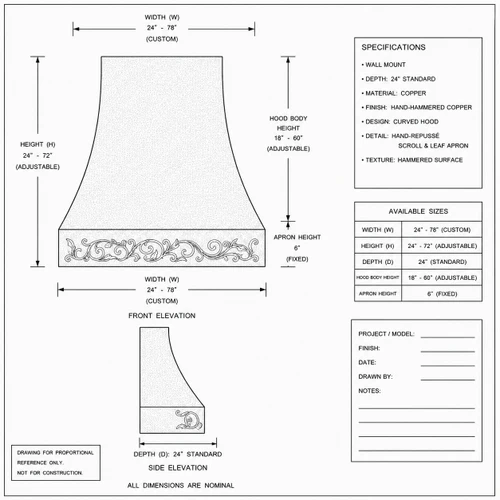
Technical drawings help homeowners, designers, cabinetmakers, contractors, and installers coordinate the hood with upper cabinetry and ventilation equipment. Review the proportional drawing for overall form, canopy slope, projection, riveted copper apron, cabinet relationship, and ventilation space. Buyer-specific dimensions, insert openings, duct positions, and installation requirements are confirmed separately through the production approval process.
Copper Craftsmanship
Each hood is handcrafted in Santa Clara del Cobre, Mexico. Artisans cut and form the 16-gauge copper, establish the straight sloping planes, hammer the broad surfaces by hand, fabricate the deeper lower apron, form its raised edging, position the exposed rivets, assemble the enclosure, and apply the selected finish. Natural differences in hammer impressions, seams, folds, rivet placement, edge work, and patina are characteristics of individual fabrication, so no two finished hoods are exactly identical.
Coppersmith Testimony
The broad front plane requires controlled forming to maintain a consistent slope while preserving the hand-hammered surface. The lower copper apron must remain visually level as its raised edging and rivet pattern are assembled beneath the angled canopy. Learn more about the traditional forming, hammering, and finishing process in the Juan Carlos Hernández copper artisan guide.
Kitchen Styles
The warm hammered copper, broad sloping surface, and riveted lower apron work particularly well with interiors combining natural materials and visible craftsmanship. Because the design avoids straps and elaborate applied ornament, it can transition between rustic and cleaner architectural settings more easily than heavily decorated copper hoods. See the hood with cabinetry, stone, tile, wood, and complementary finishes in our under-cabinet copper hood kitchen images.
Best Kitchen Styles
- Rustic: Reclaimed timber, natural stone, textured walls, and aged hardware complement the hammered copper and visible rivet detailing.
- Modern Farmhouse: Painted cabinetry, oak details, handmade tile, simple stone counters, and dark hardware balance artisan copper with cleaner architecture.
- Industrial: Brick, steel, concrete, dark fixtures, and open shelving coordinate with the exposed rivets while warm copper softens harder materials.
- Transitional: Shaker cabinetry, neutral stone, restrained hardware, and balanced millwork allow the sloping copper canopy to introduce handcrafted texture without excessive ornament.
Other Kitchen Styles
- Rustic European
- Mountain Lodge
- Southwestern
FAQ
A: Its defining features are a broad straight sloping canopy, hand-hammered copper surface, deep horizontal copper apron, raised edging, and a repeated row of exposed round rivets.
A: Yes. The lower apron, raised edging, riveted details, side panels, and main canopy are part of the hood's copper construction. Variations in patina can make individual sections appear darker or lighter.
A: Yes. Width, height, depth, canopy proportions, ventilation opening, and other dimensions can be coordinated with the available cabinet space and cooking equipment.
A: Yes. Buyer-supplied internal inserts up to 1,260 CFM and external blowers up to 1,500 CFM can be accommodated when complete equipment specifications are provided before production.
A: A recirculating configuration may be possible when supported by the selected equipment. Filter access, cabinet space, discharge routing, and other requirements should be confirmed before fabrication.
A: Copper can gradually develop additional tonal variation through exposure to heat, humidity, handling, cleaning, and normal kitchen conditions. Appropriate maintenance helps manage natural patina development.
Customize Your Hood
Configure the enclosure around the cooking surface, cabinet opening, available height, desired projection, copper finish, and selected ventilation equipment. Buyer-supplied insert and duct specifications should be submitted before production so the shell can be prepared accurately. The broad hand-hammered sloping canopy, deep riveted copper apron, raised edging, and exposed rivets remain the defining architectural details as dimensions are adapted to the project. Request a custom proposal for this sloped under-cabinet hammered copper range hood.
Related Resources
- Under-Cabinet Copper Hood Guide
- Under-Cabinet Hood Kitchen Images
- Custom Copper Range Hoods
- Copper Hood Sizing Guide
- Range Hood Insert Guide
- Copper Patina Finish Options
Care & Maintenance
Clean the hammered copper with warm water, mild soap, and a soft nonabrasive cloth, then dry the surface promptly. Wipe carefully around the raised apron edges and exposed rivets where cooking residue can accumulate. Avoid acidic cleaners, bleach, ammonia, steel wool, abrasive pads, and aggressive polishing compounds. Review the copper range hood care guide for additional maintenance recommendations.
Installation
Coordinate cabinet support, mounting height, enclosure dimensions, insert access, electrical service, duct diameter, and duct route before fabrication. Because the hood installs beneath cabinetry, cabinet construction and ventilation planning should be reviewed together. Consult the metal range hood installation guide with your cabinetmaker and installer before approving production dimensions.
Shipping & Returns
Each made-to-order hood is securely crated for transportation. Review current production timing, freight delivery procedures, inspection requirements, custom-order conditions, and applicable return policies on the Shipping & Returns page before ordering.
Warranty
The handcrafted copper enclosure is covered according to applicable Rustica House warranty terms. Buyer-supplied ventilation equipment remains subject to its manufacturer's coverage. Review the complete Rustica House Warranty for current coverage, exclusions, and limitations.
Disclaimer: Handmade dimensions, slope angles, folds, seams, hammer impressions, rivet placement, raised edging, and copper finish tones may vary slightly. These variations are expected characteristics of handcrafted copper and are not manufacturing defects. Copper may continue to develop natural color variation with age and use. Lifestyle images provide design inspiration and may show optional configurations, finishes, decorative elements, or accessories not included with the product.