 US Dollar
 Euro
Euro
 Australian Dollar
 Canadian Dollar
 Polish Zloty
 British Pound

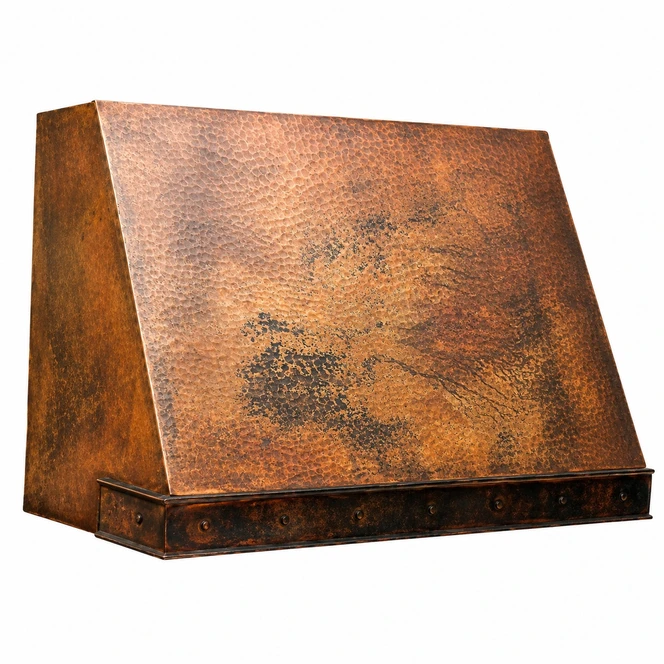
The Sloped Under-Cabinet Hammered Copper Range Hood with Rivets is shown in these kitchen images as a compact handcrafted focal point for reclaimed wood cabinetry, oak cabinetry, industrial kitchens, and shaker cabinetry. Its low-profile under-cabinet form, sloped copper face, hand-hammered texture, riveted lower band, warm patina, and clean rectangular apron create a practical range-wall feature with artisan character. The design fits beneath upper cabinetry while still adding more warmth and texture than a plain appliance-style hood. Explore the sloped under-cabinet range hood with rivets to compare its compact profile, hammered finish, riveted detail, patina options, and kitchen style applications. For product-specific planning details, read the sloped under-cabinet hammered copper range hood rivets guide.
Blog Summary
- Focus: under-cabinet hood images
- Product: hammered copper hood
- Shape: compact sloped profile
- Detail: riveted lower band
- Scenes: four kitchen settings
- Look: warm and practical
Under-Cabinet Copper Hood Images
Kitchen images help show how this sloped under-cabinet hammered copper range hood with rivets looks inside finished interiors rather than as a standalone product photo. Cabinet material, backsplash height, counter surface, lighting, range width, hardware finish, wall texture, and surrounding trim all affect how the copper patina appears. In one kitchen, the hood can feel rustic and built into reclaimed wood cabinetry. In another, the same compact form can support oak cabinetry, industrial kitchens, or shaker cabinetry.
This hood stands out because it brings handcrafted copper into a smaller under-cabinet format. The sloped face gives the range wall depth without requiring a tall chimney or large bell canopy. The hammered surface adds light movement, while the riveted lower band creates a clear handmade detail above the cooking area.
Design Highlights
- compact under-cabinet hood shape
- sloped hammered copper face
- riveted lower apron band
- warm artisan copper patina
- rectangular low-profile form
- useful below upper cabinets
- rustic to shaker flexibility
Reclaimed Wood Cabinetry with Copper Hood
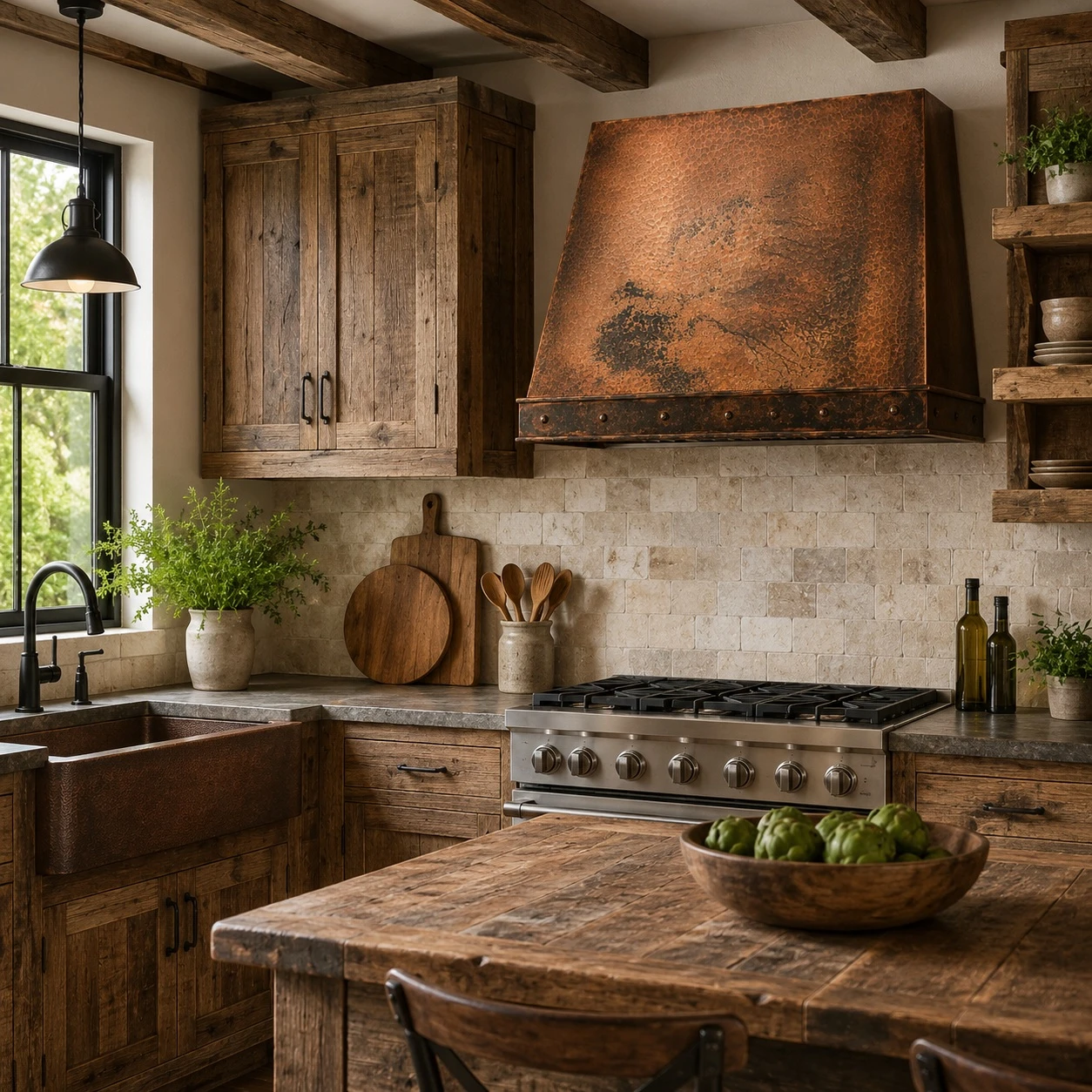
With reclaimed wood cabinetry, the copper hood feels warm, rustic, and naturally handcrafted. Reclaimed wood already has visible grain, knots, saw marks, color variation, and aged character, so the hammered copper surface fits the material palette without feeling overly polished. The under-cabinet format keeps the range wall compact while still adding a strong metal feature.
The riveted lower band works especially well with aged wood, dark hardware, stone counters, handmade tile, and textured walls. The copper patina can echo amber, brown, bronze, and reddish tones found in reclaimed lumber. This image is useful for kitchens where the hood needs to feel custom and artisan-made without taking over the full wall height. For broader handmade metal context, review the handmade copper range hoods guide.
Oak Cabinetry with Under-Cabinet Copper Hood
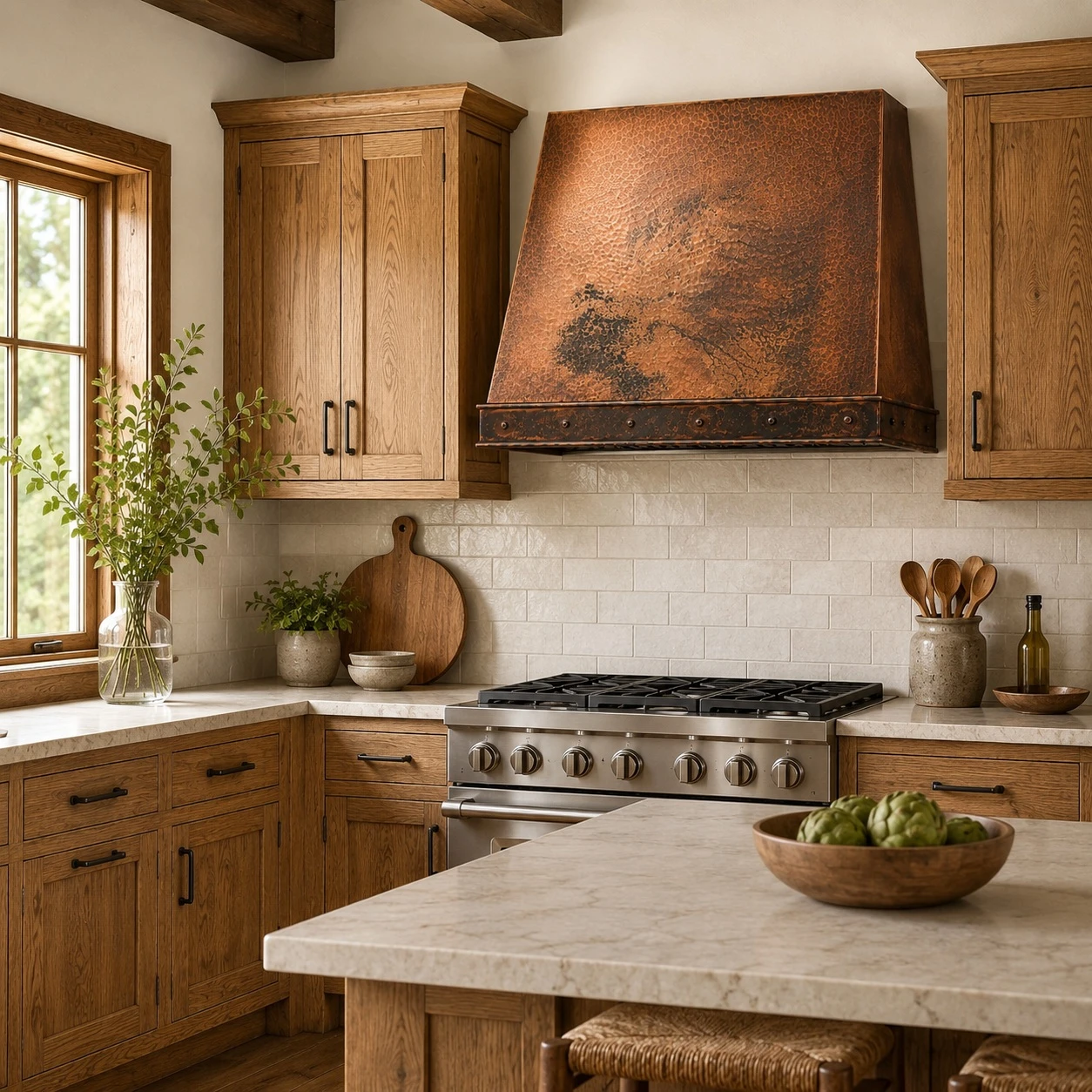
With oak cabinetry, the hammered copper hood adds warmth while keeping the design compact and balanced. Oak can range from pale and modern to golden and traditional, and copper works with both directions when the surrounding finishes are selected carefully. The sloped hood face gives the cooking area more visual interest than a flat under-cabinet insert cover.
The riveted apron band gives the hood a finished lower edge beneath the cabinets. This detail can coordinate with cabinet pulls, bronze hardware, iron lighting, or warm stone counters. The copper patina also helps connect wood grain, backsplash tile, and metal accents into a more unified range-wall composition. For finish comparison, review the copper patina finish options guide.
Industrial Kitchen with Under-Cabinet Copper Hood
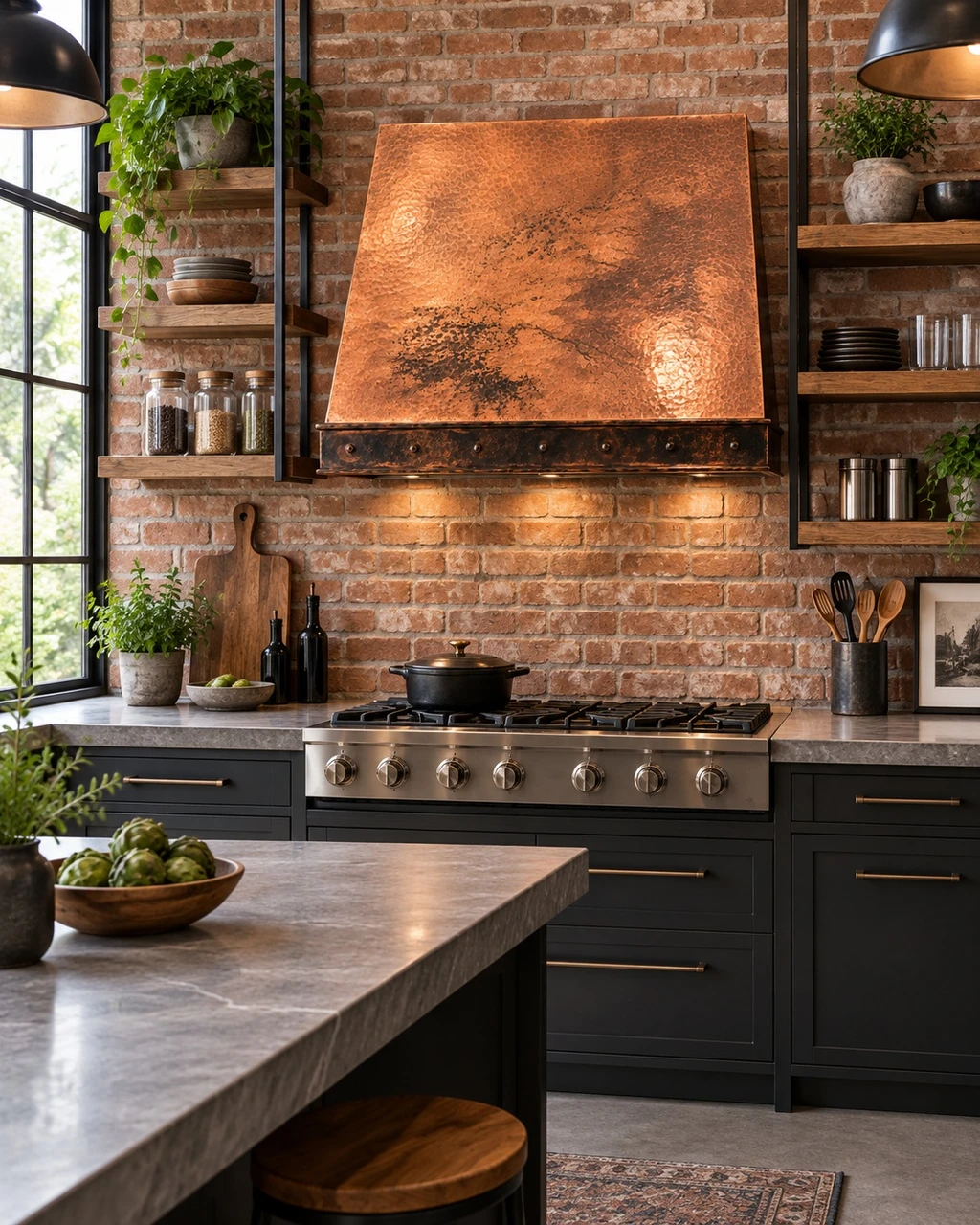
In an industrial kitchen, the sloped copper hood brings warmth to brick, concrete, steel, open shelving, dark fixtures, exposed hardware, and simplified cabinetry. Industrial interiors often include cooler or harder materials, so copper can prevent the range wall from feeling too cold. The rivets also support the fabricated metal character of the space.
The compact under-cabinet profile is useful when the kitchen already has strong shelves, cabinets, or structural details above the range. Instead of adding a tall chimney, the hood stays close to the cabinetry while still showing handcrafted texture. Hammered copper works well with blackened metal, reclaimed wood, stone, and brick because its surface has natural movement rather than a flat appliance finish.
Shaker Cabinetry with Under-Cabinet Copper Hood
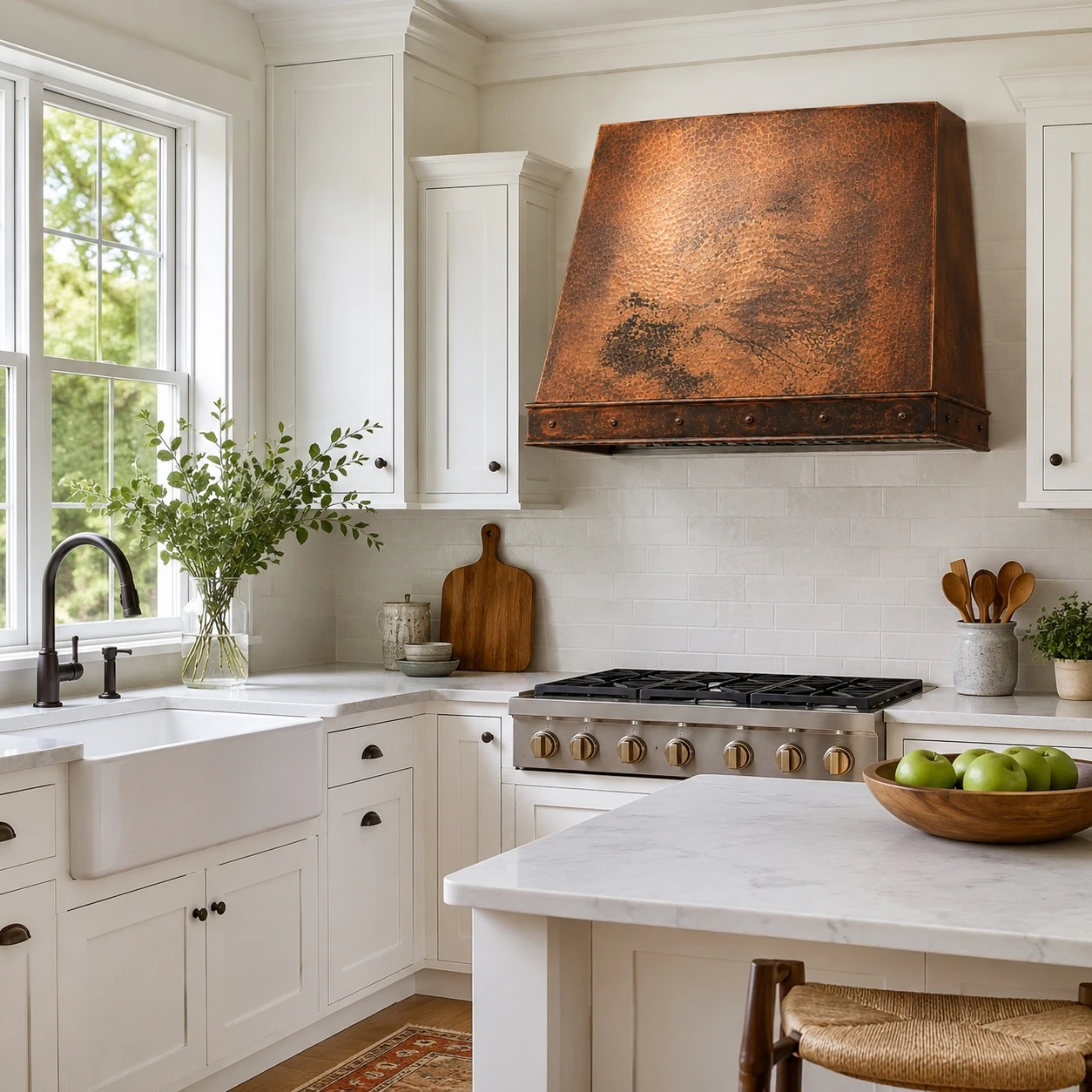
With shaker cabinetry, the hood bridges classic cabinet design and handcrafted copper warmth. Shaker kitchens often use simple rails, recessed panels, stone counters, restrained hardware, and clean backsplash layouts. The under-cabinet hood fits this setting because its rectangular footprint remains practical, while the hammered copper adds depth and character.
The riveted lower band can align visually with cabinet rails, backsplash borders, or range width. This helps the hood feel integrated rather than random. The copper finish can soften white, cream, gray, green, navy, black, or natural wood shaker cabinets while adding a warm focal point above the cooking area.
Sloped Under-Cabinet Hood Design
The sloped under-cabinet profile gives this hood its main visual purpose. It is designed for kitchens where a full-height chimney or large decorative canopy would not fit the cabinet layout. The sloped face adds depth while keeping the overall height compact.
This makes the hood useful below upper cabinets, open shelves, or architectural trim. The shape can support small kitchens, compact range walls, farmhouse kitchens, rustic interiors, and transitional cabinetry layouts where space above the range is limited.
Riveted Copper Apron Detail
The riveted lower band gives the hood a clear handcrafted accent. Because the rivets are concentrated along the apron area, they add metalwork detail without overwhelming the compact form. This is especially important on an under-cabinet hood, where every visual detail is close to the cabinetry and backsplash.
The apron band creates a stronger lower edge above the cooking surface. It can coordinate with dark hardware, iron fixtures, bronze pulls, handmade tile, stone counters, or rustic wood details.
Hammered Copper Patina in Kitchens
Copper finish selection changes how this compact hood reads in the finished kitchen. Natural fired copper can show amber, bronze, reddish, and brown variation. Coffee and antique finishes can create a deeper old-world effect. Honey and hand-polished copper can brighten the range wall, while oxidized green can create a more aged appearance.
The hammered texture is important because the hood has a smaller surface area than a tall wall-mount canopy. Hammer marks allow light to break across the sloped face, making the copper surface feel dimensional even in a compact under-cabinet installation.
Coppersmith Perspective
A sloped under-cabinet copper hood requires careful control of proportion because the form is compact and highly visible at eye level. The front face needs to slope evenly, the rectangular apron must remain straight, and the rivets should align cleanly across the lower band. Hammering and patina work also need to look balanced across the smaller surface.
Slight differences in hammer marks, copper tone, rivet spacing, apron edge, seams, folded corners, and finish depth are part of handmade copper construction. They help distinguish an artisan under-cabinet hood from a flat factory-made appliance cover.
Other Kitchen Styles
- Modern farmhouse
- Rustic contemporary
- Spanish Colonial
- Transitional rustic
Conclusion
The sloped under-cabinet copper range hood with rivets brings a compact sloped profile, hand-hammered copper texture, warm patina, riveted lower band, and practical under-cabinet format into the kitchen. These images show how the hood adapts to reclaimed wood cabinetry, oak cabinetry, industrial kitchens, and shaker cabinetry while keeping its design warm, functional, and visibly handmade.