US Dollar
 Euro
Euro
 Australian Dollar
 Canadian Dollar
 Polish Zloty
 British Pound







Product Description
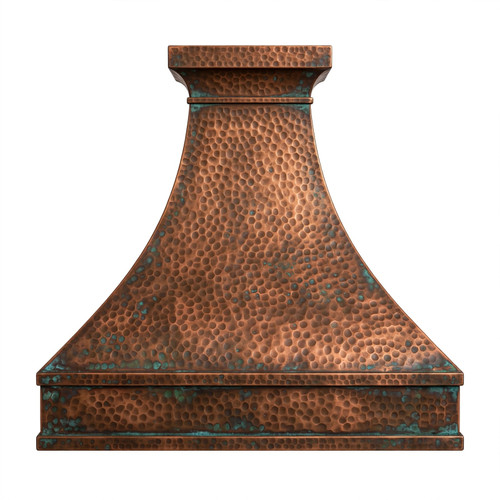
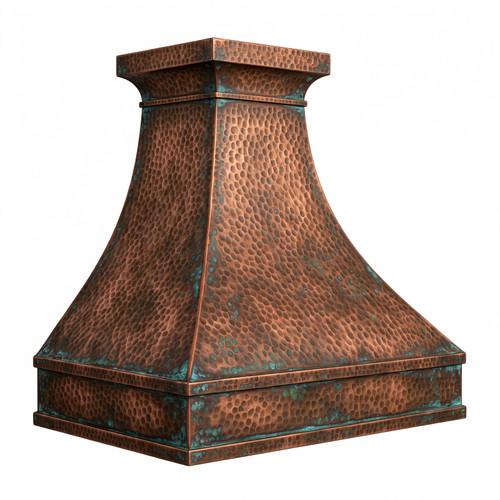
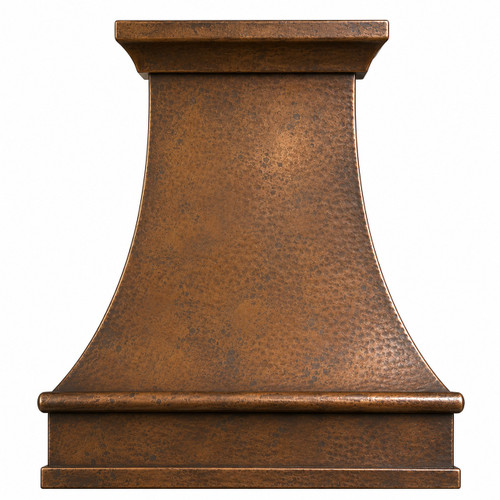
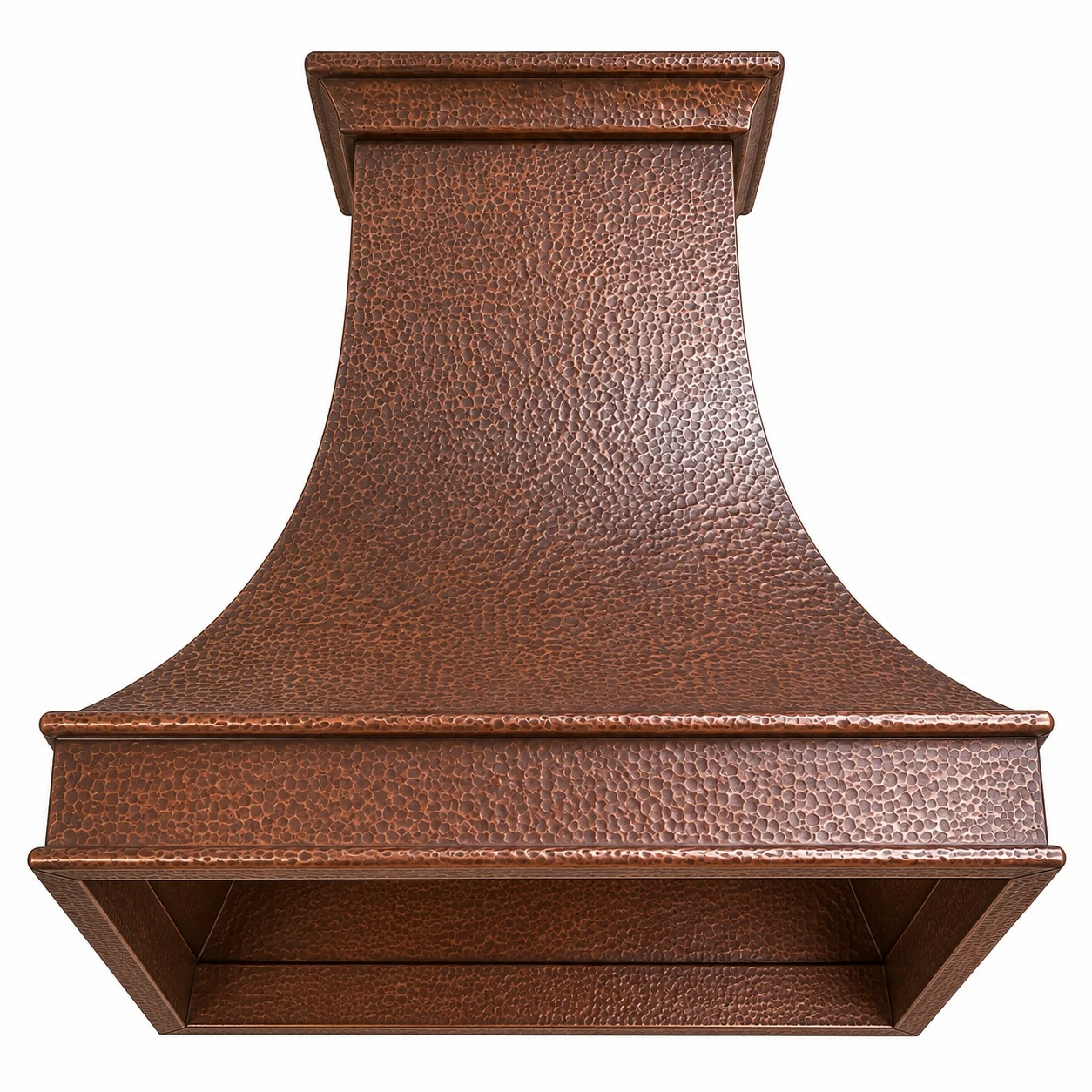
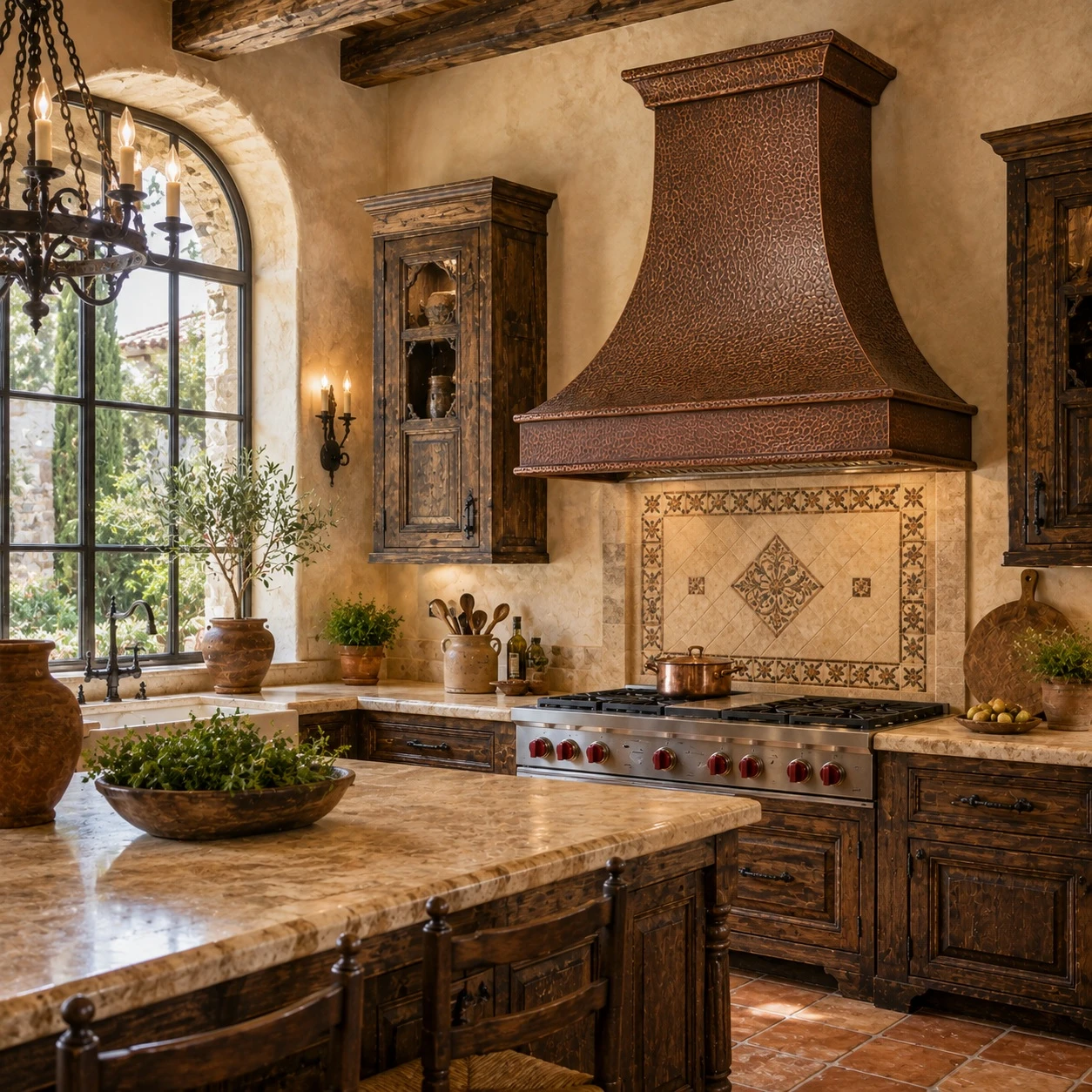
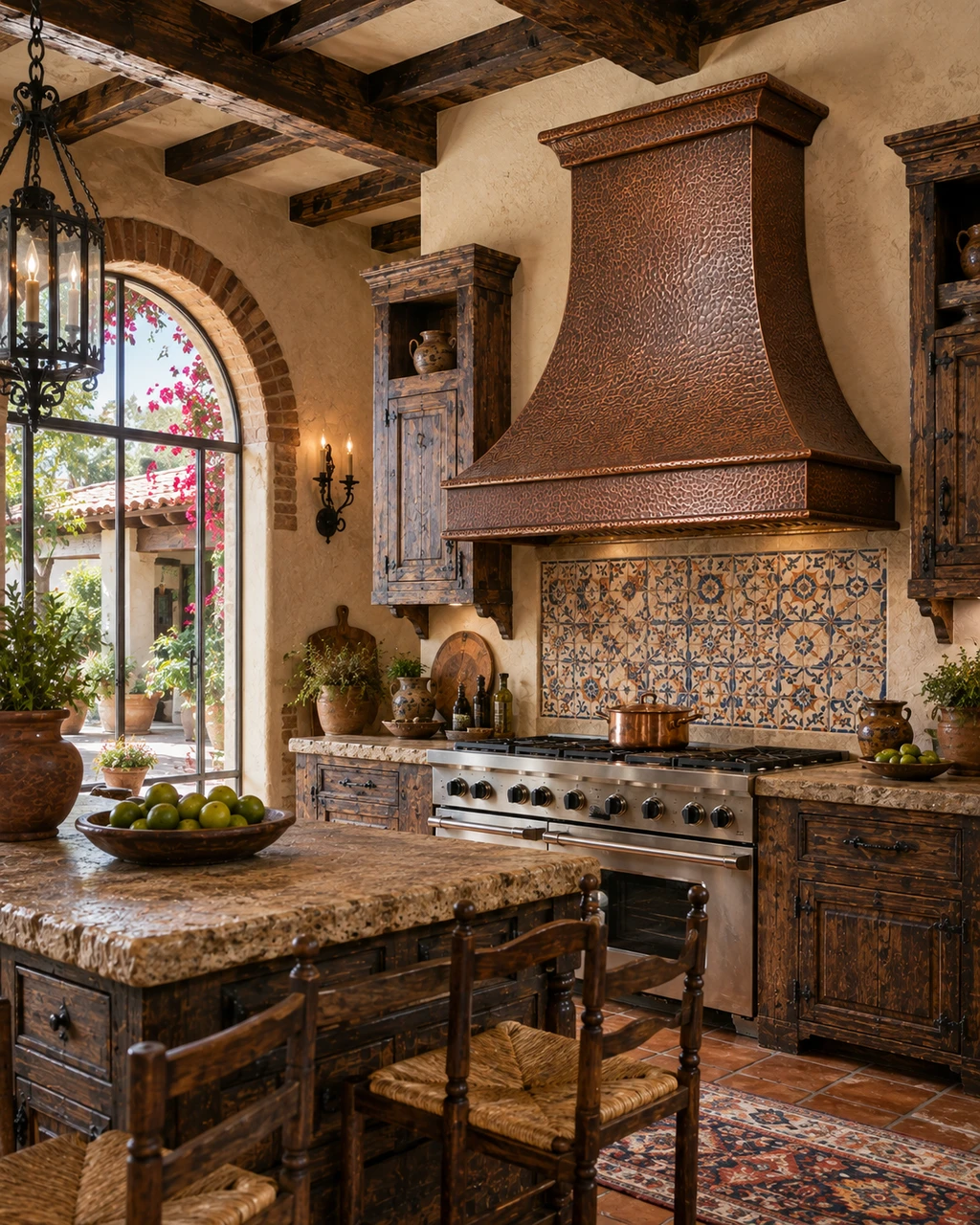
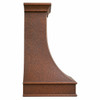
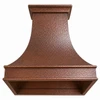
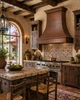
This hand-hammered bell copper range hood with architectural apron combines sweeping concave curves with a clean, strap-free canopy and substantial architectural molding. A narrow vertical chimney flows into the broad lower body through continuous curved planes, creating a tall and balanced silhouette above the cooking surface. Unlike bell hoods decorated with straps, rivets, or embossed panels, this design leaves the hammered canopy uninterrupted. The open surface highlights thousands of individual hammer impressions and the tonal variation of artisan-applied copper finishes. A projecting stepped crown provides a formal upper termination, while a deep framed apron establishes a strong horizontal base. Handcrafted from premium 16-gauge copper in Santa Clara del Cobre, Mexico, the hood is made to order for wall or kitchen-island installation. Six copper finishes and custom dimensions provide additional design flexibility. For more details about its handcrafted construction, bell proportions, and architectural apron, see our hand-hammered bell copper range hood architectural apron guide. Customize the size, finish, mounting configuration, and ventilation preparation for your kitchen.
Product Summary
- Strap-free bell canopy
- Sweeping concave curves
- Architectural stepped crown
- Deep framed apron
- Uninterrupted hammered body
- Premium 16-gauge copper
- Hand-hammered surface
- Six copper finish options
- Wall or island configuration
- Custom dimensions available
Custom Sizing
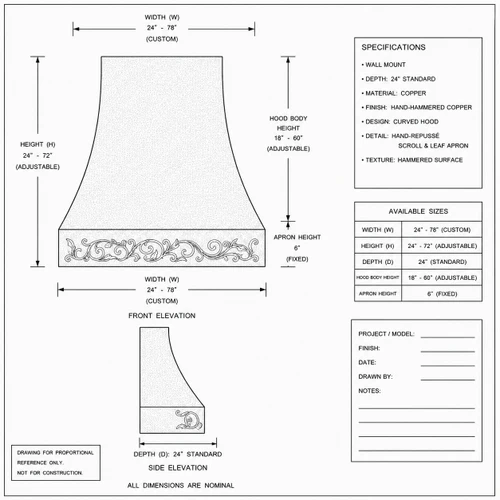
Each enclosure is made to order so its proportions can coordinate with the cooking surface, cabinetry, backsplash, and ceiling. Widths range from 28 to 78 inches, heights from 24 to 72 inches, and standard depth is 24 inches. Custom fabrication maintains the relationship between the narrow chimney, sweeping bell canopy, projecting crown, broad capture area, and substantial lower apron.
Measurements Needed
Provide the cooking-surface width, desired hood width, overall height, ceiling height, mounting height, depth, backsplash thickness, cabinet clearances, and duct location. Island projects should also identify the cooktop centerline and available ceiling framing. Accurate measurements help establish the canopy curvature, crown position, apron proportions, ventilation opening, and mounting location before fabrication begins.
Insert Planning
The handcrafted copper enclosure and mechanical ventilation equipment are planned separately. Rustica House offers an optional 200 CFM insert for compatible installations. Buyer-supplied internal inserts up to 1,260 CFM and external blowers up to 1,500 CFM can also be accommodated when complete specifications are provided before production, allowing greater flexibility for different cooking requirements.
Ventilation Options
Buyer-supplied ventilation can provide additional choices for airflow, lighting, controls, filters, duct size, sound level, and blower location. Internal and external systems require different enclosure preparation. The equipment manufacturer, model, dimensions, cutout requirements, and duct specifications should therefore be selected before the copper shell enters production.
Drawing Approval
Confirm the width, height, depth, bell curvature, crown projection, apron dimensions, ventilation opening, and duct centerline before fabrication. For buyer-supplied equipment, provide the model, overall dimensions, required cutout, duct size, lighting, controls, and filter-access requirements. Early review helps coordinate the enclosure with cabinetry, structural framing, ceiling conditions, and mechanical components.
Strap-Free Bell Architecture
The narrow upper chimney transitions through long concave curves that expand progressively toward the cooking surface. The flare becomes more pronounced near the base, producing a recognizable bell silhouette without angular breaks or faceted planes. Keeping the body free of applied straps creates a cleaner architectural composition and gives the curved hammered copper considerably more visual importance.
Uninterrupted Canopy
Large continuous copper fields distinguish this model from bell hoods that rely on riveted straps, contrasting bands, embossed artwork, or decorative panels. The eye follows the changing curvature instead of applied hardware. This restrained approach allows hammer marks, reflected light, and patina variation to become the principal surface decoration while the crown and apron provide architectural framing.
Architectural Crown
A projecting stepped crown gives the upper chimney a formal architectural termination. Multiple horizontal levels create depth and shadow, while the broad upper lip visually caps the tall composition. The crown introduces traditional cornice character without extending decoration down the canopy, allowing it to balance the substantial lower apron while preserving the clean central body.
Architectural Apron
The deep rectangular apron establishes a strong horizontal foundation beneath the sweeping canopy. Rounded copper molding frames its upper and lower edges, producing layered depth without rivets, embossed motifs, or applied ornament. Its straight geometry intentionally contrasts with the concave curves above, making the apron especially noticeable from angled and side views where the hood's depth becomes more apparent.
What Makes It Different
This model is intentionally cleaner than strap-heavy, riveted, or embossed traditional bell hoods. The tall hammered canopy remains uninterrupted from chimney to apron, allowing the sweeping curves and patina to become the primary decoration. A stepped crown and deep architectural apron frame the body without covering it with additional hardware, creating a refined interpretation of traditional European chimney-hood architecture.
Hammered Copper Surface
The entire canopy is hammered by hand rather than mechanically textured. Individual impressions vary naturally in size, spacing, depth, and orientation, producing a surface without repetitive machine patterns. Light catches raised areas while darker tones remain within the depressions. Across the large concave canopy, these variations accentuate both the individual hammer marks and the hood's overall curvature.
Copper Finishes
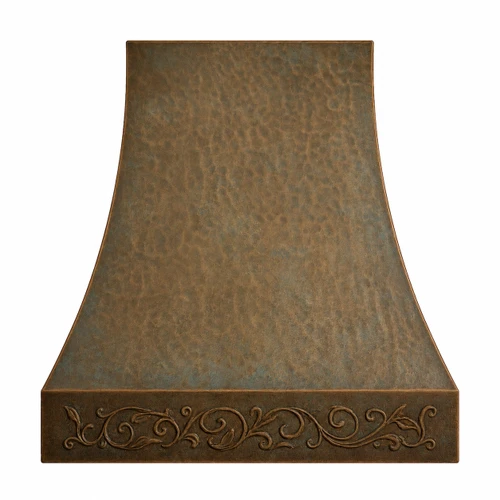
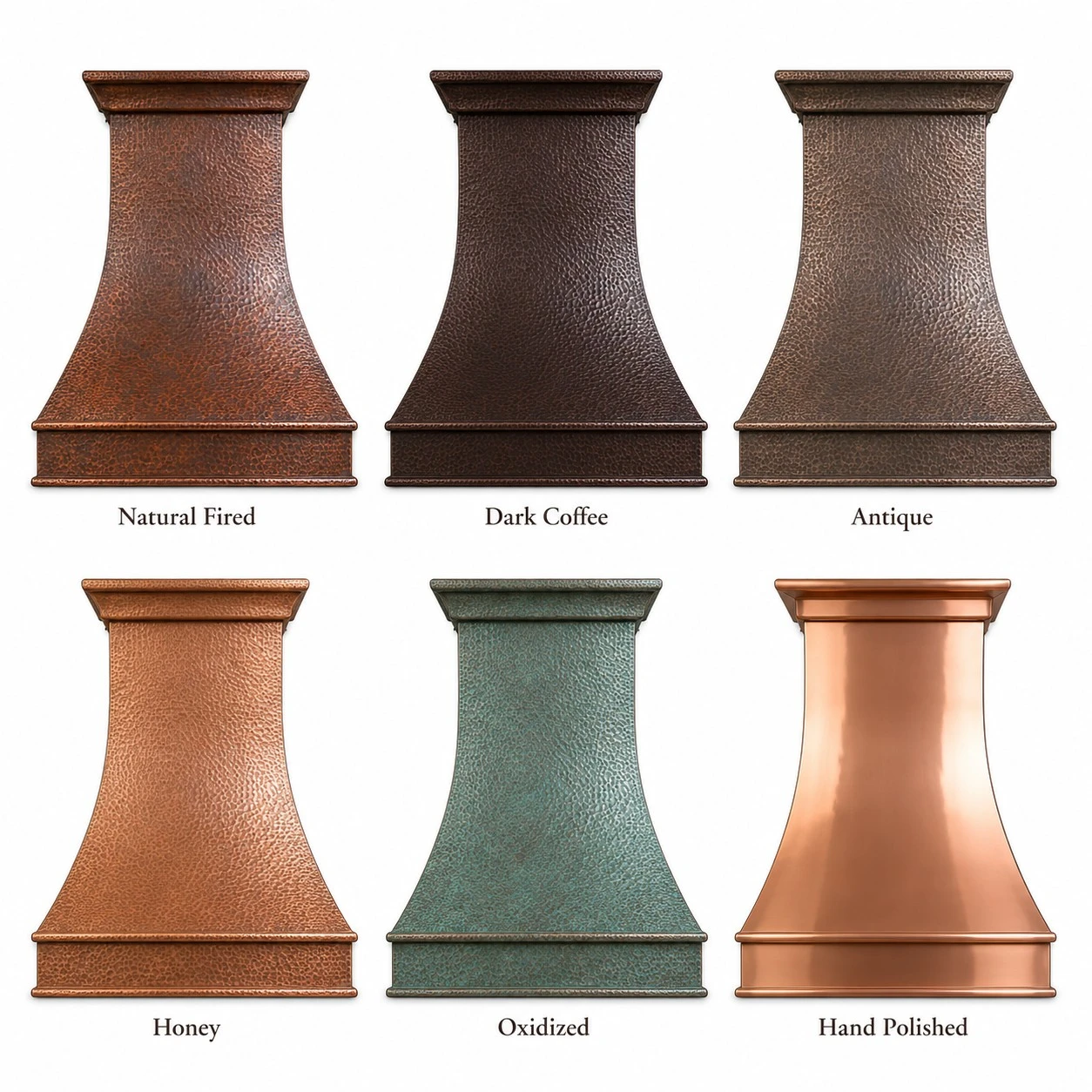
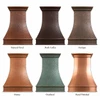
Six finishes allow the hammered copper to coordinate with different kitchen palettes. Natural fired emphasizes warm reds and bronze variation, while dark coffee creates deeper brown tones. Antique produces a quieter aged appearance, honey introduces amber warmth, and green oxidized copper develops weathered coloration. Hand-polished copper creates brighter metallic highlights while preserving the visible hammered texture beneath the finish.
Mounting Options
The hood can be fabricated for wall-mounted or kitchen-island installation. Mounting type should be established before production because structural support, exposed surfaces, attachment details, and ventilation preparation differ. Both configurations preserve the strap-free canopy, sweeping bell profile, stepped crown, deep apron, and hand-hammered surface that define this model.
Wall-Mount Version
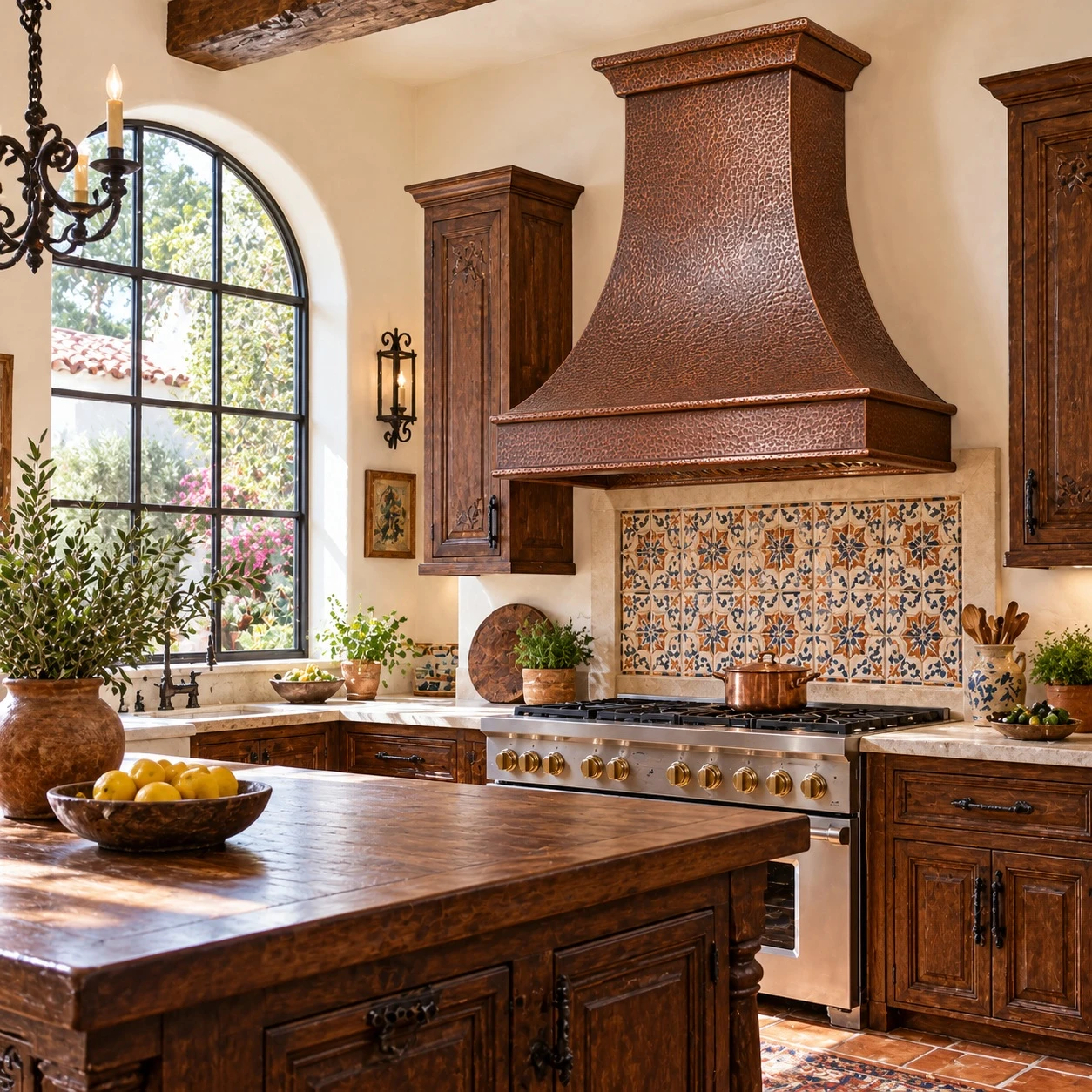
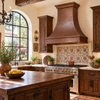
A wall-mounted version works particularly well against plaster, natural stone, handmade tile, brick, or slab backsplashes. The uninterrupted canopy provides a substantial copper focal point without competing with decorative surfaces nearby. Confirm framing, cabinet clearances, backsplash thickness, mounting height, electrical service, and duct position before approving the final dimensions.
Kitchen Island Version
An island installation exposes the bell curvature, hammered surface, crown projection, and apron depth from several directions. Suitable ceiling framing is required for structural support. Coordinate the cooktop centerline, mounting height, electrical service, duct route, and ventilation equipment before fabrication, especially when installing beneath timber beams, high ceilings, or vaulted architecture.
Buyer Planning
Confirm dimensions, finish, mounting configuration, ventilation equipment, and structural conditions together before production. The hand-hammered surface and strap-free architecture are defining features of this model. Early planning helps preserve the intended proportions while reducing conflicts between the enclosure, cabinetry, backsplash, ceiling framing, ductwork, electrical connections, and selected ventilation equipment.
| Planning | Confirm | Buyer Decision |
|---|---|---|
| Dimensions | Width, height, depth | Match cooking area |
| Finish | Six copper options | Match kitchen palette |
| Mounting | Wall or island | Confirm structure |
| Insert | Rustica or buyer supplied | Send specifications |
| Ducting | Route and diameter | Coordinate before build |
Range Hood Specifications
- Shape: Tall bell silhouette
- Profile: Sweeping concave curves
- Canopy: Strap-free architecture
- Crown: Stepped architectural molding
- Apron: Deep framed construction
- Material: Premium 16-gauge copper
- Texture: Hand hammered
- Width: 28–78 inches
- Height: 24–72 inches
- Depth: 24 inches standard
- Finishes: Six copper options
- Mounting: Wall or island
- Insert: Optional 200 CFM
- Internal insert: Up to 1,260 CFM
- External blower: Up to 1,500 CFM
- Production: About 6 weeks
- Delivery: About 8 weeks
- Shipping: Free U.S. mainland
- Warranty: 12 months
- Origin: Santa Clara del Cobre
- SKU: RH31T4W42
PDF and CAD Downloads
Use the proportional PDF drawing and DXF CAD file to review dimensions, bell curvature, crown projection, apron depth, ventilation placement, and cabinetry clearances. These files support planning by homeowners, designers, cabinetmakers, and contractors. Confirm final measurements and buyer-supplied ventilation specifications before production begins.
Copper Craftsmanship
Each hood is handcrafted in Santa Clara del Cobre, Mexico, where copperworking remains an established artisan tradition. Craftsmen form the curved canopy, hammer the metal, construct the crown and apron, join the components, and apply the selected finish individually. Natural differences in hammer impressions, seams, molding transitions, edge work, and patina distribution make every finished enclosure slightly different.
Kitchen Styles
The design combines European and Mediterranean chimney-hood proportions with Mexican handcrafted copperwork. Because decoration is concentrated at the crown and apron rather than across the canopy, the hood can complement richly detailed kitchens without competing with surrounding materials. Plaster, natural stone, timber, terracotta, wrought iron, handmade tile, and substantial cabinetry are especially compatible. See how the sweeping bell canopy works with cabinetry, stone, tile, and architectural finishes in our hand-hammered bell copper range hood with architectural apron kitchen images.
Best Kitchen Styles
- Spanish Colonial: Hammered copper complements plaster, dark beams, carved wood, wrought iron, Saltillo flooring, and handmade tile.
- Tuscan: Sweeping curves pair with travertine, warm stone, distressed cabinetry, plaster walls, and substantial cooking areas.
- Hacienda: Rustic timber, terracotta, stone, iron hardware, and handmade tile reinforce the hood's handcrafted architectural scale.
- Old World Mediterranean: Arches, textured plaster, aged woods, stone counters, and patterned tile complement its restrained bell profile.
Other Kitchen Styles
- Spanish Revival
- French Country
- Rustic European
Architectural Bell Hood FAQ
A: The hood combines a strap-free bell canopy with dense hand hammering, sweeping concave curves, a stepped architectural crown, and a deep framed apron. Its center remains intentionally free of rivets, embossed panels, and applied decorative bands.
A: A narrow upper chimney transitions through continuous concave curves before widening substantially near the cooking surface. The resulting silhouette is softer and more sculptural than a straight tapered, pyramid, or box-shaped enclosure.
A: Omitting straps keeps the curved canopy visually uninterrupted. This allows the hammer texture, copper finish, and bell geometry to provide decoration while the crown and apron establish the architectural framework.
A: Yes. This model uses a hand-hammered copper surface. Natural differences between individual impressions create subtle variations in reflected light and help distinguish handcrafted metalwork from mechanically textured sheet material.
A: Yes. Wall and kitchen-island configurations are available. Island installations require suitable ceiling support and careful coordination of the cooktop centerline, mounting height, electrical service, duct route, and ventilation equipment.
A: Yes. Buyer-supplied internal inserts up to 1,260 CFM and external blower systems up to 1,500 CFM can be accommodated when complete manufacturer dimensions and technical specifications are supplied before fabrication.
Customize This Hood
Choose custom dimensions, one of six copper finishes, wall or island construction, and ventilation preparation. The hand-hammered surface, strap-free canopy, stepped crown, and architectural apron remain defining elements. Order this custom architectural bell hood to coordinate its proportions, finish, mounting configuration, and ventilation preparation with your kitchen project.
Related Resources
- Bell-Shaped Copper Range Hoods
- Copper Hammering Techniques
- Copper Patina Finish Options
- Range Hood Size Guide
- Range Hood Insert Guide
- Copper Range Hood FAQ
Care & Maintenance
Clean the hammered copper with warm water, mild soap, and a soft nonabrasive cloth, then dry promptly. Pay additional attention around the projecting crown and apron molding where grease or moisture can collect. Avoid acidic cleaners, bleach, ammonia, steel wool, abrasive pads, and aggressive metal polishes. Read our Copper Range Hood Cleaning & Care Guide for detailed maintenance guidance.
Installation Guide
Wall installations require secure structural framing, while island configurations need appropriate overhead support and coordinated electrical and duct planning. Confirm final dimensions, mounting height, ventilation opening, and duct route before fabrication. Review the range hood installation guide with your contractor before installation.
Shipping & Returns
Production generally requires about six weeks, with total delivery commonly reaching approximately eight weeks. Each made-to-order hood is securely crated and ships free to the U.S. mainland. Review freight inspection procedures, custom-order conditions, and applicable return terms on the Shipping & Returns page.
Warranty
The handcrafted copper shell includes a 12-month warranty. Rustica House-supplied ventilation components are covered according to applicable terms, while buyer-supplied equipment remains subject to its manufacturer's warranty. Review the complete Rustica House Warranty for coverage details and limitations.
Disclaimer: Handmade dimensions, hammer impressions, seams, molding transitions, edge work, and patina tones may vary slightly. These variations are expected characteristics of handcrafted copper and are not manufacturing defects. Lifestyle images provide design inspiration and may show optional configurations, finishes, or accessories not included with the product. All product images © Rustica House, unauthorized use is prohibited.