 US Dollar
 Euro
Euro
 Australian Dollar
 Canadian Dollar
 Polish Zloty
 British Pound

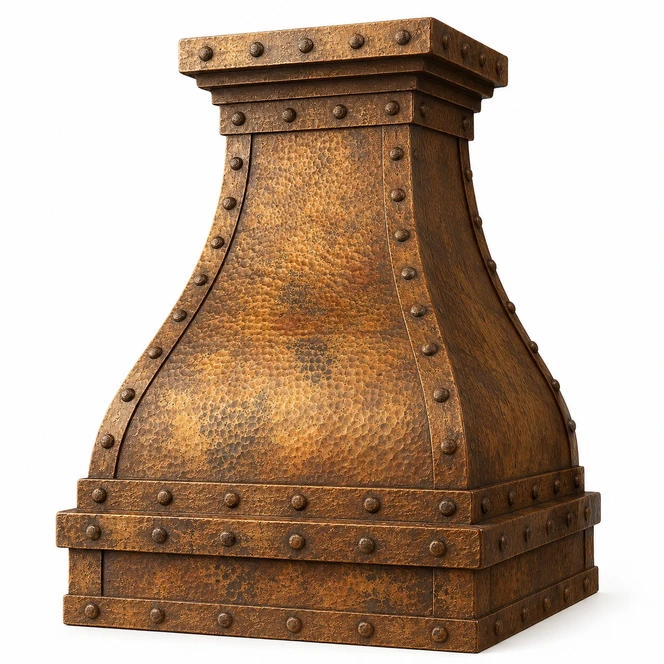
The Gothic Dome Copper Range Hood with Riveted Straps is shown in these kitchen images as a dramatic handcrafted focal point for Gothic Revival, old European, Spanish Revival, and rustic industrial kitchens. Its tall dome-shaped copper canopy, deeply curved body, riveted vertical straps, layered crown, substantial lower apron, and warm hammered patina create a range-wall feature with strong architectural presence. The hood combines Gothic-inspired verticality with artisan metalwork, making it suitable for interiors with plaster, stone, timber, handmade tile, iron hardware, and substantial cooking areas. Explore the Gothic dome copper range hood with riveted straps to compare its dome profile, strap layout, crown detail, finish options, and kitchen style applications. For product-specific design context, read the Gothic dome copper range hood riveted straps guide.
Blog Summary
- Focus: Gothic dome hood images
- Product: copper range hood
- Shape: tall dome canopy
- Detail: riveted copper straps
- Scenes: four kitchen styles
- Look: dramatic and architectural
Gothic Dome Hood Images
Kitchen images help show how this Gothic dome copper range hood looks inside finished interiors rather than as a standalone product photo. Cabinet finish, ceiling height, backsplash material, stone selection, wall texture, lighting, flooring, and hardware all affect how the copper patina and riveted straps appear. In one kitchen, the hood can feel Gothic Revival and monumental. In another, the same dome shape can support old European, Spanish Revival, or rustic industrial interiors.
This hood stands out because it combines a deeply curved dome body with strong vertical metalwork. The riveted straps emphasize height and structure, while the layered crown and lower apron make the hood feel complete from top to bottom. The hammered copper surface adds warmth and handmade variation, preventing the substantial form from feeling flat. For broader shape planning, review the copper range hood shapes guide.
Design Highlights
- Gothic-inspired dome canopy
- riveted vertical copper straps
- layered architectural crown
- substantial lower apron detail
- hammered artisan copper surface
- dramatic range-wall presence
- old-world and industrial flexibility
Gothic Revival Kitchen Image
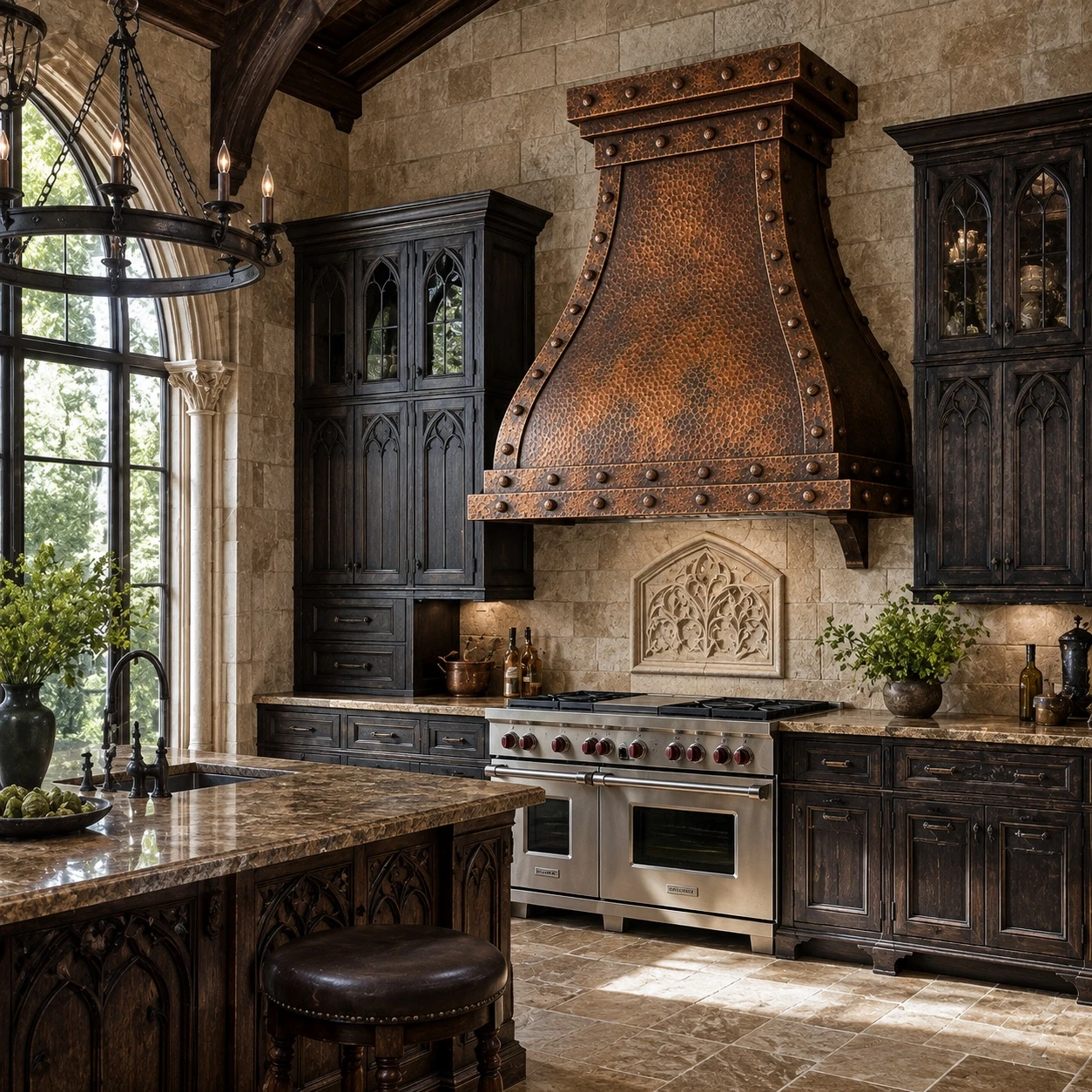
In a Gothic Revival kitchen, the dome copper hood becomes a commanding architectural feature. Gothic Revival interiors often use dark wood, stone surfaces, tall proportions, iron lighting, pointed or arched references, and strong vertical details. The hood’s tall dome body and riveted straps support that direction by giving the cooking wall height, depth, and historic metalwork character.
The copper patina can coordinate with walnut, oak, limestone, slate, aged iron, bronze hardware, and textured plaster. The rivets create small points of shadow that reinforce the constructed appearance of the hood. The layered crown adds a finished top edge, while the lower apron anchors the dome above the range. For related old-world planning, review the old European copper range hood guide.
Old European Kitchen Image
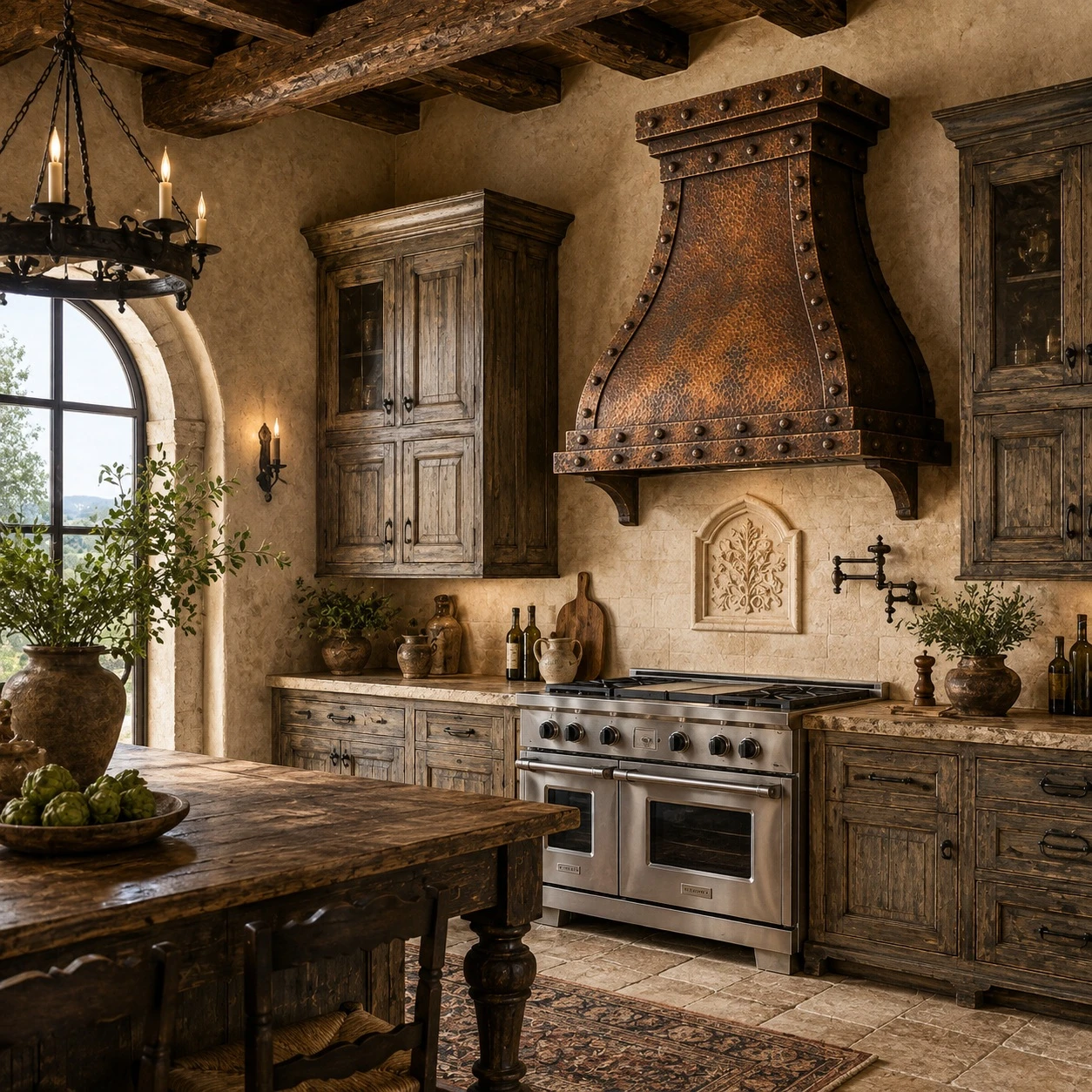
In an old European kitchen, the Gothic dome copper hood works with plaster walls, natural stone, aged cabinetry, timber beams, iron hardware, and traditional range-wall materials. Old European interiors often rely on permanence, texture, and substantial architectural elements. The dome-shaped hood supports that atmosphere by creating a strong copper centerpiece above the cooking area.
The hammered copper finish gives the surface depth and movement, while the riveted straps divide the broad body into structured vertical sections. This keeps the hood from reading as one plain copper mass. The crown and apron add architectural framing, helping the hood feel built into the room rather than added afterward. For related handmade copper context, review the handmade copper range hoods guide.
Spanish Revival Kitchen Image
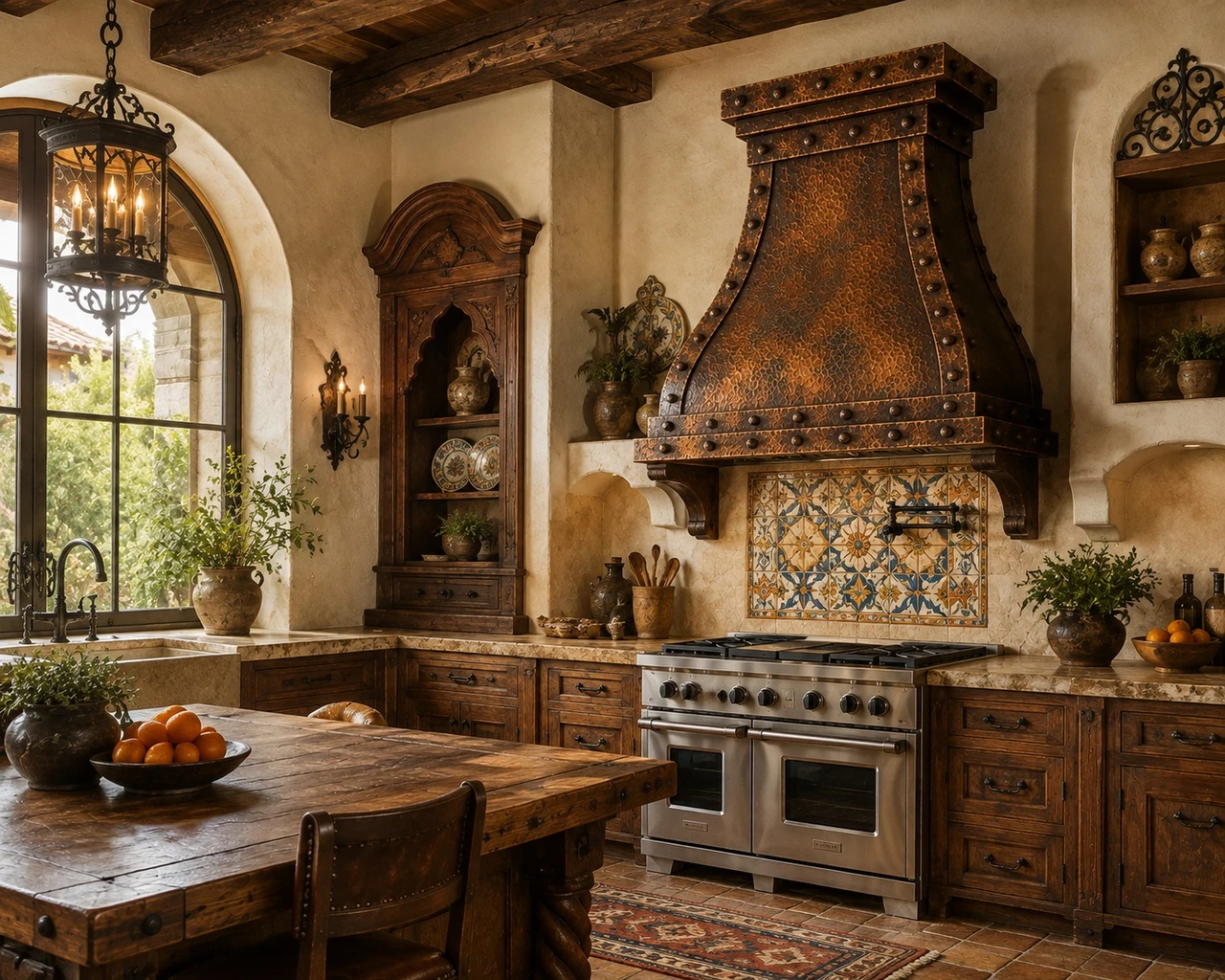
In a Spanish Revival kitchen, the Gothic dome copper hood supports plaster walls, arched architecture, dark timber, handmade tile, stone counters, bronze accents, and wrought iron. Spanish Revival interiors often combine bold architectural forms with visible artisan surfaces. The hood’s dome canopy and riveted straps work well in that setting because they add both sculptural shape and handcrafted metal detail.
The warm copper tone can coordinate with Saltillo-style flooring, Talavera-inspired tile, limestone, carved wood, aged hardware, and textured walls. The dome shape adds softness to the range wall, while the straps provide structure and vertical emphasis. This balance allows the hood to feel dramatic without relying on scrollwork, floral embossing, or contrasting metal trim. For regional inspiration, review the Spanish-style copper range hoods guide.
Rustic Industrial Kitchen Image
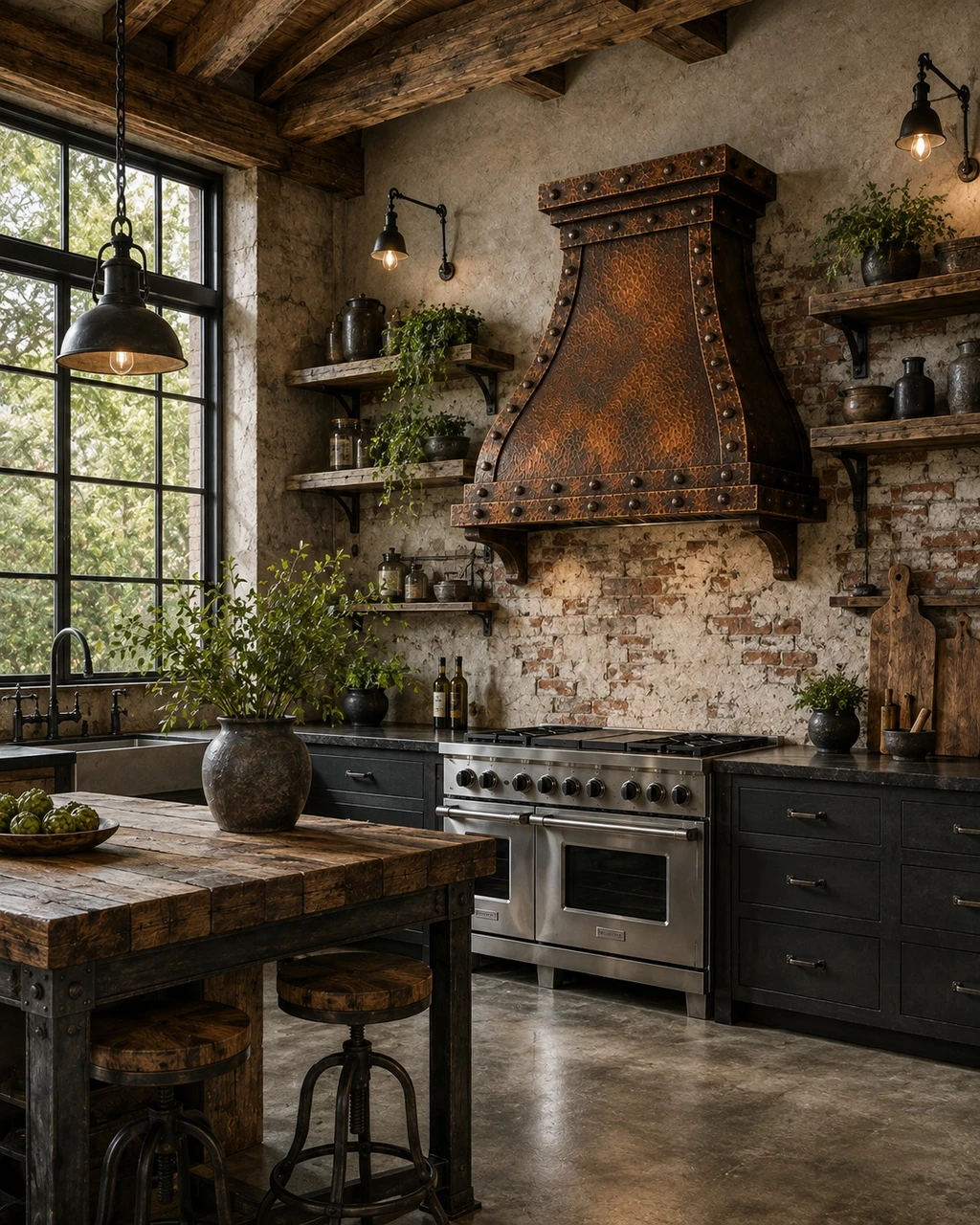
In a rustic industrial kitchen, the Gothic dome copper hood connects aged material warmth with constructed metalwork. Rustic industrial interiors often include brick, reclaimed timber, stone, black metal, exposed hardware, dark windows, and simplified cabinetry. The hood’s riveted straps support the industrial side of the design, while the copper patina keeps the range wall warm and handcrafted.
The dome body prevents the hood from feeling too mechanical or rigid. Its curved form balances steel, brick, stone, and dark hardware, while the rivets add a fabricated detail that feels appropriate in an industrial setting. The hammered copper surface can coordinate with aged wood, bronze, iron, concrete, and warm lighting. For broader metal texture planning, review the hammered and smooth metal hoods guide.
Gothic Dome Shape
The dome shape gives this hood its main architectural identity. The body rises with strong vertical presence and curves outward toward the lower apron, creating a dramatic focal point above the range. This form feels more sculptural than a straight tapered hood and more monumental than a low under-cabinet design.
The Gothic character comes from the hood’s height, ribbed strap rhythm, and substantial crown-to-apron relationship. It works especially well in kitchens where the range wall needs a strong central element with historic or old-world presence.
Riveted Strap Detail
The riveted straps give the hood visible metalwork structure. They emphasize the height of the dome canopy, divide the copper face into organized sections, and create a crafted rhythm across the front. The rivets introduce shadow and texture without covering the entire hood in ornament.
This detail supports several kitchen styles. In Gothic Revival and old European interiors, the straps feel historic and architectural. In Spanish Revival kitchens, they connect with ironwork and handmade surfaces. In rustic industrial rooms, they support a constructed metal character.
Crown and Apron
The layered crown gives the top of the hood a finished architectural edge. It helps the hood relate to ceiling beams, cabinet crowns, stone surrounds, or plaster range walls. The substantial lower apron balances the crown by giving the bottom a strong horizontal base above the cooking surface.
Together, the crown and apron frame the dome body and make the hood feel complete from top to bottom. This relationship is important because the hood is visually strong and needs clear architectural boundaries.
Hammered Copper Texture
The hammered copper surface gives the hood depth, shadow, and handmade movement. Each impression catches light differently, so the copper can appear amber, reddish, bronze, brown, or darker aged depending on lighting and finish selection.
Hammering is especially effective in kitchens with stone, plaster, timber, brick, handmade tile, and iron. It gives the metal a tactile quality that can visually connect with those surfaces while still standing apart as the main feature above the cooking area.
Copper Finish Character
The copper finish determines how dramatic, warm, dark, or reflective the hood feels in the finished kitchen. Natural fired copper can show amber, bronze, reddish, and brown variation. Coffee and antique finishes can create a deeper old-world look. Honey and hand-polished copper can brighten the range wall, while oxidized green can create a more aged and distinctive surface.
Small differences in copper tone, patina movement, hammering, seams, strap shaping, rivet spacing, apron detail, crown alignment, and edge finishing should be expected in handmade copper work. These variations help each hood feel individual rather than mass produced. For finish comparison, review the copper patina finish options guide.
Style Compatibility
This Gothic dome copper range hood with riveted straps works across several kitchen styles because it combines sculptural form, warm metal, and visible construction. In Gothic Revival kitchens, it supports height, drama, stone, and dark wood. In old European interiors, it adds permanence and handcrafted copper texture. In Spanish Revival kitchens, it connects with plaster, tile, iron, and arches. In rustic industrial rooms, it brings warmth to brick, steel, timber, and stone.
The design is strongest when surrounding materials have enough weight to support its scale. Stone backsplashes, plaster walls, wood beams, handmade tile, dark cabinetry, warm lighting, and restrained hardware help the copper hood feel integrated rather than isolated.
Handcrafted Variation
Small irregularities in hammering, patina depth, copper tone, seams, rivet spacing, strap shaping, edge finishing, and surface movement are part of handmade copper construction. These details should be expected and valued because they distinguish artisan metalwork from a factory-made hood cover.
The hood’s handmade character becomes more visible as light moves across the curved hammered body, riveted straps, crown, and apron. That changing surface quality gives the range wall warmth, depth, and lasting architectural presence.
Conclusion
The Gothic dome copper range hood with riveted straps brings a tall dome canopy, hammered copper texture, riveted vertical straps, layered crown, substantial apron, and old-world character into the kitchen. These images show how the hood adapts to Gothic Revival, old European, Spanish Revival, and rustic industrial interiors while keeping its design dramatic, architectural, and visibly handcrafted.