 US Dollar
 Euro
Euro
 Australian Dollar
 Canadian Dollar
 Polish Zloty
 British Pound

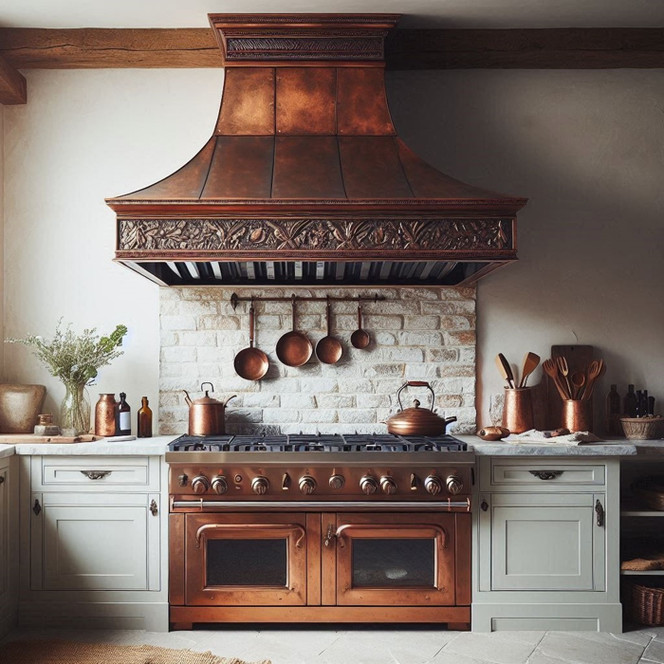
Hammered vs. smooth metal range hoods is one of the most important design choices when selecting a custom kitchen hood. The metal creates the overall color, weight, and style, while the finish controls texture, light reflection, maintenance, and visual depth. Copper, zinc, iron, brass, tin, and pewter can all look dramatically different depending on whether the surface is hammered or smooth. A handcrafted hood can feel rustic, industrial, traditional, refined, or contemporary based on this combination. Explore custom metal range hoods to compare materials, silhouettes, textures, and finish options for your kitchen.
Blog Summary
- Texture: Hammered or smooth finish
- Metals: Copper, zinc, iron and more
- Style: Rustic to contemporary
- Care: Depends on metal finish
- Choice: Match kitchen design
Why Finish Matters
The finish of a metal range hood affects more than appearance. It changes how light moves across the hood, how easily fingerprints appear, how much texture the cooking wall gains, and how the hood coordinates with cabinets, counters, tile, and lighting. A hammered finish has a dimensional surface made by repeated hand strikes or tool marks. It creates shadows, highlights, and artisan variation. A smooth finish has a cleaner surface that emphasizes shape, patina, and metal color. Both can be beautiful, but they serve different design goals. The best choice depends on whether the kitchen needs texture, refinement, contrast, or simplicity.
Hammered Finish
A hammered finish gives metal a dimpled, handmade surface. This technique adds visual depth and helps the hood feel less like a standard appliance cover. Hammering is especially effective on copper, brass, zinc, and pewter because the texture catches light across the curved or flat hood body. In rustic kitchens, hammered metal supports natural wood, stone, brick, plaster, iron hardware, and handmade tile. It can also hide minor surface marks better than a perfectly smooth finish. For a deeper look at handcrafted metal texture, review copper hammering techniques before selecting a custom hood finish.
Hammered Finish Benefits
- Depth: Adds surface movement
- Style: Feels handcrafted
- Light: Creates soft shadows
- Wear: Hides small marks
- Use: Suits rustic kitchens
Smooth Finish
A smooth finish creates a cleaner and more controlled look. Instead of relying on surface texture, it highlights the hood’s silhouette, proportions, patina, and metal color. Smooth finishes work well in modern, transitional, minimalist, industrial, and refined traditional kitchens. They pair beautifully with slab backsplashes, flat-panel cabinets, simple stone counters, and understated hardware. Smooth metal can reflect more light, especially when polished, but it may also show fingerprints, water spots, and cleaning marks more clearly. This finish is best for homeowners who want a custom metal hood with architectural presence but less visible handmade texture.
Smooth Finish Benefits
- Look: Clean and refined
- Shape: Shows hood lines
- Style: Fits modern rooms
- Light: Reflects more clearly
- Use: Supports simple design
Copper Range Hoods
Copper is one of the most popular metals for custom range hoods because it brings warmth, patina, and strong visual character to the kitchen. Hammered copper feels rustic, Spanish, Mediterranean, farmhouse, Tuscan, and Old World. The texture reinforces the handmade appearance and works well with tile, stone, wood, and iron. Smooth copper feels cleaner and more contemporary, especially when used in box, pyramid, or simple bell silhouettes. Copper naturally changes over time, so its surface may become darker, richer, or more varied with use. Compare additional styles in the copper range hoods collection.
Copper Finish Uses
- Hammered: Rustic and artisan
- Smooth: Clean warm metal
- Patina: Ages with character
- Pairs: Tile, stone and wood
- Best: Strong kitchen focal
Zinc Range Hoods
Zinc has a softer gray tone than stainless steel and a more muted appearance than copper. Hammered zinc creates a rare and textured look that works well in French country, rustic European, farmhouse, and vintage-inspired kitchens. Its dimples create quiet movement without becoming as warm or bold as copper. Smooth zinc feels calm, cool, and elegant. It suits Scandinavian, coastal, transitional, and minimalist interiors because the surface does not visually overpower the room. Zinc can develop a natural patina, giving it a lived-in quality over time. It pairs especially well with white cabinetry, marble, limestone, pale wood, and understated hardware.
Iron Range Hoods
Iron creates a stronger, darker, and more architectural range hood than most other metals. Hammered iron has rugged Old World character and can suit Gothic, rustic cabin, industrial, Spanish Revival, and mountain lodge interiors. The texture reinforces the sense of strength and hand-forged construction. Smooth iron or steel creates a more structured industrial appearance, especially in matte black, charcoal, gunmetal, or dark bronze finishes. Smooth iron works well with concrete, brick, steel shelving, black windows, wood beams, and stone counters. Because iron is visually heavy, it should be balanced with light walls, warm wood, or simple cabinetry.
Iron Finish Uses
- Hammered: Rugged Old World
- Smooth: Industrial and bold
- Color: Dark metal presence
- Pairs: Brick, stone and wood
- Best: Strong contrast walls
Brass Range Hoods
Brass range hoods bring a golden tone that can feel glamorous, traditional, vintage, or highly refined. Hammered brass adds light-catching texture and works well in eclectic, bohemian, Art Deco, and richly layered kitchens. The hammered surface prevents the metal from looking too polished or formal. Smooth brass creates a more luxurious and radiant effect, especially when paired with marble, dark cabinetry, walnut, green cabinets, navy cabinets, or Parisian-inspired details. Smooth brass requires careful maintenance if a bright finish is desired, because tarnish may develop over time. Aged brass can also be intentional, giving the hood a softer antique character.
Tin Range Hoods
Tin has a lighter silvery tone and is often associated with vintage, cottage, Victorian, retro farmhouse, and decorative metalwork traditions. Hammered tin creates a delicate shimmer with a handmade feel. It can also coordinate with embossed panels, decorative borders, and painted cabinetry. Smooth tin has a quieter metallic appearance and can work in traditional or mixed-metal kitchens where a bright but subtle hood is preferred. Because tin is softer than many other metals, the design should be handled carefully during fabrication, installation, and cleaning. It is best used when the kitchen needs a lighter metal accent rather than a heavy architectural centerpiece.
Tin Finish Uses
- Hammered: Vintage shimmer
- Smooth: Subtle silver tone
- Style: Cottage or retro
- Care: Clean gently
- Best: Light metal accents
Pewter Range Hoods
Pewter is an elegant alternative to stainless steel because it has a softer gray tone and a more handcrafted personality. Hammered pewter creates gentle light movement, making it useful in Old English, vintage European, romantic rustic, and hand-painted tile kitchens. The texture feels refined rather than rugged. Smooth pewter is understated and versatile, fitting transitional, neoclassical, modern country, and refined farmhouse kitchens. Its neutral color works well with white, cream, gray, navy, green, and natural wood cabinetry. Pewter can develop subtle surface variation over time, but it usually remains calmer than copper or brass.
Mixed Metal Hoods
Some kitchens benefit from combining metals. A hammered copper body with smooth brass trim can feel warm and decorative. Smooth zinc with iron straps can create a rustic European look. Pewter with dark rivets can feel refined but still handcrafted. Mixed metals work best when one metal leads and the others support it. Too many equal finishes can make the range wall feel busy. Repeat each metal elsewhere in small details, such as lighting, hardware, table bases, faucets, or shelving brackets. This creates intention. Mixed-metal hoods are especially useful when a kitchen already contains stainless appliances, black hardware, and warm cabinet accents.
Mixed Metal Tips
- Lead: Choose one main metal
- Repeat: Echo each finish
- Trim: Use contrast lightly
- Balance: Avoid cluttered metals
- Style: Match room mood
Choosing by Kitchen Style
The best metal and finish should match the room’s design direction. Rustic kitchens usually benefit from hammered copper, hammered iron, or hammered zinc because texture works well with wood and stone. Modern kitchens often look better with smooth copper, smooth iron, smooth zinc, or smooth pewter because the surface supports clean lines. Farmhouse kitchens can use hammered copper, smooth zinc, or tin depending on the color palette. Industrial kitchens often work with smooth iron, dark steel, or mixed metal designs. Mediterranean and Spanish kitchens frequently benefit from hammered copper, iron straps, brass trim, or textured finishes paired with handmade tile.
Choosing by Light
Lighting changes how every metal finish appears. Hammered surfaces scatter light and create smaller highlights across the hood. Smooth surfaces reflect light in broader planes and may appear brighter or more polished. Dark iron absorbs light, so it may need warm bulbs or surrounding light surfaces. Copper and brass glow beautifully under warm lighting. Zinc and pewter look calmer in soft daylight and can appear cooler under bright white bulbs. Before choosing a finish, consider windows, pendant lights, under-cabinet lights, backsplash reflection, and ceiling height. The same metal can look very different in a dark kitchen than in a bright open room.
Lighting Effects
- Hammered: Scatters highlights
- Smooth: Reflects broad light
- Copper: Glows with warmth
- Iron: Needs soft lighting
- Zinc: Looks calm and cool
Maintenance by Finish
Maintenance depends on both metal and texture. Hammered finishes can hide fingerprints and minor marks, but their low points may collect dust or grease if not cleaned regularly. Smooth finishes are easier to wipe, but fingerprints and water spots may be more visible. Copper should be cleaned with mild soap and a soft cloth, especially if the patina is intentional. Zinc should be wiped gently and allowed to age naturally unless sealed. Iron should be kept dry and cleaned carefully around seams and rivets. Brass may need polishing if a bright finish is desired. Pewter usually needs lighter upkeep and occasional gentle polishing.
Backsplash Coordination
The backsplash should support the selected metal finish. Hammered copper can pair beautifully with Talavera tile, stone, brick, plaster, or handmade ceramic surfaces. Smooth brass may look best against marble or slab stone. Iron hoods often stand out against brick, light tile, or plaster. Zinc and pewter can coordinate with white tile, gray stone, limestone, or muted handmade tile. If the hood finish is heavily textured, the backsplash should usually be quieter. If the hood is smooth and simple, the backsplash can carry more pattern. The range wall works best when one feature leads and the other supports it.
Backsplash Pairings
- Copper: Tile, plaster or stone
- Iron: Brick or light tile
- Brass: Marble or dark wood
- Zinc: White tile or stone
- Pewter: Muted ceramic tile
Material and Finish Summary
Metal and finish should be selected together. Copper with hammering creates rustic warmth, while smooth copper feels cleaner and more modern. Zinc offers calm gray softness in both hammered and smooth surfaces. Iron delivers dark strength, especially with rivets, straps, or matte finishes. Brass provides golden luxury, either textured and vintage or smooth and polished. Tin creates a lighter traditional look, while pewter offers understated gray elegance. Hammered finishes generally feel more artisan and forgiving. Smooth finishes feel more refined and architectural. The right choice depends on kitchen style, maintenance expectations, lighting, cabinetry, and desired focal impact.
Final Design Guidance
Hammered vs. smooth metal range hoods should be chosen by considering the complete kitchen, not only the hood itself. Cabinets, counters, backsplash, lighting, hardware, appliances, and flooring all affect how the metal will appear. Choose hammered metal for handcrafted texture, rustic depth, and softer light movement. Choose smooth metal for clean lines, modern restraint, and stronger reflection. Copper, zinc, iron, brass, tin, and pewter each respond differently to these finishes, giving homeowners many ways to personalize the range wall. A well-chosen metal hood can combine ventilation function with lasting architectural beauty.