 US Dollar
 Euro
 Australian Dollar
 Canadian Dollar
 Polish Zloty
 British Pound

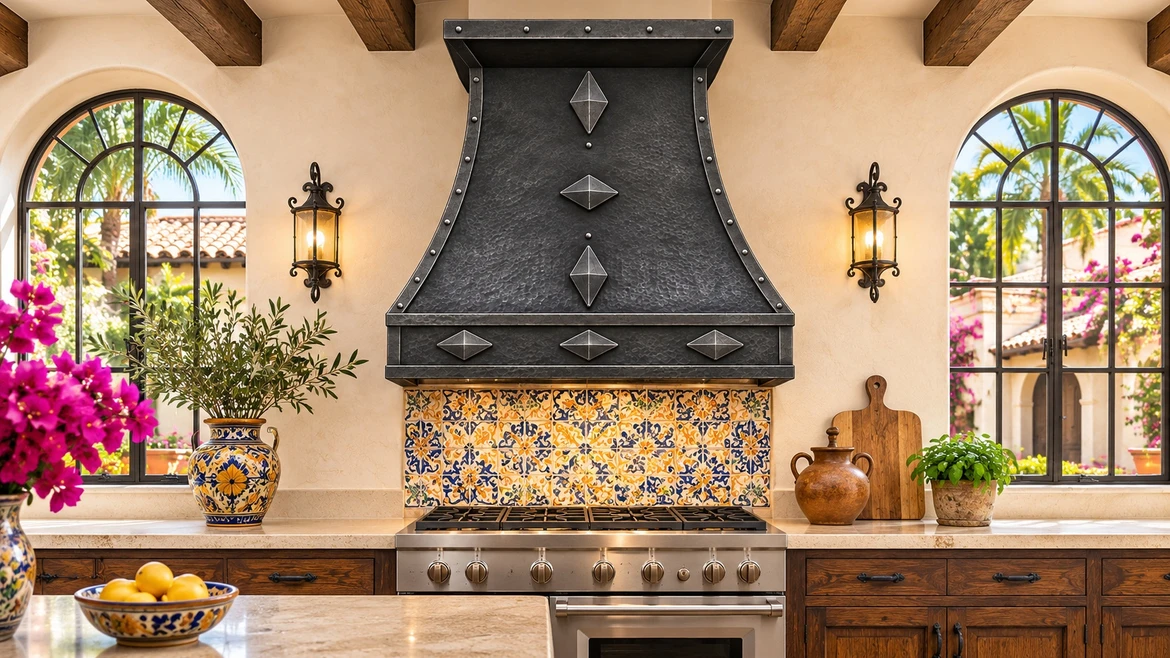
Hand-Hammered Zinc Range Hood with Diamond Accents Guide explores a sculptural metal hood with a flared bell canopy, raised geometric ornaments, riveted borders, and a framed lower apron. Available in widths from 28 to 78 inches, heights from 24 to 72 inches, and a standard 24-inch depth, this handcrafted zinc design can be configured for wall or island installation. Its medium-dark finish creates a restrained background for the faceted diamonds, while the curved silhouette brings movement to the cooking wall. The six images below explain its appearance, hammered finish options, side projection, ventilation opening, and reference proportions. Explore the diamond accent zinc hood to review the product. Plan the dimensions, finish, and ventilation preparation for your kitchen centerpiece. Discover ways to incorporate textured zinc surfaces and geometric diamond ornamentation into contemporary, transitional, modern rustic, and industrial interiors in our hammered zinc range hood with diamond accents kitchen inspiration.
Blog Summary
- Material: Handcrafted zinc
- Profile: Flared bell canopy
- Accents: Raised geometric diamonds
- Details: Riveted perimeter borders
- Mounting: Wall or island
Front View Details
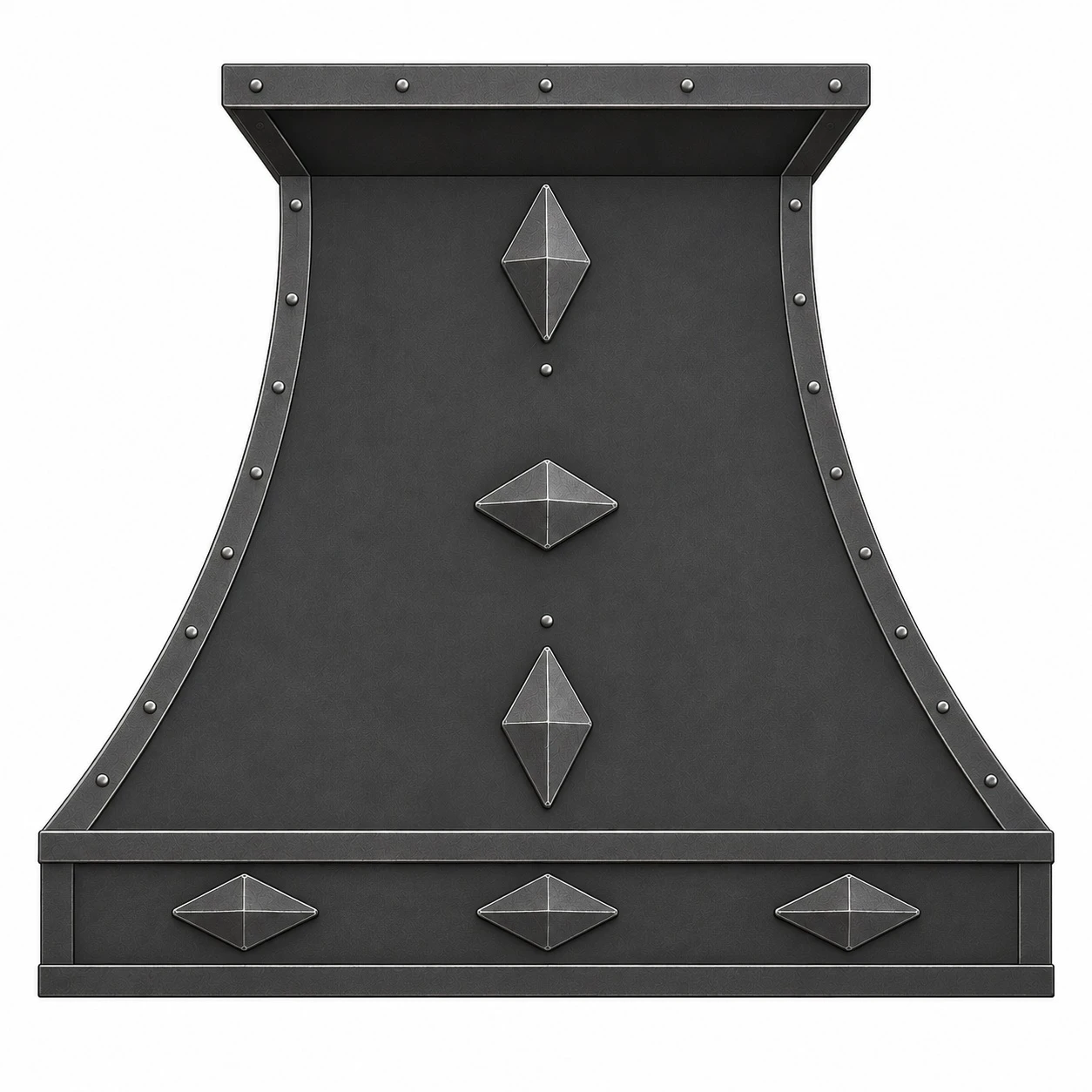
The front photograph shows three raised ornaments arranged along the canopy’s centerline: two elongated vertical diamonds surrounding a smaller horizontal diamond. Three additional horizontal diamonds decorate the apron. Their faceted surfaces catch light differently from the surrounding zinc, making the ornament visible without introducing another metal color. Riveted borders follow the canopy edges and connect the projecting crown to the base. For context on how silhouette affects a cooking wall, explore the range hood shapes guide.
Hammered Finish Options
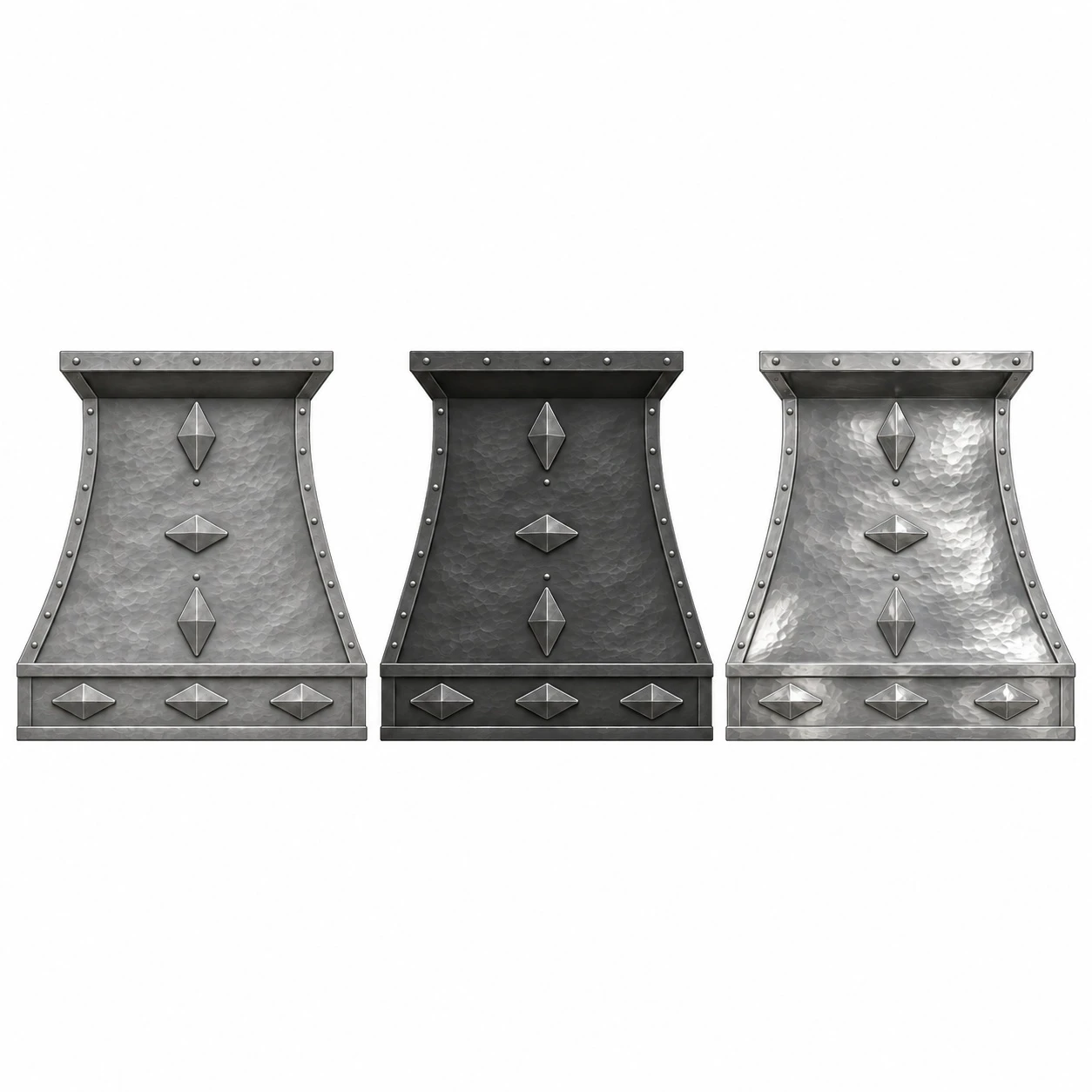
The comparison image presents natural, dark, and polished zinc with hammered texture. Natural zinc offers a lighter gray appearance, dark zinc gives the silhouette greater visual weight, and polished zinc produces brighter reflections. Hammer marks remain most noticeable where light crosses the broad canopy. The individual product views show a more subdued surface under different lighting, so confirm the intended texture and tone before ordering. The metal texture guide explains how surface treatment changes a hood’s character.
Angled View And Depth
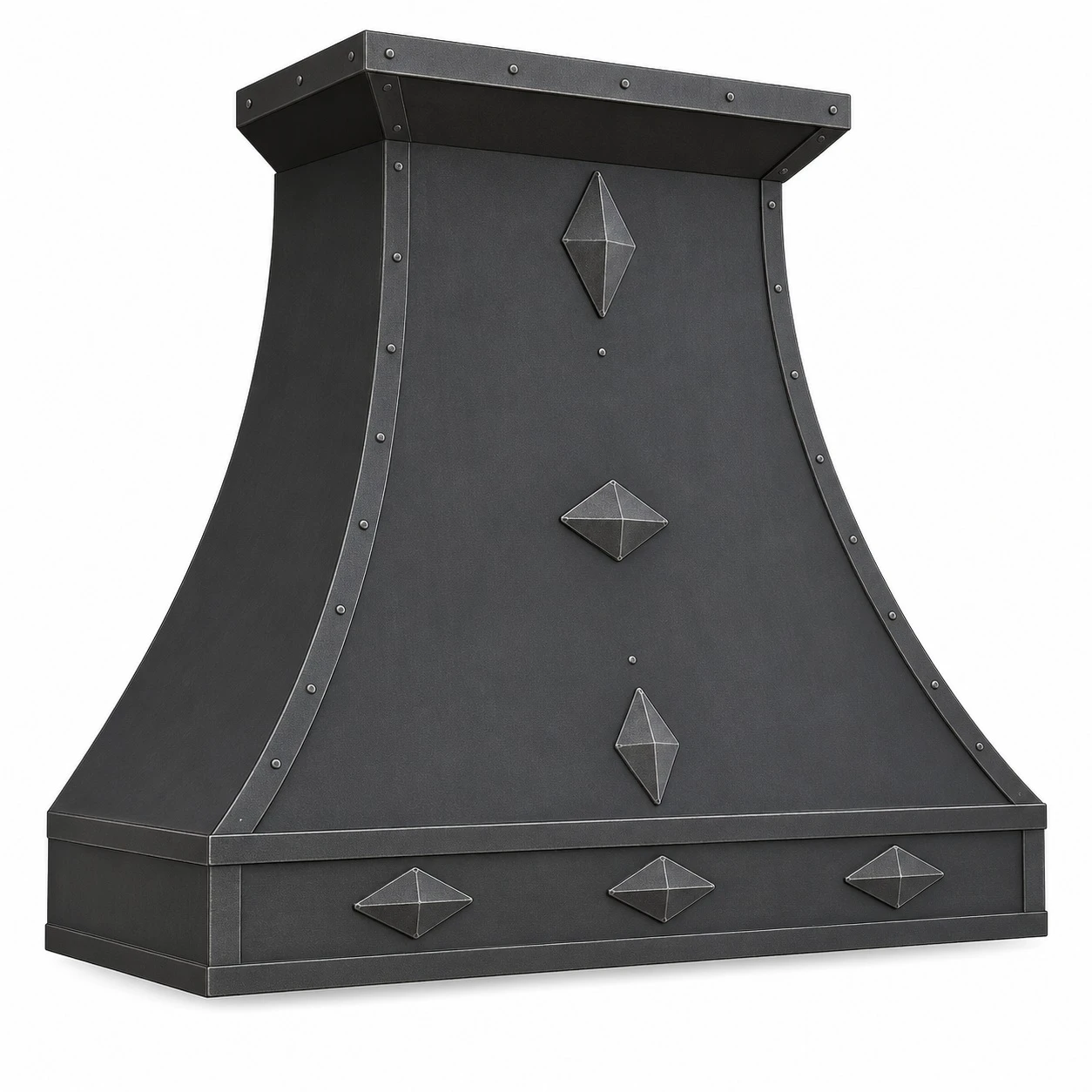
The angled photograph reveals the projection of the diamonds and the depth of the apron. It also shows how the crown extends beyond the narrow upper body, creating a deliberate architectural cap. The plain side panel balances the decorated front, allowing the curved form to remain prominent from an adjacent room. Consider these views when planning an open kitchen where the hood is visible from several directions. Compare mounting arrangements in the wall and island guide.
Side Profile Planning
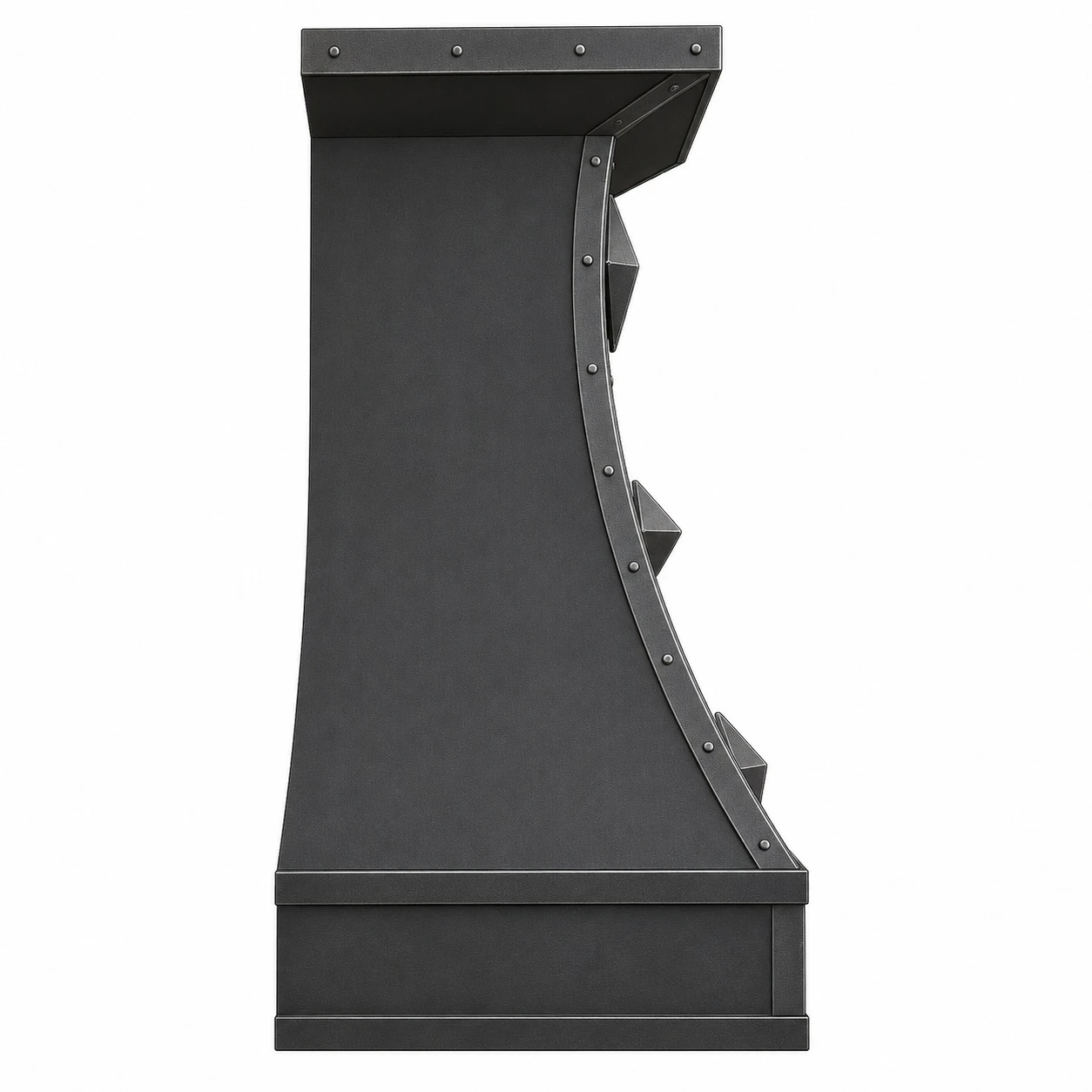
The side image clarifies the straight rear edge, outward-curving front, and projecting geometric ornaments. Include the crown and decorative projections when checking relationships with nearby cabinetry, shelves, or trim. The photographed side remains free of diamond ornaments, concentrating the decoration on the front. An island version requires its exposed surfaces and support arrangement to be confirmed separately. Review the metal hood installation guide while coordinating the mounting location and ventilation route.
Underside And Insert Fit
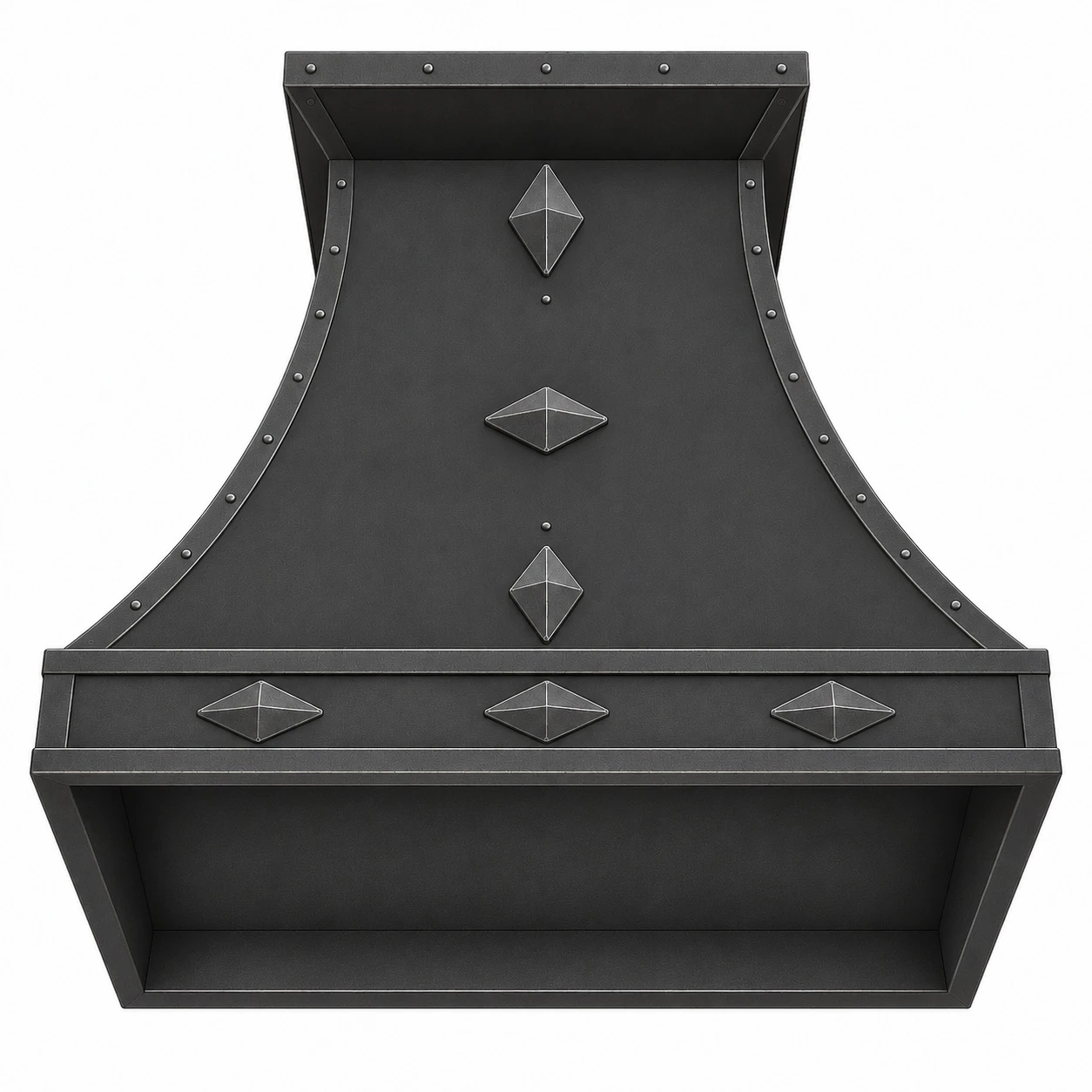
The underside photograph shows the recessed opening without an installed ventilation insert. The decorative zinc shell and the functional ventilation equipment should therefore be planned together. Confirm the insert’s exterior dimensions, mounting method, duct connection, filter access, lighting, and controls before fabrication. A hood’s overall width does not establish its usable interior opening, especially when the apron and internal supports occupy space. The custom hood insert guide helps organize the specifications needed for this review.
Technical Drawing Proportions
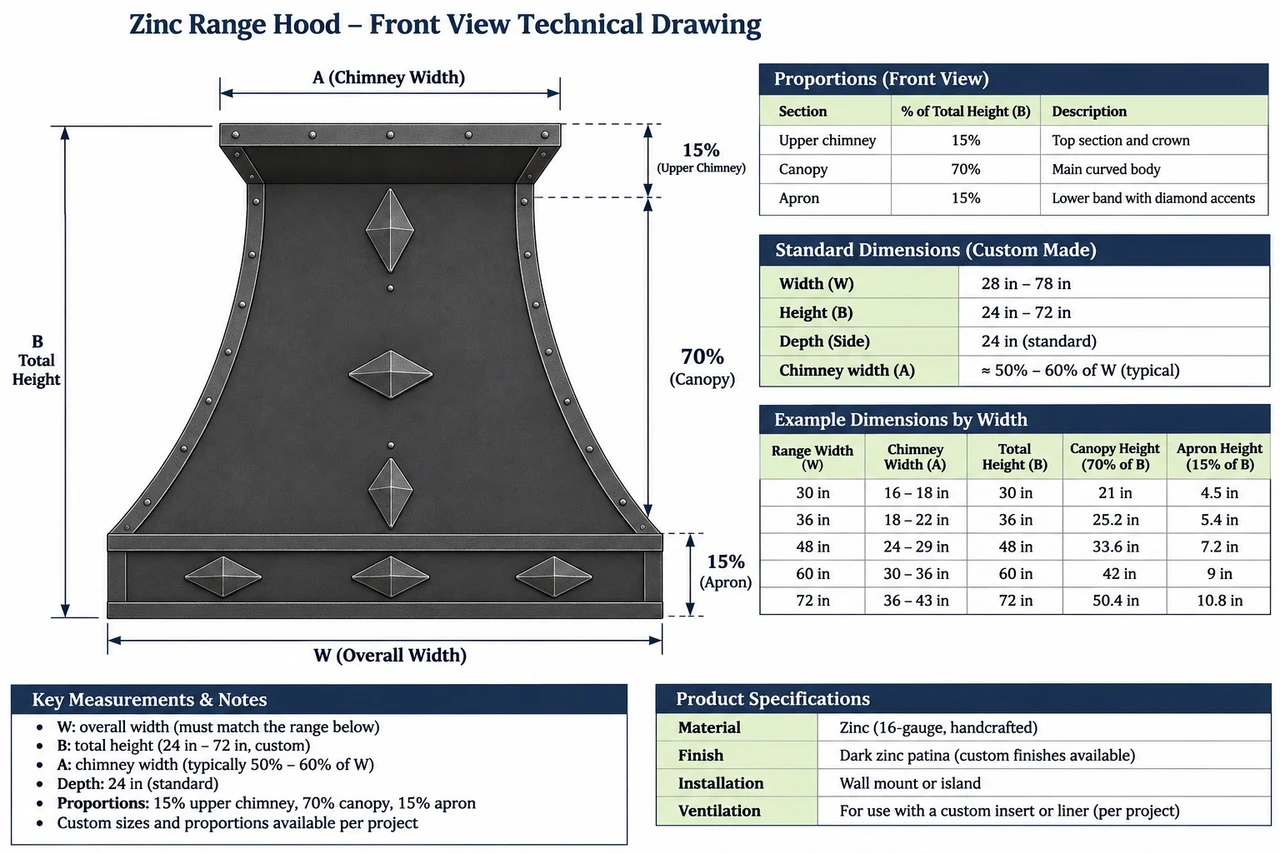
The drawing assigns approximately 15 percent of total height to the upper section, 70 percent to the canopy, and 15 percent to the apron. It identifies a typical upper width of about 50–60 percent of the overall base width. These reference relationships help preserve the tall bell profile as dimensions change. Final measurements and ornament placement should follow the approved fabrication drawing. For ceiling coordination, consult the guide to high ceiling kitchens.
Buyer Planning Table
Start with the exact cooking appliance dimensions, cabinet opening, finished ceiling height, and selected insert. Establish the required installation clearance from the applicable equipment instructions, then determine the available hood height. Review the diamond arrangement alongside the dimensions so the ornaments retain comfortable spacing. The range hood buying guide provides a useful framework for assembling project information.
| Planning | What to confirm |
|---|---|
| Width | 28–78 inches; coordinate with the range and cabinet opening |
| Height | 24–72 inches; account for ceiling conditions and required clearance |
| Depth | 24-inch standard; verify cooking coverage and insert fit |
| Decoration | Diamond placement, projection, and apron proportions |
| Mounting | Wall or island construction, support, and exposed surfaces |
| Ventilation | Insert model, duct connection, electrical access, and maintenance clearance |
Contemporary And Transitional Kitchens
Simple cabinetry and restrained stone surfaces give the geometric ornaments a quiet background. Contemporary kitchens can pair the hood with flat-front cabinets and a slab backsplash, while transitional rooms can use Shaker doors, quartzite, and warm wood. Repeat the zinc tone through a few nearby details rather than adding competing decorative metals everywhere. The modern range hood guide offers broader ideas for balancing an expressive hood with a clean kitchen composition.
Rustic And Industrial Pairings
In modern rustic kitchens, oak, plaster, and textured stone soften the darker zinc finish. Industrial rooms can connect the riveted borders with steel shelving, concrete, brick, and black hardware. The raised diamonds provide a decorative counterpoint to these practical materials. Keep surrounding patterns controlled so the ornament remains readable from across the room. Compare alternative silhouettes and surface treatments in the zinc range hood collection.
Care And Cleaning
Use a soft cloth and finish-approved gentle cleaner, then dry the surface promptly. Wipe around the diamond edges, rivets, and apron borders where cooking residue can collect. Avoid abrasive pads and aggressive polishing products that could alter the patina or protective coating. Small variations in hammering and tone contribute to the handmade appearance. Consult the zinc hood care guide alongside the instructions supplied for your selected finish.
Common Questions
What makes this zinc range hood unique?
Its flared canopy combines raised diamond ornaments, riveted perimeter borders, a projecting crown, and a framed geometric apron.
How many diamonds appear on the front?
The supplied front image shows three ornaments on the canopy and three horizontal diamonds across the apron.
Are the diamonds raised?
Yes. Their faceted, projecting construction is visible in the angled and side photographs.
Which finishes appear in the comparison image?
The image presents hammered natural, hammered dark, and hammered polished zinc.
Why does the texture vary between images?
Lighting and finish presentation affect how clearly hammering appears. Confirm the intended surface treatment before ordering.
What dimensions are illustrated?
The drawing lists widths of 28–78 inches, heights of 24–72 inches, and a standard 24-inch depth.
Can this hood be configured for an island?
Yes. Confirm finished exposed surfaces, ornament placement, ceiling support, and duct routing before fabrication.
Does the underside image show an insert?
No. It shows the recessed cavity without installed ventilation equipment, filters, lighting, or controls.
What proportions does the drawing suggest?
The reference breakdown is 15 percent upper section, 70 percent canopy, and 15 percent apron.
What information is needed before ordering?
Provide appliance dimensions, cabinet spacing, ceiling height, mounting preference, finish choice, desired hood dimensions, and complete insert specifications.
Plan Your Custom Hood
Use the front photograph to assess ornament placement, the angled and side views to judge projection, and the underside image to prepare insert questions. Confirm the final dimensions against the technical drawing before fabrication. Explore the diamond accent zinc hood and plan a configuration suited to your kitchen.
All product images © Rustica House, unauthorized use is prohibited.