 US Dollar
 Euro
 Australian Dollar
 Canadian Dollar
 Polish Zloty
 British Pound

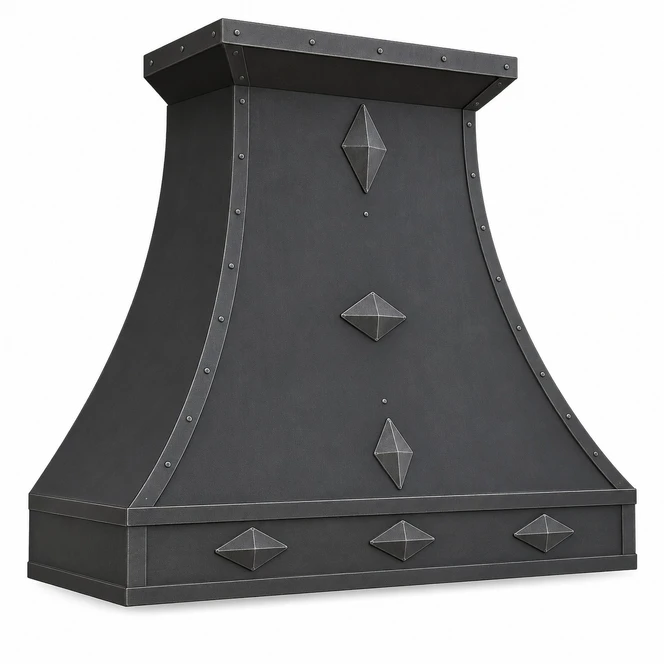
The hand-hammered zinc range hood with diamond accents combines a sculptural bell canopy, medium-dark zinc finish, raised geometric ornaments, and a riveted lower apron. Available from 28 to 78 inches wide, 24 to 72 inches high, and with a standard 24-inch depth, this handcrafted hood can be customized for wall or island installation. Its narrow upper chimney expands through graceful curves toward a broad lower apron, while elongated zinc diamonds emphasize the vertical proportions. Smaller geometric ornaments decorate the lower band, and dense hand hammering creates subtle highlights across the curved metal surfaces. Handmade in Mexico, the hood complements revival, contemporary, transitional, modern rustic, and industrial kitchens. For construction details, customization options, and ventilation planning, explore the hammered zinc hood guide. Discover kitchen design ideas featuring this distinctive handcrafted zinc range hood.
Blog Summary
- Material: Hand-hammered zinc
- Finish: Medium-dark zinc patina
- Canopy: Sculptural bell silhouette
- Chimney: Narrow rectangular profile
- Ornaments: Raised geometric diamonds
- Apron: Riveted decorative lower band
- Texture: Dense handcrafted hammering
- Width: 28–78 inches or custom
- Height: 24–72 inches or custom
- Depth: Standard 24 inches
- Mounting: Wall or island
- Origin: Handmade in Mexico
Decorative Zinc Kitchen Architecture
A hand-hammered zinc range hood with diamond accents introduces architectural character through the combination of sculptural curves, geometric ornamentation, and traditional metalworking. Unlike minimalist zinc hoods with uninterrupted surfaces, this design incorporates elongated raised diamonds that emphasize the vertical proportions of the bell canopy. Smaller geometric accents and rivets decorate the lower apron, creating a defined horizontal foundation above the cooking range. The medium-dark zinc finish provides a neutral metallic background, while dense hammering produces subtle variations in texture and reflected light. Because the decorative elements share the same zinc material as the main canopy, the design maintains a cohesive appearance without relying on contrasting copper or brass trim. This combination of traditional craftsmanship and geometric detailing allows the hood to complement historically inspired architecture as well as contemporary residential interiors.
Revival Style Kitchen
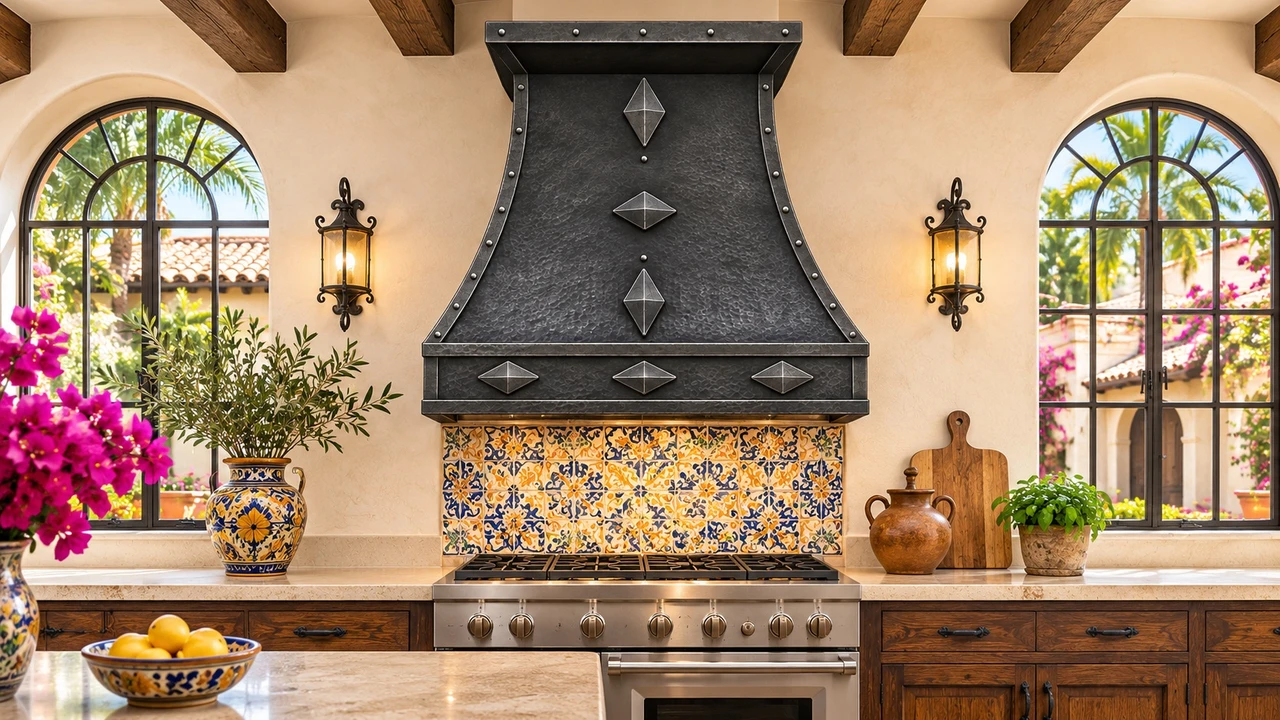
Revival style kitchens draw inspiration from historical architectural traditions through decorative cabinetry, natural materials, ornamental metalwork, and substantial architectural details. The hand-hammered zinc range hood with diamond accents complements this approach through its sculptural bell canopy and raised geometric decorations. Its medium-dark zinc finish provides an understated metallic contrast against warm plaster walls, natural wood cabinetry, and decorative stone surfaces. Elongated diamond ornaments introduce a historical decorative quality without requiring elaborate floral patterns or contrasting metal embellishments. The riveted lower apron reinforces the handcrafted appearance, making the hood particularly suitable for kitchens influenced by European revival, Mediterranean revival, and traditional architectural design. Arched openings, decorative moldings, and handcrafted ceramic tiles can establish a cohesive environment that emphasizes the hood's distinctive metalworking details.
Historical Materials and Finishes
Natural limestone, aged oak, decorative ceramic tiles, textured plaster, and traditional cabinet moldings reinforce the historical character of revival kitchens. Muted cream, warm beige, olive green, and dark wood finishes provide a complementary background for the medium-dark zinc surface. Wrought iron lighting and understated decorative hardware can establish continuity with the raised diamond ornaments while allowing the sculptural canopy to remain the principal architectural feature.
Contemporary Kitchen Style
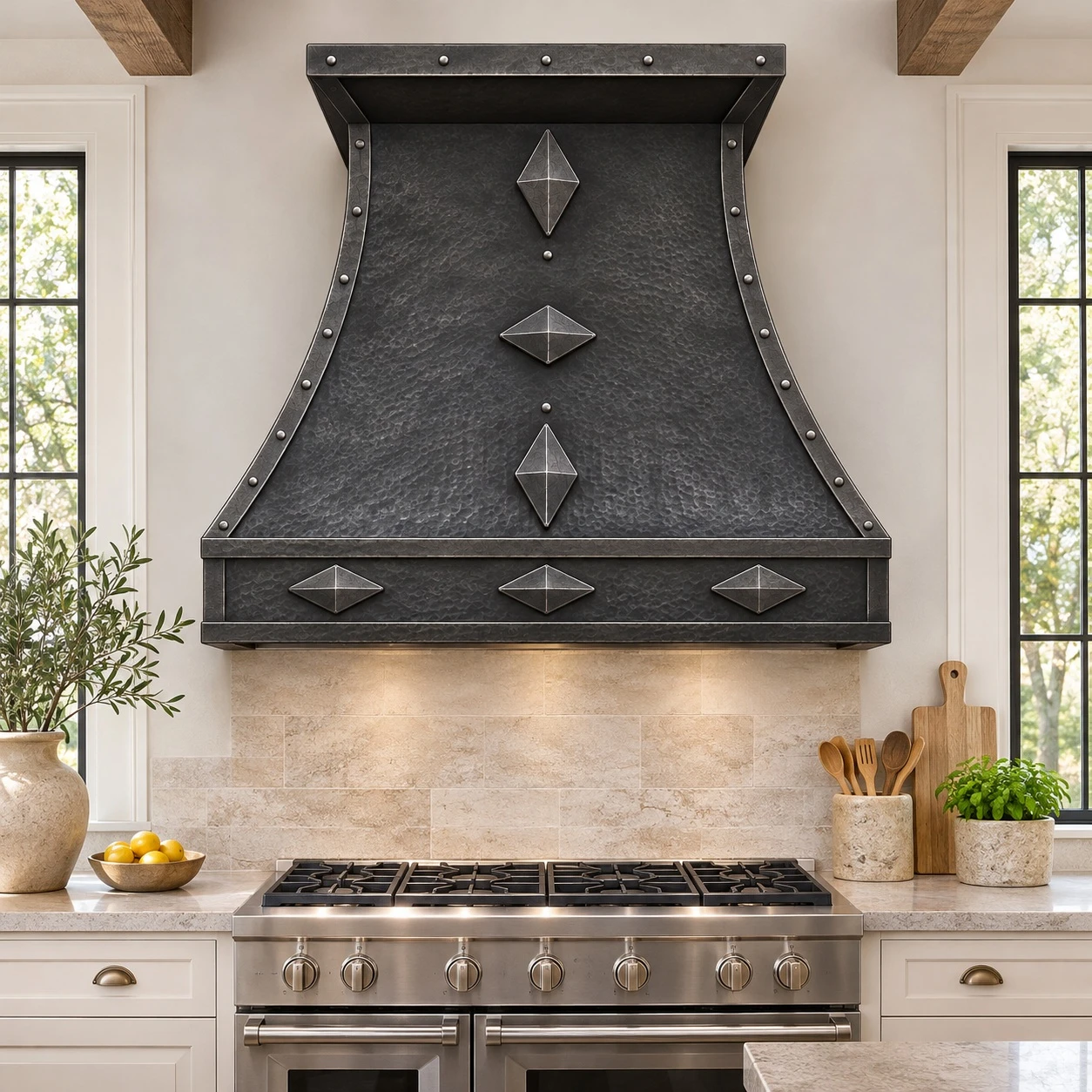
Contemporary kitchens emphasize clean architectural lines, streamlined cabinetry, restrained materials, and carefully selected focal points. The hand-hammered zinc range hood introduces a sculptural alternative to conventional rectangular ventilation enclosures through its curved bell canopy and raised diamond accents. Its medium-dark metallic surface provides contrast against flat-panel cabinets, continuous stone backsplashes, and modern appliances. Although the hood incorporates traditional decorative metalwork, the geometric simplicity of its elongated diamonds allows it to complement contemporary interiors without appearing excessively ornate. The hammered texture introduces handcrafted depth against otherwise smooth architectural surfaces, while the symmetrical arrangement of the ornaments maintains visual order. This approach works particularly well in spacious contemporary kitchens where a distinctive range hood can establish character without requiring extensive decoration throughout the room.
Streamlined Cabinets and Stone
Flat-panel cabinetry in warm white, charcoal, taupe, or natural walnut provides a restrained background for the decorative zinc hood. Large-format quartzite or marble backsplashes create uninterrupted surfaces that emphasize the curved canopy and geometric ornaments. Integrated appliances, discreet cabinet hardware, and simple lighting fixtures maintain the contemporary appearance while allowing the handcrafted zinc texture to introduce visual depth.
Transitional Kitchen Style
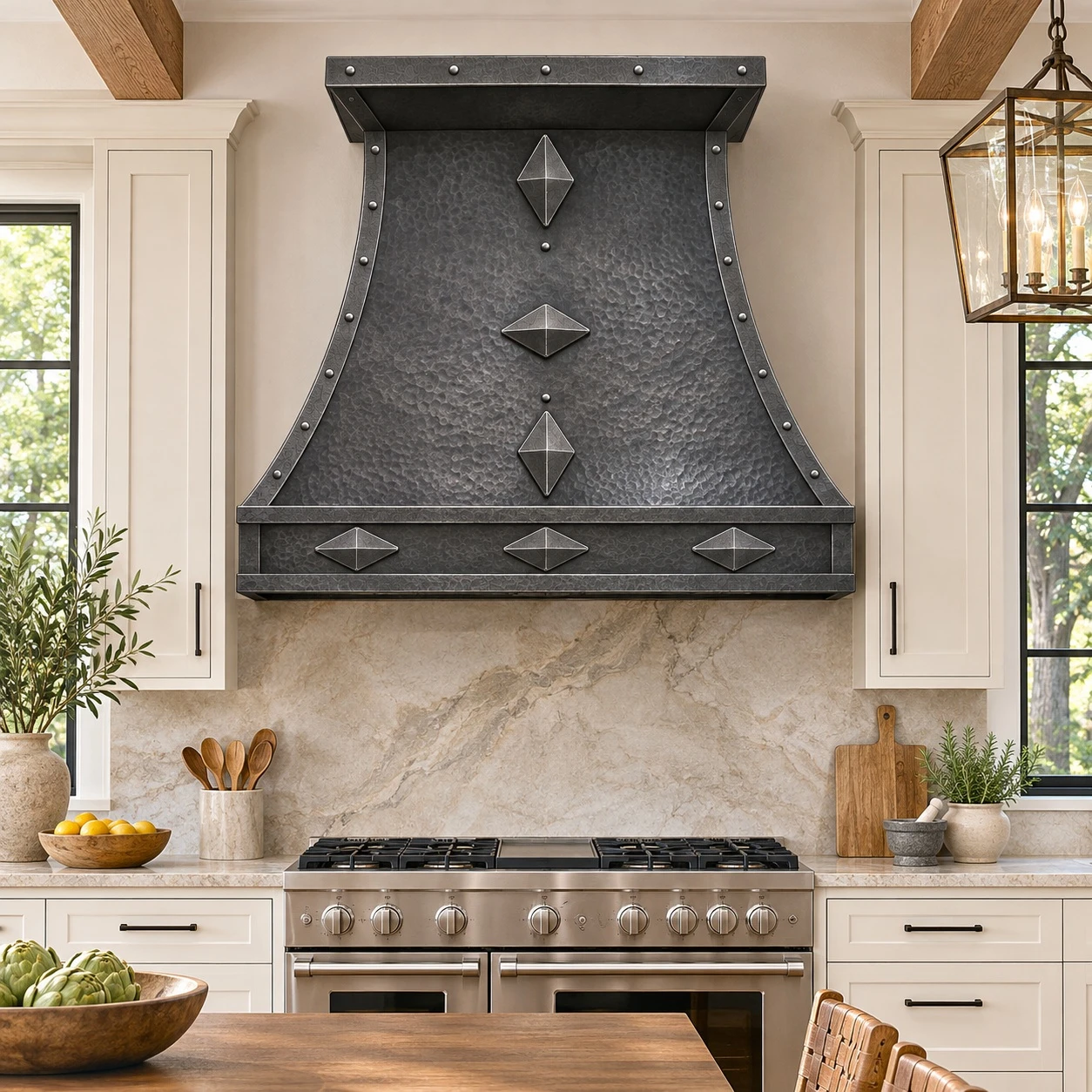
Transitional kitchens combine traditional architectural proportions with contemporary materials, creating a balanced setting for the hand-hammered zinc range hood with diamond accents. The sculptural bell canopy introduces softness against rectangular cabinetry, while the elongated geometric ornaments provide decorative character that remains compatible with modern interiors. Medium-dark zinc coordinates naturally with stainless steel appliances, neutral stone countertops, and warm wood finishes. Shaker cabinetry, understated ceiling moldings, and simple ceramic backsplashes provide a familiar residential background without competing with the hood's raised diamond details. The riveted apron establishes a strong visual foundation above the cooking range, making the design particularly suitable for American suburban kitchens where traditional craftsmanship and contemporary functionality are equally important. Its neutral metallic finish also provides flexibility when coordinating different cabinet colors and hardware finishes.
Traditional and Modern Balance
Warm white Shaker cabinets, natural oak flooring, quartzite countertops, and understated pendant lighting establish a balanced transitional environment. Brushed nickel, dark bronze, or black cabinet hardware can coordinate with the medium-dark zinc finish without requiring exact metallic matching. Restrained backsplash patterns allow the elongated diamond ornaments and hammered surface to remain prominent while preserving the kitchen's comfortable residential character.
Modern Rustic Kitchen
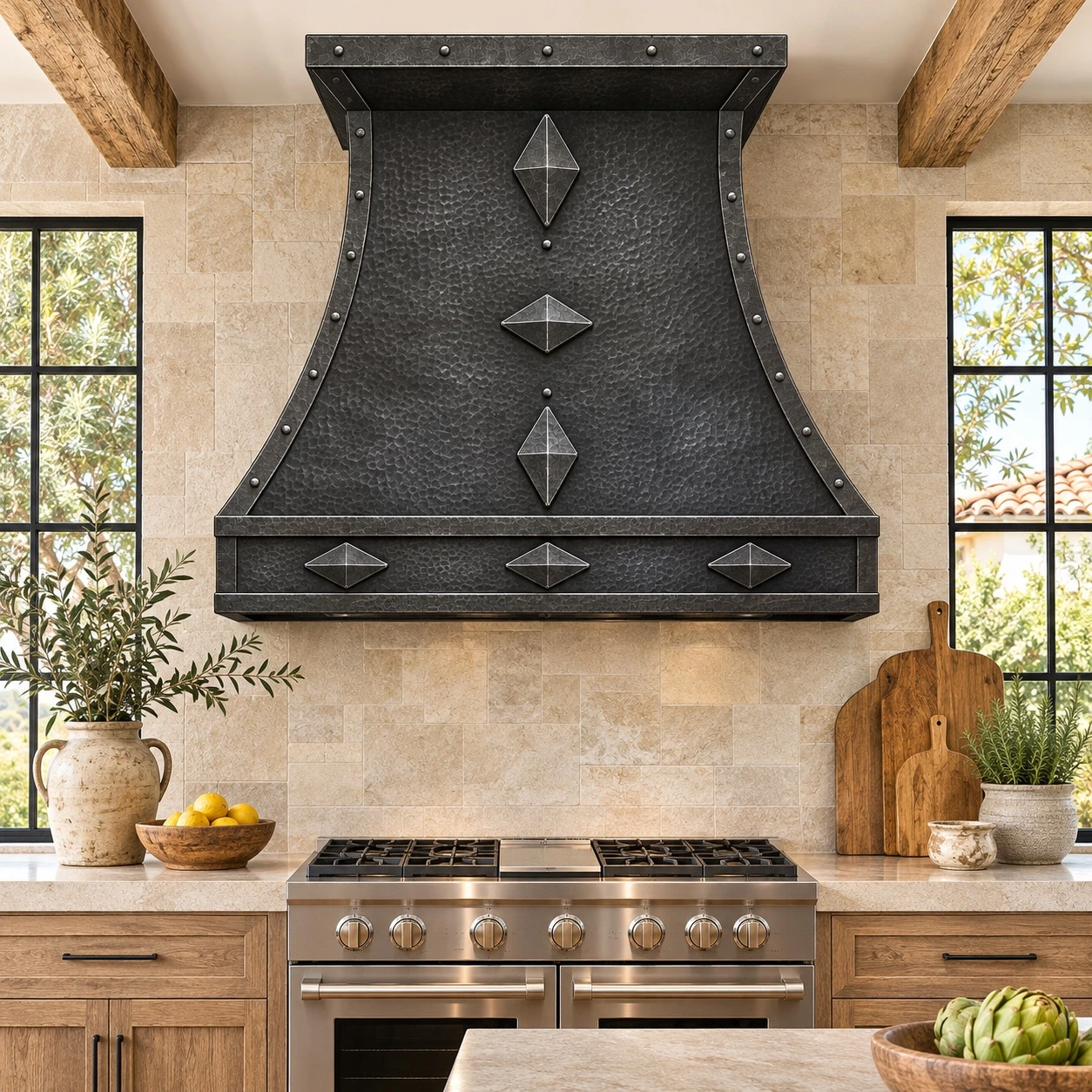
Modern rustic kitchens combine natural textures, handcrafted materials, and contemporary architectural simplicity. The hand-hammered zinc range hood complements this approach through its textured metal surface, rounded bell canopy, and raised diamond ornaments. Its medium-dark finish introduces a substantial architectural element that contrasts with natural wood cabinetry, limestone countertops, exposed beams, and textured plaster walls. The handcrafted hammering creates a relationship with the irregular surfaces of reclaimed wood and natural stone, while the geometric diamond decorations introduce structure and visual definition. Unlike heavily ornamented traditional metal hoods, this design uses a controlled arrangement of decorative elements that remains compatible with modern rustic interiors. Warm neutral colors and understated architectural finishes can soften the dark zinc appearance while emphasizing the craftsmanship of the canopy and riveted lower apron.
Natural Textures and Materials
Reclaimed oak, walnut, limestone, travertine, and handmade ceramic tiles complement the textured zinc canopy. Natural wood cabinetry introduces warmth, while stone countertops provide subtle variations that coordinate with the hand-hammered metal surface. Exposed ceiling beams, warm plaster walls, and simple iron lighting can reinforce the rustic character without diminishing the geometric sophistication of the raised diamond ornaments.
Industrial Kitchen Style
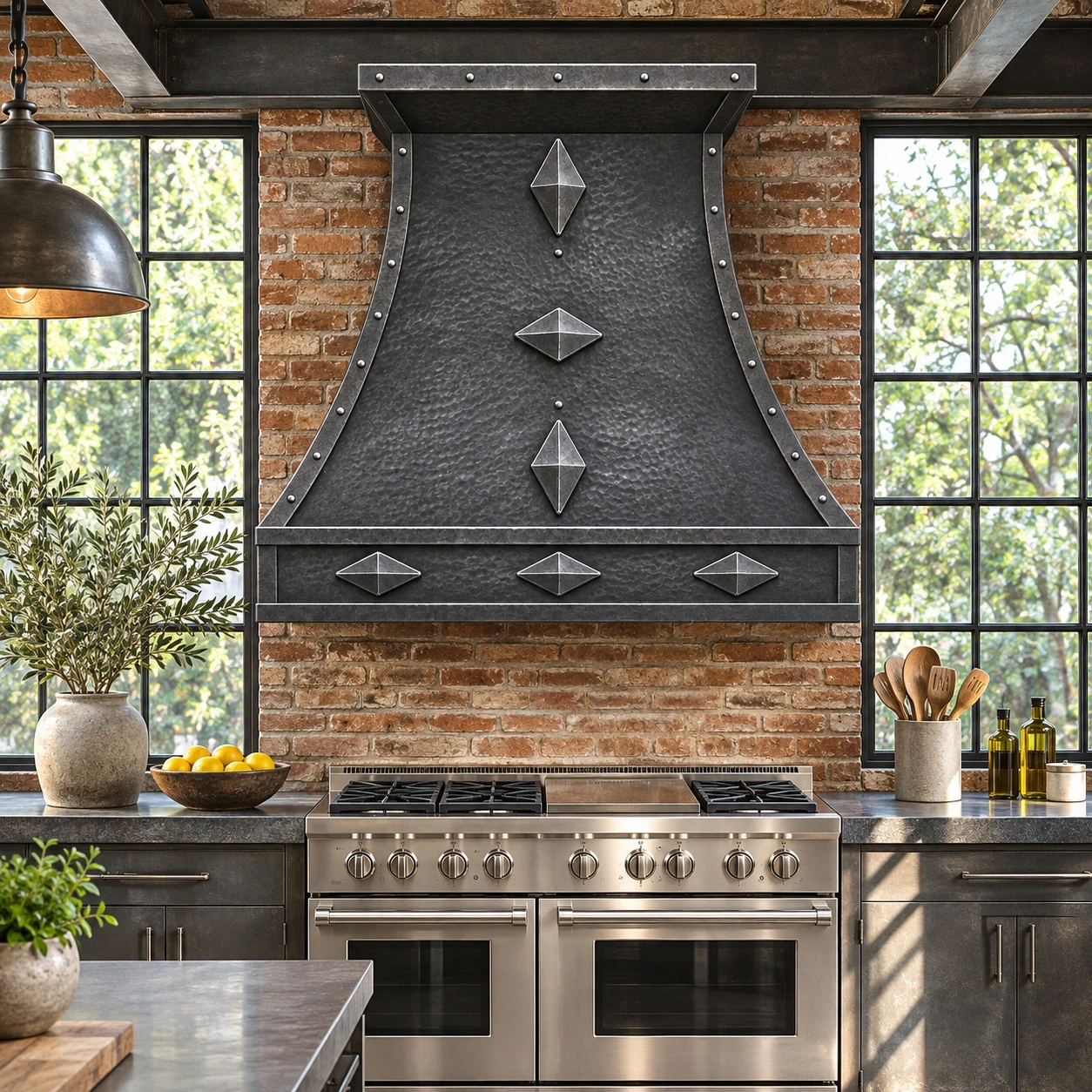
Industrial kitchens emphasize exposed construction, practical materials, substantial metal elements, and architectural character. The hand-hammered zinc range hood with diamond accents introduces a decorative interpretation of industrial metalworking through its riveted apron, medium-dark finish, and raised geometric ornaments. The hammered zinc surface coordinates with exposed steel, concrete countertops, brick walls, and black metal windows, while the sculptural bell canopy provides a softer alternative to conventional rectangular industrial hoods. Its elongated diamond accents resemble decorative architectural metalwork, introducing visual interest without relying on contrasting metals. The hood can become a substantial focal point in loft kitchens with high ceilings, open layouts, and exposed structural elements. Reclaimed wood cabinetry and warm lighting help balance the cool zinc surface, creating an industrial interior that remains inviting and suitable for residential use.
Industrial Materials and Metalwork
Exposed brick, concrete, black steel, and reclaimed wood provide a complementary architectural background for the hammered zinc range hood. Black metal pendant lights and understated cabinet hardware reinforce the industrial palette, while natural wood introduces warmth. Directional lighting can emphasize the raised diamond ornaments and create subtle shadows across the hammered canopy, highlighting the handcrafted metalwork against surrounding industrial surfaces.
Kitchen Style Comparison
The combination of a sculptural bell canopy, geometric diamond ornaments, and hand-hammered zinc allows this range hood to complement several architectural approaches. Cabinetry, countertops, backsplash materials, and lighting determine whether the finished kitchen emphasizes historical craftsmanship, contemporary simplicity, transitional balance, natural rustic character, or industrial metalwork.
| Kitchen Style | Recommended Materials | Design Effect |
|---|---|---|
| Revival | Plaster, limestone, decorative tile, aged wood | Historical architectural character |
| Contemporary | Flat-panel cabinets, stone slabs, walnut | Sculptural geometric focal point |
| Transitional | Shaker cabinets, quartzite, natural oak | Traditional and modern balance |
| Modern rustic | Reclaimed wood, limestone, textured plaster | Natural warmth and artisan texture |
| Industrial | Brick, concrete, steel, reclaimed wood | Decorative industrial metalwork |
Choosing Kitchen Cabinet Colors
Cabinet colors influence the visual prominence of the medium-dark hammered zinc surface and its raised diamond ornaments. Light cabinetry creates contrast that emphasizes the sculptural bell silhouette, while darker cabinet finishes establish a more integrated architectural composition. Natural wood introduces warmth that balances the cool metallic appearance, particularly in revival and modern rustic kitchens. Muted painted finishes work well in transitional interiors, while charcoal and black cabinetry reinforce contemporary and industrial character. Compare cabinet samples with the selected zinc finish under natural and artificial lighting before finalizing the kitchen palette.
- Warm white: Bright architectural contrast
- Ivory: Traditional revival elegance
- Greige: Balanced transitional warmth
- Natural oak: Organic material contrast
- Walnut: Rich contemporary character
- Sage green: Refined rustic appearance
- Charcoal: Industrial metallic continuity
Backsplash and Countertop Ideas
The backsplash establishes the immediate visual background for the decorative zinc range hood, making its color, pattern, and texture particularly important. Because the canopy already incorporates raised diamond ornaments and dense hammering, surrounding surfaces should provide balance rather than excessive visual competition. Continuous stone slabs work particularly well in contemporary and transitional kitchens, while limestone and handmade ceramic tiles reinforce the handcrafted character of revival and modern rustic interiors. Exposed brick and concrete-look surfaces complement industrial kitchens, creating contrast between architectural materials and the sculptural zinc canopy.
Marble and Quartzite
Marble and quartzite introduce natural veining that complements the medium-dark zinc surface. White stone with subtle gray patterns creates a bright background that emphasizes the bell canopy and raised ornaments, while warmer beige stone introduces a softer contrast suitable for transitional and revival kitchens. Large-format slabs reduce visual interruptions and allow the geometric diamond accents to remain the principal decorative feature above the cooking range.
Limestone and Travertine
Limestone and travertine provide warm neutral colors and natural surface variations that coordinate with the hand-hammered zinc texture. Their understated appearance works particularly well in modern rustic and historically inspired kitchens, where natural materials establish an architectural connection with traditional craftsmanship. These stones can soften the medium-dark metallic finish while maintaining a balanced contrast between the hood and surrounding surfaces.
Handmade Ceramic Tiles
Handmade ceramic tiles complement the artisan character of the zinc range hood through their subtle variations in color, shape, and texture. Neutral glazed tiles provide a restrained background for the raised diamond accents, while carefully selected geometric patterns can reinforce the decorative character of revival interiors. Avoid overly complex patterns immediately behind the hood when the intention is to emphasize its sculptural canopy and ornamental metalwork.
Raised Diamond Zinc Ornaments
The raised diamond ornaments distinguish this hand-hammered zinc range hood from conventional bell-shaped metal ventilation enclosures. Elongated geometric accents emphasize the vertical proportions of the canopy, drawing attention from the broad lower apron toward the narrow chimney. Smaller diamond decorations along the lower band establish a complementary horizontal arrangement that balances the taller ornaments above. Because the decorative elements are made from zinc, they maintain visual continuity with the main canopy while creating depth through their raised profiles. Natural and artificial lighting produce subtle shadows around the ornaments, making their appearance change throughout the day. This monochromatic decorative approach provides architectural character without the stronger color contrast associated with copper or brass embellishments.
Sculptural Bell Canopy Design
The bell canopy creates a gradual architectural transition between the narrow rectangular chimney and the broad lower apron. Its controlled curves introduce softness that contrasts with rectangular cabinet doors, straight countertops, and geometric kitchen architecture. The raised diamond accents follow the visual direction of the canopy, emphasizing its height and expanding proportions. The riveted lower apron provides a defined horizontal foundation that visually connects the hood with the cooking range below. This combination of curved architecture and geometric ornamentation allows the design to complement both traditional interiors and contemporary kitchens where a sculptural focal point introduces character against simpler surrounding surfaces.
Hand-Hammered Zinc Texture
Hand hammering introduces subtle surface variations that distinguish handcrafted zinc from uniformly manufactured sheet metal. Small depressions across the canopy interact with surrounding light, producing highlights and shadows that emphasize the curved metal surface. The medium-dark finish enhances these variations without requiring contrasting decorative metals. In rustic and revival kitchens, the hammered texture complements natural stone, aged wood, and handmade ceramic materials. In contemporary and transitional interiors, it introduces handcrafted depth against smooth cabinetry and continuous stone backsplashes. The combination of dense hammering and raised geometric ornaments creates a distinctive appearance that remains visually cohesive across the entire enclosure.
Hammered Zinc Finish Options
Different hammered zinc finishes can influence the appearance of the range hood while preserving its sculptural silhouette and decorative diamond accents. Natural hammered zinc introduces a lighter silver-gray appearance that works well in bright contemporary and transitional kitchens. Dark hammered zinc emphasizes the geometric ornaments and provides stronger contrast against light cabinetry, making it suitable for industrial, revival, and modern rustic interiors. Polished hammered zinc produces more reflective highlights across the textured canopy, creating a brighter metallic focal point. Finish selection should consider surrounding cabinetry, natural stone, lighting conditions, and the desired prominence of the decorative details.
- Hammered natural: Soft silver-gray appearance
- Hammered dark: Rich geometric definition
- Hammered polished: Reflective artisan texture
Lighting Decorative Zinc Hoods
Lighting plays an important role in revealing the raised diamond ornaments and hand-hammered texture of the zinc canopy. Natural daylight produces changing highlights across the curved metal surface, while directional artificial lighting can emphasize the depth of the geometric decorations. Warm lighting complements natural wood, limestone, plaster, and traditional cabinetry, whereas neutral lighting reinforces the architectural character of contemporary and industrial kitchens. Carefully positioned recessed fixtures, understated pendant lights, and symmetrical wall lighting can enhance the hood's sculptural appearance without creating excessive glare. The lighting arrangement should provide practical illumination around the cooking area while preserving the visual prominence of the handcrafted metalwork.
Planning Custom Hood Dimensions
The hand-hammered zinc range hood with diamond accents is available in widths from 28 to 78 inches, heights from 24 to 72 inches, and a standard 24-inch depth. Custom proportions allow the design to be coordinated with the cooking appliance, surrounding cabinetry, ceiling height, and selected ventilation equipment. Wall-mounted configurations create a defined architectural focal point between cabinets, while island installations allow the sculptural canopy to be viewed from multiple directions. Before approving fabrication, confirm the cooking range dimensions, available mounting space, installation clearance, and insert requirements. The proportions of the elongated diamond ornaments, bell canopy, chimney, and decorative apron should remain balanced when adapting the design to different dimensions.
Ventilation and Installation Planning
The decorative zinc enclosure should be coordinated with compatible ventilation equipment before production to ensure that the insert opening, mounting support, duct connection, and maintenance access meet project requirements. Ventilation capacity and installation clearance depend on the cooking appliance, selected insert, duct routing, and applicable building requirements. Wall and island installations may require different structural support and ventilation arrangements. For detailed product construction and customization information, consult the hammered zinc range hood guide, and review the metal hood installation guide for general mounting and ventilation planning considerations.
Caring for Hammered Zinc
Preserving the appearance of hand-hammered zinc requires cleaning methods appropriate for the selected finish and protective treatment. Avoid abrasive cleaning materials and aggressive chemical products that could damage the zinc surface or alter its patina. Pay particular attention to the raised diamond ornaments, riveted apron, and transitions between decorative elements, where cooking residue may accumulate. Regular cleaning with manufacturer-approved products helps maintain the appearance of the textured canopy and decorative metalwork. For additional information about surface protection and routine cleaning, consult the zinc hood maintenance guide.
Explore Decorative Zinc Range Hoods
A hand-hammered zinc range hood with diamond accents combines sculptural architecture, geometric ornamentation, and traditional Mexican metalworking to create a distinctive kitchen focal point. Its medium-dark zinc finish, elongated raised diamonds, riveted apron, and curved bell canopy complement revival, contemporary, transitional, modern rustic, and industrial interiors. Custom dimensions and hammered finish selections allow the design to be coordinated with cabinetry, natural stone, lighting, and compatible ventilation equipment. Explore the hand-hammered zinc range hood to select the dimensions, finish, and customization options that complement your kitchen architecture.
All product images © Rustica House, unauthorized use is prohibited.