US Dollar
 Euro
Euro
 Australian Dollar
 Canadian Dollar
 Polish Zloty
 British Pound







Product Description
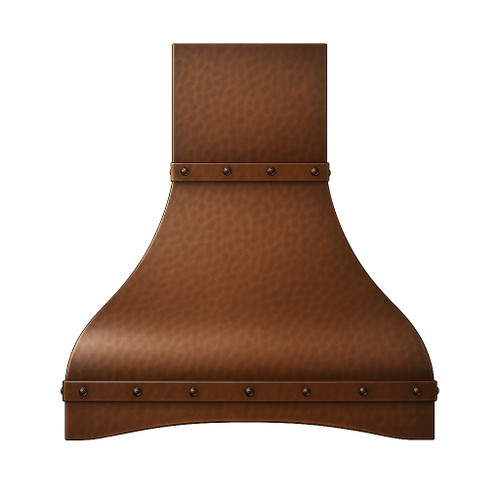
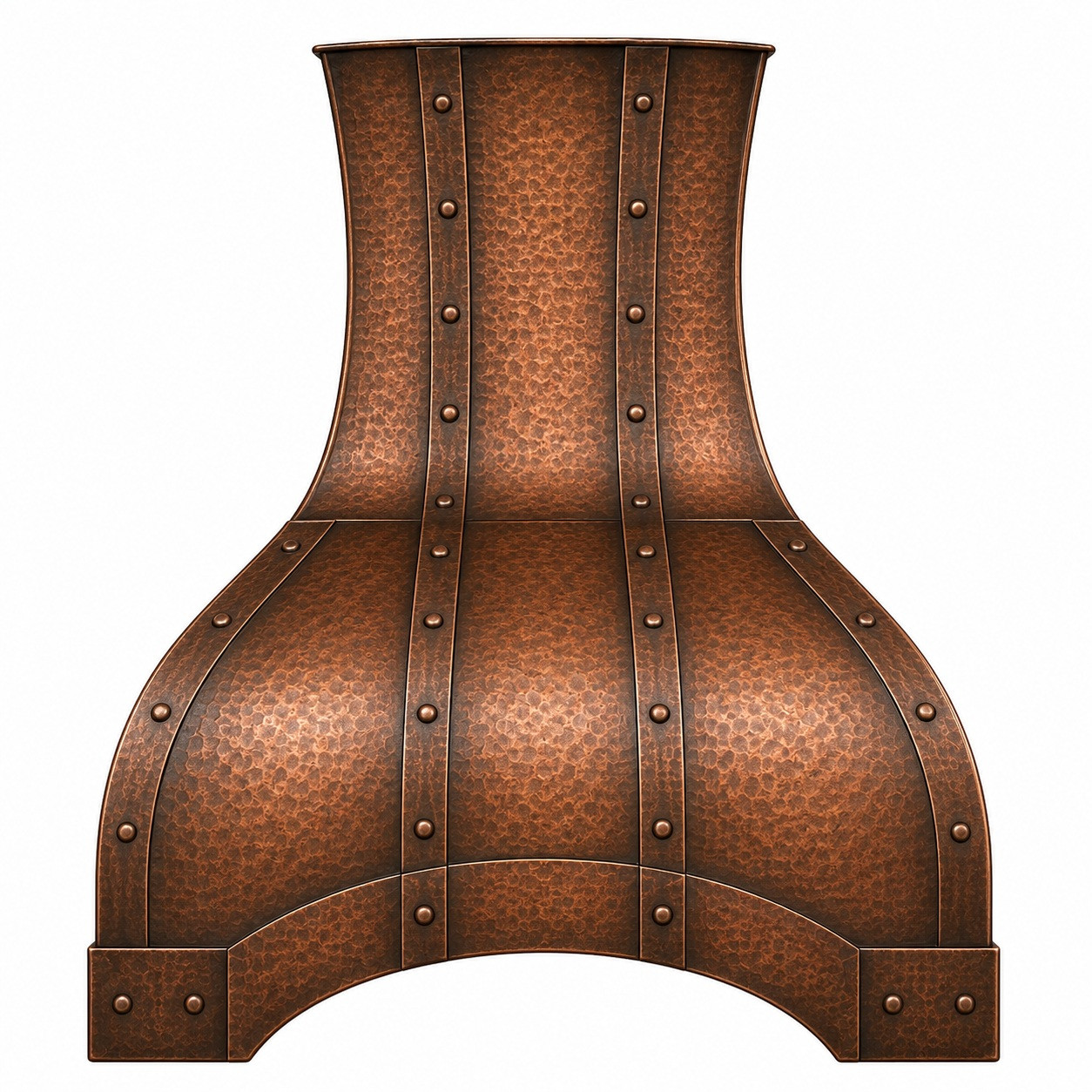
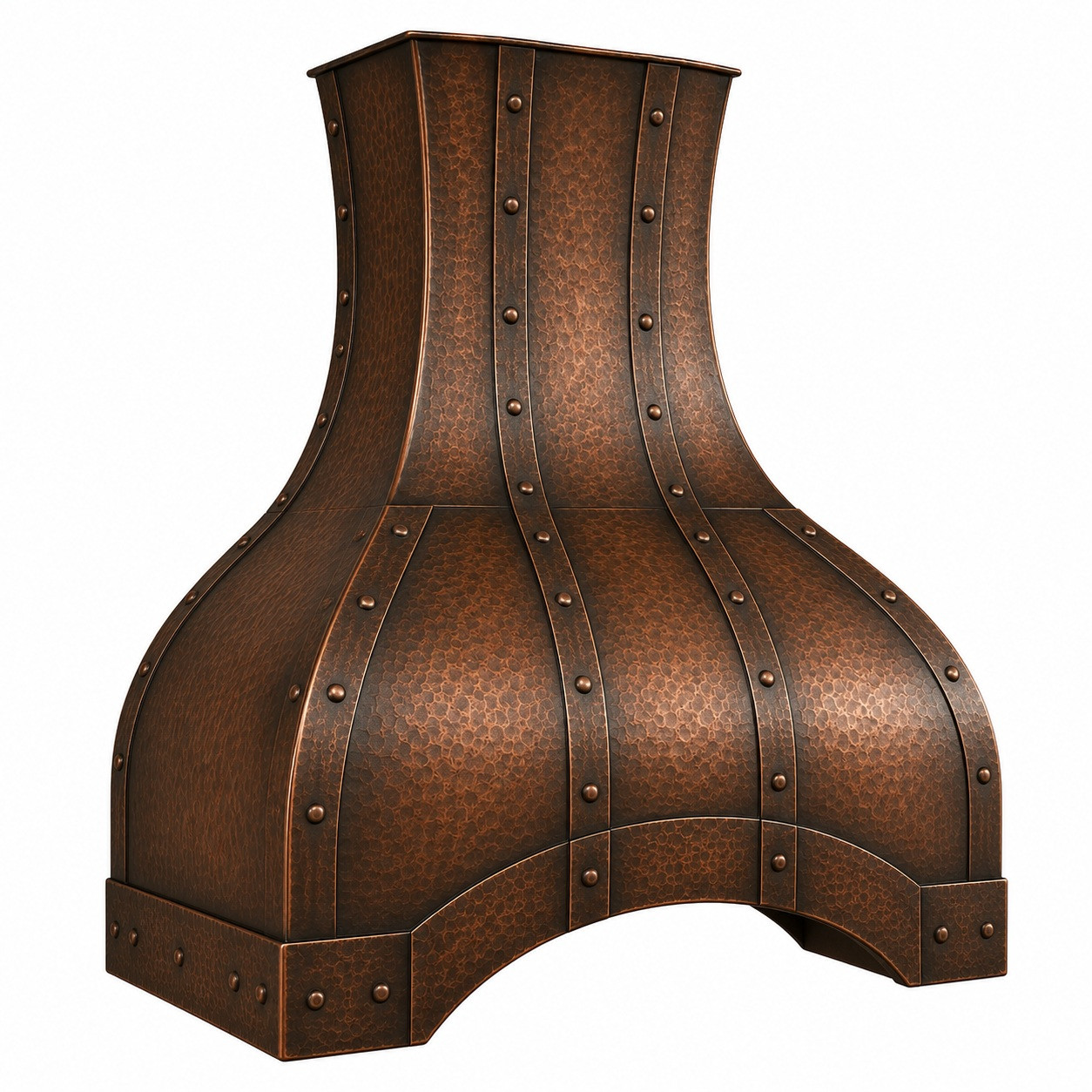
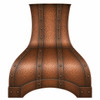
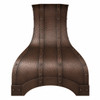
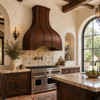
The riveted bell copper range hood with arched apron combines a cinched chimney, compound-curved canopy, continuous contour straps, and domed rivets. Handcrafted from 16-gauge copper, it is available in widths from 28 to 78 inches, heights from 24 to 72 inches, and a standard depth of 24 inches for wall or island installation. Its segmental apron arch ends in squared corner blocks, while the straps follow the concave waist and convex lower bell like structural ribs. Choose smooth or hammered copper with four patinas, green oxidized copper, or a hand-polished finish. The shell can be prepared around approved ventilation equipment. Each hood is made to order in Santa Clara del Cobre, Mexico. Evaluate the compound bell geometry, riveted construction, and arched apron profile in our riveted bell copper range hood design guide. Request a custom quote today.
Product Summary
This custom Hacienda copper range hood combines sculptural geometry with made-to-order sizing, mounting, finish, and ventilation choices. Its compound bell profile creates more movement than a straight tapered shell, while the raised arch gives the base an open hearth-like form.
- Profile: compound bell silhouette
- Chimney: tall cinched upper body
- Apron: shallow segmental arch
- Details: riveted contour straps
- Material: 16-gauge copper
- Width: 28 to 78 inches
- Height: 24 to 72 inches
- Depth: 24 inches standard
- Mount: wall or kitchen island
- Ventilation: up to 1,500 CFM
Why This Hood
This design suits buyers who want a substantial focal point rather than a simple metal enclosure. Its narrow waist, reversing shoulders, raised arch, and visible fasteners create architectural presence without scrollwork, medallions, floral embossing, or applied relief.
Cinched Bell Canopy
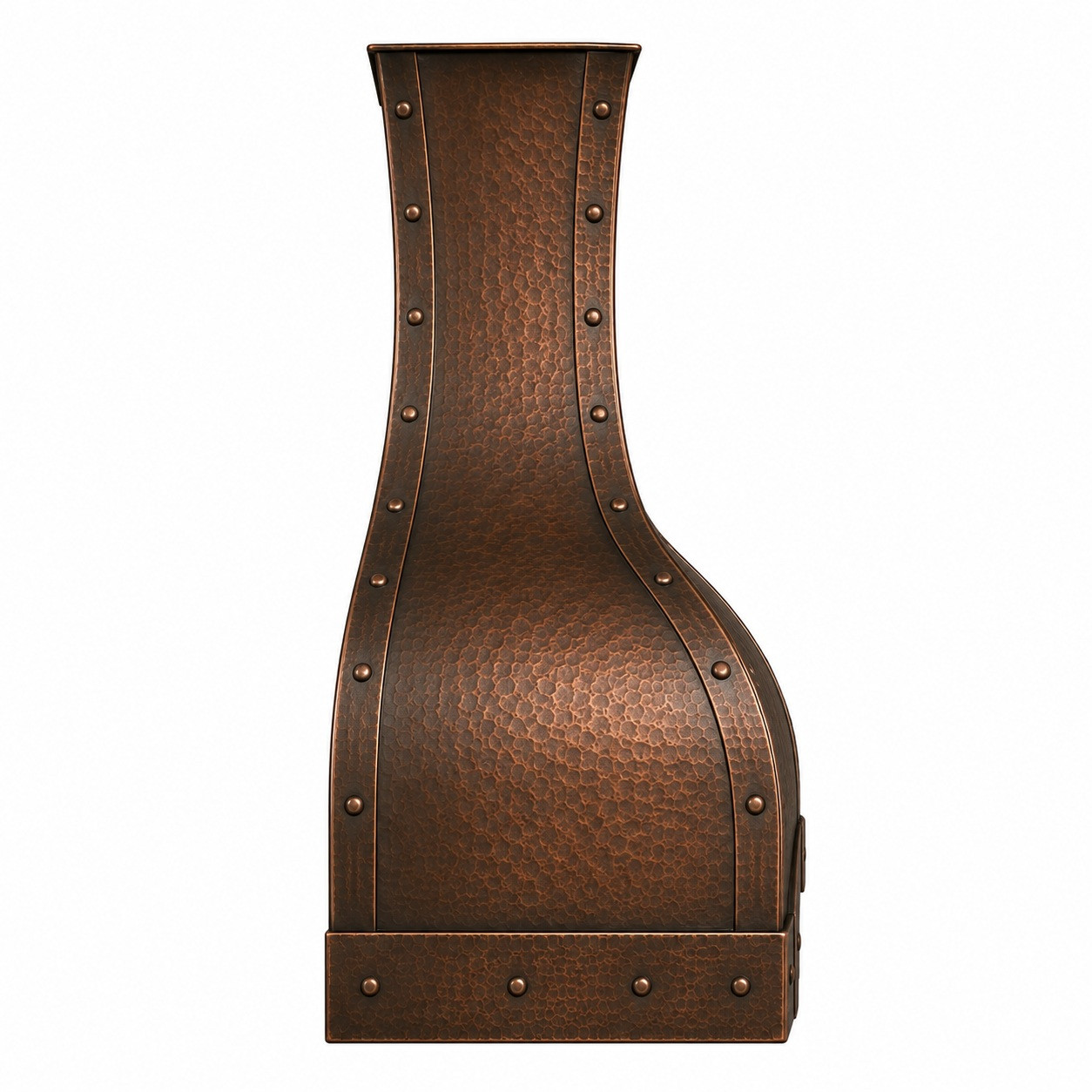
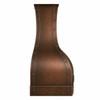
The upper chimney curves inward beneath a restrained crown, reaches a defined waist, and reverses outward through the shoulders. The shell then expands into a broad convex lower bell formed from a central face, canted front-side panels, and deeper returns. This vertical S-curve creates depth while preserving a balanced, symmetrical composition.
Arched Apron Design
The lower band rises through a wide segmental hearth arch instead of ending in a straight line. Its shallow central lift opens the cooking area without becoming pointed or overly decorative. Squared terminals anchor both ends like masonry springing blocks, giving the apron visible depth and structural presence.
Riveted Strap System
Two principal straps descend symmetrically across the front, leaving the central field broad and open. Additional bands define the outer edges and side joints. Each strap follows the chimney, concave waist, reversing shoulders, and convex bell. Domed rivets remain concentrated along the bands, seams, and apron terminals.
How It Differs
Many bell hoods use straight bands and a solid base, while many arched hoods rely mainly on a curved opening. This design integrates a cinched chimney, compound bell silhouette, segmental arch, squared terminals, contour straps, and measured rivet placement as one architectural system.
Custom Size Options
Widths include 28, 30, 36, 42, 48, 54, 60, 66, 72, and 78 inches. Heights range from 24 to 72 inches, with a standard depth of 24 inches. The waist, flare, apron rise, terminal size, crown, strap spacing, texture, finish contrast, and ventilation opening may be adjusted around the selected dimensions. Submit the range width, available height, backsplash thickness, cabinet clearances, projection, and mounting conditions before production.
Insert Planning
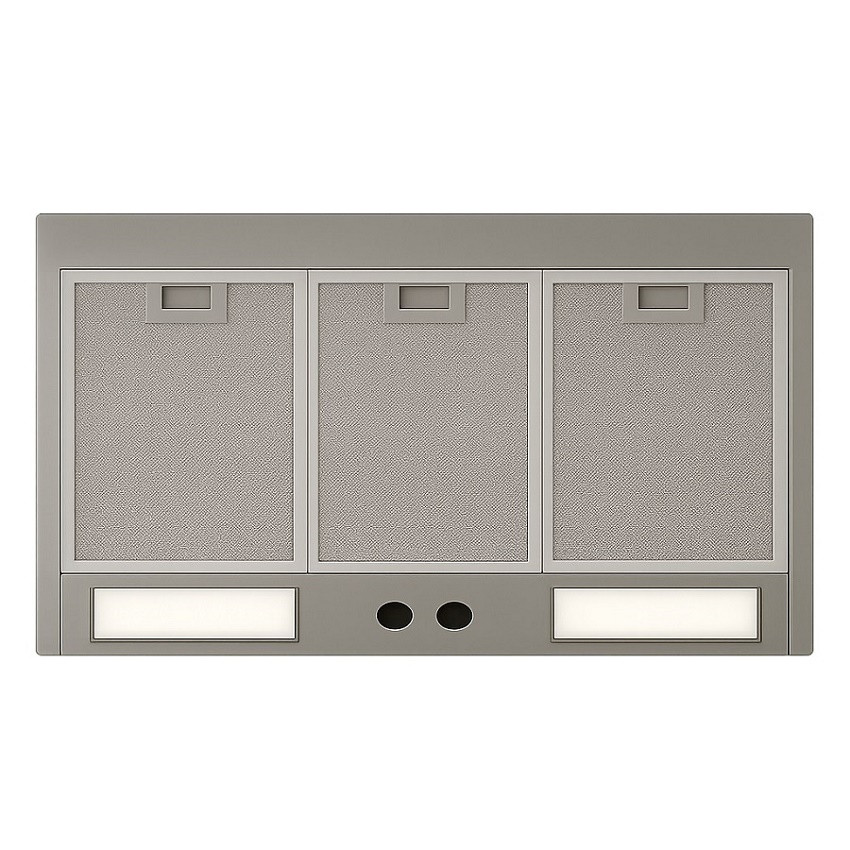
The shell is prepared around approved equipment rather than one universal blower package. Rustica House can supply the optional 200 CFM insert only. Buyer-supplied internal inserts up to 1,260 CFM and external blowers up to 1,500 CFM may be supported when complete specifications are submitted before production. Required details include the brand, model, body size, cutout, filters, controls, lighting, duct diameter, electrical requirements, and service access.
Wall or Island
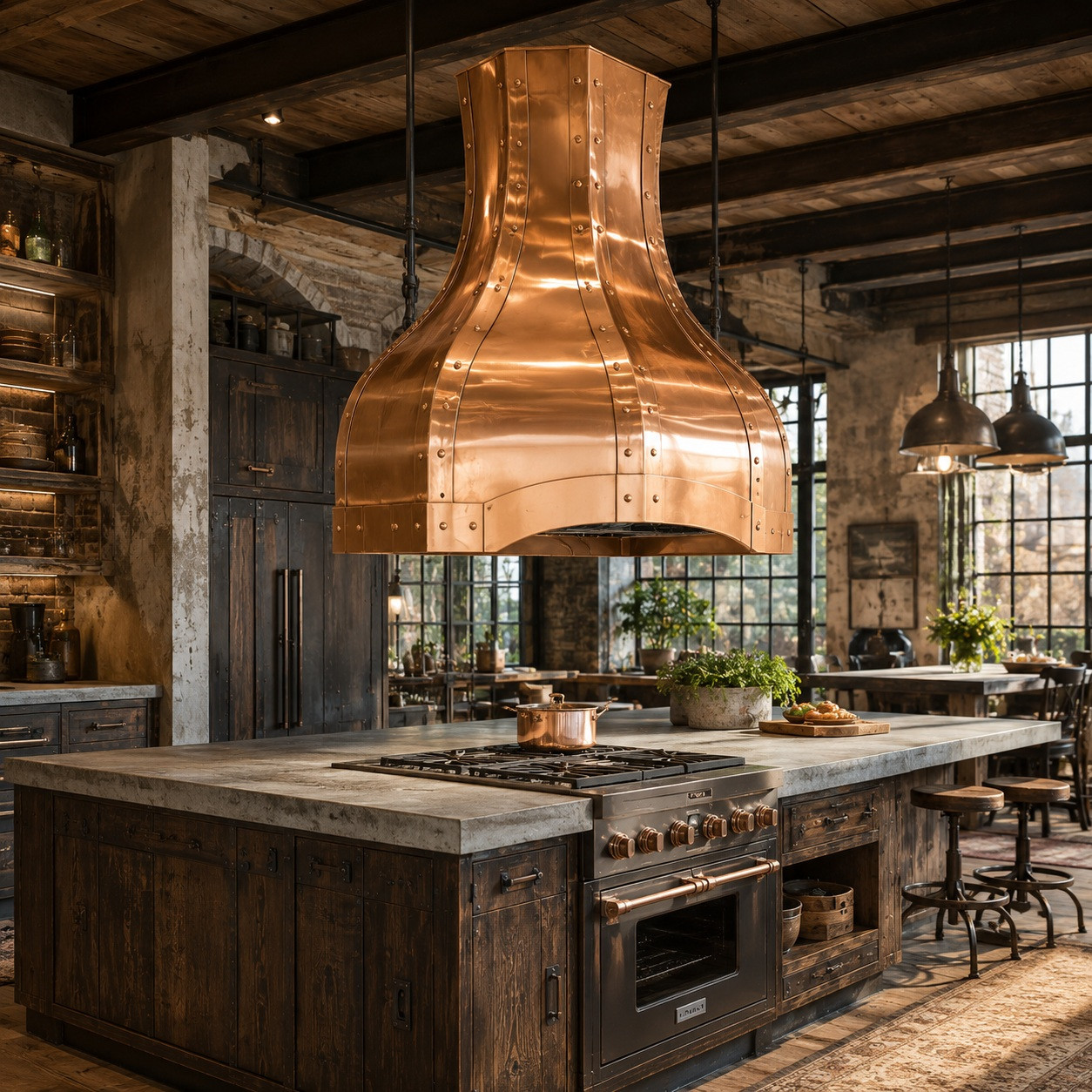
A wall version is planned around backsplash depth, rear blocking, cabinetry, and duct routing. An island version requires finished copper on all sides, ceiling framing, centered ducting, electrical preparation, and installation access. Both configurations retain the cinched bell form and segmental apron.
Buyer Planning Table
Confirm these items together because one change can affect the hood’s proportions, internal preparation, and installation requirements.
| Planning | What to confirm | Why it matters |
| Hood width | Range and installation area | Sets coverage and scale |
| Total height | Wall or ceiling clearance | Balances chimney and bell |
| Canopy profile | Waist, flare, and projection | Defines the compound curve |
| Apron arch | Rise and terminal size | Sets the lower opening |
| Strap layout | Spacing and finish contrast | Organizes the shell |
| Ventilation | Insert, blower, and duct | Guides internal preparation |
Copper Finish Options
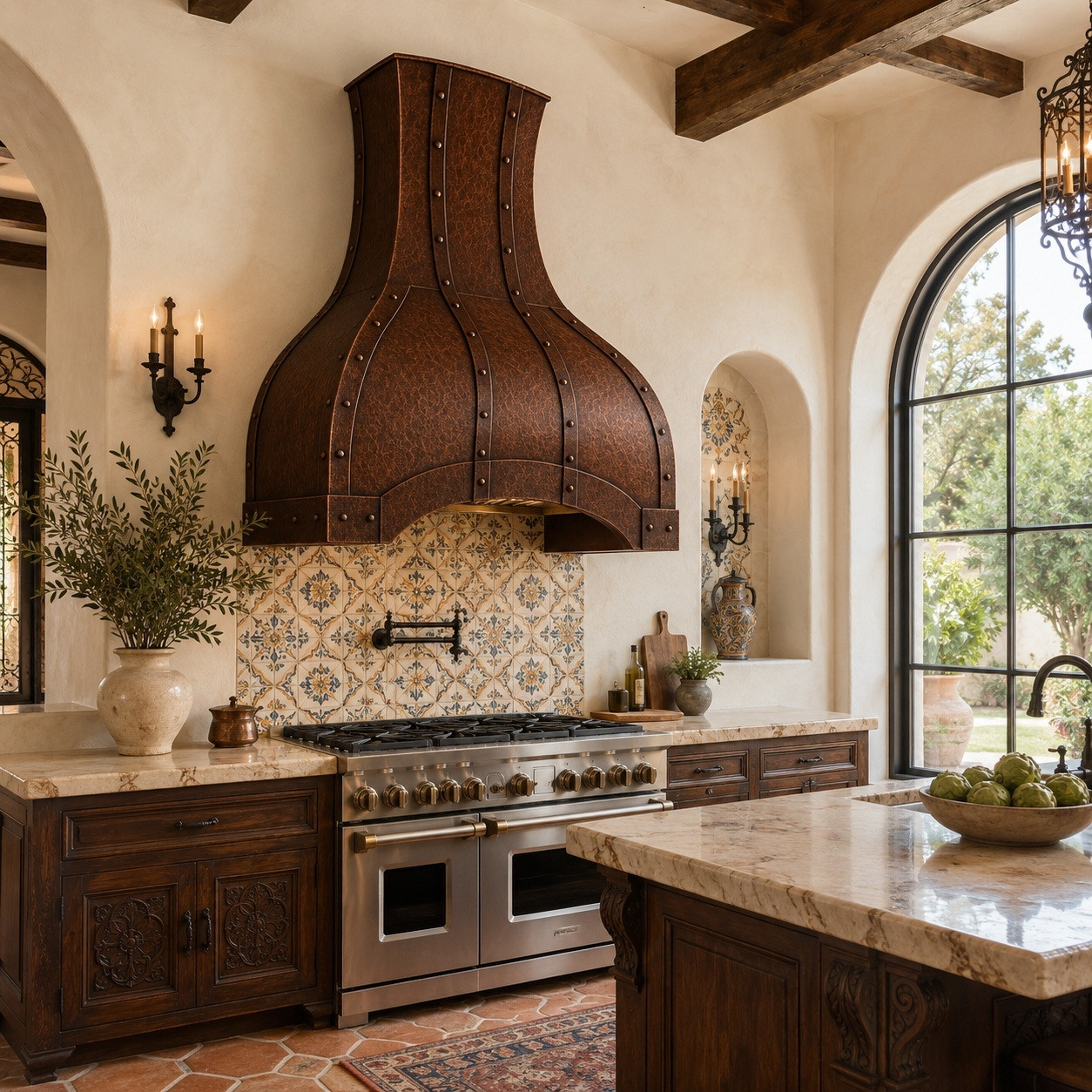
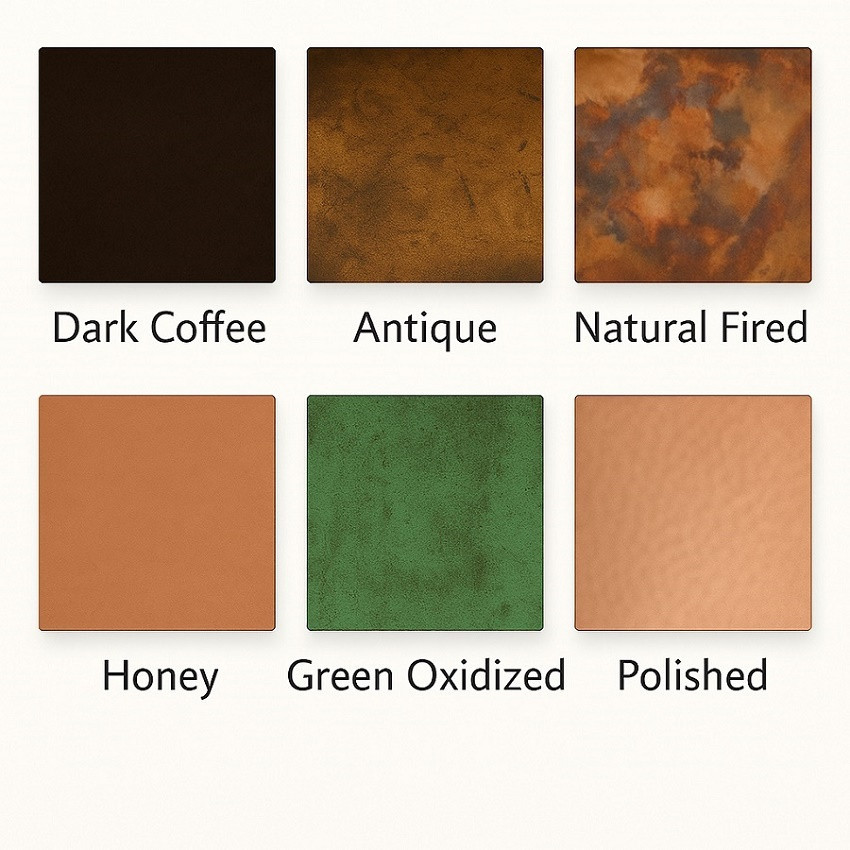
The illustrated configuration uses medium hand hammering with a dark antique or coffee-brown finish and darker straps and rivets. Buyers may choose smooth or hammered copper with four patinas, plus green oxidized and hand-polished treatments. The body and applied details may use related tones or contrasting finishes. Samples are directional because hand-applied finishes vary naturally.
Product Specifications
These specifications summarize the main construction, sizing, ventilation, production, and warranty details.
- Material: solid copper
- Gauge: 16-gauge copper
- Width: 28 to 78 inches
- Height: 24 to 72 inches
- Depth: 24 inches standard
- Mount: wall or kitchen island
- Texture: smooth or hammered
- Finishes: six copper treatments
- Supplied insert: optional 200 CFM
- Buyer insert: up to 1,260 CFM
- External blower: up to 1,500 CFM
- Production: about 8 weeks
- Warranty: 12 months
- Origin: Santa Clara del Cobre
- SKU: HE74U1G44
Copper Craftsmanship
The central face, curved side panels, returns, crown, arched apron, squared terminals, and contour bands are formed separately. Artisans shape opposing curves, fit panel transitions, bend each strap across the waist and shoulders, and align rivets with the panel divisions. The enclosure is then prepared around the approved insert, textured, finished by hand, inspected, and packed for insured freight delivery.
Coppersmith Testimony
The coordinated bell curves, fitted terminals, continuous bands, and measured rivet placement reflect experienced Michoacán metalwork. Learn more about copper artisan Juan Carlos Hernández and the regional methods used to form custom copperwork.
Handcrafted Variation
Surface variation, patina movement, tool marks, seam variation, hammering differences, small irregularities, and slight changes in curves, strap alignment, apron rise, or rivet spacing are expected and are not defects. Dimensions may vary by about 10 percent, so cabinetry, framing, stonework, ducting, and ventilation components should allow for artisan tolerances. No two completed hoods are identical.
Kitchen Style Fit
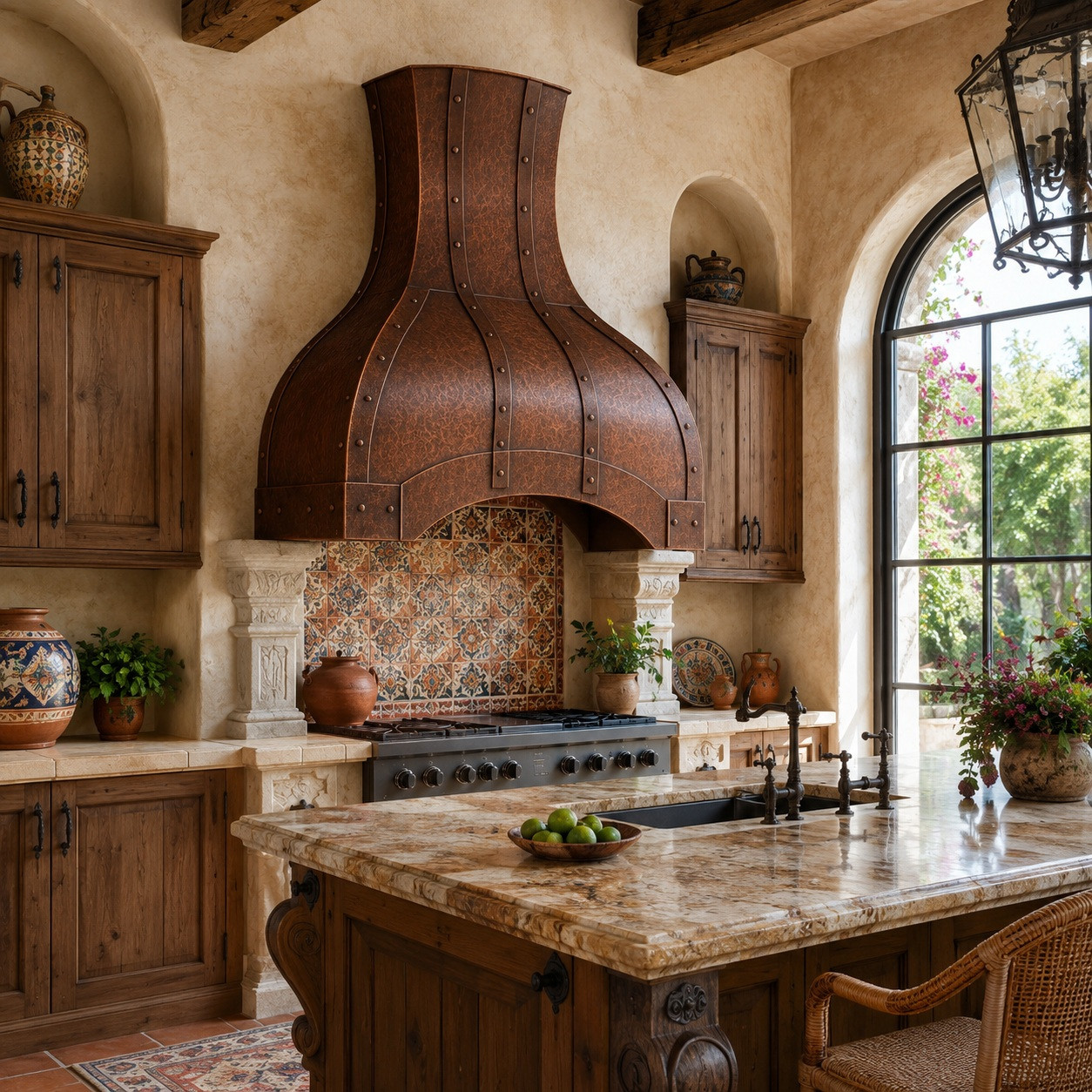
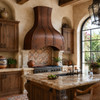
The hood is especially suitable for Mexican Hacienda, Spanish Revival, Old-World Mediterranean, and rustic industrial kitchens. Its arch complements plaster openings, masonry hearths, cantera stone, handmade tile, and cooking alcoves, while the riveted bands coordinate with timber, iron lighting, steel, brick, stone, and substantial cabinetry. Tuscan villa, French Country, and transitional rustic kitchens can also support the sculpted form. Evaluate the bell canopy proportions, riveted detailing, and arched apron across completed kitchen interiors in our riveted bell copper range hood lifestyle gallery.
Riveted Hood FAQ
These answers cover the main sizing, installation, ventilation, finish, and architectural questions to resolve before production.
A: Yes. It can be made as a wall-mounted enclosure or a finished four-sided island hood with suitable ceiling support.
A: Widths range from 28 to 78 inches, heights from 24 to 72 inches, and the standard depth is 24 inches.
A: Yes. Internal inserts up to 1,260 CFM and external blowers up to 1,500 CFM may be supported when complete specifications are supplied.
A: Choose smooth or hammered copper with four patinas, plus green oxidized and hand-polished options.
A: Yes. The body, straps, rivets, crown, and apron details may use coordinated or contrasting copper treatments.
A: Its chimney curves inward and reverses into a convex lower canopy, creating a compound S-curve instead of straight tapered sides.
A: No. It is a raised segmental band with visible depth and squared terminals that visually support the opening.
Customize This Hood
Plan the enclosure around the cooking-surface width, available height, structural support, cabinetry, backsplash, and approved ventilation equipment. Confirm the waist, shoulder transition, canopy flare, apron rise, strap layout, rivet spacing, texture, and finish before production. Request a custom quote from Rustica House today.
Related Resources
Use these resources to compare copper hood shapes, sizes, finishes, ventilation, and installation requirements.
- custom copper range hoods
- bell-shaped copper range hoods
- arched copper range hoods
- range hood insert guide
- copper hood size guide
- copper patina options
- Copper Range Hood FAQ
Shipping and Returns
This made-to-order hood ships by insured freight after production. Review inspection, damage reporting, custom-order limitations, and return eligibility on the shipping and returns page before approval.
Warranty Coverage
The copper shell and replacement components for a Rustica House-supplied insert include 12-month coverage. Review exclusions, maintenance duties, limitations, and claims on the Rustica House warranty page.
Disclaimer: Handmade dimensions may vary by about 10 percent. Canopy curves, strap alignment, rivet spacing, apron rise, hammer impressions, seams, and finish tones may also vary. These differences are expected and are not manufacturing defects. Lifestyle images are provided for inspiration and may show optional features.