 US Dollar
 Euro
Euro
 Australian Dollar
 Canadian Dollar
 Polish Zloty
 British Pound

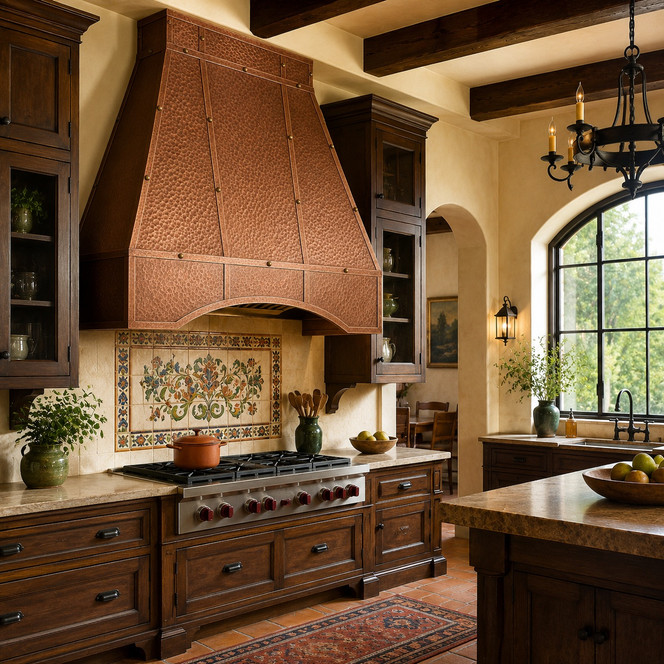
Paneled Tapered Copper Range Hood with Riveted Straps Guide explains how a handcrafted copper hood with a paneled tapered body, vertical riveted straps, framed upper section, deep boxed apron, and warm patina can become a strong architectural centerpiece above the range. This made-to-order design suits Spanish Colonial, Mission Revival, Arts and Crafts, Southwestern hacienda, English Tudor Revival, Mediterranean, and rustic transitional kitchens that need copper warmth with visible structural detail. Because each hood is handmade, hammering differences, patina movement, panel variation, strap alignment, rivet spacing, seam detail, tool marks, and small artisan irregularities should be expected. No two hoods are identical, and those natural variations add character rather than defects. Explore the paneled tapered copper range hood to review sizing, finish choices, mounting options, and insert preparation.
Blog Summary
- Material: Handmade copper hood
- Shape: Paneled tapered body
- Detail: Vertical riveted straps
- Apron: Deep boxed lower band
- Ventilation: Up to 1,500 CFM support
Design Guide Overview
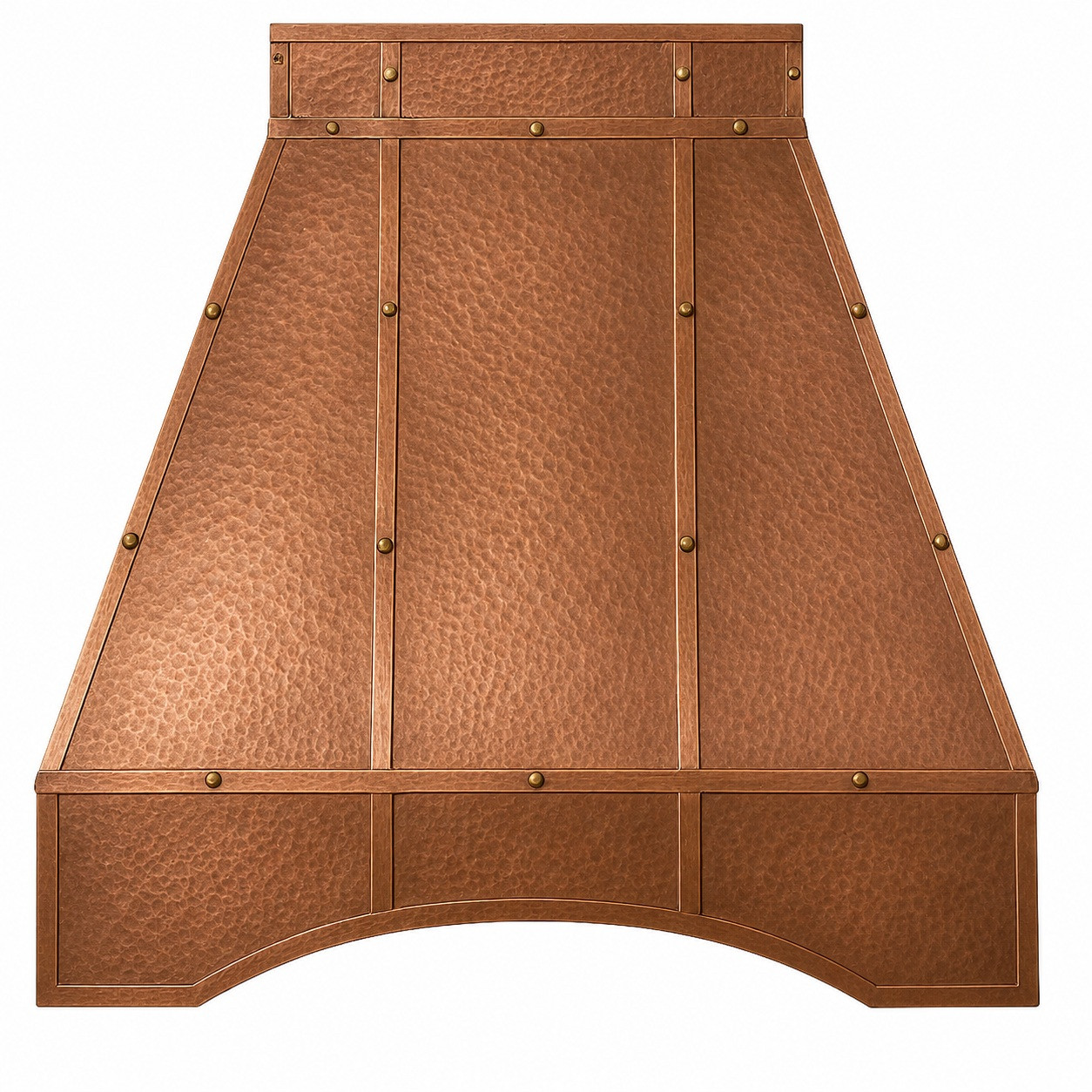
A paneled tapered copper range hood with riveted straps is designed for kitchens that need structure, warmth, and handcrafted architectural detail above the cooking area. The hood rises from a deep boxed apron into a tapered body divided by framed panels and vertical riveted straps. The narrow upper section gives the chimney a built-in look, while the broad lower canopy creates visual weight above the range. Instead of relying on floral embossing, scrollwork, or relief decoration, this hood uses geometry, panel layout, raised bands, rivets, and copper patina to create its identity. Buyers comparing related shapes can review the copper range hood shapes guide.
Tapered Copper Body
The tapered body gives the hood its main architectural structure. The lower portion is broad enough to feel substantial over a range or cooktop, while the upper section narrows into a framed chimney area. This creates a strong vertical rise that feels orderly and built into the kitchen wall. The straight diagonal planes are more geometric than a bell or dome hood, making the design especially useful in rooms with wood cabinetry, tile grids, masonry, plaster, stone, or framed architectural details. The taper also gives the range wall a centered focal point without making the hood feel overly curved or ornate. Browse kitchen inspiration featuring a paneled tapered copper range hood with decorative riveted straps in our paneled tapered copper range hood lifestyle images.
Shape Benefits
- Body: Straight tapered copper planes
- Panels: Framed architectural sections
- Straps: Vertical riveted details
- Apron: Deep boxed lower edge
- Look: Structured handmade metalwork
Paneled Front Design
The paneled front is one of the strongest features of this hood. The upper chimney area is divided into framed rectangular sections, and the lower body continues the same sense of order through vertical straps and perimeter bands. This gives the hood a crafted furniture-like quality. The panels help organize the copper surface so the design feels architectural rather than plain. They also make the hood a natural fit for kitchens with paneled cabinetry, framed cabinet doors, exposed beams, grid tile, stone blocks, or traditional millwork. The design feels substantial because the copper is not treated as a flat surface; it is divided into purposeful fields.
Vertical Riveted Straps
The vertical riveted straps create rhythm across the front of the hood. They divide the broad copper body into a large central field and narrower side sections, giving the tapered form more visual structure. Raised rivets add handmade shadow and old-world metalwork character. These details can relate to iron lighting, bronze cabinet hardware, clavos on traditional doors, rustic hinges, and forged architectural accents. The straps are decorative, but they also help the hood look more tailored and built. In a large kitchen, this strap layout prevents the broad front from feeling empty.
Deep Boxed Apron
The deep boxed apron anchors the hood at the bottom. Its horizontal mass balances the upward taper and gives the range wall a strong lower edge. The apron also creates a hearth-like base that can align visually with counters, cabinet rails, stone backsplashes, or tile borders. A shallow shaped opening in the apron adds architectural softness without turning the design into a fully arched hood. This makes the apron useful in styles that need structure first, with only a restrained amount of movement. Because the apron is handmade, slight edge, seam, and patina variation should be expected.
Architectural Details
- Upper panels: Framed chimney sections
- Lower body: Broad tapered canopy
- Rivets: Raised handmade points
- Apron: Substantial boxed base
- Finish: Hand-applied copper patina
Handcrafted Copper Character
This hood is handmade from real copper, so the finished surface should not look factory-identical. Patina tone may shift across panels, rivets may show slight hand-set variation, and the strap layout may carry small artisan differences. Seams, edges, tool marks, hammering variation, and minor irregularities are normal parts of the handcrafted process. These details help the hood feel authentic beside plaster, stone, handmade tile, dark wood, bronze hardware, black iron lighting, and aged finishes. For more background on traditional metalwork, read about traditional copper craftsmanship.
Copper Finish Choices
Finish selection changes how the paneled body, riveted straps, boxed apron, and framed chimney appear together. Coffee and antique patinas create deeper old-world contrast and make the rivets stand out more clearly. Natural copper gives the hood classic warmth, while honey patina softens the surface with a golden effect. Green oxidized accents can work in Spanish Colonial, hacienda, or Southwestern kitchens when coordinated with tile, plaster, stone, and aged metals. Hand-polished copper creates brighter highlights and can make the panels read more sharply. Review copper patina finish options before choosing the final tone.
Finish Planning
- Antique: Aged copper depth
- Coffee: Darker rustic contrast
- Natural: Classic copper warmth
- Honey: Softer golden tone
- Polished: Brighter highlights
Spanish Colonial Kitchen Use
Spanish Colonial kitchens can use this hood when the range wall needs handcrafted copper warmth with clear architectural structure. Plaster walls, Talavera tile, dark wood cabinetry, black iron lighting, bronze hardware, and terra-cotta floors all support the paneled copper design. The riveted straps relate to traditional clavos and forged metalwork, while the boxed apron gives the hood a hearth-like base. For style-specific inspiration, review Spanish-style copper range hoods.
Mission Revival Kitchen Use
Mission Revival kitchens are a strong match for this hood because the design emphasizes visible construction, framed geometry, restrained decoration, and honest materials. The tapered planes, vertical straps, deep apron, and paneled chimney work naturally with quarter-sawn oak, dark stained cabinetry, plaster walls, iron lighting, handmade tile, and stone counters. The hood has enough copper warmth to feel handcrafted, but the straight structure prevents it from becoming overly ornate. A coffee or antique patina can work especially well in Mission Revival rooms with darker wood and iron accents.
Arts and Crafts Kitchen Use
Arts and Crafts kitchens often value structure, proportion, handmade surfaces, and visible joinery. This copper hood supports that approach because the panels and straps make the construction easy to read. The broad central field, narrower side sections, perimeter bands, and rivets feel organized rather than decorative for decoration’s sake. Pair the hood with oak cabinetry, handmade ceramic tile, bronze hardware, warm stone, built-in shelving, and simple lighting. The copper patina adds warmth, while the framed layout echoes the discipline of traditional cabinetmaking.
Southwestern Hacienda Kitchen Use
Southwestern hacienda kitchens can use this hood when the room needs a large metal centerpiece with both warmth and structure. Adobe-toned plaster, reclaimed beams, terracotta floors, carved wood cabinetry, natural stone, and restrained Talavera accents all pair well with copper. The straight taper gives the hood the presence of a built-in hearth, while the rivets add handcrafted character. A darker patina can connect with iron hardware and rustic wood, while a natural or honey finish can brighten the range wall.
Style Pairings
- Spanish: Tile and plaster
- Mission: Oak and ironwork
- Craftsman: Handmade tile
- Hacienda: Beams and terra-cotta
- Tudor: Dark wood and stone
English Tudor Revival Kitchen Use
English Tudor Revival kitchens can use this hood when the room includes dark oak, leaded-glass windows, limestone, brick, forged hardware, and muted natural colors. The paneled structure and riveted straps can complement Tudor-inspired architecture without requiring elaborate Gothic decoration. The tapered body feels substantial enough for a traditional range wall, while the copper finish adds warmth against stone and wood. A darker antique patina usually works best in this setting because it supports the aged character of Tudor materials.
Mediterranean Kitchen Use
Mediterranean kitchens often combine stone, plaster, warm wood, bronze, handmade tile, arched openings, and aged metal finishes. This paneled tapered hood fits because it has enough visual weight for a traditional range wall but remains more structured than a rounded bell or dome hood. Limestone, travertine, cream cabinetry, dark beams, and zellige tile can all support the copper finish. A quieter backsplash can make the panel and strap layout more visible, while patterned tile can work when the colors repeat copper, cream, brown, blue, green, or terra-cotta tones.
Rustic Transitional Kitchen Use
Rustic transitional kitchens can use this hood when the design needs handmade warmth but also cleaner architectural order. Shaker cabinetry, white oak, walnut, quiet stone counters, simple tile, bronze hardware, and plaster-style walls can all support the paneled copper body. The tapered shape gives the hood a clean silhouette, while the straps, rivets, and boxed apron add character. A medium antique or natural copper patina can help the hood bridge rustic materials and more polished cabinetry.
Backsplash Coordination
The backsplash should support the paneled front and riveted straps without making the range wall feel crowded. Stone slab, plaster, limestone, travertine, brick, zellige, handmade ceramic tile, and quiet field tile can all work depending on the kitchen style. A highly patterned backsplash may reduce the impact of the strap rhythm and panel layout. A calmer stone, plaster, or simple tile background often lets the copper structure read more clearly. If using decorative tile, repeat copper, cream, brown, blue, green, black, or terra-cotta tones so the wall feels unified.
Cabinet Coordination
Cabinetry should frame the hood while leaving enough visual room for the tapered body, paneled chimney, vertical straps, and deep apron. Dark wood supports Spanish Colonial, Mission Revival, Tudor Revival, hacienda, and Old World interiors. Cream and warm white cabinetry create contrast and allow the copper to stand out. Walnut, oak, alder, olive, taupe, charcoal, and soft greige can also work depending on the chosen patina. Because the hood already includes rivets and strong panel lines, cabinet hardware should be coordinated with restraint. Bronze, black iron, aged brass, or pewter can work when repeated consistently.
Size Planning
Size planning should account for range width, ceiling height, backsplash height, cabinet spacing, hood depth, lower clearance, strap placement, panel proportions, apron height, and chimney scale. The tapered body should be wide enough to feel balanced above the cooking surface, while the paneled chimney should not look compressed. The deep apron also needs enough height to read as an architectural base. A hood that is too narrow may crowd the panel layout, while one that is too wide can overpower nearby cabinets or shelves. For broader measurement planning, use the range hood size guide.
Wall or Island Mounting
This paneled tapered copper hood can be planned for wall or island installation when project details allow. A wall-mounted layout should align the hood with the range, backsplash, cabinetry, ceiling height, and duct route. An island version must look balanced from several viewing angles because the paneled body, straps, rivets, boxed apron, chimney, and patina may be visible from the kitchen, dining area, and adjacent spaces. Ceiling support, duct routing, electrical access, and insert placement should be reviewed before production. For layout comparison, use the wall and island hood guide.
Ventilation Insert Planning
The copper shell creates the visible hood, while the insert, blower, and ducting provide smoke, steam, grease, and odor removal. Rustica House can supply the 200 CFM insert only. Buyer-supplied internal inserts are supported up to 1,260 CFM, and buyer-supplied external blowers are supported up to 1,500 CFM when complete specifications are provided before production. Any insert, liner, blower, lighting, filter system, or recirculating setup beyond the Rustica House 200 CFM insert must be supplied by the buyer. For technical planning, review the range hood insert guide.
Insert Details
- Rustica: 200 CFM insert only
- Internal: Up to 1,260 CFM
- External: Up to 1,500 CFM
- Buyer: Supplies other systems
- Specs: Required before production
Measurements to Send
Before production begins, buyers should send range width, ceiling height, wall or island layout, desired hood width, hood height, depth, lower clearance, duct route, backsplash conditions, cabinet limitations, and ventilation equipment details. If using a buyer-supplied internal insert up to 1,260 CFM or an external blower up to 1,500 CFM, send the brand, model, cutout dimensions, liner requirements, duct size, discharge direction, controls, lights, filters, and service-access information. Photos of the range wall are useful for reviewing taper proportion, panel layout, strap placement, apron scale, chimney height, patina direction, and surrounding materials.
Care and Cleaning
Copper should be cleaned gently to preserve patina and handmade surface character. Use a soft cloth, warm water, and mild soap for routine wiping. Avoid abrasive pads, steel wool, bleach, ammonia, acidic cleaners, and harsh degreasers because they can scratch the copper or disturb the finish. Wipe carefully around rivets, straps, panel edges, apron seams, chimney corners, and hammered low points so grease does not collect in detailed areas. Drying the hood after cleaning can help reduce water marks. For deeper care guidance, review the copper hood care guide.
Ordering Support
A paneled tapered copper hood with riveted straps should be ordered after the shape, size, finish, mount type, insert model, duct route, backsplash, and surrounding materials are reviewed. This design depends on the relationship between the tapered body, framed panels, vertical straps, raised rivets, compact chimney, and boxed apron, so proportion should be planned carefully. Ventilation equipment must also be confirmed before fabrication, especially when using buyer-supplied inserts or external blowers. Buyers comparing copper options can browse custom copper range hoods. For custom sizing, finish questions, or insert preparation, contact Rustica House.
Common Questions
What makes this copper hood unique?
This hood combines a paneled tapered copper body, framed upper section, vertical riveted straps, deep boxed apron, custom sizing, handmade patina, and architectural metalwork in one structured range hood design.
Will every copper hood look identical?
No. Each hood is handmade, so no two pieces are identical. Patina movement, panel variation, strap alignment, rivet spacing, seam detail, tool marks, and small artisan irregularities are normal.
What kitchen styles fit this hood?
This hood works well in Spanish Colonial, Mission Revival, Arts and Crafts, Southwestern hacienda, English Tudor Revival, Mediterranean, and rustic transitional kitchens. It pairs naturally with plaster, stone, handmade tile, dark wood, bronze, and black iron.
What ventilation systems are supported?
Rustica House can supply the 200 CFM insert only. The hood shell can support buyer-supplied internal inserts up to 1,260 CFM and buyer-supplied external blowers up to 1,500 CFM when complete specifications are provided before production.
Design Summary
A paneled tapered copper range hood with riveted straps is ideal for kitchens that need warm metal character, visible structure, and handcrafted architectural detail above the range. The tapered body gives the hood a clean upward form, while the paneled chimney, vertical straps, raised rivets, and boxed apron create rhythm and depth. Copper patina and handwork bring natural variation to the surface. This hood works especially well with plaster, stone, handmade tile, dark wood, brick, bronze hardware, black iron lighting, and rustic warm finishes. Proper sizing, finish selection, insert or blower preparation, backsplash coordination, cabinet balance, and gentle care help the hood remain functional and visually strong.
Final Design Guidance
Paneled Tapered Copper Range Hood with Riveted Straps Guide shows how tapered shape, framed panels, vertical rivets, boxed apron detail, copper patina, custom sizing, and ventilation planning work together. Choose this hood when the range wall needs a structured handmade centerpiece with architectural metalwork and old-world warmth. Pair it with plaster, limestone, travertine, brick, handmade tile, cream cabinetry, dark wood, walnut, oak, bronze hardware, black iron lighting, terra-cotta floors, or Mission-style materials. Confirm width, height, depth, wall or island mounting, insert details, blower specifications, duct route, backsplash conditions, strap placement, panel layout, and copper patina before production. Customize the paneled tapered copper range hood with Rustica House for a made-to-order kitchen centerpiece.