US Dollar
 Euro
Euro
 Australian Dollar
 Canadian Dollar
 Polish Zloty
 British Pound










Product Description
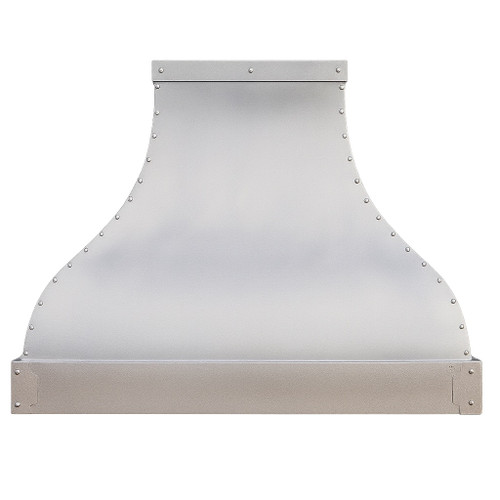
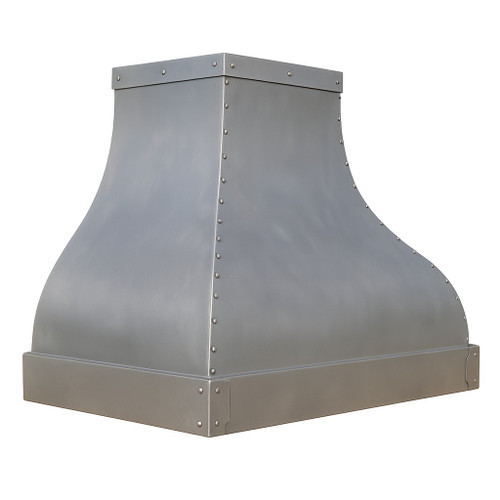
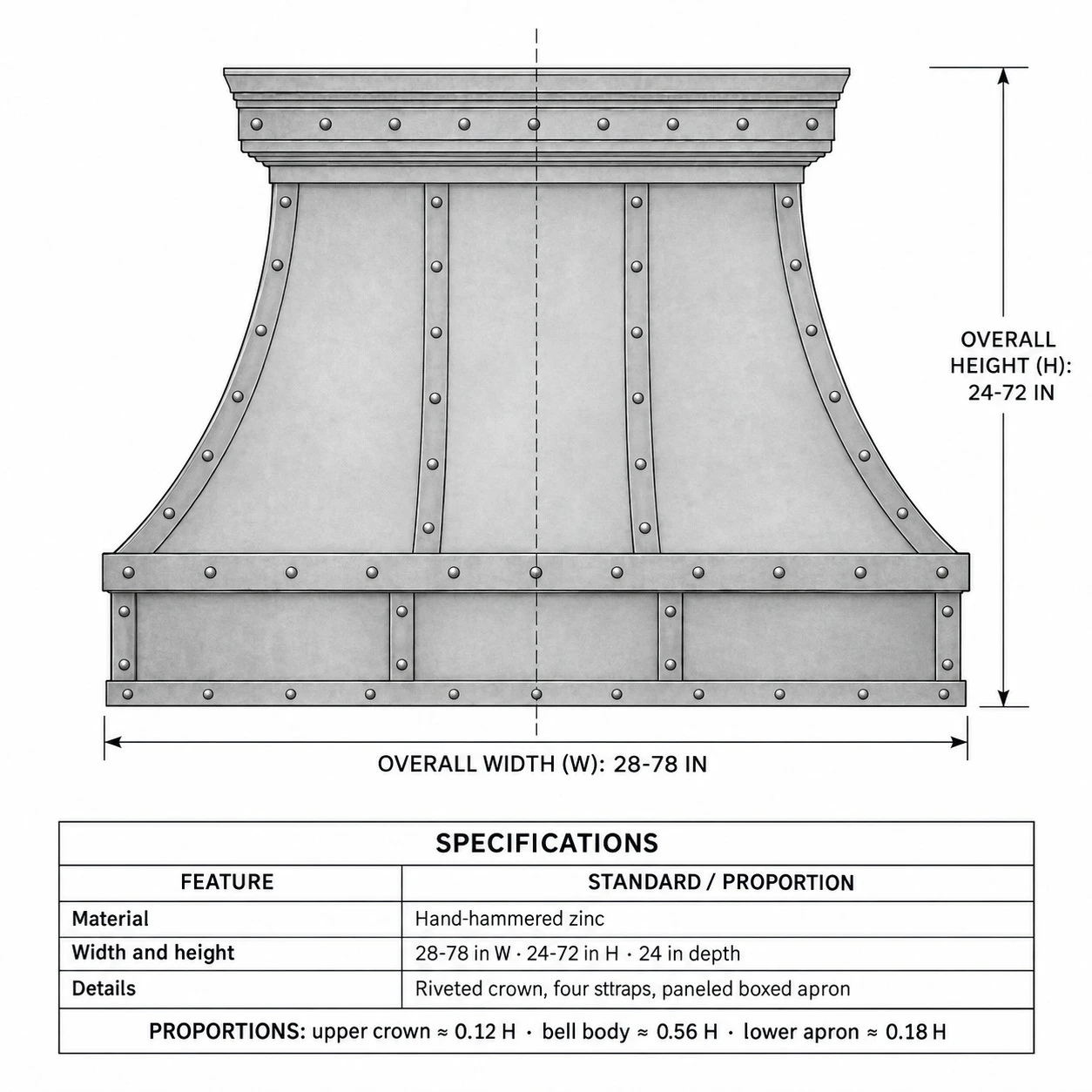
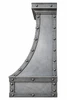
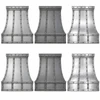
This industrial zinc bell range hood with riveted frame and paneled apron combines a tall architectural profile with exposed metalwork inspired by traditional sheet-metal fabrication. A narrow upper body transitions through a pronounced concave sweep into a broad bell-shaped lower canopy, while four riveted vertical lines organize the front and follow the changing geometry. Layered formed bends, a projecting stepped crown, and a deep riveted paneled apron give the enclosure considerably more structure than a conventional tapered zinc hood. The handcrafted zinc surface complements visible seams, folds, straps, and round fasteners rather than concealing them. Custom dimensions allow the hood to coordinate with different ranges, ceiling heights, and cabinetry layouts for wall-mount or island installation. Ventilation preparation can also be configured around approved equipment supplied before production. For more details about its industrial zinc construction, bell-shaped form, and paneled apron, see our industrial zinc bell range hood paneled apron guide. Order this custom zinc hood with dimensions, finish, mounting, and ventilation details selected for your kitchen project.
Product Summary
This design is distinguished by a specific combination of curved and geometric metalwork. The bell-flared canopy provides the primary silhouette, while a four-line riveted framework emphasizes its vertical proportions. Formed horizontal transitions connect the canopy to a stepped crown above and a substantial rectangular apron below, giving the hood a recognizable architectural identity within the Rustica House zinc collection.
- Shape: tall bell-flared canopy
- Material: handcrafted zinc
- Framework: four riveted vertical lines
- Fasteners: exposed round rivets
- Crown: layered stepped construction
- Apron: deep riveted paneled base
- Edges: multiple formed metal bends
- Mounting: wall or island
- Dimensions: custom available
- Insert: 200 CFM or custom
Insert Planning
Ventilation should be selected before fabrication because insert dimensions, duct position, controls, lighting, filters, and service access can affect the internal construction. Rustica House can supply an optional 200 CFM insert. Buyer-supplied internal inserts up to 1,260 CFM or external blowers up to 1,500 CFM can be accommodated when complete manufacturer specifications are provided before production.
- Rustica insert: optional 200 CFM
- Internal insert: up to 1,260 CFM
- External blower: up to 1,500 CFM
- Planning: specifications required first
- Ducting: coordinated before production
Design Features
The hood's industrial character comes from making its fabrication language visible. Riveted vertical lines, folded transitions, projecting edges, and framed apron panels continue from the crown to the bottom of the enclosure. Instead of concentrating decoration in one area, these details form a connected architectural system over the zinc shell and provide contrast between the curved canopy and rectangular lower structure.
Bell-Flared Silhouette
The canopy begins with a comparatively narrow upper body before expanding through a controlled concave sweep. Its lower section projects substantially farther outward, producing a recognizable bell profile rather than straight tapered sides. This transition gives the enclosure visual movement while maintaining a strong vertical relationship with the chimney and crown above and a substantial presence over the cooking surface.
Riveted Framework
Four prominent riveted lines organize the front elevation. Two inner straps divide the broad zinc face into three primary fields, while the outer bands follow the changing geometry near the canopy corners. Evenly spaced round rivets continue along these raised elements, reinforcing the vertical rhythm and visually connecting the crown, curved body, formed transitions, and lower apron.
Formed Zinc Bends
Multiple formed bends add depth without introducing unrelated ornament. Folded horizontal transitions appear beneath the crown, around the lower edge of the bell, and along the apron. These projecting surfaces create narrow shadow lines between larger zinc fields. Combined with the controlled forming of the curved canopy, they give the hood the layered character associated with architectural sheet-metal fabrication.
Stepped Crown
The upper section terminates in a projecting rectangular crown with visible riveted detailing. Additional formed layers immediately below create a stepped transition into the narrower upper body. The crown therefore reads as an architectural termination rather than a thin cap, helping the hood coordinate with tall cabinetry, substantial millwork, exposed beams, stone walls, and kitchens with higher ceilings.
Paneled Zinc Apron
The deep paneled zinc apron is one of the hood's defining architectural details. A broad horizontal riveted band establishes its upper edge, while shorter vertical elements divide the central apron into rectangular zinc fields. Another substantial horizontal band finishes the bottom. This framed metal plinth grounds the broad canopy and creates a deliberate geometric contrast with the curved bell profile above.
Why a Bell Profile
A bell profile provides a more sculpted alternative to a straight-sided industrial enclosure. The upper body remains visually controlled while the lower canopy develops the width and projection needed to balance a substantial cooking area. On this model, the curvature also gives the outer riveted bands a stronger architectural role because they trace the changing silhouette instead of appearing as simple straight decorative straps.
Zinc Surface
Zinc provides a quieter metallic character than highly reflective stainless steel while retaining the authenticity of exposed metal construction. Hand finishing creates subtle tonal movement across the canopy, crown, framework, and apron. Because each enclosure is individually fabricated, minor variations in surface tone, seams, rivet placement, formed edges, and artisan marks are natural characteristics of handcrafted metalwork rather than signs of machine-made uniformity.
Best Kitchen Styles
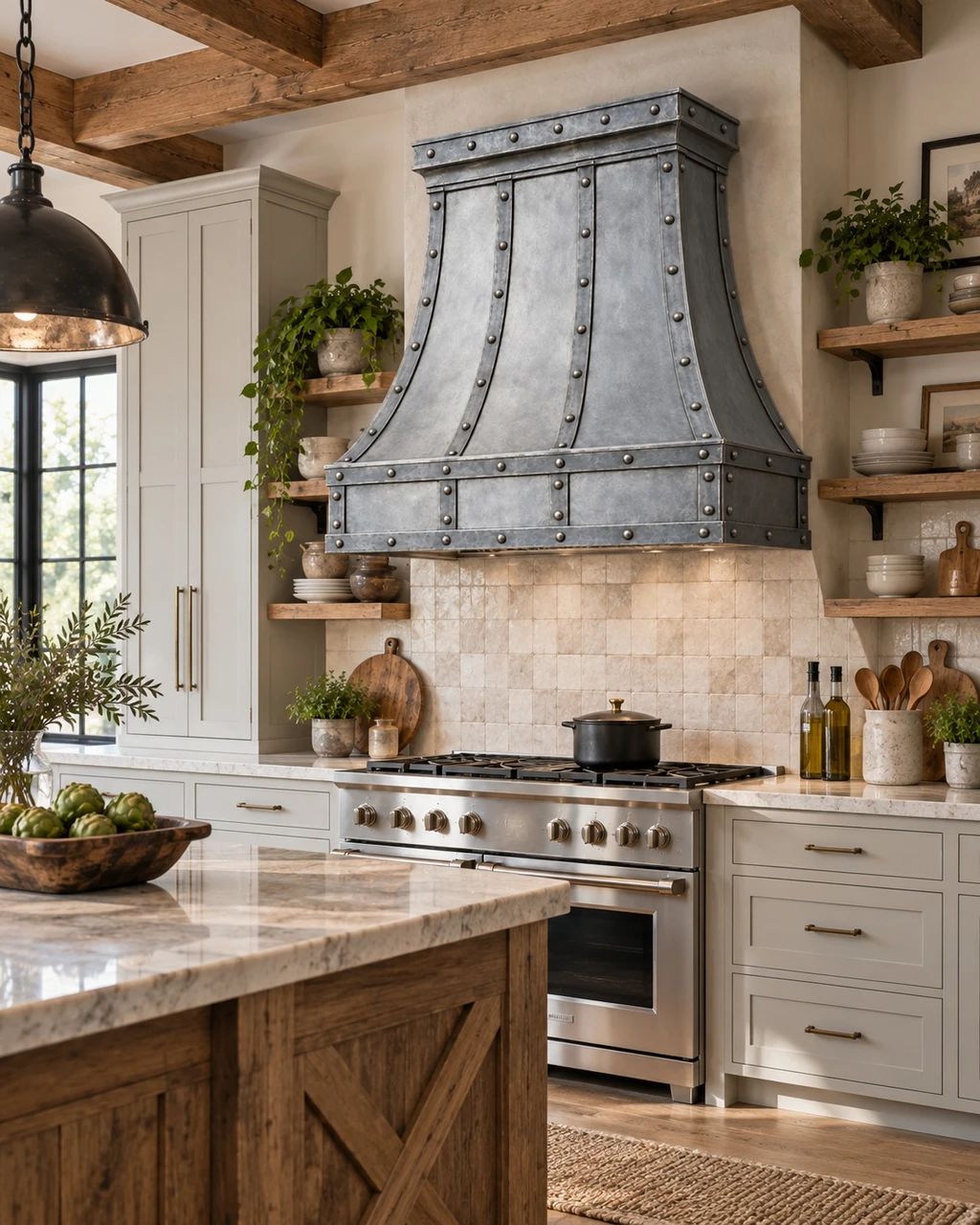
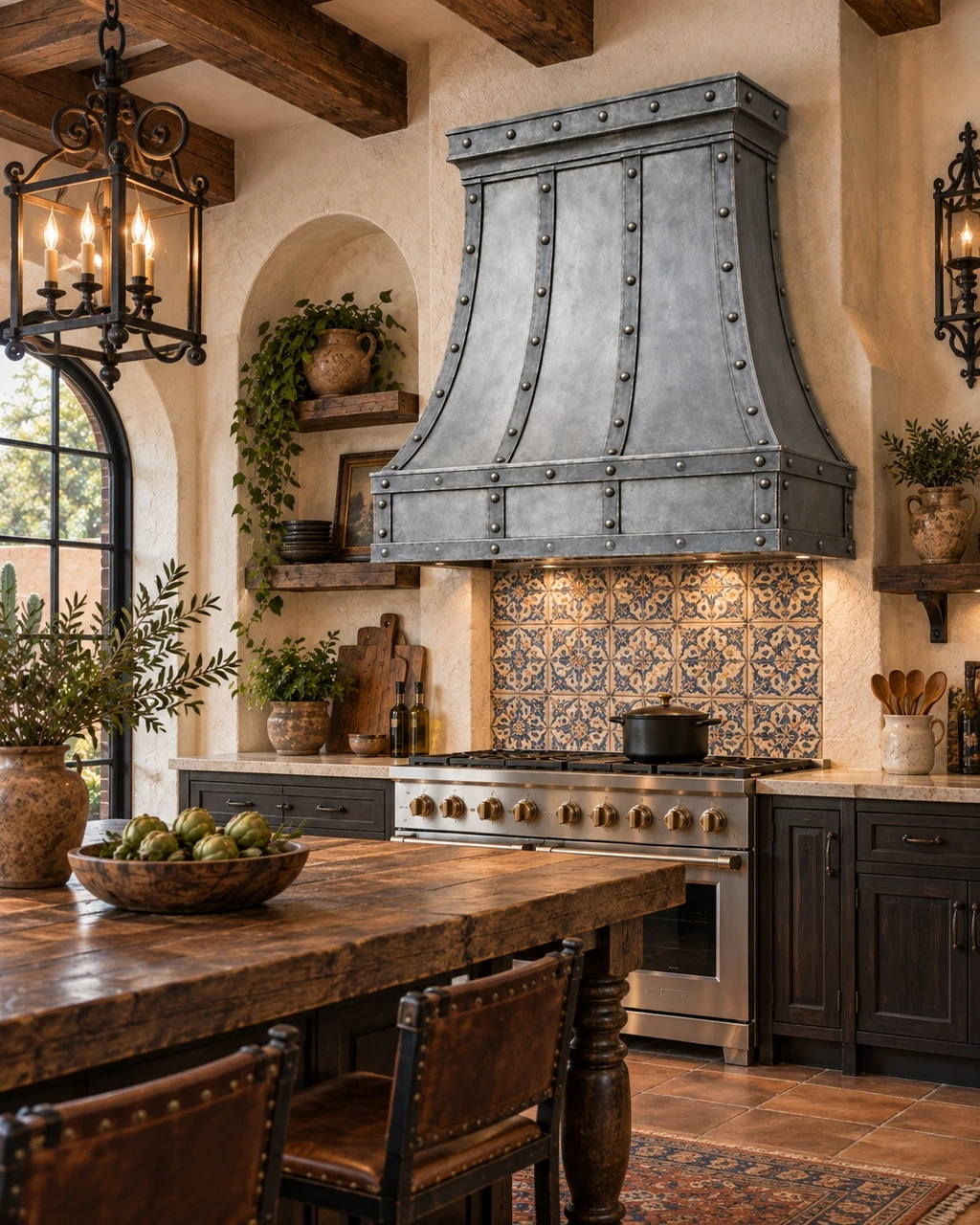
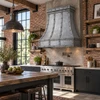
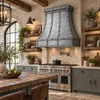
The combination of a bell silhouette and visible fabricated details allows this hood to work with interiors that balance substantial architecture and exposed materials. Its riveted framework can relate to iron and steel hardware, while the zinc surface complements stone, plaster, brick, timber, and restrained cabinetry. These four kitchen styles provide especially natural settings for the design. See how the industrial zinc construction, bell profile, and paneled apron work with surrounding materials in our industrial zinc bell range hood kitchen images.
- Industrial loft: Exposed brick, concrete, blackened steel, reclaimed timber, open shelving, and factory-style windows complement the visible rivets and formed zinc framework. The bell flare introduces curvature into interiors otherwise dominated by rectangular architecture, while the deep paneled apron gives the hood enough visual weight for a large open cooking area.
- Industrial farmhouse: Painted cabinetry, wide-plank oak, handmade tile, stone counters, and exposed beams balance the hood's fabricated metal character. Riveted framing contributes the industrial influence, while the curved bell silhouette and substantial apron provide enough traditional architectural structure to coordinate naturally with farmhouse materials and cabinetry.
- Industrial European: Aged plaster, reclaimed oak, limestone, muted cabinetry, and antique iron hardware provide an effective setting for the zinc construction. The stepped crown and paneled apron give the enclosure a furniture-like architectural quality, while visible rivets and folded edges recall traditional workshop and architectural sheet-metal details without elaborate ornament.
- Industrial Spanish Colonial: The broad bell flare works naturally with plaster walls, heavy timber beams, handmade tile, Saltillo flooring, dark cabinetry, and wrought-iron details. Zinc provides a cooler metal alternative to copper, while the repeated rivets and pronounced vertical framework can coordinate visually with traditional iron lighting and cabinet hardware.
Other Kitchen Styles
- Rustic European
- Transitional rustic
- Mountain lodge
Customization Options
Custom fabrication allows the enclosure to adapt to the proportions and technical requirements of a specific kitchen while retaining its bell silhouette, riveted framework, and paneled base. Width, height, chimney proportions, mounting format, zinc finish, and ventilation preparation can be established before fabrication. Changes affecting the crown, apron, framework spacing, or insert opening should appear on the approved technical drawing.
- Width: project-specific sizing
- Height: ceiling coordination
- Depth: planned for installation
- Finish: zinc options available
- Mounting: wall or island
- Ventilation: insert-specific setup
Handcrafted Construction
The canopy is formed from individual zinc components rather than stamped as a single appliance shell. Shaping the bell body, aligning the vertical framework, setting repeated rivets, forming the stepped crown, and assembling the rectangular apron require multiple fabrication stages. This process creates the subtle variations associated with architectural metalwork while allowing the enclosure to be produced around project-specific dimensions and ventilation requirements.
Buyer Planning
| Planning | Recommendation |
|---|---|
| Range dimensions | Confirm appliance size first |
| Hood width | Coordinate with cooking surface |
| Ceiling height | Use for overall proportions |
| Installation | Confirm wall or island |
| Zinc finish | Select before fabrication |
| Ventilation | Provide equipment specifications |
| Duct location | Confirm before fabrication |
| Final drawing | Approve before production |
Hood Specifications
- Material: zinc
- Profile: bell-flared canopy
- Framework: riveted zinc bands
- Front: three primary fields
- Rivets: exposed round fasteners
- Crown: stepped and projecting
- Apron: deep riveted paneled base
- Edges: layered formed bends
- Mounting: wall or island
- Insert: optional 200 CFM
- Internal: up to 1,260 CFM
- External: up to 1,500 CFM
- Production: made to order
- Origin: handmade in Mexico
- SKU: GU12G5V60
PDF and CAD Downloads
The proportional PDF drawing and CAD file help homeowners, cabinetmakers, designers, and interior architects coordinate the hood with cabinetry, ceiling conditions, structural support, and ventilation equipment. Use these files for preliminary planning and confirm the final width, height, depth, insert opening, duct position, crown proportions, framework placement, and paneled apron dimensions on the buyer-approved technical drawing before fabrication.
How Ordering Works
Begin with the range dimensions, ceiling height, preferred hood size, installation type, zinc finish, and selected ventilation equipment. These details establish the basic fabrication requirements. Project-specific dimensions and technical openings are then coordinated before production. Review the final drawing carefully because it controls the proportions, mounting conditions, ventilation preparation, crown, riveted framework, apron configuration, and other customized elements used to fabricate the hood.
FAQ – Zinc Bell Hood
A: Its identity comes from the combination of a bell-flared canopy, four-line riveted frame, layered formed bends, projecting stepped crown, and unusually deep paneled apron.
A: The upper section is comparatively narrow, but the main canopy transitions through a concave curve and pronounced lower flare, creating a bell-shaped profile rather than straight tapered sides.
A: The deep apron uses horizontal and vertical riveted framing to create rectangular zinc fields beneath the curved canopy instead of functioning as a simple narrow lower band.
A: They are folded and projecting transitions around the crown, canopy, and apron that create depth, shadow lines, and separation between the larger zinc surfaces.
A: Yes. Repeated round rivets reinforce the industrial metalwork character and visually connect the vertical framework, crown, formed transitions, and paneled base.
A: Yes. Project-specific dimensions can be coordinated before fabrication to work with the range, ceiling, cabinetry, mounting conditions, and selected ventilation equipment.
A: Yes. Wall and island configurations are available, with structural support, finished surfaces, duct routing, and ventilation requirements coordinated for the selected installation.
A: Yes. Buyer-supplied internal inserts up to 1,260 CFM can be accommodated when complete manufacturer specifications are provided before fabrication.
A: External blower systems up to 1,500 CFM can be planned when the blower and liner requirements are submitted and approved before production.
A: No. Minor variations in zinc tone, seams, rivet placement, formed edges, artisan marks, and surface movement are expected characteristics of individually fabricated metalwork.
Order Your Hood
This industrial zinc bell hood is intended for kitchens where visible fabrication is part of the architecture rather than something to conceal. Its curved lower flare, continuous riveted frame, layered bends, stepped crown, and deep paneled apron create a distinct alternative to Rustica House zinc models defined primarily by finish, simple straps, or straight tapered geometry. Submit your dimensions, installation details, zinc finish, and ventilation specifications to begin planning a custom configuration.
Related Resources
- Zinc Range Hood Buying Guide
- Hammered and Smooth Metal Hoods
- Kitchen Range Hood Inserts
- Range Hood Insert Sizing
Installation Guide
Installation should follow the approved technical drawing, ventilation manufacturer's instructions, structural requirements, and applicable local codes. Wall versions require adequate blocking, while island installations need suitable ceiling support. Confirm mounting height, duct routing, electrical access, and insert service clearance before installation. Review the metal range hood installation guide during project planning.
Shipping and Returns
Inspect the crate and handcrafted hood carefully at delivery and document any visible shipping damage according to carrier requirements. Because made-to-order products are fabricated around approved project specifications, buyers should review dimensions and customization details before production. See the current shipping and returns policy for delivery procedures and return information.
Warranty
Warranty coverage is subject to current Rustica House terms and exclusions. Natural zinc variation, artisan fabrication marks, normal finish evolution, and changes resulting from cleaning, installation, heat, humidity, or buyer-supplied equipment should be distinguished from manufacturing defects. Review the Rustica House warranty before placing a custom order.
Care and Maintenance
Clean the zinc surface gently with mild soap, water, and a soft cloth, then dry it promptly. Avoid abrasive pads, acidic cleaners, ammonia, and aggressive polishing compounds unless specifically approved for the selected finish. Rivets, folded transitions, framework edges, and apron recesses may require additional attention. See the zinc range hood care guide for maintenance information.
Disclaimer: This product is individually handcrafted. Variations in zinc tone, seams, rivet placement, framework alignment, formed bends, crown details, apron panels, edge alignment, and artisan surface movement are expected characteristics of custom metalwork and are not defects. Lifestyle images may show optional dimensions, finishes, ventilation equipment, or custom configurations. Final production follows the buyer-approved specifications and technical drawing. All product images are protected by copyright and may not be used without Rustica House written permission.