 US Dollar
 Euro
Euro
 Australian Dollar
 Canadian Dollar
 Polish Zloty
 British Pound

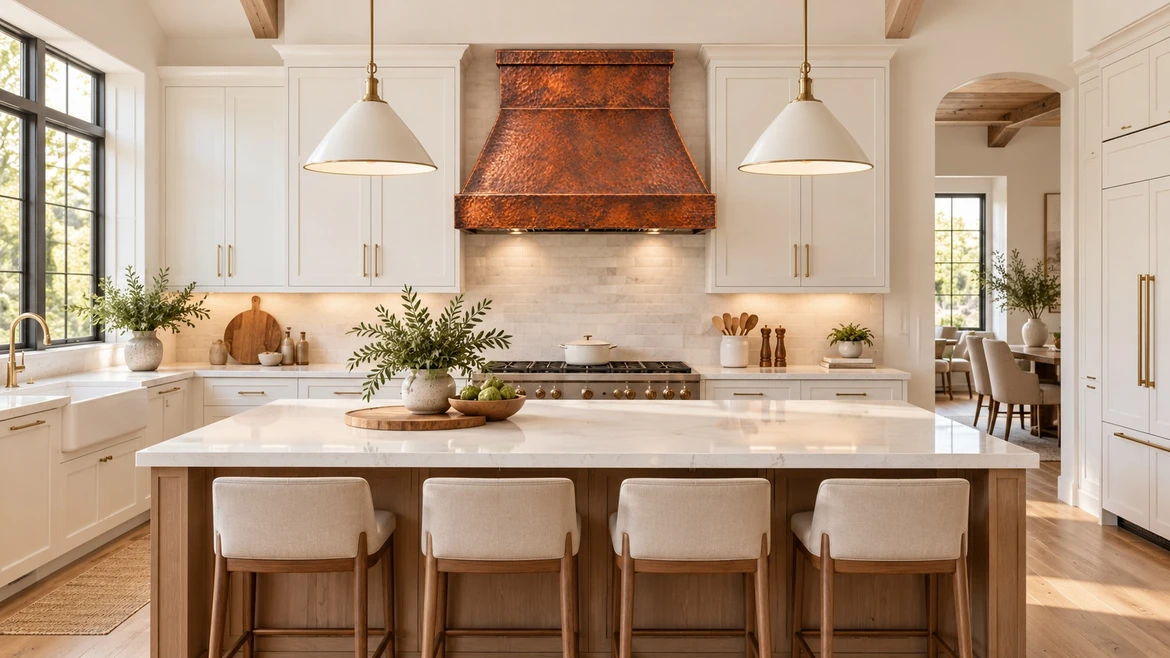
The hammered copper range hood with wide apron and box chimney brings together a rectangular upper section, straight sloping canopy, and substantial lower band. Its architectural character becomes clearer when viewed from several directions: the front reveals its symmetry, the angled photograph shows its depth, and the profile explains its projection from the wall. Hammered texture connects these surfaces, while the finish comparison demonstrates how color changes the overall impression. This image collection explores those visible details and offers ideas for coordinating the hood with kitchen materials. Explore the views below to find the shape and finish that suit your kitchen.
Blog Summary
- Front view highlights the broad apron and balanced silhouette.
- Angled and profile images reveal the canopy’s depth.
- Underside view shows the rectangular insert opening.
- Drawing and finish images support visual planning.
Front View Details

The front photograph shows three clearly defined sections. A short rectangular chimney sits above a broad trapezoidal canopy, while the straight apron establishes a strong horizontal base. A projecting lip finishes the upper edge and echoes the lower band. These repeated horizontal lines give the hood an orderly appearance, with the sloped sides providing the transition between its narrow top and wide bottom.
Across the copper, small irregular depressions catch the light differently. Brighter copper highlights alternate with deeper brown areas, giving the simple panels visual movement. The front has no decorative straps or exposed rivet pattern, allowing the hammered surface to carry the detail. Our handmade copper hoods guide provides additional context on texture, artisan variation, and architectural details.
Angled Canopy View

The angled image makes the enclosure’s volume easier to understand. The side panel slopes outward toward the apron, and the lower band continues around the corner. Above it, the chimney reads as a box with a defined side face rather than a flat decorative panel. Thin bright lines along the panel junctions emphasize the geometry without adding separate ornamental elements.
This view is particularly useful when imagining the hood from a kitchen entrance or nearby island. Its side surfaces contribute substantially to the overall appearance, so surrounding cabinetry should be considered from more than a straight-on viewpoint. Restrained backsplash patterns could give the hammered metal room to stand out. Wood cabinetry or warm stone could repeat its earthy character without requiring matching copper accessories throughout the room.
Side Profile Shape

The profile reveals a straight rear edge and a canopy that projects forward as it descends. The rectangular chimney occupies the upper portion, while the long diagonal front edge leads toward the deeper lower section. From this direction, the apron remains prominent and gives the base a substantial appearance. Hammering extends across the side, maintaining continuity with the front photograph.
The front emphasizes width and symmetry; the profile emphasizes projection and the relationship between upper and lower sections. When considering adjacent cabinets, open shelves, or a nearby window, review both perspectives. Exact placement and clearances require approved dimensions and installation instructions. Review our metal hood installation guide when coordinating the enclosure with cabinetry, structural support, and the duct route.
Underside Opening View
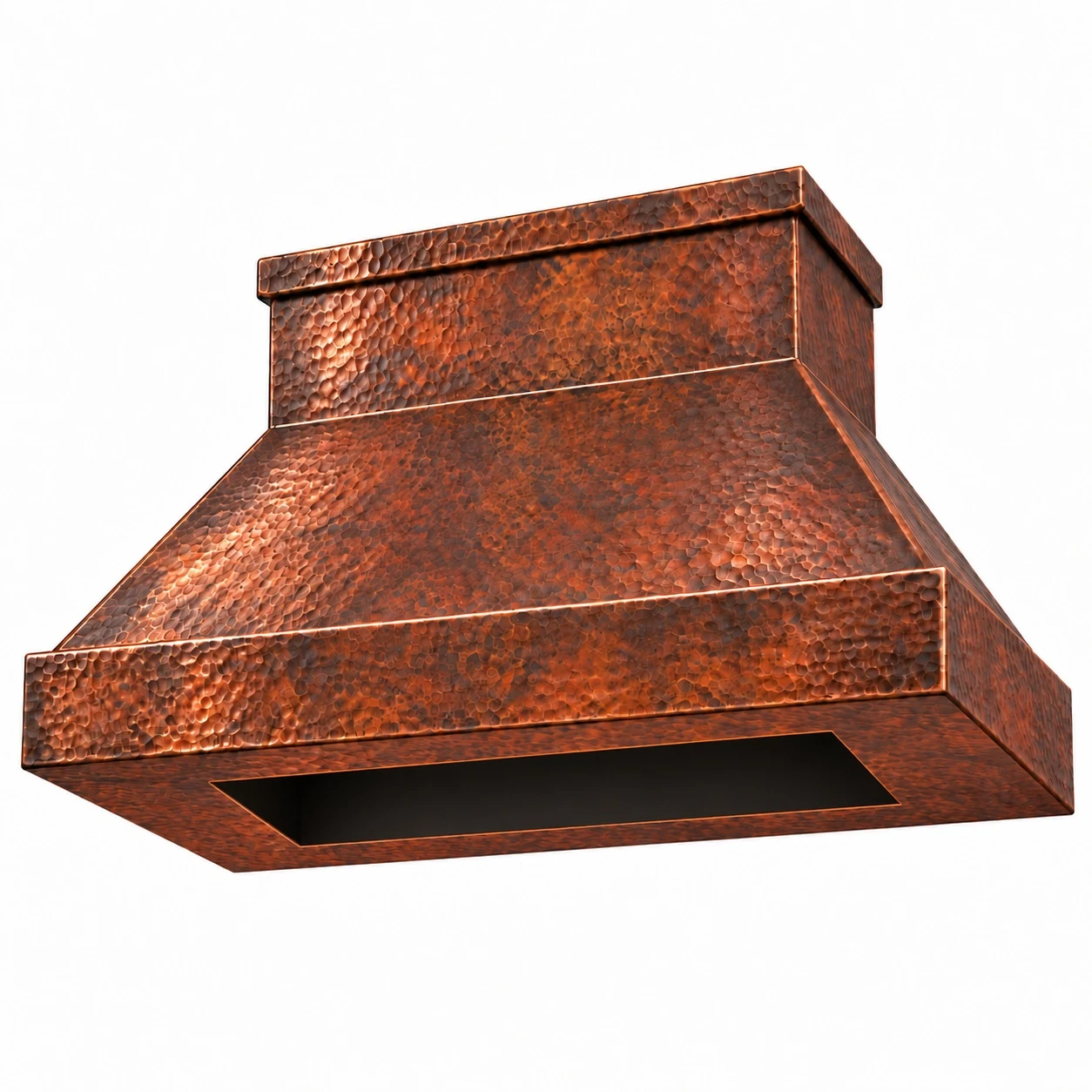
The underside photograph shows a rectangular dark opening surrounded by a copper border. The broad apron wraps around the lower perimeter, and the hammered finish continues onto the visible bottom surface. Viewed from below, the enclosure retains the same straight lines seen in the other photographs. This perspective helps explain how the decorative exterior meets the area intended for ventilation equipment.
No installed filters, controls, or task lights are visible in this image. It illustrates the enclosure opening rather than a complete operating ventilation assembly. Before ordering, coordinate the opening with the exact insert model and its installation requirements. The appearance of the finished underside will depend partly on that equipment, including the exposed trim, filter arrangement, and lighting configuration.
Drawing And Proportions

The supplied drawing identifies an illustrative 36-inch model with a 30-inch overall height and a 22-inch top width. Its dimension table lists a 6-inch chimney, an 18-inch sloped section, and a 6-inch apron. These labeled sections explain the intended visual hierarchy: the canopy occupies most of the height, with shorter rectangular elements framing it above and below.
Treat this image as a reference for the illustrated model. Confirm dimension arrows, section heights, projection, and the insert opening on the final production drawing before approving fabrication. Changes in overall size can affect how broad the apron or compact the chimney appears. Comparing the drawing with the front and profile photographs provides a more useful understanding than relying on any single image.
Six Copper Finishes
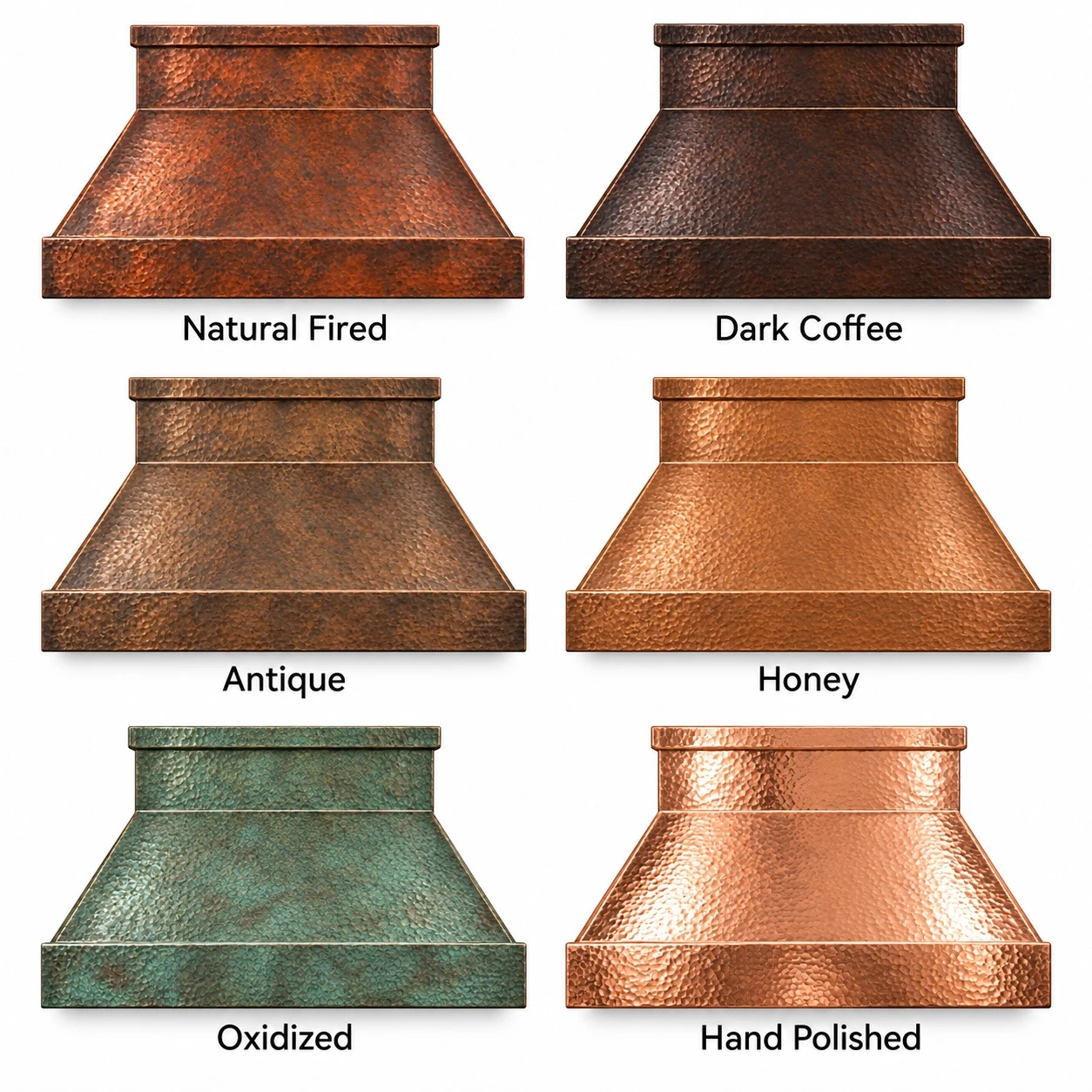
The comparison image presents the same hood shape in six finishes. Natural Fired shows warm copper and brown variation, while Dark Coffee produces a deeper, more subdued appearance. Antique has a muted aged character, and Honey introduces a brighter golden copper tone. Oxidized shifts the palette toward green, while Hand Polished shows the brightest reflective copper highlights in the collection.
Because the silhouette remains consistent, it is easier to focus on color and contrast. Consider each finish alongside cabinet samples, countertop material, backsplash tile, and hardware. A darker finish could anchor a pale kitchen, while a brighter copper surface could draw attention within a quieter palette. For maintenance considerations before choosing a finish, read our copper hood care guide.
Kitchen Styling Ideas
For Spanish or Mediterranean revival styling, consider warm plaster colors, terracotta accents, and natural wood. The hood’s straight geometry could balance decorative tile or arched architectural features. Our Tuscan copper hood guide offers related inspiration for coordinating copper with warm stone, wood, and traditional finishes. These material relationships can inform a kitchen without requiring an ornate hood silhouette.
In a rustic farmhouse or lodge setting, the hammered surface could join other tactile materials, including stone and timber. A warm contemporary kitchen offers another direction: simple cabinet fronts, restrained stone patterns, and uncluttered counters could emphasize the copper’s texture. These are proposed combinations rather than interiors shown in this collection. Compare finish samples with the actual materials and lighting planned for your space.
Final Considerations
Each image answers a different visual question, from front-facing balance to side projection and finish contrast. Review the collection together when discussing your kitchen with a designer or cabinetmaker. Confirm final dimensions, finish, and ventilation equipment before approving the order. Explore the wide apron copper hood to plan your kitchen centerpiece.
All product images are protected by copyright and may not be used without Rustica House written permission.