US Dollar
 Euro
Euro
 Australian Dollar
 Canadian Dollar
 Polish Zloty
 British Pound








Product Description
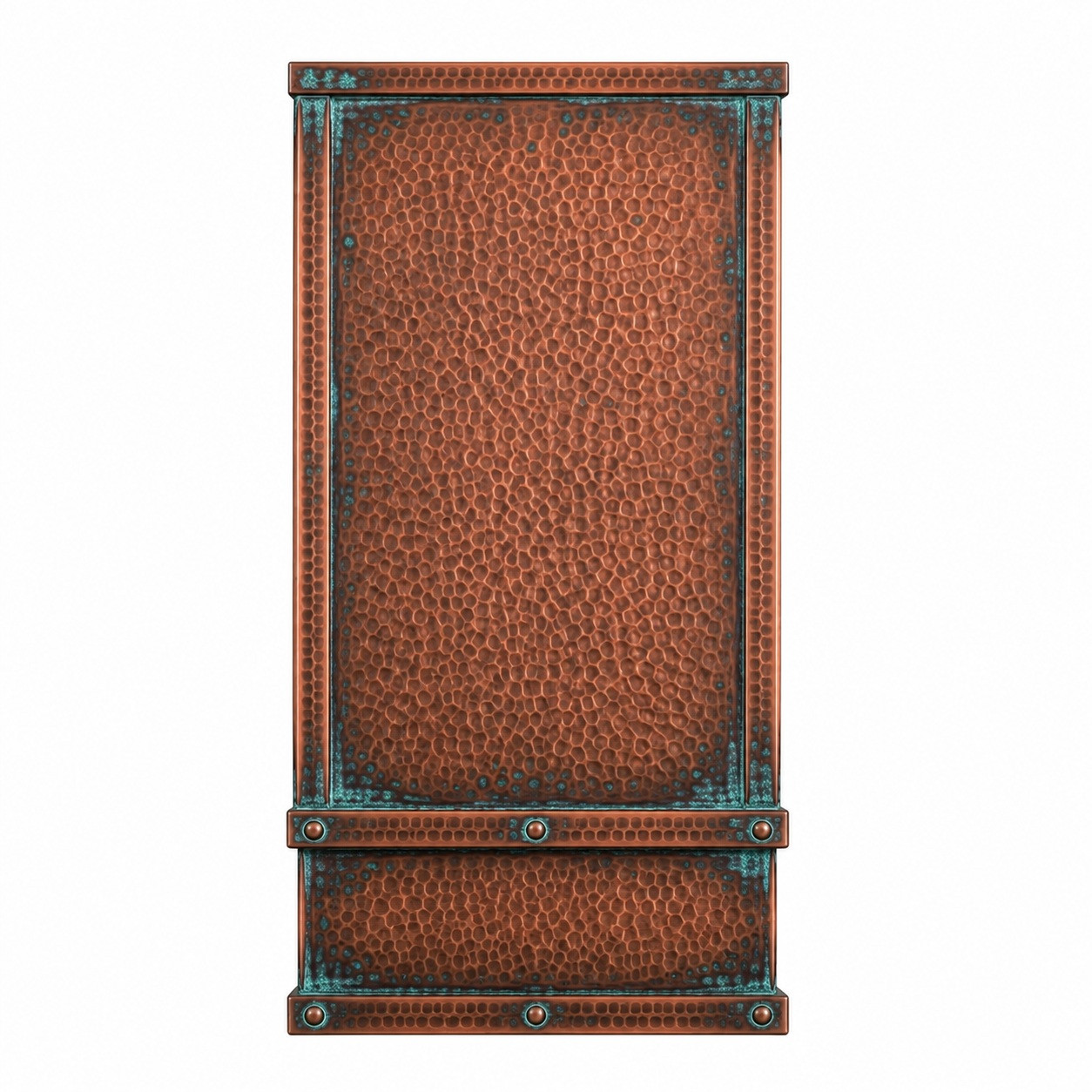
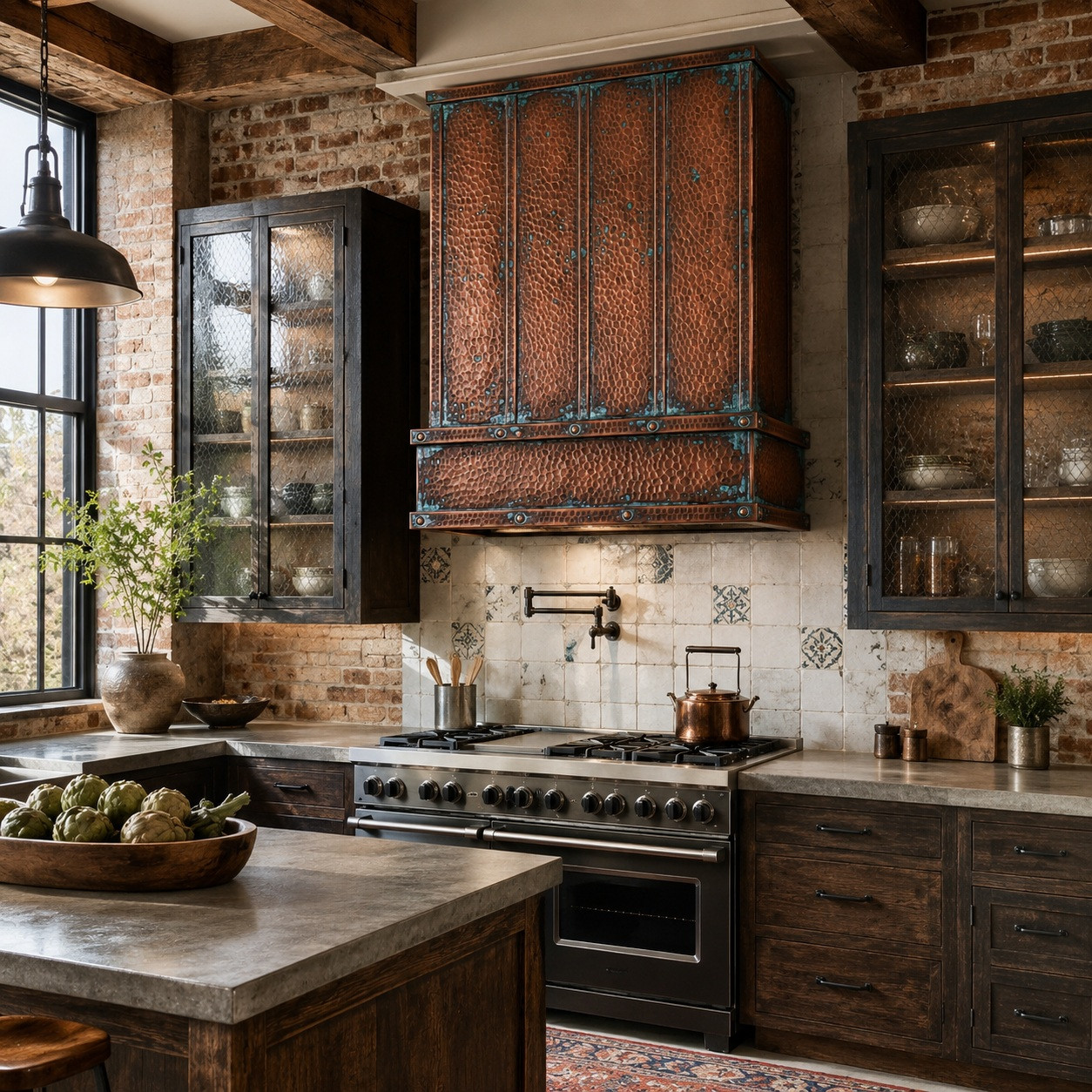
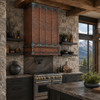
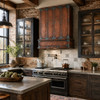
The hammered copper tower range hood with verdigris straps combines a tall four-panel elevation with deeply worked copper, visible assembly, and selectively weathered detailing. Formed from 16-gauge copper, the body rises through parallel vertical sides that create a strong architectural rhythm above the cooking surface. Three front straps divide the face into four narrow hammered fields, while the side elevations remain quiet and uninterrupted. Blue-green accents gather around panel borders, seams, rivets, and selected depressions, creating concentrated finish contrast without covering the dominant reddish-brown copper. A narrow upper cap completes the tower, a riveted crossband anchors the central transition, and a deep rectangular apron forms a substantial lower foundation. Custom wall or island configurations are available in widths from 28 to 78 inches and heights from 24 to 72 inches. Examine the structural proportions, verdigris strap detailing, insert compatibility, and fabrication characteristics in our tower range hood planning guide. Request a custom quote for this handcrafted copper centerpiece today.
Product Summary
This made-to-order hood is intended for kitchens that can support a strong vertical feature with visible metal construction. Its identity comes from the framed front, strap-free sides, pronounced hammering, weathered borders, measured fasteners, and substantial lower apron.
- Profile: tall copper tower
- Front: four framed panels
- Sides: strap-free returns
- Texture: deep hand hammering
- Finish: blue-green accents
- Bands: riveted copper rails
- Apron: deep rectangular base
- Material: 16-gauge copper
- Mount: wall or island
Design Difference
Many rectangular copper hoods are marketed through simple box geometry, interchangeable straps, broad finish menus, or general rustic styling. This design works as one integrated architectural composition: a four-panel tower, three front bands, quiet side elevations, turquoise detailing, a riveted crossbeam, and a reinforced apron. Each component contributes to the silhouette instead of appearing as decoration added to a basic copper shell.
Hood Design Analysis
Tower Profile
The enclosure maintains parallel sides from the apron to the upper cap, producing a tall vertical mass without tapering shoulders or curved transitions. Its proportions establish a clear centerline and enough visual weight to balance substantial cabinetry, stonework, exposed beams, or high ceilings. Strict geometry provides order, while the hand-worked surface prevents the hood from feeling cold or mechanically uniform.
Structural Bands
A broad riveted crossband marks the transition between the paneled tower and the lower apron. Its projection creates a pronounced shadow line and gives the impression of a structural beam supporting the copper body above. A second rail finishes the lower edge, forming a clear sequence of vertical fields, horizontal anchor, apron panel, and reinforced base.
Deep Apron
The lower section is straight, deep, and rectangular, giving the enclosure a substantial visual foundation. Its broad hammered surface balances the more divided upper body and creates a calmer interval between the crossband and lower rail. The apron avoids additional relief decoration so the visible joining, texture, and finish contrast remain easy to read.
Panel Framework
Three copper straps divide the front into four elongated fields, creating a framed architectural elevation related to paneled doors, riveted cladding, and iron-bound furniture. These bands visually lengthen the body, control the scale of the hammered areas, and establish a measured rhythm across the broad face. The panel arrangement becomes part of the hood’s structure rather than a secondary ornamental pattern.
Strap-Free Sides
The side returns remain free of vertical bands, allowing the front to carry the principal decorative emphasis. Viewed from an angle, these quieter elevations reveal the enclosure’s depth, straight outline, projecting cap, structural crossband, and lower apron without repeating the same panel framework around every surface.
Selective Verdigris
The hood is not covered in a continuous green finish. Selective verdigris gathers around rivet heads, oxidized borders, weathered seams, corners, panel edges, and individual hammer depressions. This controlled placement traces the visible assembly and intensifies the relief while allowing reddish, brown, and bronze copper to remain dominant. The blue-green accents function as architectural outlines that clarify the relationship between the panels, straps, rails, and apron.
Custom Options
Widths from 28 to 78 inches, heights from 24 to 72 inches, and a standard depth of 24 inches may be reviewed. Panel proportions, strap width, rivet cadence, apron height, cap projection, hammering depth, and oxidation intensity can be adjusted while preserving the four-panel composition. Wall-mounted and island adaptations are available when structural and ventilation requirements are confirmed before production.
Measurements Needed
Provide the cooking-surface width, selected hood width, available height, ceiling height, backsplash thickness, surrounding cabinetry, finished mounting position, and required projection. Include nearby beams, windows, shelves, stonework, or trim that could affect placement, duct routing, service access, or the visibility of the side elevations.
Insert Planning
The copper body is fabricated as an insert-ready shell. Rustica House can supply an optional 200 CFM insert. Buyer-provided internal inserts up to 1,260 CFM and external blower systems up to 1,500 CFM may be supported after complete specifications are reviewed. Provide the model, dimensions, liner cutout, filters, controls, lighting, duct size, discharge position, electrical requirements, and service clearances before production.
Buyer Table
Exterior proportions, panel divisions, finish placement, and ventilation equipment should be approved together because changing one component may affect the front rhythm, liner area, apron depth, duct position, or structural support.
| Planning | Confirm | Purpose |
| Tower height | Ceiling and clearances | Sets vertical balance |
| Panel layout | Field and strap widths | Maintains front rhythm |
| Apron depth | Base and liner space | Grounds the enclosure |
| Oxidation | Color and placement | Defines aged details |
| Ventilation | Insert, blower, and duct | Guides preparation |
| Mounting | Wall or ceiling support | Supports installation |
Range Hood Specifications
These details summarize the standard architecture, material, sizing, finish, ventilation preparation, production schedule, care, and warranty information for the handcrafted enclosure.
- Type: custom copper hood
- Profile: rectangular tower
- Front: four vertical fields
- Straps: three front bands
- Sides: no vertical straps
- Texture: deeply hammered
- Optional texture: smooth copper
- Accents: selective oxidation
- Apron: deep rectangular base
- Cap: narrow projecting top
- Rivets: rounded copper heads
- Material: 16-gauge copper
- Widths: 28 to 78 inches
- Height: 24 to 72 inches
- Depth: 24 inches standard
- Mount: wall or island
- Ventilation: insert-ready shell
- Insert: optional 200 CFM
- Buyer insert: up to 1,260 CFM
- Blower: up to 1,500 CFM
- Lead time: about 8 weeks
- Delivery: free delivery included
- Warranty: 12 months
- Care: mild soap and cloth
- Origin: Santa Clara del Cobre
- Country: handcrafted in Mexico
- SKU: AP50U4G57
PDF and CAD Downloads
Review proportional drawing in PDF format or access DXF file with compatible CAD software. These resources show range hood geometry and proportional relationships for design and planning.
Copper Craftsmanship
Artisans form the tower body, side returns, upper cap, front straps, crossband, apron, and lower rail around the approved measurements. The four panel fields are aligned before the rivet sequence is established so the front remains balanced. Deep hammering is applied across the copper, followed by the warm base finish and selective weathering. The approved ventilation opening is then prepared before inspection and insured freight packing.
Artisan Testimony
The aligned framework, measured fasteners, pronounced texture, and concentrated oxidation reflect the metalworking traditions of Michoacán. Learn more about copper artisan Juan Carlos Hernández and the regional methods used to form, hammer, join, and finish architectural copperwork.
Natural Variation
Hammer depth, panel proportions, strap alignment, rivet placement, seams, copper tones, and turquoise detailing may vary slightly between completed hoods. These differences document visible hand assembly and hand-applied finishing. They contribute to the individual character of the enclosure and are not manufacturing defects.
Best Kitchen Styles
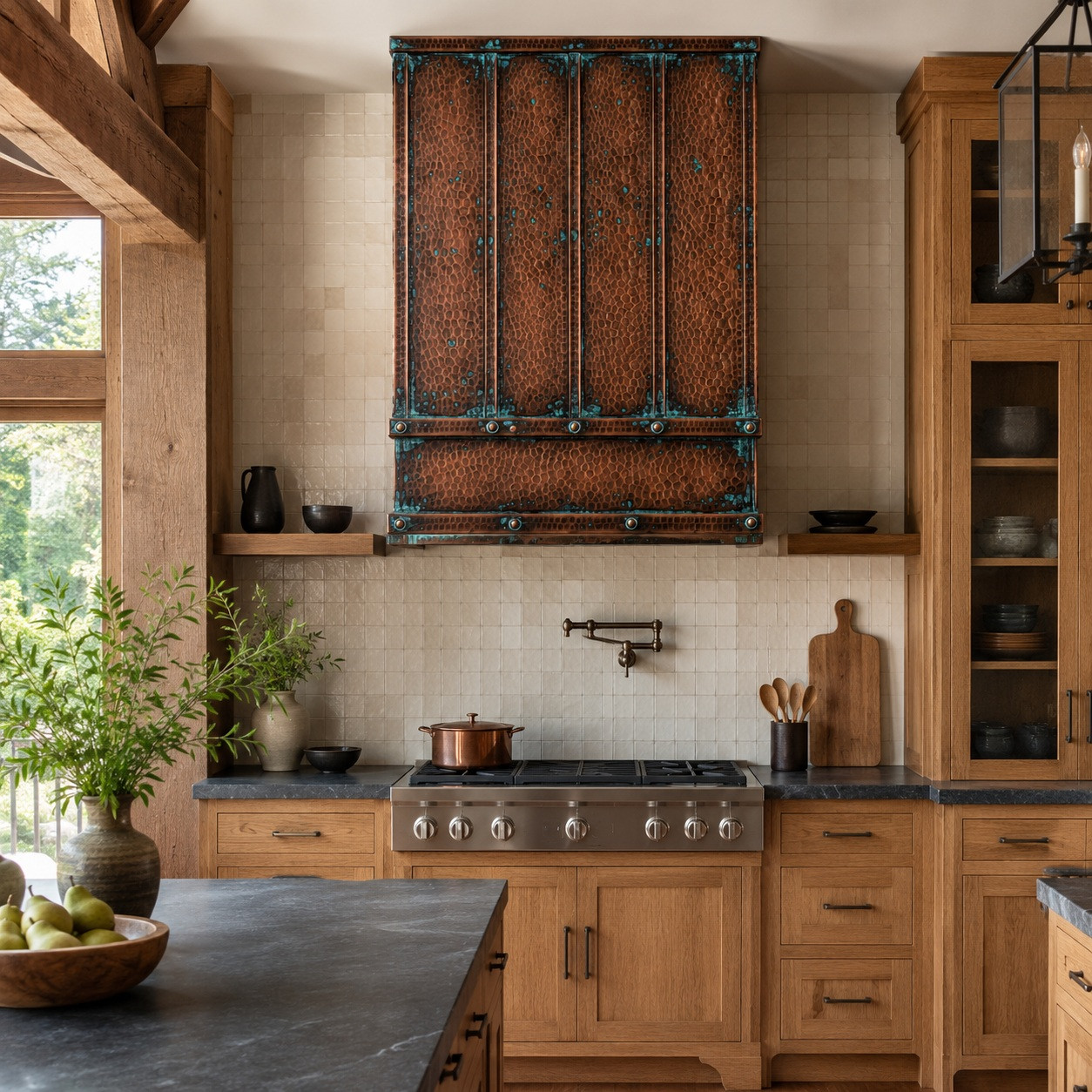
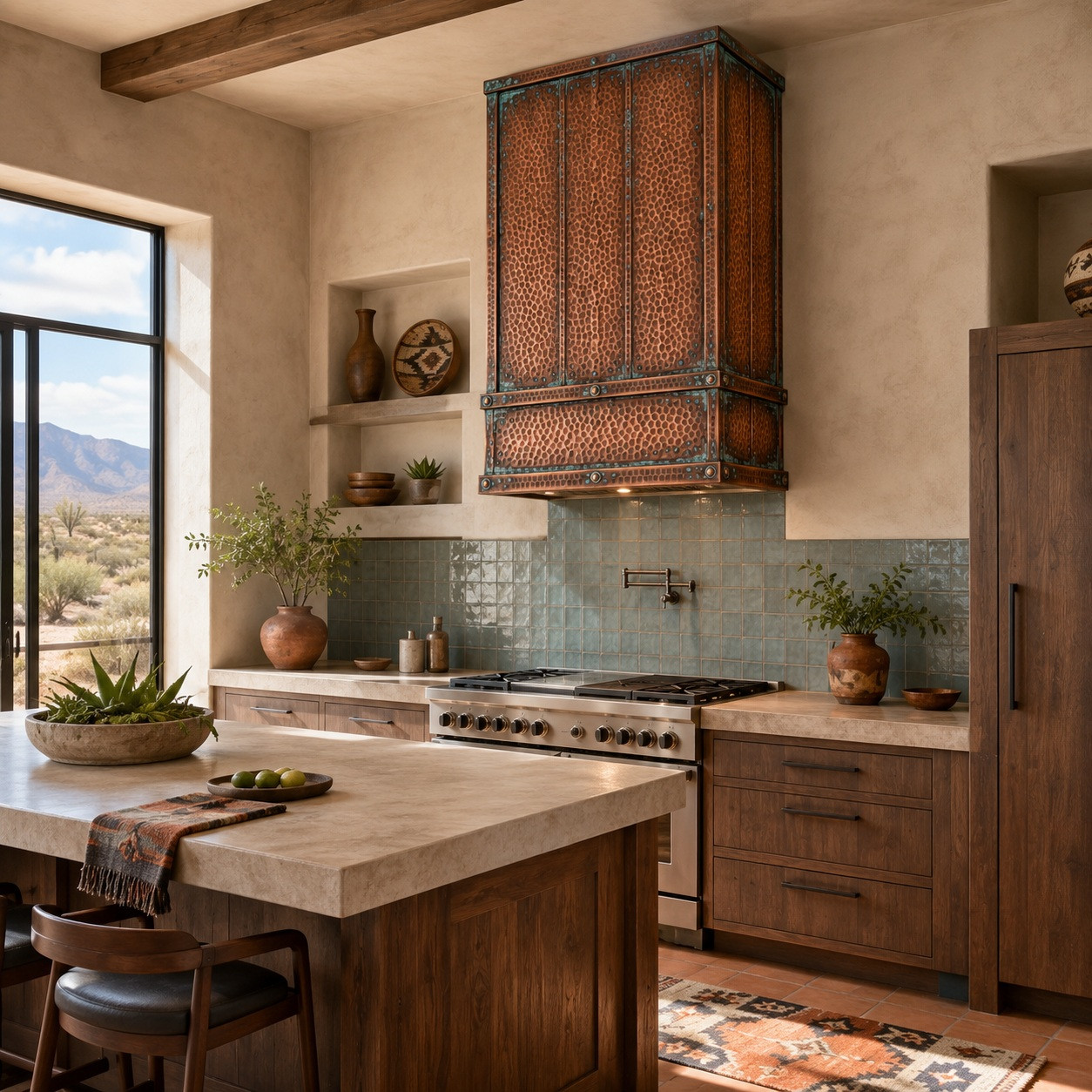
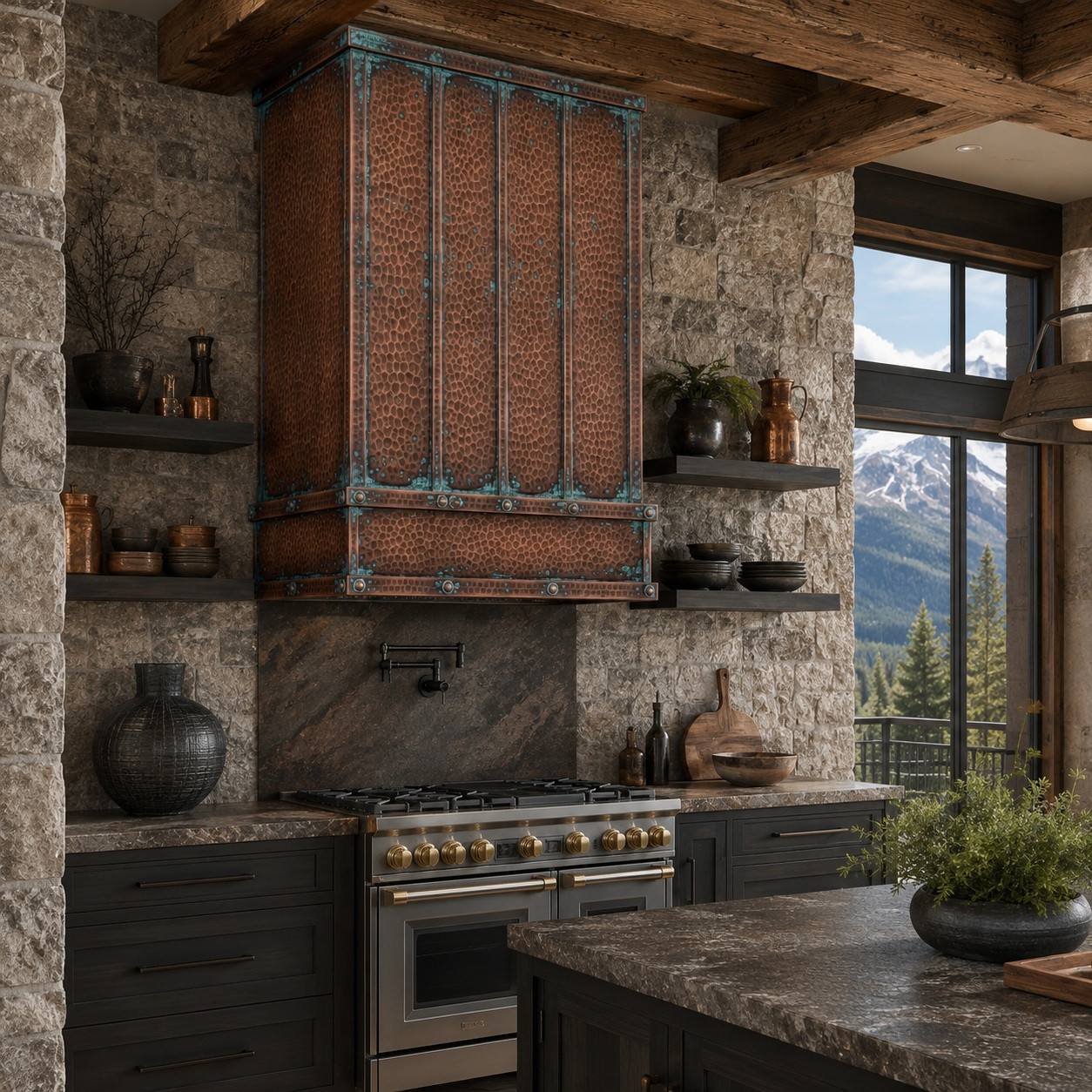
The tall vertical rhythm, framed architectural elevation, and weathered copper work best in interiors that combine substantial materials with controlled detailing. See how the tower-shaped canopy and verdigris straps create a distinctive focal point across different interiors in our copper range hood lifestyle gallery.
- Contemporary Craftsman: Quarter-sawn oak, inset cabinetry, handmade tile, soapstone, bronze hardware, and substantial trim reinforce the panel divisions and visible joining. The oxidized copper provides decorative depth, while simple cabinet doors allow the four-panel front to remain the room’s primary crafted feature.
- Southwestern contemporary: Sand-toned plaster, terracotta, desert stone, walnut, mesquite, and muted blue-green tile coordinate with the reddish copper and turquoise detailing. The straight tower keeps the room architecturally current while adding regional character without carved ornament or a flared historical canopy.
- Mountain modern: Stone walls, exposed beams, charcoal cabinetry, leathered granite, and blackened steel can support the hood’s scale. Vertical straps echo structured millwork and window framing, while the weathered seams introduce restrained color within an earthy palette.
- Heritage industrial: Reclaimed brick, wire-glass cabinets, concrete, dark wood, handmade tile, and fabricated steel complement the rivets, crossband, framed panels, and substantial lower foundation. Warm directional lighting will deepen the hammer shadows and highlight the contrast between copper and blue-green accents.
Additional Kitchen Styles
Three other kitchen directions can support the strong geometry and aged architectural surface.
- Tudor Revival
- Belgian farmhouse
- Eclectic Mediterranean
FAQ - Tower Copper Hood
These answers address the defining geometry, finish treatment, customization, ventilation compatibility, and care requirements to review before production.
A: It combines a tall four-panel tower, three front straps, quiet side elevations, deep hammering, selective verdigris, a riveted crossband, substantial apron, and lower finishing rail.
A: No. Warm reddish-brown copper remains dominant. Blue-green accents are concentrated around borders, seams, rivets, corners, and selected hammer depressions to clarify the construction.
A: Yes. Panel widths, strap spacing, rivet cadence, apron height, cap projection, overall dimensions, hammering depth, and oxidation intensity may be reviewed before fabrication.
A: Provide the manufacturer, model, body dimensions, liner cutout, filters, controls, lighting, duct size, discharge position, electrical requirements, and service clearances for compatibility review.
A: Use mild soap, clean water, and a soft nonabrasive cloth. Avoid acids, ammonia, powdered cleaners, abrasive pads, and harsh chemicals that could damage or unevenly alter the finish.
Customize This Hood
Plan this hammered copper tower range hood with verdigris straps around the cooking-surface width, available height, structural support, backsplash, cabinetry, and approved ventilation equipment. Confirm the tower proportions, panel divisions, apron depth, rivet pattern, hammering, finish placement, and final dimensions before production. Request a custom quote from Rustica House today.
Related Resources
Use these resources to compare rectangular hood styles and confirm finish, sizing, ventilation, and installation requirements.
- box copper hood collection
- custom copper range hoods
- copper patina options
- range hood insert guide
- copper hood size guide
- Copper Range Hood FAQ
Installation Guide
Coordinate structural blocking, mounting height, duct routing, electrical service, liner access, and wall or ceiling support before fabrication. Review the range hood installation guide with the installer and cabinetmaker before approving final dimensions.
Shipping & Returns
This made-to-order hood ships by insured freight after production. Review delivery inspection, damage-reporting procedures, custom-order limitations, and return eligibility on the shipping and returns page before approving the dimensions and finish.
Warranty
The handcrafted copper shell and replacement components for a Rustica House-supplied insert include 12-month coverage. Review current exclusions, maintenance responsibilities, limitations, and claim procedures on the Rustica House warranty page.
Disclaimer: Handmade dimensions, panel proportions, strap alignment, rivet placement, hammer impressions, seams, copper tones, and oxidation patterns may vary slightly. These differences are expected and are not manufacturing defects. Lifestyle images are provided for inspiration only and may show optional features. Product images may not be reproduced without written permission from Rustica House.