US Dollar
 Euro
Euro
 Australian Dollar
 Canadian Dollar
 Polish Zloty
 British Pound








Product Description
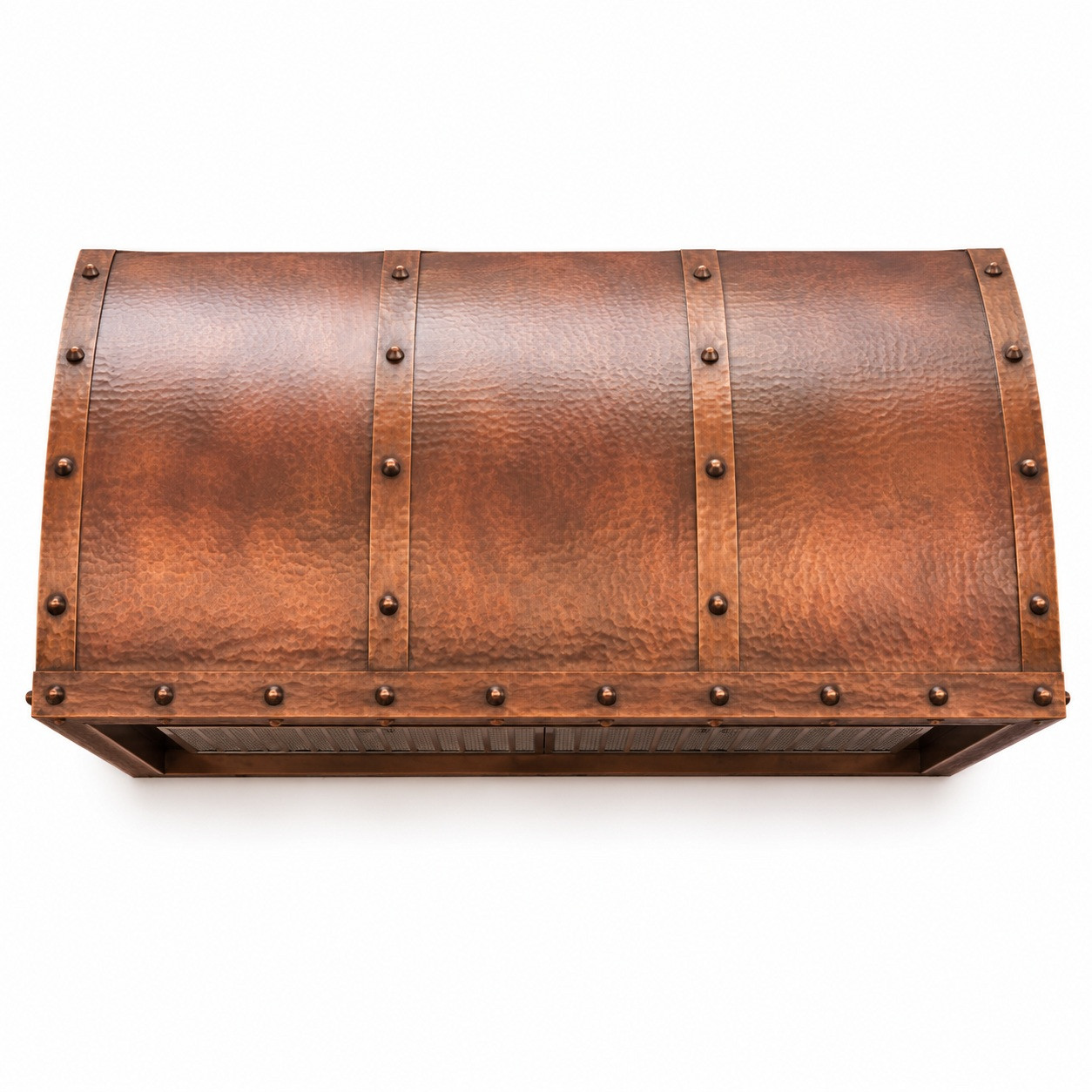
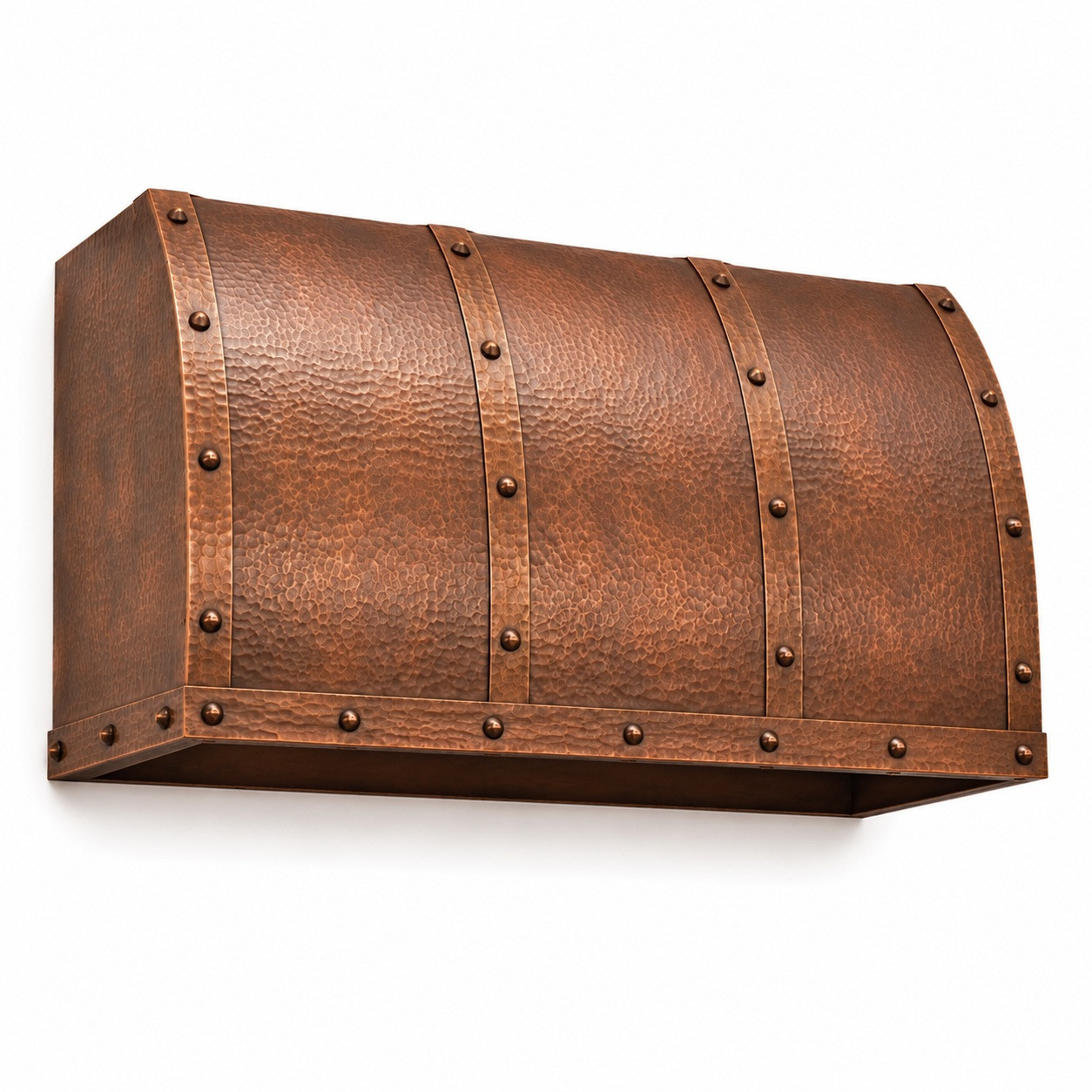
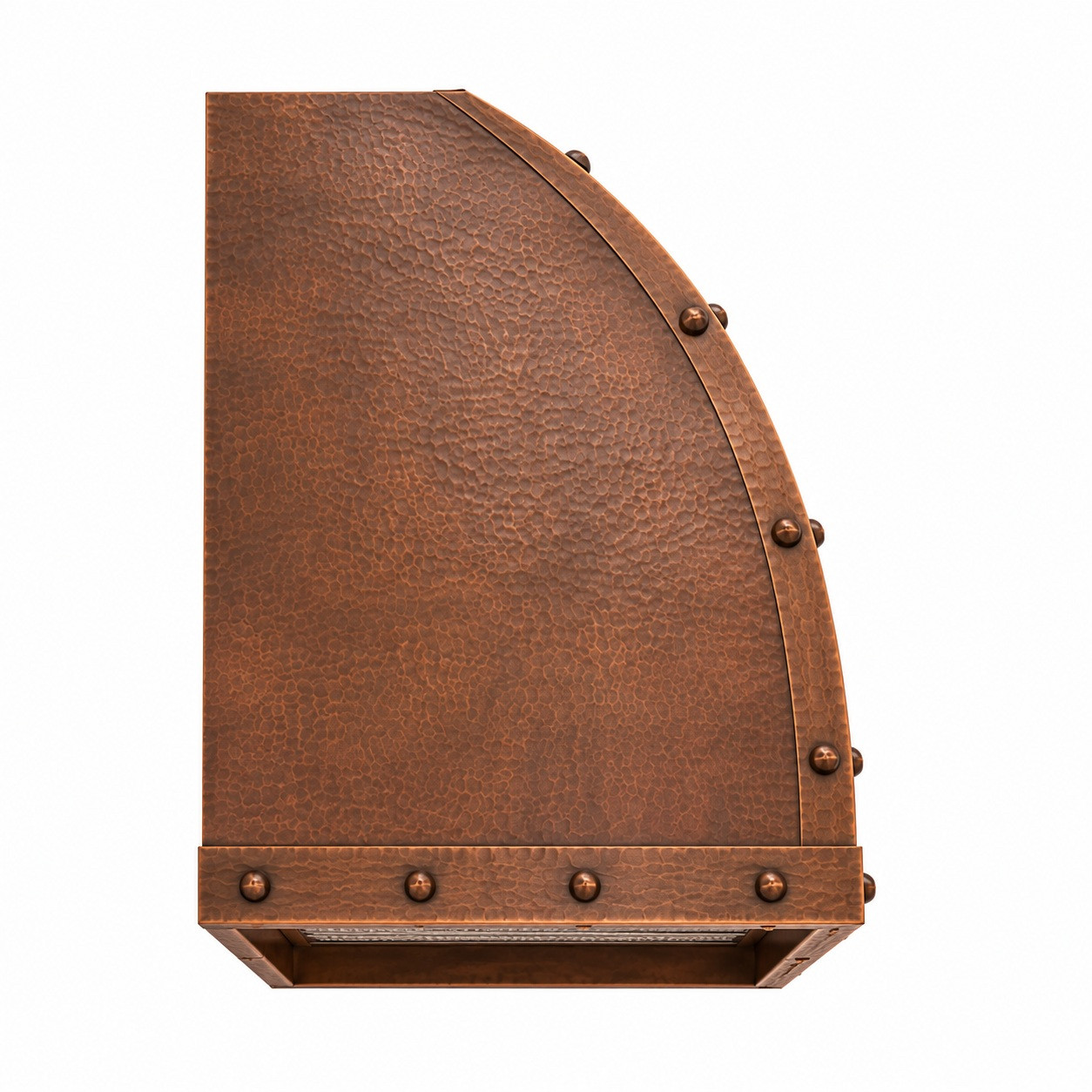
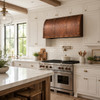
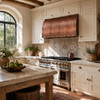
The barrel-vault under-cabinet copper range hood with riveted straps combines a softly rounded canopy, hand-hammered copper, and exposed construction details in a compact made-to-order design. Unlike a fixed-size appliance hood, this custom copper shell is proportioned around the cabinet opening, cooking surface, available height, and selected ventilation equipment. The curved face projects outward beneath the upper cabinet, while the flat top and straight side edges allow the hood to integrate with cabinetry above and on both sides. Each shell is formed from 16-gauge copper and finished by hand in Santa Clara del Cobre, Mexico. Buyers may select from four traditional copper patinas, green oxidized copper, or hand-polished copper. Natural variation in color, hammering, seams, rivet placement, and dimensions makes every hood unique. Discover how the rounded canopy and compact under-cabinet format influence sizing, cabinetry integration, and kitchen design in our under-cabinet copper range hood guide. Order this handcrafted barrel-vault hood in dimensions and a finish selected for your kitchen.
Product Summary
- Type: Custom under-cabinet hood
- Shape: Rounded barrel-vault canopy
- Material: 16-gauge copper
- Texture: Soft hand hammering
- Details: Riveted copper straps
- Fit: Cabinets above and beside hood
- Finish: Six copper finish options
- Ventilation: Up to 1,500 CFM
Barrel Architecture
Curved Canopy
The hood’s defining feature is its continuous barrel-vault canopy. Instead of using a flat face, angular slope, or rectangular box, the copper curves outward from the cabinet line and returns toward the reinforced lower edge. This geometry creates the appearance of a compact architectural vault and gives the hood greater visual depth than a conventional under-cabinet appliance. The rounded surface also reveals changes in the copper patina and hand-hammered texture as light moves across the canopy. Because the design does not rely on crown molding, scrollwork, embossing, or an extended chimney, its sculptural curved form remains the principal visual feature.
Riveted Straps
Vertical copper straps divide the curved canopy into balanced architectural sections and emphasize the direction of the barrel profile. Exposed rivets run along the straps and lower trim, recalling traditional cooperage, architectural copperwork, and early riveted metal fabrication. These details give the hood a more constructed and substantial appearance than a model with a plain uninterrupted surface. Strap spacing can be coordinated with the selected width so that the composition remains balanced on both compact and oversized hoods. The restrained detailing adds historic character without introducing ornate appliqués or unrelated decorative motifs.
Buyer Benefits
This design is intended for buyers who need an under-cabinet installation but want more architectural character than a flat stainless-steel appliance or simple rectangular metal enclosure. Its rounded front creates a stronger focal point while remaining compact enough to fit beneath upper cabinetry. The absence of elaborate moldings and embossed decoration also allows the hood to work in traditional, rustic, industrial, farmhouse, and transitional interiors. Custom production coordinates the shell with the range, cabinet opening, available mounting height, desired projection, duct route, and selected ventilation insert rather than forcing the kitchen design around a fixed factory size. Discover completed kitchens showcasing the rounded copper canopy and compact under-cabinet configuration in our under-cabinet copper range hood image gallery.
Shape Comparison
A box-style under-cabinet hood produces a straight architectural face and is often preferred for modern, urban, or highly geometric kitchens. A sloped hood uses angled planes to project over the cooking surface while maintaining a sharper silhouette. This barrel-vault design offers a softer alternative to both. Its curved face creates more visual movement than a box canopy and feels less angular than a sloped design. The riveted straps further distinguish it from smooth minimalist hoods, giving the shell artisan-made character without adding excessive ornamentation or distracting from the natural copper surface.
Cabinet Planning
Cabinet Integration
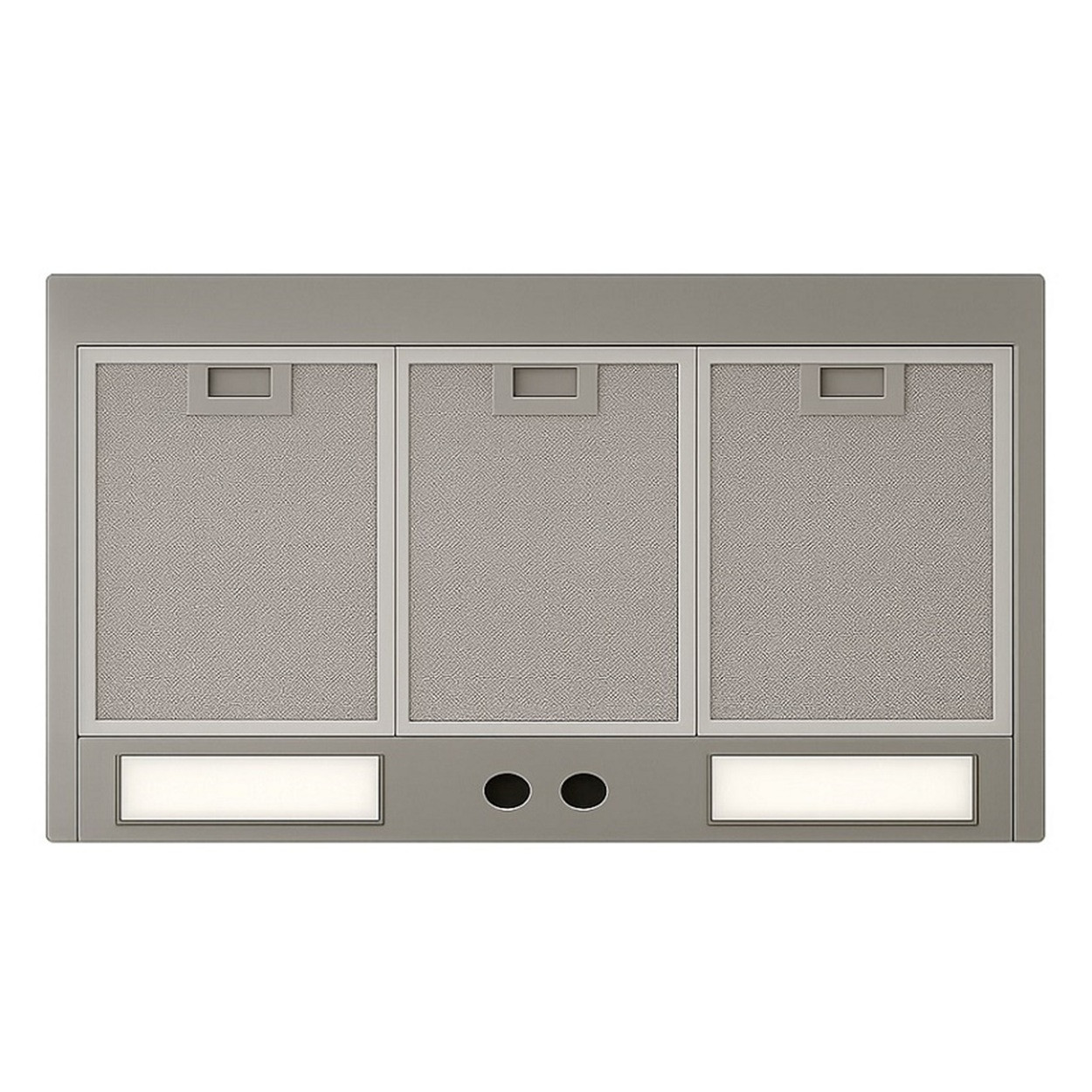
The hood is designed to sit beneath an upper cabinet or custom enclosure, with neighboring cabinets meeting its left and right sides. Its upper structure can be adjusted to suit the opening and provide space for the selected insert, controls, lighting, duct connection, or transition. The visible curved front may extend below the cabinet bottoms so that the barrel profile remains clearly visible from across the room. Before production, the buyer or cabinetmaker should confirm the opening width, cabinet depth, available height, cooking-surface width, mounting clearance, duct location, and all ventilation specifications.
Custom Proportions
Each hood is produced individually rather than formed from a standard mass-production mold. Width, height, depth, curvature, strap spacing, and insert preparation can therefore be adjusted to the project. The hood should generally be at least as wide as the cooking surface and may be ordered wider when the cabinet layout and ventilation plan allow. A wider shell creates a broader and more gradual curve, while a narrower hood produces a tighter barrel profile. Final measurements should be reviewed with the cabinetmaker and installer before fabrication because handmade dimensions may vary by approximately 10 percent from the values listed.
Planning Guide
| Feature | Best For | Buyer Decision |
|---|---|---|
| Barrel canopy | A softer alternative to box or sloped hoods | Confirm space for the curved projection |
| Under-cabinet fit | Cabinetry above and beside the cooking area | Provide exact cabinet-opening dimensions |
| Soft hammering | Subtle texture and gentle tonal movement | Expect natural handmade surface variation |
| Riveted straps | Farmhouse, industrial, and lodge kitchens | Approve strap quantity and spacing |
| Custom sizing | Nonstandard ranges and cabinet openings | Confirm width, height, depth, and clearance |
| Insert preparation | Optional or buyer-supplied ventilation | Submit specifications before production |
Kitchen Styles
The rounded silhouette, warm copper surface, and visible riveted construction allow this hood to complement several architectural styles without appearing overly decorative:
- European Farmhouse: The barrel canopy and aged copper finish reflect the practical handcrafted metalwork associated with traditional European farmhouses. Painted inset cabinetry, natural oak or walnut, limestone, soapstone, terracotta flooring, handmade ceramic tile, plaster walls, exposed beams, and aged brass or iron hardware create an authentic setting. The riveted straps add historic character while remaining restrained enough to work with simple cabinet doors and collected furnishings.
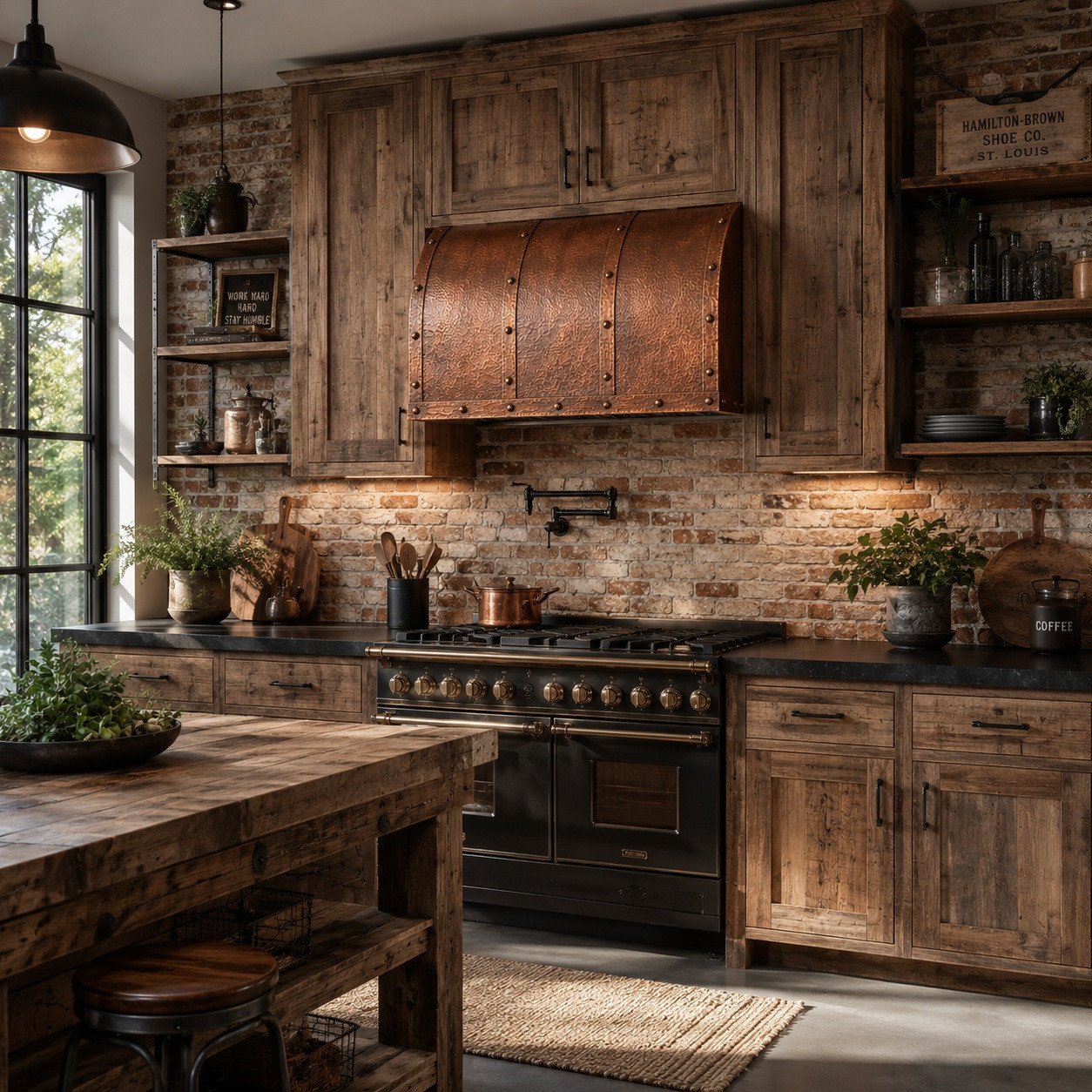
- Industrial Rustic: Exposed rivets and reinforcing straps recall early industrial fabrication, while the softly hammered copper keeps the composition warm and residential. Reclaimed wood cabinets, black steel framing, exposed brick, concrete or soapstone countertops, oversized pendant lights, dark hardware, and open shelving reinforce the hood’s constructional character. The copper connects harder industrial materials with the warmer wood tones used throughout the kitchen.
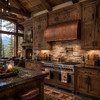
- Mountain Lodge: The substantial rounded canopy has enough visual weight for a lodge kitchen surrounded by heavy natural materials. Knotty alder cabinetry, reclaimed timber beams, stacked stone, slate flooring, forged iron lighting, leather seating, and an oversized cooking range complement the hood’s handcrafted surface. Its under-cabinet format adds warmth and architectural definition without requiring the full vertical height of a chimney-style hood.
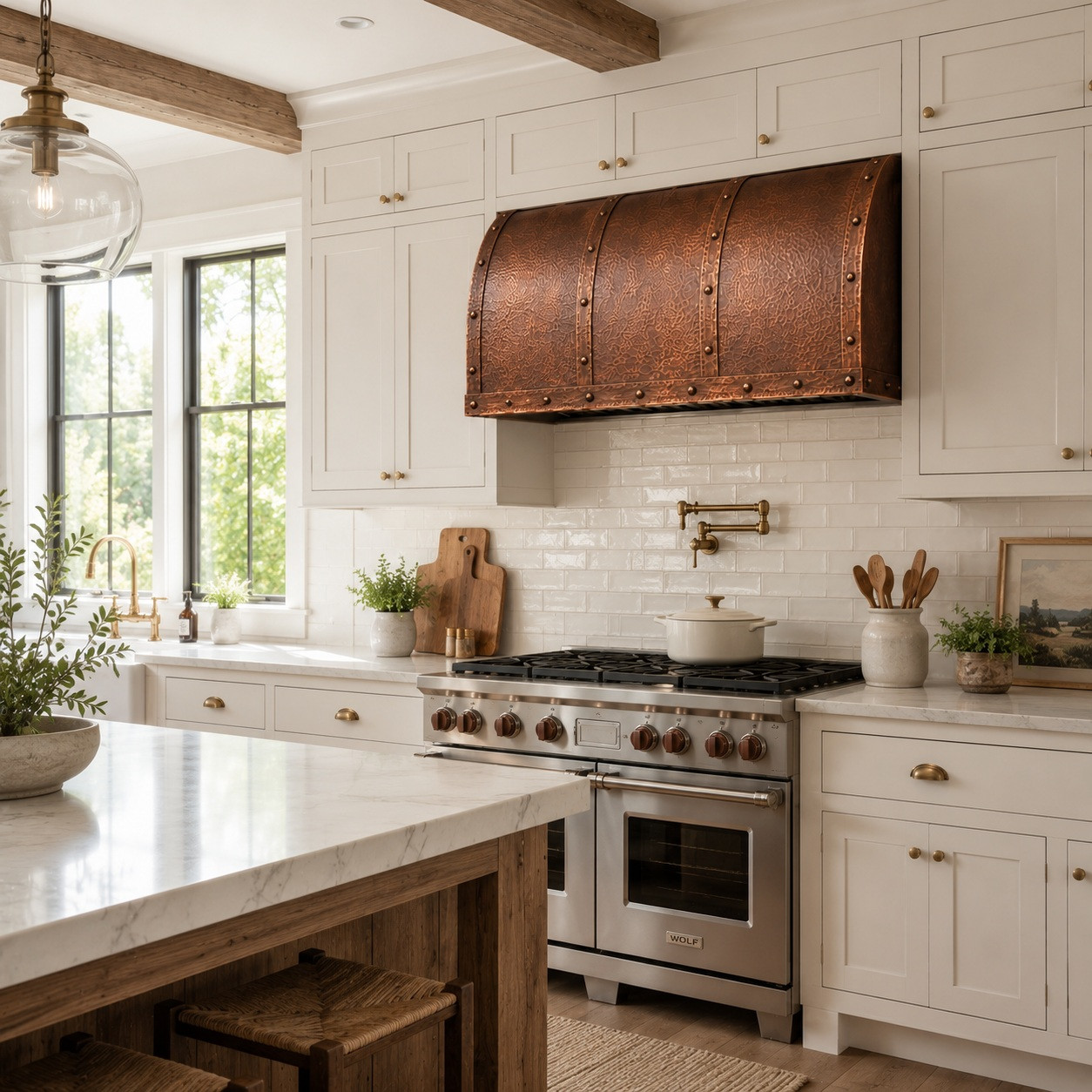
- Modern Farmhouse: Although the form is inspired by traditional metalworking, the clean barrel geometry also suits updated farmhouse interiors. White, cream, or soft-gray shaker cabinetry, a natural oak island, quartz or lightly veined marble, wide-plank flooring, matte black fixtures, aged brass hardware, and simple handmade tile create a restrained background. The copper hood becomes the main warm material accent without introducing elaborate ornamentation.
The design can also complement Spanish Colonial, English Country, and transitional rustic kitchens where copper is paired with wood, stone, plaster, brick, or handcrafted tile.
Material Finish
Hammered Copper
The canopy is formed from 16-gauge copper and finished with a soft hand-hammered texture. Fine hammer marks diffuse broad reflections and create gentle tonal movement across the curved surface, helping define the barrel profile under changing kitchen light. The texture is intentionally quieter than deep rustic hammering, allowing the hood to work in both traditional and transitional interiors. Surface variation, patina movement, tool marks, seam differences, hammering irregularities, and small dimensional variations are expected characteristics of authentic handmade metalwork and should not be considered manufacturing defects.
Finish Options
The hood is available in four traditional copper patinas ranging from lighter warm tones to deeper aged browns, as well as green oxidized copper and hand-polished copper. Antique finishes emphasize the rivets, straps, and recessed areas while preserving warmer highlights across the rounded face. Green oxidation creates more dramatic color movement, while polishing produces a brighter and more reflective surface. Copper samples should be treated as general finish directions because every patina is applied by hand and reacts differently across each sheet of metal.
Hood Specifications
- Product: Custom copper hood shell
- Shape: Barrel-vault profile
- Material: 16-gauge copper
- Texture: Soft hand hammering
- Trim: Riveted straps and lower band
- Size: Made to order
- Fit: Under-cabinet installation
- Finishes: Six finish options
- Insert: Optional 200 CFM unit
- Internal: Up to 1,260 CFM
- External: Up to 1,500 CFM
- Origin: Santa Clara del Cobre
- SKU: RH38H10C61
- Lead Time: About 6 weeks
- Shipping: Free mainland USA
- HR-Under-Cabinet
- HR-Wall-Mount
Ventilation Planning
Insert Details
Buyers using their own ventilation equipment should provide the manufacturer, model number, overall body dimensions, required cutout, duct diameter, duct location, control position, lighting layout, mounting points, filter dimensions, and service-access requirements before production. Complete specifications allow the artisans to prepare the copper shell around the selected equipment rather than modifying the finished hood at the installation site. The cabinetmaker and installer should also confirm whether additional framing, liner support, duct transitions, electrical access, or removable service panels will be required.
Duct Planning
Blower capacity should be selected according to the cooking equipment, fuel type, total burner output, hood size, duct diameter, duct length, number of turns, makeup-air requirements, and local building codes. A higher CFM rating does not guarantee effective performance when the duct system is undersized or poorly routed. The buyer should coordinate the ventilation plan with an appliance dealer, HVAC professional, or qualified installer before ordering. Review the range hood insert guide for additional planning information.
Ventilation Policy
Rustica House can supply the optional 200 CFM insert only. Other internal inserts, liners, inline blowers, external blowers, controls, duct components, and ventilation accessories must be purchased by the buyer. The copper shell can support compatible buyer-supplied internal inserts up to 1,260 CFM and external blowers up to 1,500 CFM when complete specifications are submitted and approved before production. Because ventilation equipment varies in capacity, dimensions, controls, lighting, blower type, filter access, ducting, finish, and price, allowing buyer-supplied systems provides greater flexibility. Final equipment selection, installation, airflow performance, and code compliance remain the responsibility of the buyer and qualified installer.
Hood FAQ
Are Hoods Identical?
No. Each hood is formed, hammered, assembled, and patinated by hand. Differences in color, tool marks, seams, rivets, hammering, patina movement, and dimensions are natural evidence of handcrafted production.
Is Custom Sizing Available?
Yes. The width, height, depth, projection, curvature, upper structure, strap spacing, and insert preparation can be coordinated with the cabinet plan, cooking surface, and selected ventilation equipment.
What Width Works Best?
The hood should generally be at least as wide as the cooking surface. A wider hood may provide better visual proportion and capture when the cabinet layout, mounting clearance, and ventilation plan allow it.
Can I Supply Inserts?
Yes. Compatible buyer-supplied internal inserts up to 1,260 CFM may be accommodated when complete technical specifications are provided and approved before the copper shell enters production.
Are External Blowers Compatible?
Yes. The hood may be prepared for a compatible external blower rated up to 1,500 CFM. The buyer and qualified installer must verify equipment compatibility, duct sizing, airflow requirements, and code compliance.
Which Finishes Are Available?
The hood is available in four traditional copper patinas, green oxidized copper, and hand-polished copper. Because every finish is applied by hand, samples indicate a general color direction rather than an exact result.
Ready To Order
Coordinate the hood width, overall height, depth, cabinet opening, cooking-surface size, copper finish, hammering, duct route, and ventilation equipment before placing the order. Supplying complete cabinet drawings and insert specifications early allows the artisans to prepare the shell accurately for the intended installation. Customize this barrel-vault under-cabinet copper range hood with the proportions, riveted details, and finish selected for your kitchen.
Related Resources
Installation Planning
Professional installation is recommended. The cabinetmaker and installer should verify the cabinet opening, mounting support, cooking-surface clearance, duct route, electrical access, insert dimensions, and local code requirements before the hood enters production. Installation hardware, duct components, transitions, electrical work, ventilation equipment other than the optional 200 CFM insert, and modifications to surrounding cabinetry are the buyer’s responsibility. Evaluate installation clearances, mounting requirements, and support considerations in our range hood mounting guide.
Shipping Returns
Each copper range hood is made to order according to the approved dimensions, finish, decorative details, and ventilation preparation. Buyers should inspect the shipping container and hood promptly after delivery and report visible transit damage according to the procedures in the shipping and returns policy. Custom dimensions, finishes, and fabrication details should be reviewed carefully before production because made-to-order products may be subject to return restrictions.
Product Warranty
This handcrafted copper hood is covered by the Rustica House limited product warranty for qualifying defects in materials and workmanship under normal residential use. Natural patina movement, color variation, hammer marks, seams, tool marks, rivet differences, surface irregularities, and small dimensional variations are characteristics of handmade copperwork and are not considered defects. Review the complete product warranty for coverage periods, exclusions, claim procedures, required documentation, and buyer responsibilities.
Disclaimer: Product dimensions, finish colors, patina variations, hammer marks, decorative details, handcrafted elements, and stated weights may vary slightly due to the artisan production process. Each copper range hood is individually handcrafted, making every piece unique. All product images are protected by copyright and may not be used, reproduced, copied, distributed, or published in any form without the prior written permission of Rustica House.