 US Dollar
 Euro
Euro
 Australian Dollar
 Canadian Dollar
 Polish Zloty
 British Pound


The Simple Under-Cabinet Copper Range Hood is shown in these kitchen images as a compact handcrafted focal point for modern farmhouse, modern transitional, organic modern, and contemporary rustic kitchens. Its under-cabinet format is useful for kitchens with upper cabinetry, limited clearance, or tighter range-wall layouts. The hood combines a clean sloped front, smooth copper surface, dark aged patina, boxed lower apron, and restrained handmade character without straps, rivets, crown molding, or decorative overlays. It offers a warmer alternative to standard appliance-style ventilation covers while preserving a practical cabinet-ready profile. Explore the simple under-cabinet copper range hood to compare its shape, finish, proportions, and kitchen style applications. For product-specific planning context, read the simple under-cabinet copper range hood guide.
Blog Summary
- Focus: under-cabinet kitchen images
- Product: simple copper range hood
- Shape: compact sloped profile
- Finish: dark aged copper patina
- Scenes: four kitchen styles
- Look: warm and restrained
Under-Cabinet Copper Hood Images
Kitchen images help show how this under-cabinet copper range hood works in finished interiors rather than as a standalone product photo. Cabinet color, backsplash material, counter selection, flooring, lighting, hardware, and wall texture all affect how the copper patina appears. In one kitchen, the hood can feel modern farmhouse and welcoming. In another, the same copper profile can support modern transitional, organic modern, or contemporary rustic interiors.
This hood stands out because it keeps the range wall compact. Instead of using a tall chimney or large decorative canopy, it sits beneath upper cabinets and keeps the kitchen’s horizontal cabinet rhythm intact. The copper surface still gives the cooking area a handcrafted focal point, while the simple shape prevents the hood from overwhelming the room. For broader under-cabinet inspiration, review the under-cabinet copper range hood guide.
Design Highlights
- simple under-cabinet copper profile
- smooth sloped front face
- dark aged copper patina
- clean boxed lower apron
- flat side panel geometry
- no straps, rivets, or crown
- modern to rustic flexibility
Modern Farmhouse Kitchen Image
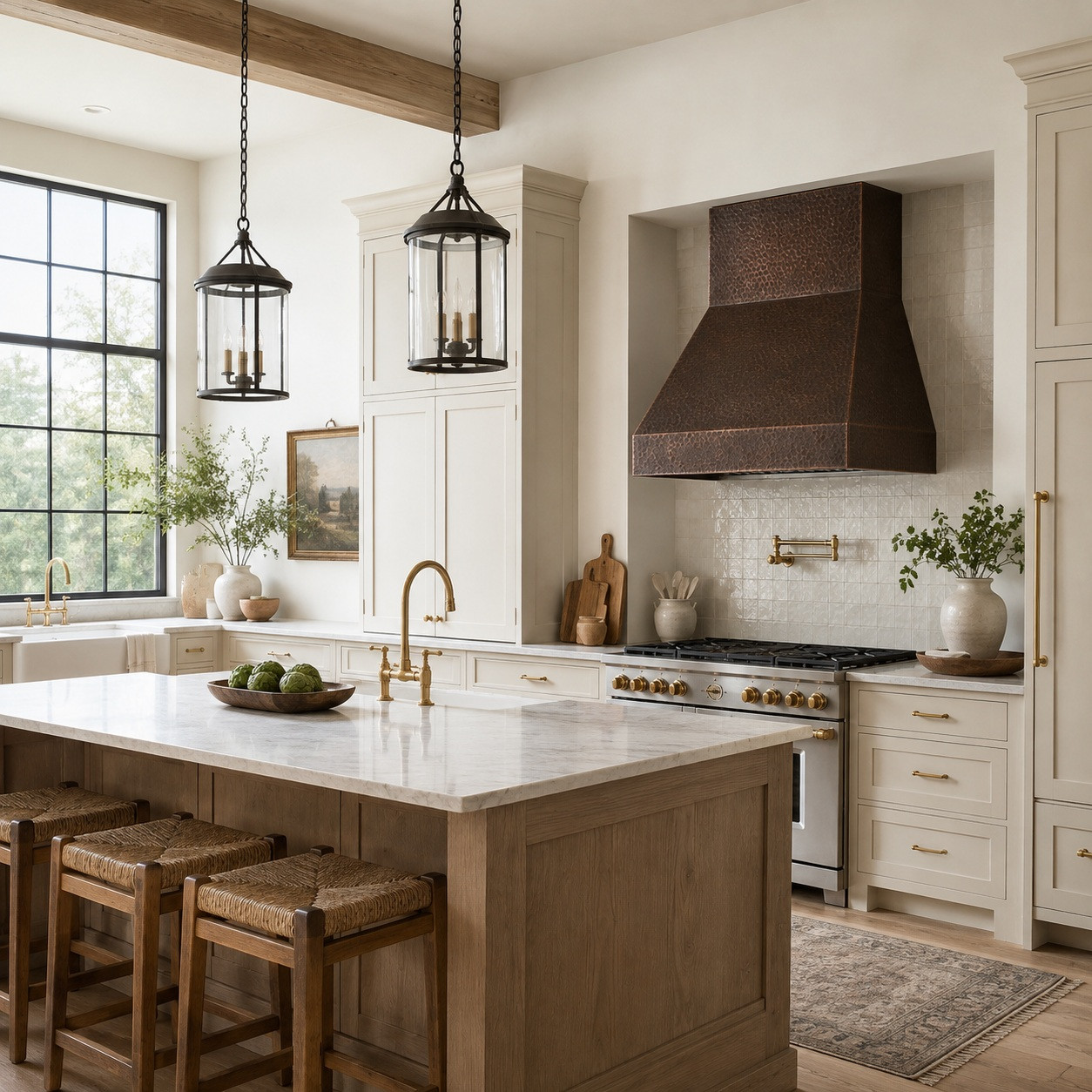
In a modern farmhouse kitchen, the simple under-cabinet copper hood brings warmth to painted cabinetry, pale oak, stone counters, handmade tile, apron-front sinks, and restrained black or brass hardware. Modern farmhouse interiors often combine familiar materials with cleaner lines, so the hood’s lack of decorative overlays is important. It provides handcrafted copper character without making the kitchen feel overly rustic or busy.
The dark aged copper patina works well against white, cream, taupe, sage, charcoal, and natural wood cabinetry. Its sloped face gives the range wall enough shape to feel custom, while the under-cabinet format keeps the overall elevation compact and practical. The boxed apron creates a clear lower edge above the cooking area, helping the hood feel finished without adding straps or rivets. This image shows how copper can warm a farmhouse kitchen while still supporting an updated design language.
Modern Transitional Kitchen Image
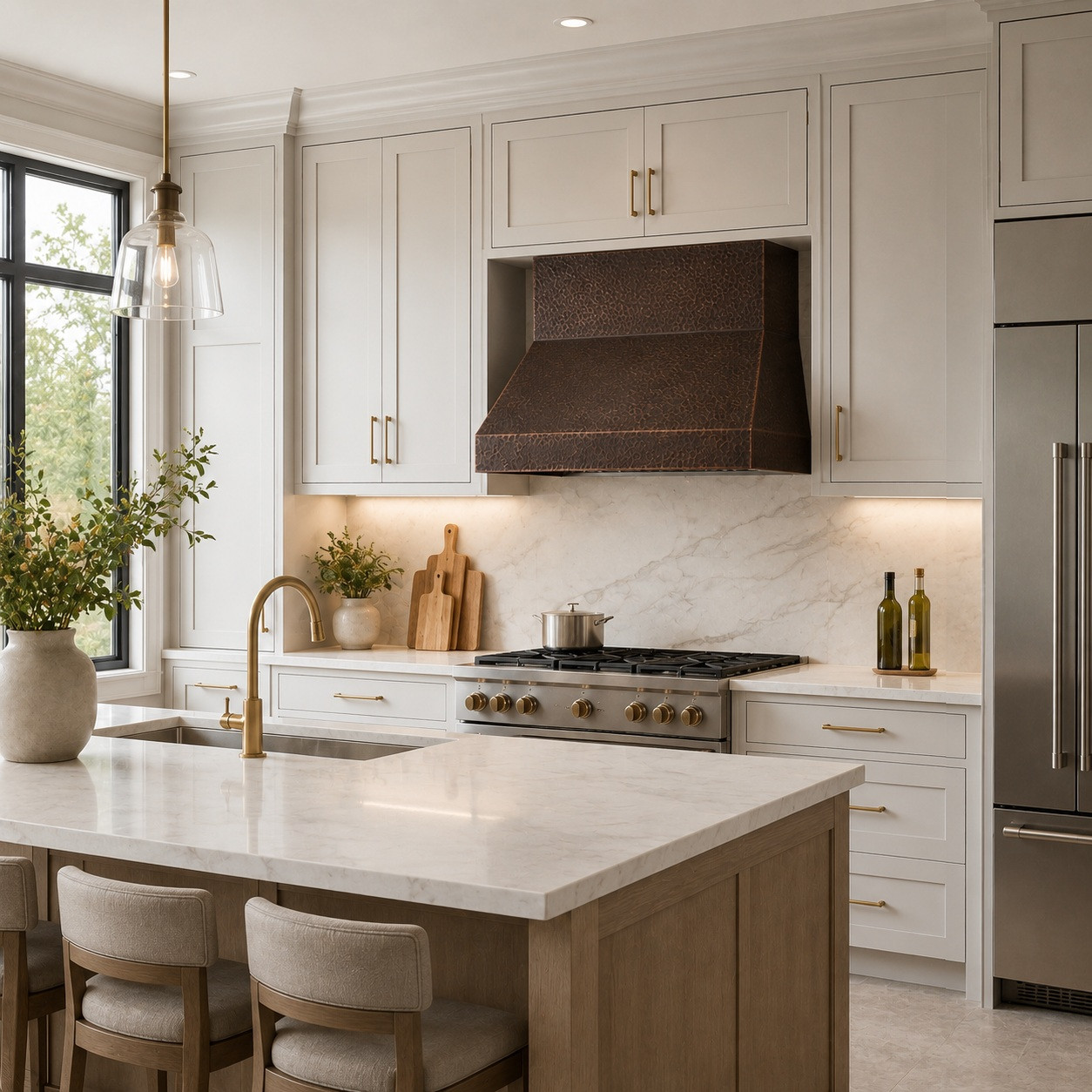
In a modern transitional kitchen, the hood bridges classic cabinetry and contemporary restraint. Transitional kitchens often include shaker or flat-panel cabinets, quartzite, marble, subtle tile, quiet lighting, and a balanced mix of warm and cool finishes. The copper hood works because its shape is simple enough for updated interiors, while the aged patina gives the range area more depth than a painted or stainless hood cover.
The smooth surface is especially useful in this style. Hammered copper, rivets, or applied straps could make the range wall lean rustic, while this cleaner design keeps the room polished and versatile. The sloped front introduces gentle movement, and the low cabinet-ready profile preserves the rhythm of upper cabinetry. For finish comparison, review the copper patina finish options guide.
Organic Modern Kitchen Image
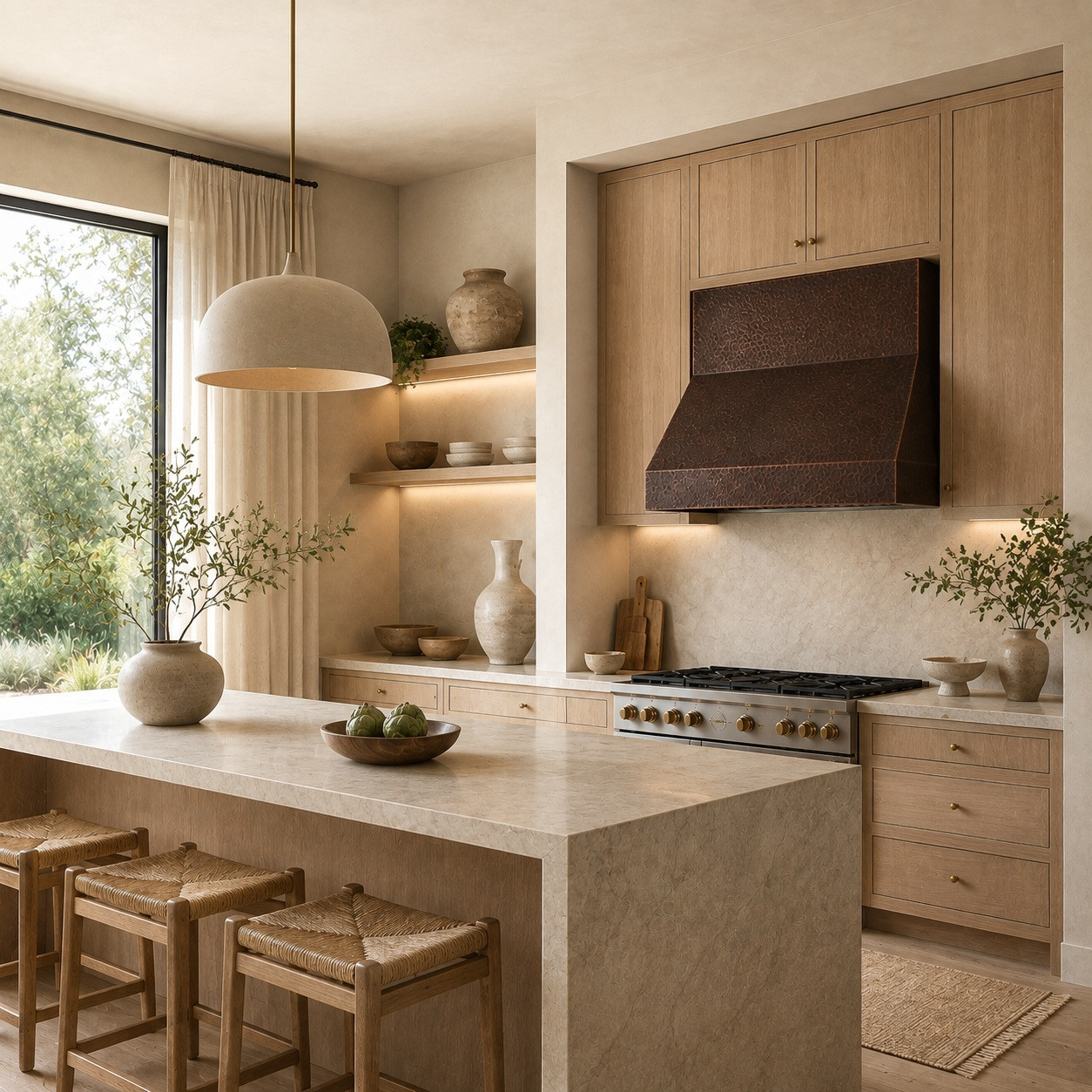
In an organic modern kitchen, the simple copper hood works with plaster walls, light timber, honed stone, handmade ceramics, natural textures, soft veining, and muted hardware. Organic modern interiors usually depend on tactile materials rather than decorative trim, so this hood’s restrained shape fits well. The copper finish adds warmth and contrast while leaving room for stone, wood, and plaster to remain central.
The under-cabinet format also supports the calm horizontal lines often found in organic modern kitchens. Instead of rising into a tall chimney, the hood stays compact and integrated beneath cabinetry. The smooth copper face complements limestone, travertine, oak, clay, plaster, and soft neutral palettes. Its dark aged patina can keep the room grounded, especially when the surrounding finishes are pale or matte. For broader smooth-versus-textured planning, review the hammered and smooth metal hoods guide.
Contemporary Rustic Kitchen Image
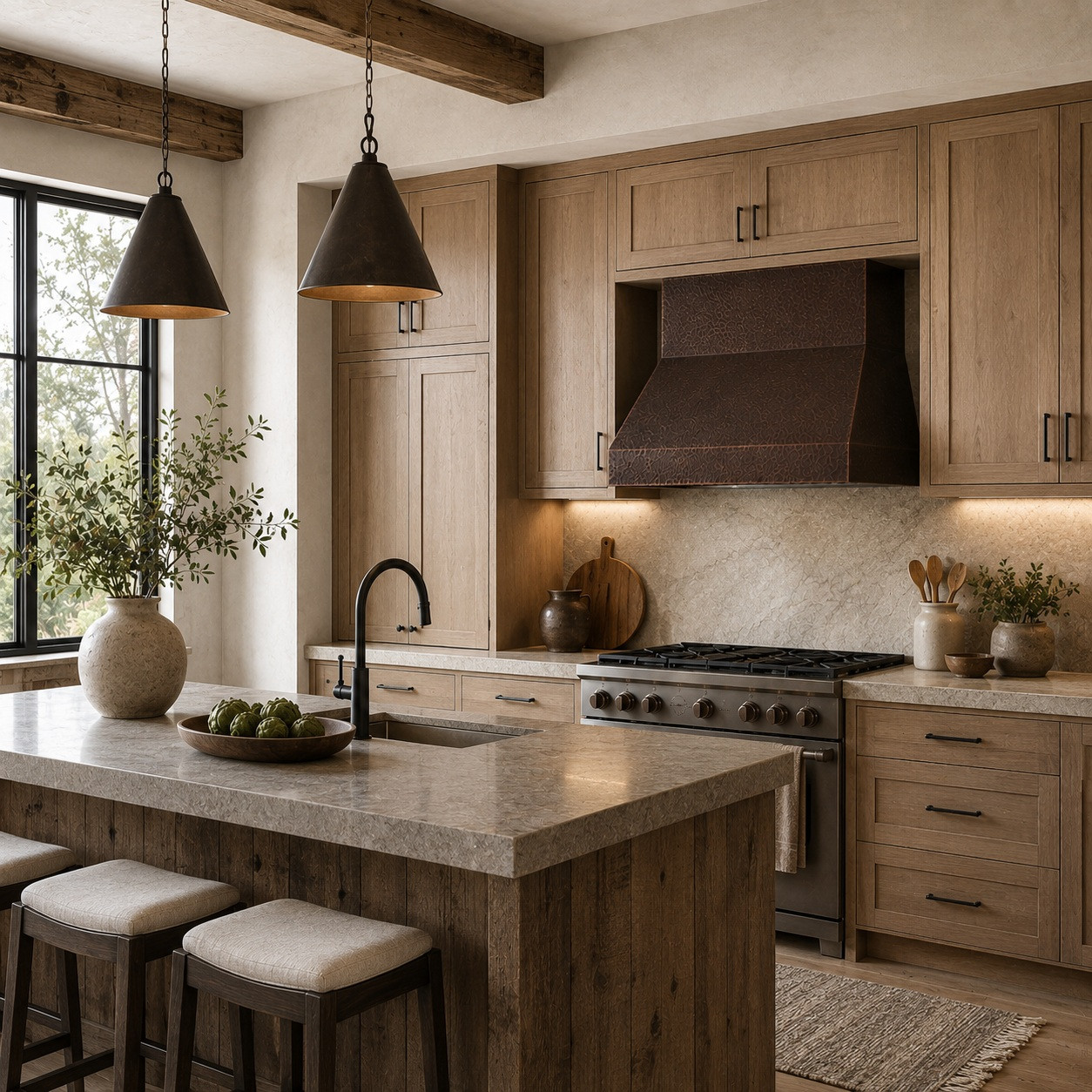
In a contemporary rustic kitchen, the hood brings aged metal character to reclaimed wood, stone, dark hardware, handmade tile, and simplified cabinetry. Contemporary rustic interiors often need a careful balance. Too much ornament can make the room feel heavy, while too many modern surfaces can remove warmth. This copper hood fits between those two extremes.
The smooth sloped face and boxed apron keep the design clean, while the dark copper patina gives the kitchen a handcrafted focal point. It can coordinate with wood beams, stone backsplashes, black iron details, bronze accents, and warm neutral cabinetry. Because there are no riveted straps or decorative bands, the hood does not compete with rough wood grain or stone texture. It adds a grounded metal element while allowing the rest of the kitchen to stay relaxed, natural, and visually balanced.
Under-Cabinet Shape
The under-cabinet shape is the main practical and visual advantage of this hood. It fits below upper cabinetry and creates a compact focal point above the cooking area. This makes the design useful for kitchens where a tall wall hood would interrupt cabinet storage, window placement, shelving, or the overall range-wall layout.
The sloped face prevents the hood from feeling like a flat box. It adds enough movement to create visual interest while preserving the clean horizontal structure of the cabinet run. The boxed apron finishes the lower edge and gives the hood a stronger architectural presence.
Copper Finish Character
The dark aged copper finish gives the hood warmth, depth, and handmade character. It can soften white cabinetry, ground pale stone, enrich wood finishes, and contrast with black or bronze hardware. Depending on the surrounding light, the copper may appear deeper, warmer, softer, or more reflective.
The smooth copper surface gives this model a quieter appearance than heavily hammered metal. Instead of many small highlights, the front reads as a broad warm plane. This makes the hood especially useful in kitchens that already include visible texture from tile, wood, stone, plaster, or cabinetry.
Compact Kitchen Planning
This hood is especially helpful when the kitchen needs custom metal character but does not have space for a full chimney-style canopy. The low profile lets the hood work below cabinetry while still giving the range wall a more finished appearance than a plain stainless appliance face. It can be used in remodels, smaller kitchens, cabinet-centered layouts, and spaces where a stronger horizontal line is preferred.
The design should be considered together with cabinet spacing, range width, backsplash height, lighting, and finish palette. A darker copper patina can make the hood feel grounded and rustic. A cleaner surrounding palette can make the same hood feel more modern. For broader category comparison, browse the copper range hoods collection.
Style Compatibility
This hood works across several kitchen styles because it combines warmth with restraint. In modern farmhouse kitchens, it softens painted cabinetry and pale wood. In modern transitional rooms, it adds a custom metal feature without heavy ornament. In organic modern kitchens, it complements natural textures and quiet materials. In contemporary rustic spaces, it brings age and warmth while keeping the range wall clean.
The design is strongest when the surrounding finishes remain intentional. Simple backsplashes, balanced cabinetry, natural stone, warm lighting, and carefully chosen hardware allow the copper hood to become a focal point without overwhelming the room.
Handcrafted Variation
Small differences in copper tone, patina depth, edge shaping, seams, surface movement, and artisan finishing should be expected in handmade copper work. These subtle variations help each hood feel individual while preserving the simple character of the design.
That variation is part of the appeal. The hood does not look like a generic appliance cover. It brings visible material warmth and hand-finished character into the kitchen while keeping the shape compact, practical, and easy to integrate.
Conclusion
The simple under-cabinet copper range hood brings smooth copper warmth, a sloped front, a boxed apron, dark aged patina, and restrained handcrafted character into the kitchen. These images show how the hood adapts to modern farmhouse, modern transitional, organic modern, and contemporary rustic interiors while keeping its design clean, practical, and visually warm.