 US Dollar
 Euro
Euro
 Australian Dollar
 Canadian Dollar
 Polish Zloty
 British Pound

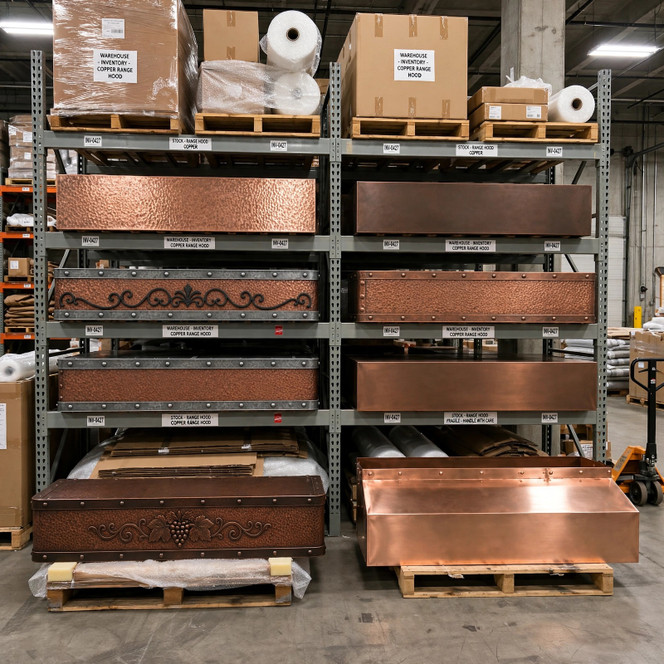
An under-cabinet copper range hood combines compact ventilation architecture with the warmth and variation of handcrafted metalwork. Unlike a full-height chimney hood, this category is designed to fit directly beneath wall cabinets or within a cabinet opening, making it practical for kitchens where storage must remain above the cooking surface. The broad horizontal body emphasizes the range wall without extending toward the ceiling, while the visible apron provides space for hammered or smooth copper, natural or dark patinas, and decorative copper or zinc bands and rivets depending on the model. Explore the broader copper range hood collection to compare handcrafted configurations, finishes, and ventilation options. Buyers interested in clean rectangular silhouettes can also browse the box copper range hood collection for additional architectural approaches.
Blog Summary
- Mounting: Beneath upper cabinets
- Profile: Compact horizontal body
- Height: 10 inches
- Depth: 20 inches
- Widths: 28 to 78 inches
- Textures: Hammered or smooth
- Patinas: Natural or dark copper
- Accents: Copper or zinc details
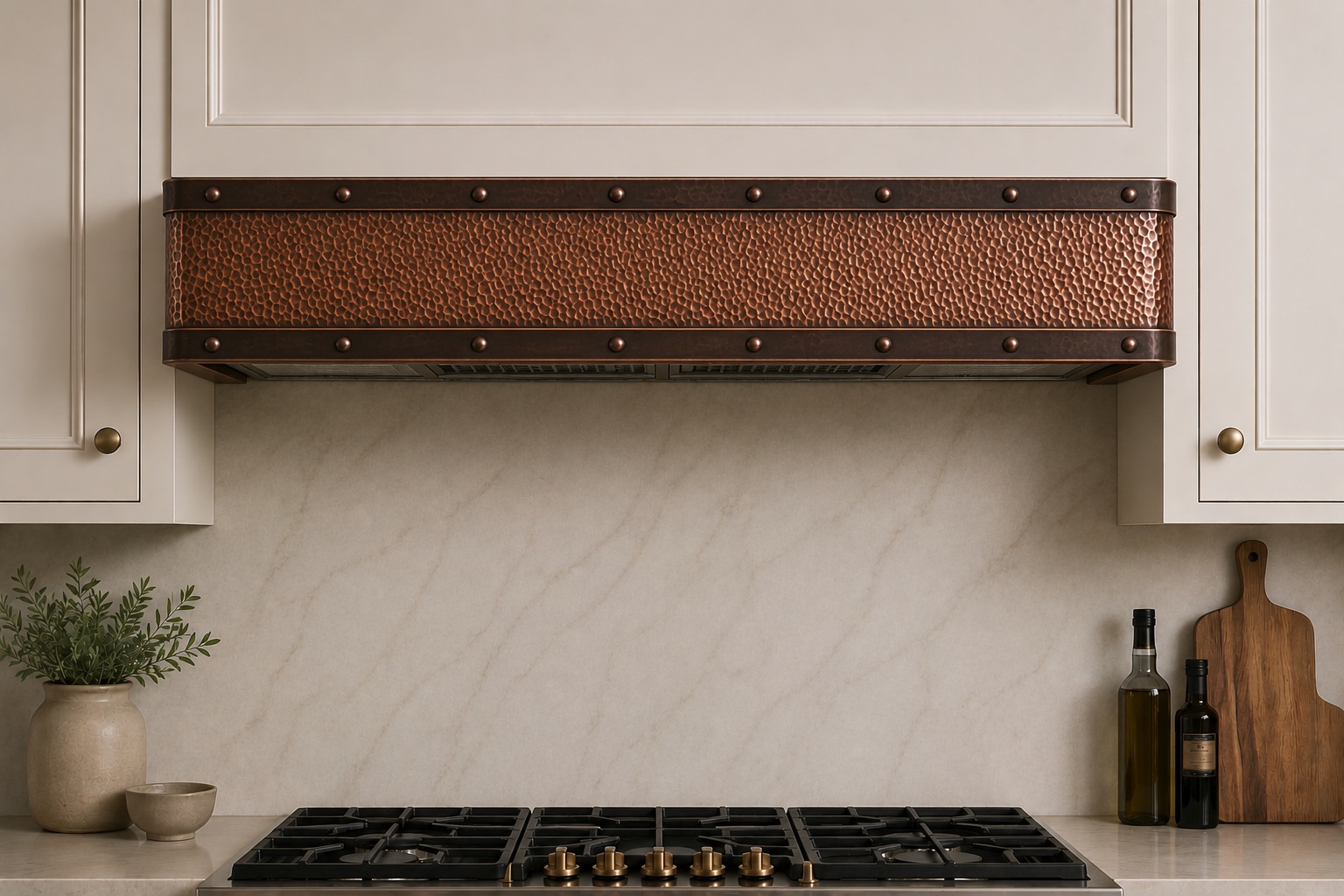
Under-Cabinet Hood Architecture
The defining feature of an under-cabinet copper range hood is its low, horizontal architecture. Instead of using a tall chimney, crown, or tapered canopy, the body remains compact enough to fit beneath existing cabinetry. This approach preserves storage above the range and creates a more integrated cooking wall.
The hood usually consists of a flat upper surface, a broad front apron, two side panels, and an open lower area prepared for a ventilation insert. These elements form a rectangular enclosure around the functional components. The exterior copper shell provides the visible design, while the insert manages smoke, steam, grease, heat, and cooking odors.
This architecture is especially useful in kitchens with standard-height ceilings, continuous upper cabinetry, or limited wall space. It also works well where homeowners want the range hood to coordinate with cabinets rather than dominate the entire wall.
A Horizontal Rectangular Profile
Under-cabinet hoods are visually wider than they are tall. The 10-inch height creates a compact proportion, while the 20-inch depth provides coverage over the cooking surface and space for ventilation equipment. Widths range from 28 to 78 inches, allowing the same general architecture to serve compact residential cooktops, professional ranges, and broad custom cooking zones.
The rectangular form aligns naturally with cabinet doors, drawer fronts, backsplashes, shelves, and countertops. This alignment makes the hood suitable for Shaker, slab-front, inset, raised-panel, farmhouse, industrial, Mediterranean, and transitional cabinetry.
For a broader comparison of rectangular, bell, sloping, tapered, and curved designs, review the copper range hood shapes guide. Understanding the basic silhouettes can help determine whether an under-cabinet box profile is more appropriate than a full decorative canopy.
The Front Apron
The apron is the most visible part of an under-cabinet copper hood. Because the upper surface is largely concealed beneath cabinetry, the front panel carries most of the visual weight. Its height, texture, patina, edge treatment, and decorative accents determine whether the hood feels minimalist, rustic, industrial, traditional, or transitional.
A plain apron emphasizes the material and rectangular geometry. It works well with smooth copper, subtle hammering, or a consistent dark patina. More decorative models may use horizontal copper bands, contrasting zinc bands, exposed rivets, folded borders, or raised perimeter details. These additions create depth and shadow without changing the compact under-cabinet format.
The lower apron also conceals the edge of the insert, filters, lighting, wiring, and internal mounting components. Its proportions must therefore balance appearance with practical service access.
Folded Copper Construction
Handcrafted copper hoods are formed from sheet metal that is cut, bent, joined, and finished to the approved dimensions. Crisp folded edges strengthen the rectangular shell and help the apron maintain a clean profile across wider spans.
Internal reinforcement may be necessary for large hoods, especially in widths above 48 inches. Wider copper panels must remain straight while supporting the insert and allowing the shell to be handled during delivery and installation. Structural framing, reinforced corners, and properly positioned mounting points help prevent the body from twisting or sagging.
Hand fabrication means slight differences in folded edges, seams, texture, and patina should be expected. These variations distinguish artisan metalwork from machine-produced stainless-steel enclosures.
Hammered Copper Texture
Hammered copper introduces small depressions across the visible panels. These marks scatter reflections, soften broad surfaces, and create the visual movement associated with traditional Mexican metalwork. Hammering can range from fine and closely spaced to larger and more irregular, depending on the design.
The textured surface works particularly well in farmhouse, Hacienda, Spanish Colonial, Mediterranean, and rustic kitchens. It also helps reduce the visibility of fingerprints, minor handling marks, and natural changes in the patina.
Buyers considering this surface can learn more from the under-cabinet hammered copper hood guide, which explains how texture affects the hood’s visual weight and relationship with surrounding cabinetry.
Smooth Copper Texture
Smooth copper creates a quieter and more architectural appearance. Without hammer marks, the eye is drawn toward the rectangular proportions, folded corners, apron edges, and decorative bands. This finish is often selected for modern, transitional, industrial, and minimalist kitchens.
A smooth surface reflects light more evenly than hammered copper. It can appear brighter in natural daylight and may show stronger tonal movement as the copper ages. Subtle fabrication marks and variations are still expected because the hood is handmade rather than pressed by automated machinery.
Smooth copper can be paired with a natural finish for warmth or a dark patina for a more restrained appearance. Contrasting zinc bands may give the hood a sharper industrial character, while matching copper details keep the design more unified.
Natural and Dark Patinas
Natural copper begins with warm reddish, amber, and orange tones. Over time, exposure to air, heat, moisture, and handling can deepen or vary the surface. This evolving appearance is often described as a living finish.
Dark copper patinas shift the surface toward coffee brown, deep bronze, charcoal brown, or antique tones. These finishes can reduce brightness and make the hood feel more substantial against white, cream, pale gray, or natural wood cabinetry.
The selected patina should be reviewed with the backsplash, cabinet finish, countertop, hardware, flooring, and room lighting. A small finish sample can look different when applied across a hood that is several feet wide. The copper patina options guide explains how common finishes interact with different kitchen materials.
Copper or Zinc Bands
Depending on the model, the apron may be framed or divided by decorative copper or zinc bands. Matching copper bands create raised architectural lines while preserving a unified metal palette. Their effect depends on whether the band uses the same patina as the body or a darker contrasting finish.
Zinc bands introduce a cooler gray metal against warm copper. This contrast can suit industrial, Western, rustic modern, and transitional interiors. Zinc may be left relatively light, darkened, brushed, or aged to coordinate with cabinet hardware and surrounding metal finishes.
The width and placement of each band influence the hood’s proportions. Narrow bands add subtle definition, while broad bands can divide the front into stronger geometric fields. The design should remain balanced so the decorative metalwork does not overwhelm the compact 10-inch height.
Riveted Metal Details
Exposed rivets may be added along bands, borders, corners, or folded seams depending on the model. Copper rivets create a coordinated handcrafted appearance, while zinc rivets can reinforce the contrast established by zinc bands.
Rivets give the hood an older architectural or industrial character, recalling traditional boilers, metal trunks, forged doors, and hand-assembled equipment. Their spacing, diameter, and finish should remain consistent across the front panel.
Not every under-cabinet hood requires rivets. A smooth apron without fasteners generally appears more contemporary, while visible rivet rows produce a more decorative and rustic result. The choice should relate to the cabinet style and the amount of detail already present in the kitchen.
Available Dimensions
The compact body is offered in a fixed 10-inch height and 20-inch depth. Multiple widths allow the hood to be coordinated with common residential and professional cooking appliances.
| Dimension | Available Size |
|---|---|
| Height | 10 inches |
| Depth | 20 inches |
| Widths | 28, 30, 36, 42, 48, 54, 60, 66, 72, and 78 inches |
The hood should normally be at least as wide as the cooking surface. Additional width may improve smoke and steam capture when cabinet space permits. A 30-inch range commonly works with a 30-inch hood, while a 36-inch range may be paired with a 36- or 42-inch hood depending on the installation.
Wider professional ranges require careful coordination between the hood width, burner output, insert capacity, duct size, and cabinet opening. Review the popular copper hood sizes guide before approving the final width.
Ventilation Insert Planning
The copper hood is an exterior shell rather than a complete ventilation system by itself. The insert provides the blower, filters, lights, controls, and duct connection. Its dimensions must fit within the 10-inch-high and 20-inch-deep enclosure while leaving space for mounting and maintenance.
Rustica House can provide an optional 200 CFM insert. Any other insert should be selected and supplied by the buyer, with full technical specifications submitted before fabrication. Required information may include the brand, model, liner dimensions, cutout size, blower location, duct diameter, lighting position, control placement, and filter access.
Because the shell is compact, buyers should avoid selecting an insert before confirming that its housing depth and height are compatible. Detailed planning is covered in the custom range hood insert guide.
Ducted and Recirculating Systems
A ducted system carries smoke, grease, heat, moisture, and odors outdoors. It generally provides the most complete ventilation when the duct route is properly sized and kept reasonably direct.
A recirculating insert filters the air and returns it to the kitchen. This option may be considered when exterior ducting is not possible, but it does not remove heat or moisture in the same way as an outdoor exhaust system.
The final choice should be reviewed with a qualified ventilation specialist. Cooking output, fuel type, duct length, elbows, local requirements, and possible make-up air needs all affect system performance.
Cabinet and Wall Planning
The cabinet opening must match the approved hood width and allow the shell to sit level beneath the cabinet base. Nearby doors should open without striking the hood, and finished side panels should align cleanly with the copper body.
The wall should include sufficient support for the hood and insert. Mounting only into drywall or decorative backsplash material is not adequate. Blocking, framing, or another approved structural attachment should be prepared before installation.
The backsplash thickness must also be included in the final measurements. Tile, stone slabs, and plaster can move the hood forward from the wall, changing cabinet alignment and available depth.
Kitchen Style Compatibility
Under-cabinet copper hoods adapt easily because their architecture is simple. Hammered copper with dark patina and rivets suits Spanish Colonial, Hacienda, Mediterranean, farmhouse, and rustic interiors. Smooth natural copper works well with Shaker cabinetry, pale stone, and warm transitional rooms.
Smooth dark copper with zinc bands can support industrial and urban kitchens, especially when paired with blackened steel, concrete, brick, or darker hardware. A plain copper apron without decorative bands can also provide warmth in minimalist kitchens without introducing unnecessary ornament.
The compact profile makes the category especially useful where the cabinetry should remain the dominant architectural framework and the copper should function as a strong material accent.
Care and Patina Changes
Routine cleaning should use mild soap, warm water, and a soft cloth. Grease should be removed before it hardens around the lower edge, insert opening, bands, and rivets. Abrasive pads, acidic cleaners, powdered products, and aggressive metal polishes may alter the finish.
Natural copper may darken, lighten, or develop irregular tones as it ages. Dark patinas may also change slightly near heat, steam, or frequently touched areas. These changes are normal for handcrafted copper and contribute to its living character.
FAQ - Under-Cabinet Copper Hoods
A: It uses a compact horizontal shell designed to fit beneath upper cabinetry rather than extending upward with a full chimney.
A: The hood measures 10 inches high and 20 inches deep, with widths from 28 to 78 inches.
A: Yes. Depending on the model, the exterior may use smooth or hammered copper.
A: Yes. Models may be finished in natural copper or darker coffee, antique, and bronze-inspired tones.
A: Depending on the model, the apron may include matching copper bands or contrasting zinc bands.
A: Yes. Rivets may be produced in copper or zinc to coordinate with the selected decorative details.
A: The shell must be paired with an insert that supplies the blower, filters, lights, controls, and duct connection.
A: It should generally be at least as wide as the range, with additional coverage considered when cabinet space allows.
A: A compatible recirculating insert may be used where exterior ducting is unavailable, subject to project requirements.
A: Yes. Differences in hammering, patina, seams, bands, rivets, and folded edges are normal characteristics of artisan fabrication.
Choosing an Under-Cabinet Copper Hood
An under-cabinet copper range hood is a practical choice when the kitchen requires compact ventilation, continued cabinet storage, and a handcrafted focal point above the cooking surface. Its 10-inch height and 20-inch depth create a cabinet-ready profile, while widths from 28 to 78 inches accommodate a broad range of appliances. Hammered or smooth textures, natural or dark copper patinas, and optional copper or zinc bands and rivets allow the same basic architecture to suit traditional, rustic, industrial, transitional, or modern interiors. Before ordering, confirm the cabinet opening, range width, insert dimensions, duct route, backsplash thickness, structural support, texture, patina, and decorative metal details.