 US Dollar
 Euro
Euro
 Australian Dollar
 Canadian Dollar
 Polish Zloty
 British Pound

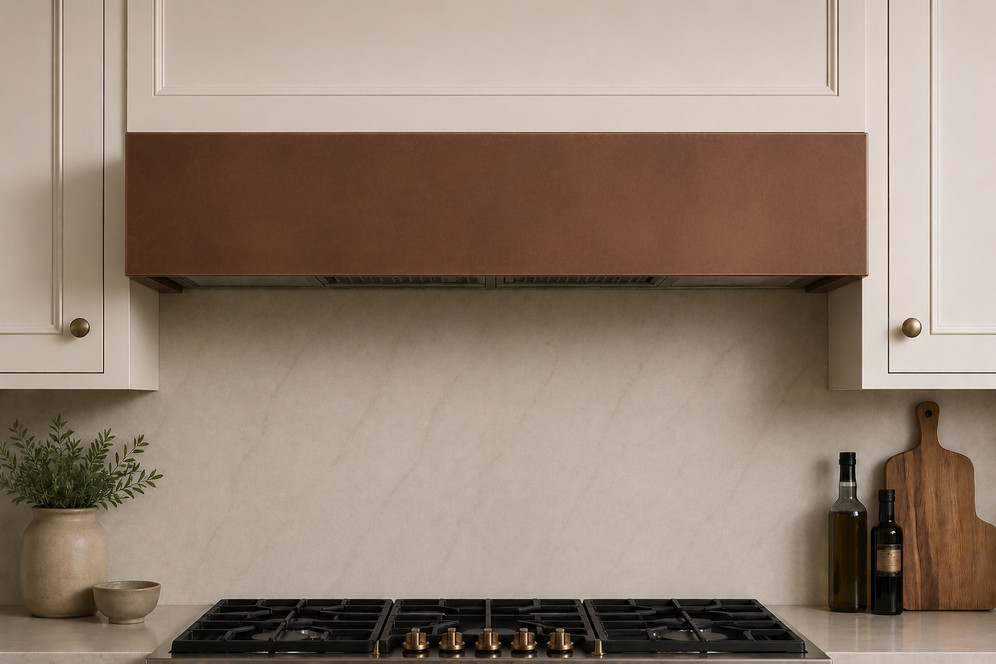
The Smooth Copper Box Under-Cabinet Range Hood is shown in these lifestyle images as a disciplined architectural focal point for desert modern, California contemporary, organic modern, and soft contemporary kitchens. Its flat copper face, low horizontal body, crisp vertical returns, smooth surface, and cabinet-integrated under-cabinet format create a refined metal accent without hammering, straps, rivets, raised panels, crown molding, or a projecting apron. The design depends on proportion, copper tone, clean edges, and broad surface reflection rather than decorative detail. Explore the smooth copper box under-cabinet range hood to compare its front plane, minimalist profile, finish, and kitchen style applications. For product-specific planning context, read the smooth copper box undercabinet range hood guide.
Blog Summary
- Focus: lifestyle image guide
- Product: smooth copper box hood
- Format: under-cabinet profile
- Surface: smooth copper face
- Styles: four modern kitchens
- Look: clean and architectural
Smooth Copper Hood Images
Lifestyle images help show how this smooth copper box hood looks inside finished kitchens rather than as a standalone product photo. Cabinet color, wall texture, backsplash material, counter tone, natural light, hardware, flooring, and surrounding wood finishes all affect how the broad copper face appears. Because the surface is smooth, light moves across the hood in larger tonal gradients rather than small hammered highlights.
This hood stands out because it keeps the under-cabinet format intentionally simple. The flat front strengthens the horizontal composition of the range wall, while the copper finish brings warmth to minimalist and contemporary rooms. The absence of straps, rivets, panels, and decorative trim makes the hood especially useful where clean cabinetry and restrained materials are part of the design. For related compact formats, review the under-cabinet copper range hood guide.
Design Highlights
- smooth copper under-cabinet hood
- flat uninterrupted front face
- low horizontal box profile
- crisp vertical corner returns
- no hammering or riveted straps
- minimal cabinet-ready shape
- modern kitchen compatibility
Desert Modern Kitchen Image
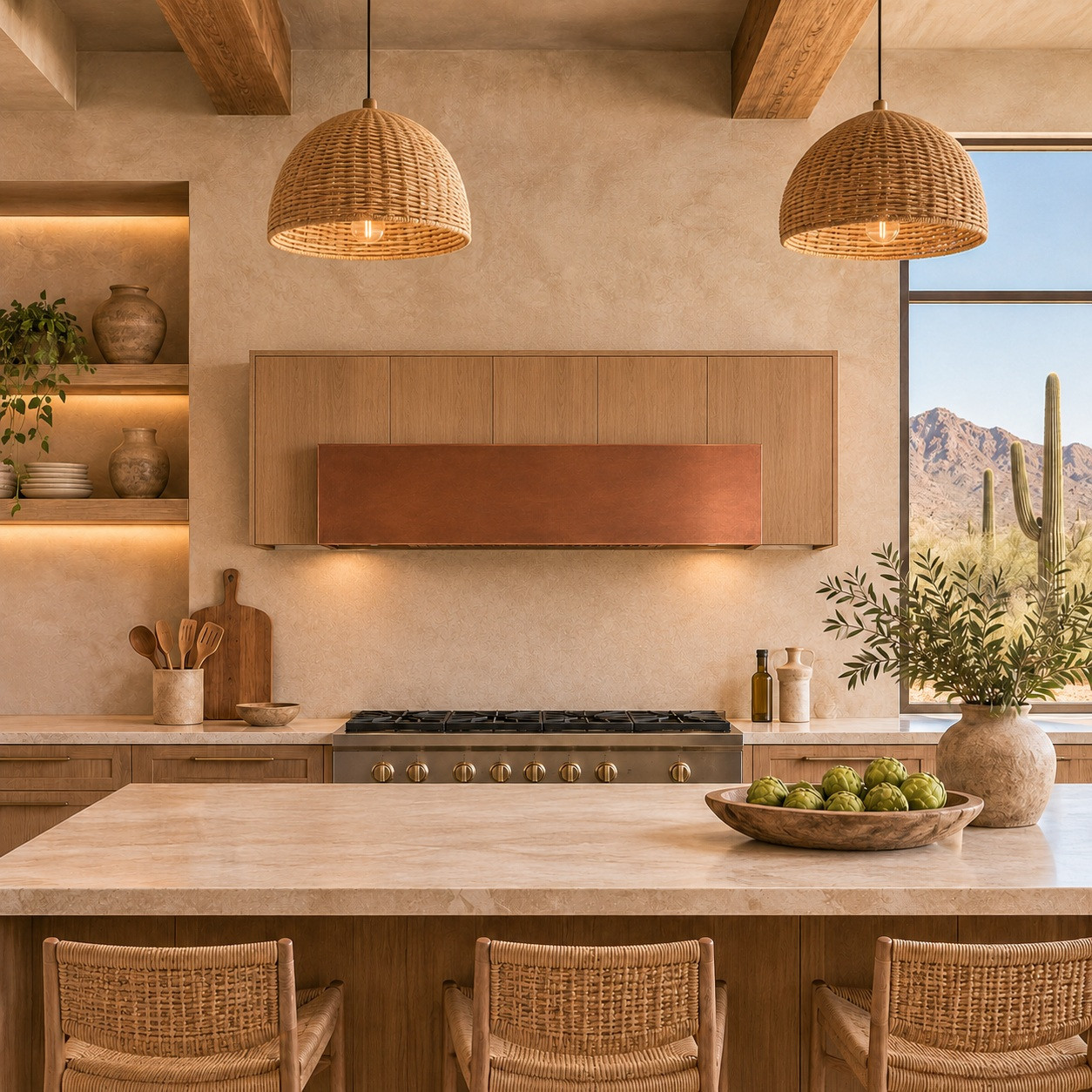
In a desert modern kitchen, the smooth copper box hood works through disciplined geometry and a warm material palette. Desert modern interiors often use rammed-earth tones, plaster walls, natural stone, pale oak, concrete, leather, clay-colored accents, blackened metal, and large windows. The hood’s uninterrupted copper face connects naturally with those sun-warmed surfaces while keeping the range wall clean and contemporary.
The low horizontal profile is especially useful in this style because desert modern kitchens often emphasize long planes, open sightlines, and quiet architectural massing. A decorative hood with rivets, straps, or a tall chimney could interrupt that calm rhythm. This hood instead acts like a refined copper panel set below the cabinets. Its smooth surface reflects light in soft bands, giving the kitchen warmth without introducing rustic texture. For broader modern range hood context, review the modern style range hoods guide.
California Contemporary Kitchen Image
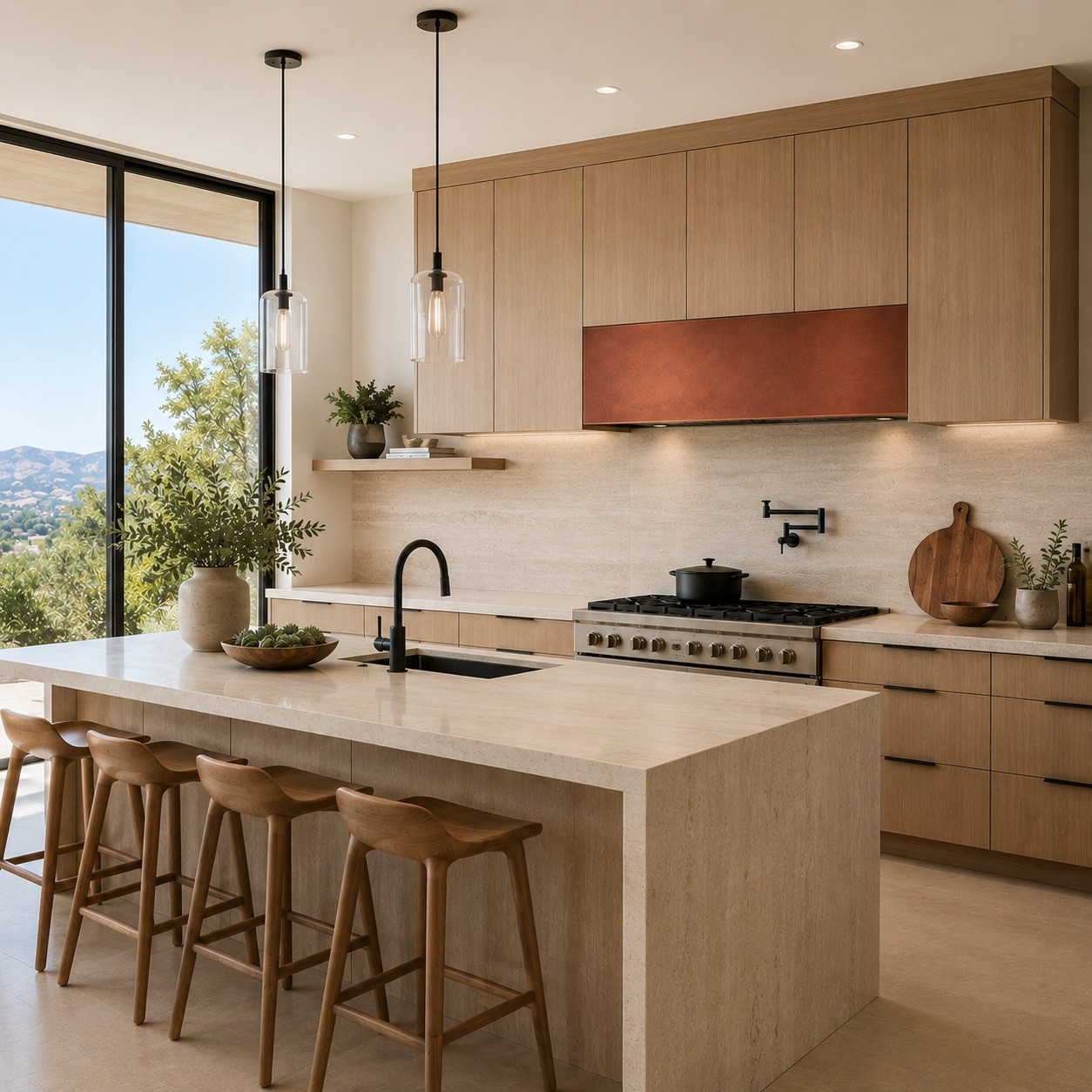
In a California contemporary kitchen, the hood adds warmth to an open, light-filled space without overwhelming the cabinetry. California contemporary interiors often include large islands, expansive windows, slim cabinet profiles, natural wood, pale stone, indoor-outdoor flow, and a restrained material palette. The smooth copper box hood fits because its shape is simple, horizontal, and visually quiet, while the copper surface gives the range wall a distinctive custom feature.
The broad front face works well with flat-panel or lightly detailed cabinetry because it reinforces the kitchen’s clean geometry. Instead of creating a tall canopy that competes with windows or open shelving, the hood remains integrated below the upper cabinets. The copper tone can coordinate with warm wood floors, white oak cabinets, bronze hardware, or soft neutral stone. For finish comparison, review the copper patina finish options guide.
Organic Modern Kitchen Image
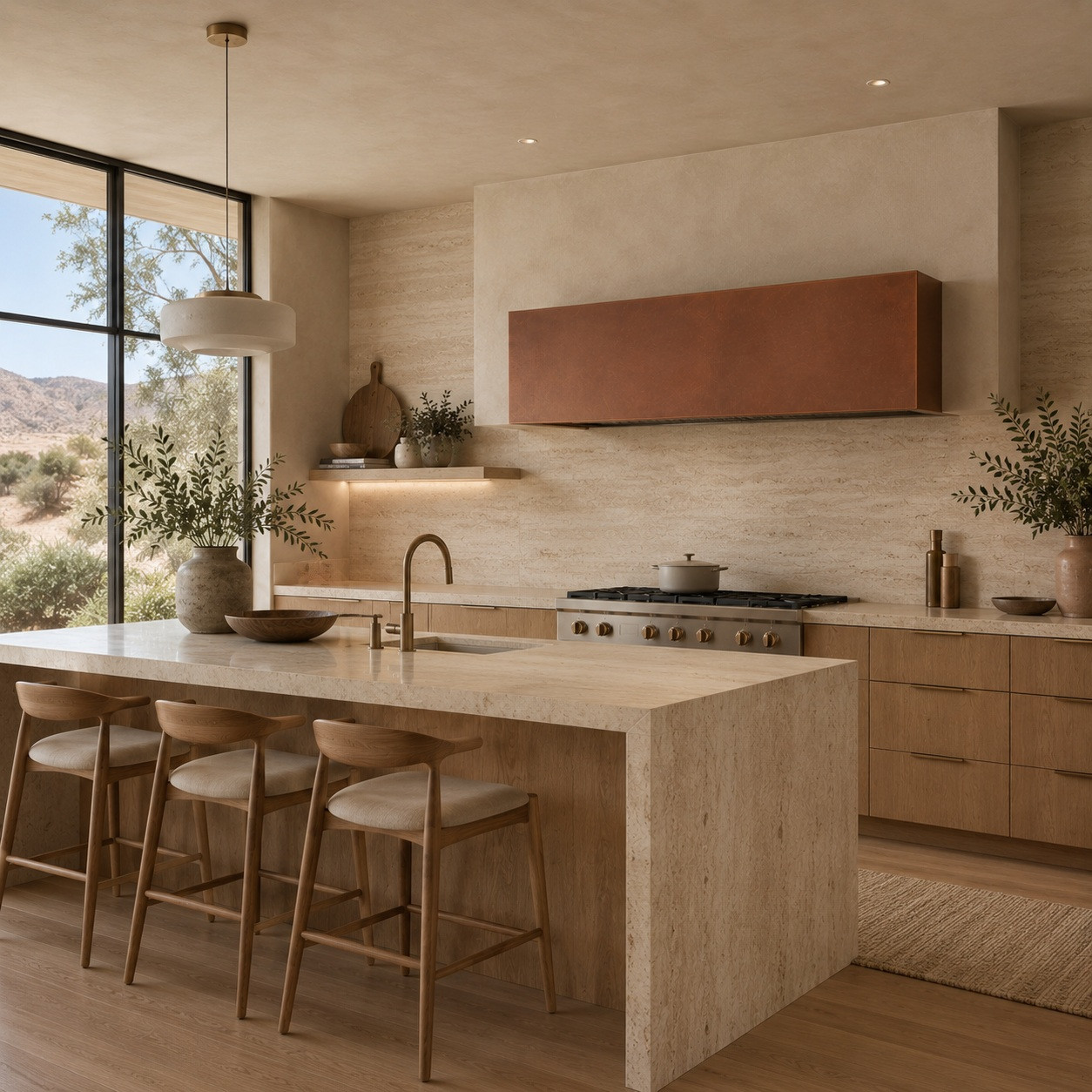
In an organic modern kitchen, the smooth copper hood works alongside natural materials without adding visual clutter. Organic modern interiors often combine contemporary forms with travertine, limestone, rift-cut oak, plaster walls, large-format stone, handmade ceramics, linen textures, and warm bronze or blackened hardware. The hood’s uninterrupted copper front adds warmth while respecting the calm material language of the room.
The lack of hammering is important in this setting. Hammered copper can feel rustic or highly textured, while smooth copper keeps the design more architectural. The flat surface allows subtle finish movement to appear through color variation and reflection instead of pronounced surface marks. That makes the hood compatible with stone veining, wood grain, plaster texture, and soft neutral cabinetry. For smooth versus textured metal planning, review the hammered and smooth metal hoods guide.
Soft Contemporary Kitchen Image
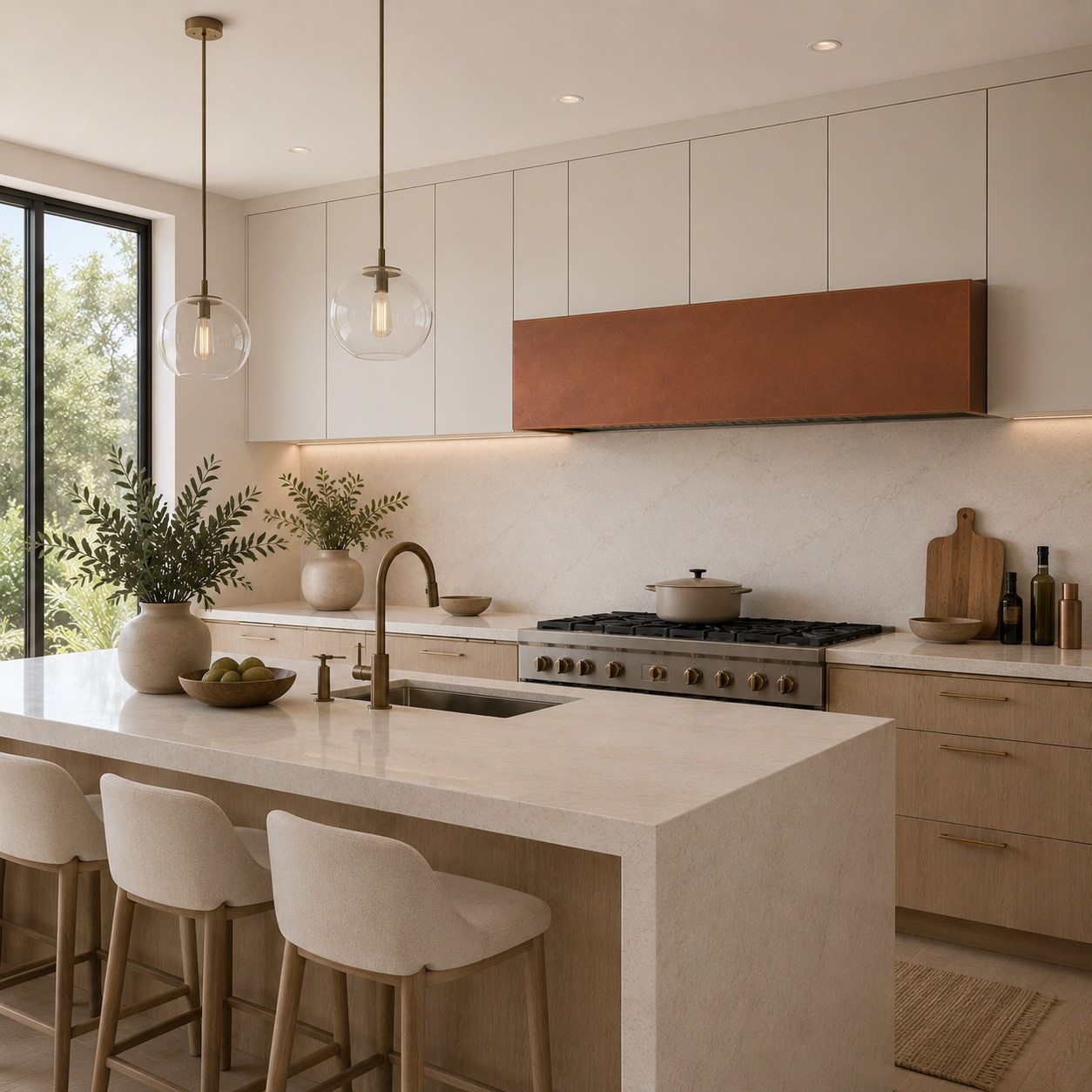
In a soft contemporary kitchen, the smooth copper box hood balances clean modern lines with warmer finishes and comfortable materials. Soft contemporary interiors often use simplified cabinetry, quartz or quartzite counters, subtle wood accents, quiet hardware, pale walls, and gentle lighting. The hood’s flat copper front softens the range wall while preserving a refined and uncluttered appearance.
This style benefits from the hood’s restraint. The design does not introduce straps, rivets, crown molding, or raised details, so it can sit comfortably among modern cabinet planes and understated surfaces. At the same time, the copper prevents the kitchen from feeling too plain or sterile. The result is a focal point that feels sophisticated without becoming visually dominant. For related copper hood options, browse the copper range hoods collection.
Smooth Copper Surface
The smooth copper surface defines the character of this hood. Because there is no hammering, the front reads as one broad architectural plane. This gives the hood a calmer and more contemporary appearance than textured copper designs. Light moves across the surface in gradual tonal shifts, making the copper feel warm without appearing busy.
This surface works especially well in kitchens with natural light, flat cabinetry, minimal hardware, stone counters, plaster walls, or long backsplash lines. The hood becomes a material statement, not an ornamental one.
Box Under-Cabinet Shape
The box under-cabinet shape keeps the hood compact and visually disciplined. It fits beneath upper cabinetry and strengthens the horizontal line above the cooking surface. This format is useful when the kitchen needs a custom copper focal point without a tall chimney, flared canopy, or open-wall hood composition.
The crisp vertical returns give the hood architectural definition. They make the front face feel intentional and structured from different viewing angles. This detail is especially important in open kitchens, where the range wall may be visible from the island, dining area, or living space.
Minimal Detail, Strong Proportion
This hood proves that a copper range hood can feel custom and expressive without decorative ornament. There are no straps, rivets, raised borders, recessed panels, crown molding, or projecting apron. The design depends on clean proportion, folded metal geometry, smooth copper tone, and cabinet alignment.
Small differences in copper tone, edge shaping, seam treatment, surface reflection, and artisan finishing should be expected in handmade copper work. These subtle variations help each hood feel individual while preserving the minimalist character of the design.
Frequently Asked Questions
What makes this copper hood different?
This hood combines a smooth flat copper face with a low under-cabinet box profile, crisp vertical returns, and a clean design without hammering, straps, rivets, raised panels, crown molding, or a projecting apron.
Which kitchen styles fit this hood?
This hood works well in desert modern, California contemporary, organic modern, soft contemporary, warm minimalist, modern rustic, and refined under-cabinet kitchens.
Is the copper hammered?
No. This model uses smooth copper, so light moves across the front in broad tonal gradients rather than small hammered highlights.
Is every hood exactly identical?
No. Each hood is handmade, so copper tone, surface reflection, folded edges, seams, and small artisan marks may vary. These differences are part of the handcrafted character.
Conclusion
The smooth copper box under-cabinet range hood brings flat-front geometry, warm copper tone, crisp folded returns, and minimalist handcrafted character into the kitchen. These lifestyle images show how the hood adapts to desert modern, California contemporary, organic modern, and soft contemporary interiors while keeping its design clean, architectural, and quietly expressive.