 US Dollar
 Euro
 Australian Dollar
 Canadian Dollar
 Polish Zloty
 British Pound

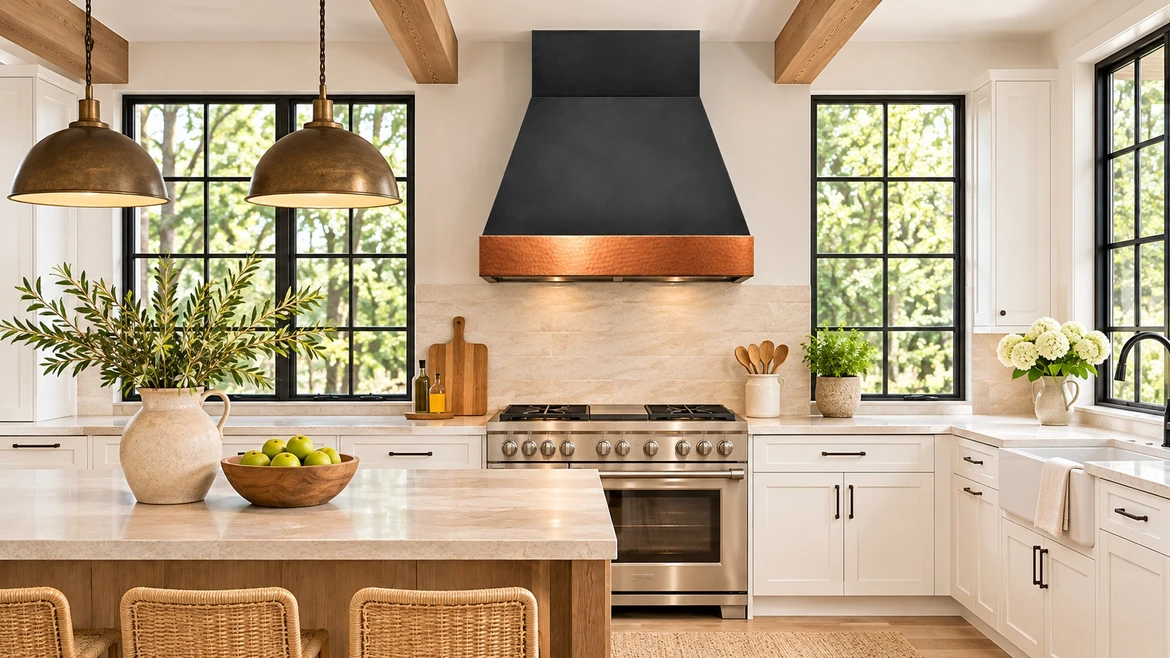
A modern zinc range hood with a hammered copper apron combines a dark architectural silhouette with the warmth of textured copper. Explore the modern zinc range hood with copper apron to review current options. Its rectangular chimney, tapered canopy, and broad lower band create a focal point for contemporary, transitional, and rustic kitchens. The five images below show the front, angled perspective, side profile, underside, and technical proportions, helping you evaluate both appearance and installation requirements. Available configurations include wall-mounted and island applications, with dimensions selected to suit the project. See how modern zinc range hoods with contrasting copper aprons complement cabinetry, stone countertops, and decorative finishes in our modern zinc range hood copper apron kitchen design ideas. Plan your kitchen around a distinctive combination of zinc and hammered copper.
Blog summary
- Materials: Zinc and hammered copper
- Shape: Straight chimney, tapered canopy
- Mounting: Wall or island configuration
- Details: Wide contrasting copper apron
Front view and contrast
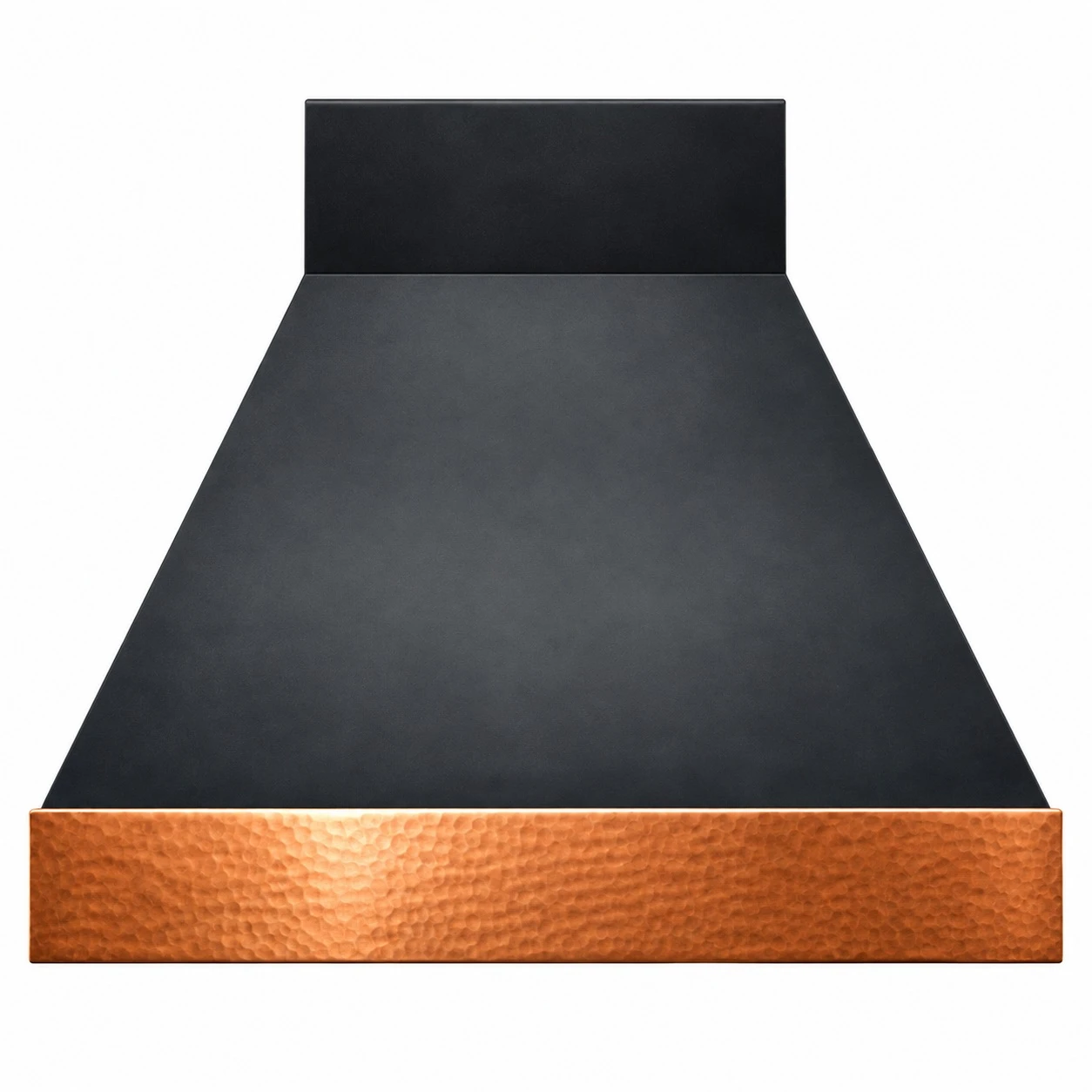
The front image shows how the design concentrates its decorative detail along the lower edge. A straight chimney rises above a broad, symmetrical canopy, while the copper apron establishes a strong horizontal line. The dark body has subtle tonal variation, and the copper surface reflects light through closely spaced hammer marks. This combination creates interest without additional straps or elaborate molding. For a coordinated approach to other kitchen finishes, explore Rustica House’s mixed metal buying guide.
Angled view and depth
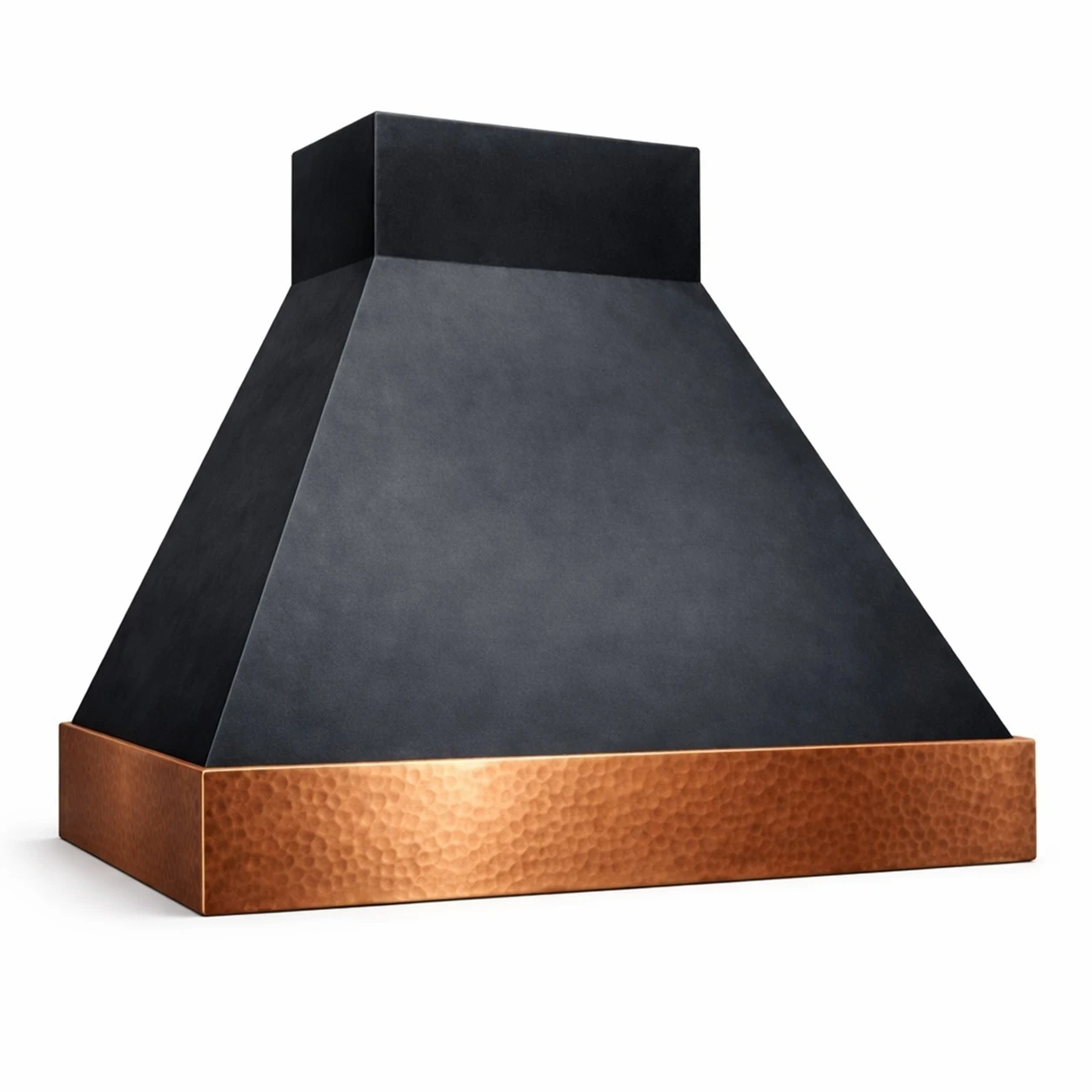
The angled photograph reveals the canopy’s depth and the continuation of the copper apron around its sides. Crisp corners connect the broad front panel to the sloping side surfaces, giving the hood a sculptural presence when viewed from an adjacent room. Consider these side views when planning an open kitchen, where the hood remains visible from several directions. The restrained geometry also works with flat-front cabinetry and simple hardware, as discussed in the modern range hood guide.
Side profile and placement
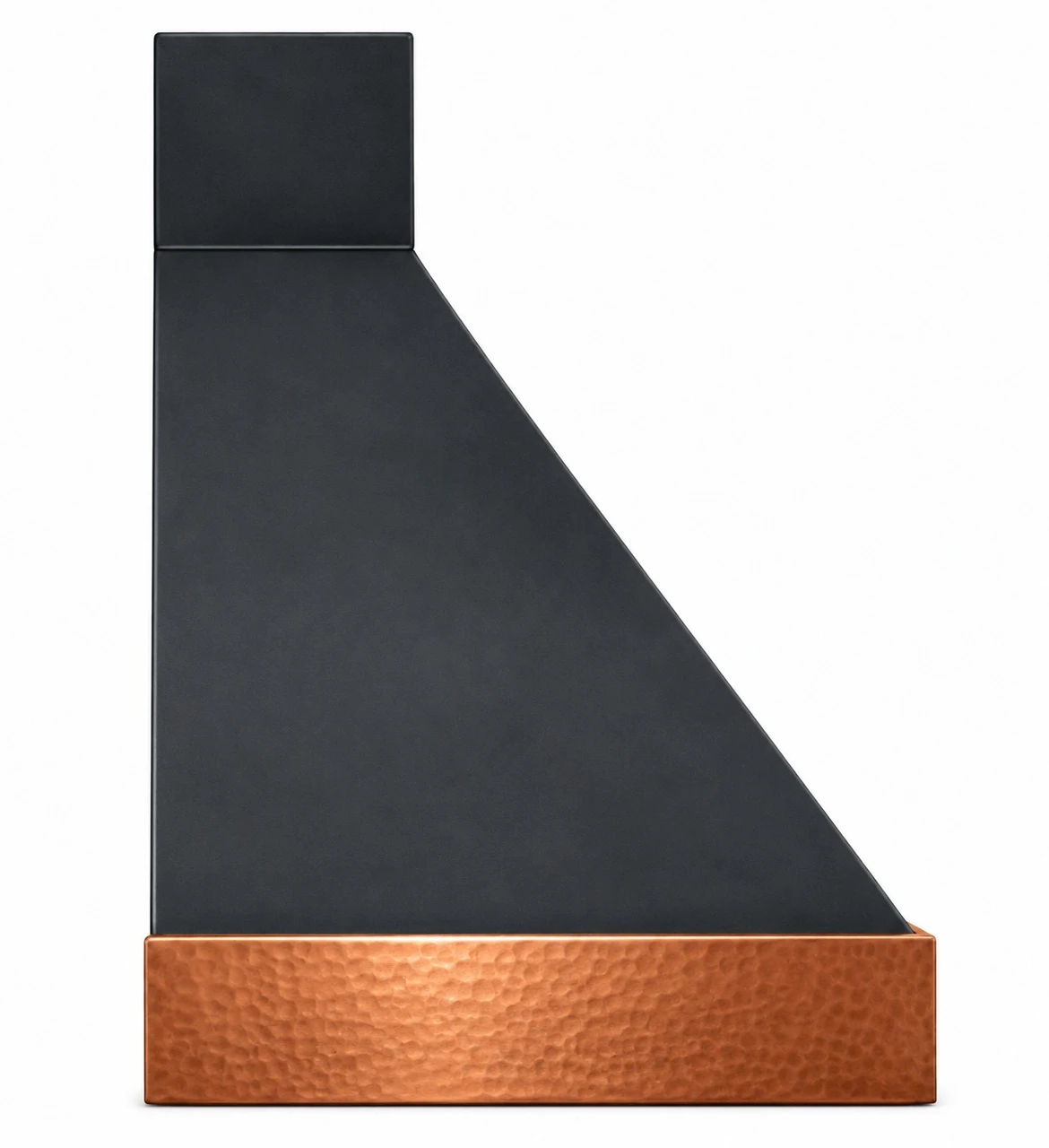
The side image shows a straight rear edge and a canopy that projects forward toward the copper apron. This perspective is useful for understanding how the wall-mounted configuration relates to the backsplash and surrounding cabinets. An island installation requires its own approved configuration and finished appearance on all exposed surfaces. Decide on mounting before finalizing fabrication, ceiling details, or duct routing. Rustica House’s comparison of wall and island hoods explains the principal layout differences.
Underside and insert planning
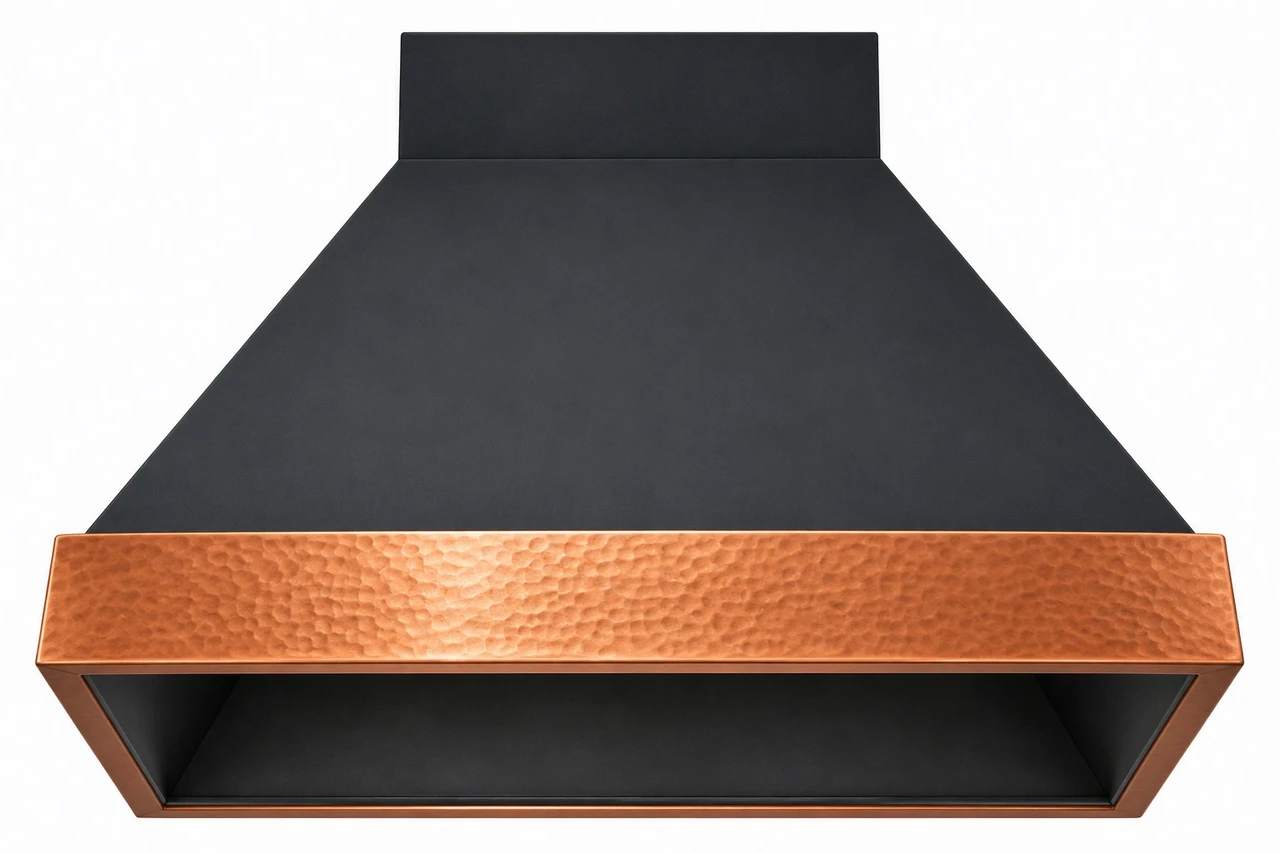
The underside photograph shows a recessed opening framed by the copper lower edge. It does not show an installed blower, filters, lights, or controls, so those components should be confirmed separately for the selected configuration. The decorative shell must accommodate the insert’s dimensions, mounting requirements, and service access. Choose the ventilation equipment early enough for its specifications to inform fabrication. The range hood insert guide provides useful background for coordinating these components.
Technical drawing and proportions
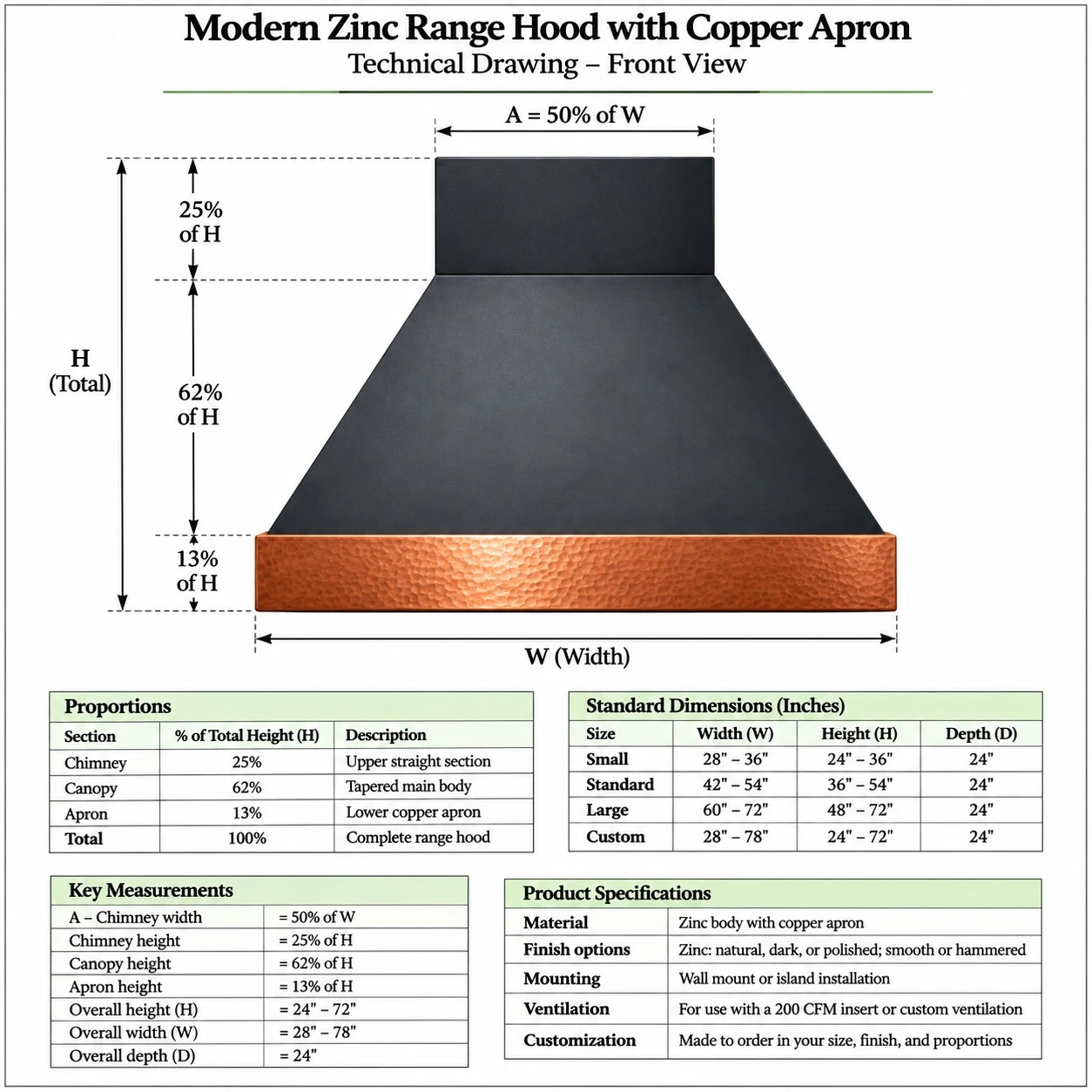
The drawing illustrates a chimney approximately half the overall hood width. Its height breakdown assigns 25 percent to the chimney, 62 percent to the tapered canopy, and 13 percent to the copper apron. These proportions explain the broad canopy and comparatively shallow decorative band visible in the photographs. Treat the illustration as a design reference and confirm project dimensions on the approved order drawing. For ceiling coordination, consult the guide to high ceiling kitchens.
Planning the right size
Begin with the cooking appliance, available wall or island space, and the ventilation manufacturer’s requirements. The illustrated size range extends from 28 to 78 inches wide and 24 to 72 inches tall, with a standard depth of 24 inches. Confirm the dimensions available for your selected configuration before ordering. Overall height should account for the required cooking clearance and ceiling conditions. The range hood buying guide helps organize these decisions.
| Planning detail | What to confirm |
|---|---|
| Overall width | 28–78 inches; coordinate with the cooking appliance |
| Overall height | 24–72 inches; confirm clearance and ceiling height |
| Standard depth | 24 inches; verify coverage and cabinet relationships |
| Mounting configuration | Wall or island; specify before fabrication |
| Ventilation equipment | Insert fit, duct connection, controls, and service access |
Texture and kitchen pairings
The photographed finish pairs a low-reflectivity zinc body with a brighter hammered copper band. Light plays differently across each surface, making the apron especially noticeable beneath pendants or nearby windows. Repeat copper selectively through cabinet hardware, lighting, or another accent, while allowing the zinc to relate to darker appliances or fixtures. Wood cabinetry and neutral stone can provide a quieter backdrop. The guide to hammered and smooth finishes explores how surface texture influences the overall effect.
Installation and ongoing care
Have the installer review support, duct routing, electrical connections, and insert access before the hood arrives. Follow the cooking appliance and ventilation equipment instructions when establishing installation height. During routine cleaning, use a soft cloth and products approved for each metal finish; keep abrasive pads and aggressive cleaners away from decorative surfaces. Copper and zinc may require different care methods, particularly when a protective coating is present. Start with the zinc hood care guide and confirm finish-specific instructions with your order.
Frequently asked questions
What gives this hood its modern appearance?
The straight chimney, angular canopy, and broad copper apron create a clean silhouette with one prominent contrasting detail.
Is the copper apron hammered?
Yes. The supplied photographs clearly show a hammered texture across the front and visible side sections of the copper apron.
Does the copper continue around the sides?
Yes. The angled and profile images show the copper band continuing along the visible sides of the hood.
Which dimensions are illustrated?
The drawing lists widths of 28–78 inches, heights of 24–72 inches, and a standard depth of 24 inches.
Can this design be used over an island?
An island configuration is offered. Confirm its finished sides, mounting arrangement, and ventilation requirements before ordering.
Does the underside image show an installed insert?
No. It shows the recessed interior opening. Confirm the blower, filters, lighting, and controls included in your selected package.
Can I select my own insert?
Discuss the proposed insert before fabrication so its dimensions, mounting points, and service requirements can be reviewed.
Are the drawing proportions fixed for every order?
The drawing provides reference proportions. Your approved project drawing should establish the final dimensions and construction details.
Which kitchen styles suit this design?
Its angular form and contrasting metals complement modern, transitional, industrial, and rustic kitchens, depending on surrounding finishes.
How should the copper apron be cleaned?
Follow the instructions for its specific patina or coating. Avoid polishing products unless they are approved for the intended finish.
Plan your kitchen centerpiece
Use the front photograph to assess visual balance, the angled and side views to judge depth, and the underside and drawing to prepare installation questions. Together, these images provide a practical starting point for coordinating the hood with your cabinetry and ventilation equipment. Review the zinc range hood with copper apron and confirm the configuration that suits your kitchen.
All product images © Rustica House, unauthorized use is prohibited.