 US Dollar
 Euro
Euro
 Australian Dollar
 Canadian Dollar
 Polish Zloty
 British Pound

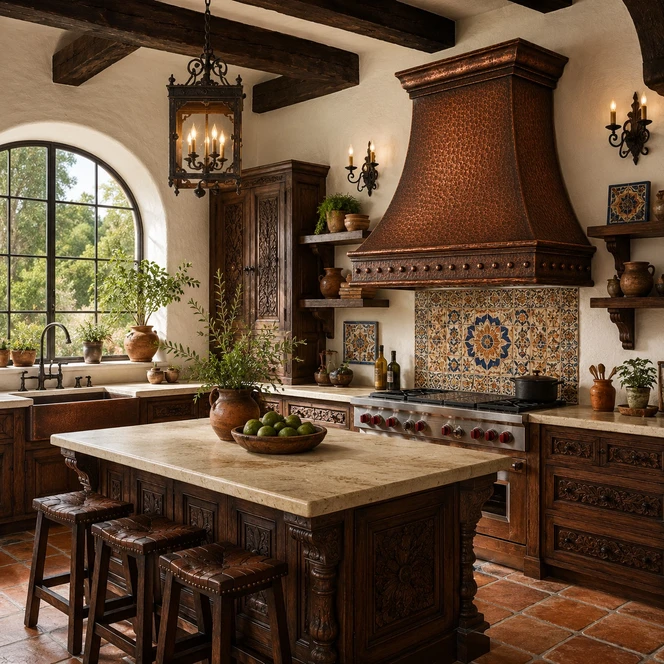
Hand-Hammered Bell Copper Range Hood with Riveted Apron Guide explains how a handcrafted copper hood with a tall bell-shaped canopy, hammered texture, single riveted apron row, underside insert preparation, proportional drawing support, and patina finish options can become a warm architectural focal point above the range. This made-to-order design suits Spanish Colonial, Hacienda, Old World Mediterranean, and traditional kitchens that need copper character with restrained metal detail. The bell body gives the hood graceful volume, while the lower apron creates a strong base above the cooking surface. Because each hood is handmade, copper tone movement, hammering variation, seam detail, rivet placement, apron proportion, edge shaping, patina depth, and small artisan irregularities should be expected. No two pieces are identical, and those differences add character rather than defects. Explore the hand-hammered bell copper range hood with riveted apron to review custom sizing, finish options, mounting details, and ventilation planning. See how the curved canopy and riveted apron work with cabinetry, stone, and tile in our hand-hammered bell copper hood with riveted apron images.
Blog Summary
- Material: Hand-hammered copper hood
- Shape: Bell-shaped canopy
- Apron: Single row of rivets
- Underside: Insert preparation view
- Finish: Copper patina options
- Ventilation: Up to 1,500 CFM support
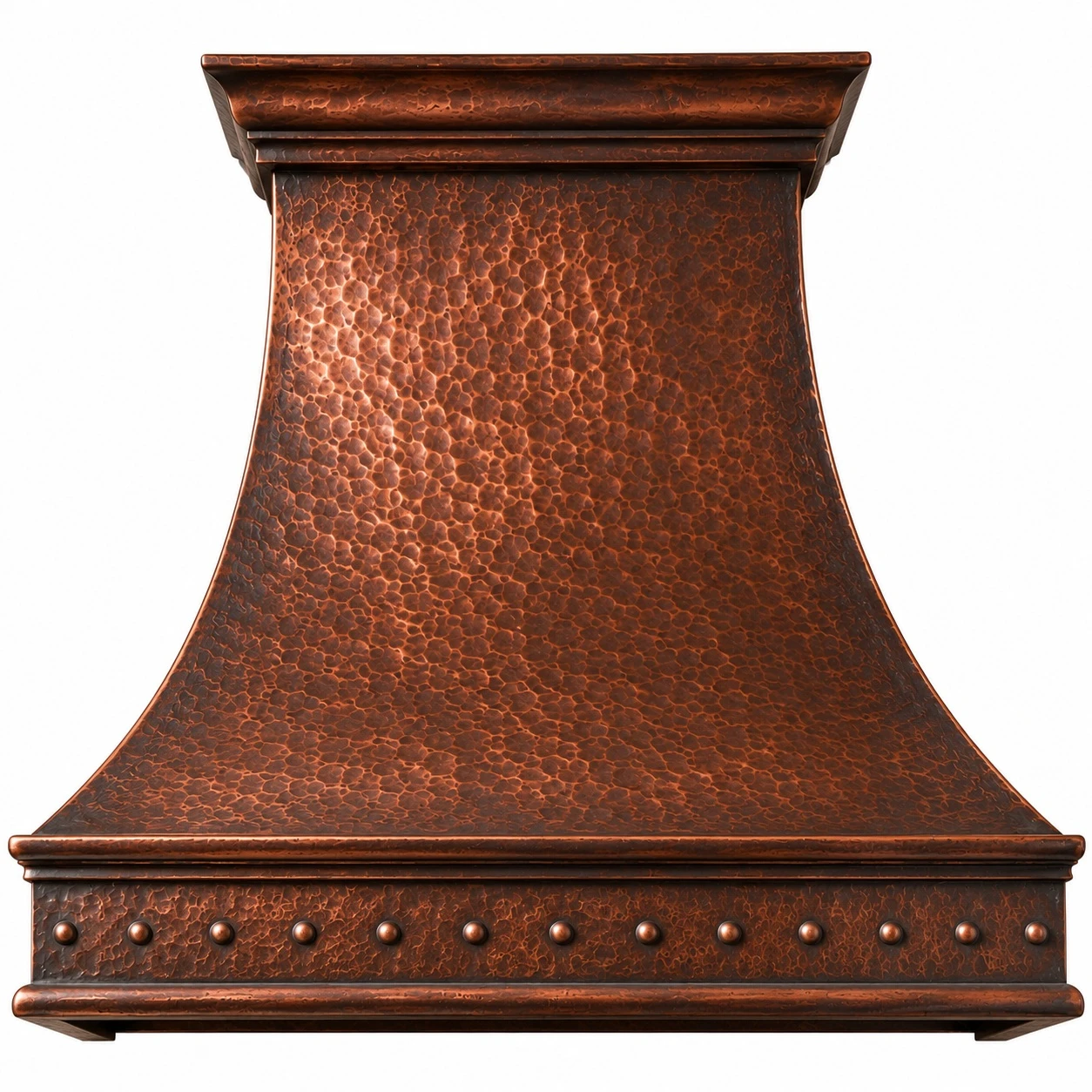
Custom Hood Specifications
- Material: Handcrafted copper
- Installation: Wall or island preparation
- Width: Custom sizing available
- Height: Custom height available
- Depth: Planned to project needs
- Texture: Hand-hammered copper
- Finish: Copper patina options
- Detail: Riveted lower apron
- Insert: Buyer-supplied specs accepted
- Internal: Up to 1,260 CFM support
- External: Up to 1,500 CFM support
- Build: Made-to-order construction
- Origin: Santa Clara del Cobre, Mexico
Planning a Bell Copper Range Hood
A bell copper range hood works well when the kitchen needs a curved canopy with enough visual weight to anchor the range wall. This model keeps the body clean and focuses its detail at the lower apron, where a single row of rivets adds handcrafted rhythm. Buyers comparing this hood with other handmade copper profiles can also browse the broader copper range hoods collection. For related shape planning, review the bell-shaped copper range hoods guide.
Why Choose a Riveted Apron?
The riveted apron gives this hood its defining lower detail. Instead of using vertical straps, heavy scrollwork, or multiple decorative bands, the design places a single row of rivets across the apron. This keeps the bell canopy visually clean while still showing traditional metalwork character. The rivets help anchor the lower edge and give the hood a stronger handcrafted presence above the range. This is useful when the kitchen needs old-world copper warmth without excessive ornament.
Bell Canopy Design
The bell-shaped canopy narrows through the upper section and expands toward the cooking surface. This creates a curved architectural profile that feels substantial but not boxy. The form pairs naturally with plaster walls, stone backsplashes, timber beams, carved cabinetry, handmade tile, iron lighting, and warm wood finishes. Since the canopy itself is not divided by heavy straps, the hammered copper texture and patina movement remain easy to see across the surface.
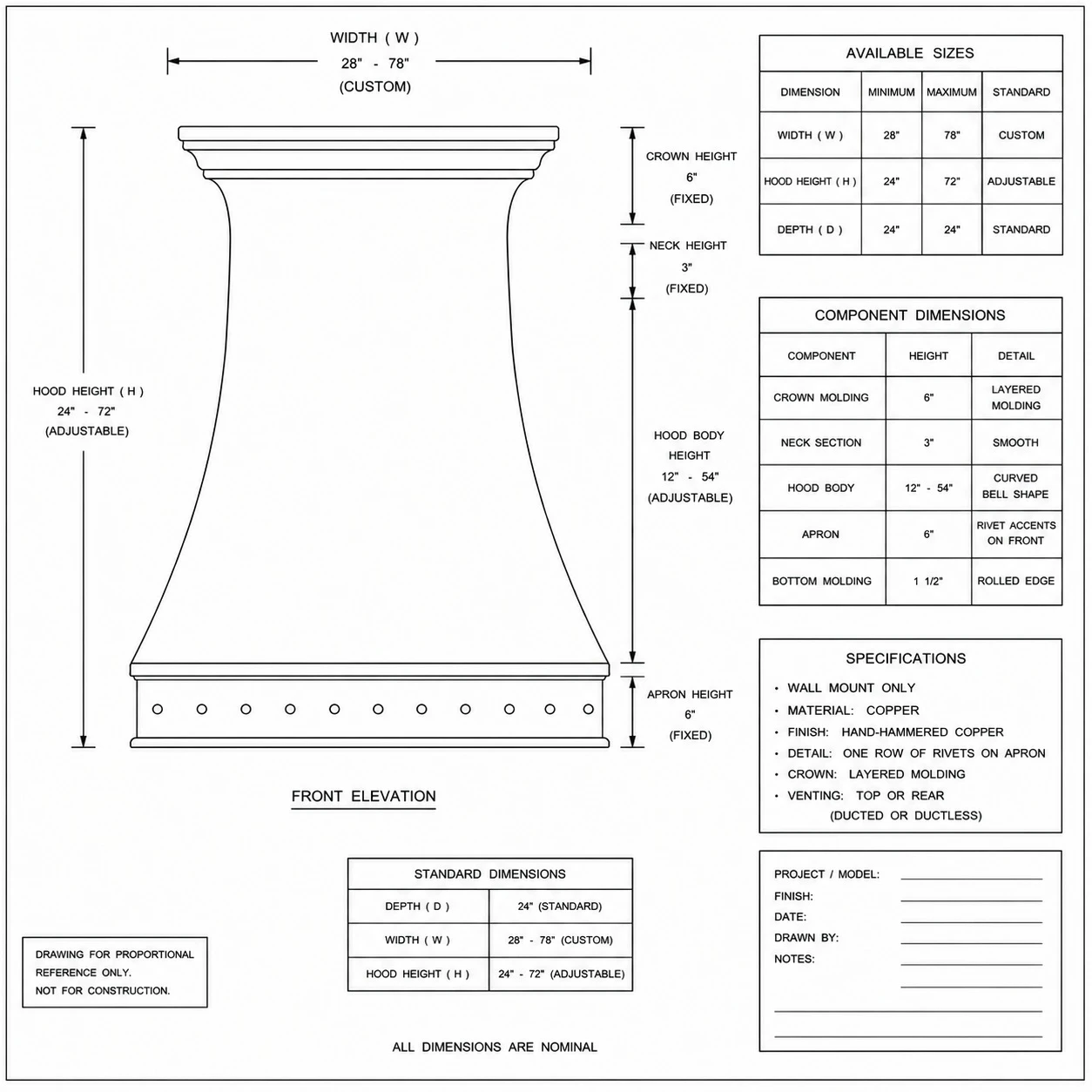
Copper Hood Dimensions and Drawing
The proportional drawing helps clarify how the bell body, chimney area, riveted apron, side projection, lower opening, and overall height relate before production. It is useful for homeowners, designers, cabinetmakers, builders, and ventilation installers who need to understand the hood in elevation. The drawing does not replace field measurement, insert specifications, duct routing, or fabrication approval, but it helps organize early decisions about range width, hood width, lower clearance, apron depth, body height, and side projection.
How to Size a Bell Hood
Hood sizing should start with the cooking surface, then account for cabinet spacing, ceiling height, backsplash height, hood depth, lower clearance, insert dimensions, and duct route. A 30-inch cooking surface may need a compact custom hood, while 36-inch and 42-inch ranges often benefit from more visual width. Larger 48-inch and 60-inch ranges need careful capture-area planning, especially when the hood is installed higher or used with powerful cooking equipment. Final sizing depends on appliance requirements, installation height, blower selection, duct configuration, and local requirements. For broader measurement planning, review the popular copper hood sizes guide.
Range Hood Height and Clearance
Height and clearance affect both cooking comfort and ventilation performance. A hood placed too low can crowd the cooking area, while a hood placed too high may lose visual connection to the range and reduce capture efficiency. The riveted apron should also be reviewed at the intended mounting height because it is the most visible detail near the cooking surface. In taller kitchens, the bell body can be extended for stronger presence. In lower kitchens, apron depth and canopy height should be carefully proportioned.
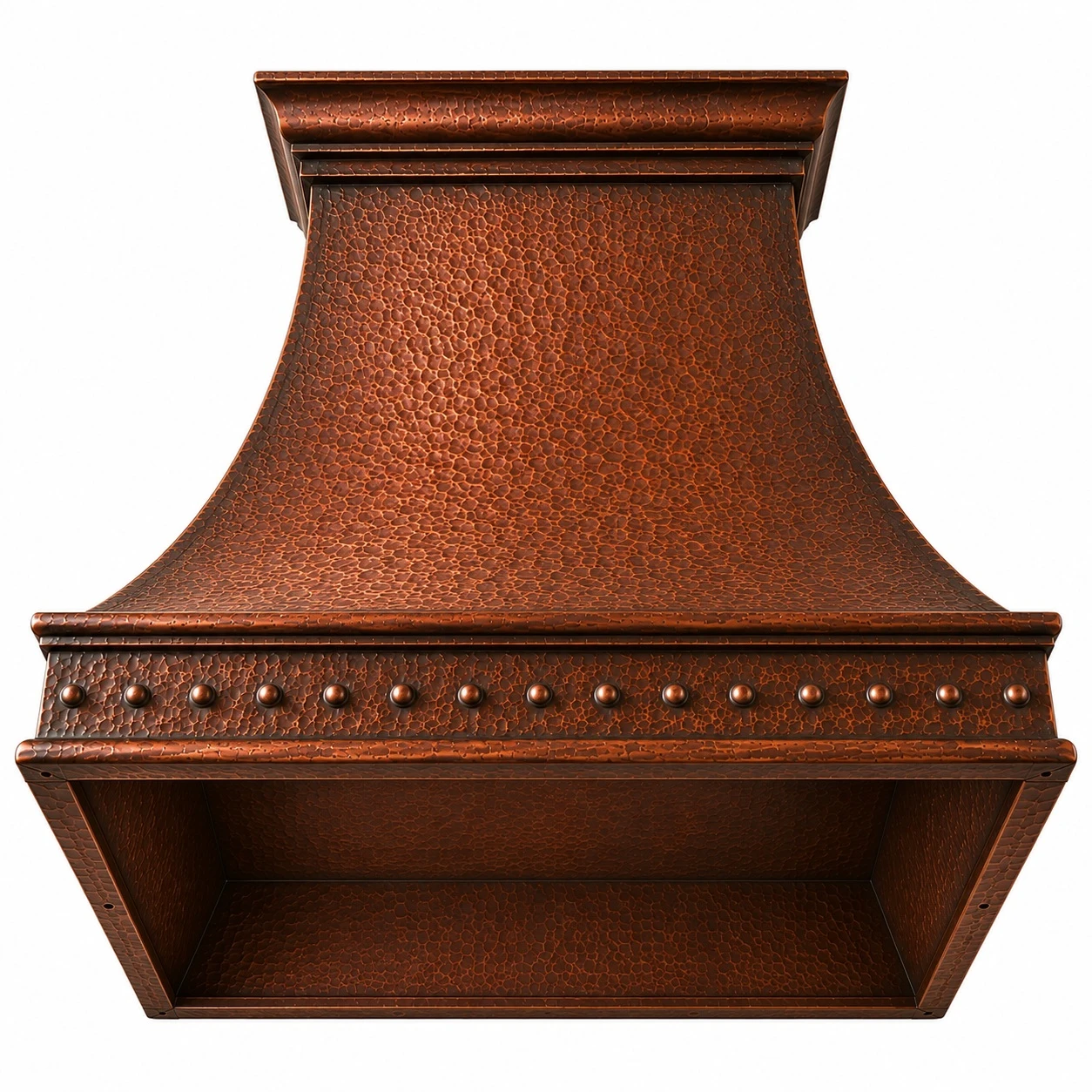
Underside and Insert Preparation
The underside view is important because it shows how the hood can be prepared around the selected ventilation insert. The copper shell should be planned before fabrication around the insert brand, model, cutout dimensions, liner requirements, duct size, discharge direction, lights, controls, filters, and service-access needs. Preparing the underside correctly helps the insert sit cleanly within the hood and reduces the need for field modification. It also allows the finished copper body to maintain its handmade exterior while supporting practical kitchen ventilation.
Patina Finish Options
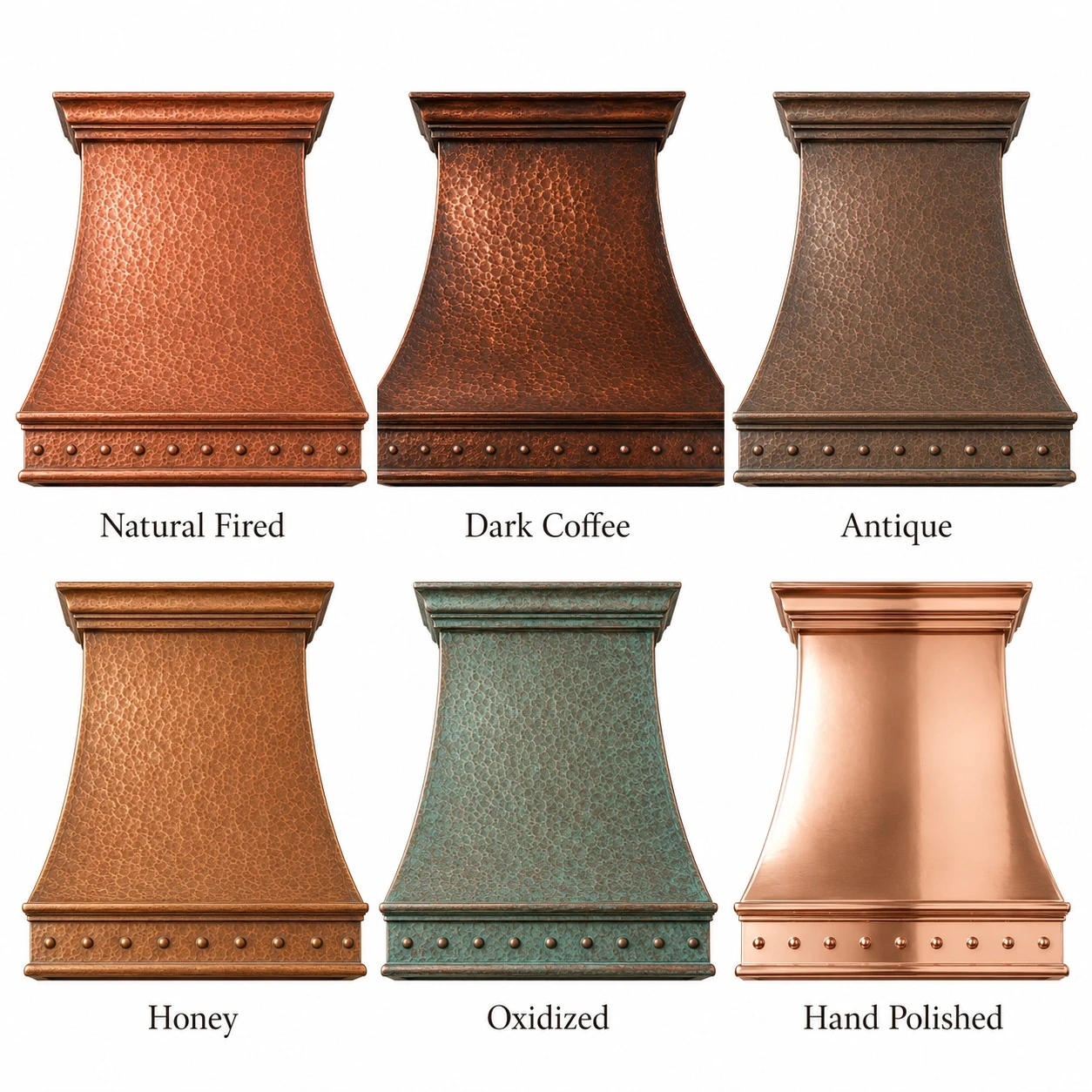
Finish selection changes how the hammered texture, bell body, and riveted apron appear in the kitchen. Natural copper creates reddish and amber movement. Honey copper gives the hood a softer golden tone. Antique copper creates a duller aged effect. Coffee patina adds deeper brown contrast. Oxidized green can introduce lighter historic color when selected. Hand-polished copper creates brighter reflection, especially on raised areas and rivets. For broader finish planning, review the copper patina finish guide.
Coppersmith Perspective
A bell hood with a riveted apron requires careful shaping because the curved canopy and lower apron must feel balanced as one form. The rivet row should follow the apron cleanly without appearing crowded or sparse. Hammering must support the bell shape without overpowering the simple apron detail. This type of work reflects the copper tradition associated with Santa Clara del Cobre. For more background on Rustica House craftsmanship, read about copper artisan work in Santa Clara del Cobre.
Handcrafted Copper Character
This hood is handmade from real copper, so the finished piece should not be expected to look machine-perfect. Hammering may appear deeper in some areas and softer in others. Patina can shift across the canopy, apron, rivets, side panels, edges, and underside. Seams may appear subtly depending on finish and lighting. Rivet placement, apron shaping, edge transitions, and tone movement may show small hand-shaped differences. These details are normal in custom copper work and make each finished hood unique.
Spanish Colonial Kitchens
Spanish Colonial kitchens are a natural setting for this hood because hammered copper complements plaster walls, Saltillo floors, Talavera tile, dark timber, carved cabinetry, wrought iron lighting, bronze hardware, and stone surfaces. The bell canopy adds old-world curve, while the riveted apron provides traditional detail without making the hood overly ornate. A natural fired, antique, or coffee patina can reinforce the historic character of the room.
Hacienda Kitchens
Hacienda kitchens can support the hood’s warm copper finish, hammered surface, and substantial apron. Rustic woods, terracotta floors, plaster walls, stone counters, handmade tile, iron hardware, and large cooking areas all coordinate naturally with the design. The riveted apron helps anchor the hood above the range, while the clean bell body keeps the overall composition balanced. Warm patina options can make the hood feel integrated with earth-tone materials.
Old World Mediterranean Kitchens
Old World Mediterranean kitchens can use this hood when the room includes arched openings, warm plaster, aged woods, limestone, travertine, patterned tile, and bronze lighting. The bell shape gives the range wall softness and depth, while the riveted apron adds a single decorative line. A quieter stone or plaster backsplash often lets the hammered copper surface and apron detail remain clear without visual competition.
Traditional Kitchens
Traditional kitchens can use this hood when the room needs a custom metal centerpiece with curved form and restrained detail. Raised-panel cabinetry, crown molding, marble, quartzite, bronze hardware, aged brass, stone tile, and warm wood tones can all support the design. Because the hood has a clear hammered surface and riveted apron, surrounding trim, tile, and cabinet details should be chosen with restraint.
Other Compatible Kitchen Styles
- Tuscan kitchens
- Rustic European kitchens
- Modern hacienda kitchens
- Refined farmhouse kitchens
Backsplash and Cabinet Coordination
The backsplash should support the copper hood without competing with the hammered body and riveted apron. Stone slab, plaster, limestone, travertine, marble, quartzite, zellige, handmade ceramic tile, brick, Saltillo, Talavera, and quiet field tile can all work. Cabinet colors such as warm white, cream, white oak, walnut, alder, cherry, deep green, navy, charcoal, and black can coordinate with copper when the hardware and lighting repeat the metal palette thoughtfully.
Wall or Island Mounting
This hand-hammered bell copper range hood with riveted apron can be planned for wall or island installation when project details allow. A wall-mounted layout should align with the range, backsplash, cabinetry, ceiling height, and duct route. An island version must look balanced from several viewing angles because the bell body, side profile, riveted apron, underside preparation, hammered surface, and patina may be visible from adjoining spaces. For layout comparison, use the wall and island hood guide.
Range Hood CFM and Inserts
The copper shell creates the visible hood, while the insert, blower, and ducting provide smoke, steam, grease, and odor removal. Ventilation requirements depend on cooking appliance output, hood dimensions, installation height, duct configuration, and local building requirements. Rustica House can supply the 200 CFM insert only. The hood can also be prepared for buyer-supplied inserts when specifications are provided before fabrication. Buyer-supplied internal inserts are supported up to 1,260 CFM, and buyer-supplied external blowers are supported up to 1,500 CFM when complete specifications are provided before production. For technical planning, review the range hood insert guide.
Measurements Before Ordering
Before production begins, buyers should send range width, ceiling height, wall or island layout, desired hood width, desired hood height, depth, lower clearance, duct route, backsplash conditions, cabinet limitations, copper patina preference, hammering preference, apron preference, rivet preference, and ventilation equipment details. If using a buyer-supplied internal insert or external blower, send the brand, model, cutout dimensions, liner requirements, duct size, discharge direction, controls, lights, filters, and service-access information. Photos of the range wall help review apron depth, rivet spacing, body height, side projection, finish direction, and surrounding materials.
Care and Cleaning
Copper should be cleaned gently to preserve finish character. Use a soft cloth, warm water, and mild soap for routine wiping, then dry promptly. Avoid abrasive pads, steel wool, bleach, ammonia, acidic cleaners, and harsh degreasers because they can scratch the copper or disturb the patina. Wipe carefully around the riveted apron, hammered surface, seams, edges, corners, underside areas, and insert opening so grease does not collect in details. For deeper care guidance, review the copper hood care guide.
Common Questions
What makes this copper hood unique?
This hood combines a hand-hammered bell canopy, riveted lower apron, custom patina options, underside insert preparation, and made-to-order copper construction.
What does the riveted apron add?
The riveted apron adds a single line of handcrafted detail and helps visually anchor the lower edge above the range.
How wide should this copper range hood be?
Width depends on the cooking surface, installation height, appliance requirements, insert dimensions, duct route, and local requirements.
Can this hood fit a 36-inch range?
Yes. A custom width can be planned around a 36-inch cooking surface when project measurements and ventilation specifications are provided.
What CFM insert can this hood support?
Rustica House can supply the 200 CFM insert only. Buyer-supplied internal inserts up to 1,260 CFM and external blowers up to 1,500 CFM are supported with specifications before production.
Can a buyer-supplied insert be used?
Yes. The buyer must provide complete insert, liner, blower, duct, lighting, filter, and service-access specifications before fabrication.
What patina works best on this hood?
Natural fired, antique, coffee, honey, oxidized green, and hand-polished options can all work depending on cabinetry, stone, tile, and lighting.
Will every hood look identical?
No. Copper tone, hammering, seam visibility, rivet placement, apron shaping, edge transitions, and patina depth vary because each hood is handmade.
What kitchen styles fit this hood?
This hood works well in Spanish Colonial, Hacienda, Old World Mediterranean, traditional, Tuscan, rustic European, and modern hacienda kitchens.
How should the copper be cleaned?
Use mild soap and a soft cloth, then dry promptly. Avoid abrasives, acids, bleach, ammonia, steel wool, and harsh degreasers.
Final Design Guidance
Hand-Hammered Bell Copper Range Hood with Riveted Apron Guide shows how a bell-shaped copper canopy, hammered texture, single riveted apron row, custom patina options, underside insert preparation, sizing, and ventilation planning work together. Choose this hood when the kitchen needs a warm handmade centerpiece with old-world curve and restrained apron detail. Pair it with plaster, Saltillo, Talavera, travertine, limestone, marble, quartzite, handmade tile, brick, painted cabinetry, oak, walnut, dark timber, bronze hardware, aged brass, black iron lighting, pewter pulls, stainless appliances, or warm neutral finishes. Confirm width, height, depth, wall or island mounting, insert details, blower specifications, duct route, backsplash conditions, apron depth, rivet spacing, underside preparation, hammering, and copper finish before production. Customize the hand-hammered bell copper range hood with riveted apron with Rustica House for a made-to-order kitchen centerpiece.