 US Dollar
 Euro
Euro
 Australian Dollar
 Canadian Dollar
 Polish Zloty
 British Pound

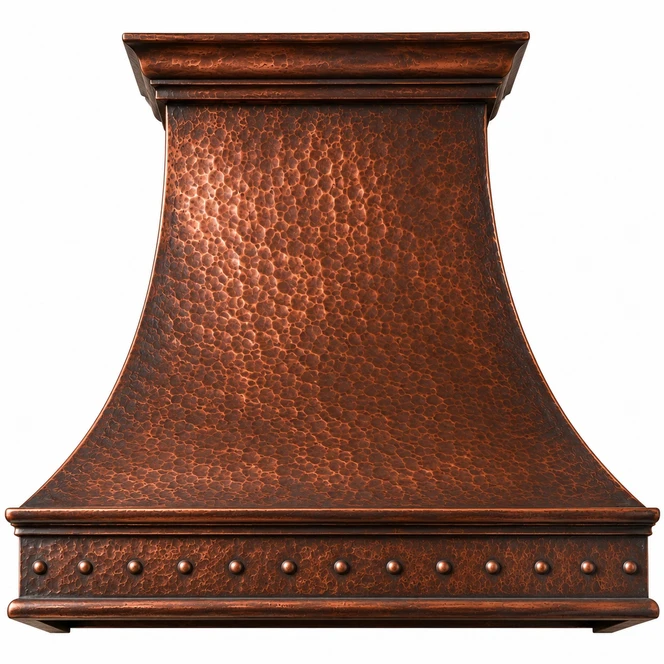
The Hand-Hammered Bell Copper Range Hood with Riveted Apron is shown in these kitchen images as a substantial handcrafted focal point for Spanish Colonial, Mediterranean, Tuscan, and Modern Hacienda kitchens. Its bell-shaped copper canopy, warm hammered surface, single riveted apron, smooth upper body, and traditional architectural scale create a range-wall feature with depth, texture, and artisan character. The design is simpler than ornamental copper hoods with scrollwork or multiple decorative bands, allowing the uninterrupted hammered canopy and lower rivet detail to define the look. Explore the hand-hammered bell copper range hood with riveted apron to compare its bell profile, hammered copper finish, riveted apron, patina options, and kitchen style applications.
Blog Summary
- Focus: bell copper hood images
- Product: hand-hammered copper hood
- Shape: substantial bell canopy
- Detail: single riveted apron
- Scenes: four kitchen styles
- Look: warm and architectural
Bell Copper Hood Images
Kitchen images help show how this hand-hammered bell copper range hood with riveted apron looks inside finished interiors rather than as a standalone product photo. Wall texture, ceiling height, cabinetry, stone counters, tile pattern, lighting, flooring, and hardware all affect how the copper patina and hammered surface appear. In one kitchen, the hood can feel Spanish Colonial and traditional. In another, the same bell profile can support Mediterranean, Tuscan, or Modern Hacienda interiors.
This hood stands out because the main canopy remains clean and uninterrupted. The hammered copper surface carries most of the visual movement, while the riveted apron gives the lower edge a strong handcrafted detail. That balance makes the design useful for kitchens that need copper warmth and artisan texture without pierced bands, scrollwork, upper straps, or heavy mixed-metal accents.
Design Highlights
- bell-shaped copper canopy
- hand-hammered metal texture
- single riveted lower apron
- warm artisan copper patina
- uninterrupted upper body
- substantial range-wall presence
- Spanish to Hacienda flexibility
Spanish Colonial Kitchen with Bell Copper Hood
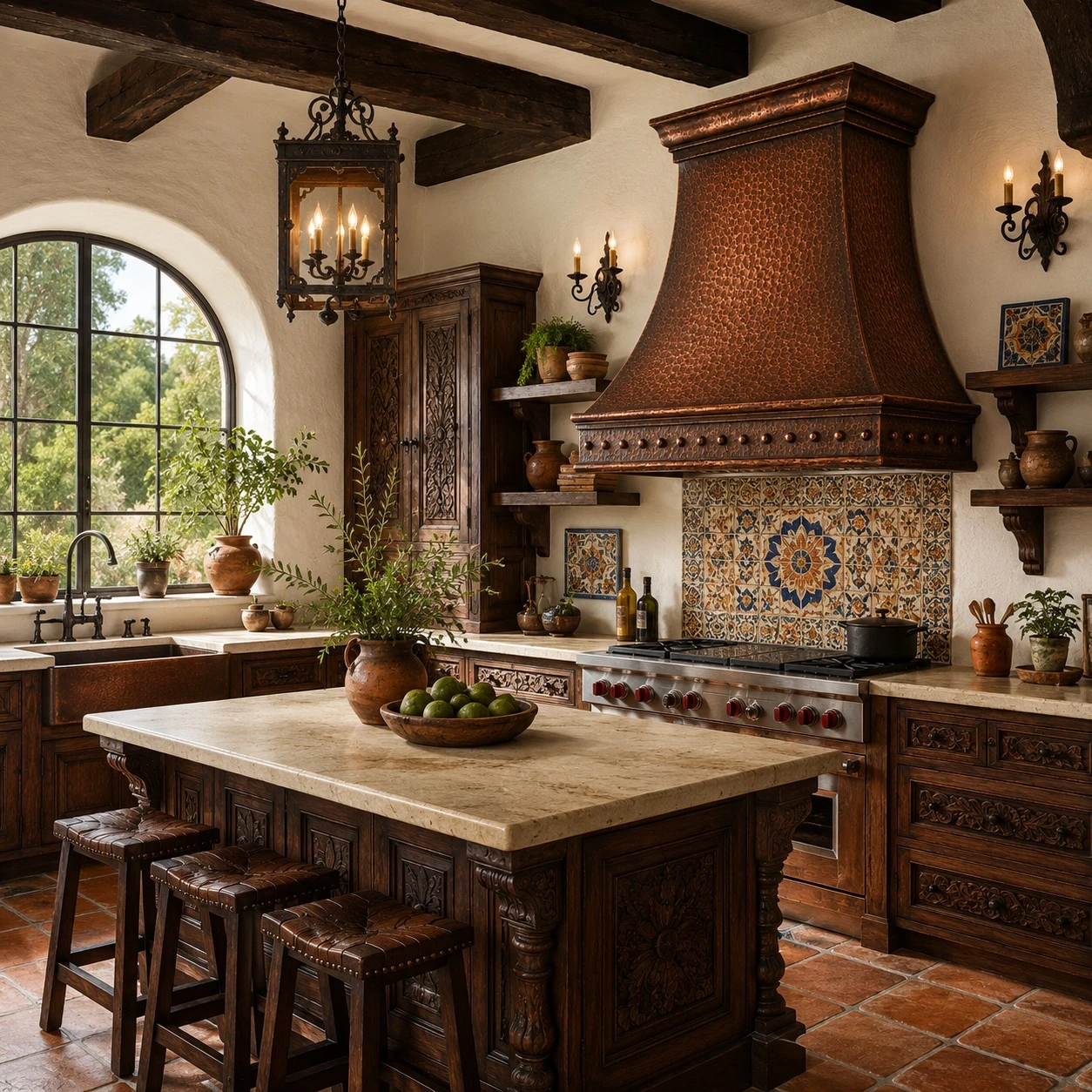
In a Spanish Colonial kitchen, the hand-hammered copper hood works naturally with plaster walls, dark timber, carved cabinetry, handmade tile, stone counters, wrought iron, and warm clay tones. Spanish Colonial interiors often need a strong architectural range-wall feature, and the bell canopy provides that presence without requiring ornate decoration.
The riveted apron adds a traditional metalwork detail along the lower edge, while the smooth upper silhouette keeps the hood grounded and readable. The hammered copper patina can coordinate with Saltillo-style floors, bronze hardware, aged wood, limestone, and textured plaster. For related regional inspiration, review the Spanish-style copper range hoods guide.
Mediterranean Kitchen with Bell Copper Hood
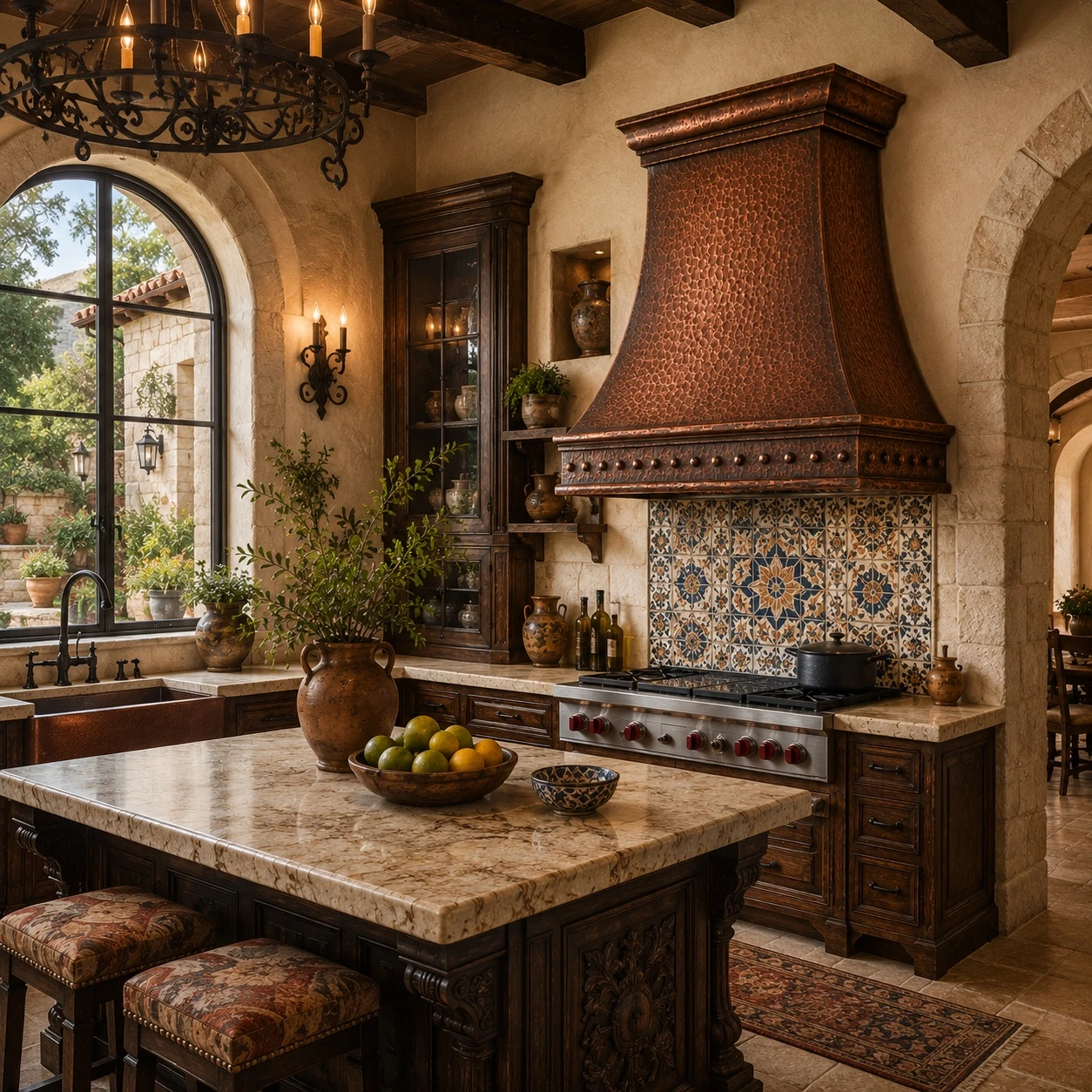
In a Mediterranean kitchen, the hood brings warmth, curve, and handcrafted texture to plaster, stone, dark wood, patterned tile, bronze hardware, and arched architectural elements. Mediterranean interiors often rely on natural materials and softened forms, making the rounded bell canopy a strong fit above the cooking area.
The hammered copper surface catches light across the canopy, creating depth without busy ornament. The riveted apron gives the lower section a clear base and helps the hood feel finished above the range. The warm patina can connect travertine, limestone, walnut, clay tile, and aged metal details. For broader old-world design context, review the old European copper range hood guide.
Tuscan Kitchen with Bell Copper Hood
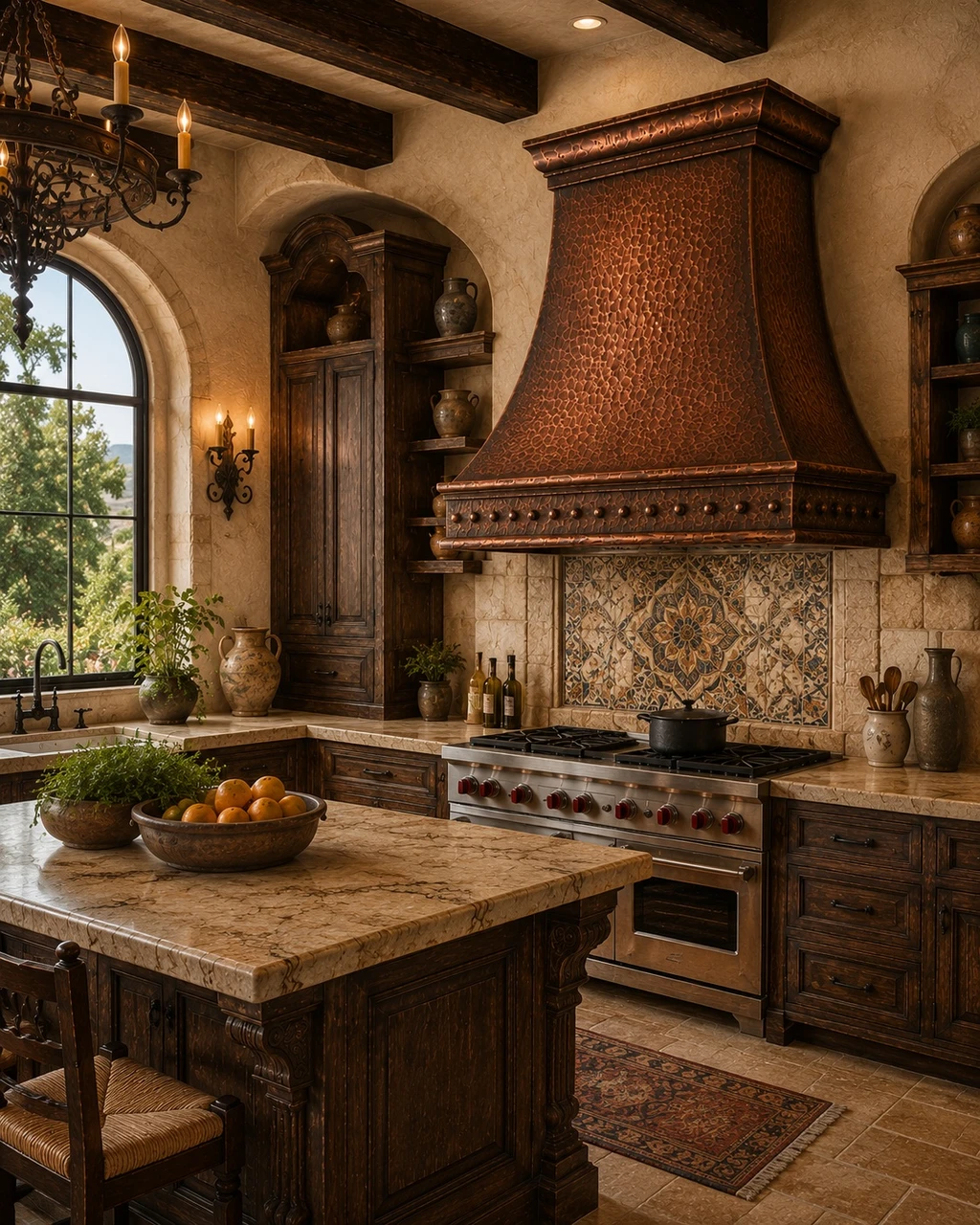
In a Tuscan kitchen, the hood supports travertine, distressed wood, warm stone, plaster walls, iron hardware, and traditional cabinetry. Tuscan interiors often benefit from a range hood with visible material weight and old-world warmth. This design provides both through its substantial bell canopy and hammered copper surface.
The single row of rivets on the apron adds detail where the hood meets the cooking zone. Because the rest of the canopy remains open and textured, the design does not feel crowded. The copper patina can echo stone floors, aged wood, bronze fixtures, and warm wall finishes. For related style planning, review the Tuscan style range hoods guide.
Modern Hacienda Kitchen with Bell Copper Hood
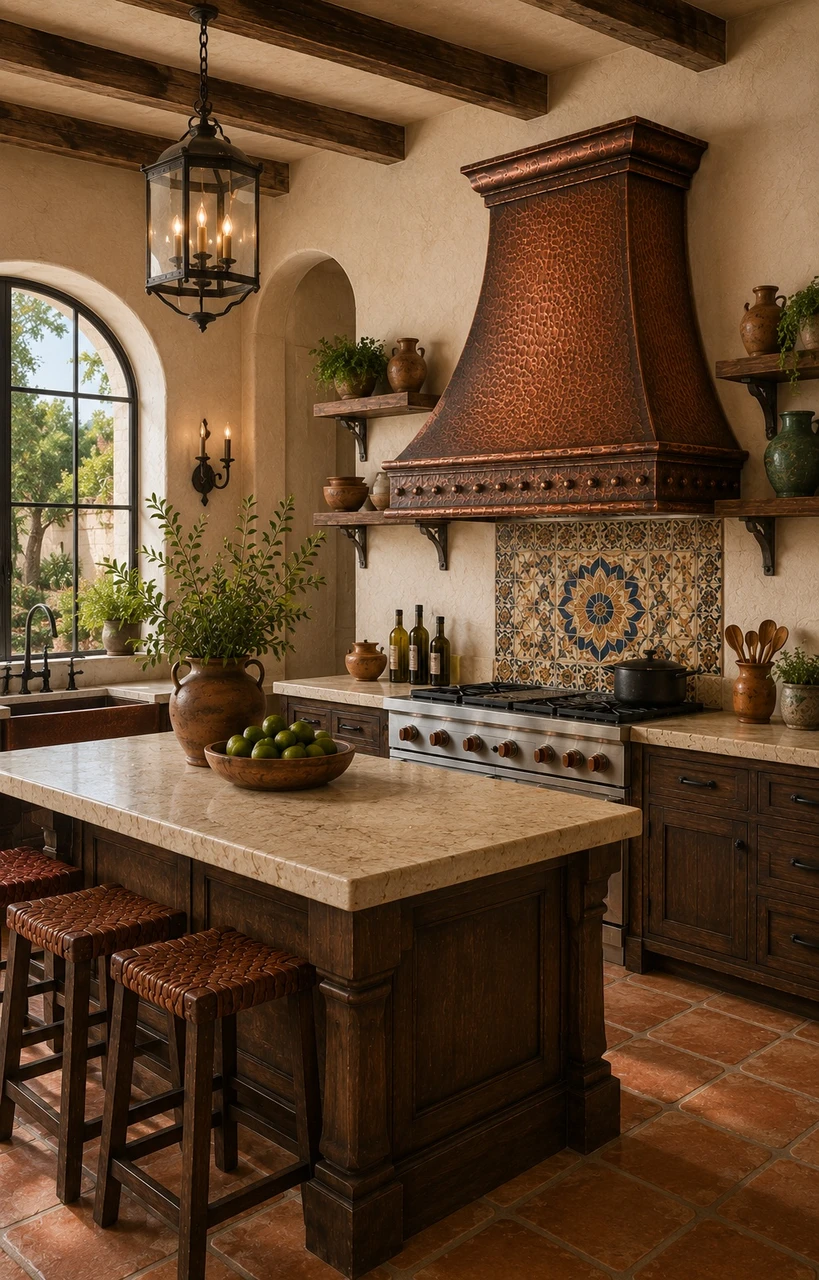
In a Modern Hacienda kitchen, the bell copper hood works with quiet plaster, substantial timber, terracotta, limestone, handmade tile, and restrained ironwork. Modern Hacienda interiors often reduce visual clutter while keeping regional materials important. This hood fits that balance because the canopy is simple, warm, and architectural.
The hammered copper provides texture, while the riveted apron adds a controlled handcrafted detail. The absence of upper straps or ornamental scrollwork allows the hood to feel cleaner than a heavily decorated old-world design. For related planning, review the Hacienda copper range hood buying guide.
Bell Copper Hood Design
The bell shape gives this hood height, curve, and traditional range-wall presence. The canopy narrows toward the upper section and broadens above the cooking area, creating a familiar old-world silhouette. This profile works well when the hood should feel substantial without becoming overly decorative.
The uninterrupted hammered body is important to the design. It allows the copper surface, patina variation, and curved form to remain the primary visual features. The riveted apron then adds emphasis only at the lower edge.
Riveted Apron Detail
The riveted apron gives the hood a strong base above the range. Instead of placing rivets across the crown or upper canopy, this design concentrates them along the lower apron. That creates a clear handcrafted detail without interrupting the large hammered copper surface.
This lower rivet placement works well in kitchens where the backsplash, cabinetry, or plaster wall already includes strong texture. The apron adds metalwork character while keeping the upper canopy calm and balanced.
Copper Patina in Kitchens
Copper finish selection changes how this hood reads in the finished kitchen. Natural fired copper can show amber, bronze, reddish, and brown variation. Coffee and antique finishes can create a deeper old-world effect. Honey and hand-polished copper can brighten the range wall, while oxidized green can create a more aged appearance.
Because the canopy is broad and uninterrupted, the patina becomes especially visible. Hammer marks can catch light differently across the curved surface, making the finish appear deeper in some areas and brighter in others. For finish comparison, review the copper patina finish options guide.
Coppersmith Perspective
A bell hood with a riveted apron requires careful control of curve, apron alignment, and surface rhythm. The canopy must keep its broad rounded shape, while the apron needs to sit evenly across the lower front. Hammering also has to remain balanced so the surface looks textured rather than uneven.
Slight differences in hammer depth, patina tone, apron edge, rivet spacing, seams, and surface movement are part of handmade copper construction. They help distinguish an artisan range hood from a flat factory-made appliance cover.
Other Kitchen Styles
- Mexican Colonial Revival
- Rustic Mediterranean
- Traditional farmhouse
- Old-world European
Conclusion
The hand-hammered bell copper range hood with riveted apron brings a substantial bell canopy, hand-hammered copper texture, warm patina, single riveted apron, and handcrafted architectural character into the kitchen. These images show how the hood adapts to Spanish Colonial, Mediterranean, Tuscan, and Modern Hacienda interiors while keeping its design warm, balanced, and visibly handmade.