 US Dollar
 Euro
Euro
 Australian Dollar
 Canadian Dollar
 Polish Zloty
 British Pound

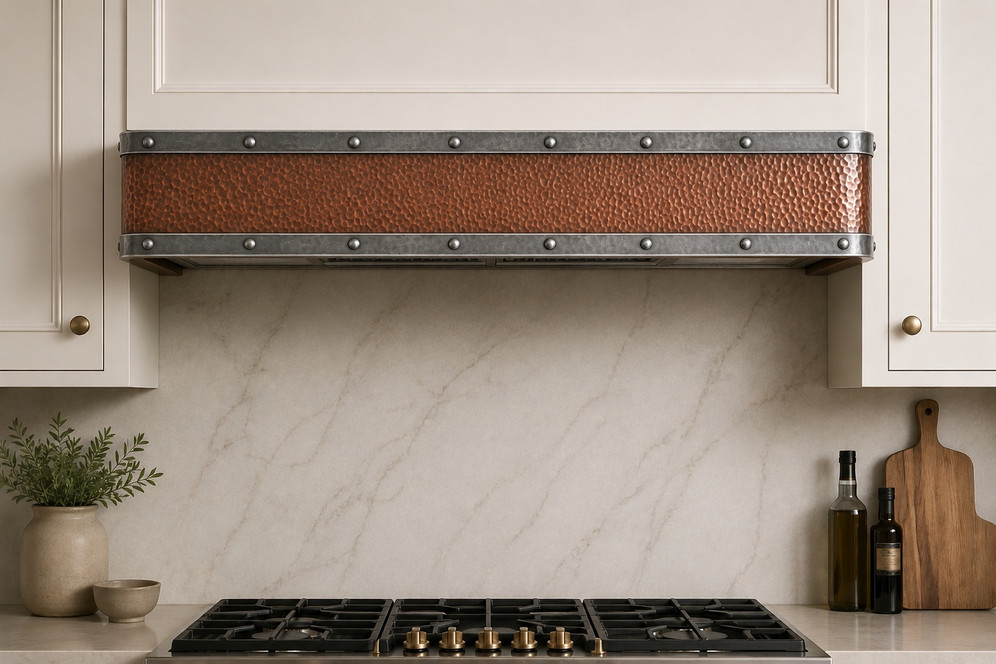
The Hammered Copper Box Undercabinet Hood with Riveted Zinc Bands is shown in these lifestyle images as a compact mixed-metal focal point for wabi-sabi, bistro, chalet, and Art Deco revival kitchens. Its under-cabinet box profile keeps the hood low and cabinet-ready, while the hammered copper face, parallel zinc bands, repeated rivets, warm patina, and clean rectangular shape create strong artisan texture without requiring a tall chimney. The hood also corresponds well with modern, transitional, industrial, and contemporary farmhouse kitchens because the shape is simple, the metalwork is structured, and the copper-and-zinc contrast works with both rustic and refined materials. Explore the hammered copper box undercabinet hood with riveted zinc bands to compare its compact shape, mixed-metal details, rivet pattern, and kitchen style applications. For layout planning, review the under-cabinet copper range hood guide.
Blog Summary
- Focus: lifestyle image guide
- Product: mixed-metal box hood
- Format: under-cabinet copper hood
- Details: zinc bands and rivets
- Styles: four image scenes
- Fit: modern to rustic kitchens
Riveted Zinc Band Hood Images
Lifestyle images help show how this hammered copper under-cabinet hood looks inside complete kitchens rather than as a product photo alone. Cabinet finish, wall texture, backsplash material, countertop tone, lighting, flooring, hardware, and surrounding metal details all affect how the copper, zinc, and rivets appear. In one setting, the hood may feel quiet and wabi-sabi. In another, it can look bistro, chalet, or Art Deco revival.
This hood stands out because the visual detail is concentrated in a compact front face. The copper field provides warmth and handmade texture. The zinc bands add cooler contrast and a strong horizontal structure. The rivets create repeated points of shadow, giving the box hood a crafted metalwork rhythm. For broader material comparison, review the mixed metal range hoods buying guide.
Design Highlights
- under-cabinet copper box profile
- hand-hammered copper surface
- parallel zinc band detailing
- repeated round rivet accents
- warm mixed-metal contrast
- compact cabinet-ready format
- modern and rustic flexibility
Wabi-Sabi Kitchen Image

In a wabi-sabi kitchen, this hood works because the surface does not depend on perfect uniformity. The hammered copper, darker low points, zinc variation, patina movement, and visible rivets all support a design language based on natural texture, age, and handcrafted irregularity. Pair the hood with plaster walls, honed stone, weathered wood, handmade ceramics, muted earth tones, and simple cabinetry.
The box shape keeps the scene calm. Instead of adding ornate curves or heavy decorative trim, the hood uses honest materials and visible metalwork. The zinc bands provide structure, but the hammered copper prevents the composition from feeling too strict. This balance is especially helpful in a wabi-sabi kitchen where quiet restraint and material character need to work together.
Bistro Kitchen Image

In a bistro kitchen, the hood adds the feeling of a compact working kitchen with stronger decorative presence. Bistro interiors often include tile, marble or stone counters, café shelving, dark hardware, brass or bronze accents, wood furniture, and layered lighting. The under-cabinet format is practical, while the copper-and-zinc front gives the range area a custom metal feature.
The repeated rivets are especially effective in this scene because they create visual rhythm similar to old café fixtures, metal shelving, range hardware, or framed glass details. The copper surface adds warmth, and the zinc bands keep the hood from becoming too visually soft. Together, they create a range-wall accent that feels both functional and atmospheric.
Chalet Kitchen Image

In a chalet kitchen, the hood pairs naturally with wood cabinetry, stone counters, exposed beams, darker metal hardware, textured walls, and warm lighting. Chalet interiors often need materials that feel substantial and handcrafted. The hammered copper surface brings warmth, while the zinc bands add a cooler mountain-lodge contrast that can coordinate with iron, steel, pewter, or aged nickel finishes.
The compact profile is useful because chalet kitchens may already have strong wood grain, heavy beams, stone surfaces, and built-in cabinetry. A tall ornate hood could make the room feel crowded, but this under-cabinet box hood keeps the composition controlled. The rivets and hammered finish still add enough detail to make the cooking zone feel custom.
Art Deco Revival Kitchen Image
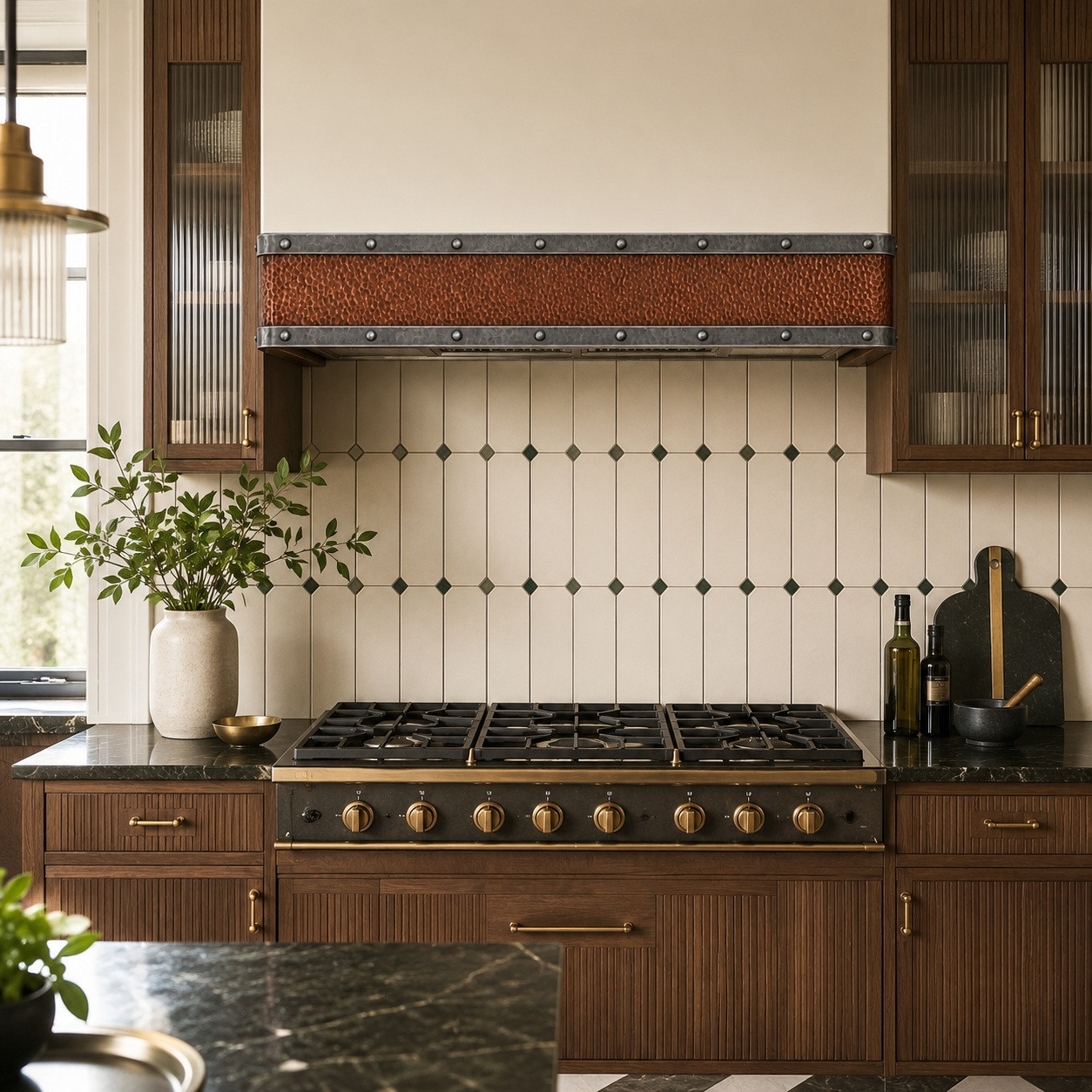
In an Art Deco revival kitchen, the two parallel zinc bands and repeated circular rivets create the graphic structure needed for a more architectural interior. Pair the hood with fluted walnut, geometric tile, reeded glass, dark green or black stone, brass details, and carefully controlled metallic accents. The broad horizontal face gives the wall a strong line, while the rivets create an orderly pattern.
The hammered copper texture is valuable here because it softens the precision of surrounding Deco-inspired materials. Without that texture, the room could become too polished or severe. The hood adds warmth and handmade variation while the zinc bands keep the design crisp. This makes the piece useful for Art Deco revival kitchens that need metal contrast without becoming overly glossy.
Modern, Transitional, Industrial, and Farmhouse Fit
Beyond the four image scenes, this hood also fits modern, transitional, industrial, and contemporary farmhouse kitchens. In a modern kitchen, the straight box profile and horizontal zinc bands support clean geometry. In a transitional kitchen, the copper warmth softens neutral cabinetry and stone counters while the zinc structure keeps the hood refined. For broader comparison, review the modern style range hoods guide.
In an industrial kitchen, the rivets, zinc bands, and hammered metal surface coordinate with concrete, brick, dark steel, reclaimed wood, and exposed hardware. In a contemporary farmhouse kitchen, the hood adds warmth and handmade texture while the box shape remains simple enough for painted cabinets, wood shelves, handmade tile, and black or bronze hardware.
Zinc Bands and Rivets
The zinc bands are the main structural detail on this hood. Their cooler tone frames the warmer copper field and gives the under-cabinet face a stronger horizontal direction. This contrast is useful when the kitchen already mixes metals, such as black hardware, stainless appliances, bronze faucets, zinc accents, or iron lighting.
The rivets add rhythm and shadow. Because they repeat across the zinc bands, they make the compact hood feel assembled by hand rather than flat or appliance-like. For related mixed-metal planning, browse the mixed metal range hoods collection.
Hammered Copper Finish
The hammered copper surface gives the hood warmth, texture, and natural variation. Each mark catches light differently, creating small highlights and darker low points across the face. This helps the rectangular box shape feel more organic and handcrafted.
Small differences in hammering, patina tone, zinc surface movement, rivet placement, seams, edge details, and artisan finishing should be expected in handmade metalwork. These variations are part of the hood’s character. For finish comparison, review the copper patina finish options guide.
Size and Ventilation
Under-cabinet hoods must be planned around cabinet spacing, range width, backsplash height, cooking clearance, insert dimensions, and duct direction. The compact format is helpful when a tall chimney hood would interrupt upper cabinetry or overwhelm a smaller range wall. For scale planning, review the most popular range hood sizes guide.
Ventilation should be planned around the insert, blower, duct route, filters, lighting, and cooking habits. For insert selection, review the range hood insert guide for custom metal hoods. Rustica House can supply the 200 CFM insert only. Any other insert must be supplied by the buyer, and Rustica House will make the hood ready for that buyer-supplied insert when the insert details are provided.
Frequently Asked Questions
What makes this copper hood different?
This hood combines an under-cabinet box profile with hammered copper, riveted zinc bands, warm patina, and compact cabinet-ready proportions. The mixed-metal front gives it strong visual structure.
Which kitchen styles fit this hood?
This hood works well in wabi-sabi, bistro, chalet, Art Deco revival, modern, transitional, industrial, and contemporary farmhouse kitchens.
Is every hood exactly identical?
No. Each hood is handmade, so hammering, patina tone, zinc band character, rivet placement, seams, and small artisan marks may vary. These differences are part of the handcrafted character.
Conclusion
The hammered copper box undercabinet hood with riveted zinc bands brings compact cabinet-ready proportions, warm copper texture, cool zinc contrast, and repeated rivet detail into the kitchen. These lifestyle images show how the hood adapts to wabi-sabi, bistro, chalet, and Art Deco revival interiors while also fitting modern, transitional, industrial, and contemporary farmhouse kitchens.