 US Dollar
 Euro
Euro
 Australian Dollar
 Canadian Dollar
 Polish Zloty
 British Pound

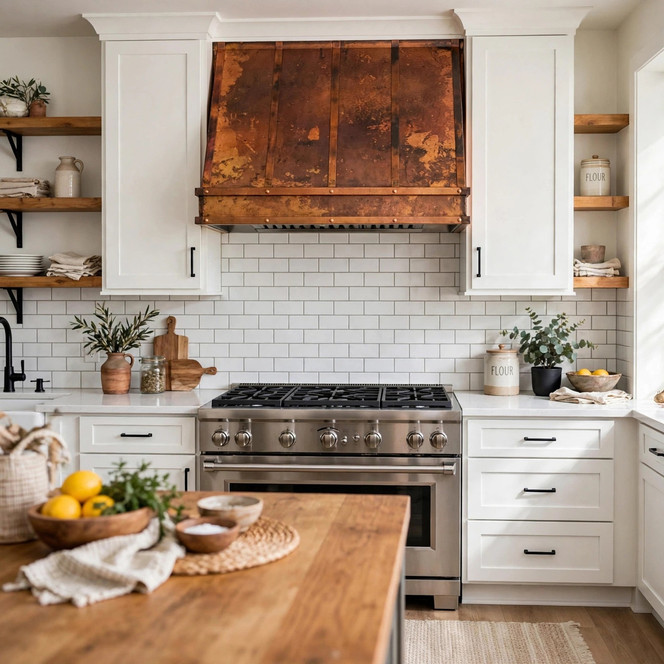
Double-Beam Under-Cabinet Copper Range Hood with Rib Straps Guide explains how a handcrafted copper hood with two lower beams, four vertical rib straps, five formed panels, a steep sloped side profile, hammered texture, and rustic fired patina can become a compact architectural feature below upper cabinets. This made-to-order hood is designed for kitchens where a full chimney is not practical, but the range wall still needs warmth, structure, and artisan character. Small hammering differences, patina movement, beam alignment variation, rib spacing differences, tool marks, seam irregularities, and handmade surface details should be expected. No two hoods are identical. Explore the double-beam under-cabinet copper hood to review sizing, finish options, cabinet planning, and insert preparation. Browse kitchen inspiration in our under-cabinet copper hood with double beams lifestyle images.
Blog Summary
- Design: Double-beam copper hood
- Mount: Under-cabinet layout
- Ribs: Four vertical straps
- Panels: Five copper sections
- Finish: Fired copper patina
Design Guide Overview
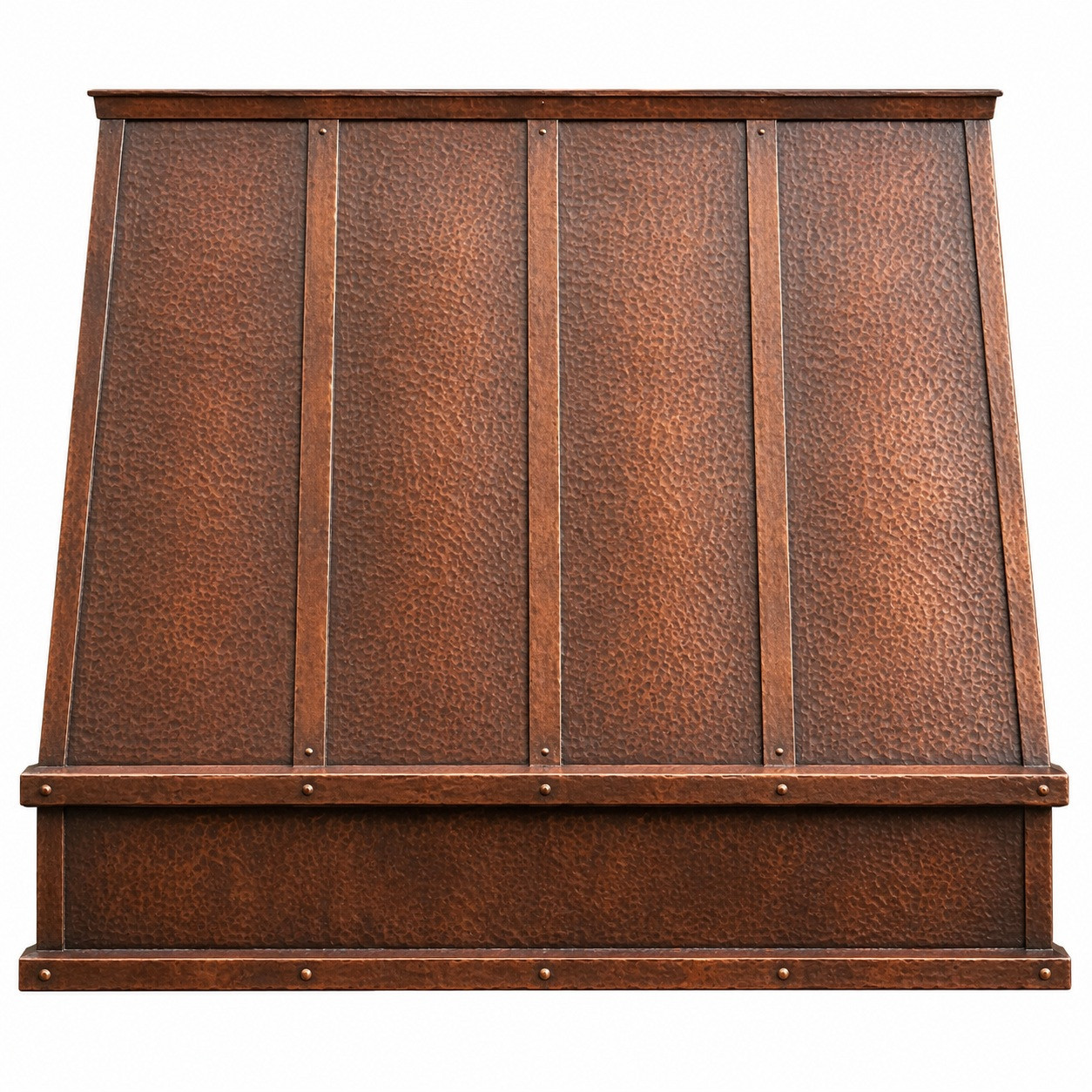
A double-beam under-cabinet copper range hood with rib straps is built for kitchens that need compact installation, strong metalwork detail, and a handmade copper focal point. The equal-width rectangular front keeps the design clean below upper cabinets, while the steep side profile adds visual movement. Two horizontal beams create a substantial base, and four raised ribs divide the front into five panels. For broader cabinet-fit planning, the under-cabinet hood guide explains why low-profile hood formats work well in cabinet-centered kitchens.
Under-Cabinet Fit
The under-cabinet format is the main functional advantage of this hood. It fits beneath upper cabinets, soffits, beams, or shelving where a tall chimney hood would interrupt storage or wall design. The flat cabinet-ready roof helps the shell sit within a planned opening, while the visible copper face gives the range area a custom appearance. This makes the hood useful in remodels, traditional cabinet runs, compact kitchens, and layouts where the cooking wall must remain practical. For a related copper example, read the under-cabinet hammered copper hood guide.
Cabinet Fit Benefits
- Roof: Flat cabinet-ready top
- Mount: Fits below cabinets
- Profile: Compact range wall use
- Storage: Preserves upper layout
- Look: Custom copper focal point
Double-Beam Design
The double-beam design gives the lower portion of the hood its strongest architectural weight. Two horizontal copper beams create a layered base that feels substantial without requiring scrollwork, floral relief, or a tall chimney. The beams also help visually separate the cooking area from the upper cabinet line. Rivets along the beams add texture and reinforce the handcrafted metalwork character. This detail works especially well with rustic, farmhouse, transitional, industrial loft, and Southwestern kitchens because the beams create structure while the fired copper patina adds warmth.
Vertical Rib Straps
Four vertical rib straps divide the front face into five formed copper panels. These ribs are more than decoration. They cover panel connections, create rhythm, and make the hood feel taller even though it is designed for under-cabinet placement. The vertical lines balance the horizontal double beams, giving the hood a strong grid-like composition. Rib spacing can be adjusted according to hood width, so a 30 inch version will read differently from a wider 48, 60, or 72 inch version. Buyers comparing strap details can also review the copper hood straps guide.
Rib Strap Details
- Count: Four vertical ribs
- Panels: Five formed sections
- Role: Covers panel seams
- Effect: Adds height and rhythm
- Scale: Adjusted by width
Five-Panel Construction
The five-panel front gives this hood a tailored construction pattern. Instead of one uninterrupted copper field, the face is divided into separate sections by the rib straps. This makes the hood look more crafted and architectural, especially when viewed straight on. Each panel can show slightly different hammering and patina movement because the copper is formed and finished by hand. Those differences should be expected. They help the hood look authentic rather than stamped or factory-flat, especially when paired with beams, rivets, and a fired patina.
Sloped Side Profile
The side profile slopes steeply from the lower body toward the flat cabinet-ready roof. This angled form helps the hood feel lighter than a deep rectangular box while still maintaining enough projection for ventilation planning. It also gives the design a strong under-cabinet silhouette from the side, especially near open shelving, cabinet returns, or end panels. Sloped copper hoods are useful when a kitchen needs clean lines, head clearance, and architectural shape. For related shape planning, use the sloping copper range hoods guide.
Shape Comparison
This hood is not a bell, dome, or tall chimney design. Its primary identity is an under-cabinet copper hood with a rectangular front and steep sloped side. That makes it useful in kitchens where cabinet fit matters more than vertical chimney height. Compared with box hoods, the sloped side feels less blocky. Compared with decorative apron hoods, the double beams and ribs create a more architectural pattern. Buyers comparing options should review the copper range hood shapes guide before choosing a final silhouette.
Shape Details
- Front: Equal-width rectangle
- Side: Steep sloped profile
- Base: Double-tier beams
- Roof: Cabinet-ready flat top
- Use: Under-cabinet range wall
16-Gauge Copper
The hood is handcrafted from 16-gauge copper, giving the shell strength, depth, and a substantial handmade feel. The panels are hammered, while ribs and beams can appear smoother to emphasize their structural role. This contrast helps the design look layered rather than flat. Heavy copper also supports a richer patina because light catches hammer marks, edges, and raised details differently. Since the hood is formed by hand, exact texture, panel contour, rib alignment, and beam finish can vary slightly from one finished piece to another.
Hammered Copper Finish
The hammered copper surface gives the hood rustic texture and visible artisan character. Hammer marks scatter light across the five panels, making the fired patina look deeper and more varied. The smoother ribs and beams create contrast against the hammered fields, so the construction pattern remains clear. This surface works especially well with stone, plaster, brick, white shaker cabinets, walnut, cream cabinetry, Talavera tile, bronze hardware, black iron, and industrial finishes. For a broader view of handmade copper options, browse the handcrafted copper range hoods collection.
Fired Patina Finish
The fired patina blends amber, umber, brown, and darker tones across the copper surface. This finish gives the under-cabinet hood an aged, rustic appearance without needing extra motifs. On a double-beam design, patina collects visual emphasis around raised ribs, rivets, edges, and beam lines. Every fired patina is applied by hand, so tone variation, darker movement, lighter highlights, and surface irregularity are normal. Before choosing a final direction, review copper patina finish options for natural, antique, coffee, honey, green, and polished copper looks.
Finish Benefits
- Color: Amber and umber tones
- Depth: Darker edge movement
- Texture: Hammered highlights
- Protection: Clear varnish layer
- Character: No identical finishes
Modern Farmhouse Use
Modern farmhouse kitchens can use this hood when the range wall needs compact copper warmth with more structure than a plain under-cabinet cover. White shaker cabinets, warm wood shelves, apron-front sinks, stone counters, and simple tile all work well with the double-beam design. The ribs add vertical rhythm, while the fired patina prevents the kitchen from feeling too new or sterile. Keep the backsplash calm enough for the rib straps and beams to remain visible. A brick, stone, or handmade ceramic backsplash can support the rustic character without overpowering the hood.
Warm Transitional Use
In transitional kitchens, the hood can add handcrafted warmth while keeping a clean rectangular front below cabinetry. Cream cabinets, walnut accents, quartzite counters, bronze hardware, and simple backsplash tile pair well with the fired copper surface. The rib straps help the hood feel organized, while the double beams add visual weight to the lower edge. This is useful when a kitchen needs custom metalwork but not a tall or highly ornate hood. Keep surrounding cabinet trim balanced so the beams and ribs look intentional, not crowded.
Transitional Pairings
- Cabinets: Cream or walnut
- Counters: Quartzite or stone
- Hardware: Bronze or black
- Tile: Quiet handmade field
- Lighting: Warm metal fixtures
Industrial Loft Use
Industrial loft kitchens can use this hood as a warmer alternative to stainless steel or blackened metal. The double beams, rivets, and rib straps create a constructed look that works well with exposed brick, concrete, steel shelving, dark cabinetry, and open plans. The copper patina softens hard industrial materials while still feeling architectural. A darker fired finish can look especially strong against brick or charcoal cabinets. Buyers comparing copper with other metals can browse custom metal range hoods for material-level design differences.
Southwestern Hacienda Use
Southwestern and hacienda kitchens can use this hood when the range wall includes Talavera tile, plaster, dark wood, iron lighting, terracotta floors, or hand-finished cabinetry. The fired copper patina connects with clay, wood, and aged hardware, while the rib straps and beams add a strong handcrafted pattern. If the backsplash includes colorful tile, keep the tile scale and color placement balanced so the hood details remain readable. The rectangular front can help organize a visually rich wall, especially when the surrounding materials are rustic or highly textured.
Style Pairings
- Farmhouse: Shaker and stone
- Transitional: Cream and walnut
- Industrial: Brick and steel
- Hacienda: Tile and plaster
- Rustic: Wood and aged metal
Cabinet Clearance
Cabinet clearance is critical for this design because the hood is made to fit within a specific opening. Buyers should confirm cabinet width, available height, cabinet depth, backsplash thickness, nearby trim, lower clearance, and service access before production. The roof depth must align with cabinetry, while the lower return should leave room for filters, lighting, and insert access. A double-beam hood has visible front details, so the opening should allow the beams and ribs to be seen clearly. The under-cabinet copper range hood guide is useful for cabinet-size planning.
Size Planning
Width should relate to the range or cooktop below and the available cabinet opening. This hood can be ordered in common widths from 28 to 78 inches, with height based on cabinet clearance and a standard depth of 24 inches. Wider versions can make the rib pattern and double beams more dramatic, while narrower versions create a compact custom feature. Height should be large enough to show the sloped side and beam structure without crowding the upper cabinets. For broader proportion planning, use the copper range hood size guide.
Size Checks
- Width: Match range and opening
- Height: Use cabinet clearance
- Depth: Standard 24 inches
- Ribs: Adjusted by width
- Beams: Scaled to design
Ventilation Insert Planning
The copper shell creates the exterior design, while the insert provides smoke, steam, grease, and odor removal. Rustica House can supply the 200 CFM insert only. Any other insert must be buyer-supplied, and the hood can be prepared for that insert when complete specifications are provided before production. Insert details should include brand, model, liner size, cutout dimensions, duct diameter, discharge direction, lighting location, controls, filter access, and service requirements. The range hood insert guide explains why approved equipment details must be confirmed before fabrication.
Insert Details
- Rustica: 200 CFM insert only
- Buyer: Supplies other inserts
- Cutout: Send exact opening
- Duct: Confirm discharge path
- Access: Plan filters and lights
Duct Routing
Duct routing should be coordinated before production because under-cabinet hoods often interact with upper cabinets, wall cavities, ceiling chases, or soffits. The insert outlet, cabinet framing, service access, and electrical location must work together. A duct path may travel through cabinetry, a wall, or another planned chase, depending on the project. If outdoor venting is not practical, a recirculating setup may be considered only when the correct insert, filter access, cabinet clearance, and maintenance expectations are confirmed. For ductless planning, read the recirculating copper hood guide.
Installation Planning
Installation planning should confirm the wall structure, cabinet opening, mounting cleat, duct path, electrical access, insert cutout, and service clearance. This hood is made as a copper shell, so the surrounding site conditions must be ready for the selected insert and mount type. The flat roof, sloped side, double beams, and ribbed front should be protected during handling. Professional installation is recommended because cabinet-mounted ventilation requires accurate alignment and secure support. Review the copper hood installation guide before finalizing the project details.
Measurements to Send
Before production begins, send the range width, cabinet opening, cabinet depth, available hood height, desired hood width, backsplash thickness, standard or custom depth, lower clearance, duct route, insert brand, insert model, cutout size, duct diameter, lighting location, filter access, and nearby trim conditions. Photos or drawings of the range wall are useful. For this design, also confirm whether the rib spacing, beam proportions, lower return, and patina direction should follow the standard look or be adjusted by the final width.
Project Details
- Range: Appliance width
- Opening: Cabinet dimensions
- Depth: Hood and cabinet depth
- Insert: Brand and model
- Finish: Fired patina choice
Backsplash Coordination
The backsplash should support the double-beam and rib strap design without making the range wall feel crowded. Brick, plaster, stone slab, limestone, handmade ceramic tile, zellige, Talavera tile, and simple field tile can all work depending on the kitchen style. Since the hood already has strong horizontal and vertical metalwork, very busy backsplash patterns should be used carefully. A calmer material can help the beams, ribs, rivets, and fired patina remain visible. In Southwestern or hacienda kitchens, repeat copper, amber, cream, brown, or deep accent tones from the hood.
Cabinet Coordination
Cabinet color should be selected with the fired copper patina and under-cabinet format in mind. White shaker cabinets create a bright farmhouse contrast. Cream and walnut cabinets feel warmer and more transitional. Dark wood supports hacienda and rustic interiors. Charcoal, black, or gray cabinetry can push the hood toward an industrial look. Since the front has strong beam and rib details, nearby cabinet doors and hardware should not become overly busy. Clean shaker, inset, simple raised-panel, or slab-front cabinets usually keep the hood details clear.
Cabinet Pairings
- White: Bright farmhouse contrast
- Cream: Warm transitional base
- Walnut: Rich cabinet depth
- Charcoal: Industrial contrast
- Dark wood: Hacienda character
Handcrafted Character
Every double-beam copper hood is handmade, so exact uniformity should not be expected. Panel contours, rib placement, beam alignment, rivet spacing, hammering, patina tones, edge details, and seam movement may vary slightly. These differences are natural characteristics of artisan work and help the hood feel authentic. The design is especially expressive because it uses visible construction details as decoration. For more background on the craft tradition behind handmade copper range hoods, read about the Santa Clara del Cobre artisan process.
Cleaning and Care
Copper should be cleaned gently to preserve patina, varnish, and surface detail. Use mild soap, warm water, and a soft cloth for routine wiping. Avoid abrasive pads, steel wool, bleach, ammonia, acidic cleaners, and harsh degreasers because they can scratch copper or disturb the finish. Wipe carefully around ribs, beams, rivets, and hammered low points so grease does not collect around raised areas. Drying after cleaning can help reduce water marks. For a deeper maintenance routine, review the copper hood care guide.
Care Guidelines
- Soap: Use mild cleaner
- Cloth: Choose soft fabric
- Ribs: Wipe raised straps
- Beams: Clean lower bands
- Avoid: No harsh chemicals
Ordering Support
This hood should be ordered only after cabinet clearance, width, projection, finish, insert model, duct route, and service access are confirmed. Because the product is made to order, final dimensions and insert details affect the shell, cutout, roof depth, beam size, rib spacing, and mounting preparation. Buyers still comparing common copper hood questions can review the copper range hood FAQ. For custom sizing, project drawings, finish questions, or insert preparation, contact Rustica House.
Common Questions
What makes this under-cabinet copper hood unique?
This hood is unique because it combines an equal-width rectangular front, steep sloped side profile, two horizontal copper beams, four vertical rib straps, five formed panels, hammered copper, fired patina, and compact cabinet-ready construction.
Will every hood look exactly the same?
No. Each hood is handmade, so no two pieces are identical. Hammering variation, rib spacing differences, beam alignment, rivet placement, patina movement, seam details, and small tool marks are natural parts of the handcrafted character.
Can this hood fit below upper cabinets?
Yes. It is designed for under-cabinet planning, but the cabinet opening, available height, cabinet depth, backsplash thickness, hood projection, insert cutout, duct route, and service access must be confirmed before production.
What insert can Rustica House supply?
Rustica House can supply the 200 CFM insert only. Any other insert, liner, blower, lighting, filter system, or recirculating setup must be buyer-supplied with complete specifications before fabrication.
What kitchen styles fit this design?
This hood works well in modern farmhouse, warm transitional, industrial loft, Southwestern hacienda, rustic, and cabinet-centered kitchens. It pairs naturally with shaker cabinets, walnut, brick, stone, Talavera tile, plaster, bronze, and black iron.
Design Summary
A double-beam under-cabinet copper range hood with rib straps is ideal for kitchens that need compact cabinet-ready installation, strong architectural metalwork, and rustic handmade copper character. The two lower beams create a substantial base, while four vertical ribs divide the front into five panels. The steep sloped side profile adds movement, and the fired patina gives the surface aged warmth. Proper cabinet clearance, width, depth, insert preparation, duct routing, finish planning, backsplash coordination, and gentle care help the hood remain functional and visually strong.
Final Design Guidance
Double-Beam Under-Cabinet Copper Range Hood with Rib Straps Guide shows how cabinet fit, horizontal beams, vertical ribs, hammered panels, fired patina, and insert planning work together. Choose this hood when the kitchen needs a compact copper focal point with more structure than a plain under-cabinet cover. Pair it with white shaker cabinets, cream and walnut finishes, exposed brick, plaster, stone, Talavera tile, bronze hardware, black iron lighting, or industrial accents. Confirm cabinet opening, hood width, height, depth, lower clearance, roof fit, rib spacing, beam proportions, insert details, duct route, and finish choice before production. Customize the under-cabinet copper hood with rib straps with Rustica House for a made-to-order kitchen centerpiece.