 US Dollar
 Euro
 Australian Dollar
 Canadian Dollar
 Polish Zloty
 British Pound


The dark zinc industrial range hood combines a rounded bell canopy, cylindrical collar, exposed elbow vent, and circular wall plate. Its hammered charcoal-gray surface connects these mechanical forms through a consistent handcrafted texture. This guide examines the front, angled, side, and underside images alongside the technical drawing. Each perspective reveals details useful for planning the hood’s placement and understanding its distinctive silhouette. For background on artisan metalwork, explore zinc range hood production. Review the images to plan an industrial focal point for your kitchen.
Blog Summary
- Canopy: Rounded bell with a narrow rolled rim
- Assembly: Cylindrical collar and exposed elbow
- Surface: Dark hammered zinc with gray highlights
- Planning: Confirm diameter, projection, and venting
Front View Architecture
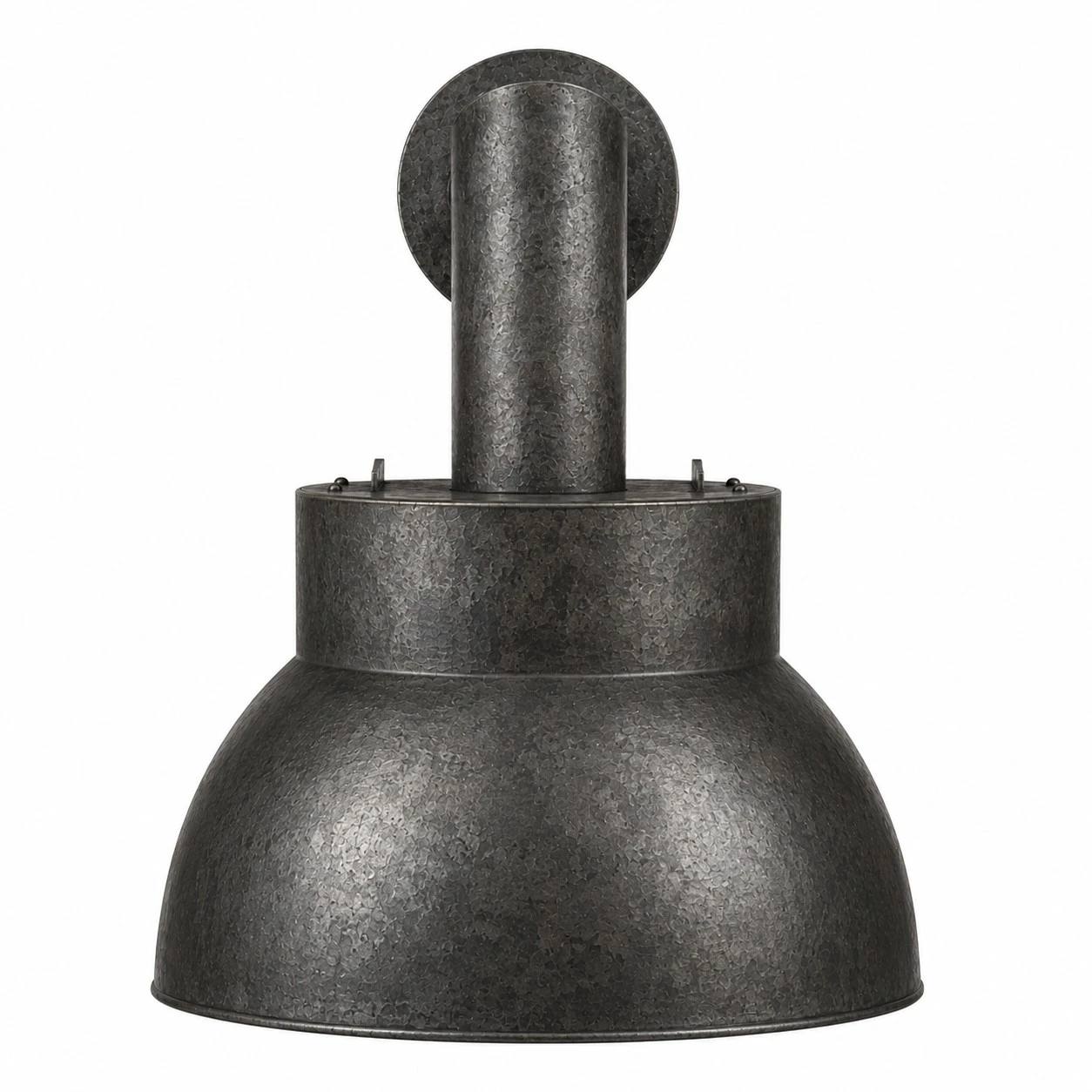
The front image establishes a clear sequence of rounded forms. A broad bell canopy supports a shorter cylindrical collar, with a narrower vent rising above it. The circular wall plate remains visible behind the upper pipe, repeating the geometry of the canopy below. A thin rolled rim finishes the lower edge without a deep decorative apron. To compare this mechanical composition with a more geometric industrial design, explore our rectangular black zinc guide.
Angled Mechanical Details
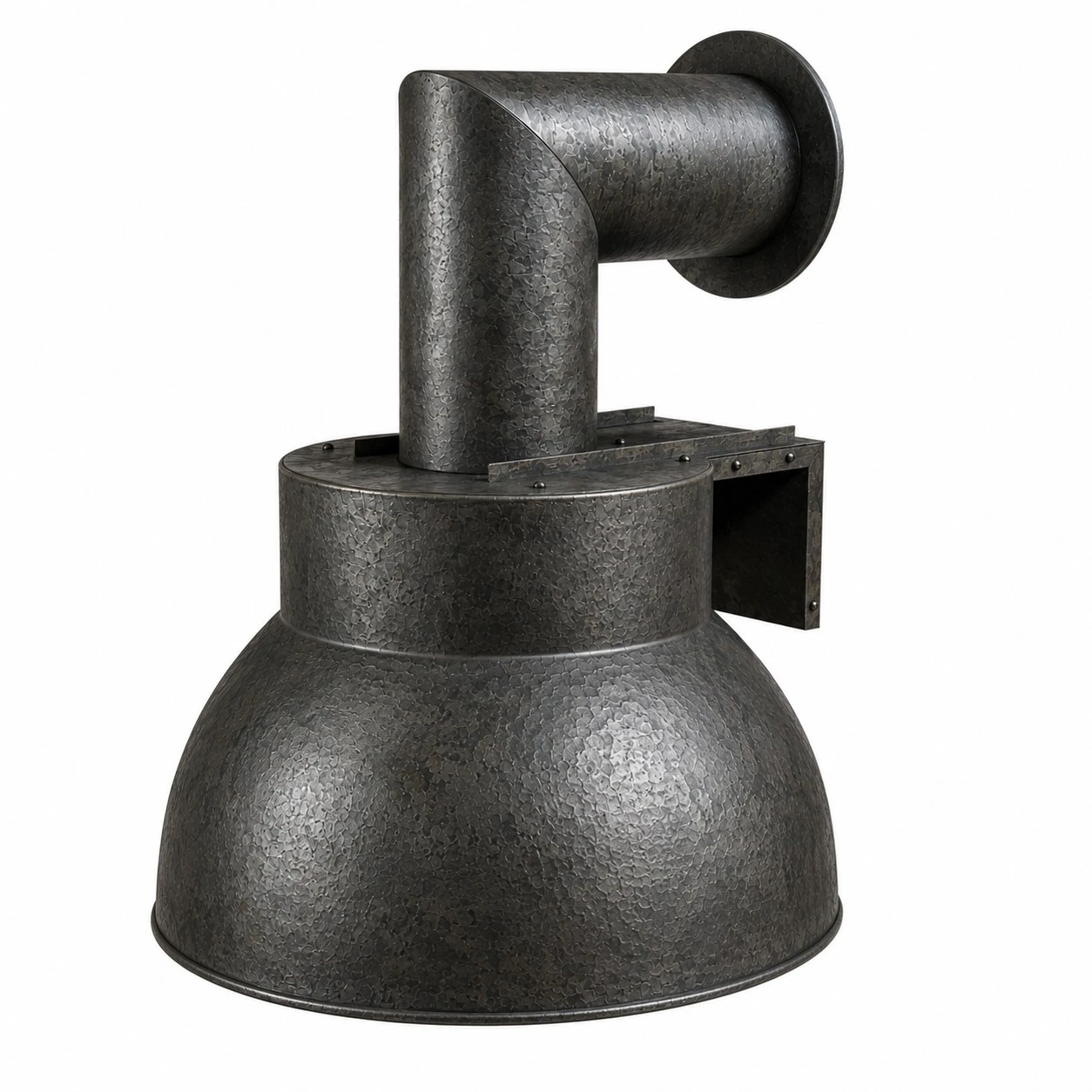
The angled photograph reveals the elbow turning toward the wall and the bracket assembly behind the cylindrical collar. These elements give the hood depth and make its mechanical construction part of the visual composition. Hammering continues across the canopy, collar, duct, and wall plate, helping the separate components read as one coordinated piece. Our article on handcrafted zinc hood production provides context for the forming and finishing work behind such metal assemblies.
Side View Projection
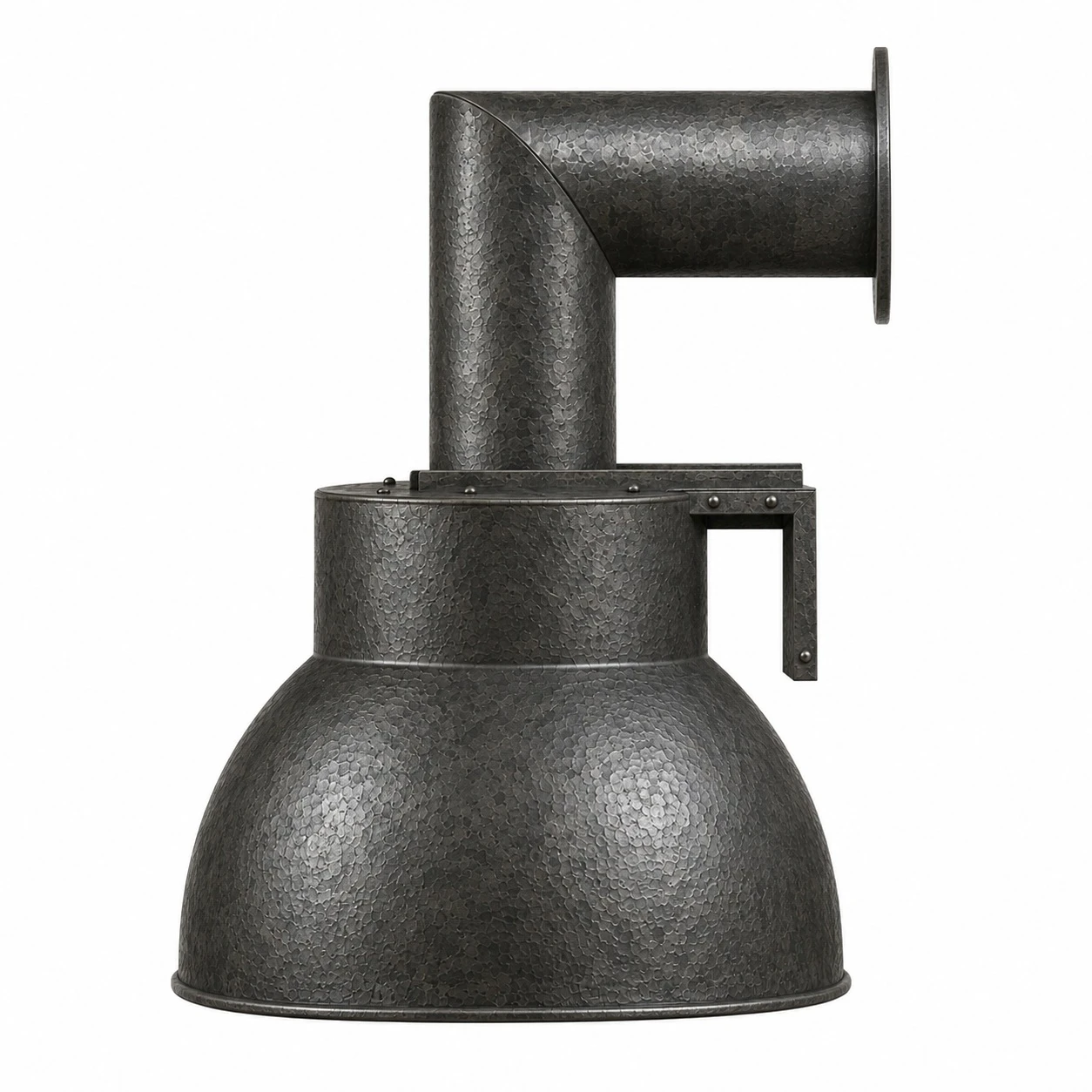
The side view explains how the canopy, vent elbow, and rear bracket relate to the wall. The horizontal duct section projects behind the upright pipe, while the support bracket extends beneath that connection. This arrangement should be reviewed alongside the intended duct opening, wall construction, and cooking appliance position. The photograph illustrates the configuration but does not establish installation measurements. Consult our metal hood installation guide when coordinating structural support and placement.
Hammered Zinc Surface
Small irregular hammer marks cover the curved body, creating bright gray highlights within the darker graphite-colored finish. Because the canopy is rounded, the light changes gradually across its surface rather than breaking at sharp corners. The same texture gives the exposed pipe a handcrafted appearance. This visual continuity is important when the duct remains prominent above the canopy. For a broader comparison of texture and reflection, read our hammered and smooth hoods article.
Underside Circular Opening
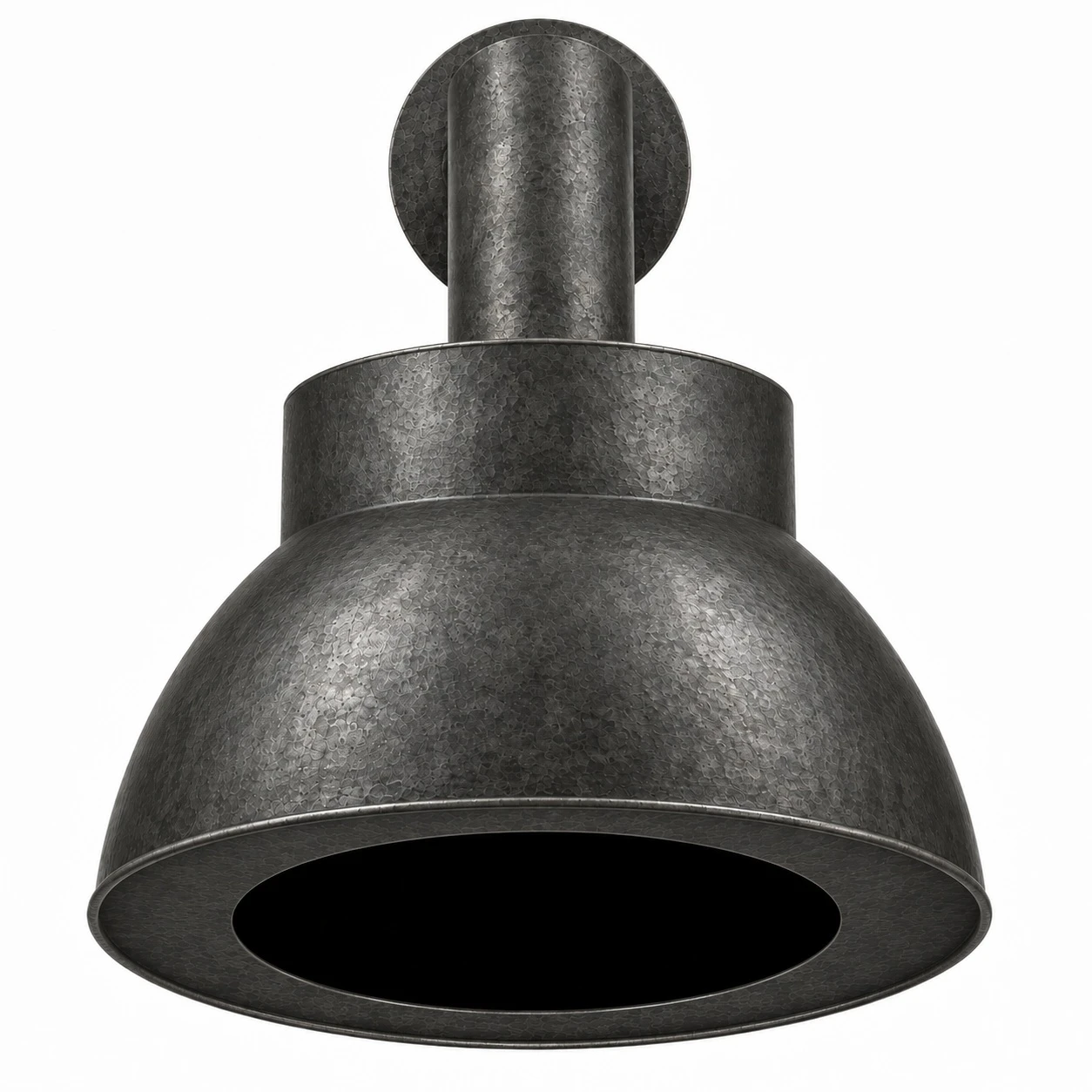
The underside photograph shows a large circular opening surrounded by a broad zinc border and narrow outer rim. No rectangular insert, filter assembly, controls, or lights are visible. This open configuration needs product-specific ventilation planning: the image alone cannot establish airflow, grease filtration, or suitability for a particular cooking appliance. Our range hood ventilation guide explains the distinction between a decorative enclosure and the equipment responsible for extraction.
Natural Vent Planning
For an installation planned around natural venting, confirm the complete arrangement with Rustica House and the installer before ordering. Discuss the duct route, outlet dimensions, cooking equipment, and whether additional extraction or filtration components are required. An open canopy and exposed elbow describe the visible form; they do not provide a performance rating. The range hood installation guide offers general coordination principles, while this model’s final ventilation details require specific approval.
Technical Drawing Reference
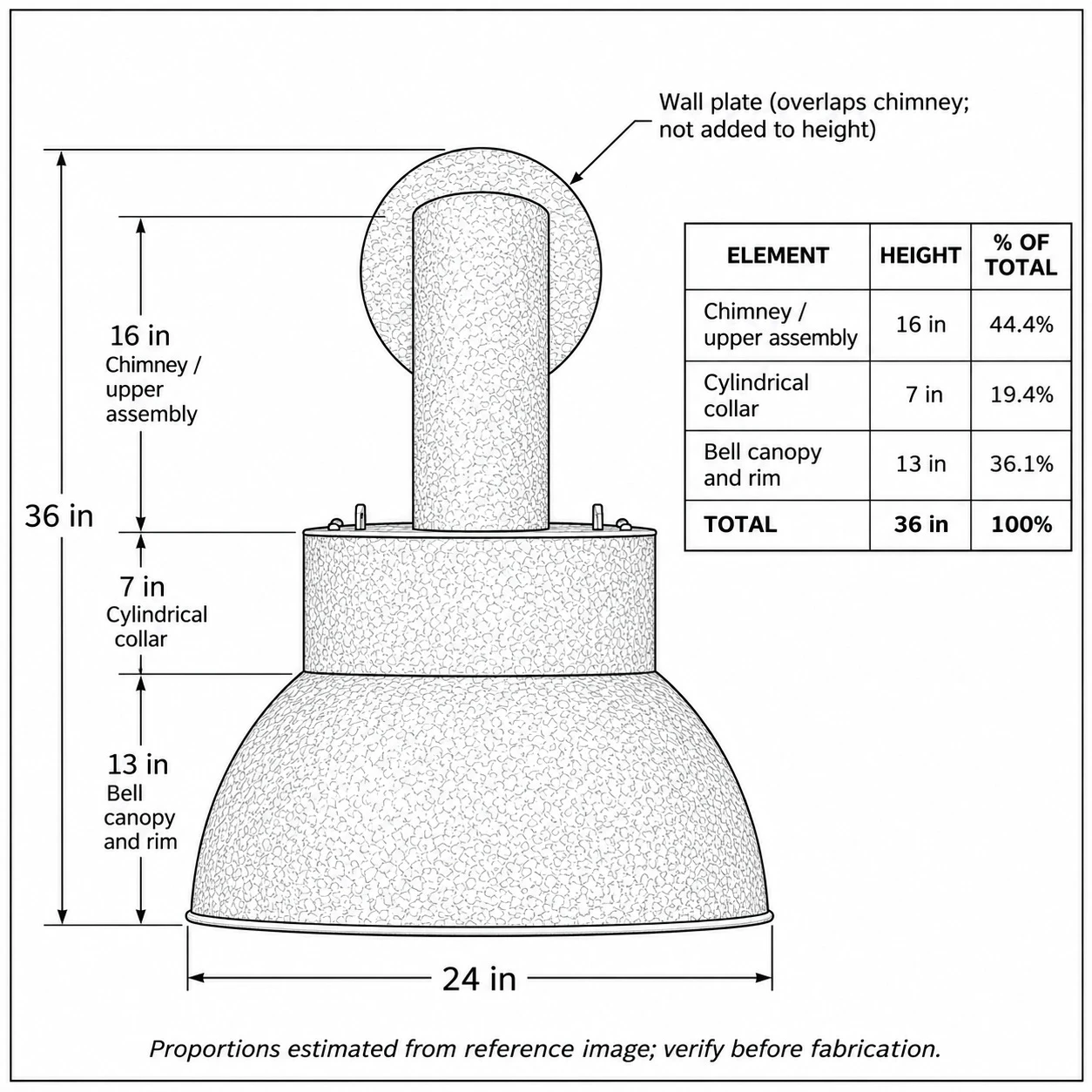
The supplied drawing labels a 36-inch overall height and a 24-inch canopy diameter. Its table divides the height into a 16-inch upper assembly, 7-inch cylindrical collar, and 13-inch bell canopy with rim. A note states that the proportions are estimated and should be verified before fabrication. Use this image as a discussion reference rather than a final production specification. Our range hood buying considerations explains the importance of confirming measurements before ordering.
Confirming Canopy Diameter
The drawing’s 24-inch diameter should be reconciled with the 25-inch diameter previously specified for this model. Confirm whether the final dimension includes the rolled rim and identify the approved overall height, wall projection, and duct centerline. The circular wall plate also needs a clear position relative to the elbow and mounting surface. For projects where the upper assembly must relate to a taller room, review our high ceiling hood guide alongside the product-specific drawing.
Industrial Kitchen Styling
As a styling direction, the dark rounded canopy could complement exposed brick, concrete, weathered wood, and simple metal shelving. Its curved body would introduce a softer form among straight cabinet lines, while the elbow vent would reinforce the room’s mechanical character. Allow enough visual space around the upper assembly to appreciate the pipe and wall plate. For a different interpretation of industrial zinc, explore our Brutalist zinc hood guide.
Balancing Dark Metal
Pale plaster, warm oak, or light stone could provide contrast against the charcoal zinc and make the hammered highlights more visible. Repeating the dark tone in a few smaller fittings could connect the hood with the surrounding kitchen. These are proposed combinations rather than interiors pictured in this collection. For an example of zinc coordinated with a furnished kitchen, explore our natural zinc kitchen images.
Care And Maintenance
The hammered surface and multiple curved components benefit from a gentle cleaning routine. Follow the approved finish instructions, use soft cleaning materials, and pay attention to the lower rim and junction beneath the collar. Any ventilation components should receive the maintenance specified for their particular configuration. Discuss cleaning access before installation, especially around the exposed elbow and rear bracket. Read the zinc hood care guide for material-specific maintenance guidance.
Final Considerations
This collection reveals the hood’s rounded canopy, cylindrical collar, exposed elbow, hammered finish, and circular underside opening. Review the images together, resolve the diameter difference, and confirm the complete ventilation arrangement before approving fabrication. Use our metal hood installation guide to support the planning discussion. Explore the dark zinc industrial hood to begin coordinating your kitchen project.