 US Dollar
 Euro
Euro
 Australian Dollar
 Canadian Dollar
 Polish Zloty
 British Pound

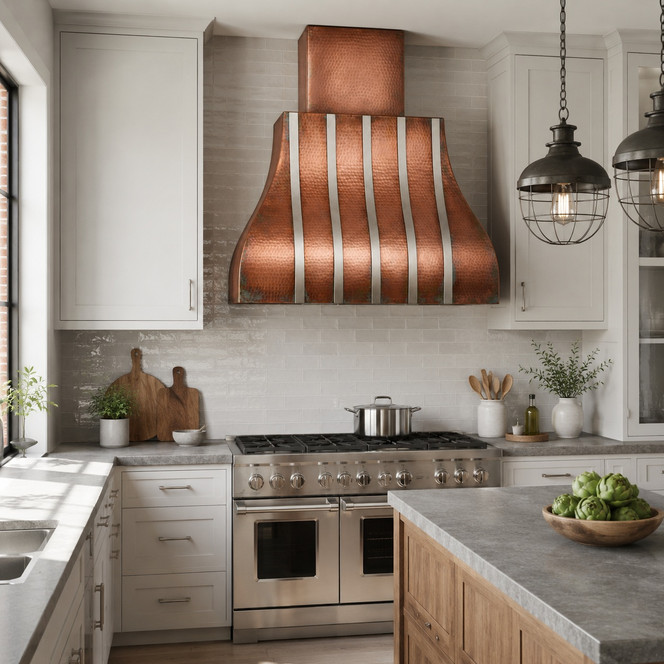
Copper Bell Range Hood with Polished Zinc Straps Guide explains how a handcrafted copper hood with a sculpted campana profile, polished zinc front ribs, clean apronless lower edge, and proportional drawing support can become a refined mixed-metal centerpiece above the range. This made-to-order design suits Belgian farmhouse, industrial transitional, refined rustic, Spanish revival, Mediterranean, and new traditional kitchens that need warm copper bodywork balanced by cool zinc structure. Because each hood is handmade, copper patina movement, hammering variation, seam detail, strap alignment, drawing proportions, and small artisan irregularities should be expected. No two hoods are identical, and those natural variations add character rather than defects. Explore the copper bell range hood with polished zinc straps to review sizing, finish, mounting, and planning resources. Browse kitchen inspiration featuring a copper bell range hood with polished zinc straps in our copper bell hood kitchen lifestyle images.
Blog Summary
- Material: Copper and zinc hood
- Shape: Sculpted bell profile
- Straps: Five polished zinc ribs
- Base: Clean apronless edge
- Planning: PDF and DXF downloads
- Ventilation: Up to 1,500 CFM support
Design Guide Overview
A copper bell range hood with polished zinc straps is designed for kitchens that need a warm handcrafted surface with a disciplined mixed-metal framework. The copper body gives the hood depth and artisan character, while the polished zinc ribs create a clean architectural rhythm across the front. Unlike heavily ornamented copper hoods with embossed aprons or full strap coverage, this design keeps the sides quiet and places the zinc emphasis on the front elevation. Buyers comparing related profiles can review the bell-shaped copper hood guide.
Bell Canopy Shape
The main body follows a sculpted bell form rather than a simple trapezoid. The upper shoulders begin with a controlled inward movement before the canopy expands toward a fuller lower flare. This gives the hood a softened campana profile with more dimension than a flat tapered design. The bell shape works well above a range because it creates visual width near the cooking surface while maintaining a narrower chimney above. The result is a hood that feels substantial, balanced, and intentionally shaped rather than merely decorative.
Shape Benefits
- Profile: Compound bell canopy
- Shoulders: Controlled upper curve
- Flare: Fuller lower expansion
- Chimney: Simple rectangular top
- Base: Clean apronless line
Polished Zinc Straps
The polished zinc straps are the defining mixed-metal feature. Five smooth front ribs follow the canopy contour and divide the copper surface into six elongated fields. This creates a refined vertical rhythm without covering the side elevations. The cool zinc tone contrasts with the warm copper body, helping the hood coordinate with stainless appliances, brushed-nickel hardware, gray stone, polished metal lighting, and contemporary cabinet pulls. Because the straps are aligned by hand, slight artisan differences may appear from hood to hood.
Quiet Side Elevations
The side panels remain entirely copper, which is an important design distinction. By keeping the polished zinc ribs on the front only, the hood preserves quieter angled views from the kitchen, dining area, or island approach. This prevents the mixed-metal detail from becoming too busy. It also allows the copper patina to wrap around the profile naturally, showing the sculpted bell curve without interruption. The contrast between detailed front elevation and calm side elevation gives the hood a more tailored architectural presence.
Apronless Lower Edge
This design does not use a heavy decorative apron below the bell body. Instead, the copper canopy terminates in a clean apronless lower edge. That restrained base is useful in kitchens where the hood should feel substantial but not overly historical. The missing apron keeps attention on the curved body, vertical zinc ribs, and warm patina. It also makes the design easier to pair with quiet stone slabs, handmade tile, plaster backsplashes, paneled cabinetry, and simple millwork.
Architectural Details
- Front: Five zinc ribs
- Fields: Six copper panels
- Sides: Uninterrupted copper
- Lower edge: No apron band
- Effect: Tailored mixed metal
Copper Patina Character
The shown design emphasizes warm reddish copper with restrained blue-green aging near seams, corners, lower edges, and selected surface impressions. This approach keeps copper dominant while allowing patina variation to add depth. The finish should not be expected to look perfectly uniform. Handmade copper can show tonal movement, darker low points, brighter highlights, seam shadows, and small surface irregularities. Those differences are part of the handmade character. Buyers comparing finish direction can review copper patina finish options.
Handcrafted Metalwork
This hood is handmade from real metal, so its value comes from material, proportion, and artisan workmanship. Copper fields are shaped, finished, and joined by hand, while the polished zinc ribs are placed to follow the front curve. Slight movement in hammering, patina, seams, and strap alignment should be expected. These characteristics make each hood unique. For buyers interested in the artisan background behind handcrafted copper work, the Santa Clara del Cobre artisan story gives useful context.
PDF and CAD Downloads
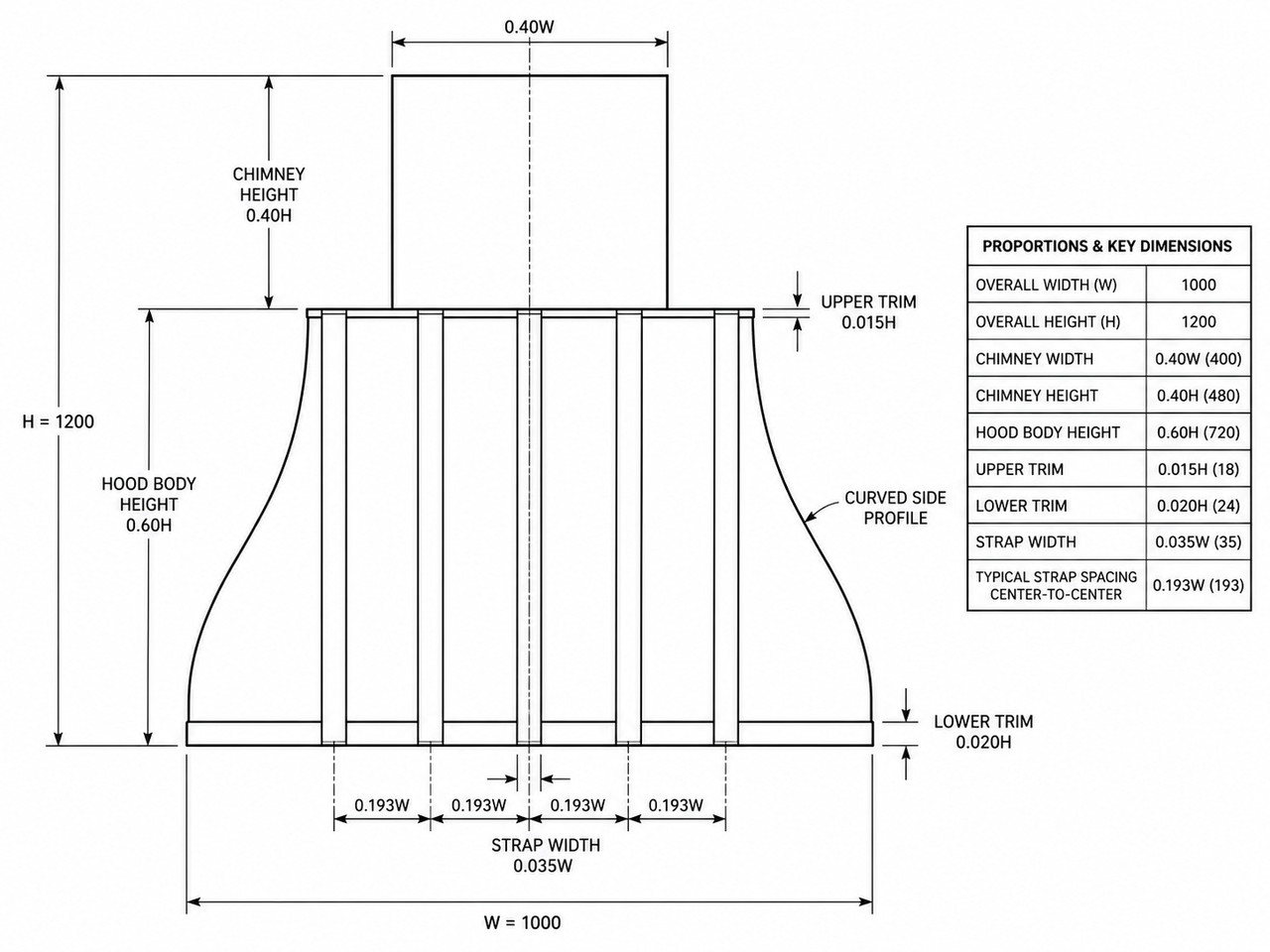
Review the proportional drawing in PDF format or download the DXF file for use with compatible CAD software. These resources show the range hood geometry, centered chimney, front strap rhythm, side profile, lower flare, and proportional relationships for design and planning.
Drawing Review
The drawing is useful because it isolates shape and proportion from finish photography. It helps designers review the centered chimney, bell shoulder movement, zinc strap placement, lower width, height relationship, and apronless base line before finalizing a kitchen elevation. A proportional drawing cannot replace field measurement or fabrication approval, but it can help homeowners, builders, cabinetmakers, and designers understand the hood’s architecture before production. It is especially helpful when coordinating cabinet openings, backsplash height, ceiling clearance, and the visual relationship between range width and hood width.
Belgian Farmhouse Kitchens
Belgian farmhouse kitchens can use this hood when the room needs quiet mass, pale materials, and restrained mixed metal. Limewashed walls, pale oak, aged stone, muted textiles, and simple cabinetry create a calm background for the copper and zinc contrast. The simple chimney and apronless base suit the style’s preference for substantial forms without excessive decoration. Natural copper warmth can soften gray limestone, white oak, plaster, and understated hardware while the zinc ribs connect with cooler metals and stone tones.
Industrial Transitional Kitchens
Industrial transitional kitchens benefit from the polished zinc straps because they can connect the hood with stainless appliances, brushed-nickel hardware, gray stone, and industrial lighting. Meanwhile, the curved copper body softens shaker cabinetry, slab counters, brick, concrete, and rectilinear architecture. This balance keeps the kitchen from feeling overly mechanical. The hood works especially well when the backsplash remains calm and the zinc accents are repeated in small details such as light fixtures, faucet finishes, or appliance trim.
Refined Rustic Kitchens
Refined rustic kitchens can use this hood when the room needs hand-finished copper without heavy old-world ornament. The bell shape gives the range wall warmth and depth, while polished zinc ribs add order. Pair it with walnut, white oak, plaster, limestone, handmade ceramic tile, leathered stone, bronze hardware, or black iron lighting. A restrained copper patina works well because it allows the zinc framework to remain visible without making the hood look overly aged.
Spanish Revival Kitchens
Spanish revival kitchens can support the hood’s bell form and copper body, but the polished zinc straps give the design a cleaner, more tailored direction than many traditional Spanish hoods. Plaster walls, dark beams, handmade tile, iron lighting, terracotta, stone floors, and bronze accents can all coordinate with the copper finish. The apronless lower edge keeps the profile controlled, while the compound curve maintains the sculptural quality expected in Spanish-influenced architecture.
Style Pairings
- Belgian: Limewash and pale oak
- Industrial: Steel and gray stone
- Rustic: Walnut and plaster
- Spanish: Tile and iron accents
- Mediterranean: Stone and warm copper
Mediterranean Kitchens
Mediterranean kitchens can use this hood when the design needs warmth, curve, and artisan character without an elaborate apron. Limestone, travertine, plaster, zellige, cream cabinetry, dark wood, clay tile, and bronze lighting all pair well with copper. The zinc ribs add a polished mixed-metal note that can make the range wall feel more refined. A simple stone or plaster backsplash often works best because it lets the bell curve and strap spacing remain clear.
New Traditional Kitchens
New traditional kitchens can use this hood as a bridge between classic shape and cleaner modern detailing. The bell canopy provides familiar softness, while the apronless lower line and smooth zinc ribs keep the design disciplined. Inset cabinetry, warm white paint, marble, quartzite, brushed hardware, walnut accents, and paneled range walls can all support the design. The hood can feel formal without looking overdecorated, especially when the surrounding materials are calm and balanced.
Backsplash Coordination
The backsplash should support both the copper body and the polished zinc ribs. Stone slab, plaster, limestone, marble, quartzite, zellige, handmade ceramic tile, travertine, and quiet field tile can all work depending on the kitchen style. A highly patterned backsplash may compete with the strap rhythm. A calmer background usually makes the hood’s geometry stronger. If decorative tile is used, repeat copper, cream, gray, blue-green, brown, black, or terracotta tones so the range wall feels planned.
Cabinet Coordination
Cabinet color changes how the mixed metals read. Warm white and cream cabinets make the copper stand out clearly. White oak, pale oak, walnut, alder, and dark stained wood add natural warmth. Greige, taupe, putty, soft gray, and deep green cabinetry can create a more tailored interior. Because the hood already includes copper and zinc, hardware should be coordinated carefully. Bronze, black iron, aged brass, nickel, pewter, or stainless steel can work when repeated consistently through the kitchen.
Size Planning
Size planning should account for range width, ceiling height, backsplash height, cabinet spacing, hood depth, lower clearance, chimney height, bell curve, strap spacing, side profile, and insert dimensions. The five zinc ribs should not feel crowded, and the lower flare needs enough width to feel intentional above the cooking surface. A hood that is too narrow may compress the front rhythm. A hood that is too tall may overpower nearby cabinetry. For broader measurement planning, use the range hood size guide.
Wall or Island Mounting
This copper bell hood can be planned for wall or island installation when project details allow. A wall-mounted layout should align the hood with the range, backsplash, cabinetry, ceiling height, and duct route. An island version must look balanced from several viewing angles because the copper side panels, front zinc ribs, chimney, lower flare, and patina may be visible from the kitchen, dining area, and adjacent spaces. Ceiling support, duct routing, electrical access, and insert placement should be reviewed before production. For layout comparison, use the wall and island hood guide.
Ventilation Insert Planning
The copper and zinc shell creates the visible hood, while the insert, blower, and ducting provide smoke, steam, grease, and odor removal. Rustica House can supply the 200 CFM insert only. Buyer-supplied internal inserts are supported up to 1,260 CFM, and buyer-supplied external blowers are supported up to 1,500 CFM when complete specifications are provided before production. Any insert, liner, blower, lighting, filter system, or recirculating setup beyond the Rustica House 200 CFM insert must be supplied by the buyer. For technical planning, review the range hood insert guide.
Insert Details
- Rustica: 200 CFM insert only
- Internal: Up to 1,260 CFM
- External: Up to 1,500 CFM
- Buyer: Supplies other systems
- Specs: Required before production
Measurements to Send
Before production begins, buyers should send range width, ceiling height, wall or island layout, desired hood width, desired hood height, depth, lower clearance, duct route, backsplash conditions, cabinet limitations, zinc strap preferences, copper patina preferences, and ventilation equipment details. If using a buyer-supplied internal insert up to 1,260 CFM or an external blower up to 1,500 CFM, send the brand, model, cutout dimensions, liner requirements, duct size, discharge direction, controls, lights, filters, and service-access information. Photos of the range wall are useful for reviewing bell proportion, strap rhythm, chimney centering, lower flare, and surrounding materials.
Care and Cleaning
Copper and polished zinc should be cleaned gently to preserve their finishes. Use a soft cloth, warm water, and mild soap for routine wiping. Avoid abrasive pads, steel wool, bleach, ammonia, acidic cleaners, and harsh degreasers because they can scratch metal, disturb patina, or dull polished details. Wipe carefully around zinc ribs, seams, corners, lower edges, and hammered low points so grease does not collect in details. Drying the hood after cleaning can help reduce water marks. For deeper guidance, review the copper hood care guide.
Ordering Support
A copper bell range hood with polished zinc straps should be ordered after the shape, size, finish, mount type, insert model, duct route, backsplash, and surrounding materials are reviewed. This design depends on the relationship between the compound bell canopy, simple chimney, apronless base, five polished zinc ribs, and six copper fields, so proportion should be planned carefully. Ventilation equipment must also be confirmed before fabrication, especially when using buyer-supplied inserts or external blowers. Buyers comparing related options can browse custom copper range hoods. For sizing or insert preparation, contact Rustica House.
Common Questions
What makes this copper hood unique?
This hood combines a compound bell canopy, polished zinc front ribs, six copper fields, quiet copper side elevations, rectangular chimney, apronless lower edge, custom sizing, and handmade surface variation.
Is the canopy a simple trapezoid?
No. The sides develop through a compound bell curve, beginning with controlled upper shoulders before expanding into a fuller rounded flare near the cooking surface.
Are zinc straps installed on the sides?
No. The polished zinc ribs are positioned on the front. The side panels remain copper to preserve quieter profile and angled views.
Will every copper hood look identical?
No. Each hood is handmade, so no two pieces are identical. Patina movement, zinc strap alignment, seam detail, hammering variation, and small artisan irregularities are normal.
What ventilation systems are supported?
Rustica House can supply the 200 CFM insert only. The hood shell can support buyer-supplied internal inserts up to 1,260 CFM and buyer-supplied external blowers up to 1,500 CFM when complete specifications are provided before production.
Design Summary
A copper bell range hood with polished zinc straps is ideal for kitchens that need sculpted copper warmth, polished mixed-metal rhythm, and clean architectural restraint above the range. The compound bell canopy gives the body softness, while the five zinc ribs organize the front elevation. The uninterrupted copper sides, simple rectangular chimney, and apronless base keep the hood tailored rather than ornate. The PDF and DXF downloads help designers review proportional relationships before final planning. Proper sizing, finish selection, insert or blower preparation, backsplash coordination, cabinet balance, and gentle care help the hood remain functional and visually refined.
Final Design Guidance
Copper Bell Range Hood with Polished Zinc Straps Guide shows how a compound bell profile, polished zinc ribs, warm copper body, apronless base, proportional drawing, custom sizing, and ventilation planning work together. Choose this hood when the kitchen needs a refined handmade centerpiece with mixed-metal structure and calm side elevations. Pair it with limewash, pale oak, aged stone, gray marble, plaster, handmade tile, walnut, bronze hardware, stainless appliances, black iron lighting, or muted textiles. Confirm width, height, depth, wall or island mounting, insert details, blower specifications, duct route, backsplash conditions, chimney centering, zinc rib spacing, copper patina, and CAD/PDF planning needs before production. Customize the copper bell range hood with polished zinc straps with Rustica House for a made-to-order kitchen centerpiece.