 US Dollar
 Euro
 Australian Dollar
 Canadian Dollar
 Polish Zloty
 British Pound

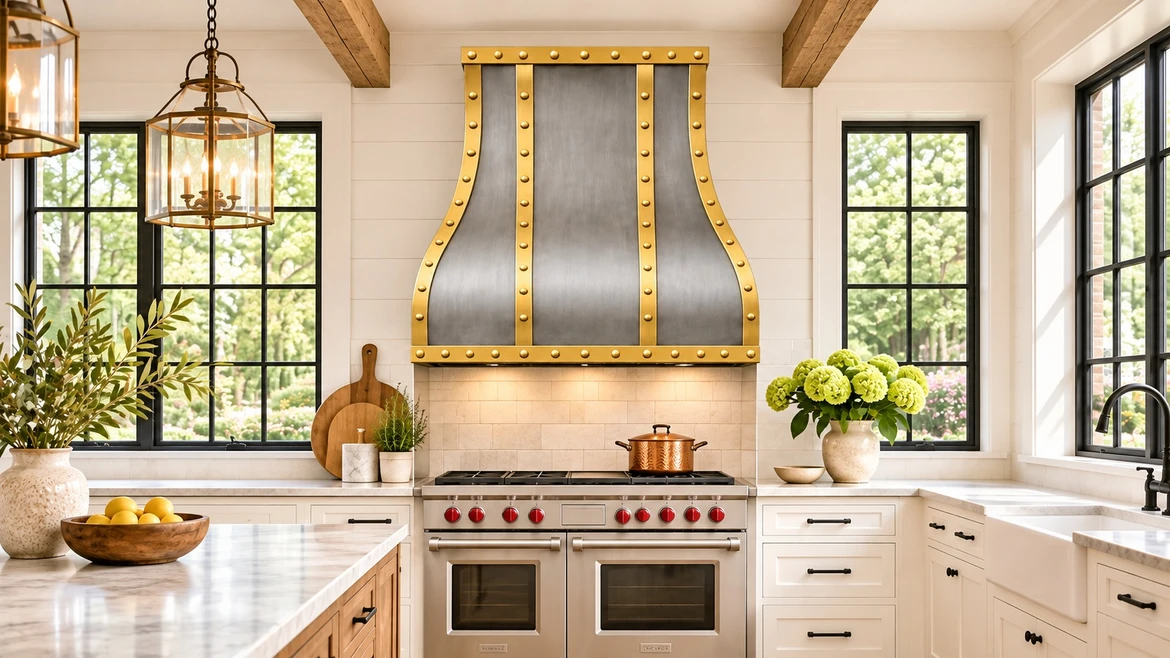
Brushed Zinc Range Hood with Brass Straps Guide explores a handcrafted hood with a softly flared canopy, silver-gray zinc panels, polished brass framing, and domed rivets. Available in widths from 28 to 78 inches, heights from 24 to 72 inches, and a standard 24-inch depth, this design can be configured for wall or island installation. Its curved profile introduces sculptural movement, while the brass detailing gives the broad zinc surfaces a defined architectural rhythm. The six images below explain its appearance, finish choices, side projection, ventilation opening, and technical proportions. Explore the brushed zinc brass-strapped hood to review product options. Plan the dimensions, finish combination, and ventilation preparation for your kitchen centerpiece. For additional kitchen design inspiration, explore our zinc range hood with brass straps kitchen design ideas.
Blog Summary
- Body: Brushed zinc panels
- Accents: Polished brass framing
- Details: Domed brass rivets
- Profile: Gracefully flared canopy
- Mounting: Wall or island
Front View Details

The front photograph shows a broad central zinc panel between two interior brass straps, with additional brass framing following the outer curves. Horizontal brass bands connect the framework at the top and bottom. Domed rivets repeat along these lines, adding small highlights against the brushed gray metal. The lower portion rounds outward before meeting the straight base, creating a substantial silhouette. For guidance on coordinating the warm and cool finishes, explore the mixed metal buying guide.
Finish And Texture Options

The comparison image presents six zinc treatments with consistent brass detailing. Smooth natural, smooth dark, and smooth polished zinc appear across the upper row; hammered versions occupy the lower row. Brushed natural zinc provides the softer silver-gray appearance shown in the main photographs. Dark zinc strengthens the contrast against the brass, while polished zinc creates brighter reflections. Hammered surfaces add another layer of texture. Review the metal texture guide alongside cabinet and backsplash samples before choosing.
Angled View And Framing

The angled view reveals how the brass framework continues around the visible side. Its curved edge bands follow the changing canopy profile, while the horizontal lower band wraps around the base. Reflections move across the rounded zinc surface, making the lower canopy appear fuller than in a flat elevation. These side views matter in open kitchens where the hood is visible from adjoining rooms. Compare installation layouts through the wall and island guide before confirming exposed surfaces.
Side Profile Planning

The side photograph shows a straight rear edge and a curved front that expands toward the cooking surface. Brass outlines both edges, giving the profile a finished appearance. Check the projection against adjacent cabinetry, shelves, and trim rather than relying on the front width alone. An island configuration needs suitable ceiling support and finished rear surfaces. Review the metal hood installation guide while coordinating the mounting position, electrical access, and duct route.
Underside And Ventilation Fit

The underside photograph shows the recessed rectangular opening without an installed ventilation insert. The zinc enclosure supplies the visible architecture, while the selected equipment determines airflow, filtration, lighting, and controls. Confirm the insert dimensions, liner arrangement, mounting method, duct connection, and filter access before fabrication. The external width does not establish the usable interior opening. Consult the custom hood insert guide when preparing equipment specifications for review.
Technical Drawing And Proportions

The drawing combines front, side, and underside references with dimension tables. It illustrates an upper width approximately 60 percent of the overall base width, with 20 percent of total height allocated to the upper section and 80 percent to the curved canopy below. These relationships help preserve the silhouette when dimensions change. Share the technical drawing PDF with your installer, or use the AutoCAD DXF drawing for design coordination. Confirm final fabrication measurements against the approved project drawing.
Buyer Planning Table
Start with the exact appliance dimensions, available cabinet opening, finished ceiling height, and selected insert. Establish the required installation clearance from the equipment instructions, then determine the available hood height. Review strap spacing and canopy curvature alongside the overall measurements so the design remains balanced. The range hood buying guide helps organize these decisions before the metalwork begins.
| Planning | What to confirm |
|---|---|
| Width | 28–78 inches; coordinate with the appliance and cabinet opening |
| Height | 24–72 inches; account for ceiling conditions and required clearance |
| Depth | 24-inch standard; check cooking coverage and insert fit |
| Metal finishes | Zinc tone and texture coordinated with the brass treatment |
| Mounting | Wall or island construction, structural support, and visible surfaces |
| Ventilation | Insert dimensions, duct connection, controls, and service access |
Modern And Industrial Kitchens
Modern kitchens can pair the hood with clean cabinetry, broad stone surfaces, and restrained lighting. The brass framework supplies decorative definition while the brushed zinc keeps the composition relatively quiet. Industrial settings can connect the rivets with steel shelving, exposed brick, concrete, and darker hardware. Repeat brass selectively so its warmth feels intentional. For broader approaches to a sculptural cooking-wall feature, explore the modern range hood guide.
Tuscan And Eclectic Pairings
Tuscan kitchens can combine the curved canopy with plaster, limestone, warm wood, and terracotta. The zinc provides a cooler counterpoint to those materials, while brass relates to warm lighting and hardware. In eclectic rooms, the framed silhouette can connect traditional cabinetry with contemporary stone or patterned tile. Give the hood enough quiet background for its strap arrangement to remain readable. Compare other material combinations in the mixed metal design guide.
Care For Both Metals
Follow the supplied instructions for the zinc finish and brass treatment. Use a soft cloth and approved gentle cleaners, dry moisture promptly, and wipe carefully around rivets and strap edges where residue can collect. Avoid abrasive pads or polishing compounds unless specifically permitted for the coating or patina. The zinc hood care guide provides additional background; confirm brass care separately so cleaning preserves both surfaces.
Common Questions
What makes this brushed zinc hood unique?
Its rounded bell canopy combines brushed zinc panels, polished brass framework, domed rivets, and a continuous lower brass border.
How is the front divided?
Two interior brass straps flank the broad central zinc panel, while curved brass borders define the outer edges.
Which finishes appear in the comparison image?
The image shows smooth and hammered zinc in natural, dark, and polished treatments with matching brass detailing.
Is the main photographed surface hammered?
The main product views show smooth brushed zinc with directional grain. Hammered alternatives appear in the finish comparison.
What dimensions are illustrated?
The drawing lists widths of 28–78 inches, heights of 24–72 inches, and a standard 24-inch depth.
Can the hood be configured for an island?
Yes. Confirm finished exposed surfaces, ceiling support, duct routing, and the decorative arrangement before fabrication.
Does the underside photograph include an insert?
No. It shows the recessed opening without installed filters, lighting, controls, or a blower.
Are PDF and CAD drawings available?
Yes. The PDF and DXF links above provide technical references for discussion with your designer, cabinetmaker, or installer.
What proportions does the drawing suggest?
It illustrates a top width around 60 percent of the base width and a 20/80 upper-section-to-canopy height relationship.
What should be confirmed before ordering?
Confirm dimensions, mounting configuration, zinc finish, brass treatment, insert specifications, duct route, and installation clearance.
Plan Your Custom Hood
Compare the photographs to assess the metal contrast and curved profile, then review the technical files alongside your appliance and cabinet measurements. Select the ventilation equipment early so the interior can be prepared around its requirements. Explore the brushed zinc brass-strapped hood and plan a configuration suited to your kitchen.
All product images © Rustica House, unauthorized use is prohibited.