US Dollar
 Euro
Euro
 Australian Dollar
 Canadian Dollar
 Polish Zloty
 British Pound



Product Description
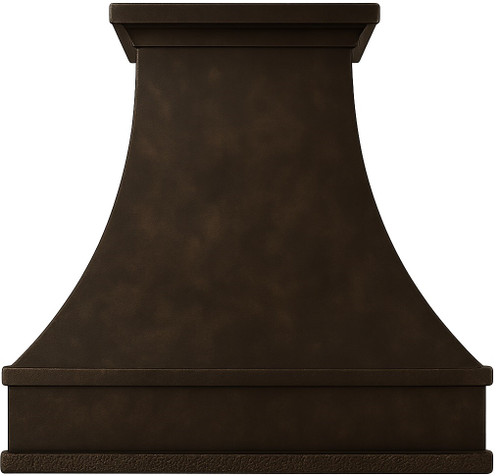
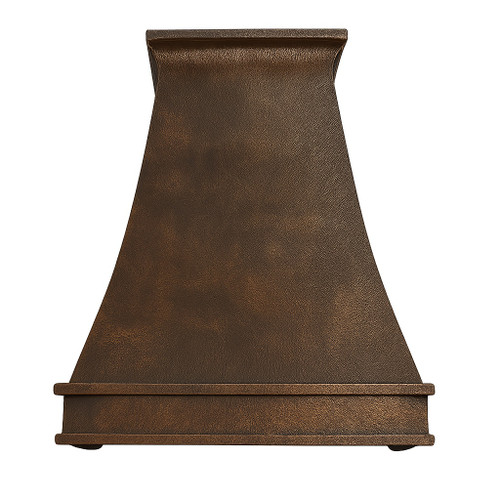
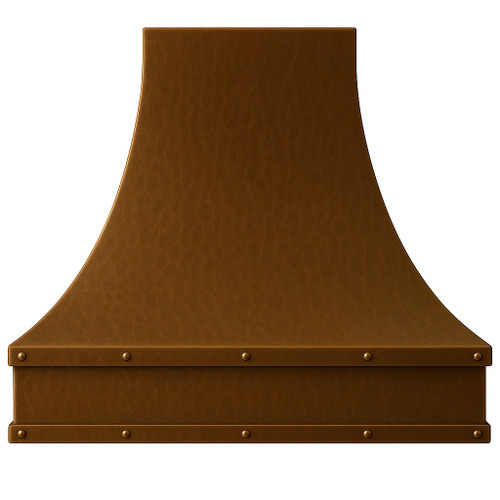
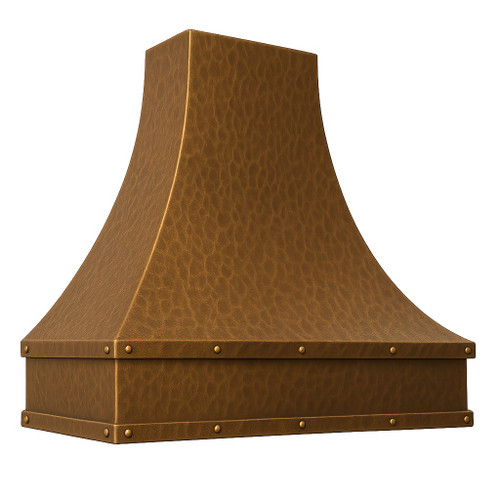
This country kitchen hammered copper exhaust hood combines a gently sloping canopy with layered bullnose detailing and the warmth of handcrafted copper. Triple bullnose crown molding gives the upper section a substantial architectural finish, while double bullnose trim defines the lower apron without relying on ornate straps or applied decoration. The photographed natural fired patina displays warm yellow, bronze, reddish, and brown variation created during artisan finishing. Hand-hammered texture introduces subtle irregular impressions across the broad copper planes, creating changing highlights and giving every enclosure individual character. Made to order in Santa Clara del Cobre, Mexico, the hood is available from 28 to 78 inches wide and 24 to 72 inches high, with a standard 24-inch depth. Wall-mounted and kitchen-island configurations are available, along with custom ventilation preparation. For more details about its handcrafted construction, copper finish, and country kitchen design, see our country kitchen copper exhaust hood guide. Request a custom quote for your country-style copper hood today.
Product Summary
- Gently sloping copper canopy
- Triple bullnose crown molding
- Double bullnose apron trim
- Natural fired copper patina
- Hand-hammered copper texture
- Six copper patina options
- Widths from 28 to 78 inches
- Heights from 24 to 72 inches
- Standard 24-inch depth
- Wall or island construction
- Custom ventilation preparation
- Handcrafted in Mexico
Custom Sizing
Each hood is made to order so the chimney, sloping canopy, triple crown molding, and double apron trim remain visually balanced as dimensions change. Standard widths include 28, 30, 36, 42, 48, 54, 60, 66, 72, and 78 inches, with heights from 24 to 72 inches and a standard depth of 24 inches. Additional dimensional adjustments can be discussed for cabinetry, cooking equipment, ceiling conditions, and custom kitchen layouts.
Measurements Needed
Before ordering, confirm the cooking-surface width, desired hood width, overall hood height, ceiling height, installation height, finished depth, nearby cabinet clearances, backsplash thickness, and duct location. Island projects also require the cooktop centerline and ceiling support information. These measurements help establish appropriate proportions and ventilation preparation before fabrication. Review the copper hood sizing guide when planning dimensions.
Ventilation
The copper enclosure can be prepared around different ventilation requirements. Rustica House can supply an optional 200 CFM insert. Buyer-supplied internal inserts up to 1,260 CFM and external blower systems up to 1,500 CFM can also be accommodated when complete equipment specifications are supplied before production. Depending on the selected system and kitchen conditions, the enclosure can be prepared for top or rear duct routing and compatible ducted or recirculating configurations.
Drawing Approval
Final dimensions and mechanical requirements should be reviewed before fabrication. For buyer-supplied ventilation, provide the insert manufacturer, model, cutout dimensions, duct diameter, duct position, controls, lighting, filters, electrical requirements, and service clearances. Drawing approval also provides an opportunity to verify the crown, apron, overall height, depth, and relationship to surrounding cabinetry before the handcrafted enclosure enters production.
Sloping Architecture
The hood uses a gently sloping profile rather than a pronounced bell, dome, or sharply tapered pyramid form. Broad hammered copper planes descend gradually toward the cooking surface, creating a traditional silhouette that remains relatively restrained. The strongest architectural details are concentrated along the top and bottom edges, where layered bullnose molding frames the simpler central body. This combination gives the hood recognizable country character without requiring straps, rivets, embossed motifs, or other applied decoration.
Sloping Canopy
The gradual outward slope creates a natural transition between the narrower chimney and broad lower capture area. Its relatively uninterrupted surfaces make the hand-hammered texture an important part of the design. Individual hammer marks introduce irregular highlights and shallow shadows across the canopy, allowing the natural fired patina to appear lighter or deeper as viewing angle and kitchen lighting change. The understated body also provides a visual counterpoint to the more architectural crown and apron edges.
Triple Bullnose Crown
Three rounded molding levels define the upper section and give the chimney a more finished architectural presence. The repeated horizontal lines create depth and shadow while establishing a clear transition between the chimney and sloping body. Unlike decorative strap systems or heavily ornamented crowns, the bullnose molding relies on proportion and layered metalwork. It works particularly well with traditional cabinetry, substantial wood details, and kitchens where architectural trim is already present.
Double Bullnose Apron
The lower edge is anchored by double bullnose apron trim. Two rounded horizontal profiles give the base greater visual weight while repeating the architectural language established by the triple crown above. This coordinated treatment helps distinguish the design from plain-apron copper hoods and models dominated by contrasting metal straps. The detail is decorative without becoming overly ornate, making it suitable for country and farmhouse interiors as well as more restrained transitional kitchens.
Unique Design
The defining feature of this model is not simply its hammered copper construction but the relationship between the gently sloping body and its layered edge treatments. Triple bullnose molding creates a substantial crown, while double bullnose trim finishes the apron below. The uninterrupted central canopy allows the artisan hammering and natural patina to remain visible without competing against straps, rivets, or embossed motifs. This gives SKU AL72J5U50 a distinct identity among more heavily decorated copper hoods while preserving the warmth associated with traditional handcrafted metalwork.
Copper Texture
The entire hood is crafted with a hand-hammered copper texture. Artisans create shallow irregular impressions that break up reflected light and give the broad canopy greater visual depth. Hammering also interacts with the patina, producing subtle tonal changes between raised areas and small recesses. Because the texture is produced individually by hand rather than stamped into a perfectly uniform pattern, the spacing, orientation, and depth of the marks naturally vary. These differences contribute to the character of each made-to-order enclosure.
Copper Finishes
The photographed hood features natural fired copper with irregular yellow, bronze, reddish, and brown tones. Six patina options are available, allowing the enclosure to coordinate with lighter or darker cabinetry, stone, tile, flooring, and hardware. The hand-hammered surface adds further variation by changing how light moves across each finish. Artisan-applied patinas naturally vary across the surface and between individual pieces. Compare available tones in the copper patina finish guide before selecting a finish.
Mounting Options
This model can be fabricated as a wall-mounted or kitchen-island hood. Mounting type should be established before production because structural support, exposed surfaces, ventilation preparation, and finishing requirements differ. Both configurations preserve the gently sloping hammered copper canopy, triple bullnose crown, and double bullnose apron that define the design.
Wall-Mount Version
The wall-mounted version works between cabinetry, against an open cooking wall, or within a larger architectural cooking area. Confirm framing, cabinet clearances, backsplash thickness, finished mounting height, electrical service, insert opening, and duct position before fabrication. Natural wood, painted cabinetry, handmade tile, stone, and plaster can all provide complementary surroundings for the warm hammered copper surface.
Kitchen Island Version
The island version is finished for viewing from multiple sides and requires appropriate overhead structural support. Confirm the cooktop centerline, hood dimensions, mounting height, ceiling framing, electrical supply, insert specifications, and duct route before production. From side and angled viewpoints, the gradual canopy slope, hammered surface, and layered crown and apron profiles become especially visible.
Buyer Planning
Coordinate dimensions, patina, mounting configuration, and ventilation before placing the order. These decisions affect both appearance and fabrication. Providing complete information early helps the workshop coordinate the enclosure with cabinetry, backsplash construction, ceiling conditions, ductwork, electrical connections, and the selected ventilation equipment. The hammered texture is a defining feature of this model and remains part of the handcrafted construction regardless of the selected patina.
| Planning | Confirm | Buyer Decision |
|---|---|---|
| Dimensions | Width, height, depth | Match cooking area |
| Finish | Six patina options | Coordinate materials |
| Mounting | Wall or island | Confirm structure |
| Ventilation | Insert or blower | Send specifications |
| Ducting | Top or rear route | Confirm before build |
Copper Hood Specifications
- SKU: AL72J5U50
- Shape: Gently sloping canopy
- Crown: Triple bullnose molding
- Apron: Double bullnose trim
- Material: Handcrafted copper
- Texture: Hand hammered
- Finish: Natural fired shown
- Finishes: Six patina options
- Width: 28–78 inches
- Height: 24–72 inches
- Depth: 24 inches standard
- Mount: Wall or kitchen island
- Insert: Optional 200 CFM
- Internal: Up to 1,260 CFM
- External: Up to 1,500 CFM
- Venting: Top or rear
- Build: Made to order
- Origin: Santa Clara del Cobre
PDF and CAD Downloads
Technical files can help homeowners, designers, cabinetmakers, contractors, and installers coordinate hood proportions with the surrounding kitchen. Review the drawing for overall dimensions, canopy slope, crown and apron relationships, mounting position, and ventilation planning. Final project dimensions and buyer-supplied insert specifications should always be confirmed before fabrication.
Copper Craftsmanship
Each hood is handcrafted in Santa Clara del Cobre, Mexico, a community known for generations of copperworking. Artisans cut and form the copper, establish the canopy slope, hammer the broad metal surfaces by hand, build the layered bullnose profiles, assemble the enclosure, and apply the selected patina. Small variations in hammer marks, forming, seams, molding profiles, edges, and coloration are natural evidence of individually produced metalwork and ensure that no two finished hoods are exactly identical.
Coppersmith Testimony
Creating repeated bullnose profiles requires careful forming so the rounded crown and apron details remain consistent across custom sizes. The broad canopy must also transition evenly between the upper and lower sections while maintaining its gentle slope and handcrafted hammered character. Learn more about regional copperworking and the people behind the craft in the Juan Carlos Hernández copper artisan guide.
Kitchen Styles
The warm hammered metal surface and layered architectural trim make this design especially suitable for interiors combining natural materials with traditional detailing. Natural fired copper reinforces its rustic character, while other patina choices can coordinate with lighter or darker cabinetry and surrounding finishes. See this handcrafted exhaust hood across different kitchen settings in our country kitchen copper exhaust hood inspiration.
Best Kitchen Styles
- Country: Warm wood cabinetry, stone counters, traditional hardware, and handcrafted materials complement the layered bullnose details.
- Farmhouse: Painted cabinetry, apron-front sinks, oak, handmade tile, and simple stone surfaces balance the warm hammered copper canopy.
- Rustic: Reclaimed timber, natural stone, exposed beams, and aged finishes reinforce the varied tones and handcrafted texture.
- Transitional: Simple cabinetry, restrained hardware, neutral stone, and cleaner millwork balance the gently sloping silhouette and traditional trim.
Other Kitchen Styles
- Tuscan
- French Country
- Rustic European
Country Copper Hood FAQ
A: Its defining combination is a gently sloping hand-hammered canopy framed by triple bullnose crown molding and double bullnose apron trim, creating layered architectural detail without straps or applied ornament.
A: Yes. Standard widths range from 28 to 78 inches and heights from 24 to 72 inches, with additional dimensional customization available for project-specific requirements.
A: The copper is hammered by hand, creating irregular impressions that add depth and interact with natural and artificial light. Small variations in the hammer marks are expected characteristics of artisan production.
A: Yes. Wall-mounted and island versions are available. Island installations require appropriate ceiling support and coordination of the cooktop centerline, electrical service, ventilation equipment, and duct route.
A: Yes. Buyer-supplied internal inserts up to 1,260 CFM and external blowers up to 1,500 CFM can be accommodated when complete specifications are provided before production.
A: Copper can gradually develop additional tonal variation with age, heat, humidity, handling, and cleaning. Appropriate maintenance helps manage surface changes while preserving its handcrafted character.
Customize Your Hood
Configure SKU AL72J5U50 around your kitchen by selecting the width, height, one of six copper patinas, mounting method, and ventilation preparation. The hand-hammered copper surface, gently sloping canopy, triple bullnose crown, and double bullnose apron remain the defining architectural features. Coordinate final choices with cabinetry, backsplash materials, cooking equipment, ceiling conditions, and your selected insert or blower system. Request a custom quote for this handcrafted country kitchen copper exhaust hood today.
Related Resources
- Country Copper Hood Guide
- Country Copper Hood Images
- Custom Copper Range Hoods
- Copper Hood Sizing Guide
- Copper Patina Finish Options
Care & Maintenance
Clean the hammered copper with warm water, mild soap, and a soft nonabrasive cloth, then dry the surface promptly. Work gently across recessed hammer marks where cooking residue can collect. Avoid acidic cleaners, bleach, ammonia, steel wool, and abrasive pads that can alter the artisan patina. For detailed recommendations, read the copper range hood care guide.
Installation
Wall installations require secure structural framing, while island configurations need suitable overhead support. Confirm mounting height, hood dimensions, electrical service, insert opening, duct diameter, and duct route before fabrication. Review the metal range hood installation guide with your contractor during project planning.
Shipping & Returns
Each made-to-order hood is securely crated for transportation. Review current production, freight delivery, inspection procedures, custom-order conditions, and applicable return requirements on the Shipping & Returns page before placing your order.
Warranty
The handcrafted copper enclosure is covered according to applicable Rustica House warranty terms. Buyer-supplied ventilation equipment remains subject to its manufacturer's coverage. Review the complete Rustica House Warranty for current coverage, exclusions, and limitations.
Disclaimer: Handmade dimensions, seams, hammer marks, bullnose molding profiles, edge work, and patina tones may vary slightly. These variations are expected characteristics of handcrafted copper and are not manufacturing defects. Copper may continue to develop natural color variation with age and use. Lifestyle images provide design inspiration and may show optional configurations, finishes, decorative elements, or accessories not included with the product. All product images © Rustica House, unauthorized use is prohibited.