US Dollar
 Euro
Euro
 Australian Dollar
 Canadian Dollar
 Polish Zloty
 British Pound








Product Description
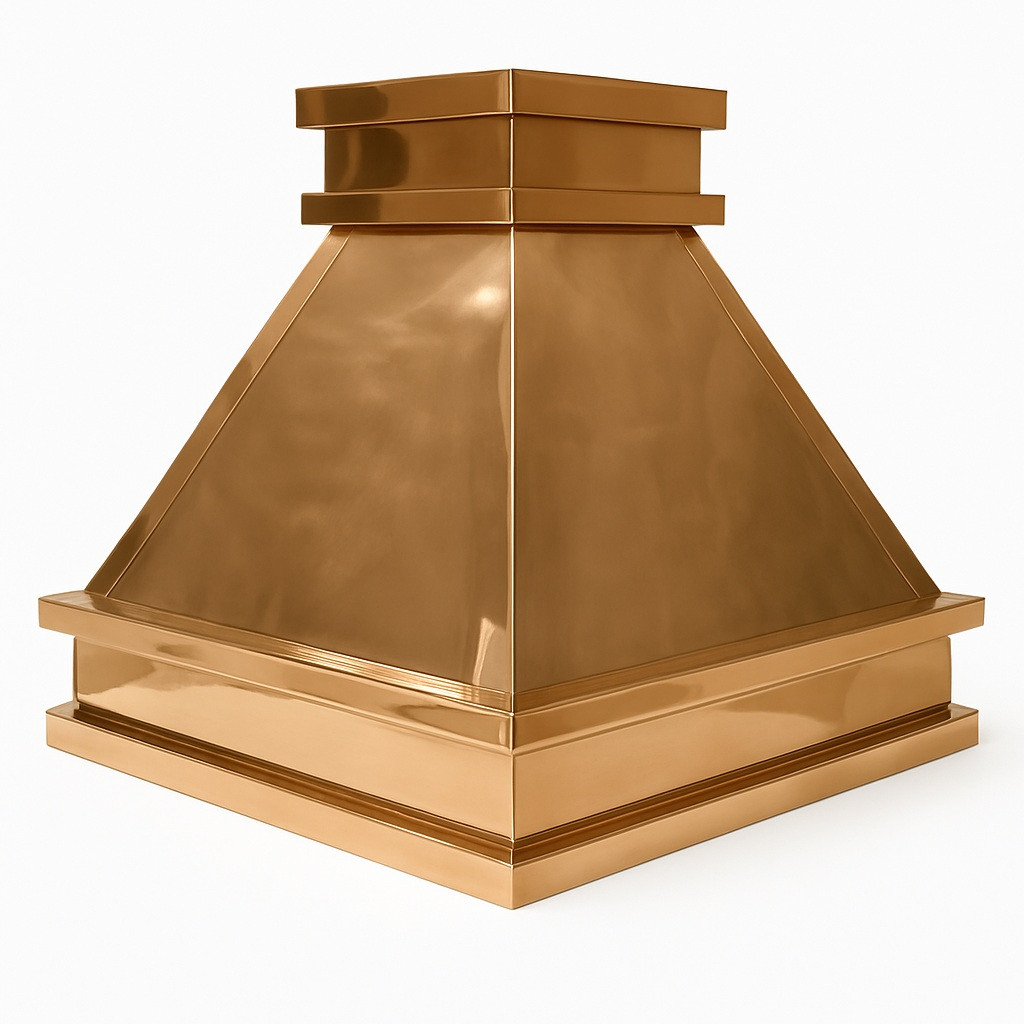
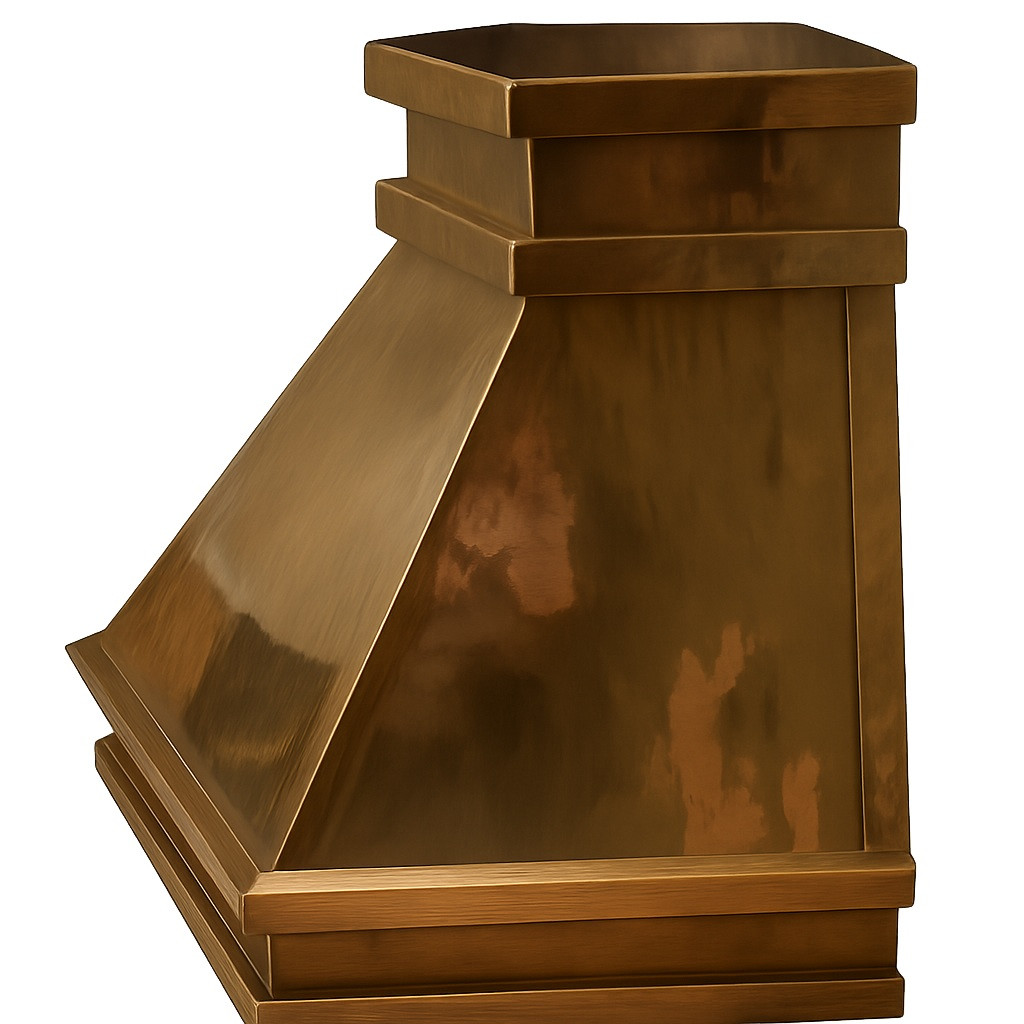
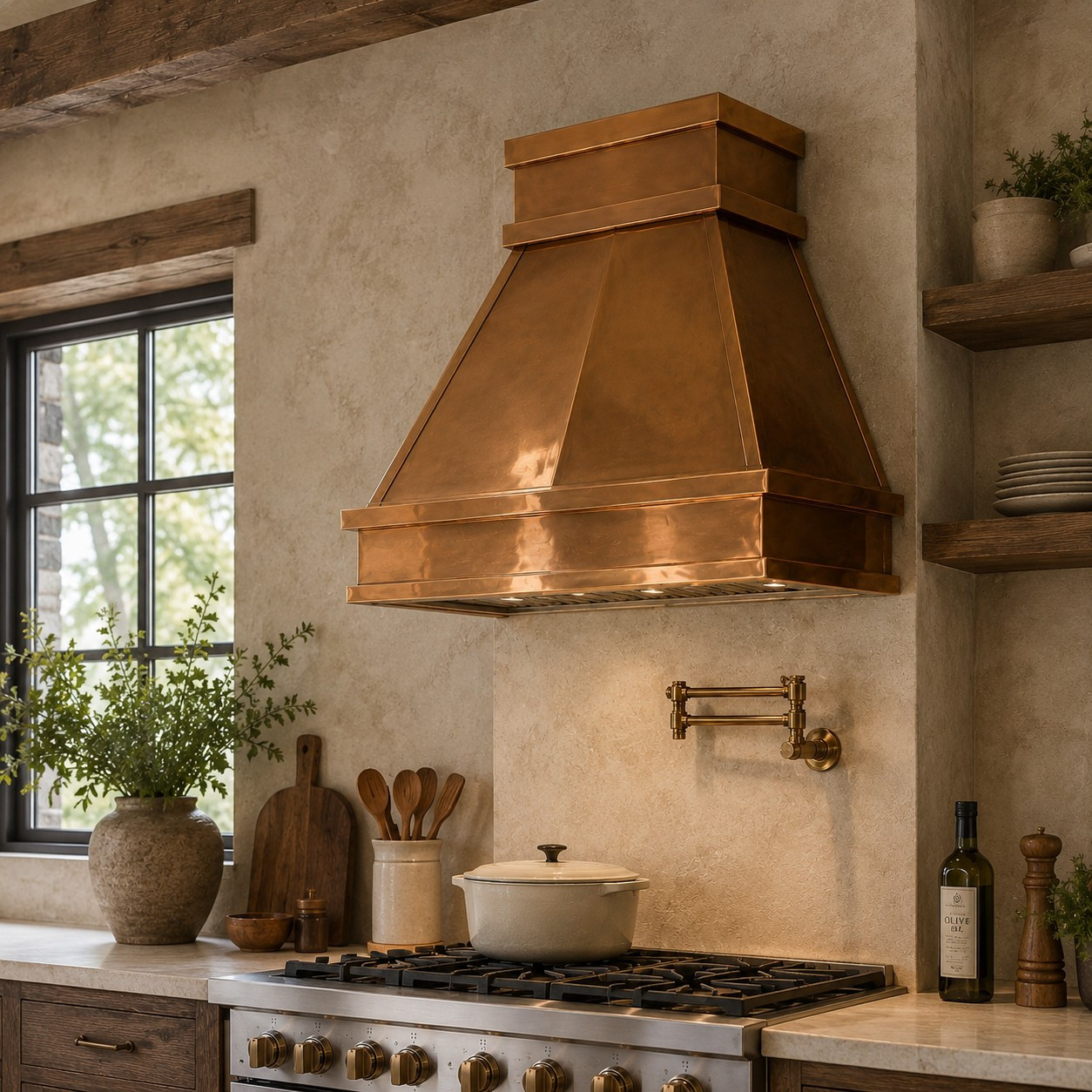
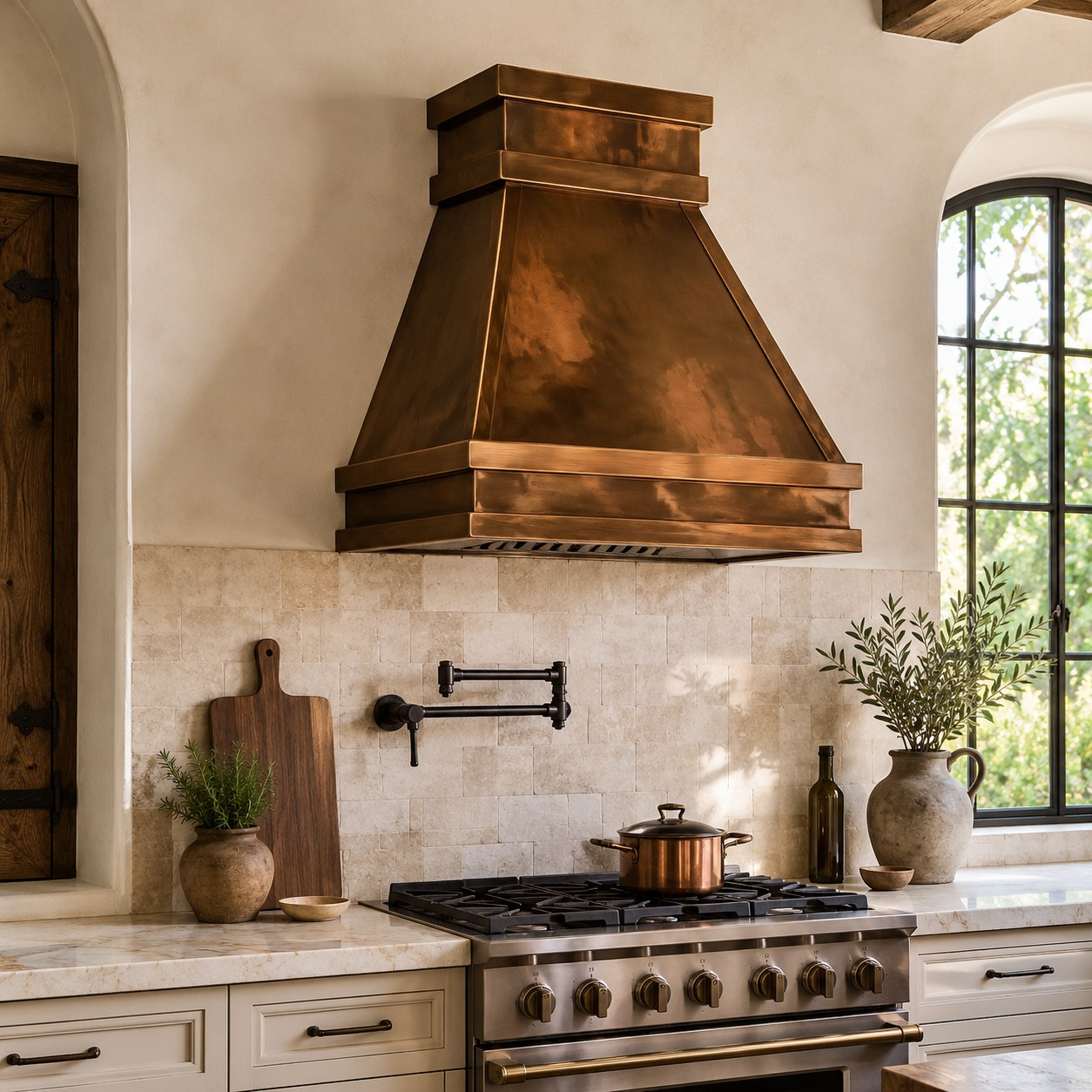
The hand-polished copper range hood with tapered design combines a five-sided pyramidal canopy, broad sloping panels, layered crown, and substantial double apron trim in one sculptural architectural composition. Formed from 16-gauge copper, the body rises from a wide lower capture area toward a compact rectangular chimney, creating balanced symmetry without straps, rivets, embossed motifs, or contrasting metals. Hand polishing produces broad warm reflections across the angled planes, while subtle tonal variation preserves the character of manually worked copper. Available widths include 28, 30, 36, 42, 48, 54, 60, 66, 72, and 78 inches, with heights from 24 to 72 inches and a standard depth of 24 inches. Wall-mounted and island configurations may be prepared around approved ventilation equipment. Learn more about this hand-polished copper range hood. Request a custom quote today.
Product Summary
This made-to-order enclosure is intended for kitchens that need a bold geometric focal point without decorative strapwork or relief ornament. Its identity comes from the five-sided lower plan, broad pyramidal planes, compact upper chimney, layered crown, double apron trim, and reflective copper surface.
- Shape: five-sided pyramid
- Body: broad angled panels
- Crown: layered copper molding
- Apron: wide double trim
- Texture: smooth or hammered
- Finish: hand-polished copper
- Material: 16-gauge copper
- Mount: wall or island
Custom Sizing
Widths range from 28 to 78 inches, including 30, 36, 42, 48, 54, 60, 66, and 72-inch options. Heights may be produced from 24 to 72 inches, with a standard depth of 24 inches. The chimney width, canopy angle, front projection, crown layers, apron height, and five-sided lower footprint may be proportionally adjusted so the hood remains balanced at the selected size.
Measurements Needed
Provide the cooking-surface width, preferred hood width, available wall height, ceiling height, backsplash thickness, cabinet clearances, finished mounting position, and required projection. Include nearby beams, shelves, stone surrounds, windows, or trim that could affect placement, duct routing, structural support, or access for installation and future service.
Insert Planning
The copper body is fabricated as an insert-ready shell rather than a universal ventilation appliance. Rustica House can supply the optional 200 CFM insert only. Buyer-provided internal inserts up to 1,260 CFM and external blower systems up to 1,500 CFM may be reviewed when complete specifications are submitted and physical compatibility is approved before production.
Equipment Details
Submit the insert manufacturer, model, body dimensions, liner cutout, filters, lighting, controls, duct diameter, discharge position, electrical requirements, and service clearances. The approved equipment determines the underside opening, internal support, duct path, access panels, and the amount of usable space within the five-sided lower body.
Design Difference
Many polished copper hoods rely on straps, rivets, contrasting metals, decorative panels, or heavily worked texture. This design achieves its character through form alone. The five-sided pyramidal body, layered upper crown, broad apron rails, and uninterrupted reflective planes create architectural depth without applied hardware. The result feels sculptural and substantial while remaining cleaner than ornamented Tuscan or industrial copper hoods.
Pyramidal Form
The main canopy consists of wide sloping planes that expand from the compact chimney toward the cooking surface. Its front and angled corner panels create a five-sided footprint rather than a simple four-sided box. This geometry produces stronger depth from oblique views and gives the lower body a faceted architectural quality that is visible even without straps or panel borders.
Angular Panels
Each broad plane reflects surrounding light at a different angle, allowing the smooth copper to reveal the canopy construction naturally. The central face provides the principal frontal surface, while the angled corner sections connect it to the side returns. Crisp seams preserve symmetry and make the enclosure appear carefully assembled rather than molded from one continuous curved shell.
Compact Chimney
The upper chimney remains narrower than the canopy and rises through straight vertical sides. Its restrained scale gives the sloping body visual lift while leaving enough room for the layered crown treatment. The chimney may be lengthened or shortened according to the available height, provided the ventilation path and overall proportions remain practical.
Layered Crown
The crown uses several projecting copper levels to create a strong upper termination. These horizontal steps cast narrow shadow lines and prevent the chimney from ending as a plain metal tube. Because the crown is formed from the same polished copper as the body, it adds architectural refinement without introducing another material or decorative motif.
Double Apron
The lower edge is anchored by two broad horizontal copper rails. The upper band separates the sloping canopy from the base, while the lower band provides a substantial finishing edge above the cooking surface. Together, they balance the crown and give the wide lower body enough visual weight to support the tall pyramidal composition.
Polished Surface
Hand polishing creates broad reflections across the smooth copper rather than the fragmented highlights produced by hammering. The illustrated treatment shows warmer and brighter areas around the apron and crown, with deeper tones across portions of the angled body. These shifts are influenced by lighting, hand finishing, and the direction of each panel rather than by a mechanically uniform color coating.
Finish Choices
The hood may be ordered in hand-polished copper or with smooth and hammered surfaces in natural fired, rustic antique, dark coffee, warm honey, or oxidized-green treatments. Polishing emphasizes the pyramidal geometry and crisp edges, while hammering gives the same architecture a softer artisan appearance. Physical finish samples should be reviewed with cabinetry, counters, backsplash materials, and lighting.
Buyer Table
Exterior dimensions, panel geometry, insert specifications, finish, and installation conditions should be approved together. A change to one item may affect the five-sided base, liner clearance, chimney width, apron height, duct position, or structural support.
| Planning | Confirm | Purpose |
| Hood width | Range and wall area | Sets coverage and scale |
| Total height | Ceiling and clearance | Balances proportions |
| Canopy angle | Slope and projection | Defines the pyramid |
| Base shape | Five-sided footprint | Controls insert space |
| Crown layers | Height and projection | Finishes the chimney |
| Ventilation | Insert, blower, duct | Guides preparation |
| Mounting | Wall or ceiling support | Supports installation |
Range Specifications
These details summarize the standard architecture, material, sizing, finish options, ventilation preparation, production schedule, care requirements, and mounting configuration for the made-to-order copper enclosure.
- Type: custom copper hood
- Shape: pyramidal canopy
- Base: five-sided footprint
- Body: broad angled planes
- Crown: layered copper trim
- Apron: double copper bands
- Straps: none
- Rivets: none visible
- Material: 16-gauge copper
- Texture: smooth or hammered
- Finishes: six treatments
- Widths: 28 to 78 inches
- Height: 24 to 72 inches
- Depth: 24 inches standard
- Mount: wall or island
- Ventilation: insert-ready shell
- Insert: optional 200 CFM
- Buyer insert: fit reviewed
- Blower: fit reviewed
- Lead time: about 8 weeks
- Delivery: free delivery included
- Warranty: 12 months
- Care: mild soap and cloth
- Origin: Santa Clara del Cobre
- Country: handcrafted in Mexico
- SKU: AP50G1F59
Insert Clearance
For the wall-mounted version, the lower body has five sides, so the usable interior width narrows near the angled front corners. The ventilation insert should be at least 12 inches narrower than the total hood width. This difference provides room for the diagonal side walls, mounting brackets, airflow, and safe alignment during installation.
Copper Craftsmanship
Artisans form the central face, angled corner panels, side returns, chimney, crown layers, apron rails, and underside structure around the approved measurements. Each plane must remain symmetrical while the seams, folded edges, and trim align across the full width. The copper is then polished or hammered, prepared for the approved insert, inspected, and packed for insured freight delivery.
Artisan Testimony
“Polishing copper by hand reveals the depth and warmth hidden within the metal. Every hood reflects light differently, making each piece truly unique.” — Juan Carlos Hernández, Copper Artisan
Natural Variation
Panel angles, seams, corner folds, crown alignment, apron projection, polish intensity, reflected highlights, and copper tones may vary slightly between completed hoods. These differences document manual forming and hand finishing. They contribute to the individual appearance of each enclosure and are not manufacturing defects.
Best Kitchen Styles
The polished pyramidal canopy works best in kitchens that combine clear geometry with warm materials, substantial cabinetry, and restrained architectural detailing. Evaluate the tapered proportions, polished copper reflections, and visual relationship with cabinetry and countertops in our tapered copper hood image guide.
- Industrial: Concrete, dark steel, open shelving, flat-panel cabinetry, and large-format stone support the hood’s crisp geometry. The polished copper introduces a warmer alternative to stainless steel while the layered crown and broad apron provide enough structure to balance industrial lighting and professional appliances.
- Transitional: Shaker cabinetry, quartzite, white oak, restrained hardware, and balanced elevations complement the symmetrical pyramidal body. The smooth copper contributes historical material richness, while the absence of rivets, straps, and relief ornament keeps the enclosure compatible with simplified contemporary detailing.
- Modern Rustic: Reclaimed beams, natural stone, warm plaster, textured wood, and blackened hardware provide a substantial setting for the reflective copper. The clean panel geometry prevents the room from feeling overly traditional, while tonal variation preserves the handcrafted character expected in a modern rustic interior.
- Mediterranean: Limewashed walls, walnut cabinetry, limestone, travertine, handmade ceramic tile, and aged bronze coordinate naturally with the warm copper. The broad lower body supplies architectural presence, while the unornamented planes keep the composition lighter than a heavily embellished Old World chimney hood.
Other Kitchen Styles
- Desert modern
- European transitional
- Organic contemporary
FAQ – Polished Copper Hood
A: Its sculptural pyramidal silhouette, reflective copper finish, and layered trim details create a refined architectural centerpiece.
A: Yes. Width, height, finish tone, texture, and ventilation configuration can all be customized.
A: Yes. It can be fabricated for wall-mounted or kitchen island applications.
A: Clean with mild soap and a soft cloth. Optional copper wax may help preserve the reflective finish.
A: Yes. It supports recirculating ductless inserts as well as traditional ducted systems.
Customize This Hood
Plan the enclosure around the cooking-surface width, available height, backsplash, cabinetry, structural support, and approved ventilation equipment. Confirm the pyramidal angles, five-sided footprint, chimney proportions, crown, apron trim, texture, finish, insert opening, and duct location before production. Review the polished copper hood video for an additional view of its reflective architecture. Request a custom quote from Rustica House today.
Related Resources
Use these resources to review the polished finish, pyramidal architecture, alternative textures, related styles, and installation requirements.
- polished copper hood guide
- pyramid copper hoods
- modern copper hood styles
- copper hammering techniques
- Rustica hood installation
Installation Guide
Coordinate structural blocking, mounting height, duct routing, electrical service, liner access, insert clearance, and wall or ceiling support before fabrication. Review the range hood installation guide with the installer and cabinetmaker before approving final dimensions.
Shipping & Returns
Each made-to-order hood is securely crated and shipped by insured freight. Review delivery inspection, damage-reporting procedures, custom-order limitations, and return eligibility on the shipping and returns page before approving the dimensions, finish, and ventilation preparation.
Warranty
The handcrafted copper shell and replacement components for a Rustica House-supplied insert include 12-month coverage. Review current exclusions, maintenance responsibilities, limitations, and claim procedures on the Rustica House warranty page.
Maintenance
Clean the polished copper with mild soap, clean water, and a soft nonabrasive cloth, then dry the surface to limit water spotting. Avoid acids, ammonia, scouring pads, powdered cleaners, and aggressive compounds that can scratch or unevenly alter the reflective finish.
Disclaimer: Images reflect possible finish and shape variations. Props are not included, and lifestyle images are provided for inspiration only. Color may shift with lighting and screen settings. Handmade dimensions, seams, panel angles, polish intensity, and finish tones may vary slightly. All product images are protected by copyright and may not be used without written permission from Rustica House.
protected by copyright and may not be used without Rustica House written permission.