US Dollar
 Euro
Euro
 Australian Dollar
 Canadian Dollar
 Polish Zloty
 British Pound










Product Description
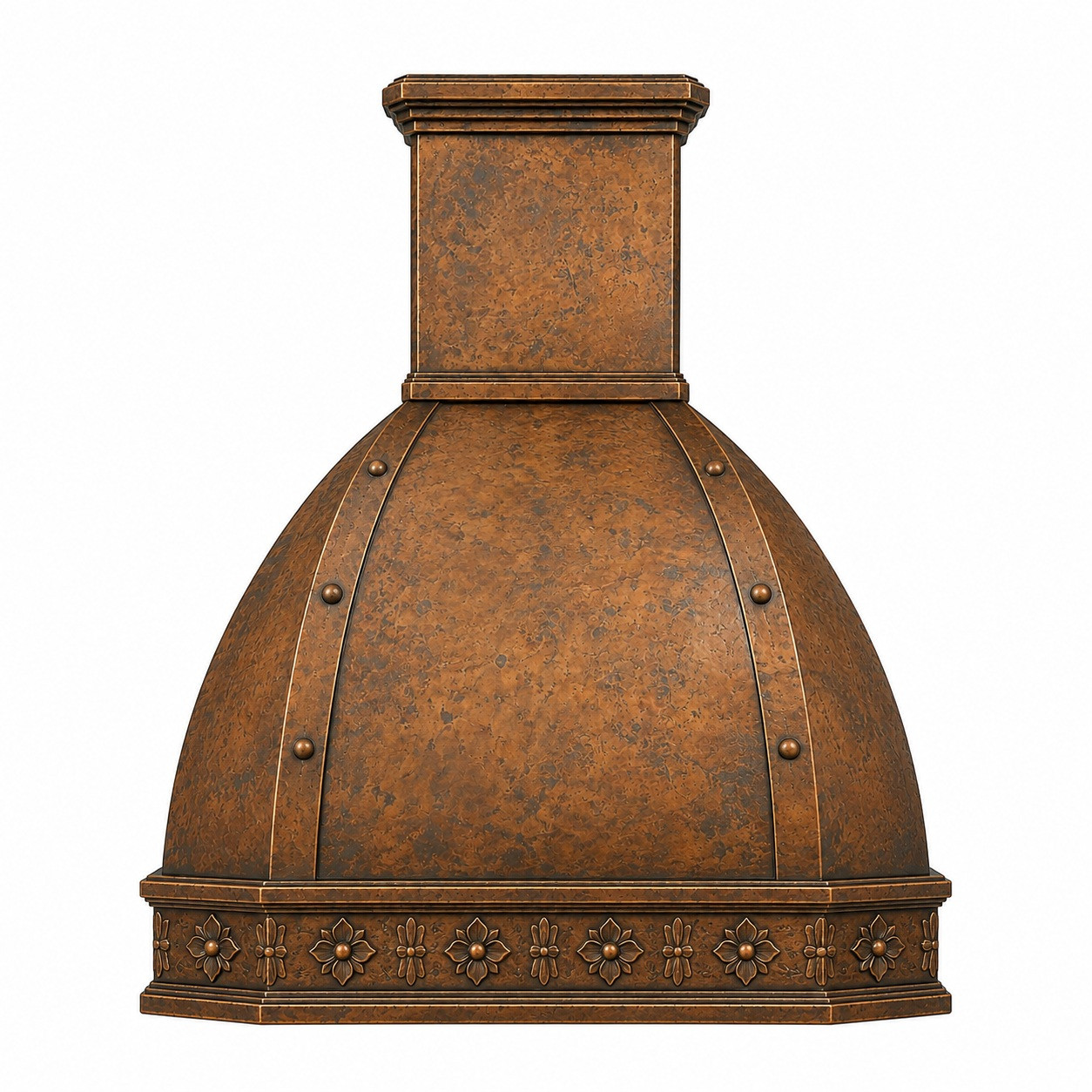
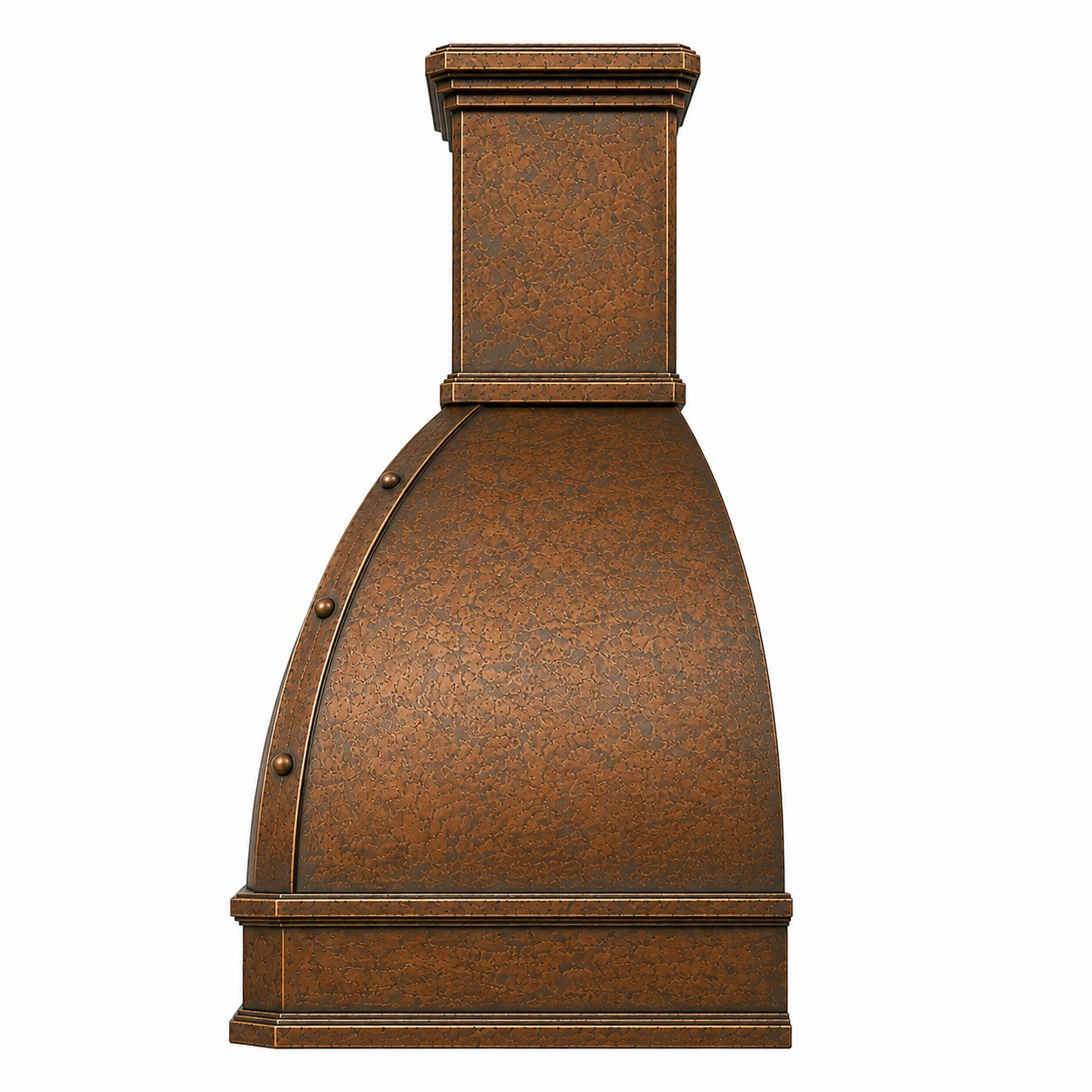
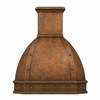
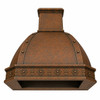
This Mission copper range hood with riveted bands and rosette frieze combines a broad dome-shaped canopy with a straight architectural chimney and carefully concentrated decorative metalwork. The lower body develops through a full convex curve rather than the straight planes of a tapered hood or the outward flare of a traditional bell profile. Vertical copper bands follow the rounded surface and are secured with exposed round rivets, giving the enclosure a visibly constructed character associated with Mission and Arts and Crafts design. A repeating rosette frieze forms a decorative lower border, adding ornament without covering the large copper fields above it. Handcrafted from premium 16-gauge copper, the hood can be ordered with a smooth surface for stronger architectural definition or hand hammering for additional texture. Choose natural fired, honey, antique, coffee, or oxidized patina, or a hand-polished finish. Made to order in Santa Clara del Cobre, Mexico, it is available from 28 to 78 inches wide and 24 to 72 inches high for wall-mounted or kitchen island installation. Compare handcrafted fabrication, ornamental detailing, architectural proportions, and custom sizing in our complete Mission copper range hood rosette frieze guide. Customize the dimensions, copper surface, finish, mounting configuration, and ventilation preparation for your kitchen.
Product Summary
- Rounded Mission-style copper canopy
- Straight architectural chimney
- Vertical riveted copper bands
- Decorative rosette frieze
- Wall or kitchen island construction
Mission Architecture
The design is organized around the relationship between a substantial dome-shaped lower body and a cleaner, rectilinear chimney. The canopy projects outward through a continuous convex curve, creating considerably more three-dimensional volume than a straight-sided tapered enclosure. Its rounded geometry gives the hood a substantial architectural presence while providing a broad lower capture area above the cooking surface. The straight chimney introduces vertical structure above the curved mass and prevents the overall composition from appearing excessively heavy. Unlike copper hoods covered with scrollwork, medallions, contrasting metals, or repeated embossed decoration, this design uses its vertical bands as architectural structure and reserves concentrated ornament for the lower rosette frieze.
Dome-Shaped Canopy
The canopy is one of the hood's defining architectural features. Beginning beneath the straight chimney, the copper gradually expands outward through a pronounced convex profile before meeting the decorated lower section. From the front, this creates a broad and symmetrical silhouette; from an angled view, the depth of the dome becomes more apparent as the curved front transitions into similarly formed side panels. This three-dimensional geometry distinguishes the design from tapered, pyramid, and bell-shaped copper hoods while providing enough visual mass for substantial ranges and large kitchens.
Riveted Bands
Vertical copper bands travel down the dome-shaped canopy and follow its changing curvature rather than sitting on a flat or straight-sloping surface. Exposed round rivets make the apparent method of assembly part of the decoration and introduce a hand-forged quality without excessive embellishment. Because the bands conform to the convex body, their edges create changing highlights and shadows that become particularly visible across hand-hammered copper. Their repeated spacing provides structure while leaving the broad copper fields visually open.
Rosette Frieze
A repeating floral-rosette frieze establishes a distinct decorative border near the base. This feature separates the hood from simpler Mission and rustic copper designs that depend primarily on straps, rivets, or patina for decoration. Concentrating the motif within one horizontal zone keeps the expansive dome comparatively restrained, allowing handmade tile, carved cabinetry, stone, plaster, and wrought-iron elements to coexist with the hood without creating an overly ornate composition.
Copper Surface
Premium 16-gauge copper is available in smooth or hand-hammered form. Smooth copper creates broad reflections that make the dome curvature particularly visible and place greater emphasis on the straight chimney, riveted bands, and defined rosette frieze. Hand hammering breaks those reflections into smaller highlights, giving the convex surface additional visual movement and reinforcing the artisan character. Because the vertical bands follow the rounded body, their relationship with the dome becomes more pronounced as lighting changes across the hood. Each enclosure is individually formed and finished, so slight variations in seams, hammer impressions, tool marks, rivet positioning, edges, and surface texture are natural characteristics of handcrafted metalwork.
Finish Selection
Five artisan patinas and a hand-polished option allow the same architecture to coordinate with different material palettes. Natural fired copper displays varied reddish and bronze tones. Honey produces a lighter amber appearance, while antique creates a quieter aged surface. Coffee develops deeper brown coloration that increases contrast around the rivets, bands, and rosette details. Oxidized copper introduces characteristic blue-green variation. Hand-polished copper offers the brightest treatment and emphasizes reflected light across the rounded body. Because every finish is applied individually, exact tone and patina distribution naturally vary.
Custom Sizing
Made-to-order fabrication allows the enclosure to be proportioned around the cooking surface, cabinetry, backsplash, ceiling height, and surrounding architecture. Standard widths range from 28 to 78 inches, heights from 24 to 72 inches, and standard depth is 24 inches. When dimensions are changed, the dome curvature, chimney width, band spacing, and frieze height should remain visually coordinated. This proportional approach is particularly important for a large rounded Mission copper hood above a professional-style range, where simply enlarging one component could distort the original composition.
Measurements Needed
Before production, confirm the cooking-surface width, desired hood width, overall height, finished depth, mounting height, ceiling height, backsplash thickness, surrounding cabinet clearances, and proposed duct position. For an island installation, establish the cooktop centerline and available ceiling structure. Complete specifications for buyer-supplied ventilation equipment should also be provided before fabrication so the internal opening and support structure can be prepared for the actual system.
Insert Planning
The decorative copper shell and mechanical ventilation equipment are planned as separate components. Rustica House can supply an optional 200 CFM insert for suitable residential applications. The enclosure can also accommodate buyer-supplied internal inserts up to 1,260 CFM or external blower systems up to 1,500 CFM when complete specifications are submitted before production. Since equipment varies in dimensions, cutout requirements, duct size, blower configuration, controls, lighting, filters, and service access, provide the manufacturer, model, specification sheet, duct position, control information, lighting details, and filter-access requirements before fabrication.
Drawing Approval
Review the width, height, depth, canopy curvature, chimney proportions, band locations, frieze height, insert opening, duct centerline, and mounting configuration before production begins. Drawing approval is especially valuable for wide ranges, vaulted ceilings, exposed beams, thick stone backsplashes, kitchen islands, or cabinetry designed closely around the enclosure. Confirming these relationships helps coordinate the handcrafted metal shell with framing, finished surfaces, cabinetry, and ventilation equipment.
Mounting Options
This Mission-inspired copper hood can be fabricated for wall-mounted or kitchen island installation. A wall version can be centered between cabinetry, shelving, masonry surrounds, or decorative tile, making the rounded front and rosette border the primary focal point. An island version exposes the curved side surfaces and band arrangement from additional viewpoints. Island projects require appropriate overhead framing, accurate alignment with the cooktop, and coordinated ceiling ducting and electrical service.
Buyer Planning
| Planning | Confirm | Buyer Decision |
| Dimensions | Width, height, depth | Coordinate with range |
| Copper surface | Smooth or hammered | Choose visual texture |
| Finish | Patina or polished | Select copper tone |
| Mounting | Wall or island | Plan structural support |
| Ventilation | Insert and duct | Provide specifications |
Specifications
- Product: Mission copper range hood
- Profile: broad dome-shaped canopy
- Canopy: convex three-dimensional form
- Chimney: straight architectural stack
- Material: premium 16-gauge copper
- Surface: smooth or hand hammered
- Bands: vertical riveted copper accents
- Frieze: repeating floral rosettes
- Width: 28–78 inches
- Height: 24–72 inches
- Depth: 24 inches standard
- Patinas: natural fired, honey, antique, coffee, oxidized
- Polish: hand-polished copper option
- Mounting: wall or kitchen island
- Insert: optional 200 CFM
- Buyer insert: up to 1,260 CFM
- External blower: up to 1,500 CFM
- Production: approximately 6 weeks
- Delivery: approximately 8 weeks
- Shipping: free U.S. mainland
- Warranty: 12 months
- Origin: Santa Clara del Cobre, Mexico
- SKU: MY82G4M71
PDF and CAD Downloads
Use the proportional PDF drawing and DXF CAD file to coordinate the dome-shaped canopy, straight chimney, riveted bands, rosette frieze, overall dimensions, ventilation opening, cabinetry, and duct position during project planning.
Copper Craftsmanship
Each hood is handcrafted in Santa Clara del Cobre, Mexico, where copperworking remains an established artisan tradition. Individual panels are cut, formed, joined, textured, and finished by hand. The dome-shaped canopy is formed before the vertical bands and visible rivets are positioned, while the lower frieze requires additional decorative work to establish its repeated rosette pattern. Handmade fabrication makes custom dimensions possible while preserving the relationship among the straight chimney, curved body, vertical divisions, and ornamental base. Natural variations in seams, tool marks, hammering, rivet alignment, frieze details, and patina are expected characteristics of individually made copperwork.
Kitchen Styles
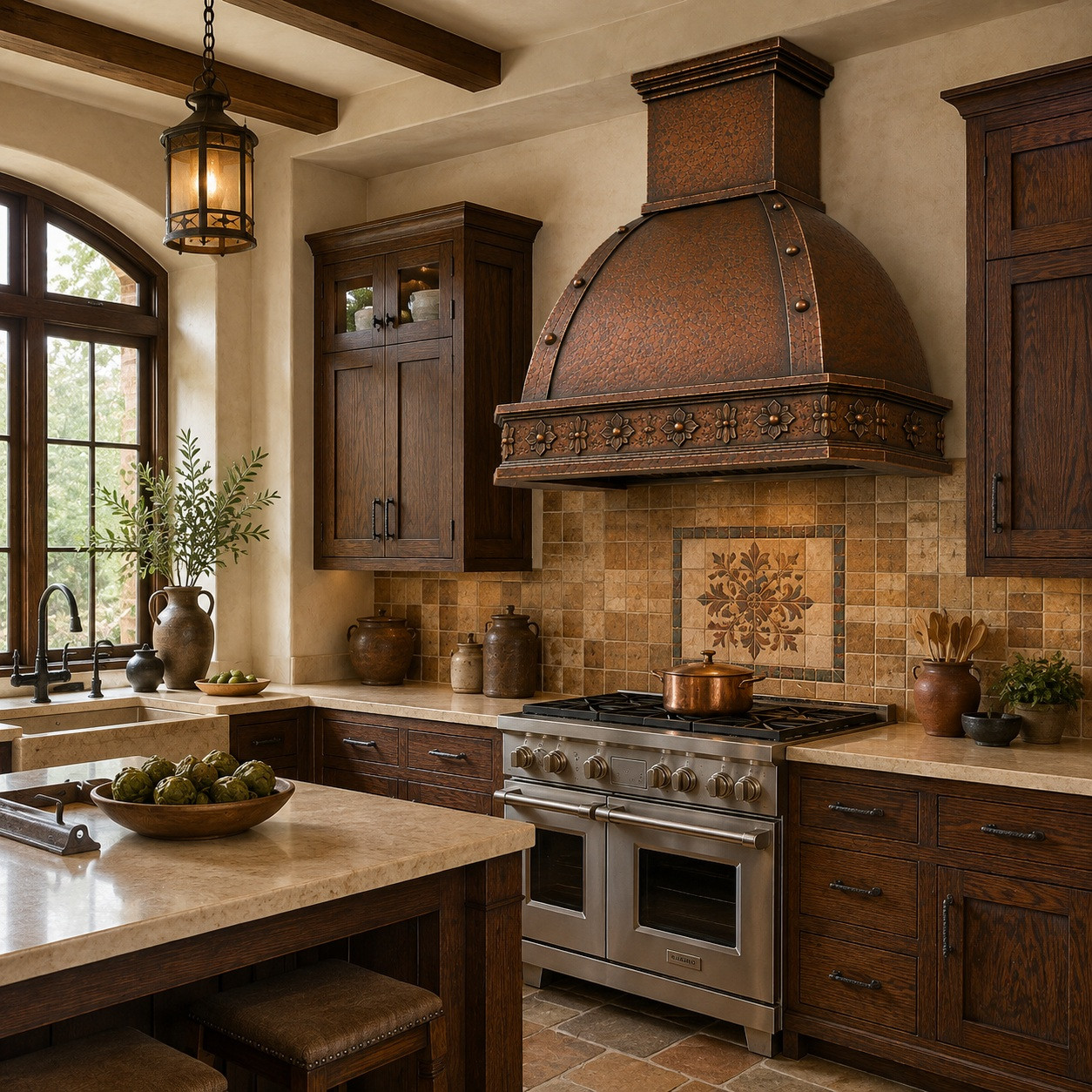
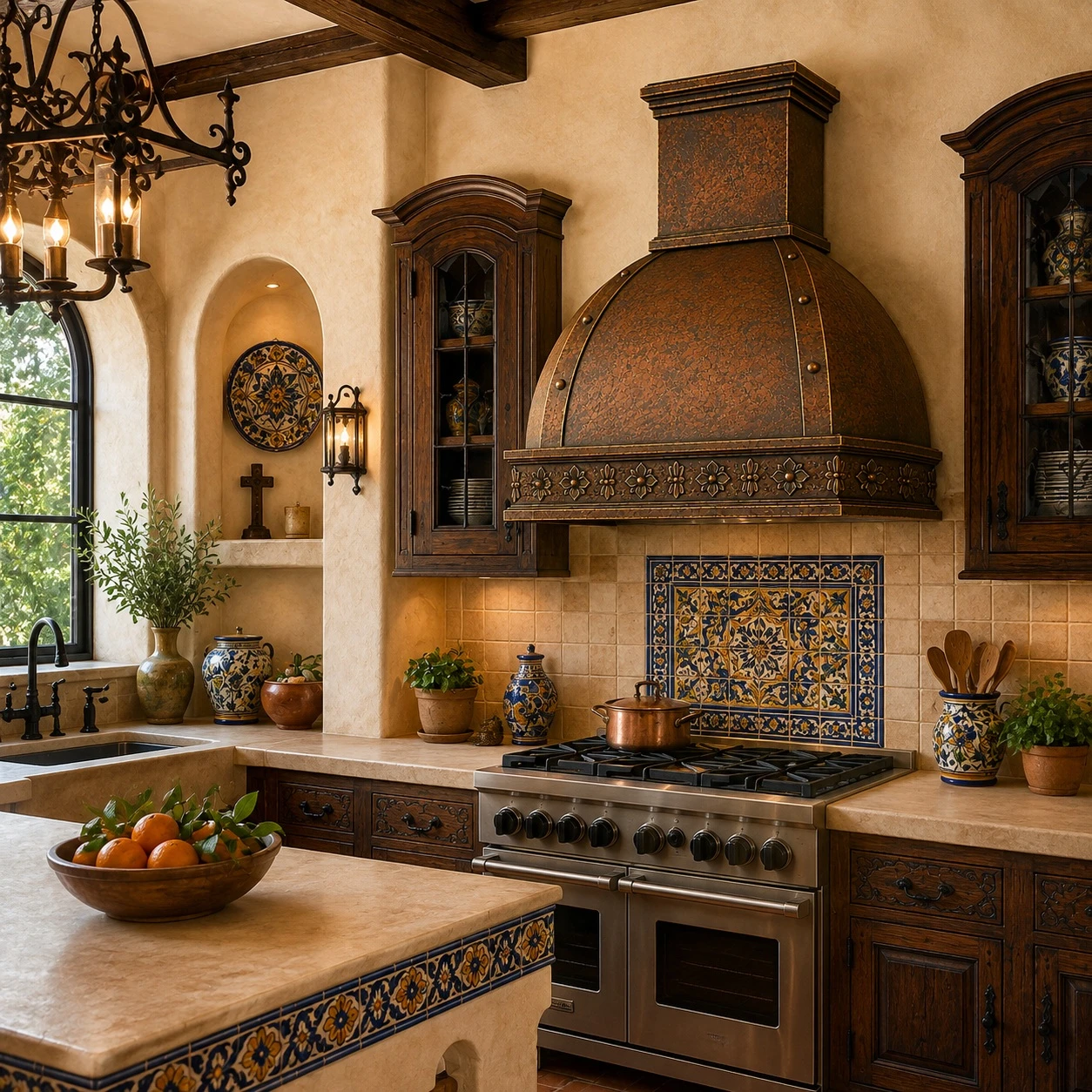
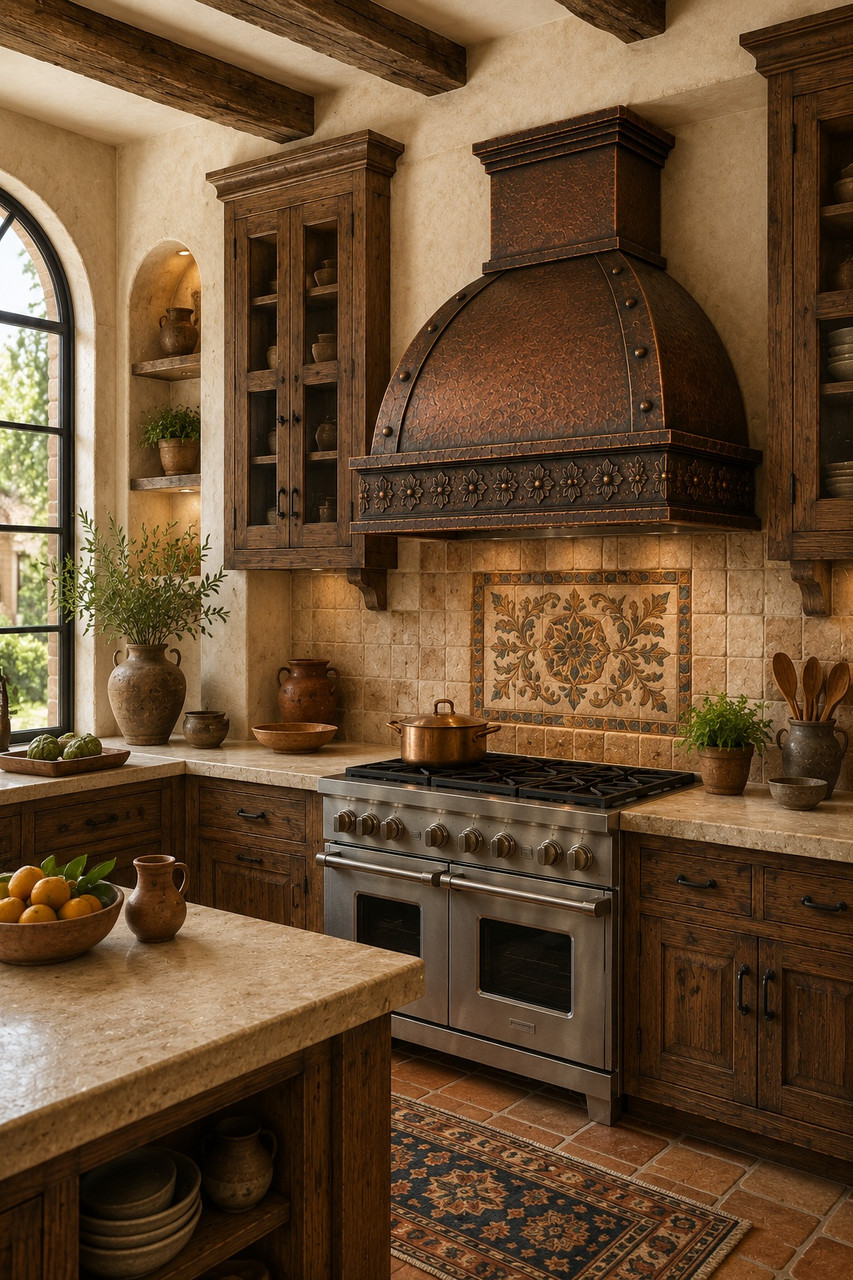
The rounded silhouette, exposed metal construction, darkened copper, and decorative lower border give the hood a recognizable Mission character without restricting it to one historical interior. Its strongest settings combine natural materials, substantial cabinetry, handcrafted surfaces, and architectural details capable of supporting its visual weight. See how the architectural copper silhouette and ornamental frieze integrate with different interiors in our Mission copper range hood rosette frieze lifestyle kitchen images.
Best Kitchen Styles
- California Mission: Dark or quarter-sawn oak cabinetry, earth-toned handmade tile, plaster walls, stone flooring, and hammered hardware complement the rounded canopy and visible riveted bands. Antique or coffee copper reinforces the substantial Arts and Crafts character while the rosette frieze introduces controlled ornament.
- Spanish Revival: Warm plaster, dark wood cabinetry, Saltillo flooring, Talavera accents, arches, and forged iron lighting provide a natural setting for the structured bands and decorative lower border. The straight chimney gives the composition architectural discipline above the more sculptural dome-shaped canopy.
- Arts and Crafts: Natural wood, handmade ceramic tile, straightforward cabinetry, stone surfaces, and visibly crafted hardware align with the hood's emphasis on material and construction. Smooth antique copper can emphasize its geometry, while hand hammering gives the broad curved surfaces a stronger workshop-made character.
- Rustic Mediterranean: Textured plaster, limestone, terracotta, aged timber, and substantial cabinetry provide enough visual mass for the broad rounded body. Natural-fired or coffee copper works particularly well where the hood needs to anchor a large cooking area without relying on elaborate applied ornament.
Other Kitchen Styles
- Tuscan
- Southwestern
- Old World European
Mission Hood FAQ
A: Its distinguishing architecture combines a full dome-shaped copper canopy with a straight chimney, vertical riveted bands, and a repeating rosette frieze. The convex body gives the hood greater three-dimensional volume than a conventional tapered enclosure, while the ornament remains concentrated along the lower border.
A: Yes. Smooth copper emphasizes the dome curvature, straight chimney, bands, and rosette details, while hand-hammered copper introduces additional surface movement and smaller reflections. Both surfaces are formed and finished by hand.
A: Choose natural fired, honey, antique, coffee, or oxidized patina, or select hand-polished copper. Since finishes are developed individually, variations in tone, shading, and patina distribution are expected characteristics of handcrafted copper.
A: Yes. Wall-mounted and kitchen island versions are available. Island installations require suitable ceiling framing, accurate positioning above the cooking surface, and coordinated electrical and duct planning.
A: Yes. Internal inserts up to 1,260 CFM and external blower systems up to 1,500 CFM can be accommodated when complete manufacturer specifications are supplied before production.
Customize Your Hood
Configure the width, height, smooth or hammered surface, copper finish, wall or island construction, and ventilation preparation while preserving the distinctive relationship between the dome-shaped canopy, straight chimney, riveted vertical bands, and decorative lower border. Order a handcrafted Mission copper hood built around your kitchen's architectural proportions and ventilation requirements.
Related Resources
- Range Hood Insert Guide
- Range Hood Size Guide
- Copper Patina Options
- Copper Hammering Techniques
- Copper Range Hood FAQ
- Spanish Mission Style
Care & Maintenance
Clean the copper with mild soap, warm water, and a soft nonabrasive cloth, then dry the surface promptly. Avoid acids, ammonia, bleach, abrasive pads, and aggressive metal polishes that can alter the artisan patina. Wax may be applied when appropriate to slow natural surface changes, or the copper can be allowed to continue aging. Follow the step-by-step copper cleaning video for the recommended cleaning procedure.
Installation Guide
Confirm structural framing, mounting height, finished hood dimensions, ventilation equipment, duct size, electrical requirements, and appliance clearances before installation. Kitchen island versions require suitable overhead framing and coordinated ceiling ductwork. Review the range hood installation guide with the contractor before fabrication and installation.
Shipping & Returns
Production generally requires approximately six weeks, with overall delivery commonly reaching about eight weeks. Each made-to-order copper hood is securely crated for freight transportation, with free shipping to the U.S. mainland. Custom dimensions and configurations may affect applicable terms, so review the Shipping & Returns information before ordering.
Warranty
The handcrafted copper enclosure includes a 12-month warranty. Rustica House-supplied ventilation equipment is covered according to applicable terms, while buyer-supplied inserts and external blower systems remain subject to their manufacturers' warranties. Review the complete Rustica House Warranty for coverage information.
Disclaimer: Handmade copper construction produces natural variations in forming, seams, hammer impressions, rivet placement, rosette details, tool marks, edges, dimensions, and patina coloration. These characteristics are expected in artisan metalwork and are not manufacturing defects. Lifestyle images are provided for design inspiration and may show optional finishes, configurations, appliances, cabinetry, or decorative items not included with the hood. All product images © Rustica House, unauthorized use is prohibited.