 US Dollar
 Euro
Euro
 Australian Dollar
 Canadian Dollar
 Polish Zloty
 British Pound





Product Description
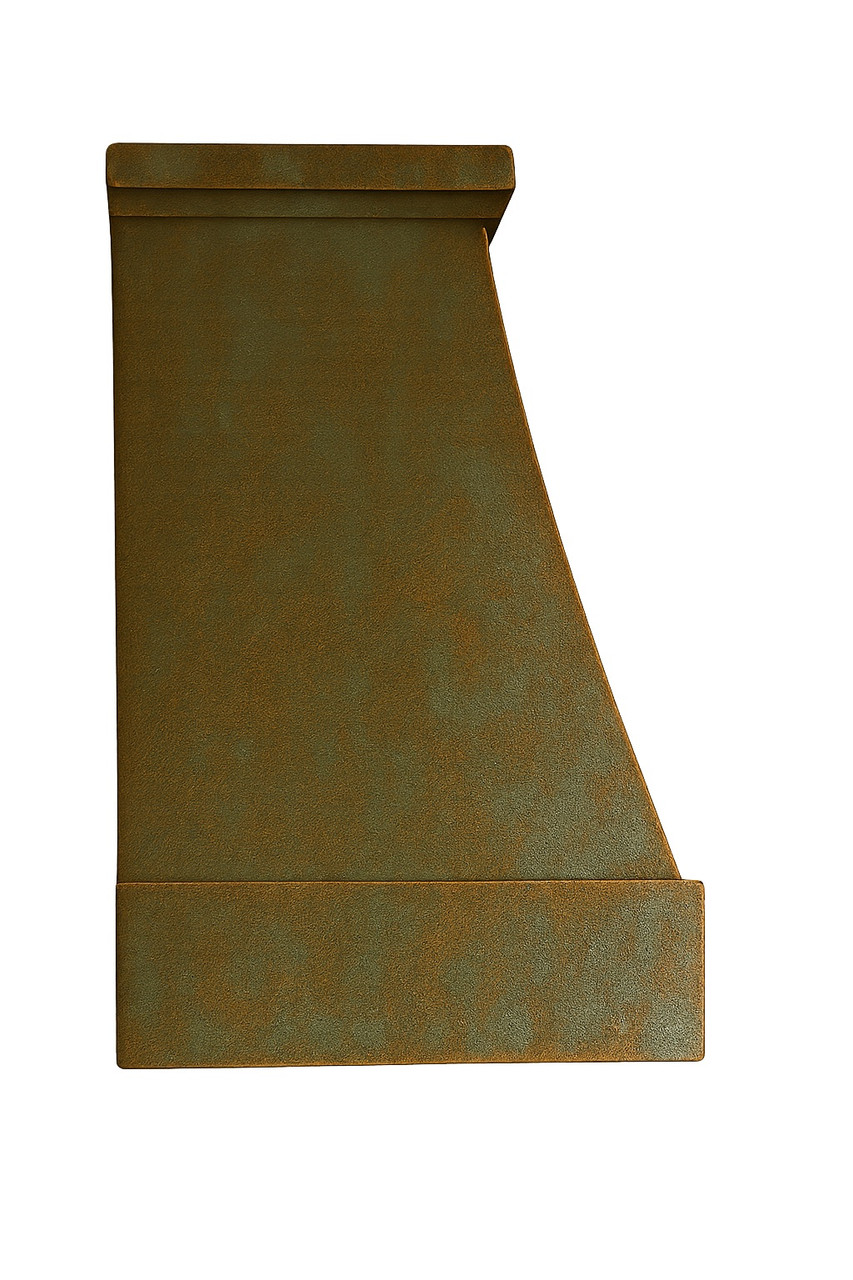
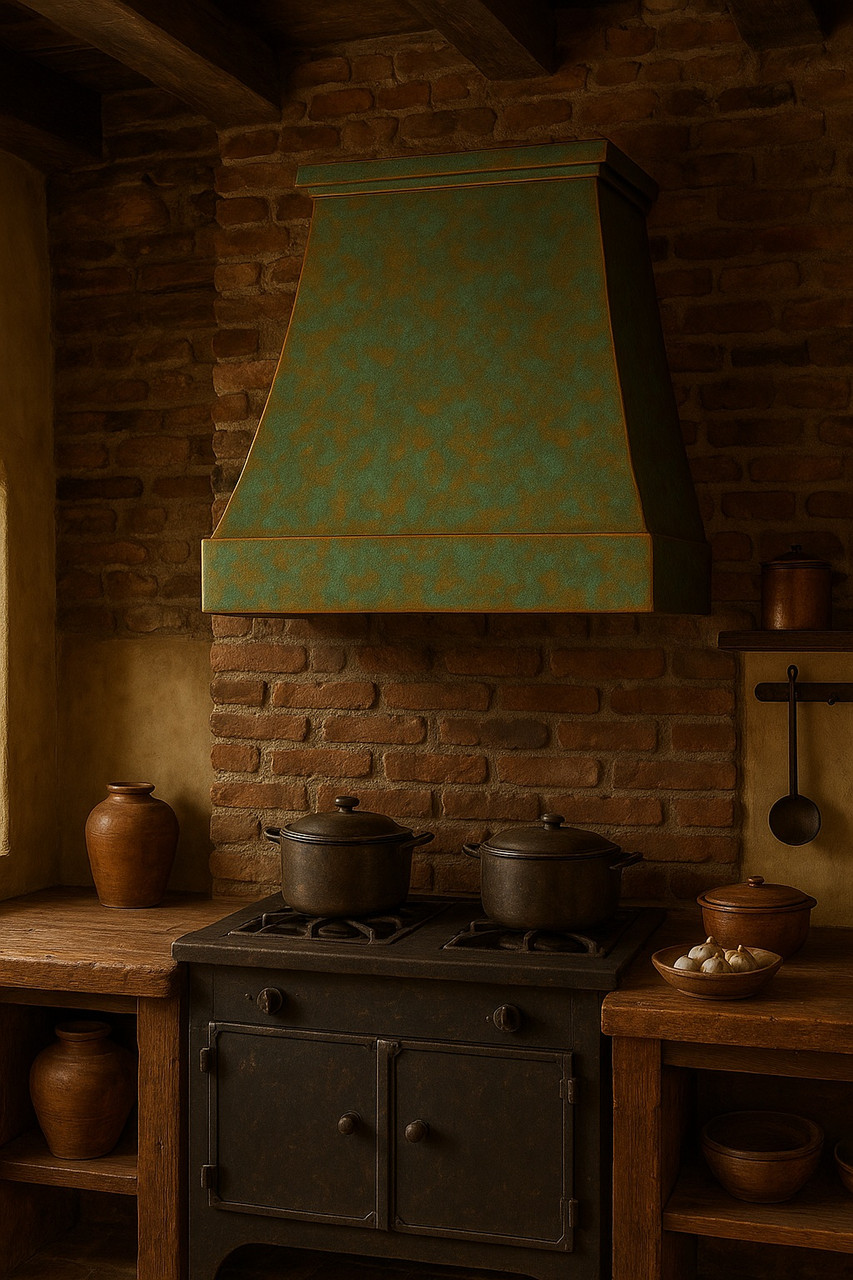
The Colonial tapered copper range hood with rustic green patina combines a strong architectural silhouette with the character of naturally aged metal. Its broad lower canopy narrows gradually toward the upper chimney, creating a clean tapered profile softened by a subtle concave transition. Hand-hammered copper gives the surface tactile depth, while oxidized green, reddish-brown, and darker copper tones create layered color rather than a uniform painted appearance. A stepped crown finishes the upper edge, and a substantial lower band anchors the wider capture area without introducing straps, riveted grids, or elaborate embossed decoration. Available from 28 to 78 inches wide, 24 to 72 inches high, and 24 inches deep as standard, the hood can be prepared for wall-mounted or kitchen island installation. Custom dimensions, finish, proportions, and ventilation preparation can be coordinated before production. Request a custom quote for your kitchen project.
Product Summary
- Shape: tapered copper canopy
- Material: handcrafted copper
- Texture: smooth or hammered
- Patina: oxidized rustic green
- Crown: stepped upper molding
- Base: substantial lower band
- Widths: 28 to 78 inches
- Height: 24 to 72 inches
- Depth: 24 inches standard
- Mount: wall or island
Custom Sizing
The hood may be proportioned around the cooking surface, cabinetry, backsplash, ceiling height, and available installation area. Standard widths range from 28 to 78 inches, with heights from 24 to 72 inches and a standard depth of 24 inches. The taper angle, upper chimney width, lower projection, crown scale, base height, and capture opening can be coordinated together. Adjusting these elements as one composition helps a wider or taller hood preserve the original Colonial proportions instead of simply stretching a fixed design.
Measurements Needed
Provide the cooking-surface width, desired hood width, available overall height, mounting height, backsplash thickness, adjacent cabinet clearances, finished depth, and proposed duct route. Island installations also require ceiling height, cooktop centerline, structural-support locations, and dimensions for every exposed elevation. These measurements allow the exterior copper shell, ventilation opening, internal supports, and duct position to be coordinated before fabrication begins.
Insert Planning
The copper enclosure functions as an insert-ready decorative shell. Rustica House can supply an optional 200 CFM insert for suitable residential applications. Buyer-supplied internal inserts up to 1,260 CFM and external blower systems up to 1,500 CFM may be accommodated when complete equipment specifications are provided before production. Insert dimensions, liner cutout, filters, lighting, controls, duct size, discharge position, electrical requirements, and service clearances should be confirmed before the shell is formed.
Drawing Approval
For custom dimensions or buyer-selected ventilation, the taper, upper chimney, crown, lower band, insert opening, overall depth, and duct centerline can be coordinated before production approval. This planning stage is particularly useful when the hood must align with stone surrounds, custom cabinetry, ceiling beams, or an existing ventilation route. Final proportions can then be fabricated around the approved kitchen layout and insert requirements.
Design Difference
This model is distinguished by its restrained tapered architecture and oxidized copper surface rather than applied decoration. Many traditional copper hoods depend on vertical straps, large rivets, contrasting metals, embossed motifs, or deeply layered moldings. Here, large uninterrupted copper fields remain visible between a stepped crown and broad lower frame. The green patina therefore becomes a major design element, while the slight concave movement along the sides gives the taper more character than a completely straight pyramidal canopy.
Tapered Profile
The body widens progressively as it descends toward the cooking surface. Its sides remain tapered rather than forming the rounded mass of a dome or the narrow waist and outward flare of a bell hood. This controlled geometry gives the enclosure visual height while providing a broad lower capture zone. From the front it reads as balanced and symmetrical; from an angle, the subtle concave contour softens the otherwise geometric form.
Hammered Surface
Hand hammering introduces hundreds of shallow depressions that break reflected light into smaller highlights and shadow areas. The texture makes the green oxidation appear more varied because raised marks expose warmer copper tones while deeper impressions retain darker coloration. Smooth copper can also be selected when a calmer surface is desired, but the hammered option emphasizes the handmade character of this particular design.
Green Copper Patina
The photographed finish combines oxidized green with brown, russet, and underlying copper tones. It is intentionally irregular and should not resemble a flat green coating. Variations across the hammered metal create the appearance of naturally aged architectural copper, making the hood especially effective with stone, plaster, reclaimed wood, traditional tile, and wrought-metal details.
Crown and Base
A stepped crown provides a precise termination at the narrow upper section and introduces subtle horizontal shadow lines. The broad lower band visually anchors the canopy at its widest point. Both elements frame the hand-finished copper without covering it, maintaining a cleaner architectural approach than hoods with elaborate crowns, multiple straps, or decorated aprons.
Finish Options
The shown oxidized green finish is only one possible treatment. Coffee creates deeper brown coloration, antique develops a softened aged appearance, natural fired copper emphasizes reddish and amber tones, and warm honey produces lighter golden warmth. Oxidized green adds weathered blue-green variation, while hand polishing creates brighter reflections. Changing the finish can move the same tapered hood from historic Old World surroundings toward cleaner transitional or contemporary kitchens.
Buyer Table
Exterior dimensions, taper, finish, mounting format, and ventilation equipment should be planned together because one change can affect the visual proportions, liner opening, duct position, or structural requirements.
| Planning | Confirm | Buyer Decision |
| Hood size | Width, height, depth | Match cooking area |
| Taper | Angle and projection | Set canopy volume |
| Chimney | Width and height | Balance upper body |
| Green finish | Oxidation and texture | Set aged character |
| Mounting | Wall or island | Plan structure |
| Ventilation | Insert, blower, duct | Guide fabrication |
Product Specifications
- Type: custom copper hood
- Material: handcrafted copper
- Shape: tapered canopy
- Texture: smooth or hammered
- Shown finish: oxidized green
- Crown: stepped upper molding
- Base: wide lower trim band
- Widths: 28 to 78 inches
- Height: 24 to 72 inches
- Depth: 24 inches standard
- Mount: wall or island
- Ventilation: insert-ready shell
- Insert: optional 200 CFM
- Buyer insert: up to 1,260 CFM
- External blower: up to 1,500 CFM
- Lead time: about 6 weeks
- Delivery: about 8 weeks in total
- Shipping: free USA mainland
- Warranty: 12 months
- Origin: handcrafted in Mexico
- SKU: NZ92H4L97
Copper Craftsmanship
Each hood is individually formed, hammered, trimmed, and finished by artisans in Mexico. The tapering panels must be shaped so the front and side proportions remain consistent while the lower band and crown align with the approved dimensions. The oxidized finish is developed by hand, producing natural differences in green concentration, underlying copper, hammer depth, seams, and edge folds. These variations document artisan fabrication and are expected characteristics of the finished product.
Artisan Testimony
Learn more about copper artisan Juan Carlos Hernández and the traditional forming, hammering, joining, and finishing methods associated with handcrafted copperwork from Santa Clara del Cobre.
Best Kitchen Styles
- Old World: The oxidized green copper, hammered texture, and substantial tapered form complement stone walls, exposed timber, aged cabinetry, and traditional masonry.
- Spanish Revival: The weathered green patina works naturally with textured plaster, arched architecture, hand-painted tile, dark wood cabinetry, and wrought-iron accents.
- Tuscan: The aged copper surface pairs with travertine, limestone, terracotta, warm wood cabinetry, and other earthy materials common in Italian country kitchens.
Other Kitchen Styles
- Mexican Hacienda
- Rustic Farmhouse
- French Country
- Arts and Crafts
Tapered Hood FAQ
A: Its combination of straight tapered architecture, subtle concave side movement, hammered copper, oxidized green patina, stepped crown, and substantial lower band creates an aged-metal focal point without applied ornament.
A: Yes. The hood is made to order and may be finished in other copper treatments, including coffee, antique, natural fired, warm honey, oxidized green, or hand-polished copper.
A: Yes. Width, height, taper angle, chimney proportions, lower band, depth, and ventilation opening can be coordinated around the kitchen before production.
A: Yes. Island construction includes finished exposed elevations and preparation for suitable ceiling support, duct routing, and approved ventilation equipment.
A: Yes. Buyer-supplied internal inserts up to 1,260 CFM can be accommodated when complete manufacturer dimensions and installation specifications are provided before production.
A: Use mild soap, warm water, and a soft cloth. Avoid abrasive pads, acidic cleaners, metal polish, and aggressive chemicals that may alter the oxidized surface.
Customize This Hood
Plan the hood around the cooking-surface width, available height, wall or island position, taper angle, upper chimney, lower band, copper texture, finish, structural support, and selected ventilation equipment. Confirm the liner opening and duct position before fabrication. Request a custom proposal from Rustica House.
Related Resources
- Spanish Colonial hoods
- Copper patina options
- Sloping copper hoods
- Range hood size guide
- Copper range hood collection
Care and Maintenance
Clean the hammered copper gently with mild soap, warm water, and a soft nonabrasive cloth, then dry the surface. Avoid acidic cleaners, abrasive compounds, ammonia, metal polish, and scouring pads because they may alter the oxidized finish. Review the copper range hood cleaning and care guide for detailed maintenance recommendations.
Installation Guide
Plan structural support, cooking clearances, electrical service, liner access, and duct routing before production. Wall installations require suitable framing, while island versions require adequate overhead support. Review the metal range hood installation guide before approving final dimensions.
Shipping & Returns
Production takes about six weeks, with delivery commonly reaching about eight weeks in total. Free shipping is available to the USA mainland, and each hood is securely crated for freight delivery. Review inspection procedures, custom-order conditions, and eligibility on the shipping and returns page.
Warranty
The handcrafted copper shell and replacement components for a Rustica House-supplied insert include 12-month coverage. Buyer-supplied ventilation equipment remains subject to its manufacturer's warranty. Review complete terms, exclusions, and claim procedures on the Rustica House warranty page.
Disclaimer: Handmade dimensions, taper angles, hammer impressions, crown details, lower-band proportions, seams, edge folds, green oxidation, and underlying copper tones may vary slightly. These differences are expected in handcrafted copper and are not manufacturing defects. Lifestyle images are provided for inspiration only and may show optional configurations. All product images © Rustica House, unauthorized use is prohibited.


