US Dollar
 Euro
Euro
 Australian Dollar
 Canadian Dollar
 Polish Zloty
 British Pound








Product Description
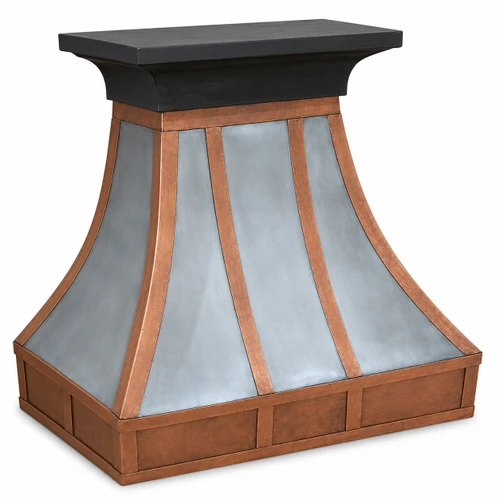
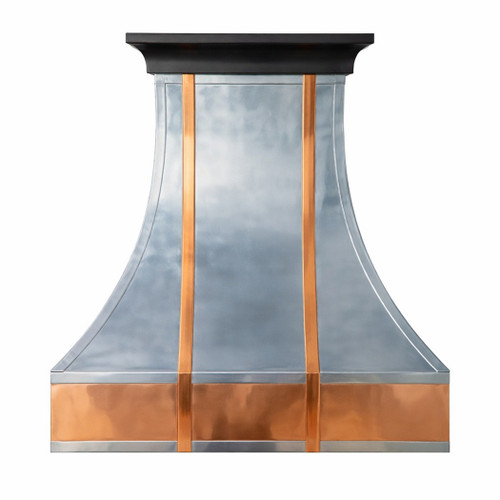
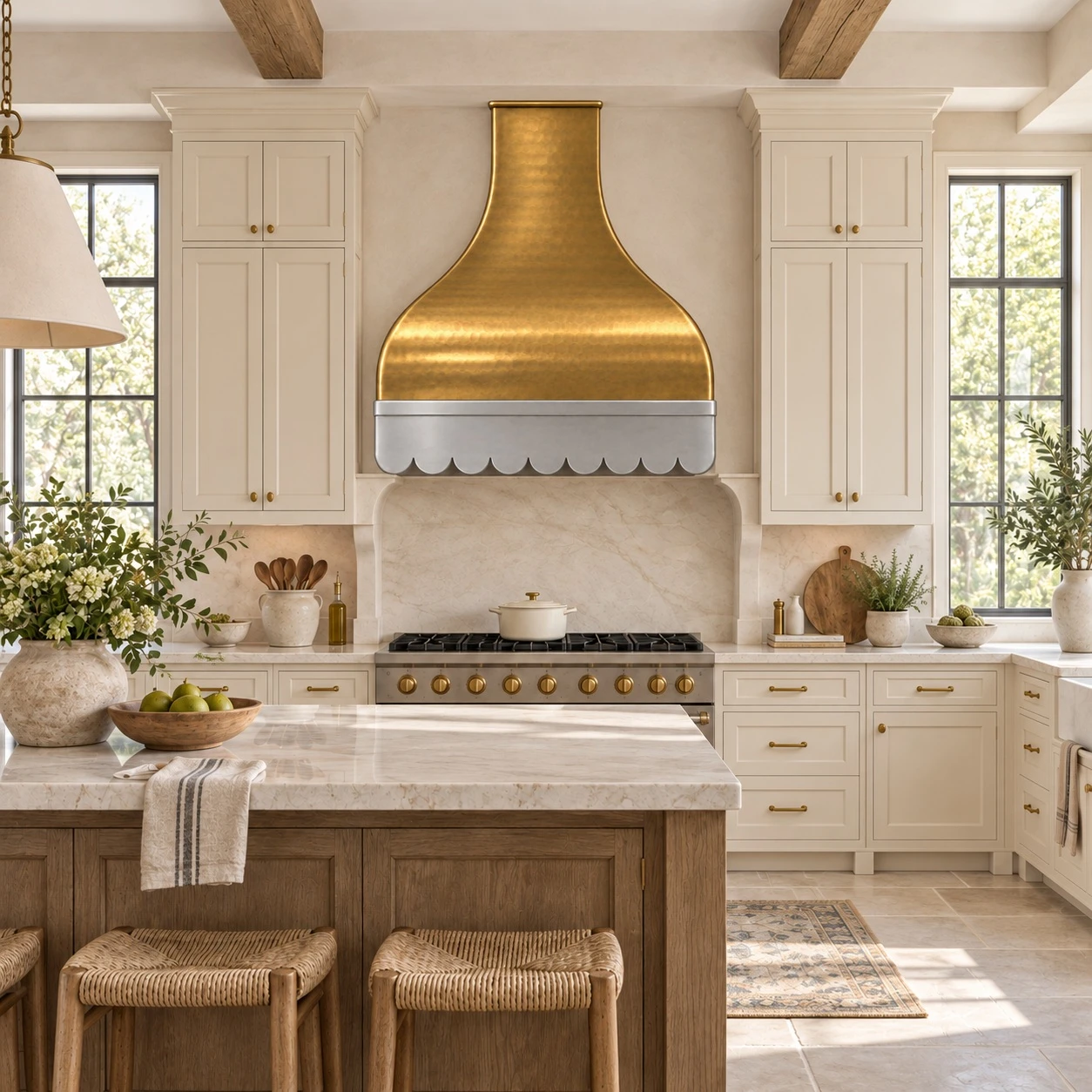
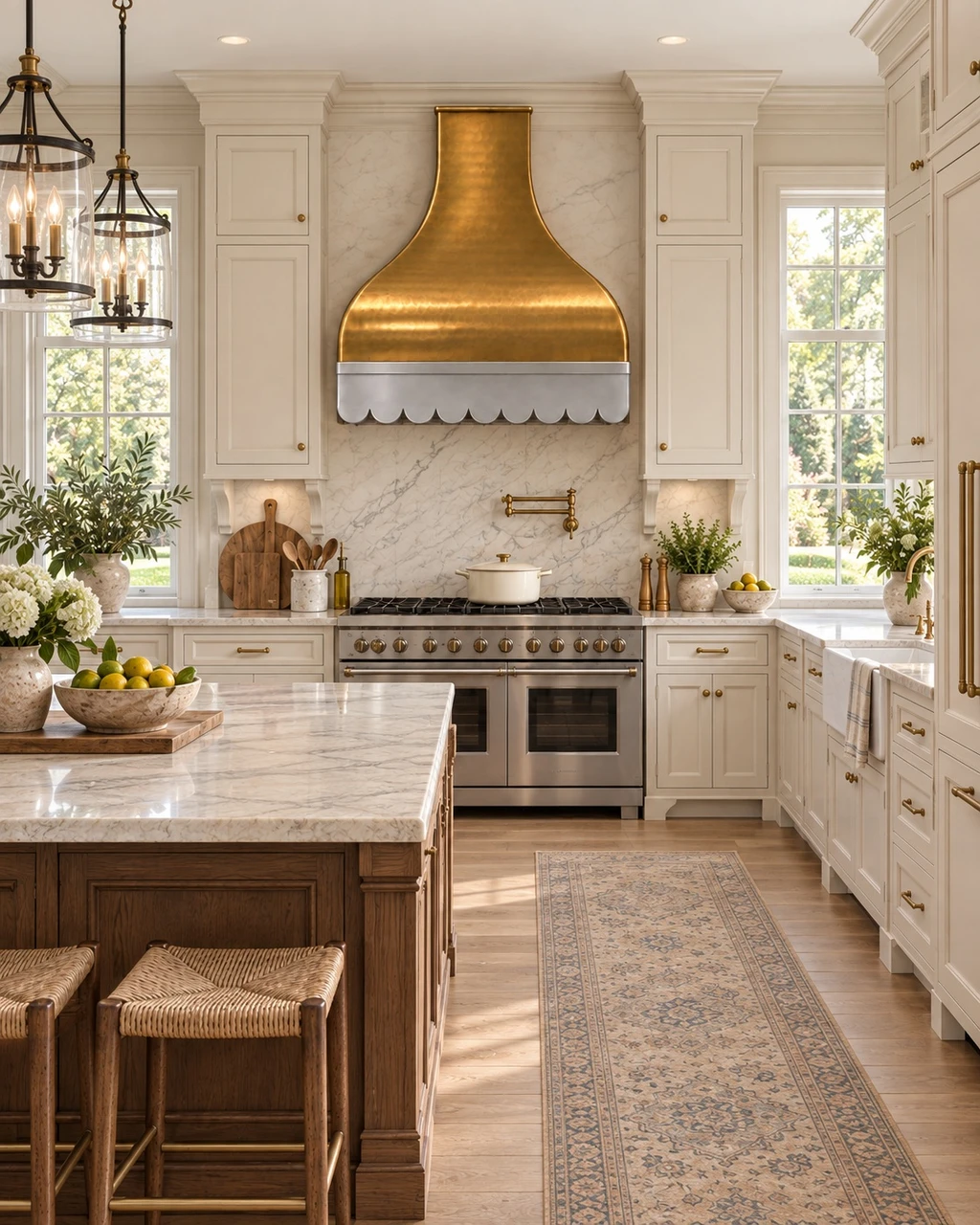
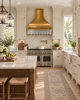
Brass range hood with zinc apron and iron frame combines a sculptural brass bell canopy, concealed structural iron support, and a contrasting natural-zinc apron for a custom kitchen focal point with European character. The narrow upper chimney descends into deeply concave sides that sweep outward toward the cooking surface, creating a strong architectural transition from vertical chimney to broad lower canopy. A smooth scalloped zinc apron anchors the base, softening the hood’s scale with decorative rhythm inspired by French canopies, ornamental awnings, and historic metal cornices. Warm hand-hammered brass contrasts with cool natural zinc, while the iron frame helps support the enclosure, stabilize joined metal sections, and prepare the hood for buyer-selected ventilation. For more details about its mixed-metal construction, zinc apron, and iron frame, see our brass range hood with zinc apron and iron frame guide. Customize this brass and zinc range hood for your kitchen today.
Product Summary
- Brass bell canopy with deep curves
- Natural zinc scalloped apron
- Concealed structural iron frame
- Raised zinc transition bend
- Restrained hand-hammered brass
- Smooth silvery-gray zinc finish
- Wall or island installation
- Ventless or ducted preparation
- Buyer-selected insert planning
- Custom dimensions available
- European metalwork influence
- Handcrafted in Mexico
Custom Sizing
Each brass range hood with zinc apron is made to order so the narrow chimney, curved bell canopy, scalloped apron, and insert opening remain proportional to the cooking area. Widths are available from 24 to 78 inches, with larger sizes available by request. Heights range from 24 to 72 inches with adjustable chimney planning, and standard depth is 24 inches. Custom sizing allows the hood to coordinate with professional ranges, cabinet openings, island cooktops, plaster surrounds, stone backsplashes, ceiling heights, and ventilation specifications without changing the essential brass, zinc, and iron composition.
Measurements Needed
Provide the cooking surface width, desired hood width, total height, ceiling height, mounting height, standard or custom depth, cabinet clearances, backsplash thickness, and planned duct location. Island projects also require the cooktop centerline and available ceiling framing. These measurements help preserve the relationship between the brass chimney, concave canopy, zinc transition bend, scalloped apron, and underside insert opening before fabrication begins.
Ventilation
The handcrafted brass and zinc enclosure is planned separately from the mechanical ventilation equipment. Rustica House can provide an optional 200 CFM insert for compatible applications. Buyer-supplied internal inserts up to 1,260 CFM and external blower systems up to 1,500 CFM can be accommodated when complete specifications are supplied before production. The underside can be prepared with a clean rectangular opening for approved equipment, keeping the visible exterior refined while supporting ducted or suitable ventless configurations.
Drawing Approval
Confirm the width, height, depth, bell curve, apron drop, scallop rhythm, insert opening, and duct centerline before fabrication. For buyer-supplied ventilation, provide the manufacturer, model, cutout dimensions, duct size, controls, lighting, filters, and service clearances. Early drawing approval helps coordinate the custom metal hood with cabinetry, structural framing, electrical service, ductwork, backsplash materials, ceiling conditions, and the selected ventilation insert.
Brass Architecture
This hood is defined by a pronounced bell-shaped profile rather than a simple tapered, box, or pyramidal form. The narrow chimney keeps the upper section restrained, while the concave brass sides expand outward with enough depth to create visual weight above a large range. From the side, the profile projects gradually before ending in a more vertical lower section. This controlled movement gives the hood architectural presence without making it feel bulky.
Canopy Shape
The brass canopy uses deeply concave sides that sweep outward toward the cooking surface. This geometry creates a dramatic transition from chimney to capture zone and gives the hood a more sculptural profile than flatter brass vent hoods. The broad lower canopy supports the scale needed for spacious kitchens, while the restrained upper chimney helps the design remain balanced, symmetrical, and suitable for custom American homes.
Iron Frame
The internal iron frame provides the structural skeleton behind the decorative brass and zinc surfaces. This hidden support helps maintain the curved bell silhouette, stabilize the wide zinc apron, support the projecting canopy, and hold the enclosure square during installation. Because brass and zinc are decorative sheet metals, the iron structure is especially important for a large custom range hood with deep curves and mixed-metal transitions.
Apron and Trim
The natural-zinc apron creates a cool silvery-gray base below the warmer brass canopy. Its repeating scalloped edge softens the hood’s substantial scale and introduces a decorative rhythm associated with French valances, traditional awnings, and ornamental metal trim. A raised horizontal zinc bend covers the connection between brass and zinc, making the lower section feel deliberately finished rather than simply attached.
Unique Design
Many brass range hoods online rely on polished surfaces, rivet rows, strap patterns, or conventional bell silhouettes. This design stands apart because it combines three distinct roles: brass provides warmth and visual luxury, iron supplies concealed structure, and zinc adds a cool scalloped apron with historic decorative influence. The hood is not only a brass statement piece; it is a mixed-metal architectural enclosure with a softer apron line and a stronger structural logic.
Brass Texture
The brass canopy has restrained hand hammering with shallow, overlapping impressions rather than deep rustic dimples. This texture scatters light across the curved surface, giving the hood depth without making the metal look busy. A softly burnished or aged natural brass finish works better than mirror polish because it complements the handmade surface, reduces glare, and reinforces the Old World character of the bell-shaped form.
Brass Finishes
Natural brass, aged brass, satin brass, and antique brass tones can change the mood of the hood significantly. A warmer brass finish emphasizes European hearth character, while a softer aged tone makes the zinc apron feel more integrated. Natural zinc will gradually develop a quiet matte patina, adding living-metal variation beneath the brass canopy. These changes should be expected as part of authentic brass and zinc metalwork rather than considered defects.
Mounting Options
The hood can be fabricated for wall-mounted or kitchen-island installation, depending on the kitchen layout and ventilation plan. Mounting type should be established before production because structural support, finished surfaces, duct routing, and viewing angles differ. Both versions retain the defining design elements: concave brass bell canopy, concealed iron frame, natural-zinc apron, raised transition bend, scalloped lower edge, and clean underside insert preparation.
Wall-Mount Version
The wall-mounted version places the rear surface against plaster, stone, slab, handmade tile, brick, or a custom backsplash. It works especially well between tall cabinets or inside a framed cooking alcove where the brass canopy and scalloped zinc apron can become the center of the composition. Confirm wall framing, backsplash thickness, cabinet clearances, mounting height, electrical service, insert dimensions, and duct position before fabrication.
Kitchen Island Version
The island version finishes exposed surfaces for viewing from several directions. The curved brass profile, zinc apron, scalloped edge, and side projection become more visible in open-plan kitchens. Island installation requires suitable overhead structure and advance coordination of cooktop centerline, ceiling framing, mounting height, electrical service, ventilation equipment, duct routing, and sight lines from surrounding dining or living areas.
Buyer Planning
Plan the hood dimensions, brass finish, zinc apron height, mounting configuration, ventilation equipment, and structural requirements together. Custom sizing should preserve the relationship between the narrow chimney, concave brass body, raised zinc transition, scalloped apron, and underside insert opening. Early coordination reduces conflicts involving cabinetry, backsplash materials, ceiling trim, electrical connections, ductwork, lighting, filters, controls, and later access for service or cleaning.
| Planning | Confirm | Buyer Decision |
|---|---|---|
| Dimensions | Width, height, depth | Match cooking area |
| Brass Finish | Natural or aged tone | Coordinate cabinetry |
| Zinc Apron | Height and scallops | Approve before build |
| Mounting | Wall or island | Confirm structure |
| Ventilation | Insert or blower | Send specifications |
Specifications
- Material: Brass, zinc, and iron
- Canopy: Hand-hammered brass
- Apron: Natural zinc scalloped edge
- Frame: Concealed iron structure
- Shape: Concave bell profile
- Width: 24–78 inches
- Height: 24–72 inches
- Depth: 24 inches standard
- Mount: Wall or island
- Insert: Optional 200 CFM
- Internal: Up to 1,260 CFM
- External: Up to 1,500 CFM
- Venting: Top or rear route
- Build: Made to order
- Origin: Mexico
- SKU: NM19H4F69
PDF and CAD Downloads
Use the proportional drawing and CAD file to review overall dimensions, bell canopy projection, zinc apron depth, scalloped lower edge, insert opening, and surrounding clearances. These files can assist homeowners, designers, cabinetmakers, and contractors during planning. Confirm final dimensions and buyer-supplied ventilation specifications before fabrication begins.
Brass Craftsmanship
Each enclosure is handcrafted in Mexico by artisans experienced in forming architectural metalwork. The iron frame is prepared to support the bell shape, then the brass canopy and zinc apron are fitted around the structure. Hammering, trimming, scallop shaping, transition alignment, insert preparation, and finish work are completed by hand. Natural variations in tone, hammering, zinc patina, seams, edge work, and apron rhythm are expected characteristics of individually made metal hoods.
Artisan Testimony
The challenge is balancing three materials without letting one overpower the others. The brass gives warmth, the zinc apron gives rhythm, and the iron frame keeps the deep curve stable as the hood is built to size.
Kitchen Styles
This brass range hood with zinc apron works best in kitchens that combine history, warmth, and architectural detail. Its bell form recalls European hearth canopies, while the scalloped zinc apron adds French decorative character. The design can also support American custom kitchens because the zinc softens the brass and makes stainless appliances easier to incorporate. Stone, plaster, oak, marble, limestone, handmade tile, and unlacquered hardware provide the strongest surrounding materials.
Best Kitchen Styles
See how the brass body, zinc apron, and iron frame work with surrounding kitchen materials in our brass range hood zinc apron iron frame kitchen images.
- French Country: Painted cabinetry, limestone flooring, plaster walls, oak beams, and unlacquered brass hardware reinforce the bell silhouette and scalloped zinc apron.
- English Country: Freestanding cabinetry, warm oak, aged stone, bridge faucets, and traditional range cookers support the hood’s collected, established character.
- Old World Mediterranean: Arched openings, textured plaster, limestone counters, walnut cabinetry, handmade tile, and iron lighting match the hood’s architectural scale.
- Traditional American: Cream cabinetry, marble or quartzite counters, crown molding, paneled appliances, and mixed metals let the hood anchor a spacious kitchen.
Other Kitchen Styles
- Spanish Colonial
- Tuscan
- Transitional
Brass Zinc Hood FAQ
A: Its identity comes from the warm brass bell canopy, concealed iron frame, cool natural-zinc apron, raised transition bend, and scalloped lower edge. The combination creates a mixed-metal focal point that feels architectural, European inspired, and different from standard brass-only hoods.
A: The iron frame helps support the curved bell canopy, stabilize the wide zinc apron, hold the enclosure square, and reduce movement where different metals join. It provides structure while the brass and zinc remain the visible decorative surfaces.
A: Yes. Island versions are available when planned before production. Island installation requires finished exposed surfaces, suitable overhead support, cooktop centerline confirmation, electrical coordination, insert planning, and duct routing.
A: Natural zinc can develop a soft matte patina and subtle tonal variation. These changes are normal for living metal and should be considered part of the apron’s character rather than a defect.
A: Yes. Buyer-supplied internal inserts up to 1,260 CFM and external blower systems up to 1,500 CFM can be accommodated when complete technical specifications are supplied before fabrication.
A: Softly burnished, aged natural, satin, or antique brass finishes work best because they complement restrained hammering and the cooler natural zinc apron without creating excessive glare.
Customize Your Hood
Choose the width, height, brass finish, zinc apron proportion, scalloped edge rhythm, wall or island configuration, and ventilation preparation required for your project. The concave brass bell canopy, structural iron frame, natural-zinc apron, raised transition bend, and underside insert opening remain the defining elements. Configure the enclosure around your range, cabinetry, backsplash, ceiling conditions, and selected ventilation system. Order this custom brass range hood with zinc apron to create a European-inspired focal point tailored to your kitchen.
Related Resources
- Brass Range Hoods Buying Guide
- Customize Brass Range Hood Fit
- Kitchen Brass Range Hood
- Metal Range Hood Brass Trim
- Mixed Metal Range Hoods Guide
- Zinc Range Hoods Guide
Care & Maintenance
Clean brass and zinc with warm water, mild soap, and a soft nonabrasive cloth, then dry promptly. Pay extra attention around the transition bend, scalloped apron, seams, and underside edges where residue can collect. Avoid acidic cleaners, bleach, steel wool, abrasive pads, and aggressive polishing compounds.
Installation
Wall installations require secure framing, while island configurations need suitable overhead support. Confirm dimensions, mounting height, insert opening, electrical service, duct size, and duct route before fabrication. Review requirements with your contractor so the brass canopy, zinc apron, and iron frame are supported correctly.
Shipping & Returns
Each made-to-order brass range hood is securely crated for protected transportation. Review current production, delivery, freight inspection, custom-order conditions, and applicable return procedures on the Shipping & Returns page before ordering.
Warranty
The handcrafted brass, zinc, and iron enclosure is covered according to applicable Rustica House warranty terms. Buyer-supplied ventilation equipment remains subject to its manufacturer’s coverage. Review the complete Rustica House Warranty for current coverage details, exclusions, and limitations.
Disclaimer: Handmade dimensions, seams, hammer impressions, apron scallops, zinc tone, brass finish, edge work, and metal transitions may vary slightly. These variations are expected characteristics of handcrafted brass and zinc metalwork and are not manufacturing defects. Lifestyle images provide design inspiration and may show optional configurations, finishes, or accessories not included with the product. All product images © Rustica House, unauthorized use is prohibited.