 US Dollar
 Euro
Euro
 Australian Dollar
 Canadian Dollar
 Polish Zloty
 British Pound

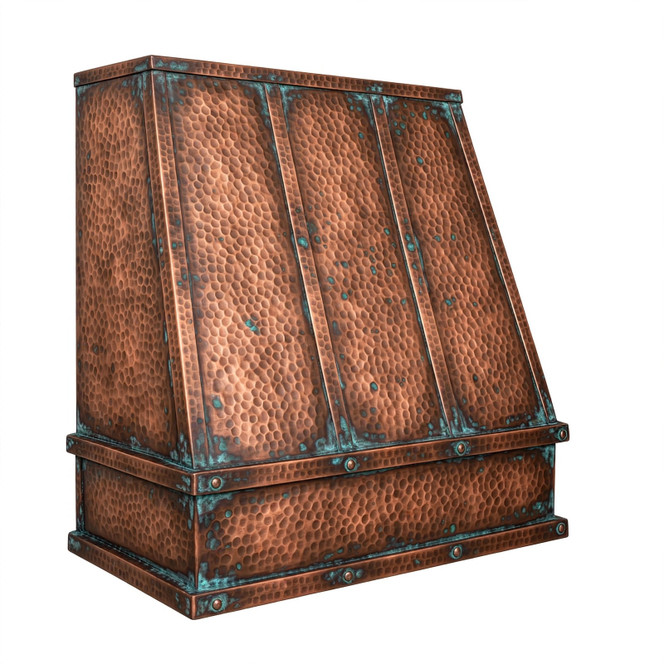
The Under-Cabinet Copper Range Hood with Verde Straps is shown in these lifestyle images as a compact handcrafted copper focal point for rustic, industrial loft, suburban, rustic suburban, and modern farmhouse kitchens. Its under-cabinet format, angled front profile, hand-hammered copper surface, verde strap accents, broad apron, and warm fired patina create a strong custom look without requiring a tall chimney. The design works especially well where upper cabinetry, storage, or a lower ceiling height makes a full wall-mount hood less practical. Explore the under-cabinet copper range hood with verde straps to compare its finish, strap detail, proportions, and kitchen style applications. For more product-specific planning details, read the under-cabinet copper range hood with verde straps guide.
Blog Summary
- Focus: lifestyle image guide
- Product: under-cabinet copper hood
- Feature: verde strap accents
- Shape: angled front profile
- Styles: five kitchen ideas
- Finish: fired copper patina
Under-Cabinet Hood Images
Lifestyle images help show how an under-cabinet copper range hood looks inside a complete kitchen rather than as a standalone product. Cabinet color, upper storage, backsplash material, counter tone, flooring, wall texture, lighting, and nearby hardware all affect how the copper and verde accents appear. In one room, the hood may feel rustic and aged. In another, the same compact copper body may look more industrial, suburban, or modern farmhouse.
This hood stands out because it brings artisan copper character into a cabinet-ready format. Instead of using a tall chimney, the design concentrates its visual weight in the lower copper body. The verde straps divide the front into strong vertical sections, while the broad apron gives the hood a substantial handcrafted appearance below the upper cabinets.
Design Highlights
- under-cabinet copper hood format
- angled front body profile
- verde strap accents
- broad lower apron detail
- hand-hammered copper surface
- warm fired patina finish
- compact custom range wall focal point
The under-cabinet format is one of the most important features of this hood. It keeps the copper body visually strong while fitting below upper cabinetry. This makes the design useful for remodels, smaller kitchens, cabinet-centered layouts, and rooms where a tall chimney hood would interrupt storage or feel too large.
Rustic Kitchen Image
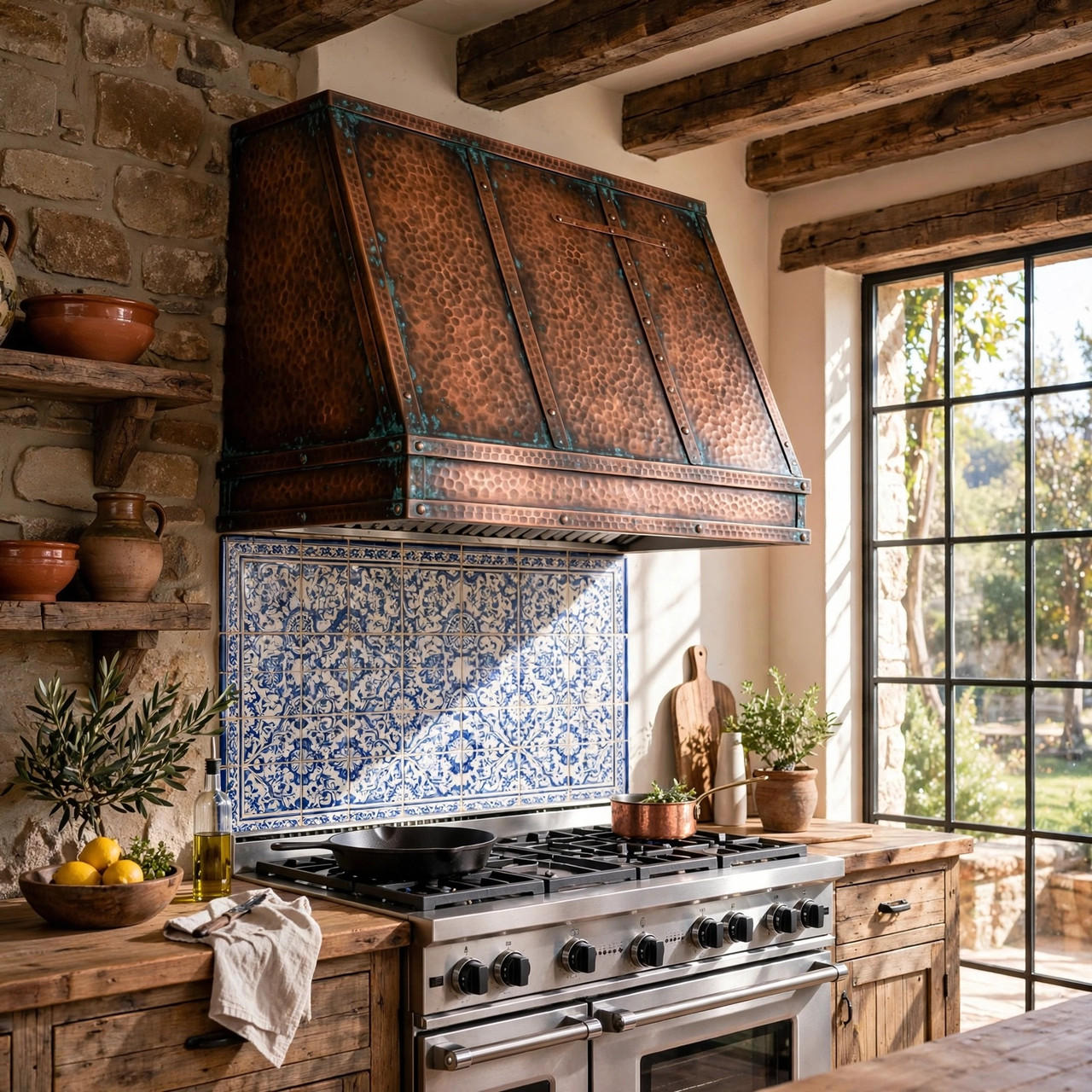
In a rustic kitchen, the under-cabinet copper hood with verde straps feels naturally connected to wood cabinetry, stone counters, textured walls, handmade tile, iron lighting, and aged finishes. The fired copper patina brings warmth, while the verde accents add an oxidized character that looks old-world and handcrafted.
The compact under-cabinet body keeps the cooking wall practical without losing visual impact. The broad apron gives the lower section weight, while the vertical straps make the hood feel structured and handmade. This is useful in rustic kitchens where storage, cabinetry, and warm materials all need to work together around the range.
For broader under-cabinet planning, review the under-cabinet hammered copper range hood guide. It can help compare compact hood layouts, cabinet-centered proportions, copper finishes, and kitchen styles before choosing a final design.
Industrial Loft Kitchen Image
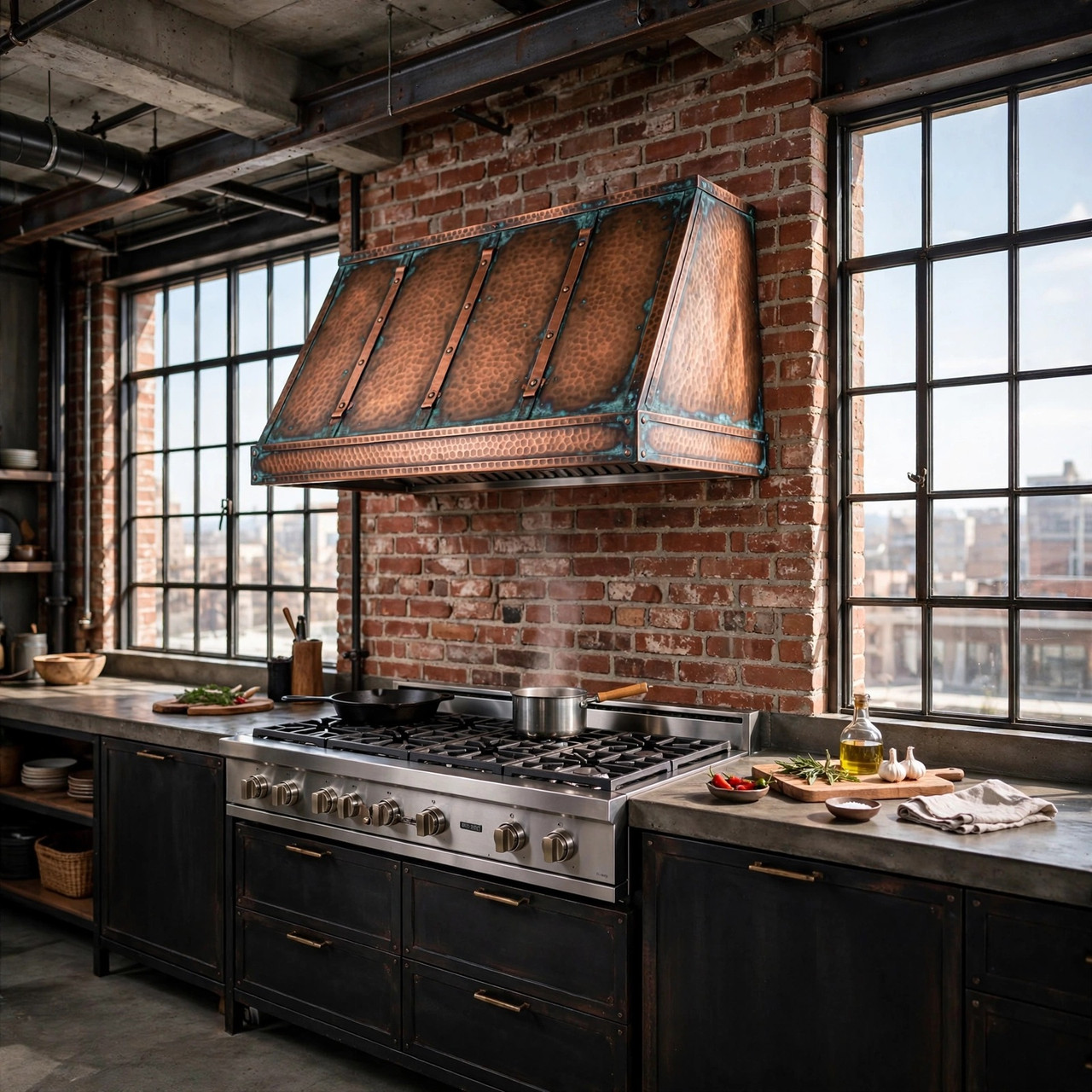
In an industrial loft kitchen, the copper hood adds handcrafted warmth to a room that may include exposed brick, concrete, dark metal, open shelving, simple cabinetry, and utilitarian lighting. The verde straps give the hood a more aged metalwork character, helping it connect with industrial surfaces without becoming too cold.
The angled front profile also works well in loft-style interiors because it feels compact, practical, and architectural. The hood does not need a tall chimney to stand out. Instead, the sloped face, hammered copper, verde strap layout, and broad apron create enough structure below the cabinetry.
For shape comparison, read the sloping front copper range hood guide. It is useful when comparing angled front hoods for under-cabinet, wall-mount, or island-style kitchen planning.
Suburban House Kitchen Image
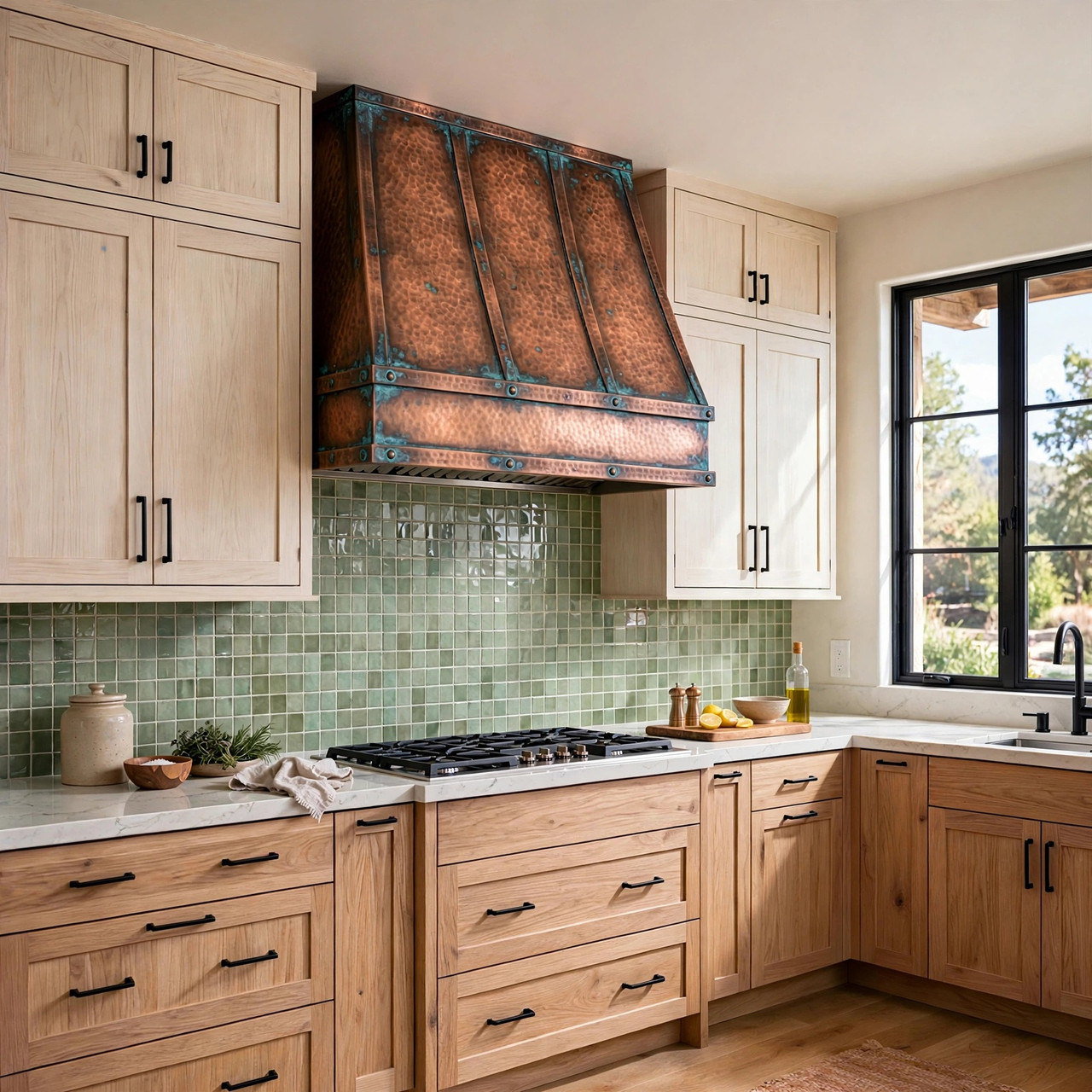
In a suburban house kitchen, the under-cabinet copper hood creates a warm custom feature while preserving the familiar cabinet layout. Suburban kitchens often include practical upper storage, stone countertops, painted or stained cabinetry, tile backsplashes, and standard cooking-wall proportions. This hood works in that setting because it adds handcrafted character without requiring a large chimney or major architectural change.
The verde straps and hammered copper surface give the hood enough personality to stand out, while the under-cabinet format keeps it easy to integrate visually. The broad apron helps the hood feel substantial above the range, and the angled front reduces the sense of bulk below the cabinets.
For scale and proportion planning, review the most popular copper range hood sizes guide. Width, height, apron depth, cabinet spacing, and range size all affect how balanced the finished installation feels.
Rustic Suburban Kitchen Image
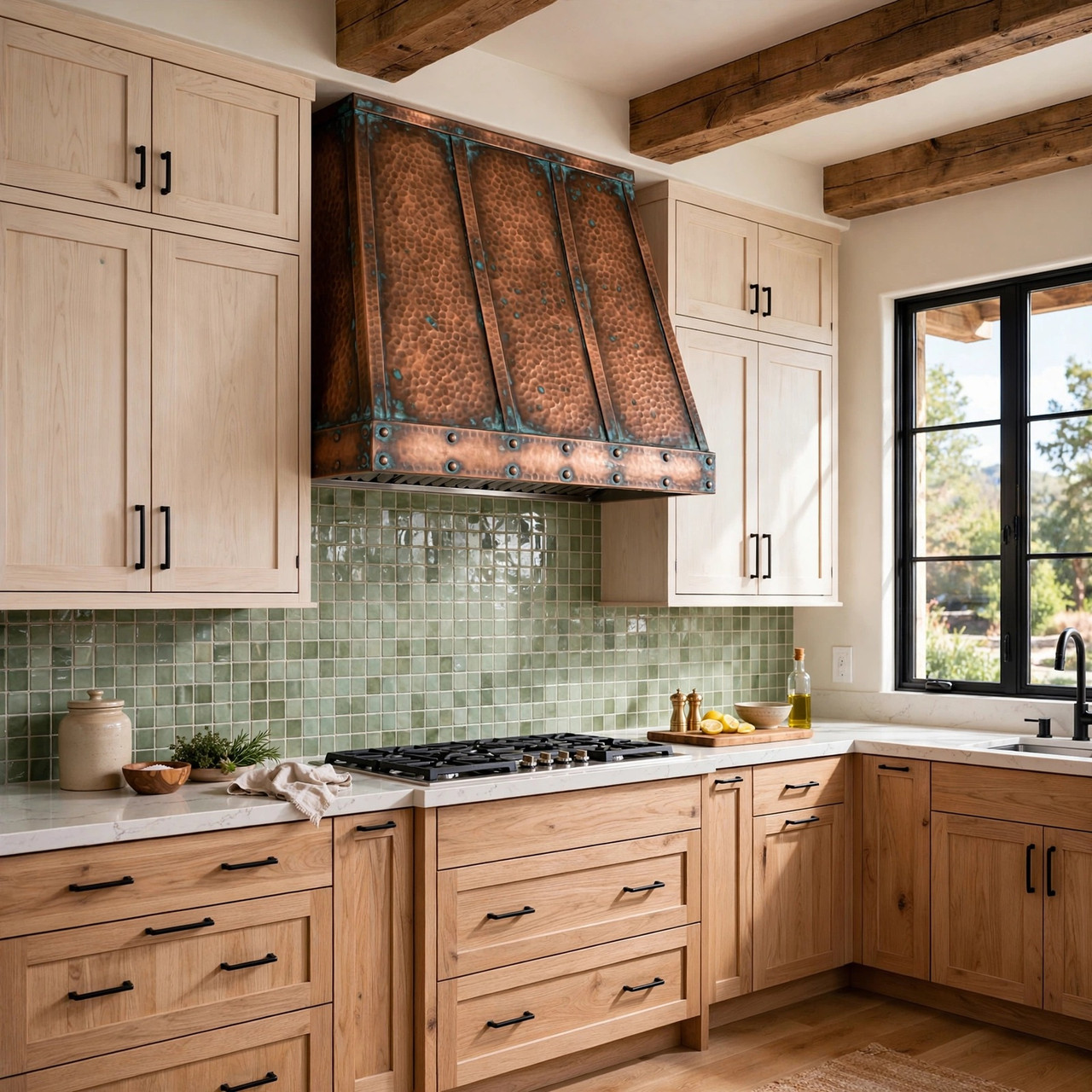
In a rustic suburban kitchen, the copper hood bridges everyday function with handcrafted material character. The room may still use a standard cabinet run, but the hood adds warmth, texture, and a more custom range-wall identity. The verde straps make the design feel aged and artisan-made, while the copper body keeps the overall look warm.
This style works especially well when homeowners want rustic character without removing upper cabinets or building a large plaster, wood, or masonry surround. The under-cabinet format keeps the kitchen practical, while the fired patina and strap details make the hood feel special above the cooking area.
For finish inspiration with oxidized accents, review the green patina copper range hood guide. Verde highlights can change how the hood coordinates with wood, stone, tile, dark hardware, and warm neutral cabinetry.
Modern Farmhouse Kitchen Image
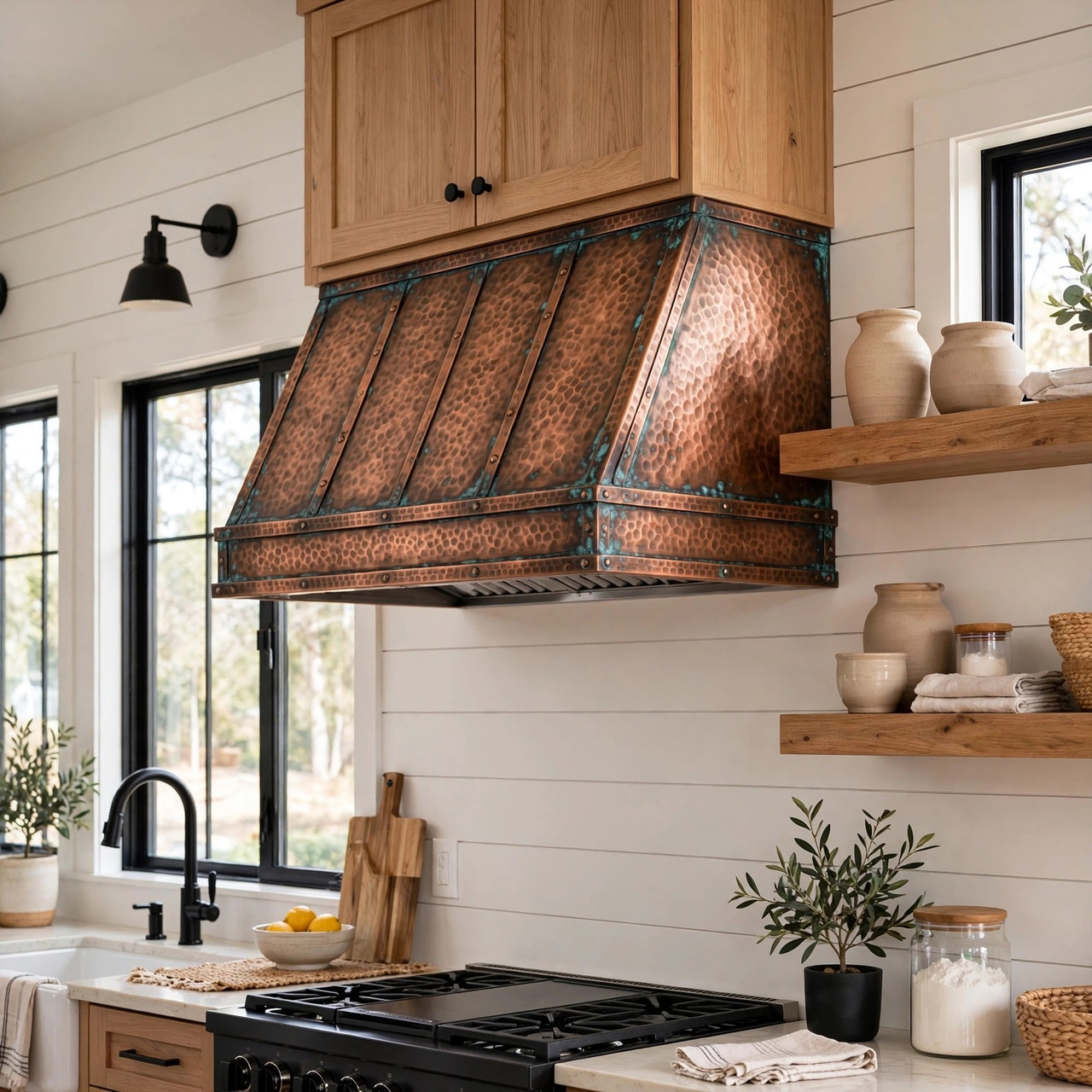
In a modern farmhouse kitchen, the under-cabinet copper hood adds warmth and handmade character while keeping the room clean and practical. Modern farmhouse interiors often combine painted cabinetry, wood accents, simple lighting, stone counters, neutral backsplashes, and black or bronze hardware. Copper works well in this setting because it adds depth without making the kitchen feel too formal.
The verde straps give the hood a more aged and distinctive personality than a plain copper under-cabinet model. The angled front profile keeps the design compact, while the broad apron gives the lower edge enough weight to stand out. This makes the hood useful for modern farmhouse kitchens that need one crafted focal point above the range.
For general finish planning, review the copper patina finish options guide. Patina selection can change how the hood coordinates with white cabinetry, natural wood, stone, bronze hardware, black fixtures, and warm lighting.
Under-Cabinet Format
The under-cabinet format makes this hood practical for kitchens where storage and proportion matter. Instead of rising into a tall chimney, the hood sits below upper cabinetry and concentrates the design in the visible copper body. This can be helpful in remodels, smaller rooms, suburban kitchens, and layouts where the cabinets already define the range wall.
The compact format does not mean the hood needs to look plain. The hammered copper surface, verde straps, fired patina, and broad apron give the design a strong artisan identity. This makes the hood more decorative than a standard stainless under-cabinet appliance while still respecting the cabinet-centered layout.
Verde Strap Details
The verde straps are the main decorative feature of this hood. They divide the copper face into vertical sections and add aged greenish highlights that contrast with the warmer fired patina. The result feels old-world, rustic, and handcrafted without needing scrollwork or floral relief.
Verde accents work especially well with stone, plaster, wood, handmade tile, black hardware, bronze fixtures, and rustic lighting. They can make the hood feel more historic or weathered, especially when paired with natural materials and warm neutral finishes.
Angled Front Profile
The angled front profile gives this under-cabinet hood a more architectural side view. The upper and lower widths may look rectangular from the front, but the side profile shows the sloping movement. This helps the hood feel more dimensional than a flat box while staying compact enough for cabinetry.
For broader silhouette comparison, review the copper range hood shapes guide. Comparing sloping, bell, box, curved apron, arched, and tapered profiles can help determine which shape best fits the kitchen architecture.
Hammered Copper Finish
The hammered copper finish gives the hood depth, warmth, and natural variation. Each hammer mark catches light differently, creating small highlights and shadows across the angled face and apron. This helps the hood feel visibly handcrafted rather than flat or machine-made.
The fired patina adds darker copper warmth, while the verde highlights create aged contrast on the straps. Small differences in hammering, patina tone, strap placement, seams, and artisan finishing should be expected in handmade copper work. These variations help make each hood unique once installed.
Size and Proportion
Proper proportion is especially important for an under-cabinet hood. The hood should fit below the upper cabinets, align well with the range or cooktop, and leave enough visual space around the backsplash. If the hood is too short, it may feel weak. If it is too deep or too wide, it may overpower the cabinet run.
The best size depends on range width, cabinet spacing, backsplash height, cabinet depth, ceiling height, mounting type, apron depth, and desired visual weight. The product page and guide should be reviewed together so the final dimensions, patina, strap layout, and insert preparation match the actual kitchen layout.
Ventilation Planning
A copper range hood should be planned around both appearance and performance. The visible copper shell creates the focal point, while the insert, blower, filters, ducting, and lighting determine how the hood functions. Range width, cooking habits, cabinet clearance, duct route, and installation type should all be reviewed before ordering.
For insert selection, review the range hood insert guide for custom metal hoods. Rustica House can supply the 200 CFM insert only. Any other insert must be supplied by the buyer, and Rustica House will make the hood ready for that buyer-supplied insert when the insert details are provided.
Frequently Asked Questions
What makes this copper hood different?
This hood combines a compact under-cabinet format with an angled front profile, hand-hammered copper surface, fired patina, broad apron, and verde strap accents. The verde straps give the hood aged contrast and handcrafted character.
Which kitchen styles fit this hood?
This hood works well in rustic, industrial loft, suburban, rustic suburban, modern farmhouse, Hacienda, and transitional kitchens. It pairs well with stone, plaster, wood, handmade tile, painted cabinets, black hardware, bronze accents, and warm neutral palettes.
Is every hood exactly identical?
No. Each hood is handmade, so hammering, patina tone, verde highlights, strap placement, seams, apron details, and small artisan marks may vary. These variations are part of the hood’s handcrafted character and make each piece unique.
Conclusion
The under-cabinet copper range hood with verde straps brings a compact cabinet-ready format, angled front profile, fired copper patina, hand-hammered texture, broad apron, and aged verde strap accents into the kitchen. These lifestyle images show how the hood adapts to rustic, industrial loft, suburban, rustic suburban, and modern farmhouse interiors while keeping its handcrafted copper identity. With the right surrounding materials and proportions, it can become a warm custom focal point below the upper cabinets.