 US Dollar
 Euro
Euro
 Australian Dollar
 Canadian Dollar
 Polish Zloty
 British Pound

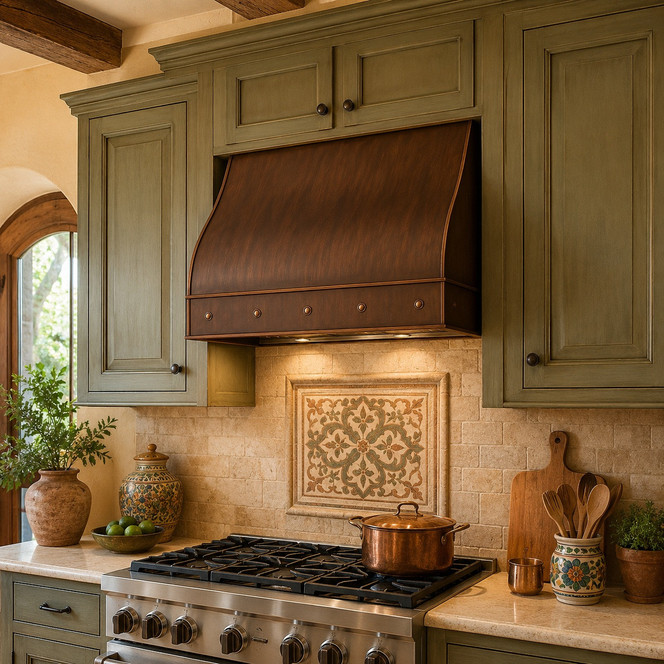
Under-Cabinet Hammered Copper Range Hood with Curved Front is designed for kitchens that need compact ventilation, artisan metal texture, and a softer front profile beneath upper cabinetry. Its hand-hammered copper surface, warm patina, curved front panel, and cabinet-friendly proportions make it suitable for Spanish, Mediterranean, farmhouse, rustic, transitional, and custom kitchen interiors. Unlike tall chimney hoods, this style keeps the upper wall connected to cabinetry while still creating a handcrafted focal point above the cooking surface. Explore the curved under-cabinet copper hood to review its shape, finish, custom sizing, and insert-ready ventilation design.
Blog Summary
- Design: Curved under-cabinet hood
- Material: Hammered copper shell
- Style: Spanish kitchen focus
- Use: Fits below cabinetry
- Options: Custom sizes and patinas
Design Guide Overview
An under-cabinet hammered copper range hood with curved front is a practical option for kitchens where the ventilation area sits directly below cabinets or a custom upper surround. The design avoids a tall chimney and instead focuses visual attention on the lower copper body. This makes it useful in remodels, smaller kitchens, and cabinet-centered layouts where storage and proportion matter. The curved front panel softens the hood’s appearance, while the hammered copper texture provides depth and handmade character. The result is a compact but expressive hood that can improve both kitchen function and visual warmth.
Curved Front Design
The curved front is the main feature that separates this hood from flatter under-cabinet models. Instead of a straight vertical face, the front panel has a softer rounded projection that adds depth above the range. This curve helps the hood feel more sculptural while still remaining compact enough to fit beneath cabinetry. In Spanish and Mediterranean kitchens, the curved shape works well with arches, plaster walls, handmade tile, and warm materials. In transitional kitchens, the curve softens straight cabinet lines. The design gives the cooking area a custom appearance without requiring a tall decorative chimney.
Curved Design Benefits
- Shape: Softens cabinet lines
- Depth: Adds visual dimension
- Scale: Stays cabinet friendly
- Style: Fits Spanish kitchens
- Focus: Frames the range wall
Hammered Copper Surface
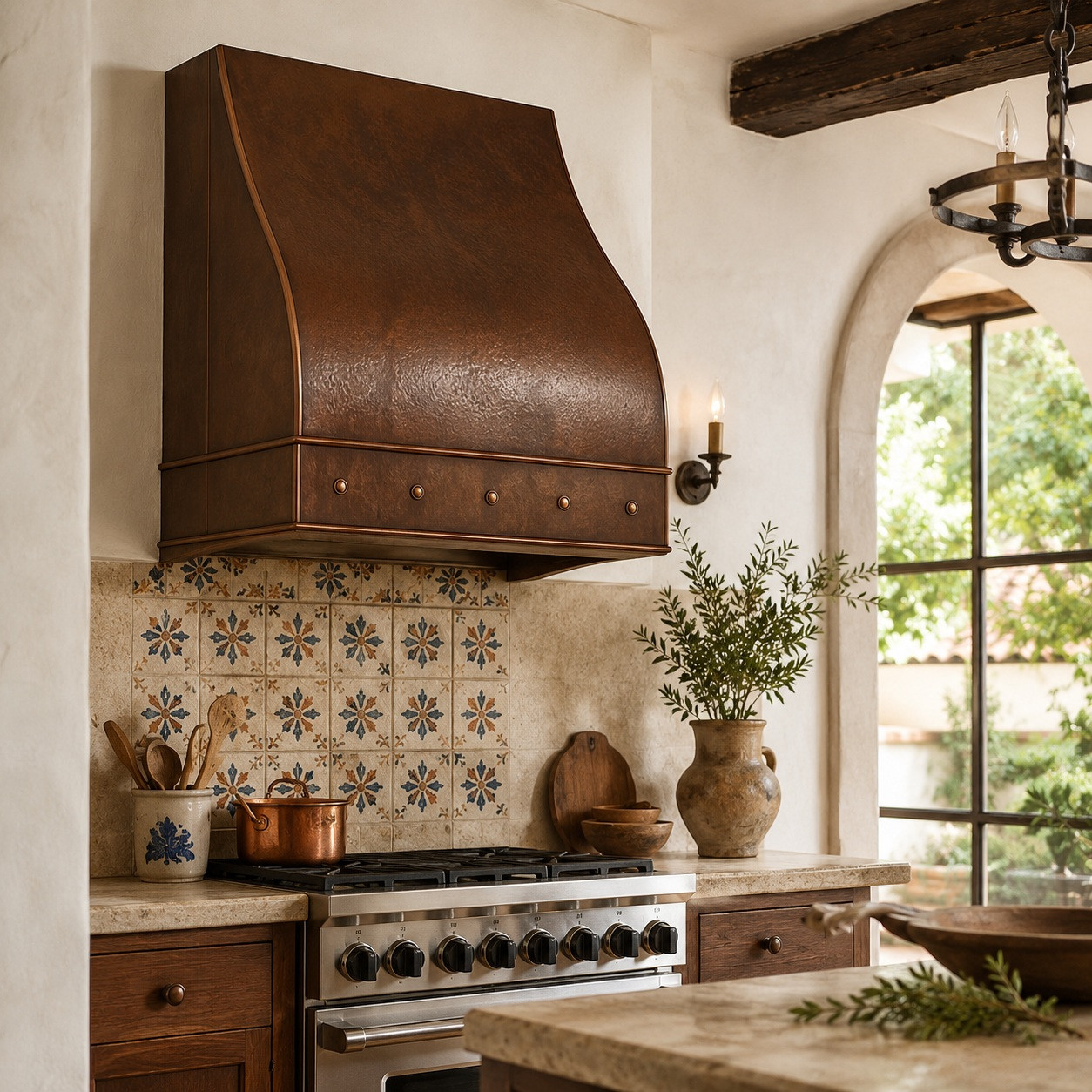
The hammered copper surface gives the hood its artisan character. Small hammer marks create light variation across the metal, making the surface appear warmer and more dimensional than smooth sheet metal. This texture works well under cabinetry because it helps the compact form remain visually interesting. In the lifestyle image, the copper finish creates contrast against the surrounding kitchen surfaces while still feeling natural and handcrafted. Hammered copper pairs well with stone, tile, wood, plaster, iron, and rustic hardware. It also supports both traditional and updated interiors because the texture adds warmth without needing heavy ornament.
Rustic Patina Finish
Patina is one of the most important choices for a copper hood. A rustic copper finish gives the metal deeper brown, red, and antique tones that coordinate naturally with Spanish Colonial, hacienda, farmhouse, and Mediterranean kitchens. Darker patinas create stronger contrast against light cabinets or pale plaster, while warmer finishes can brighten wood-heavy interiors. Because copper naturally changes over time, the hood may develop additional depth with use. This natural aging is part of the material’s appeal. Gentle cleaning helps preserve the finish while allowing the surface to maintain its handcrafted character.
Patina Effects
- Warmth: Adds aged color
- Depth: Highlights hammering
- Contrast: Works with light walls
- Style: Supports Old World rooms
- Care: Needs gentle cleaning
Spanish Kitchen Setting
The product lifestyle image presents the hood in a Spanish-inspired kitchen, where copper, plaster, tile, wood, and warm color can work together. Spanish kitchen design often uses tactile materials and architectural detail rather than flat, uniform finishes. The curved copper hood supports that atmosphere because it looks handmade, warm, and substantial. Its under-cabinet format keeps the kitchen practical, while the copper surface creates a visible focal point. When used with handmade tile, iron lighting, carved wood, or warm stone, the hood becomes part of a larger design story rooted in Old World and Mexican-influenced kitchen traditions.
Under-Cabinet Function
Under-cabinet range hoods are useful when a kitchen needs ventilation but cannot accommodate a full chimney design. They fit below cabinets or built-in surrounds, helping preserve storage and upper-wall structure. This format is common in both new kitchens and remodels because it works with established cabinet layouts. The copper body becomes the visible feature, while the functional ventilation insert sits inside or behind the shell. For layout planning and installation ideas, review the metal range hoods category to compare compact and full-height hood styles.
Under-Cabinet Uses
- Storage: Keeps upper cabinets
- Layout: Fits compact kitchens
- Profile: Avoids tall chimney
- Function: Supports inserts
- Design: Adds copper warmth
Copper Hood Category
Copper range hoods are available in many shapes, including bell, barrel, pyramidal, box, curved front, and under-cabinet styles. The curved under-cabinet model is ideal when the kitchen needs a compact hood with artisan personality. Taller copper hoods may create stronger architectural drama, while under-cabinet hoods provide warmth within a lower profile. Hammered copper remains a popular choice because it gives the surface texture, patina variation, and visual depth. To compare related handmade copper designs, browse the copper range hoods collection.
Mixed Metal Coordination
Although copper can stand alone as the primary warm metal, it also coordinates well with other finishes when used carefully. Black iron hardware can strengthen Spanish or rustic character. Antique brass can soften the palette, while bronze details reinforce deeper patina tones. Stainless steel appliances can work if the room includes enough wood, tile, stone, or copper to balance the cooler finish. Mixed metal design should feel intentional rather than random. If a kitchen uses more than one metal, repeat each finish at least once in smaller details. For inspiration, compare mixed metal range hoods.
Metal Pairing Ideas
- Iron: Adds dark contrast
- Bronze: Supports deep patina
- Brass: Adds soft warmth
- Steel: Works with appliances
- Copper: Leads the palette
Cabinet and Wall Planning
Because this hood fits below cabinetry, measurements are essential. The cabinet opening, range width, hood width, hood depth, mounting height, duct location, and insert size should be reviewed before production. The hood should appear centered and proportional between cabinets. If the copper body is too small, the range wall may feel unfinished. If it is too wide, it may crowd adjacent cabinets. The curved front also needs enough clearance to project comfortably. A well-planned hood looks integrated with the cabinetry while still standing out as a handmade focal point.
Backsplash Coordination
The backsplash sits directly behind the hood and influences how the copper appears. A simple stone, plaster, brick, or quiet tile backsplash allows the hammered texture to stand out clearly. Spanish and Mediterranean kitchens may use patterned tile, but the color palette should relate to the copper patina, cabinet color, or flooring. If the backsplash is too busy, it may compete with the hammered surface and curved front. A balanced range wall usually has one dominant feature. In this case, the copper hood should remain the primary focus, while the backsplash supports the surrounding kitchen style.
Backsplash Options
- Stone: Grounds the hood
- Tile: Adds Spanish color
- Brick: Supports rustic style
- Plaster: Creates soft texture
- Neutral: Keeps focus clear
Ventilation Insert Planning
The copper shell provides the exterior design, but the insert provides ventilation performance. Before ordering, confirm the insert dimensions, airflow needs, filter access, light location, duct route, and cooking habits. Frequent frying, grilling, or high-heat cooking may require stronger ventilation than occasional light cooking. The hood should also provide enough capture area for the range below. Under-cabinet hoods must balance compact size with useful performance, so insert planning should happen early. A properly matched insert helps the hood support kitchen freshness, smoke removal, odor control, and everyday cooking comfort.
Custom Sizing Benefits
Custom sizing is especially important for under-cabinet hoods because cabinet openings vary from one kitchen to another. Width, depth, height, front curve, finish, and insert preparation can be adjusted to fit the room. This makes the hood useful for remodels where a standard appliance hood would look too plain or poorly proportioned. Custom construction also helps the copper body align with cabinet rails, backsplash height, and range size. When the proportions are correct, the hood feels built into the kitchen rather than added later. This improves both appearance and long-term usability.
Custom Planning Points
- Width: Match range scale
- Depth: Fit cabinet layout
- Height: Balance wall space
- Insert: Confirm dimensions
- Finish: Match kitchen tone
Farmhouse Kitchen Use
In farmhouse kitchens, a curved under-cabinet copper hood adds warmth above the range without overwhelming painted cabinetry. White, cream, sage, gray, or natural wood cabinets can all work with rustic copper patina. The hammered surface pairs well with apron-front sinks, open shelves, wood counters, stone backsplashes, and ceramic pottery. A farmhouse kitchen usually benefits from practical materials and relaxed styling, so the hood should feel handmade rather than overly formal. Repeating copper warmth through wood accents, cutting boards, or small decorative details helps connect the hood with the rest of the room.
Transitional Kitchen Use
In transitional kitchens, the hood can provide the artisan warmth that clean cabinetry sometimes lacks. The under-cabinet shape keeps the design efficient, while the curved copper front introduces softness and depth. Pair it with shaker cabinets, stone counters, muted backsplash tile, simple hardware, and warm lighting. The hood should become the handcrafted focal point, not one of many competing decorative features. This approach works well for homeowners who want a current kitchen that still feels personal and warm. Copper adds character without making the room feel overly rustic or historic.
Clearance and Budget Options
Custom copper hoods offer the most control over size, finish, and insert preparation, but some projects may also consider discounted or ready-made options. Clearance hoods can be helpful when timing, dimensions, and design requirements align. However, a lower price should not replace proper planning. The hood must still fit the range, cabinet opening, mounting height, duct path, and kitchen style. If dimensions are not compatible, installation can become more difficult or visually unbalanced. Review available range hood clearance options only after confirming measurements and ventilation needs.
Cleaning and Maintenance
Hammered copper should be cleaned with mild soap, warm water, and a soft cloth. Avoid abrasive pads, steel wool, bleach, ammonia, and harsh degreasers because they can scratch copper or disturb patina. Grease should be wiped before it becomes sticky, especially along the lower edge and curved front where cooking residue may collect. After cleaning, dry the hood with a soft towel to prevent water spots. If the hood has a rustic patina, avoid frequent acidic cleaners or aggressive polishing. Gentle maintenance allows the copper to age naturally while preserving its handcrafted surface character.
Care Guidelines
- Soap: Use mild cleaner
- Cloth: Choose soft fabric
- Dry: Prevent water spots
- Avoid: No rough pads
- Patina: Protect the finish
Design Summary
An under-cabinet hammered copper range hood with curved front is a compact but expressive ventilation cover for kitchens that need warmth and handcrafted texture. Its curved front softens the range wall, while the hammered copper surface adds depth and artisan character. The under-cabinet format preserves upper cabinetry and works well in remodels, compact kitchens, Spanish interiors, farmhouse rooms, and transitional layouts. Proper sizing, insert planning, backsplash coordination, and gentle maintenance are essential. When planned carefully, this hood can improve both kitchen function and design without requiring a tall chimney-style structure.
Final Design Guidance
Under-Cabinet Hammered Copper Range Hood with Curved Front works best when cabinet layout, range width, insert size, patina, and backsplash style are planned together. The copper body should feel centered and proportional beneath the upper cabinetry, while the curved front should remain visible as the main design feature. Use warm lighting, balanced hardware, and supportive backsplash materials to highlight the hammered texture. Whether used in Spanish, Mediterranean, farmhouse, rustic, or transitional kitchens, this hood adds kitchen freshness, smoke and odor removal, and handmade Rustica House character above the cooking surface.