 US Dollar
 Euro
Euro
 Australian Dollar
 Canadian Dollar
 Polish Zloty
 British Pound

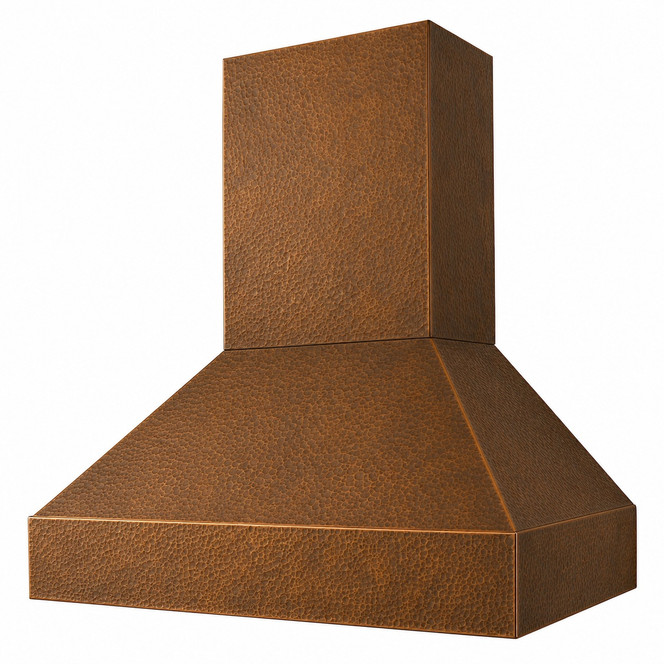
The Tapered Copper Range Hood with Rectangular Chimney is shown in these kitchen images as a clean handcrafted focal point for transitional, modern farmhouse, rustic contemporary, and organic modern kitchens. Its tapered copper canopy, tall rectangular chimney, smooth architectural planes, warm patina, and restrained detailing create a range-wall feature with structure, warmth, and visual clarity. The hood narrows upward from a broad lower body into a straight chimney, giving the design a disciplined silhouette that works well in refined and natural interiors. Explore the tapered copper range hood with rectangular chimney to compare its tapered shape, chimney profile, finish options, proportions, and kitchen style applications. For product-specific design context, read the tapered copper range hood rectangular chimney guide.
Blog Summary
- Focus: tapered copper hood images
- Product: copper range hood
- Shape: tapered canopy body
- Chimney: rectangular upper form
- Scenes: four kitchen styles
- Look: clean and warm
Tapered Copper Hood Images
Kitchen images help show how this tapered copper range hood with rectangular chimney looks inside finished interiors rather than as a standalone product photo. Cabinet color, wall finish, backsplash texture, counter material, lighting, ceiling height, flooring, and hardware all affect how the copper surface appears. In one kitchen, the hood can feel transitional and tailored. In another, the same tapered form can support modern farmhouse, rustic contemporary, or organic modern interiors.
This hood stands out because it combines warm copper with disciplined geometry. The tapered lower body provides range-wall presence, while the rectangular chimney keeps the upper section clean and architectural. The design does not rely on riveted straps, ornate crown molding, scrollwork, or heavy decorative bands. Its strength comes from proportion, material warmth, and the clear transition from canopy to chimney. For broader shape planning, review the copper range hood shapes guide.
Design Highlights
- tapered copper canopy body
- tall rectangular chimney
- clean architectural silhouette
- warm copper patina options
- smooth range-wall presence
- restrained handmade character
- transitional to organic fit
Transitional Kitchen Image
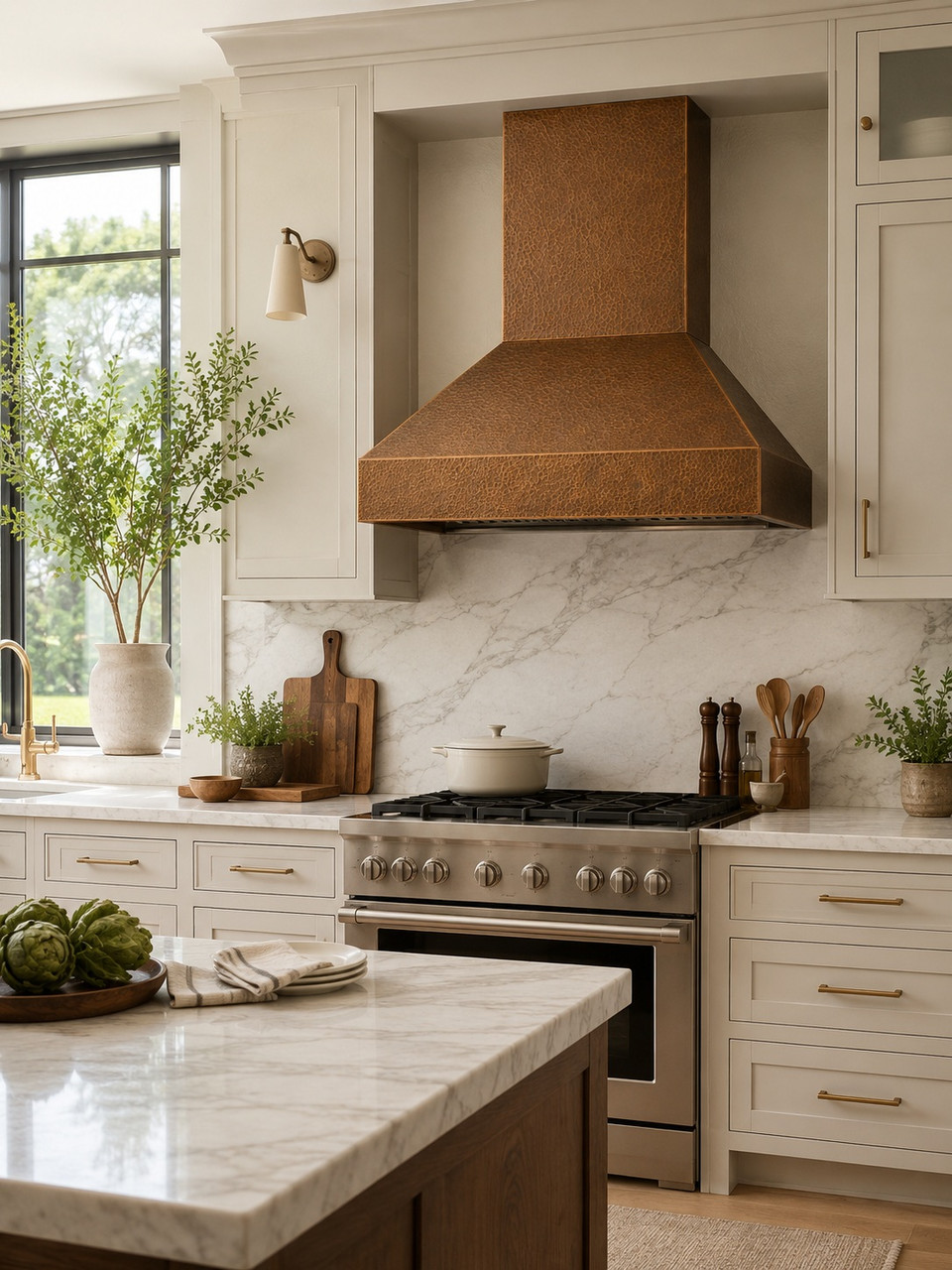
In a transitional kitchen, the tapered copper hood brings warmth to clean cabinetry, stone counters, restrained hardware, and balanced architectural details. Transitional interiors often combine classic materials with updated simplicity, so this hood works well because its form remains controlled. The copper adds character, while the tapered canopy and rectangular chimney keep the range wall organized.
The straight chimney is especially useful in this setting because it introduces a clear vertical line above the range. It can coordinate with shaker cabinetry, slab counters, simple tile, paneled walls, and quiet hardware. The broad lower canopy gives the cooking area presence, while the clean upper section prevents the hood from feeling too rustic or ornate. For finish comparison, review the copper patina finish options guide.
Modern Farmhouse Kitchen Image
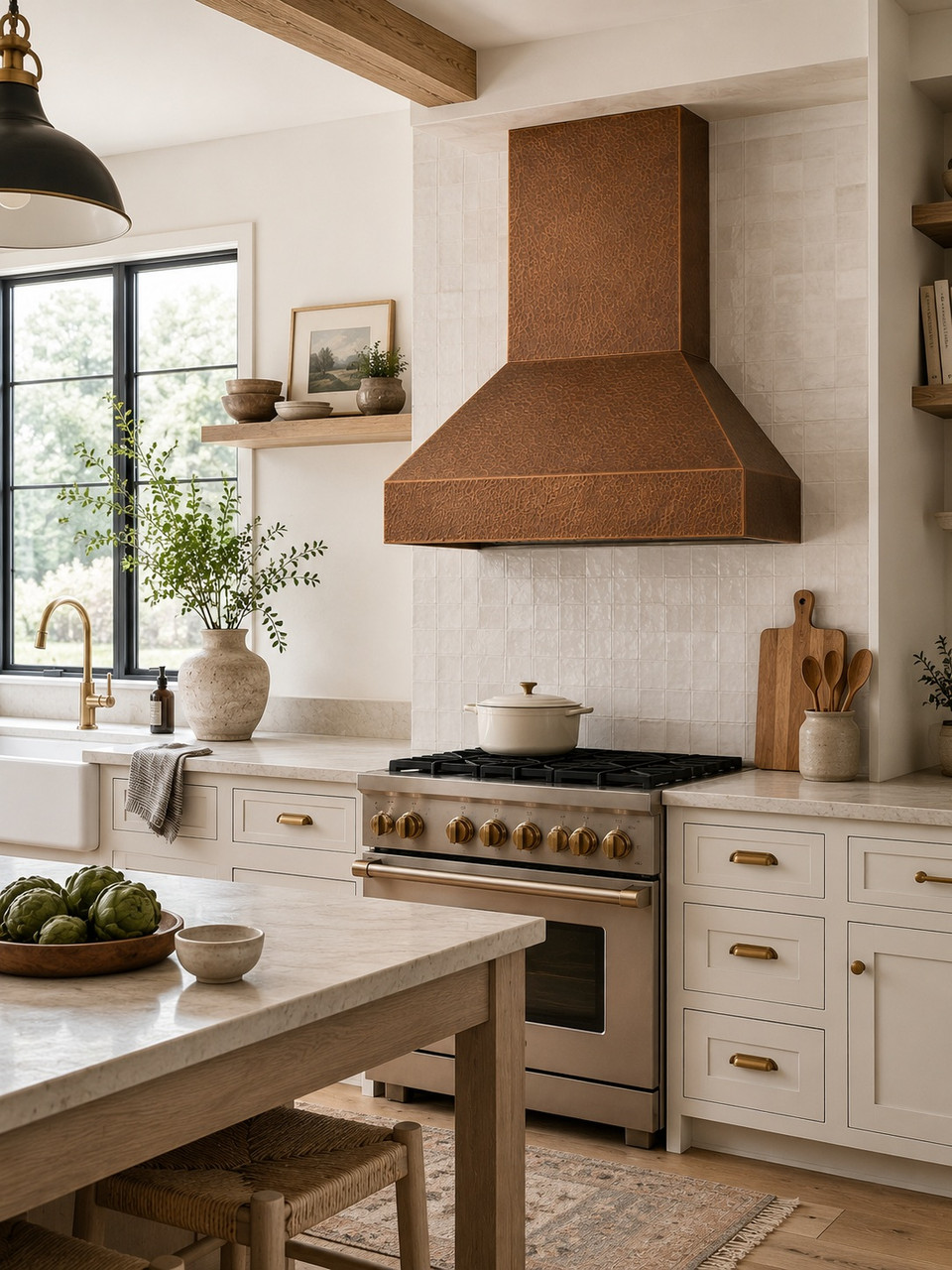
In a modern farmhouse kitchen, the tapered copper hood adds warmth to painted cabinetry, pale oak, handmade tile, simple stone counters, apron-front sinks, and restrained hardware. Modern farmhouse interiors often need a balance between familiar materials and cleaner current lines. This hood supports that balance because the copper feels warm and handcrafted, while the rectangular chimney and tapered body remain simple and architectural.
The hood can soften white, cream, taupe, sage, charcoal, or natural wood cabinetry. Its copper patina adds color and depth without requiring heavy decorative trim. The tapered shape gives the range wall a custom focal point, while the clean chimney keeps the design from feeling too old-fashioned. For related handmade copper context, review the handmade copper range hoods guide.
Rustic Contemporary Kitchen Image
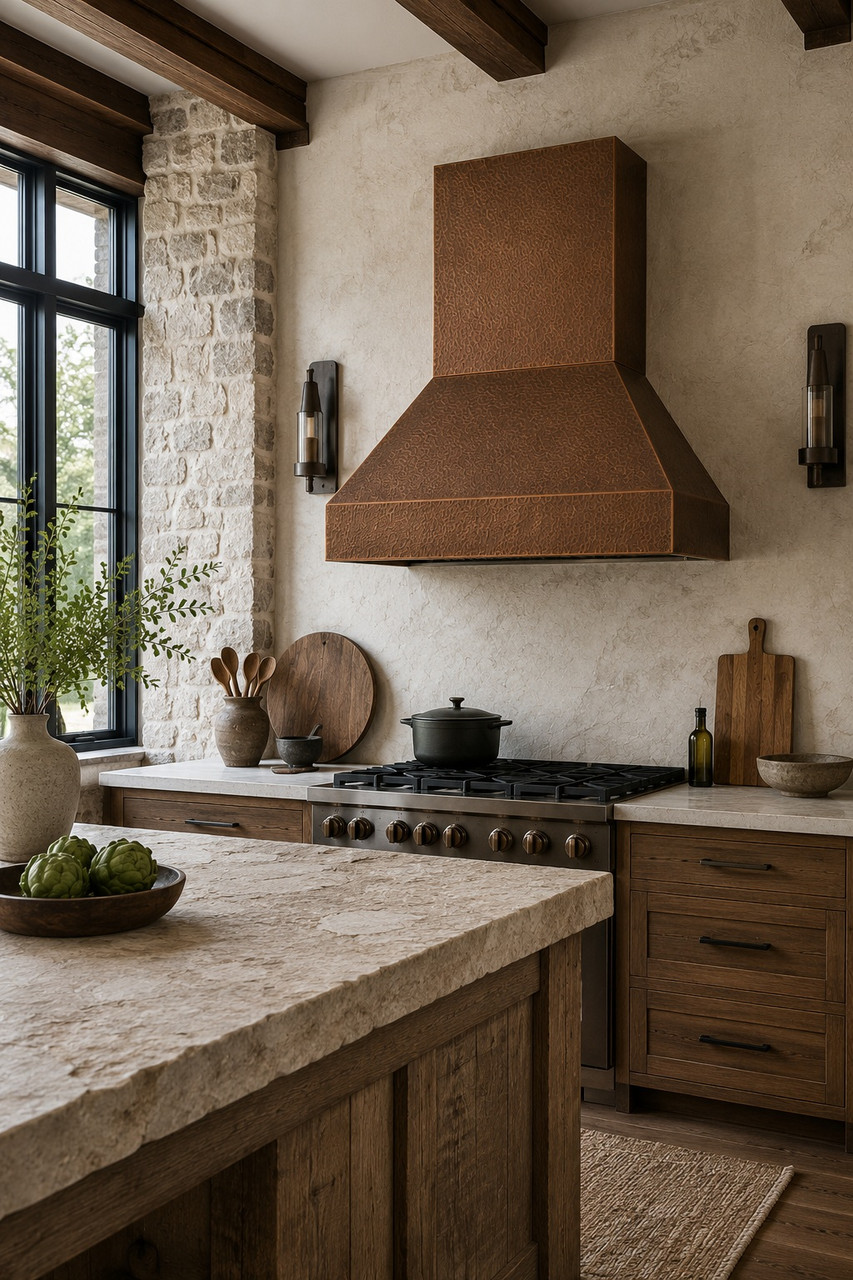
In a rustic contemporary kitchen, the hood connects natural material warmth with simplified architecture. Rustic contemporary interiors often include textured plaster, natural stone, reclaimed timber, dark metal windows, simplified cabinetry, and restrained lighting. The copper hood works well in this setting because it introduces artisan warmth without adding excessive ornament.
The tapered form gives the range wall structure, while the rectangular chimney feels modern and disciplined. The copper patina can coordinate with wood beams, stone backsplashes, bronze hardware, blackened metal, limestone, or clay-toned flooring. Its clean planes allow nearby textures to remain important, while the warm metal gives the cooking area a stronger focal point. For broader texture comparison, review the hammered and smooth metal hoods guide.
Organic Modern Kitchen Image
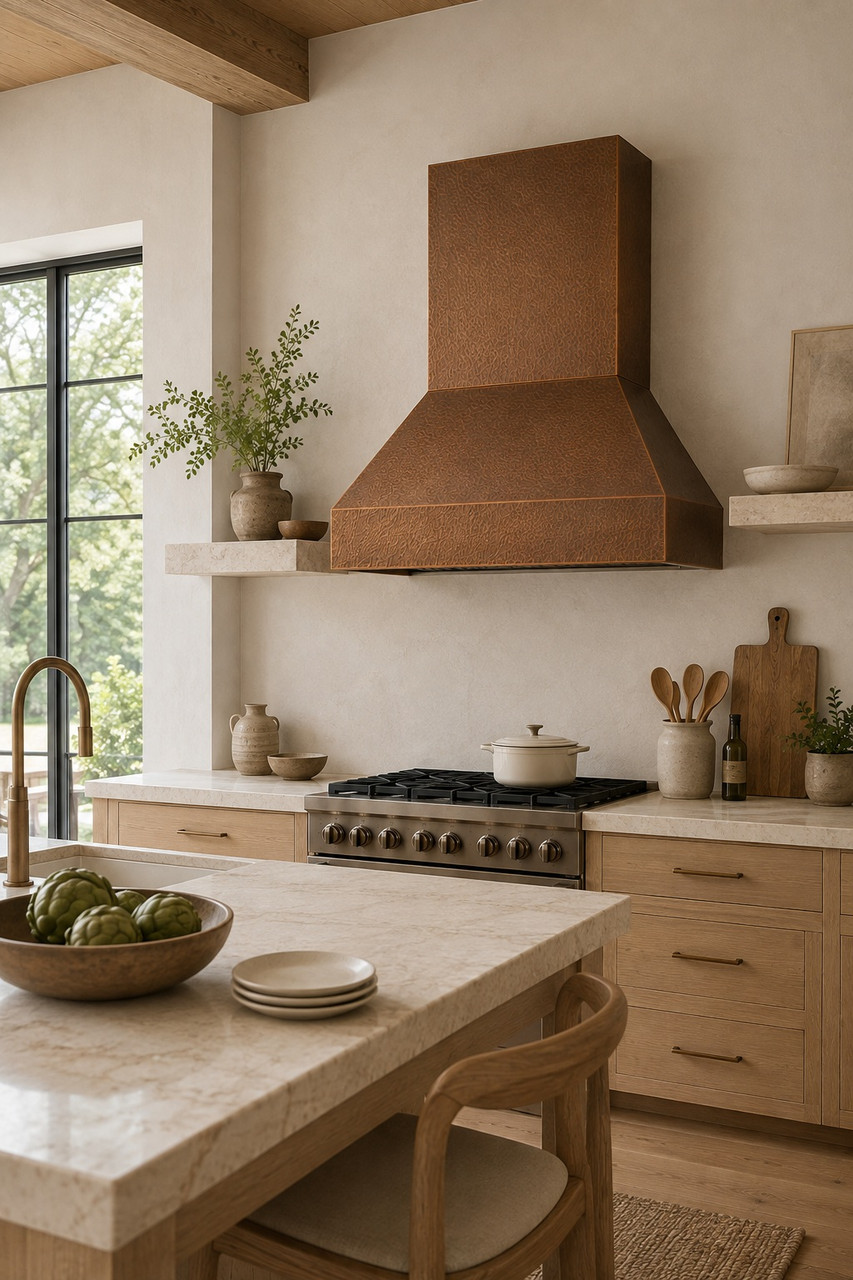
In an organic modern kitchen, the tapered copper hood works with white oak, plaster, limestone, natural stone, soft neutral colors, handmade ceramics, and subdued hardware. Organic modern interiors usually rely on material contrast and calm composition rather than heavy decoration. This hood fits that approach because the copper adds warmth, while the tapered geometry stays quiet and structured.
The rectangular chimney gives the room a clean vertical element above the range. The tapered lower section prevents the hood from feeling flat, and the copper finish introduces natural warmth against pale stone, matte plaster, wood grain, and simple cabinetry. This image shows how a copper hood can work in a modern organic room without making the composition visually busy.
Tapered Canopy Shape
The tapered canopy gives this hood its main architectural identity. The lower body remains broad enough to create presence above the cooking surface, while the sides narrow toward the rectangular chimney. This transition gives the hood a structured profile that is more dynamic than a simple box and cleaner than a rounded bell or dome shape.
Tapered hoods are useful when a kitchen needs a strong focal point with controlled geometry. They can work between cabinets, against a full backsplash, or on a feature wall where the hood should feel important but not overly decorative.
Rectangular Chimney
The rectangular chimney gives the upper portion of the hood a clear vertical line. This detail is especially important in kitchens with tall ceilings, symmetrical cabinet layouts, or simple range-wall compositions. It helps the hood feel architectural and intentional rather than purely decorative.
The chimney also gives the design its modern restraint. Instead of using a rounded or heavily molded upper section, the hood keeps the top clean and direct. This allows the copper surface and tapered body to provide most of the visual interest.
Copper Finish Character
Copper brings warmth, depth, and natural variation to this clean silhouette. Depending on lighting and finish selection, the surface may appear amber, reddish, bronze, brown, honey-toned, darker aged copper, or more reflective when polished. Surrounding materials such as stone, plaster, wood, tile, and hardware can change how the patina reads in the finished kitchen.
Small differences in copper tone, patina movement, seams, edge shaping, surface texture, chimney alignment, and artisan finishing should be expected in handmade copper work. These variations help each hood feel individual rather than mass produced. They also keep the clean design from feeling flat or generic.
Style Compatibility
This tapered copper range hood with rectangular chimney works across several kitchen styles because it balances warmth and restraint. In transitional kitchens, it adds character without disrupting a refined layout. In modern farmhouse kitchens, it brings handcrafted warmth to painted cabinetry and pale wood. In rustic contemporary spaces, it complements plaster, stone, timber, and dark metal. In organic modern kitchens, it adds quiet contrast to natural surfaces.
The design is strongest when surrounding materials let the copper remain the central feature. Balanced cabinetry, thoughtful lighting, simple tile, natural stone, warm wood, and restrained hardware help the hood feel integrated into the room rather than isolated above the range.
Handcrafted Variation
Small irregularities in copper tone, patina depth, seams, edges, surface movement, and artisan finishing are part of handmade copper construction. These details should be expected and valued because they distinguish a handcrafted metal range hood from a factory-made appliance cover.
The hood’s handmade character becomes more visible as light moves across the surface. Even with a clean tapered shape and rectangular chimney, the copper material gives the range wall warmth, depth, and individual character.
Conclusion
The tapered copper range hood with rectangular chimney brings a structured tapered canopy, clean upper chimney, warm copper patina, restrained handmade detail, and architectural clarity into the kitchen. These images show how the hood adapts to transitional, modern farmhouse, rustic contemporary, and organic modern interiors while keeping its design warm, disciplined, and visually balanced.