 US Dollar
 Euro
Euro
 Australian Dollar
 Canadian Dollar
 Polish Zloty
 British Pound

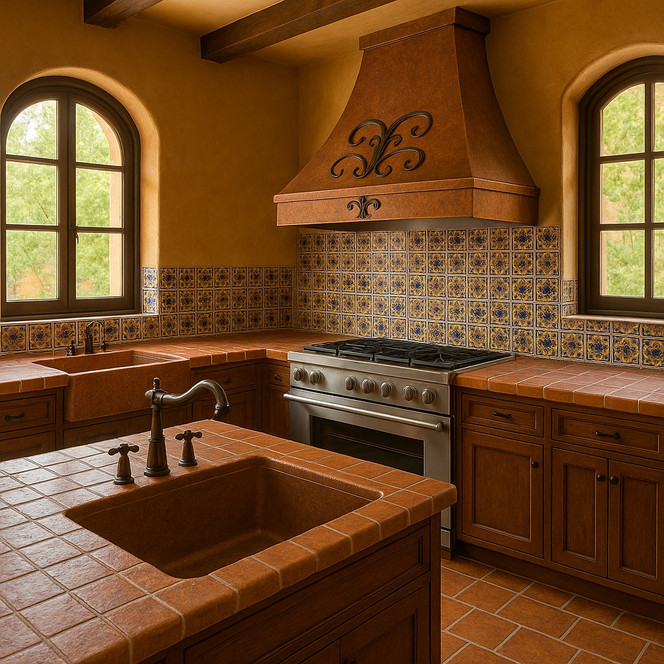
Spanish-style copper kitchen hoods combine handcrafted metalwork, warm patina, and architectural forms inspired by Spanish Colonial, Mission, Hacienda, and Mediterranean interiors. These hoods are designed to become the visual center of the range wall, where copper, plaster, tile, stone, and dark wood can work together as one coordinated composition. Depending on the kitchen, a Spanish copper hood may use a bell-shaped canopy, tapered body, curved apron, arched lower edge, stepped crown, riveted straps, or restrained ornamental bands. The style can feel historic and rustic or cleaner and more transitional according to the selected shape and finish. Explore the complete collection of Spanish-style copper range hoods to compare handcrafted designs, custom dimensions, wall or island configurations, and artisan patinas.
Blog Summary
- Style: Spanish kitchen design
- Material: Handcrafted copper
- Shapes: Bell, tapered and arched
- Details: Straps, rivets and crowns
- Finish: Warm artisan patinas
- Planning: Size, insert and mounting
What Defines a Spanish-Style Copper Hood?
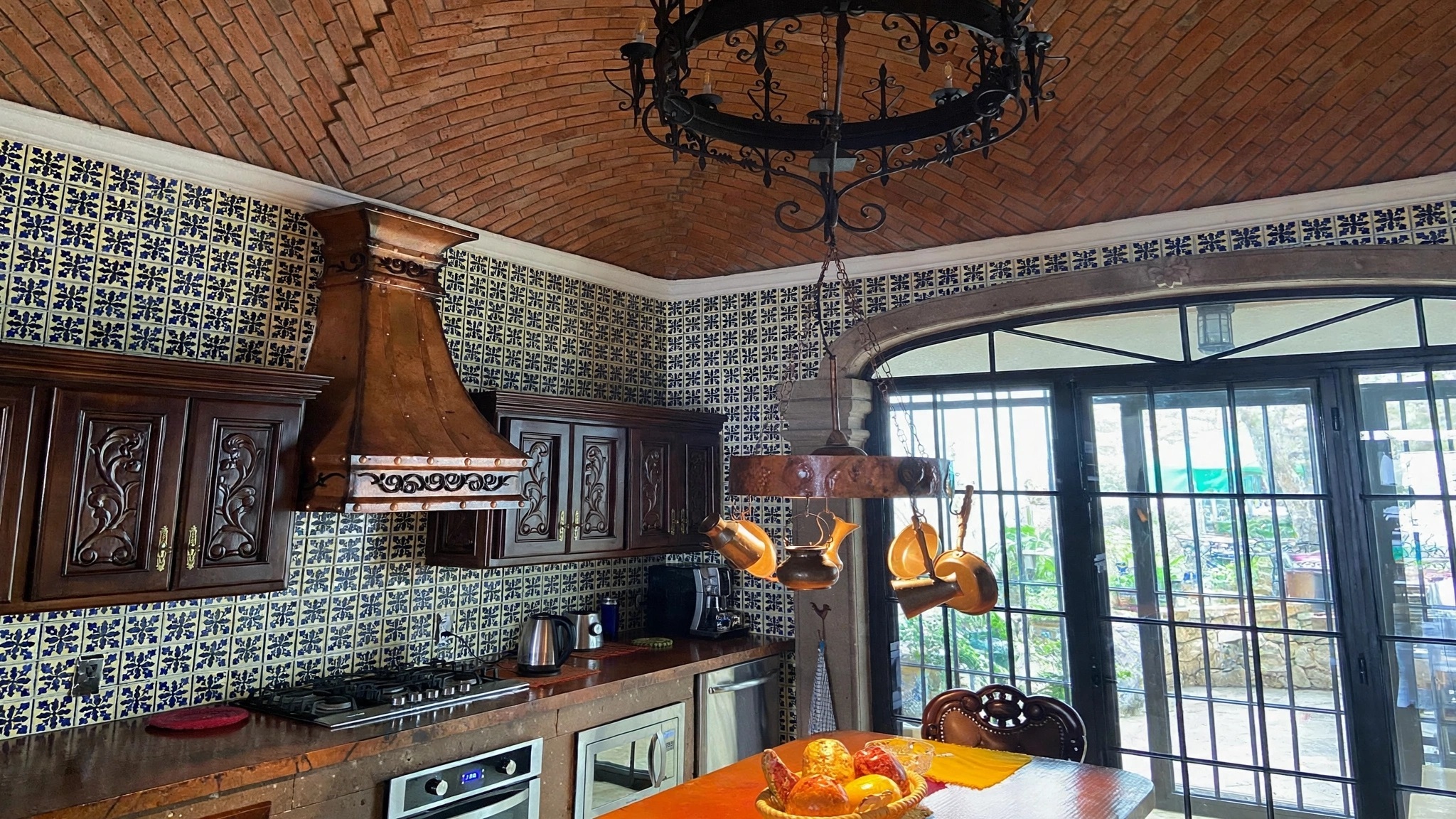
A Spanish-style hood is defined by more than copper alone. Its identity comes from the relationship between shape, proportion, surface texture, decorative metalwork, and the architectural materials surrounding it. Traditional Spanish-inspired kitchens often include plaster walls, arched openings, exposed timber, handmade tile, carved cabinetry, terracotta flooring, stone counters, and wrought-iron lighting. A copper hood supports these materials because it introduces warmth without looking factory-made.
Spanish design can range from simple rural forms to formal Colonial Revival architecture. Some hoods use a plain tapered canopy with a broad apron, while others include curved shoulders, stepped crowns, riveted straps, embossed panels, or forged iron accents. The Spanish copper hood guide offers additional context for comparing traditional details and cleaner contemporary interpretations.
Spanish Colonial and Hacienda Influences
Spanish Colonial kitchens tend to feel substantial, warm, and connected to natural materials. The hood usually has enough visual weight to balance heavy wood cabinetry, masonry, decorative tile, and broad cooking appliances. Bell-shaped and tapered copper bodies are especially effective because they create a strong transition from the range to the ceiling.
Hacienda interiors often favor hammered metal, darker patinas, exposed rivets, broad bands, and architectural crowns. These elements should look integrated rather than applied without purpose. A riveted strap can reinforce a seam, frame the center panel, or visually lengthen the hood. A crown can connect the canopy to timber beams or ceiling trim. For a broader view of the room style, review the Spanish Mission style guide.
Popular Spanish Hood Shapes
Bell-Shaped Canopies
The bell shape remains one of the most recognizable Spanish-style profiles. Its sides curve outward as they descend toward the apron, creating a softer and more sculptural outline than a straight trapezoid. The broad lower body provides space for hammering, straps, rivets, decorative bands, or a raised central panel.
Bell hoods work particularly well with arched doorways, plaster walls, carved wood, and patterned tile. They can be heavily detailed for an Old World kitchen or simplified for a Spanish transitional interior. Compare related silhouettes in the bell-shaped copper hood collection.
Tapered and Sloping Profiles
Tapered hoods use straight angled panels instead of continuous curves. This gives the range wall a cleaner architectural outline while retaining the warmth of copper. A sloping Spanish hood may include a compact chimney, a broad lower apron, vertical straps, rope-inspired trim, or a simple stepped crown.
This profile is useful when the kitchen combines Spanish materials with modern cabinetry. The geometry feels controlled, while hammered copper and aged patina prevent the design from becoming too minimal. The copper hood shapes guide compares tapered, bell, box, arched, and curved-apron forms.
Arched Lower Aprons
An arched apron introduces a Roman or Spanish Revival influence along the lower edge of the hood. The arch can be shallow and restrained or deeper and more dramatic. It may echo an arched doorway, window, niche, or tile panel elsewhere in the kitchen.
Because the lower edge sits close to eye level, its shape strongly affects the room. An arched hood usually works best when nearby cabinetry remains relatively simple. Too many competing curves can weaken the focal point. Explore additional planning ideas in the arched copper hood guide.
Hammered and Smooth Copper Surfaces
Hammered copper is closely associated with Spanish and Hacienda kitchens because its irregular surface reflects traditional handwork. Small hammer marks scatter light across the canopy, creating deeper tonal movement than smooth sheet metal. The texture also works well beside stone, plaster, handmade ceramic, and rustic wood.
Smooth copper provides a cleaner interpretation of Spanish style. It emphasizes the silhouette, seams, apron, and crown rather than surface texture. A smooth hood can work in California Spanish, Spanish transitional, or luxury contemporary interiors where the room uses restrained cabinetry and a quiet stone backsplash.
| Surface | Appearance | Best Kitchen Use |
|---|---|---|
| Fine hammering | Soft artisan movement | Spanish transitional |
| Deep hammering | Strong rustic texture | Hacienda and Mission |
| Smooth copper | Clean architectural planes | California Spanish |
Straps, Rivets and Decorative Bands
Straps are among the most common details on Spanish copper hoods. Vertical straps can divide the canopy into panels, reinforce its height, and add contrast when made from iron, zinc, brass, or darker copper. Horizontal bands can define the apron, chimney transition, or upper crown.
Rivets create small points of shadow and strengthen the impression of traditional metal construction. They may be subtle and evenly spaced or larger and more prominent. Decorative details should support the shape rather than overwhelm it. A simple bell hood may need only two vertical straps, while a broad Hacienda hood can support stronger bands and a deeper apron.
For an example of copper combined with darker forged ornament, review the Spanish copper hood with iron scroll.
Choosing a Spanish Copper Patina
Patina determines whether the hood feels bright, softly aged, rustic, or formal. Natural copper introduces reddish-gold color and develops additional variation as the surface matures. Honey patina creates a warmer golden tone, while antique and coffee finishes deepen the copper toward brown and umber.
Darker patinas work well with white plaster, cream cabinetry, pale limestone, and handmade tile because they create a strong focal point. Natural and honey finishes pair effectively with walnut, alder, white oak, or painted sage cabinetry. Green oxidized accents can be appropriate when used intentionally, but they are not required for Spanish character.
Because every patina is applied by hand, differences in tone, edge shading, seams, hammering, and low points are expected. Review the copper patina finish options before coordinating the hood with cabinetry and tile.
Cabinet and Backsplash Coordination
A Spanish copper hood should be planned as part of the complete range wall. Painted cream, warm white, sage, blue-gray, and muted green cabinets allow aged copper to stand out. Dark walnut, alder, or distressed wood creates a richer Hacienda effect. The hood should remain wide enough to balance the cooking appliance without appearing squeezed between cabinets.
Talavera tile is a natural backsplash choice, but pattern density requires restraint. A highly decorative hood may look best against a simple field tile or plaster wall. A plain copper canopy can support a stronger patterned backsplash. Stone slab, limestone, brick, zellige, and terracotta can also work when their color relates to the copper patina.
Material Pairings
- Plaster: Soft architectural backdrop
- Talavera: Traditional color pattern
- Wood: Adds warmth and depth
- Stone: Grounds the range wall
- Iron: Reinforces Spanish detail
Wall-Mounted and Island Installations
Most Spanish-style copper hoods are installed against a wall, where they can anchor a tile or plaster backsplash between cabinetry. Wall-mounted designs may extend to the ceiling, stop beneath a beam, or include a custom chimney and crown. The centerline of the hood, range, backsplash panel, and ceiling details should align before production begins.
An island version must be visually complete on every side because it can be viewed from adjoining living and dining spaces. A bell or tapered canopy can work over an island when its rear panel, side proportions, chimney, and apron are balanced from all directions. Ceiling framing, duct routing, electrical service, and structural support must be planned early.
Compare the two mounting formats in the wall and island hood guide.
Custom Size Planning
A made-to-order hood should be proportioned around the range width, ceiling height, cabinet spacing, backsplash thickness, mounting height, and insert dimensions. The canopy must provide suitable coverage while remaining visually balanced with the appliance below. Larger professional ranges generally need wider and deeper hoods than compact residential cooktops.
The chimney or upper section should also be scaled carefully. A short upper body can make a tall wall feel unfinished, while an oversized chimney may overwhelm the canopy. Before approving dimensions, compare common planning relationships in the popular copper hood sizes guide.
| Planning Item | Buyer Confirmation |
|---|---|
| Range width | Confirm appliance model |
| Hood height | Measure finished ceiling |
| Mounting type | Wall or island |
| Backsplash | Provide final thickness |
| Insert model | Send full specifications |
Ventilation Insert Planning
The copper enclosure creates the exterior design, but the insert performs the ventilation. Insert selection should account for the cooking appliance, cooking habits, blower capacity, duct size, filter type, lighting, controls, and acceptable noise. The shell must be prepared around the exact equipment rather than a general CFM rating alone.
Rustica House can supply the optional 200 CFM insert for light residential use. Buyer-supplied inserts up to 1,260 CFM and external blower systems up to 1,500 CFM can be supported when complete specifications are submitted before fabrication. Review the custom range hood insert guide before selecting the ventilation package.
Installation Preparation
Professional installation is recommended because handcrafted copper hoods can be large and heavy. Structural support should be prepared before delivery, especially for island models or broad wall-mounted shells. Confirm framing, mounting points, electrical location, duct route, backsplash completion, and cooking appliance position before lifting the hood.
Protect the copper during construction. Adhesive, grout, mortar, metal tools, abrasive cloths, and harsh cleaners can damage the patina. The insert should be test-fitted and the duct alignment checked before the shell is secured permanently. Additional preparation steps are available in the copper hood installation guide.
Cleaning and Patina Care
Routine cleaning requires mild soap, warm water, and a soft cloth. Avoid bleach, ammonia, vinegar, steel wool, abrasive pads, polishing compounds, and aggressive degreasers because they may scratch copper or alter the patina. Wipe around straps, rivets, apron edges, and hammered low points where airborne grease can collect.
Dry the surface after cleaning to reduce water spots. Wax may be used only when appropriate for the selected finish and care instructions. Filters should be cleaned or replaced according to the insert manufacturer because filter maintenance affects airflow independently of the copper shell. Read the copper range hood care guide for a more complete routine.
Handcrafted Variation
Every Spanish-style copper hood is handmade rather than stamped from an automated production line. Surface variation, changing patina tones, hammering differences, seam movement, tool marks, edge shading, and minor dimensional distinctions are natural parts of artisan production. These characteristics should be expected and contribute to the value of a one-of-a-kind hood.
The completed hood may not match a small finish sample or product photograph in every detail because its larger surfaces respond differently to heat, hand finishing, and room lighting. Buyers seeking exact industrial uniformity may prefer a factory-coated material. Buyers who value handcrafted character generally consider these differences essential to the final design.
Final Design Guidance
A Spanish-style copper kitchen hood works best when its architecture, finish, and decorative details are coordinated with the complete room. Bell and arched shapes provide softer Old World character, while tapered silhouettes offer a cleaner Spanish transitional direction. Hammered copper, dark patina, straps, and rivets create stronger Hacienda influence, while smooth copper and restrained trim suit California Spanish interiors.
Choose the shape first, then coordinate the crown, apron, straps, patina, cabinetry, backsplash, and ventilation insert. Confirm dimensions and installation requirements before production begins. When these elements are planned together, a handcrafted Spanish copper hood can provide dependable ventilation while becoming the defining architectural feature of the kitchen.
Related Resources
- Spanish kitchen hood guide
- Copper hood shapes guide
- Copper range hood guide
- Copper range hood FAQ
- Custom metal range hoods