 US Dollar
 Euro
Euro
 Australian Dollar
 Canadian Dollar
 Polish Zloty
 British Pound

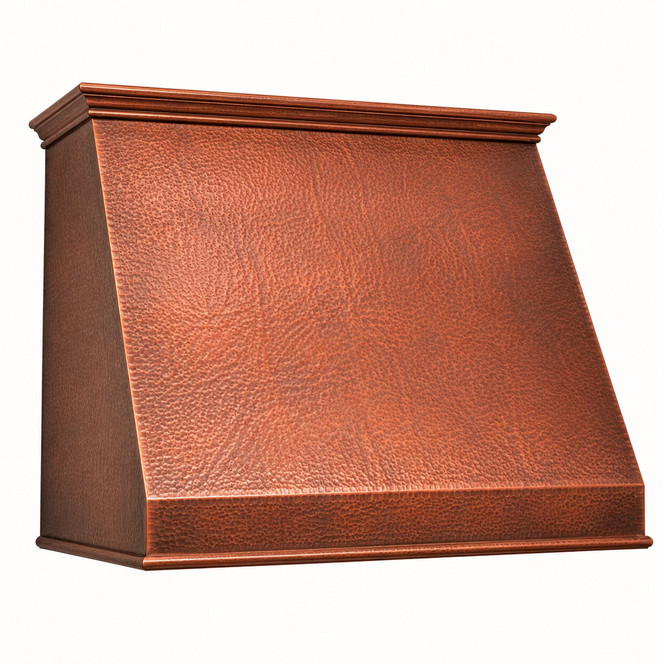
Sloping front copper range hoods combine clean angled geometry, handcrafted metal texture, and flexible installation options for kitchens ranging from compact remodels to large custom interiors. The front panel slopes outward toward the cooking surface, creating a wider lower capture area while maintaining a visually lighter profile than many deep bell or box-shaped hoods. These hoods are often installed beneath upper cabinetry, but the same shape can also be adapted for an independent wall-mounted installation without cabinets above or for a ceiling-supported kitchen island configuration. Homeowners can explore the complete collection of sloping front copper range hoods to compare handcrafted profiles, custom dimensions, surface textures, patina finishes, and mounting options.
Guide Summary
- Shape: Angled front profile
- Mount: Three installation types
- Material: Handcrafted copper
- Texture: Smooth or hammered
- Sizing: Made to order
- Insert: Custom preparation
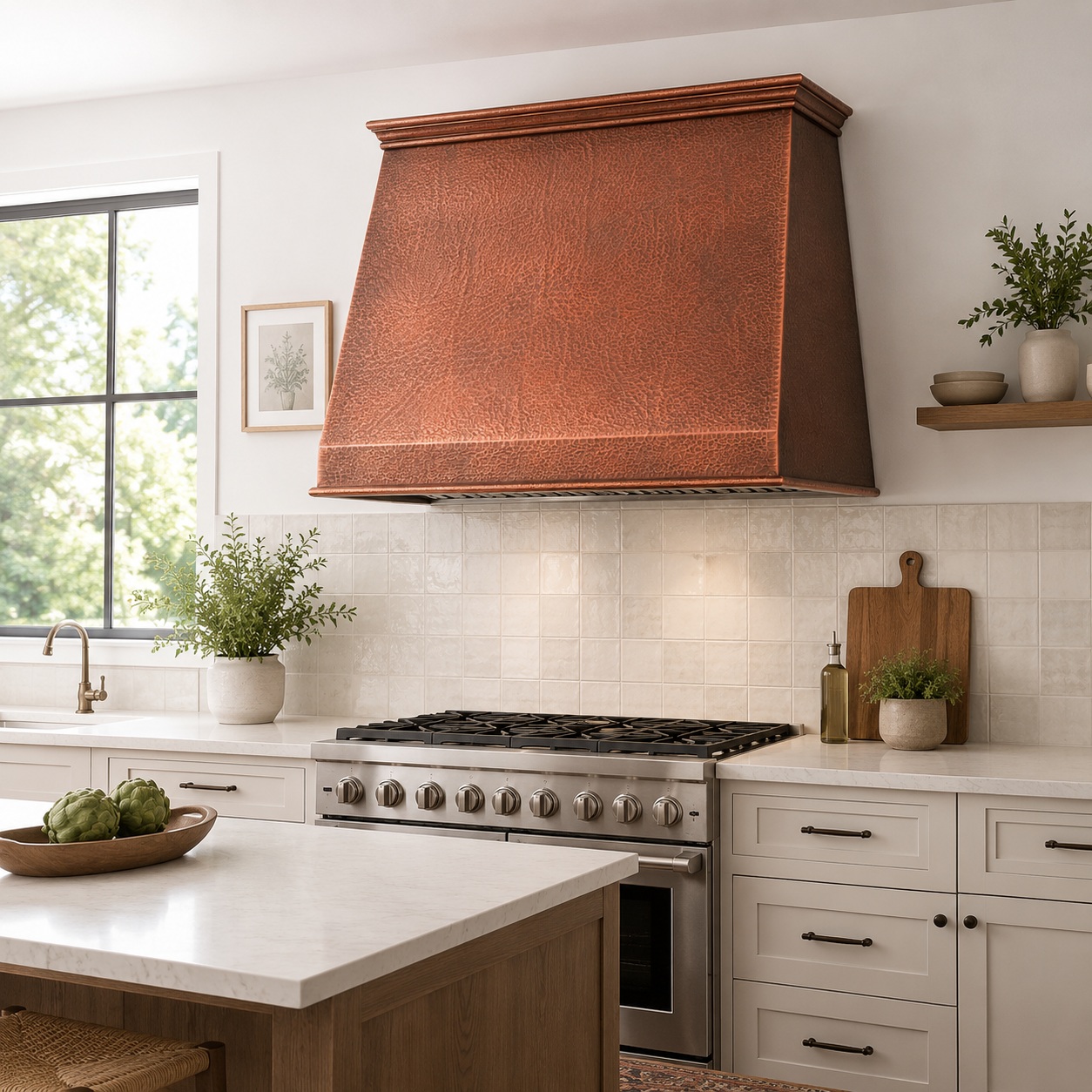
What Is a Sloping Front Copper Hood?
A sloping front copper hood has an angled face that projects gradually outward from the upper section toward the lower edge. It is related to trapezoid and tapered hood shapes, but the term sloping front places greater emphasis on the forward angle visible from the side. Depending on the model, the sides may also flare outward, remain nearly vertical, or follow a softer taper. The shape creates clean architectural movement without requiring the continuous rounded body associated with a traditional bell hood.
The generous copper surface gives artisans room to showcase hammering, smooth metalwork, riveted straps, decorative bands, lower aprons, or simple unadorned panels. Homeowners comparing this shape with bell, box, arched, and curved apron silhouettes can review the copper range hood shapes guide before choosing a final profile.
Why the Sloping Shape Works
The angled body creates a balanced transition from a narrower upper section to a broader lower opening above the range. This geometry can help the hood feel less bulky at eye level while maintaining a substantial architectural presence. It also keeps the front edge farther from the cook’s head than a deep vertical box might, which can make the working area feel more open when the hood dimensions and mounting height are planned correctly.
From a design perspective, the slope adds movement without relying on elaborate decoration. A plain hammered copper body can feel rustic and handcrafted, while a smooth surface with minimal trim can appear more contemporary. Decorative straps or rivets can shift the same basic profile toward farmhouse, Spanish, industrial, or traditional interiors.
Under-Cabinet Installation
Sloping front copper hoods are frequently installed beneath upper cabinets because their compact upper section can fit naturally into a cabinet-centred layout. In this arrangement, the copper hood occupies the visible space directly above the cooking surface while the cabinets continue across the upper wall. The format is useful when homeowners want to preserve storage, avoid a full-height chimney, or replace an ordinary under-cabinet appliance with a handcrafted focal point.
Cabinet dimensions, hood width, insert access, duct routing, and the depth of the sloping face should be coordinated before fabrication. The copper body should appear centred below the cabinet above, and the lower edge should remain visually balanced with the range and neighbouring doors. The under-cabinet range hood guide provides additional planning information for this installation format.
Under-Cabinet Benefits
- Storage: Preserves upper cabinets
- Profile: Compact upper section
- Style: Integrated copper accent
- Access: Open cooking workspace
- Planning: Cabinet-based layout
Independent Wall Mounting
A sloping front hood does not require cabinetry above it. When manufactured as a full wall-mounted design, it can extend upward with a custom chimney, crown, stepped moulding, or simplified upper transition. This configuration makes the copper hood the main architectural feature of the cooking wall and provides more freedom to adjust its overall height for tall ceilings, wide ranges, and large backsplash areas.
An independent wall hood can be placed between cabinets, between open shelves, or on a broad uninterrupted wall. The sloping face creates a strong focal point without the heavier curves of a deep bell design. For kitchens with high ceilings, the chimney can be proportioned so the hood feels connected to the room rather than appearing like a small appliance attached to a large wall.
Homeowners deciding between wall and ceiling-supported layouts can use the wall-mount and island hood guide to compare structural, visual, and ventilation considerations.
Kitchen Island Configuration
A sloping front copper hood can also be produced for installation above a kitchen island. An island version must be finished and proportioned for viewing from several directions because it is exposed on the front, back, and sides. The sloping body can be repeated symmetrically or adapted so the complete hood maintains a balanced appearance over the cooktop.
Island installations require early coordination with ceiling framing, electrical service, duct placement, and the dimensions of the cooking appliance below. The hood should provide sufficient coverage while preserving comfortable sightlines through the kitchen. In an open floor plan, the angled copper surfaces can appear lighter than a deep rectangular canopy, especially when the chimney and crown are kept proportional.
Island Planning Points
- Support: Confirm ceiling framing
- Duct: Plan the route early
- Views: Finish every visible side
- Scale: Balance hood and island
- Insert: Confirm access needs
Hammered Copper Texture
A hammered finish emphasizes the handcrafted character of a sloping front hood. Small variations across the metal catch light differently, producing highlights and shadows that become especially visible on the broad angled face. Hammering can soften the strict geometry of the silhouette and help the hood coordinate with natural stone, textured tile, timber beams, handmade cabinetry, and forged hardware.
The depth and pattern of hammering also affect the visual result. A fine texture can appear restrained and refined, while stronger hammer marks create a more rustic surface. Because the face is inclined, lighting from windows, pendants, and ceiling fixtures moves across it throughout the day, making the texture an active part of the room.
Smooth Copper Surfaces
Smooth copper places greater emphasis on form, proportion, seams, and patina. Without visible hammer marks, the sloping face reads as a cleaner architectural plane. This treatment can work particularly well in contemporary, transitional, Scandinavian-inspired, and minimalist kitchens where the warmth of copper is desired but heavy artisan texture would compete with simple cabinetry.
Smooth copper is not visually static. Normal variation in the hand-applied finish, reflections from the room, and gradual patina development still create character. The result is cleaner than hammered copper but warmer and more individual than a painted or factory-coated metal hood.
Choosing Decorative Details
The sloping profile can remain plain or be enhanced with straps, rivets, horizontal bands, crown moulding, a defined lower apron, or contrasting metal accents. Vertical straps reinforce the direction of the taper and can make the hood appear taller. Horizontal bands visually separate the chimney, body, and lower edge. Rivets introduce small points of shadow and can support farmhouse, industrial, Spanish, or rustic styling.
Decoration should match the scale of the hood. Wide straps and large rivets may suit a broad professional range, while narrow trim generally works better on a compact under-cabinet model. A restrained design often provides the greatest flexibility because copper texture and patina already give the surface considerable visual interest.
Kitchen Style Compatibility
Sloping front copper hoods work in more interiors than their rustic material might initially suggest. In a modern farmhouse kitchen, the angled profile pairs well with shaker cabinets, pale stone, wood flooring, and black or aged brass hardware. In a transitional room, smooth copper and controlled trim can add warmth without making the kitchen feel heavily traditional.
Contemporary kitchens can use a simplified sloping hood against slab cabinetry and a quiet stone backsplash. Spanish and Mediterranean interiors may favour hammered copper, darker patinas, visible straps, and handmade tile. Industrial kitchens can combine the hood with steel-framed windows, dark cabinetry, concrete, and riveted details. The surrounding finishes determine whether the same profile feels rustic, refined, or modern.
Selecting the Right Size
Hood width should be planned in relation to the range or cooktop, surrounding cabinets, available wall space, and the requirements of the ventilation insert. Overall height must account for ceiling height, mounting position, upper cabinetry, and the desired visual proportion. Depth influences both the physical presence of the hood and its coverage over the cooking surface.
Standard-size expectations should not replace project-specific planning. A compact under-cabinet hood and a large island hood may share the same sloping profile but require completely different body proportions. Before ordering, compare common widths and height relationships in the popular copper range hood sizes guide.
Measurements to Confirm
- Range: Record appliance width
- Ceiling: Measure total height
- Cabinets: Check side spacing
- Depth: Plan cooking coverage
- Insert: Supply exact details
Ventilation Insert Planning
The copper shell provides the decorative exterior, while the insert supplies the blower, filters, lighting, controls, and duct connection. Insert planning must take place before fabrication because the interior support, opening, liner area, and access points depend on the selected equipment. Buyers using their own insert should provide the manufacturer, model, complete dimensions, installation instructions, duct requirements, and cutout information.
Airflow capacity should be selected for the cooking appliance, cooking habits, duct design, room conditions, and applicable local requirements. A higher rating is not automatically better if the duct system, make-up air provisions, or noise expectations are not considered. The custom range hood insert guide explains the differences between basic residential equipment and more powerful ventilation systems.
Patina and Finish Selection
Patina determines whether a sloping copper hood feels bright, softly aged, dark, rustic, or refined. Natural copper highlights the broad angled surface and changes gradually as the metal interacts with its environment. Honey tones create warmth without the depth of darker finishes. Antique and coffee patinas can emphasize hammering, seams, straps, and rivets by creating greater tonal contrast.
Cabinet colour, backsplash material, room lighting, flooring, hardware, and nearby appliances should all be considered before choosing the finish. Samples are useful because screen images cannot reproduce every variation in genuine metal. The copper patina finish guide offers a broader comparison of available colour directions.
Backsplash and Cabinet Coordination
A sloping front hood has a strong directional shape, so the surrounding range wall should support rather than compete with it. Quiet stone slabs, handmade neutral tile, brick, plaster, limestone, and simple geometric tile can all create an effective background. Highly patterned backsplashes may work when their colours relate clearly to the copper, but the pattern should not obscure the lower outline of the hood.
Under-cabinet versions should align carefully with cabinet widths and door rails. Independent wall hoods benefit from balanced negative space on both sides. Island models should relate to the length and depth of the island below. In every configuration, repeating copper tones through subtle hardware or lighting accents can connect the hood to the room without matching every metal finish exactly.
Cleaning and Long-Term Care
Routine care should protect both the copper surface and its artisan patina. Use mild soap, warm water, and a soft cloth for normal cleaning. Avoid abrasive pads, steel wool, acidic products, bleach, ammonia, and harsh degreasers because they may scratch the metal or alter the finish unevenly. Wipe carefully around straps, rivets, seams, and lower edges where airborne grease can collect.
Dry the hood after cleaning to limit water marks. Filters should be maintained according to the insert manufacturer’s instructions because filter condition affects ventilation performance independently of the decorative copper shell. More detailed recommendations are available in the copper range hood cleaning guide.
Final Design Guidance
A sloping front copper range hood is a flexible choice for homeowners who want clean geometry, handcrafted metal character, and several installation possibilities. It can fit beneath upper cabinets in a compact or storage-focused kitchen, stand independently as a wall-mounted focal point, or become a ceiling-supported feature above an island. Hammered copper creates stronger artisan texture, while smooth copper gives the angled body a cleaner architectural appearance.
The best result comes from planning the complete system rather than selecting the exterior shape alone. Confirm the mounting format, range dimensions, hood width, total height, depth, cabinet spacing, ceiling conditions, insert model, duct route, surface texture, decorative details, and patina before production. When these elements are coordinated, the sloping front hood can provide a balanced combination of practical ventilation support, comfortable working space, and lasting copper craftsmanship.