 US Dollar
 Euro
Euro
 Australian Dollar
 Canadian Dollar
 Polish Zloty
 British Pound

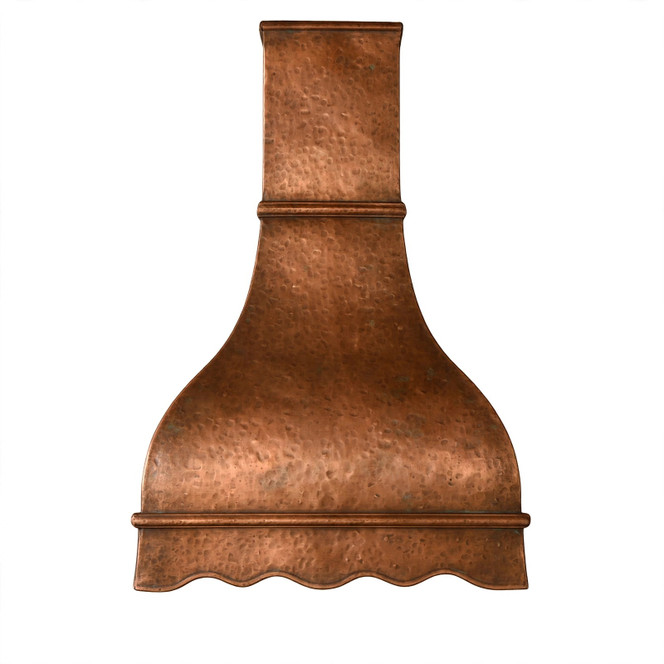
The Scalloped Dome Copper Range Hood with Stepped Neck is shown in these lifestyle images as a handcrafted focal point for old-world, Spanish Colonial, transitional, and Tuscan kitchens. Its rounded dome canopy, compact stepped neck, straight chimney, rolled moldings, hammered copper surface, and five-wave scalloped apron create a refined decorative profile without straps, rivets, medallions, or applied relief. The hood feels architectural, but not overly heavy, making it useful for kitchens that need artisan copper character with controlled ornament. Explore the scalloped dome copper range hood with stepped neck to compare its shape, apron, finish, and installation options. For product-specific planning details, read the scalloped dome copper range hood stepped neck guide.
Blog Summary
- Focus: lifestyle image guide
- Product: scalloped dome copper hood
- Shape: rounded dome canopy
- Feature: five-wave scalloped apron
- Styles: four kitchen scenes
- Detail: stepped neck moldings
Scalloped Dome Hood Images
Lifestyle images help show how this scalloped dome copper hood looks in finished kitchens rather than as a product photo alone. Cabinet color, backsplash texture, ceiling height, counter material, lighting, flooring, and hardware all affect how the dome, stepped neck, and scalloped apron appear. In one room, the hood may feel old-world and formal. In another, it may look Spanish Colonial, Tuscan, or transitional.
This hood stands out because the decorative movement is built into the shape itself. The five-wave apron creates a soft lower edge, while the stepped neck and rolled moldings define the transition into the chimney. For broader shape comparison, review the copper range hood shapes guide.
Design Highlights
- rounded dome copper canopy
- five-wave scalloped apron
- compact stepped neck
- straight rectangular chimney
- rolled transition moldings
- hammered copper surface
- wall or island planning
Old-World Kitchen Image

In an old-world kitchen, the scalloped dome copper hood works with stone counters, warm plaster, dark wood, antique-style fixtures, heavy beams, and traditional cabinet details. The rounded canopy gives the range wall a substantial architectural presence, while the wave-shaped apron keeps the lower edge softer than a straight band.
The stepped neck is important in this scene because it gives the hood a finished, furniture-like transition into the chimney. Instead of appearing as one plain dome, the hood has layered movement at the shoulders. This detail suits kitchens with carved wood, arched openings, textured tile, aged metal, and warm lighting.
Spanish Colonial Kitchen Image
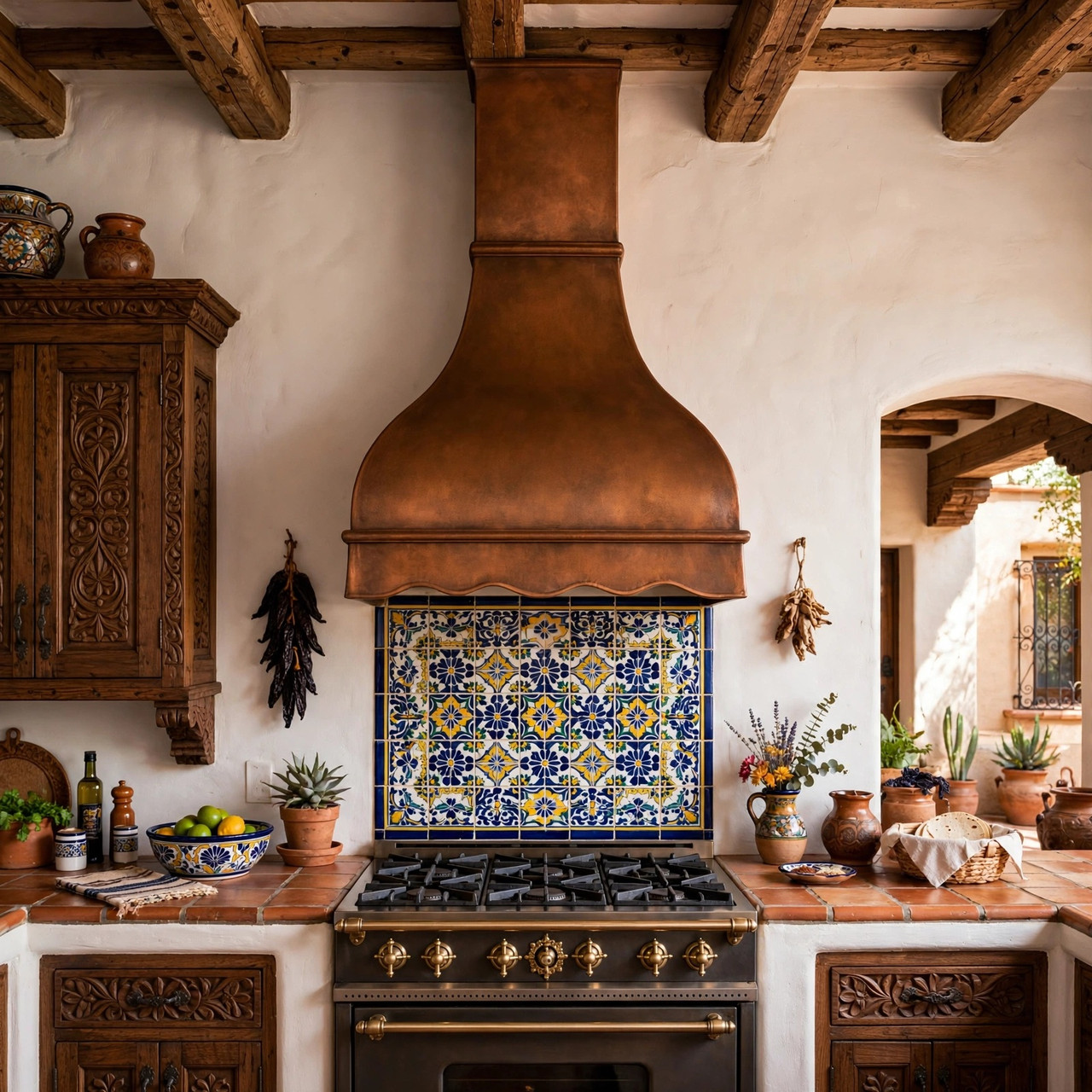
In a Spanish Colonial kitchen, this hood supports plaster walls, Saltillo-style floors, handmade tile, dark wood cabinetry, black iron lighting, bronze hardware, and warm stone surfaces. The dome shape feels connected to traditional hearth architecture, while the scalloped apron adds movement without using heavy straps or rivets.
The clean copper face helps the hood work in rooms that already contain strong materials. Spanish Colonial kitchens can include beams, tile borders, ironwork, carved furniture, and textured walls, so a quieter copper hood shape can be more effective than an overly decorated design. For broader style planning, review the Spanish-style copper range hoods guide.
Transitional Kitchen Image

In a transitional kitchen, the scalloped dome copper hood brings warmth and handmade texture to a cleaner interior. Transitional kitchens often use simple cabinetry, neutral counters, restrained backsplashes, controlled lighting, and limited decorative accents. The hood adds shape and patina, but the absence of straps, rivets, and relief details keeps it from feeling too ornate.
The five-wave apron works especially well in this scene because it introduces softness without overwhelming the cabinetry. The curved lower line can balance square cabinet doors, straight counter edges, and simple tile layouts. For related shape families, browse the dome-shaped copper range hoods collection.
Tuscan Kitchen Image
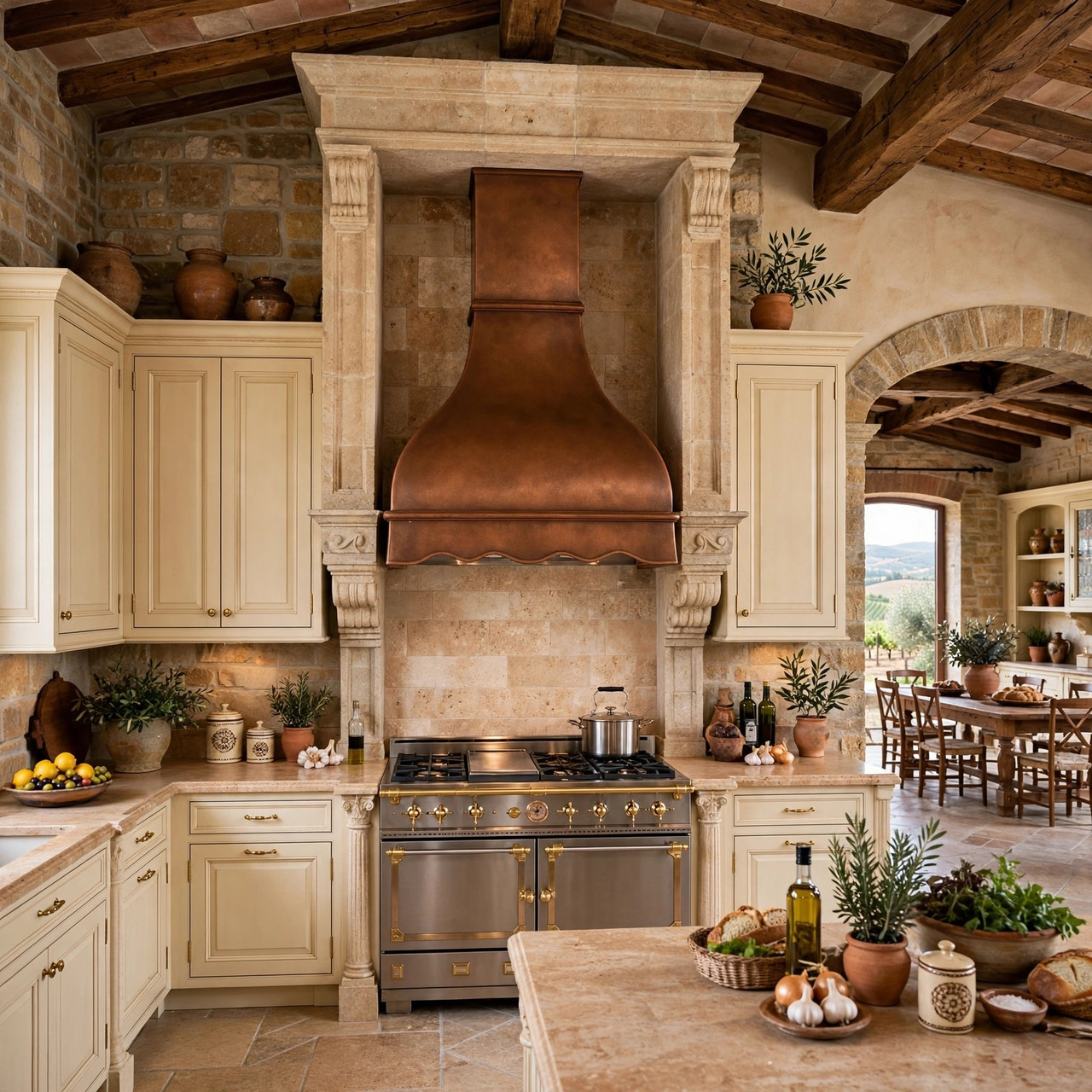
In a Tuscan kitchen, the hood coordinates with earth-toned stone, travertine, warm plaster, carved wood, wrought iron, handmade tile, and aged bronze hardware. The copper finish reinforces the warm palette, while the dome body adds the shaped range-wall presence associated with villa-style kitchens.
The scalloped apron gives the design a decorative edge that feels appropriate for Tuscan interiors, but it remains controlled. The hood does not depend on heavy appliqué or raised artwork. Instead, the profile, moldings, texture, and patina carry the visual interest. For style comparison, review the Tuscan style range hoods guide.
Scalloped Apron Detail
The five-wave apron is the most distinctive feature of this hood. It replaces a straight lower edge with a gentle repeated curve, giving the range wall movement and a more handcrafted personality. This detail can soften hard materials such as stone, tile, cabinet frames, and metal hardware.
Because the apron is part of the hood structure, the ornament feels integrated rather than applied. That makes the design useful for kitchens that need character but not excessive decoration. The result is formal enough for traditional rooms and clean enough for transitional settings.
Stepped Neck Shape
The stepped neck gives the dome a clear transition before the chimney rises. This feature helps the hood look proportioned from bottom to top, especially in kitchens with taller walls or visible upper sections. The rolled moldings above the canopy also repeat the curved language of the scalloped apron.
This layered neck detail can coordinate with crown molding, cabinet trim, carved wood, stone edges, and architectural beams. It also helps the hood look more custom than a plain dome shell.
Patina, Size, and Ventilation
The hammered copper surface adds depth because each mark catches light differently. Patina tone may appear warmer, darker, or brighter depending on the kitchen lighting and surrounding materials. For finish comparison, review the copper patina finish options guide.
Proportion matters because a dome hood has strong volume. Confirm width, height, depth, ceiling clearance, cabinet spacing, backsplash height, and range size before production. For scale planning, review the most popular copper range hood sizes guide.
Ventilation should be planned around the insert, blower, duct route, filters, lighting, and cooking habits. For insert selection, review the range hood insert guide for custom metal hoods. Rustica House can supply the 200 CFM insert only. Any other insert must be supplied by the buyer, and Rustica House will make the hood ready for that buyer-supplied insert when the insert details are provided.
Frequently Asked Questions
What makes this copper hood different?
This hood combines a rounded dome canopy, compact stepped neck, rolled transition moldings, hammered copper surface, and five-wave scalloped apron. The ornament comes from the shape rather than straps or applied relief.
Which kitchen styles fit this hood?
This hood works well in old-world, Spanish Colonial, Tuscan, transitional, Mediterranean, Hacienda, and warm traditional kitchens.
Is every hood exactly identical?
No. Each hood is handmade, so hammering, patina tone, apron curves, moldings, seams, chimney proportion, and small artisan marks may vary. These variations are part of the handcrafted character.
Conclusion
The scalloped dome copper range hood with stepped neck brings a rounded canopy, layered neck moldings, hammered copper texture, and five-wave apron into the kitchen. These lifestyle images show how the hood adapts to old-world, Spanish Colonial, transitional, and Tuscan interiors while keeping its handcrafted copper identity refined, warm, and architectural.