 US Dollar
 Euro
Euro
 Australian Dollar
 Canadian Dollar
 Polish Zloty
 British Pound

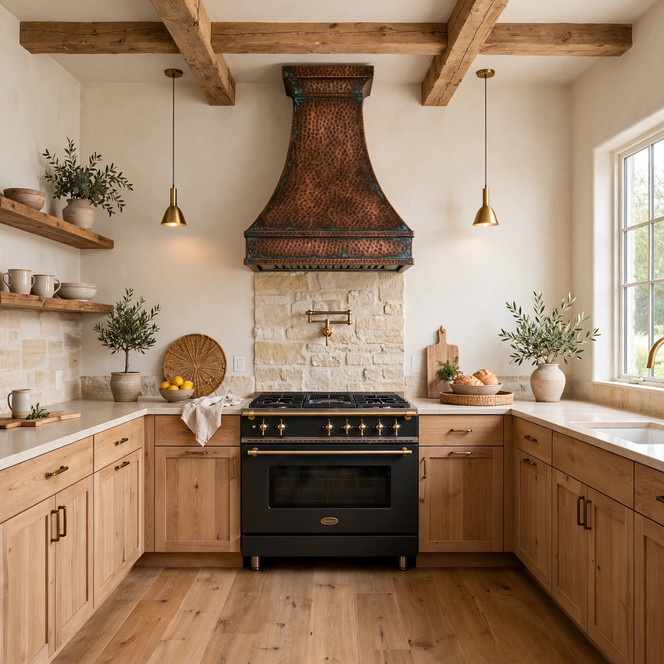
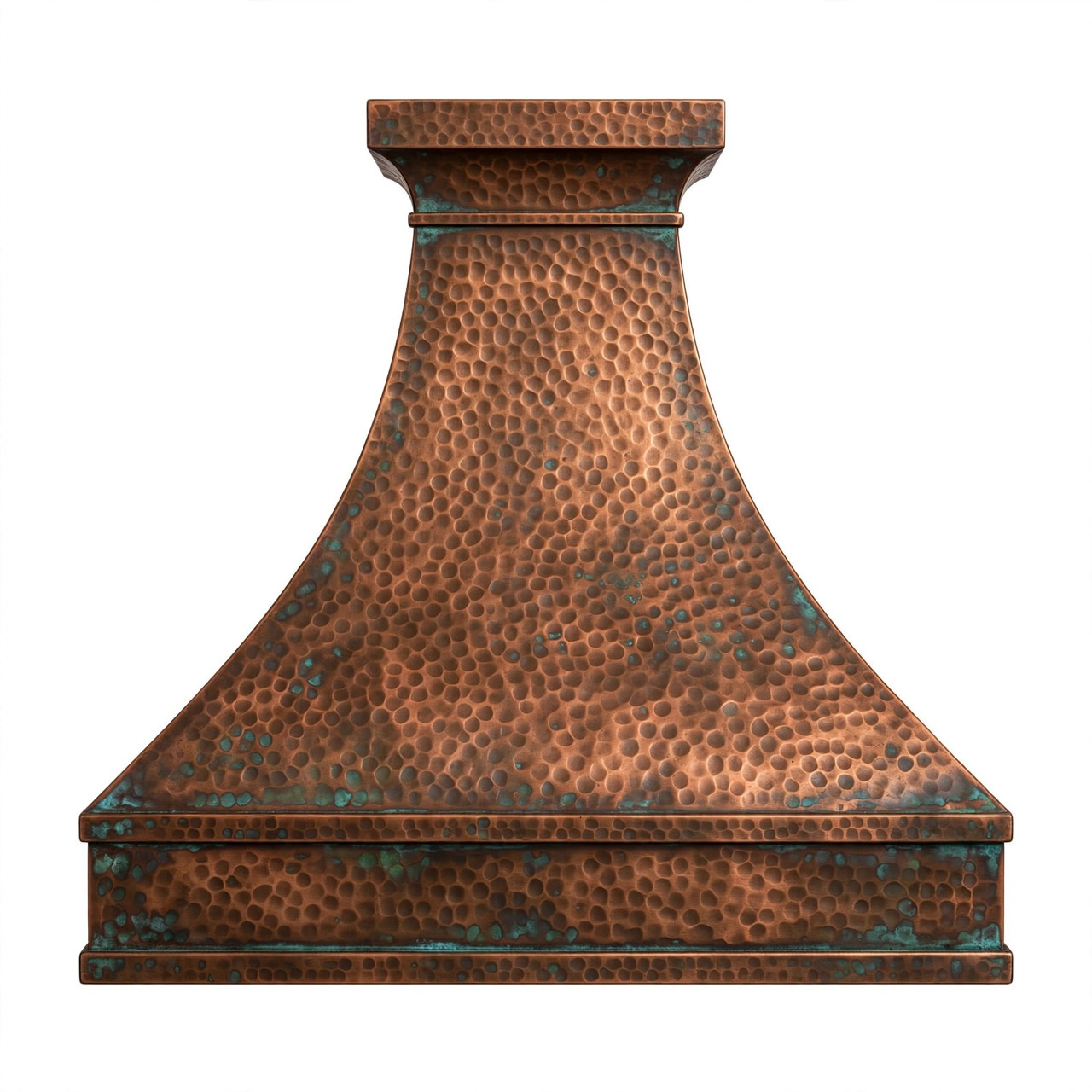
Rustic Luxury Hammered Bell Copper Range Hood Guide explains how a handcrafted copper hood with a wide bell canopy, broad lower apron, narrow curved chimney, horizontal neck band, stepped crown, and hammered surface can shape Spanish Colonial Revival, Tuscan villa, Old World Mediterranean, and rustic transitional kitchens. This made-to-order copper hood has a rustic handcrafted character, so hammering differences, patina movement, oxidation accents, tool marks, seam variation, and small artisan irregularities should be expected. No two hoods are identical, and those handmade details are part of the product’s authenticity rather than defects. Explore the rustic luxury hammered bell copper hood to review custom sizing, mounting choices, finish options, and insert planning.
Blog Summary
- Shape: Wide bell copper body
- Apron: Broad lower profile
- Chimney: Narrow curved form
- Texture: Hammered copper only
- Character: Rustic handmade variation
Design Guide Overview
A rustic luxury hammered bell copper range hood is designed for kitchens that need a strong handmade focal point above the range. The bell-shaped canopy creates broad lower presence, while the narrow curved chimney gives the upper section a graceful transition. The broad apron adds weight without relying on floral relief, scrollwork, vines, straps, or raised decorative panels. This makes the hood ideal for homeowners who want rustic character with a cleaner architectural profile. Buyers comparing similar silhouettes can review bell-shaped copper range hoods before choosing the final design.
Handcrafted Rustic Character
This copper hood is individually handmade, so the finished surface will not look factory uniform. Hammer marks, darker oxidation areas, patina movement, small tool marks, seam variation, and artisan inconsistencies are normal features of handcrafted copper work. These details give the hood its rustic luxury character and make each piece distinct. No two hoods will have the same surface movement, patina tone, or hammering pattern. In Spanish Colonial, Tuscan, Old World, and rustic transitional kitchens, this natural variation adds warmth, depth, and authenticity. Browse kitchen inspiration in our luxury hammered bell copper hood lifestyle images.
Bell Canopy Shape
The bell canopy is the primary architecture of this hood. The lower body spreads broadly above the cooking surface and then curves inward toward the upper chimney. This creates a strong range-wall presence while keeping the silhouette softer than a box or pyramid hood. The wide body works especially well above large cooking appliances, stone backsplashes, plaster walls, and warm wood cabinetry. For broader profile comparison, the bell-shaped copper hood guide explains how bell forms affect kitchen style and proportion.
Shape Benefits
- Canopy: Wide bell profile
- Apron: Strong lower presence
- Chimney: Graceful curved rise
- Crown: Stepped top detail
- Use: Rustic focal point
Broad Lower Apron
The broad lower apron gives this hood its substantial rustic luxury character. It creates visual weight above the range without adding decorative motifs. This makes the design more material-focused than ornate copper hoods with floral aprons or scroll panels. The apron also gives the hammered copper surface more room to show texture, patina, and oxidation movement. In larger kitchens, the apron helps the hood feel properly scaled. In smaller kitchens, width and height should be planned carefully so the lower profile does not overpower the surrounding cabinets.
Curved Chimney Detail
The narrow curved chimney gives the upper part of the hood a softer and more graceful transition. Instead of rising as a plain straight box, the chimney curves inward from the broad bell body, giving the hood more movement and architectural character. This detail helps the design feel refined while still remaining rustic. The chimney should be planned with ceiling height, duct route, backsplash height, and cabinet spacing in mind. Buyers comparing bell, curved, tapered, and apron-style profiles can use the copper hood shapes guide for planning help.
Profile Details
- Lower body: Wide bell canopy
- Apron: Broad rustic face
- Band: Horizontal neck line
- Chimney: Narrow curved form
- Top: Stepped crown
Hammered Copper Surface
This hood is sold as a hammered copper design, so the handworked texture is central to its appearance. Hammering creates light movement across the canopy, apron, chimney, and crown. It also helps the aged copper finish look richer than a flat sheet surface. The hammer marks may vary across the hood because each piece is shaped and finished by hand. This rustic surface character is expected and should be treated as part of the hood’s value. Buyers comparing different handcrafted copper models can browse the wider copper range hoods collection.
Horizontal Neck Band
The horizontal neck band separates the wide bell body from the curved chimney and gives the hood a more structured profile. This band adds a clear architectural transition without making the design overly decorative. It also helps the broad apron, main body, and upper chimney read as connected but distinct parts of the same custom hood. In rustic luxury kitchens, this simple band can coordinate with cabinet lines, stone seams, tile borders, or iron hardware. The band should remain proportional to the hood width and chimney height.
Stepped Crown
The stepped crown completes the upper profile and gives the hood a finished architectural top. Instead of ending with a plain chimney edge, the crown adds depth, shadow, and visual closure. This detail works well in kitchens with beams, tall cabinetry, plaster walls, stone backsplashes, and Old World materials. The crown should not feel too thin or too heavy for the hood body. When properly scaled, it helps the broad bell canopy and narrow chimney feel balanced from bottom to top.
Architectural Details
- Band: Defines neck transition
- Crown: Finishes upper edge
- Apron: Adds lower strength
- Texture: Hammered by hand
- Patina: Rustic aged movement
Spanish Colonial Revival Use
Spanish Colonial Revival kitchens often include plaster walls, Saltillo tile, dark wood, iron lighting, carved cabinetry, and warm handmade surfaces. This hammered bell copper hood fits naturally in that setting because the broad apron and aged copper surface create a strong rustic focal point. The curved chimney softens the upper profile, while the stepped crown gives the design architectural weight. Pair it with black iron hardware, terracotta floors, handmade tile, and warm plaster so the copper finish feels connected to the rest of the room.
Tuscan Villa Use
In a Tuscan villa kitchen, this hood pairs well with limestone, travertine, plaster, distressed cabinetry, heavy wood, bronze hardware, and muted earth-tone tile. The wide bell body gives the range wall visual strength, while the hammered texture adds the handmade depth expected in Tuscan interiors. A coffee or antique patina can make the hood feel richer against cream cabinets or stone walls. A natural or honey finish can create a warmer and brighter mood. The design is especially effective when the kitchen needs rustic luxury without floral or scroll decoration.
Tuscan Pairings
- Stone: Travertine or limestone
- Cabinets: Cream or distressed wood
- Walls: Plaster or limewash
- Hardware: Bronze or iron
- Tile: Muted handmade pattern
Old World Mediterranean Use
Old World Mediterranean kitchens often combine arches, beams, handmade tile, plaster walls, stone floors, and aged metals. This rustic luxury copper hood supports that look through its broad bell shape, curved chimney, hammered texture, and natural oxidation accents. The hood can become the main range-wall anchor without relying on elaborate ornament. A darker finish can create historic depth, while a lighter patina can brighten rooms with heavy wood or stone. If the backsplash uses decorative tile, keep the pattern balanced so the broad apron remains visible.
Rustic Transitional Use
Rustic transitional kitchens combine cleaner cabinetry with warm handmade materials. This hood fits that direction because the profile is strong but not overly ornate. The hammered copper adds rustic character, while the simple broad apron, neck band, curved chimney, and stepped crown keep the design structured. Pair it with shaker cabinetry, white oak, quartzite, plaster, simple tile, bronze hardware, and warm lighting. For homeowners comparing copper with zinc, brass, iron, tin, or pewter, the broader metal range hoods category shows how material choice changes kitchen style.
Patina and Finish
Patina selection controls how the hammering, apron, curved chimney, and crown appear. Coffee and antique finishes deepen the surface and highlight darker oxidation movement. Natural copper gives the hood a classic warm tone, while honey patina softens the surface with golden warmth. Green oxidized details can add artistic character when used carefully, and polished copper creates a brighter statement. Because the hood has broad hammered surfaces, patina variation will be visible. Before choosing the final finish, review the copper patina options guide.
Finish Options
- Coffee: Dark rustic depth
- Antique: Aged copper tone
- Natural: Classic copper warmth
- Honey: Softer golden finish
- Oxidized: Artistic green accent
Wall-Mount Planning
A wall-mounted hammered bell copper hood should be centered over the range or cooktop and aligned with the backsplash, cabinets, and ceiling details. The broad apron makes proportion especially important because the lower body becomes a major visual feature. Hood width, height, depth, lower clearance, crown height, and chimney shape should all be reviewed before production. The range wall should provide enough space for the bell body to feel intentional. For installation preparation, use the range hood installation guide.
Island Hood Planning
An island-mounted version must look balanced from several viewing angles because it is visible from the kitchen, dining area, and nearby living space. The bell canopy, broad apron, curved chimney, neck band, and stepped crown should appear proportional from every side. Island installations also require ceiling support, duct routing, electrical access, and careful alignment with the cooktop below. The hood should provide enough capture area without blocking important sightlines. A hammered bell copper island hood can become a dramatic centerpiece when scale and ceiling conditions are planned correctly.
Installation Checks
- Width: Match appliance scale
- Height: Fit ceiling space
- Depth: Plan capture area
- Duct: Confirm route early
- Mount: Wall or island setup
Size Planning
Custom size planning should account for range width, ceiling height, available wall or island space, backsplash height, cabinet spacing, lower clearance, and desired visual weight. This hood can be ordered in widths from 28 inches to 78 inches, heights from 24 inches to 72 inches, and standard 24 inch depth. A wider range usually needs a wider hood for proportion and capture area. Taller ceilings may require additional height so the curved chimney and crown do not look compressed. For common dimensions, review the range hood size guide.
Ventilation Insert Planning
The copper shell creates the exterior design, but the insert handles smoke, steam, grease, and odor removal. Rustica House can supply the optional 200 CFM insert or prepare the hood shell for a buyer-supplied ventilation system when complete specifications are provided before production. Insert details should include brand, model, cutout size, liner dimensions, duct size, controls, lighting placement, filter access, and blower type. For insert selection and planning details, review the range hood insert guide.
Insert Planning
- Insert: Confirm make and model
- Cutout: Send exact dimensions
- Duct: Match vent route
- Filters: Keep access clear
- Blower: Provide full details
Measurements to Send
Before production begins, buyers should send the range width, ceiling height, available wall or island space, desired hood width, hood height, standard or custom depth, lower clearance, duct route, insert brand, insert model, liner size, cutout dimensions, electrical access, filter access needs, cabinet limitations, and backsplash conditions. These details help the hood shell, broad apron, curved chimney height, mounting configuration, and ventilation opening be prepared correctly. Buyers still comparing basic questions can review the copper range hood FAQ.
Backsplash Coordination
The backsplash should support the broad apron without competing against the hammered surface. Stone slab, plaster, limestone, travertine, brick, handmade ceramic tile, and quiet patterned tile can all work depending on the kitchen style. If the backsplash is colorful or highly textured, the hood’s broad apron may lose visual clarity. A quieter background often makes the bell canopy and curved chimney stronger. In Spanish Colonial and Mediterranean kitchens, handmade tile can work well when its colors connect with copper, wood, iron, plaster, and flooring.
Cabinet Coordination
Cabinet color should be chosen with the copper patina and hood scale in mind. Cream and warm white cabinets create bright contrast. Dark wood supports Spanish Colonial, Tuscan, and Old World interiors. White oak, walnut, taupe, mushroom, sage, and charcoal can also work when paired with the right finish. Because the hood has a broad apron and strong bell shape, surrounding cabinet details should not be too busy. Simple raised-panel, inset, shaker, painted, or natural wood cabinetry usually creates the best balance.
Cabinet Pairings
- Cream: Warm copper contrast
- Dark wood: Old World depth
- Oak: Rustic transitional warmth
- Sage: Earthy kitchen color
- Charcoal: Dramatic contrast
Cleaning and Care
Copper should be cleaned gently to preserve patina and surface character. Use mild soap, warm water, and a soft cloth for routine wiping. Avoid abrasive pads, steel wool, bleach, ammonia, acidic cleaners, and harsh degreasers because they can scratch copper or disturb the finish. Hammered areas should be wiped carefully so residue does not collect in low points. Drying after cleaning can help reduce water marks and preserve the aged rustic appearance. For a deeper maintenance routine, review the copper hood cleaning guide.
Care Guidelines
- Soap: Use mild cleaner
- Cloth: Choose soft fabric
- Texture: Wipe hammered areas
- Avoid: No harsh chemicals
- Dry: Reduce water spots
Shipping and Warranty
Made-to-order copper hoods require careful delivery planning. Buyers should review production time, freight delivery, inspection steps, packaging, damage reporting, and return conditions before purchase. The hood should be inspected at delivery because custom metalwork is large, heavy, and project-specific. For current policy information, review shipping and returns. Warranty details can differ between the copper hood shell and optional ventilation components, so review the Rustica House warranty before finalizing the order.
Common Questions
What makes this hammered bell copper hood unique?
This hood is unique because it combines a wide bell canopy, broad lower apron, narrow curved chimney, horizontal neck band, stepped crown, and hammered copper surface. It has rustic handmade character instead of floral motifs, scrollwork, vines, straps, or raised decorative panels.
Is this hood smooth or hammered?
This hood is sold as hammered copper. Hammer marks, darker surface movement, oxidation accents, patina variation, small tool marks, and handmade irregularities are normal characteristics of artisan copper work and are not defects.
Can this hood be wall mount or island mount?
Yes. The hood can be prepared for wall or island installation when project details are provided before production. Buyers should confirm range location, ceiling height, duct route, support conditions, hood dimensions, and insert specifications before ordering.
What insert works with this hood?
Rustica House can supply the optional 200 CFM insert or prepare the hood shell for the buyer’s preferred ventilation equipment when full specifications are provided before production. Buyer-supplied insert details must be confirmed before fabrication.
What kitchen styles fit this hood?
This hood works well in Spanish Colonial Revival, Tuscan villa, Old World Mediterranean, and rustic transitional kitchens. It pairs naturally with plaster walls, stone backsplashes, carved wood, handmade tile, iron lighting, warm cabinetry, and aged metal hardware.
Design Summary
A rustic luxury hammered bell copper range hood is ideal for kitchens that need bold copper warmth, broad lower presence, curved chimney movement, and handmade surface texture. The wide bell canopy creates a strong focal point, while the broad apron gives the hood a substantial lower profile. The neck band and stepped crown add structure without making the design overly decorative. Proper size planning, finish selection, insert preparation, mounting details, backsplash coordination, shipping review, and careful cleaning help the hood remain functional and visually balanced.
Final Design Guidance
Rustic Luxury Hammered Bell Copper Range Hood Guide shows how bell canopy architecture, broad apron proportion, curved chimney shape, hammered copper texture, patina variation, and ventilation planning work together. Choose this hood when the range wall needs rustic luxury character without floral motifs, scrollwork, vines, or decorative strap layouts. Pair it with plaster, stone, handmade tile, warm wood cabinetry, iron lighting, bronze hardware, and a copper finish that supports the room palette. Confirm width, height, depth, wall or island mounting, insert details, duct route, backsplash conditions, shipping expectations, and finish choice before production.