 US Dollar
 Euro
Euro
 Australian Dollar
 Canadian Dollar
 Polish Zloty
 British Pound

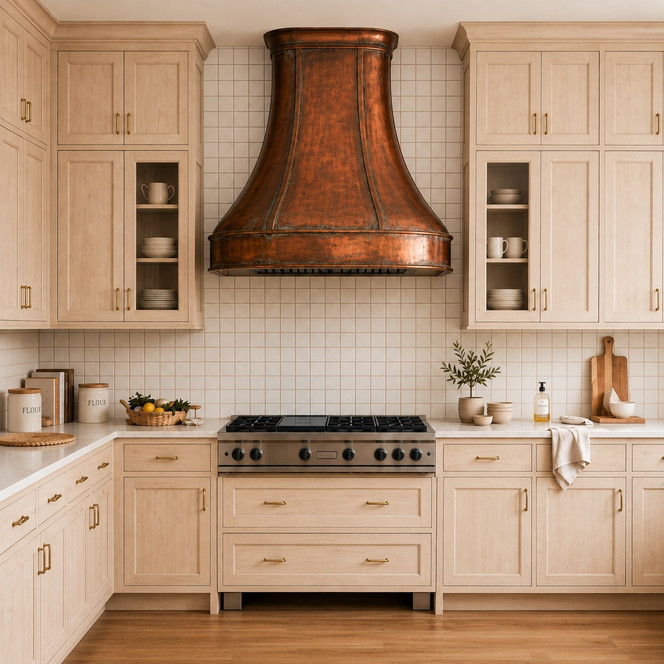
Regional influences in copper range hood design demonstrate how handcrafted copper can support kitchens ranging from Tuscan villas and Spanish Revival homes to Scandinavian interiors and urban lofts. Shape establishes the architectural direction, while hammering, patina, straps, rivets, crowns, aprons, cabinetry, tile, and stone determine the final regional character. A rounded dome may feel Mediterranean, a paneled bell can suggest Spanish Revival, and a plain geometric canopy suits modern or industrial spaces. Explore the complete copper range hood collection to compare bell, dome, box, tapered, sloping, and under-cabinet forms. Learn how the hoods are produced in the handmade copper range hoods guide, then compare additional installations in the copper hood shape gallery.
Blog Summary
- Scope: Ten regional directions
- Images: Ten different products
- Shapes: Dome, bell, box and tapered
- Textures: Smooth or hammered
- Details: Straps, rivets and scrolls
- Planning: Match hood to architecture
Regional Copper Range Hood Style Gallery
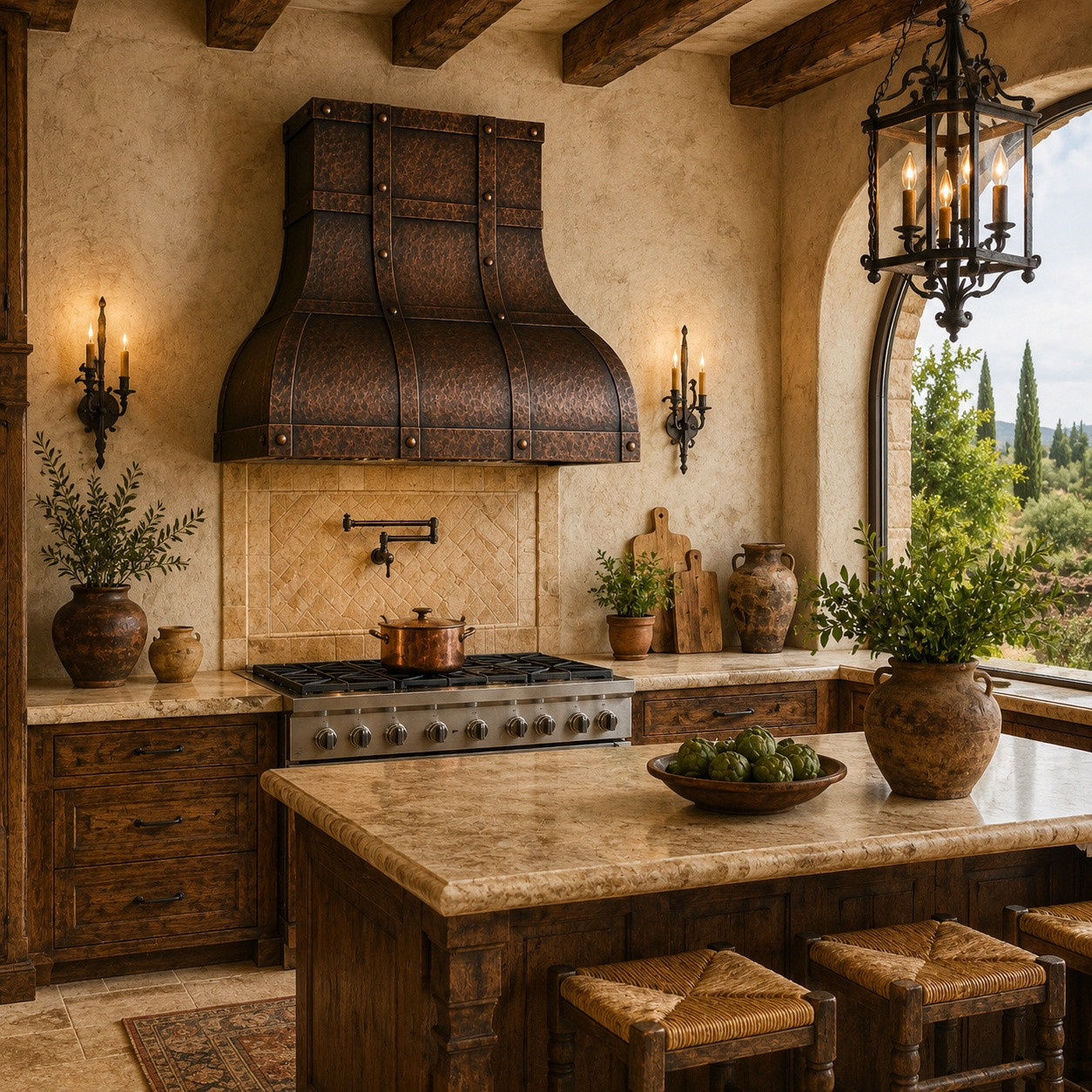
TuscanRounded copper, stone, cream cabinetry, walnut, terracotta, and forged lighting create the warmth of an Italian countryside kitchen. |
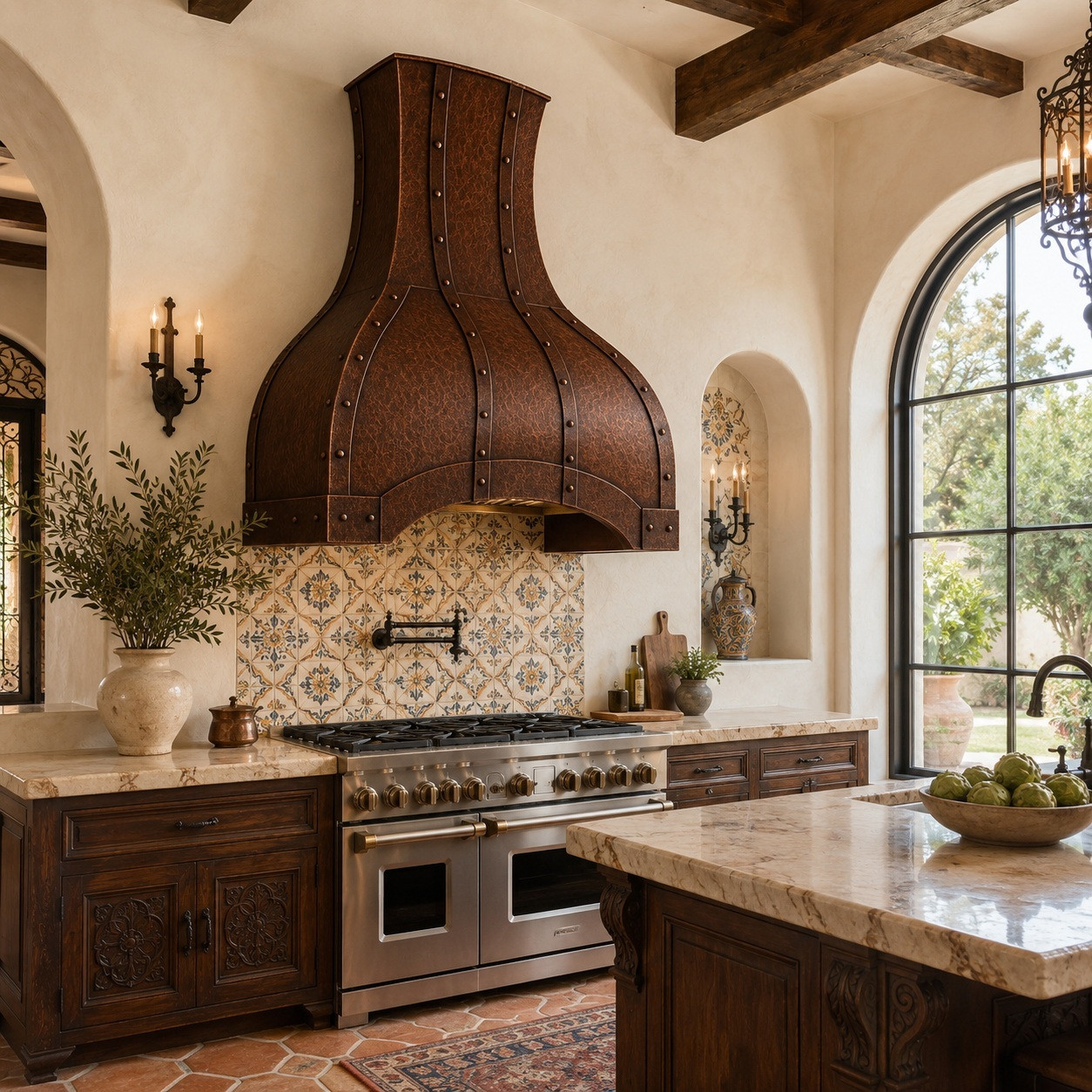
Spanish RevivalA domed canopy, arched apron, riveted bands, plaster walls, dark timber, and patterned tile reinforce California Spanish architecture. |
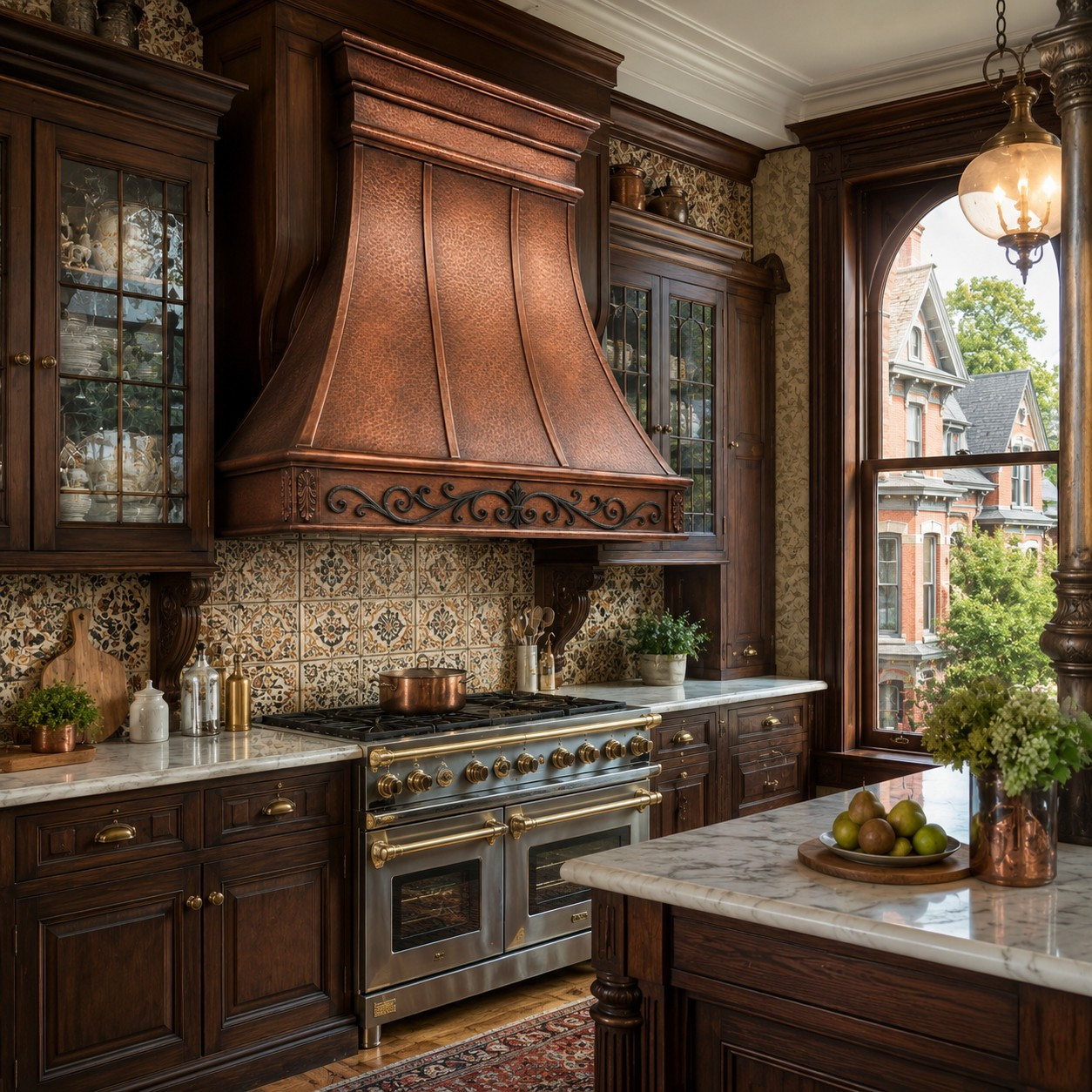
VictorianLayered crown molding, a tall bell body, patterned tile, dark cabinetry, and forged scrollwork suit historic townhouses and revival homes. |
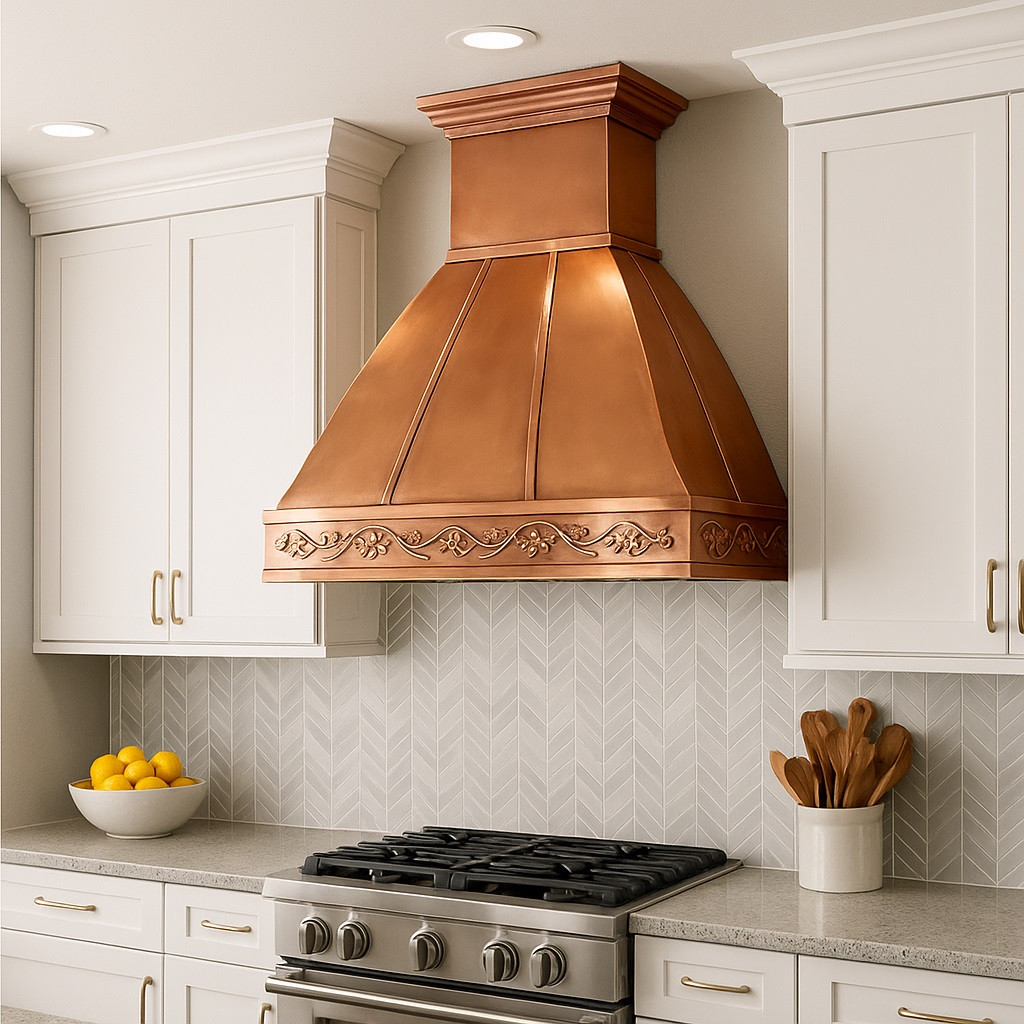
French CountryA polished bell canopy, graceful apron ornament, painted cabinets, marble, and soft neutral colors create refined provincial character. |
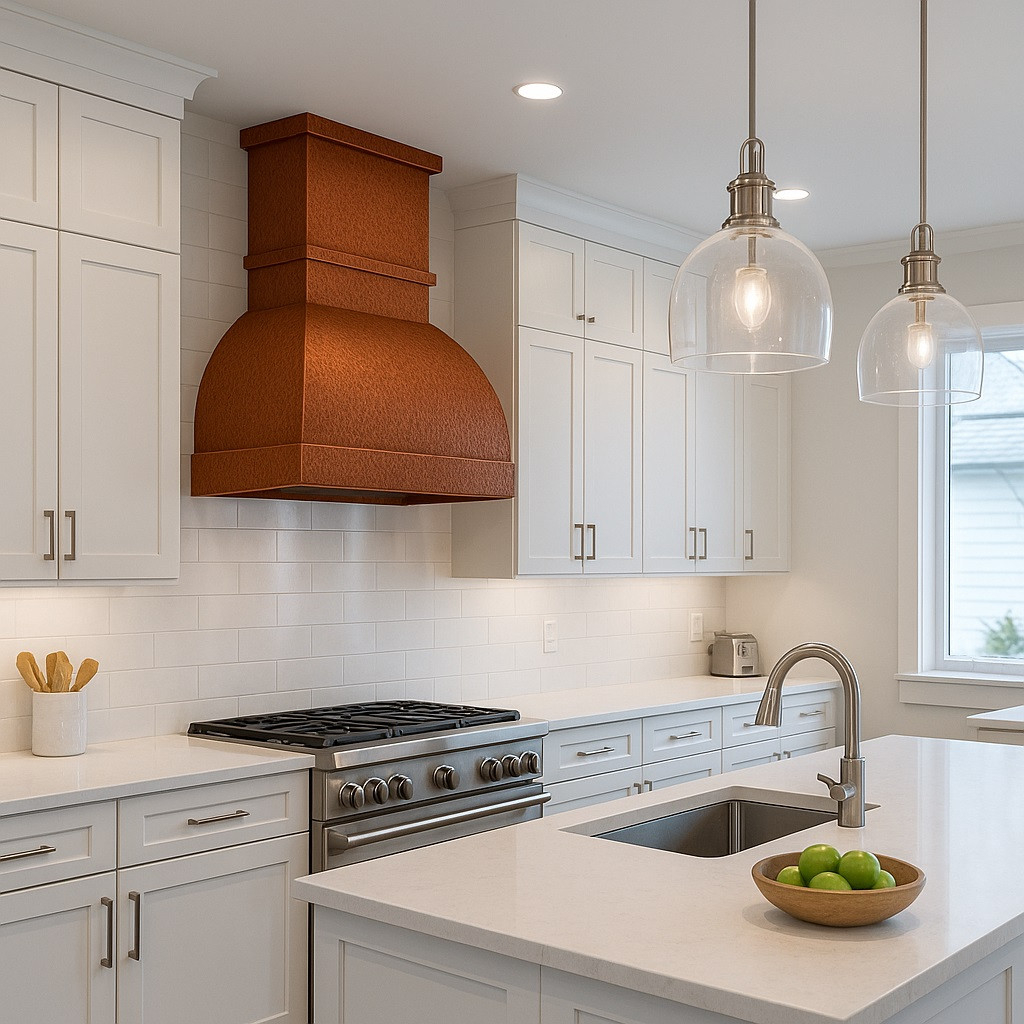
ModernClean cabinetry, broad stone surfaces, limited trim, and a smooth architectural hood use copper as controlled warmth rather than ornament. |
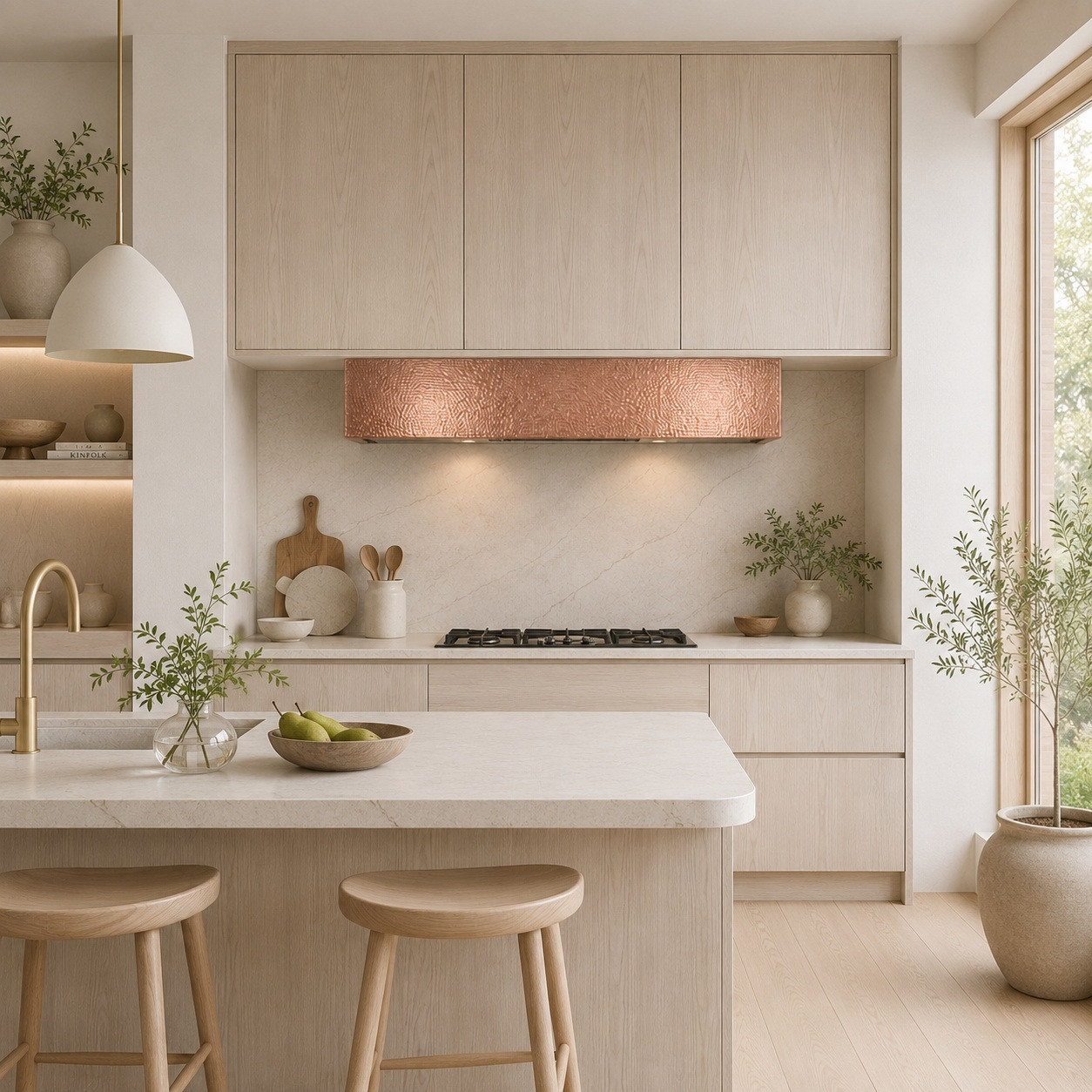
ScandinavianPale oak, white walls, natural light, quiet stone, and a low copper profile provide warmth without interrupting Nordic simplicity. |
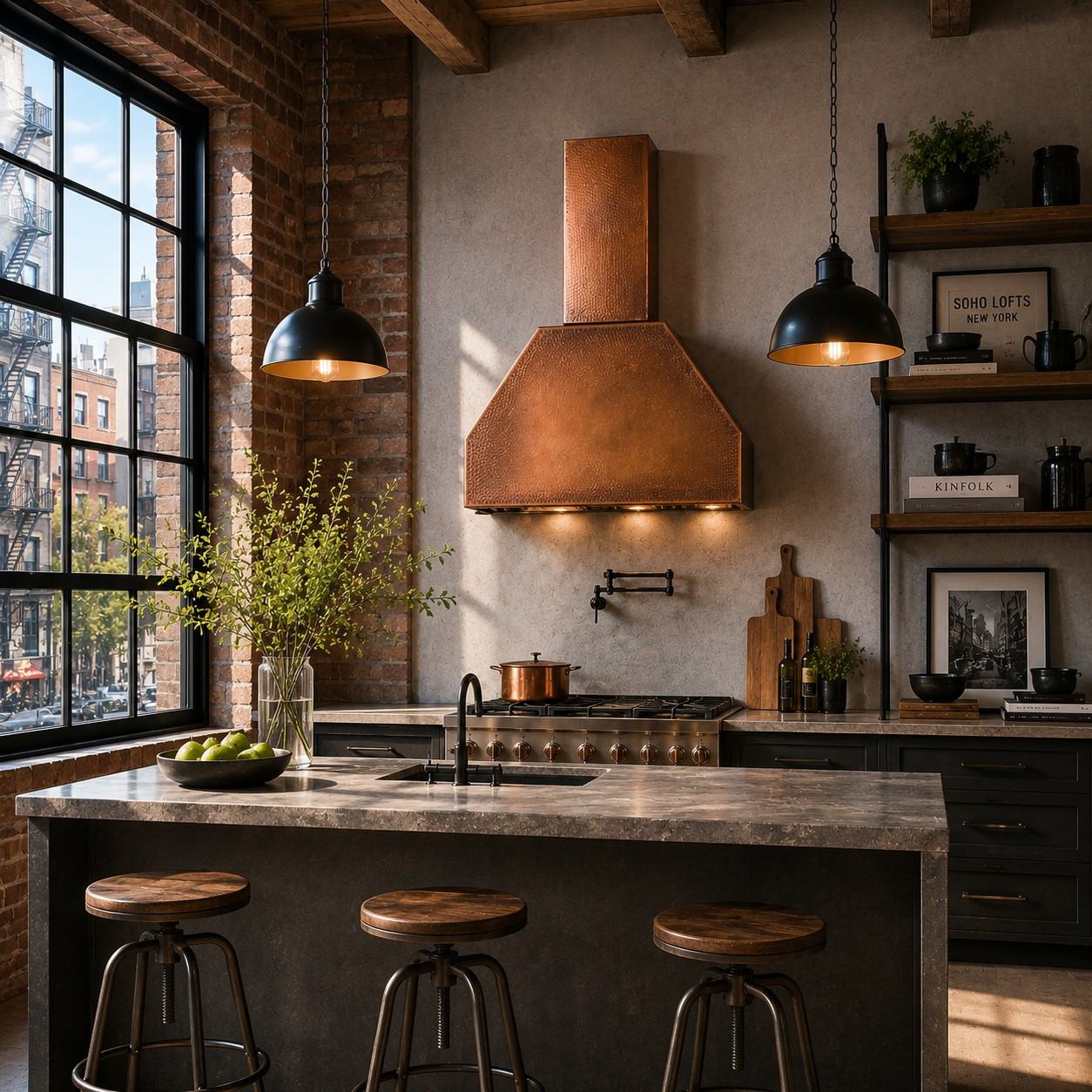
Industrial LoftRectangular geometry, exposed brick, steel, open shelving, and hammered copper create a warm focal point within urban architecture. |
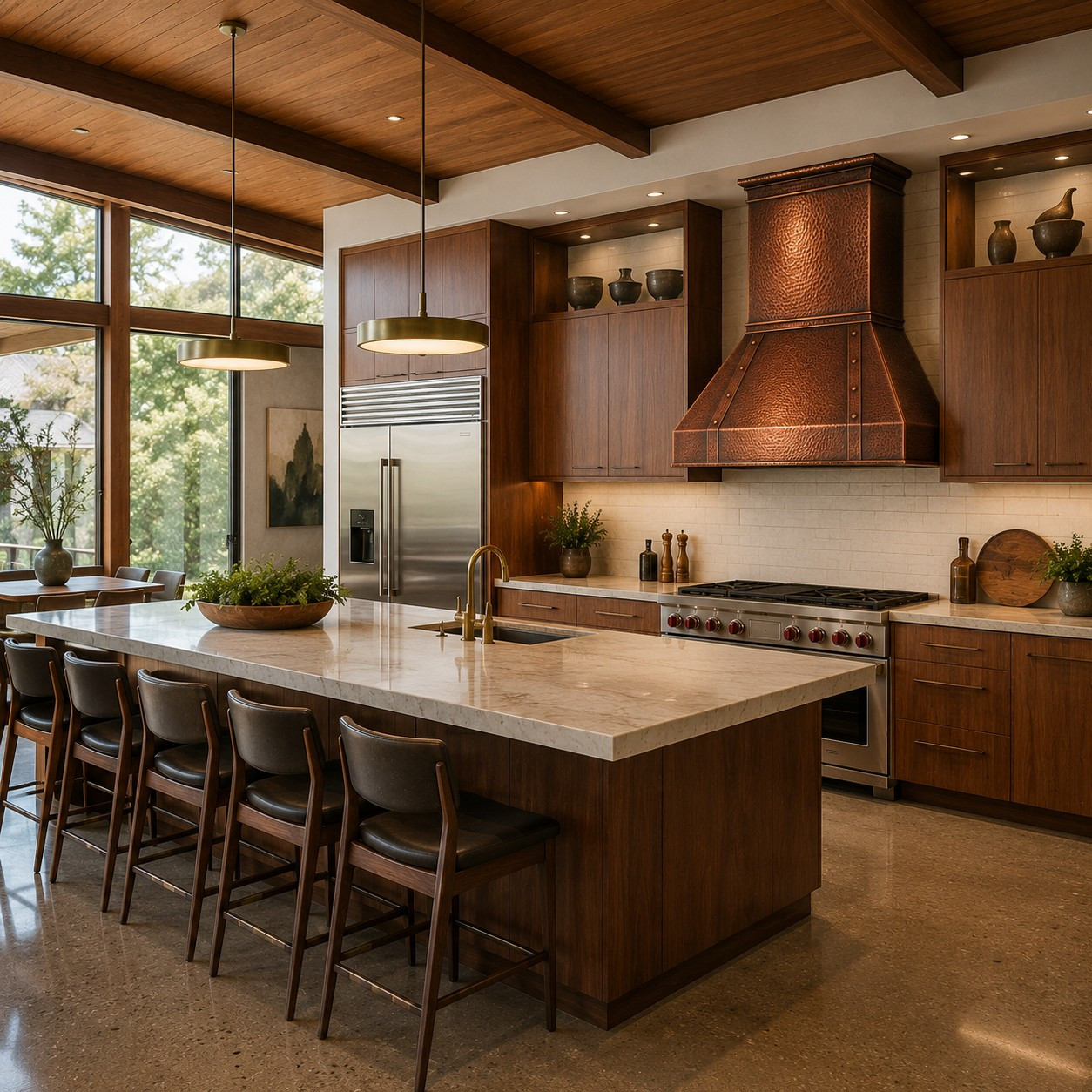
Mid-CenturyWalnut cabinetry, open planning, large windows, a broad apron, and compact chimney connect artisan copper with vintage modern design. |
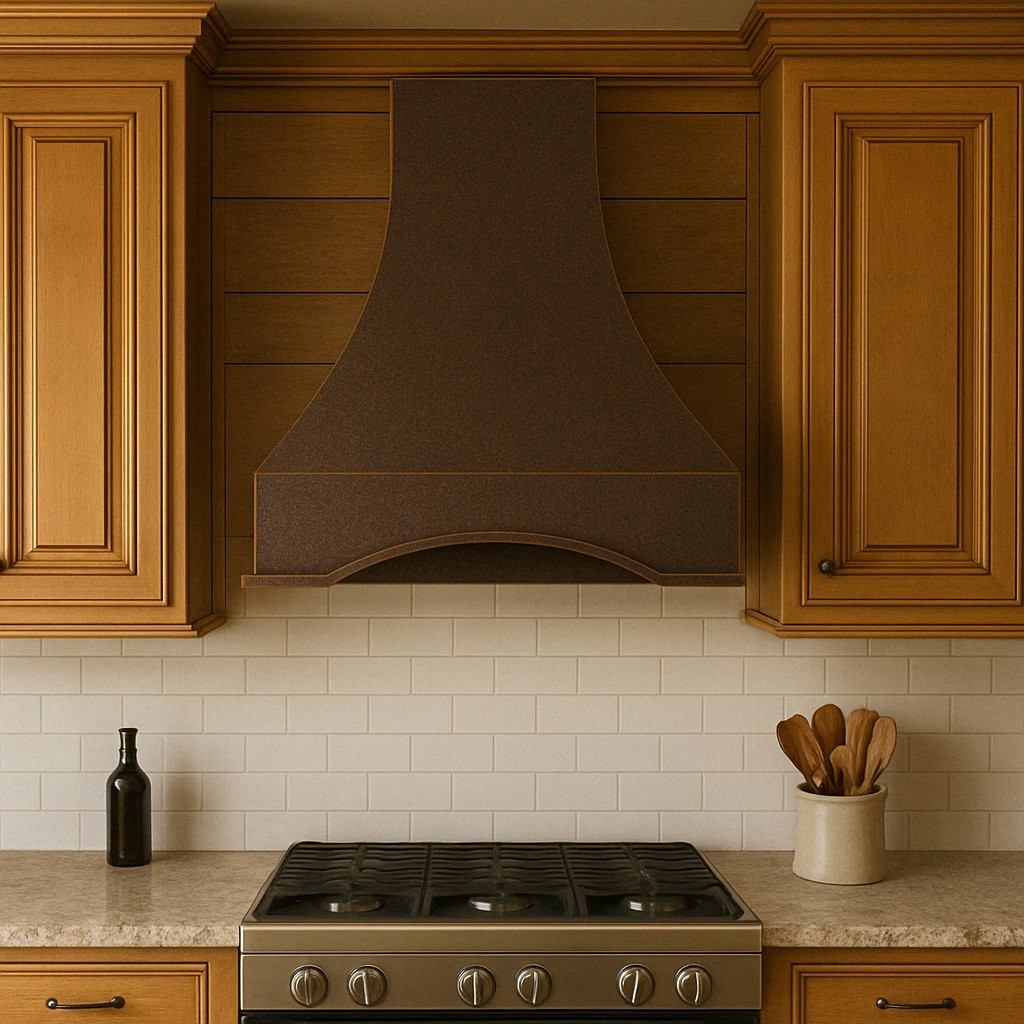
RusticIrregular hammering, timber, stone, dark patina, and natural variation reinforce the room’s handmade and timeworn material character. |
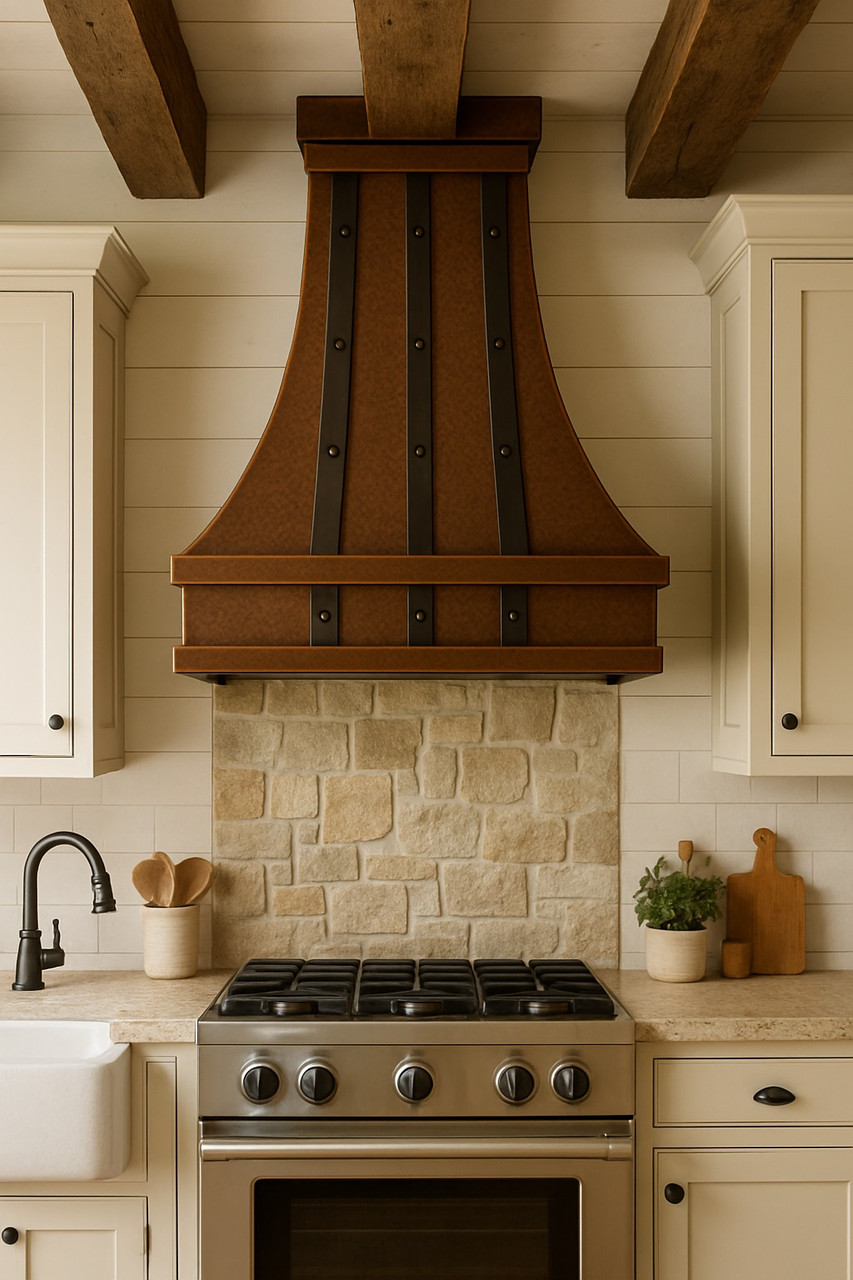
Modern FarmhouseShaker cabinets, pale counters, simple tile, warm wood, and restrained riveted straps combine practical farmhouse structure with updated finishes. |
How Regional Character Changes the Hood
The same copper material can appear formal, rustic, minimal, or industrial depending on how it is shaped and detailed. Tuscan and Spanish Revival interiors favor rounded bodies, darker patinas, architectural aprons, and visible handcrafted construction. Victorian and French country kitchens support stronger crown molding and ornamental metalwork. Modern, Scandinavian, and industrial rooms depend more on proportion, clean planes, and controlled texture. Rustic and farmhouse kitchens use hammering, patina movement, rivets, wood, and stone to establish warmth.
The strongest result begins with the room rather than the hood alone. Consider the cabinet door style, backsplash pattern, countertop movement, ceiling height, windows, beams, flooring, and lighting before selecting the silhouette. A highly patterned backsplash may need a simpler hood, while a quiet plaster or stone wall can support stronger straps, scrolls, or riveted panels.
FAQ – Regional Copper Hood Styles
A: Tuscan, Spanish Revival, Hacienda, Mediterranean, rustic, and farmhouse kitchens have especially strong material compatibility.
A: Yes. Changes in cabinetry, tile, stone, lighting, patina, and hardware can substantially change how the same silhouette is interpreted.
A: Spanish Revival, Tuscan, rustic, farmhouse, Hacienda, Gothic, and industrial interiors often benefit from visible hand hammering.
A: Modern, Scandinavian, Art Deco, contemporary, and minimalist kitchens generally support cleaner copper surfaces.
A: Dome, bell, campana, and curved-apron hoods work well with stone, timber, plaster, and traditional cabinetry.
A: Rounded or paneled forms, arched aprons, riveted straps, warm patina, plaster, iron, and patterned tile are common features.
A: Yes. Choose a rectangular, box, or tapered hood with simple lines, darker patina, and restrained exposed construction.
A: A simple tapered or under-cabinet hood with a light natural or polished finish preserves visual clarity while adding warmth.
A: No. Dark finishes feel older and heavier, while honey, natural, or polished copper can brighten French country, modern, or Scandinavian rooms.
A: Yes. Hammer marks, patina movement, seams, tool marks, rivet placement, and small irregularities are part of authentic artisan fabrication.
Choose the Regional Direction
Begin with the home’s architecture and select the hood shape before choosing patina and ornament. Coordinate its scale with the range, cabinetry, backsplash, ceiling, and ventilation equipment. Copper can reinforce a historical regional identity or provide handcrafted contrast in a modern room, but the design works best when every material supports the same architectural direction. Read our regional copper range hood styles design guide to compare architectural traditions, finishes, and handcrafted details.