 US Dollar
 Euro
Euro
 Australian Dollar
 Canadian Dollar
 Polish Zloty
 British Pound

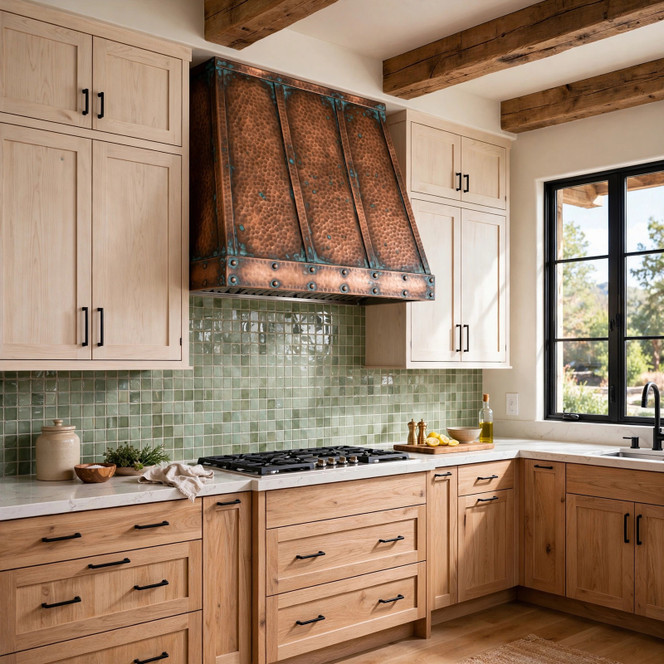
Copper range hood shape galleries help shoppers compare silhouettes before choosing a custom hood for a kitchen project. A bell hood, dome hood, box hood, sloping hood, arched hood, tapered hood, under-cabinet hood, wall hood, and island hood can all use the same warm copper material, yet each one changes the range wall in a different way. Some shapes feel traditional and sculptural. Others feel clean, compact, modern, or architectural. This gallery uses Rustica House lifestyle images to show how different copper hood shapes look in finished kitchens. Learn about materials, finishes, and craftsmanship in our copper range hoods collection and the handmade copper range hoods guide.
Blog Summary
- Focus: copper hood shape gallery
- Material: handcrafted copper
- Shapes: bell, sloping, box, dome
- More shapes: arched and tapered
- Layouts: under-cabinet, wall, island
- Use: kitchen design comparison
Copper Range Hood Shape Gallery
Choosing a copper range hood is not only a finish decision. Shape controls how the hood relates to cabinets, ceilings, backsplashes, islands, and appliances. A tall tapered hood draws the eye upward. A dome hood adds rounded volume. A box hood creates a cleaner horizontal feature. An under-cabinet hood keeps the design compact below upper cabinets. A wall or island hood can become the main architectural centerpiece of the kitchen.
The images below show one Rustica House example for each major shape or installation layout. They are not meant to show every available copper hood model. Instead, they provide a visual starting point for understanding how silhouette changes the mood of the room.
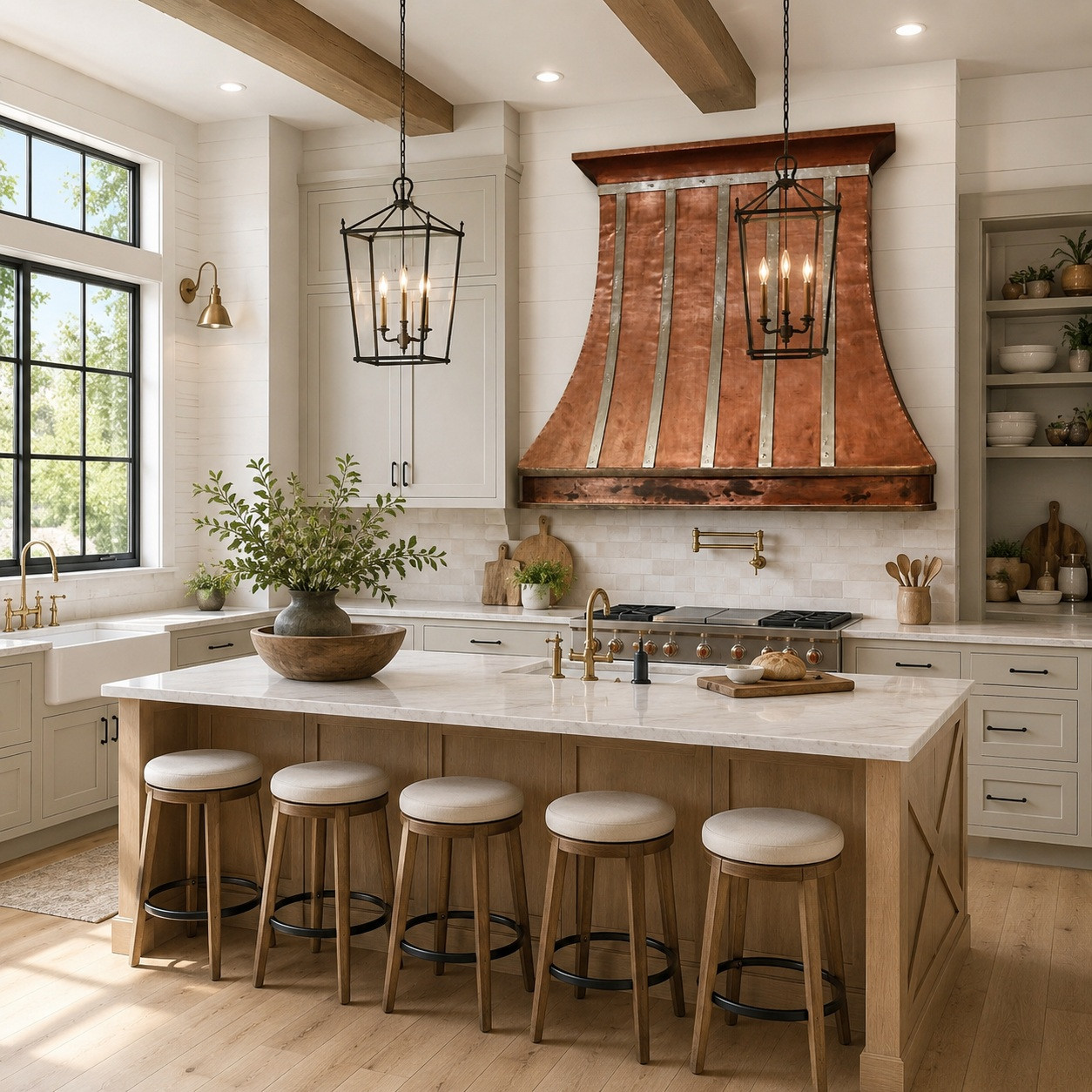
Bell Copper Hood
A bell copper hood brings soft movement to the range wall. The sides curve outward as the body descends, creating a shape that feels traditional, warm, and approachable. This example uses a smooth copper bell body with zinc straps and a rounded apron, giving the hood mixed-metal structure without making the design too heavy.
Bell hoods work especially well in farmhouse, transitional, rustic European, and traditional kitchens. Their rounded shape softens straight cabinet lines and adds a handcrafted focal point above the cooking area. When the surrounding kitchen uses stone, wood, painted cabinetry, or handmade tile, a bell copper hood can tie those materials together through warmth and curve.
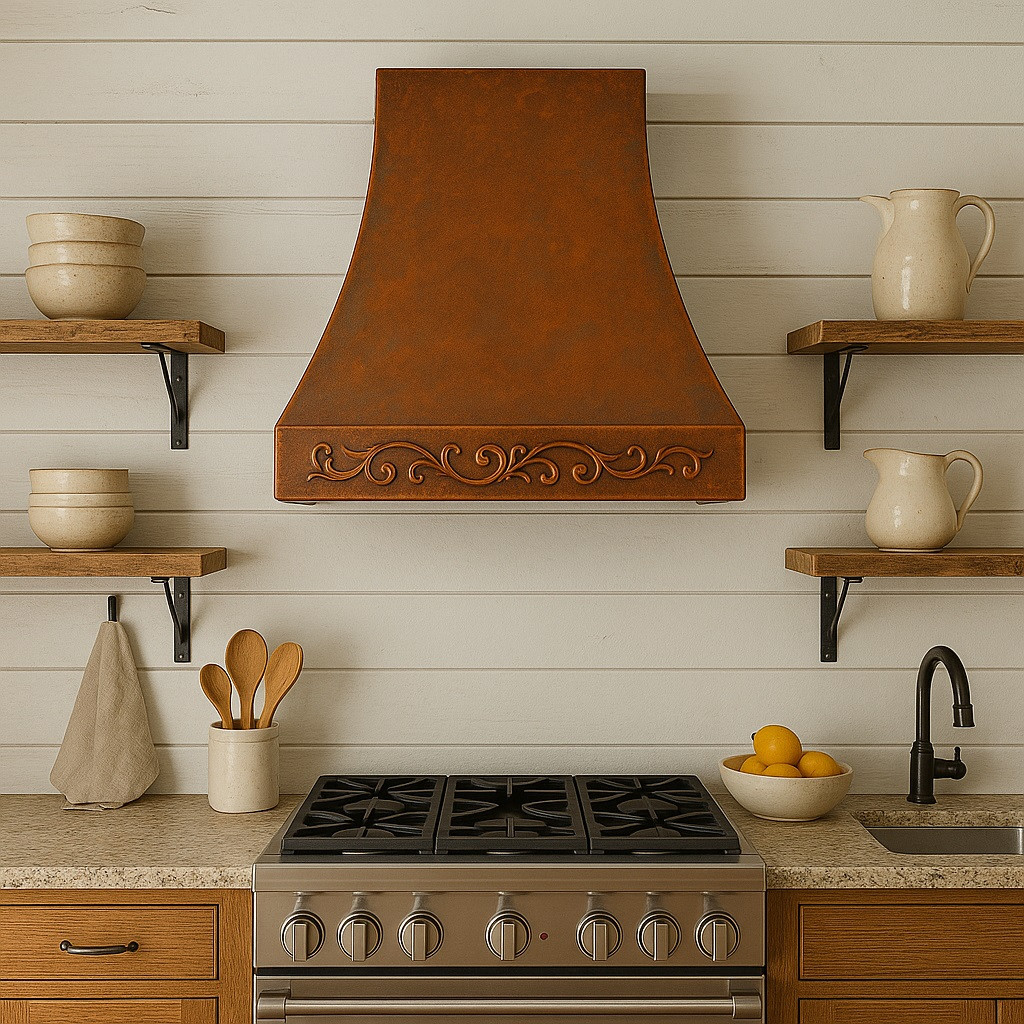
Sloping Copper Hood
A sloping copper hood uses angled planes to move from a wider lower edge toward a narrower upper body. The shape is more linear than a bell hood, but it still has enough movement to avoid looking flat. In farmhouse and traditional kitchens, this sloped profile can feel practical, strong, and familiar.
The sloping shape is useful when the kitchen needs a clear range-wall feature without a fully rounded canopy. It pairs well with simple cabinet layouts, wood beams, stone counters, and tile backsplashes. Depending on finish and trim, a sloping copper hood can move from rustic to refined. A smooth face feels cleaner, while hammered copper adds more artisan texture.
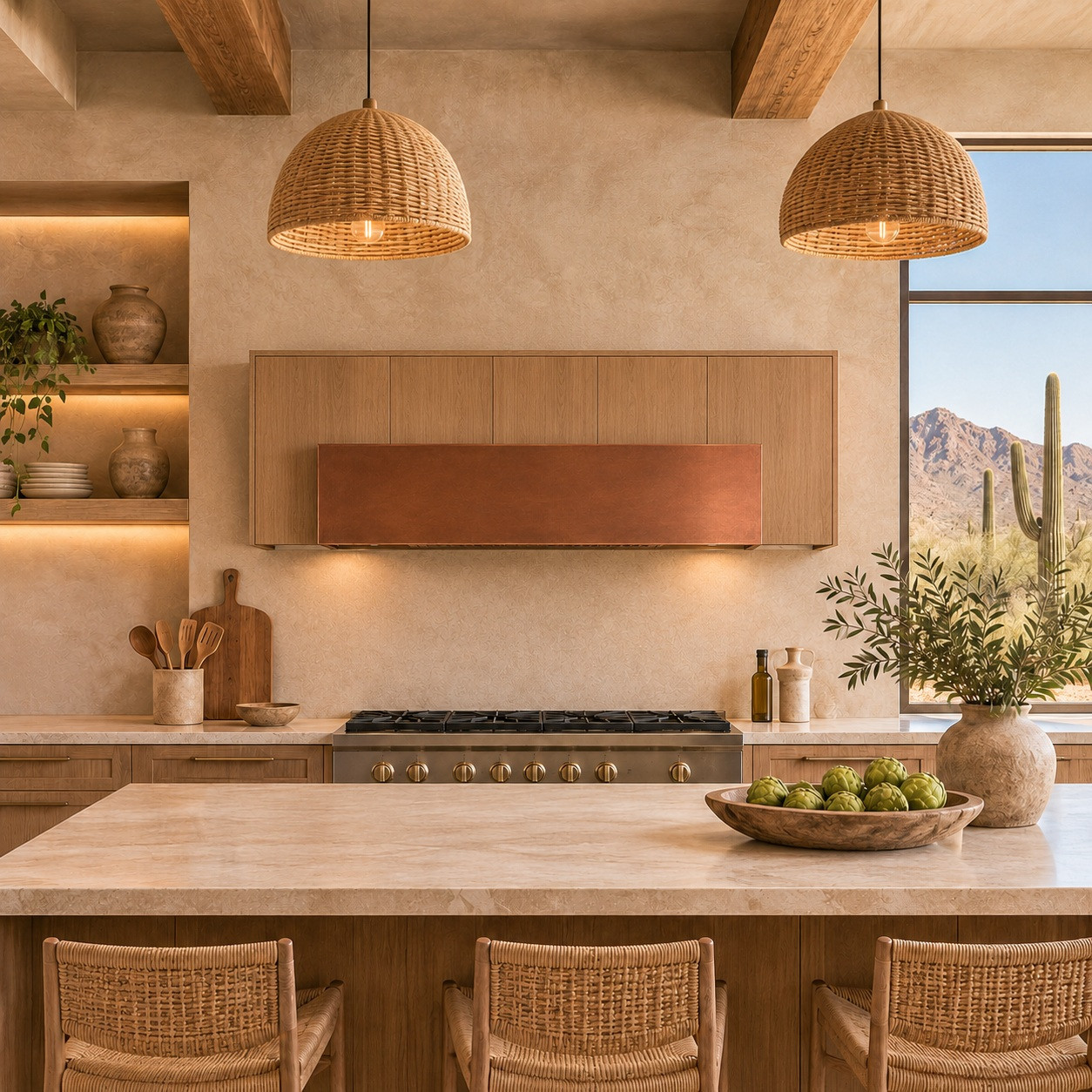
Box Copper Hood
A box copper hood creates a clean rectangular feature. This example uses a smooth copper face and compact under-cabinet format, making it a strong choice for modern, desert modern, organic modern, and soft contemporary kitchens. The appeal comes from proportion and finish rather than curved shape or decorative trim.
Box hoods are useful when the kitchen design depends on straight lines, slab cabinets, simple hardware, or architectural restraint. The copper still adds warmth and visual character, but the shape remains disciplined. A box hood can also be easier to integrate below upper cabinets or within a modern range wall where a tall chimney would feel too dominant.
Dome Copper Hood
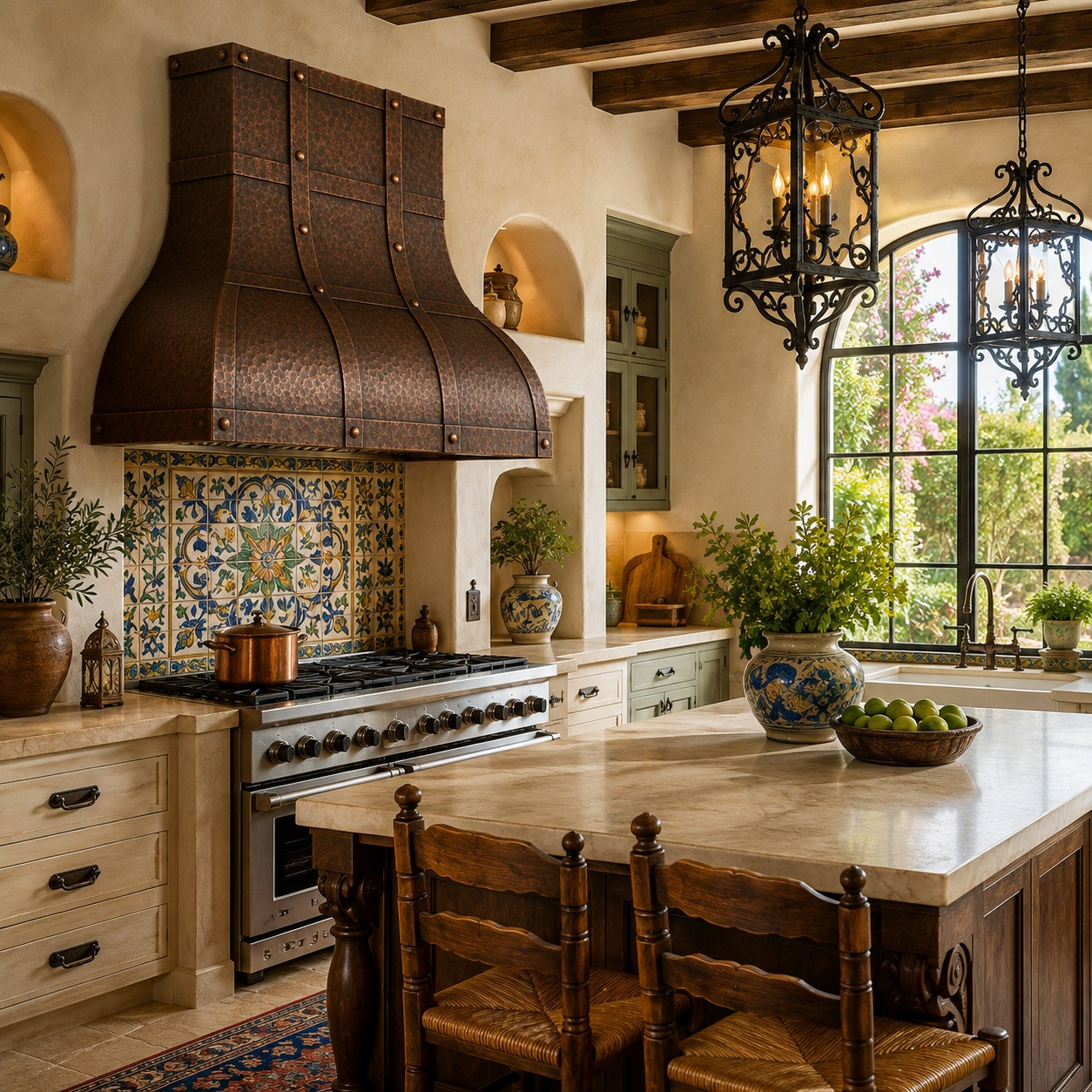
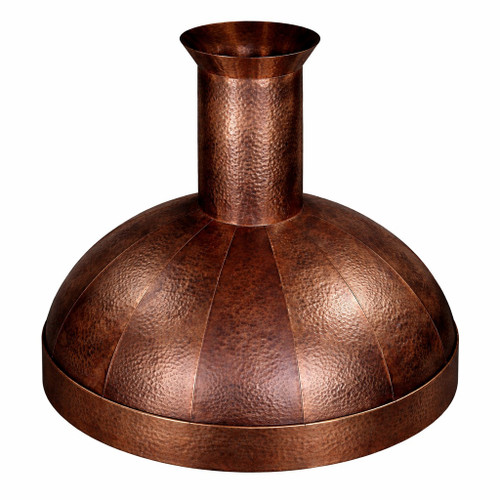
A dome copper hood adds rounded volume and sculptural presence. The curved canopy can feel old-world, Spanish Revival, Tuscan, or rustic luxury depending on the surrounding architecture. This example includes an architectural strap grid, which divides the copper body into structured sections and adds handmade metalwork rhythm.
Dome hoods are effective in kitchens with arches, plaster, stone, decorative tile, and strong range-wall compositions. The rounded body gives the room a central focal point, while copper warms the space. When a dome hood includes straps, the design becomes more architectural and formal. When the dome is plain, the shape feels softer and simpler.
Arched Copper Hood
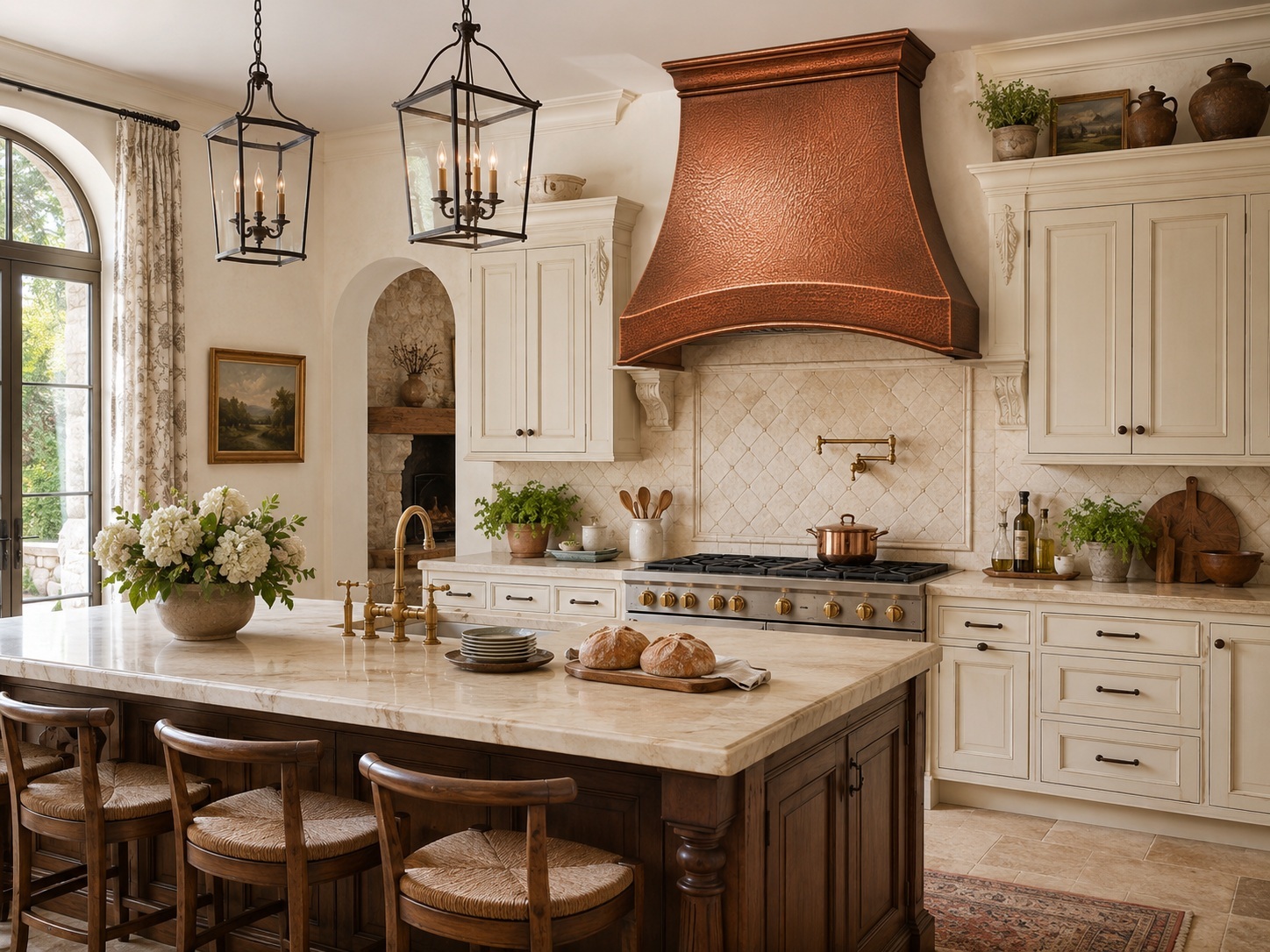
An arched copper hood uses a curved lower line to soften the range wall. The arch can appear across the apron, front opening, or lower canopy edge, depending on the model. This shape works well in Spanish, Mediterranean, European, Hacienda, and rustic kitchens because it relates naturally to arched doorways, tile niches, and traditional masonry forms.
The arched profile can make a large hood feel less severe. Instead of ending in a straight horizontal band, the lower curve introduces movement and creates a more welcoming focal point. When paired with hammered copper, the shape feels especially handcrafted. The finish catches light across the curve, making the hood feel warmer and more dimensional.
Tapered Copper Hood
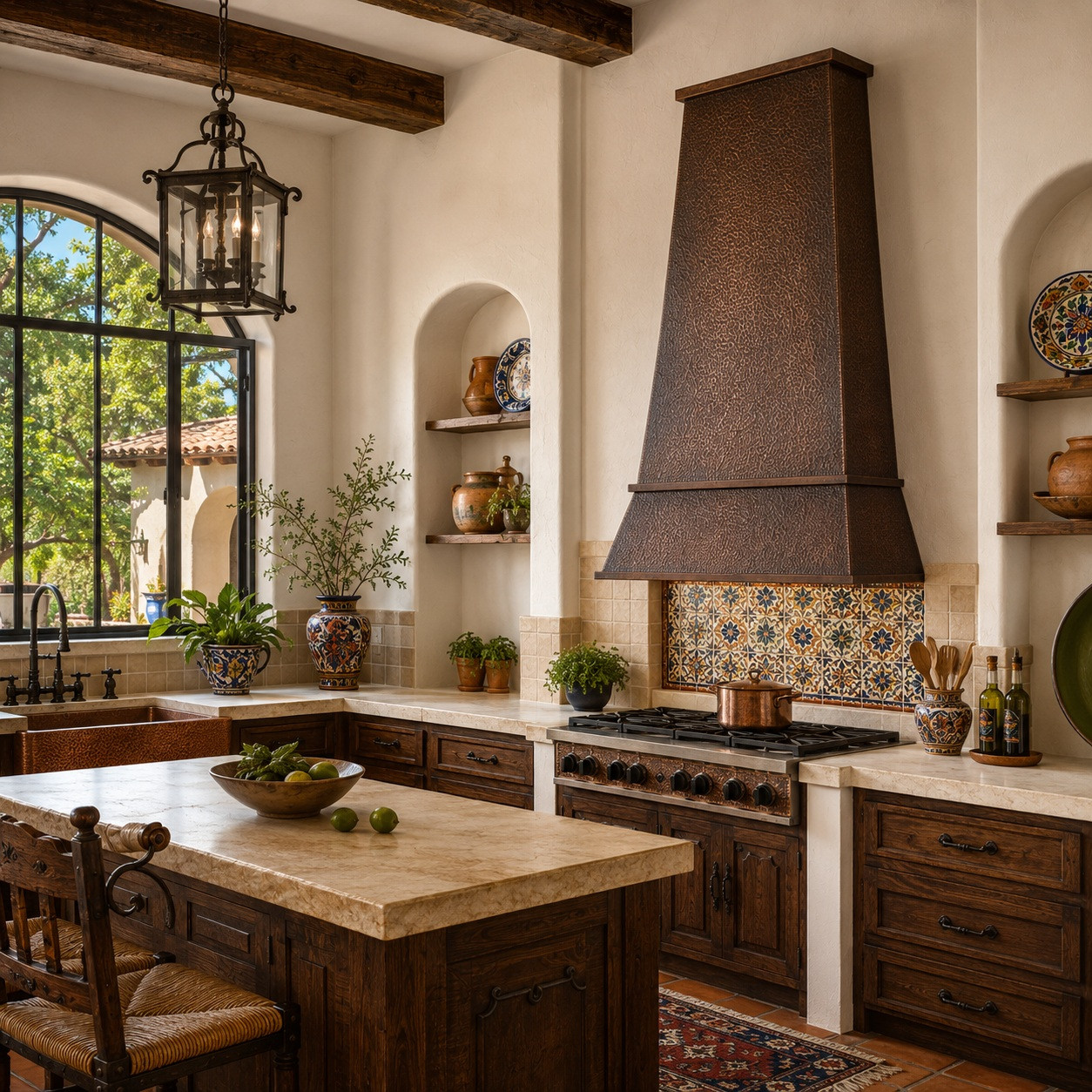
A tapered copper hood draws the eye upward through straight angled planes. The lower section is wider, while the chimney narrows as it rises. This creates height and structure without using rounded curves. The shape works well in colonial, Mediterranean, commercial, hospitality, rustic, and transitional kitchens.
The tall tapered example shown here has a strong vertical presence. It can work in residential kitchens, but it is also useful in restaurants, wine bars, resort kitchens, and other hospitality spaces where the hood must hold its own in a larger room. The tapered shape feels substantial, while the copper finish prevents the design from becoming cold or purely industrial.
Under-Cabinet Copper Hood
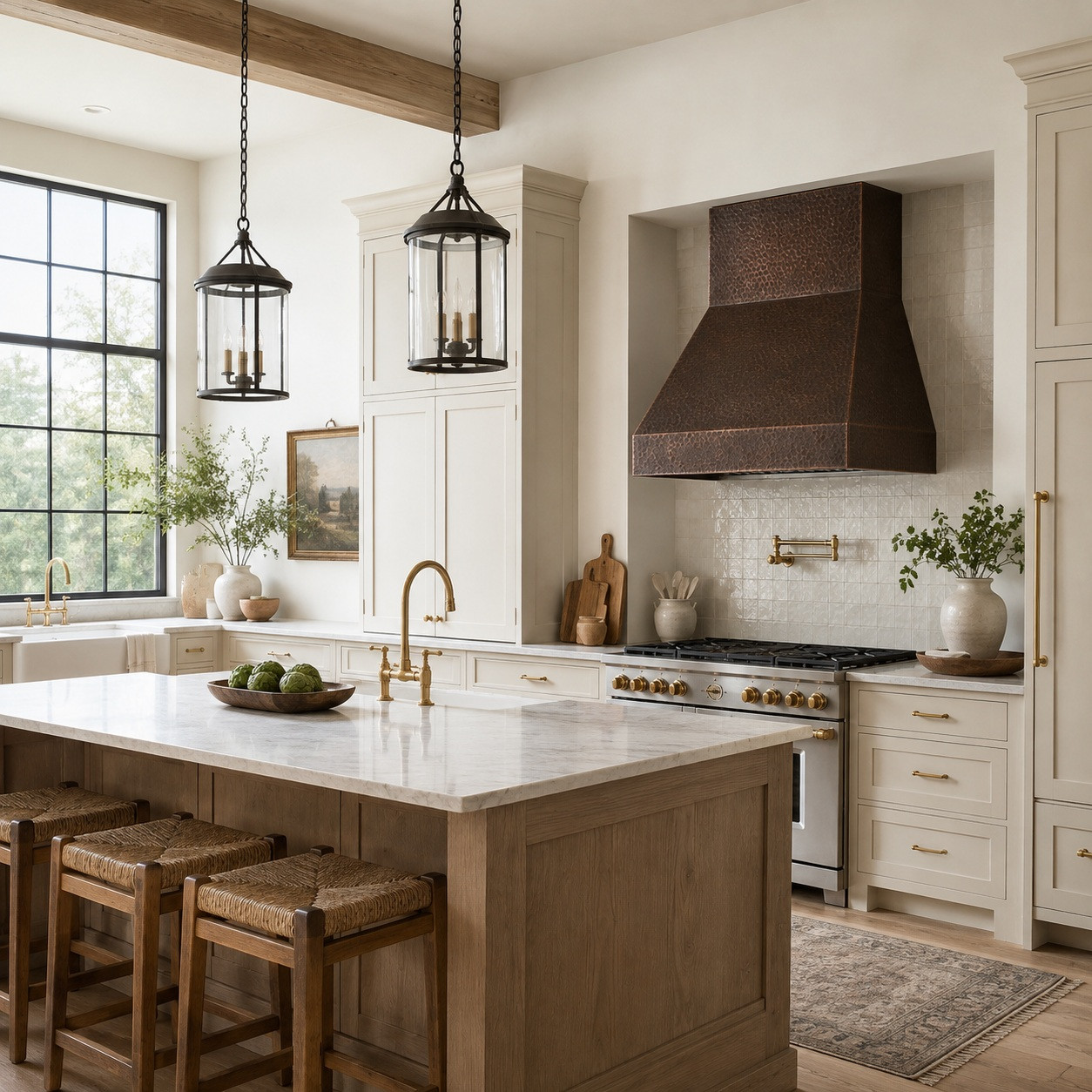
An under-cabinet copper hood is the right comparison point for kitchens where upper cabinets remain above the cooking area. Instead of replacing the cabinet zone with a tall chimney canopy, the hood sits compactly below the cabinet line. This can be helpful in smaller kitchens, remodels, apartments, or cabinet-focused layouts.
The example shown here uses a simple sloped copper face with a clean lower apron. It brings warmth to the kitchen without taking over the full wall. Under-cabinet copper hoods can work in modern farmhouse, transitional, organic modern, contemporary rustic, and compact traditional kitchens. The copper gives the room a custom look while preserving storage and horizontal cabinet rhythm.
Wall or Island Copper Hood
Wall and island range hoods require different visual planning than under-cabinet models. A wall hood is usually centered against a range wall, often between cabinets, shelves, windows, or a framed backsplash. An island hood must be considered from multiple sides because it is more exposed in the room. The finish, side panels, lower edge, and proportions become especially important.
A copper hood can work beautifully in both layouts. On a wall, it anchors the cooking zone and coordinates with cabinetry and backsplash materials. Over an island, it becomes a sculptural feature visible from the kitchen, dining area, and living space. For island use, the hood should be visually finished and proportioned carefully so it looks intentional from every direction.
How to Compare Copper Hood Shapes
When comparing copper hood shapes, start with the kitchen’s architecture. A room with strong arches, plaster, and tile may support a dome or arched hood. A modern kitchen with slab cabinetry may benefit from a box or smooth under-cabinet hood. A room with high ceilings may need a tall tapered design. A farmhouse or transitional kitchen may work well with a bell or sloping profile.
Next, consider surface texture. Hammered copper adds movement, handmade depth, and rustic warmth. Smooth copper feels cleaner, quieter, and more architectural. Polished copper reflects more light, while antique or darker patinas feel aged and grounded. The finish should support the room’s cabinetry, counters, backsplash, hardware, and lighting.
Craftsmanship and Finish Character
Handmade copper range hoods are valued because they are not perfectly identical. Small differences in hammering, seams, folded edges, patina tone, strap alignment, surface movement, and artisan finishing are part of the handmade character. These variations help each hood feel individual rather than mass produced.
That handmade quality matters in both traditional and modern kitchens. In rustic rooms, it reinforces natural texture. In modern rooms, it prevents clean surfaces from feeling sterile. In transitional rooms, it adds one memorable custom feature without forcing the entire kitchen into a rustic style.
Conclusion
This copper range hood shape gallery shows how silhouette changes the entire feeling of a kitchen. Bell hoods add soft movement. Sloping hoods bring practical angled structure. Box hoods feel clean and modern. Dome hoods create sculptural volume. Arched hoods soften the lower edge. Tapered hoods add height and architectural discipline. Under-cabinet hoods preserve compact cabinet layouts, while wall and island hoods create stronger focal points.
By comparing Rustica House kitchen images, homeowners, designers, and builders can better understand which copper hood shape fits the room’s architecture, materials, and style direction. The right choice should feel proportionate, functional, and visually connected to the rest of the kitchen.