 US Dollar
 Euro
Euro
 Australian Dollar
 Canadian Dollar
 Polish Zloty
 British Pound

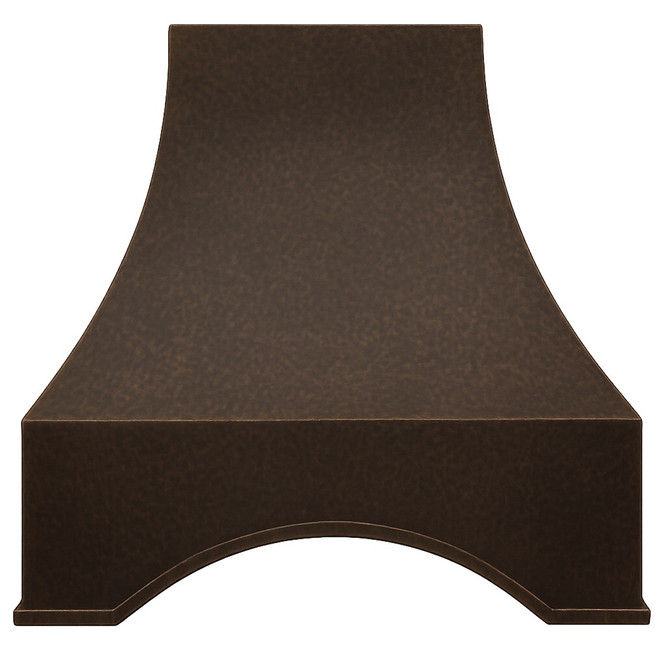
The Random Hammered Copper Range Hood is shown in these lifestyle images as a strapless bell-style copper focal point for traditional, transitional, rustic, modern, and farmhouse kitchens. Its smooth flared canopy, arched lower apron, random hand-hammered surface, dark coffee patina, and clean face allow the copper texture to become the main design feature. The product page describes a smooth bell silhouette with organic hammer marks, a hand-applied dark coffee patina, recycled 16-gauge copper, wall or island installation options, and rustic, farmhouse, transitional, and Mediterranean style compatibility. Explore the random hammered copper range hood to compare its shape, finish, texture, and installation options. For product-specific planning details, read the random hammered copper range hood guide.
Blog Summary
- Focus: lifestyle image guide
- Product: random hammered copper hood
- Shape: strapless bell silhouette
- Feature: arched lower apron
- Styles: five kitchen ideas
- Finish: dark coffee patina
Random Hammered Hood Images
Lifestyle images help show how a random hammered copper range hood looks inside a finished kitchen rather than as a product photo alone. Cabinet color, backsplash tile, countertop tone, wood finish, lighting, flooring, and hardware all change how the copper patina appears. In a bright room, the hammer marks can read warmer and more visible. In a darker room, the coffee patina can look deeper, more bronze, and more old-world.
This hood stands out because the face is strapless and clean. There are no riveted bands, vertical straps, scrolls, or raised apron reliefs competing with the surface. The random hammered texture carries the design, while the bell shape and arched lower apron give the hood graceful structure. For broader silhouette comparison, review the copper range hood shapes guide.
Design Highlights
- strapless bell copper body
- random hammered texture
- arched lower apron
- dark coffee patina
- smooth flared canopy
- recycled 16-gauge copper
- wall or island planning
Traditional Kitchen Image

In a traditional kitchen, the random hammered copper hood adds warmth to cream cabinetry, framed cabinet doors, white subway tile, light countertops, and classic hardware. The arched lower apron softens the range wall and creates a gentle focal point above the cooktop. Because the hood has no straps or rivets, the kitchen keeps a clean traditional look while still gaining handcrafted copper character.
The brighter cabinetry makes the warm copper surface stand out clearly. The hood becomes the main color accent in the room, while the simple backsplash allows the hammered texture and bell shape to remain visible. This scene works well for homeowners who want a classic kitchen with one artisan feature instead of a heavily decorated range wall.
Transitional Kitchen Image

In a transitional kitchen, the hood bridges traditional warmth and cleaner modern restraint. The cream cabinetry, neutral tile, stone counter, and dark hardware create a balanced setting where the copper hood can feel rich without overwhelming the room. The deeper coffee patina gives the hood a grounded look that works well with warm beige, ivory, taupe, bronze, and black accents.
The arched lower apron is important in this scene because it gives the hood softness, while the straight chimney and clean face keep the overall design controlled. For related shape families, browse the bell-shaped copper range hoods collection.
Rustic Kitchen Image

In a rustic kitchen, the random hammered copper hood feels naturally connected to wood cabinetry, paneled walls, textured tile, darker hardware, and warm lighting. The coffee patina blends with the surrounding wood tones, while the hammer marks give the hood a handmade surface that suits rugged natural materials.
This scene shows how the hood can feel more integrated when placed against deeper wood. Instead of creating sharp contrast, the copper becomes part of the room’s warm material palette. The clean strapless face keeps the design from becoming too busy, which is useful when the kitchen already includes wood grain, cabinet molding, tile lines, and visible texture.
Modern Kitchen Image

In a modern kitchen, the copper hood creates contrast against white cabinetry, pale surfaces, simple hardware, and a quieter backsplash. The shape is traditional enough to feel warm, but the plain strapless body makes it simple enough for a cleaner room. This balance is why the hood can work in modern kitchens without looking out of place.
The hammered copper surface adds texture where the surrounding finishes are smooth. The hood breaks up flat cabinetry and polished counters, making the kitchen feel less sterile. For finish planning, review the copper patina finish options guide before choosing the final tone.
Farmhouse Kitchen Image

In a farmhouse kitchen, the hood works with wood beams, natural cabinetry, white tile, warm counters, black pulls, and relaxed everyday styling. The copper patina reinforces the handmade atmosphere, while the arched apron adds a softer hearth-like detail above the range. This makes the hood feel welcoming rather than formal.
The farmhouse scene also shows why proportion matters. The hood needs enough width to anchor the range and enough height to balance the cabinets and beams. For scale planning, review the most popular copper range hood sizes guide.
Hammered Copper Texture
The random hammered texture is the main visual feature of this hood. Each hammer mark catches light differently, creating small highlights and darker low points across the bell body and apron. Because the surface is not patterned in a strict layout, the texture feels organic and handmade.
This texture is especially useful in kitchens with simple cabinetry or plain tile because it adds depth without needing extra ornament. It can also soften modern finishes, connect with rustic wood, and bring warmth to white or neutral kitchens.
Patina and Ventilation
The dark coffee patina gives the hood bronze, espresso, chestnut, and aged copper tones. Small differences in patina, hammering, seam placement, apron curve, and artisan finishing should be expected in handmade copper work. These variations are part of the handcrafted character.
Ventilation should be planned around the insert, blower, duct route, filters, lighting, and cooking habits. For insert selection, review the range hood insert guide for custom metal hoods. Rustica House can supply the 200 CFM insert only. Any other insert must be supplied by the buyer, and Rustica House will make the hood ready for that buyer-supplied insert when the insert details are provided.
Frequently Asked Questions
What makes this copper hood different?
This hood combines a strapless bell silhouette, random hammered texture, arched lower apron, and dark coffee patina. The clean face lets the handmade copper surface become the main design feature.
Which kitchen styles fit this hood?
This hood works well in traditional, transitional, rustic, modern, farmhouse, Mediterranean, Spanish Revival, and warm transitional kitchens.
Is every hood exactly identical?
No. Each hood is handmade, so hammering, patina tone, apron curve, seams, and small artisan marks may vary. These differences are part of the handcrafted character.
Conclusion
The random hammered copper range hood brings a strapless bell body, arched lower apron, dark coffee patina, and organic hand-hammered texture into the kitchen. These lifestyle images show how the hood adapts to traditional, transitional, rustic, modern, and farmhouse interiors while keeping its warm handcrafted copper identity. With the right surrounding materials and proportions, it can become the defining focal point above the range.