 US Dollar
 Euro
Euro
 Australian Dollar
 Canadian Dollar
 Polish Zloty
 British Pound

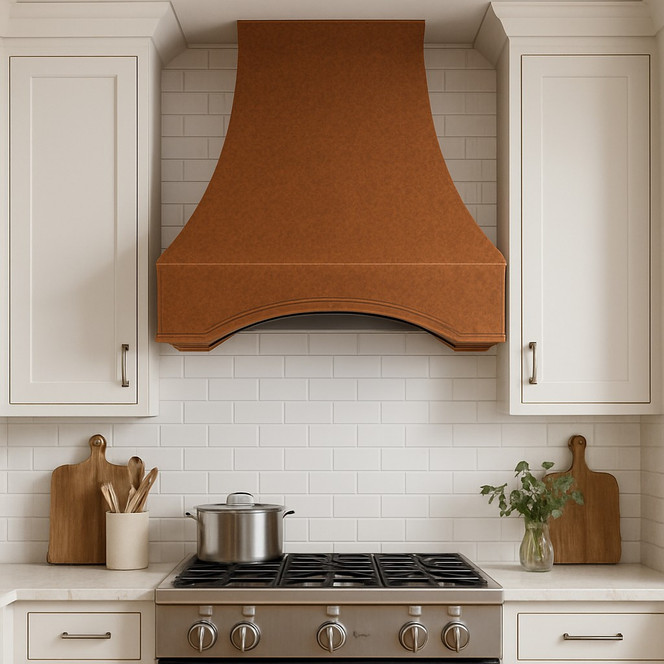
The random hammered copper range hood celebrates artisan variation through an uninterrupted copper body covered with irregular hand-applied hammer marks. Instead of relying on straps, rivets, raised panels, crown molding, or embossed artwork, the hood uses texture, proportion, and patina to create its character. The random dimpling catches light differently across the canopy, producing changing highlights and shadows throughout the day. This guide explains the hood’s architecture, finish choices, custom sizing, ventilation planning, installation, maintenance, and use in traditional, transitional, rustic, modern, and farmhouse interiors. For room-specific styling examples, review the random hammered hood lifestyle images alongside this planning guide.
Blog Summary
- Texture: Random hand hammering
- Design: Strapless copper body
- Shape: Tall tapered canopy
- Apron: Flat framed lower section
- Options: Custom size and patina
- Mounting: Wall or island
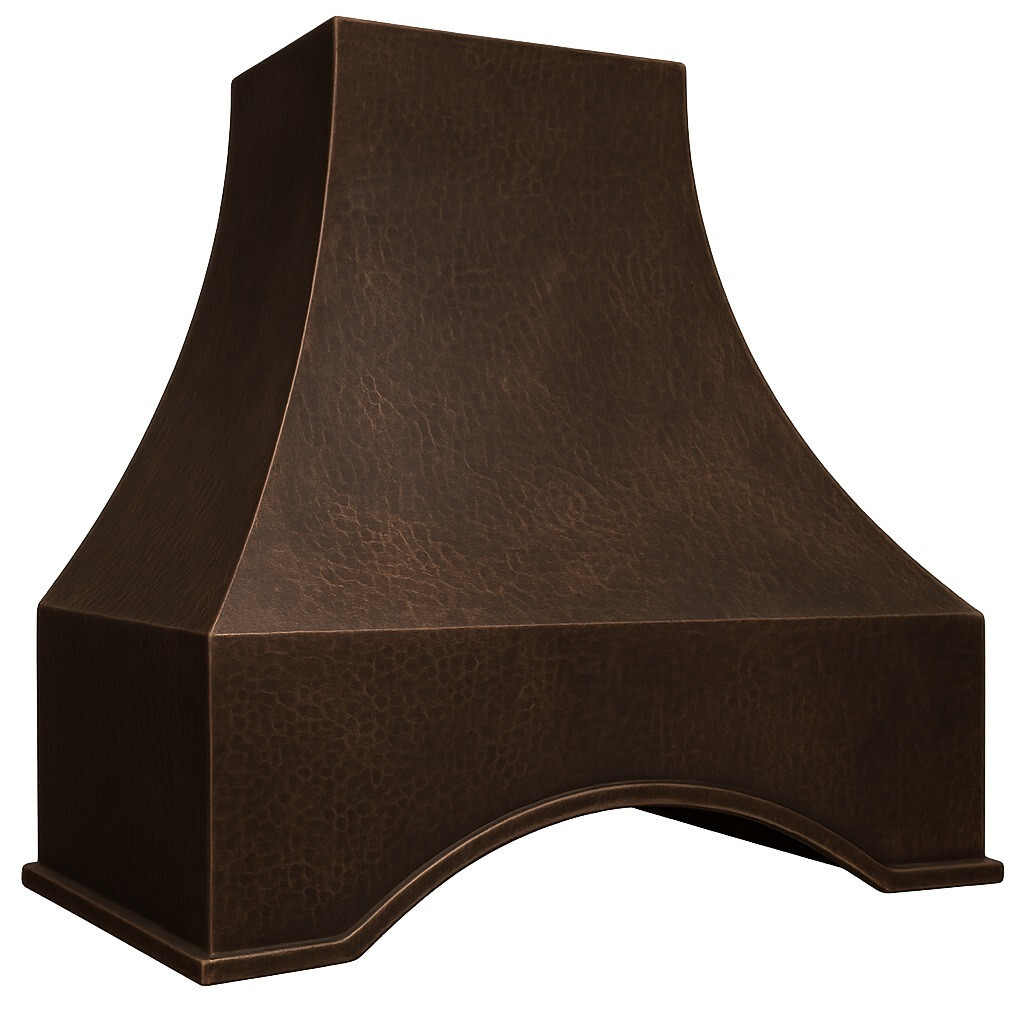
Random Hammered Hood Design
A random hammered copper hood is defined by an irregular pattern of hand-applied dimples rather than a uniform mechanical texture. Hammer marks vary slightly in shape, depth, spacing, and direction, preventing the surface from looking repetitive. As light moves across the metal, raised and recessed areas create a changing pattern that gives the hood greater visual depth.
This particular design combines a tall catenary bell canopy with a broad lower opening and a narrow upper throat. The body widens gradually toward the cooking surface rather than using sharp angular transitions. A flat framed apron anchors the lower edge, while a shallow segmental opening in the center adds a restrained architectural detail.
The hood contains no straps, rivets, raised panels, crown molding, or applied ornament. This keeps attention on the copper surface and curved silhouette. Buyers comparing this shape with sloping, box, tapered, or arched models can review the copper range hood shapes guide.
Why Random Hammering Matters
Hammering gives copper a handcrafted appearance, but random hammering creates a less formal result than evenly spaced dimples. It does not follow a strict grid or repeated decorative pattern. The variation makes each hood individual and helps the broad copper planes appear active without requiring ornamental straps or relief artwork.
The textured surface can also soften the appearance of minor fingerprints, light scuffs, and natural patina changes better than highly polished smooth copper. It should not be interpreted as damage or inconsistency. Differences in hammer depth, patina shading, seams, and tonal movement are normal characteristics of handmade metalwork.
Texture Characteristics
- Pattern: Intentionally irregular
- Light: Produces shifting highlights
- Surface: Visibly handcrafted
- Variation: Unique on every hood
- Effect: Warm and dimensional
Choosing a Copper Patina
Patina changes how strongly the random texture appears. Natural copper creates a brighter reddish-brown surface with noticeable tonal movement. Honey patina softens the metal with warm golden color, while antique finishes create a more established, softly aged appearance. Dark coffee patina produces deeper contrast in the hammered recesses and gives the hood greater visual weight.
Polished copper reflects the most light and emphasizes individual hammer marks. It works well where the hood should feel artistic or contemporary. Darker finishes are generally better suited to rustic, traditional, Spanish, or lodge-inspired interiors. Lighter patinas coordinate easily with white, cream, pale wood, and muted painted cabinetry.
Because patina is applied by hand, a completed hood will not be completely uniform or identical to a small sample. Room lighting, cabinet color, backsplash material, and nearby metals also affect how the finish appears. Compare available tones in the copper patina finish guide before approving the final selection.
| Patina | Visual Effect | Suggested Interior |
|---|---|---|
| Polished | Bright and reflective | Modern or eclectic |
| Natural | Warm reddish variation | Transitional kitchens |
| Honey | Soft golden warmth | Farmhouse or light wood |
| Antique | Gently aged character | Traditional interiors |
| Coffee | Deep brown contrast | Rustic or lodge kitchens |
Traditional Kitchen Placement
In a traditional kitchen, the hood can balance raised-panel cabinetry, marble or granite counters, decorative molding, and warm wood finishes. Its curved canopy introduces a classical outline, while the random hammering prevents the copper from appearing too formal. Antique or coffee patina works especially well with walnut, cherry, alder, and cream-painted cabinetry.
Because the hood itself has no added straps or ornament, it can sit comfortably near detailed cabinets without making the range wall feel overcrowded. A restrained stone or handmade tile backsplash allows the hammered surface to remain visible.
Transitional Kitchen Placement
Transitional kitchens combine traditional proportions with cleaner contemporary details. The strapless copper body works well in this setting because its curved silhouette adds softness while the plain surface keeps the design controlled. Pair it with shaker cabinets, quiet stone, simple bronze hardware, and a limited color palette.
Natural, honey, or softly antique copper can warm white, greige, taupe, or pale wood cabinetry. The random texture adds character without requiring decorative trim, making the hood a practical bridge between old and new materials.
Rustic Kitchen Placement
Rustic kitchens are a natural setting for hand-hammered copper. Reclaimed wood, rough stone, brick, plaster, exposed beams, and hand-finished cabinetry relate directly to the hood’s irregular surface. A dark coffee or antique patina strengthens the aged appearance and creates deeper shadows within the hammer marks.
The design remains simpler than heavily ornamented Hacienda or Old World hoods. This allows it to work in a rustic interior that values material texture more than decorative motifs. It can also complement mountain, ranch, lodge, and countryside kitchens.
Modern Kitchen Placement
In a modern kitchen, the random hammered hood can act as a sculptural contrast to flat-panel cabinetry, integrated appliances, simple stone slabs, and linear lighting. Its warm surface breaks up large areas of white, black, gray, or pale wood without adding a complicated pattern.
A polished or natural patina gives the hood a brighter contemporary character. The strapless body is especially useful because it preserves a clean silhouette. Allowing open wall space around the canopy helps the hammered copper remain the primary focal point.
Farmhouse Kitchen Placement
The hood also fits naturally into farmhouse kitchens with apron-front sinks, open shelving, painted shaker cabinets, wood floors, and straightforward hardware. Honey, natural, or antique patina adds warmth without requiring a dark rustic finish.
Its handmade texture supports the relaxed character of farmhouse interiors, while the plain apron avoids excessive decoration. Pair it with white or cream cabinetry for contrast, or use muted sage, blue-gray, and natural oak for a softer composition.
Custom Dimensions and Proportion
The hood is made to order in widths from 28 to 78 inches and heights from 24 to 72 inches. The standard depth is 24 inches. Dimensions should be selected according to the cooking appliance, ceiling height, cabinet spacing, mounting position, insert specifications, and local ventilation requirements.
A wider hood can improve visual balance above a professional range, but the complete range wall should be measured before production. Height affects the curvature of the canopy and the relationship between the narrow upper throat and broad lower body. Review common planning relationships in the copper range hood size guide.
Measurements to Confirm
- Range: Appliance width and type
- Ceiling: Finished room height
- Hood: Width, height and depth
- Mount: Wall or island
- Duct: Outlet size and route
- Insert: Exact make and model
Wall and Island Options
The hood can be prepared for wall-mounted or island installation. A wall-mounted version anchors the backsplash and is viewed mainly from the front and sides. An island hood must be finished and proportioned for viewing from every direction, including the rear panel.
Island installation requires ceiling support, careful duct alignment, electrical planning, and enough open space around the canopy. The chimney and lower body should remain centered over the cooking surface. Compare layout considerations in the wall and island hood guide.
Ventilation Insert Planning
The handcrafted copper shell provides the exterior architecture, while the insert supplies airflow, filtration, controls, and lighting. Rustica House can supply the optional 200 CFM insert. Buyer-supplied inserts up to 1,260 CFM and external blowers up to 1,500 CFM can be supported when complete equipment specifications are provided before fabrication.
Do not select the insert by advertised width alone. Confirm liner dimensions, flange size, duct outlet, blower location, control placement, lighting, filter access, and electrical requirements. The custom range hood insert guide explains the information needed before the copper shell enters production.
Installation Preparation
Professional installation is recommended because custom copper hoods can be large and heavy. Structural blocking, framing, masonry anchors, ductwork, and electrical service should be prepared before delivery. Confirm the finished range position, backsplash thickness, mounting height, and hood centerline before securing the shell.
Protect the copper from grout, mortar, adhesive, metal tools, and abrasive materials during construction. Test-fit the insert and verify duct alignment before completing the installation. Additional steps are available in the copper range hood installation guide.
Cleaning and Maintenance
Clean the copper with mild soap, warm water, and a soft cloth. Avoid bleach, ammonia, vinegar, steel wool, abrasive pads, polishing compounds, and aggressive degreasers because they may scratch the metal or alter the patina. Wipe gently around the hammered recesses and dry the surface after cleaning.
Filters belong to the ventilation insert and should be cleaned or replaced according to the equipment manufacturer’s instructions. Proper filter maintenance supports airflow and reduces grease accumulation inside the hood. Follow the detailed recommendations in the copper hood cleaning guide.
FAQ – Random Hammered Hood
A: No. Each hood is hammered by hand, so the depth, placement, and spacing of the dimples vary naturally from one piece to another.
A: No. The strapless design relies on its curved silhouette, random hammered texture, framed apron, and copper patina.
A: Yes. Widths range from 28 to 78 inches, heights from 24 to 72 inches, and the standard depth is 24 inches.
A: Yes. Wall-mounted and island configurations are available when the installation type is specified before production.
A: Yes. The shell can be prepared for an approved buyer-supplied insert when complete specifications are submitted before fabrication.
Choose Handcrafted Texture
A random hammered copper range hood is a strong choice for kitchens that need artisan texture without decorative straps, rivets, embossed motifs, or heavy molding. Its tall curved canopy, framed apron, and irregular hand-hammered surface can complement traditional, transitional, rustic, modern, and farmhouse interiors. Select the patina, dimensions, installation type, and ventilation insert as one coordinated system. Explore the full collection of custom copper range hoods to compare this understated design with bell, tapered, arched, sloping, and more decorative alternatives.