 US Dollar
 Euro
Euro
 Australian Dollar
 Canadian Dollar
 Polish Zloty
 British Pound

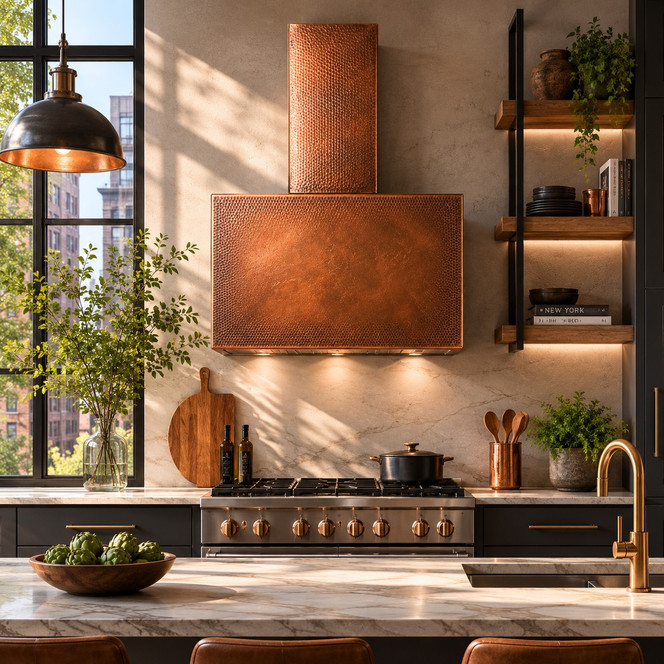
New York Style Box Copper Range Hood Guide explains how a handcrafted copper hood with a rectangular canopy, narrow upper chimney, smooth central panel, and hammered perimeter frame can shape an urban, industrial, loft, contemporary, luxury apartment, or modern farmhouse kitchen. This made-to-order hood is built from solid copper with straight vertical sides, clean seams, a framed front face, and a metropolitan profile that avoids straps, scrollwork, rivets, and heavy ornament. Explore the New York style box copper hood to review its dimensions, finish options, mounting choices, and ventilation planning.
Blog Summary
- Design: New York box hood
- Shape: Rectangular copper canopy
- Detail: Hammered perimeter frame
- Panel: Smooth central copper face
- Style: Loft and urban kitchens
Design Guide Overview
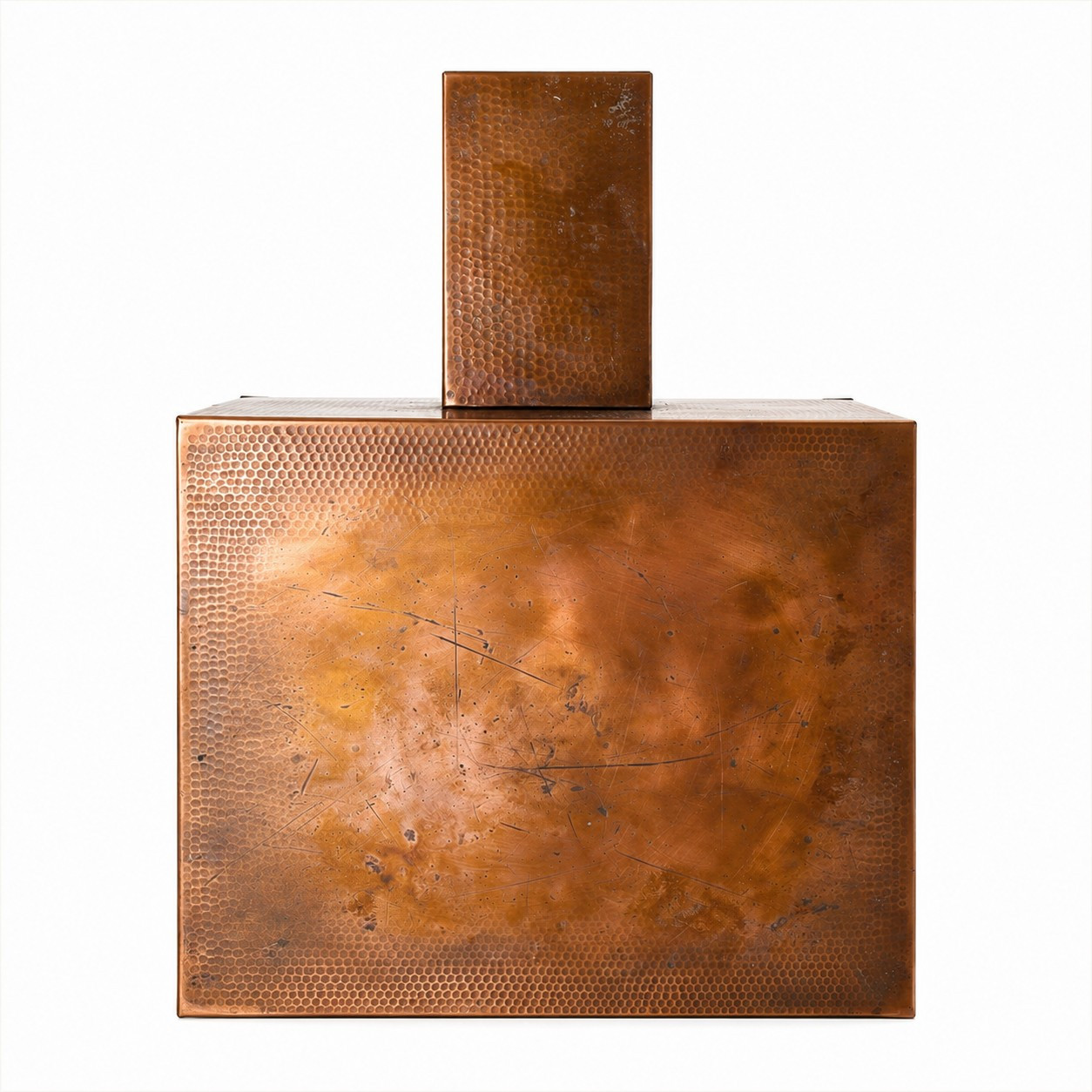
A New York style box copper range hood is designed for kitchens that need clean geometry, warm metal character, and a strong urban profile above the cooking surface. The wide rectangular canopy creates horizontal balance, while the narrow upper chimney gives the hood a taller city-apartment look. Unlike decorative copper hoods with straps, rivets, or scrollwork, this design focuses on proportion, panel contrast, hammered framing, and straight architectural lines. For broader material comparisons, browse custom metal range hoods before choosing the final kitchen direction. See how this handcrafted hood complements contemporary interiors in our new york style box copper range hood lifestyle guide.
Box Canopy Shape
The box-shaped canopy gives this hood its most important visual identity. Its rectangular body works well in kitchens with flat cabinetry, slab backsplashes, stone counters, exposed brick, steel details, and simple architectural lines. The shape feels more urban than curved bell or barrel styles because it emphasizes straight edges and strong proportions. A box hood also gives the range wall a clean framed appearance without feeling plain. To compare other straight-sided copper designs, review the box copper range hoods collection.
Shape Benefits
- Form: Clean rectangular body
- Profile: Strong urban geometry
- Scale: Wide canopy balance
- Lines: Fits modern cabinetry
- Style: Loft kitchen character
Narrow Upper Chimney
The narrow upper chimney gives the hood a taller metropolitan profile. Instead of using a wide chimney or heavy crown, the design rises from the box canopy with a slimmer vertical form. This creates visual lift and helps the hood feel suited to loft apartments, city kitchens, and spaces with strong vertical architecture. The chimney also keeps the design clean because it avoids heavy molding and decorative bulk. When planning the hood height, the chimney should relate to ceiling height, duct route, backsplash size, cabinet spacing, and the overall range wall composition.
Smooth Center Panel
The smooth central copper panel gives this hood visual restraint. It allows the copper color and patina to stand out without making the entire surface heavily textured. This is useful in contemporary kitchens, industrial modern spaces, and luxury apartment interiors where too much hammering might feel rustic. The smooth panel also contrasts with the hammered perimeter border, creating a framed design that feels intentional. This combination gives the hood both urban simplicity and handcrafted character. For more modern design ideas, review the modern copper hoods guide.
Hammered Frame Detail
The hammered perimeter frame adds artisan texture around the smooth central panel. This detail prevents the hood from looking too flat while keeping the overall design clean. Hammer marks create subtle highlights, shadows, and handmade variation along the border. The frame also gives the front face a defined architectural edge, similar to a metal picture frame around the central copper field. This feature is especially effective in loft and industrial kitchens because it balances refined geometry with visible craft. For surface texture guidance, read the copper hammering guide.
Frame Benefits
- Texture: Hammered copper border
- Contrast: Smooth center panel
- Depth: Adds handmade detail
- Focus: Frames the front face
- Style: Industrial artisan look
Urban Loft Character
This hood is especially suited to New York loft kitchens because it combines copper warmth with industrial geometry. Exposed brick, concrete floors, steel shelving, black-framed windows, reclaimed wood, and slab counters all work naturally with the rectangular form. The copper finish softens harder urban materials, while the box shape keeps the hood aligned with modern architecture. The design feels more specific than a general custom box hood because the narrow chimney, smooth panel, and hammered frame create a clear loft-inspired identity. For more background on this shape category, read the box-shaped hood guide.
Industrial Modern Kitchens
In industrial modern kitchens, the New York style box copper hood can become the warm metal anchor above the range. The design pairs well with concrete counters, exposed ductwork, matte black hardware, stainless appliances, brick walls, and open shelving. Copper gives the space warmth, while the straight canopy keeps the room from feeling overly rustic. The smooth center panel supports a cleaner modern look, and the hammered frame adds just enough handmade detail. Use warm lighting to bring out the copper patina and prevent the industrial palette from feeling too cold.
Luxury Apartment Kitchens
Luxury apartment kitchens often require a focal point that feels custom but not oversized. This copper hood works well because the box canopy creates a strong design feature, while the narrow chimney keeps the silhouette controlled. In apartments with flat-panel cabinetry, stone slab backsplashes, integrated appliances, and simple lighting, the copper surface adds warmth and individuality. The hood can stand out without relying on ornate decoration. The framed front face also works well in open-plan apartments where the kitchen is visible from dining or living areas and needs to look intentional from a distance.
Apartment Pairings
- Cabinets: Flat or slab fronts
- Backsplash: Stone or simple tile
- Lighting: Warm modern fixtures
- Hardware: Black or bronze pulls
- Flooring: Wood or concrete
Contemporary Kitchen Use
A contemporary kitchen can use this hood when the room needs clean lines with a warmer material than stainless steel. The box canopy supports modern geometry, while copper prevents the range wall from feeling sterile. The smooth central panel keeps the front clean, and the hammered frame adds a controlled handmade accent. Pair the hood with slab stone, quiet tile, light wood, matte black hardware, or minimalist cabinetry. For additional shape comparisons across copper models, review the copper range hood shapes guide.
Urban Farmhouse Kitchens
Urban farmhouse kitchens often combine shaker cabinets, wood shelves, stone counters, simple tile, industrial lighting, and warmer metal accents. The New York style copper hood can fit this setting because the box shape feels clean, while the hammered border adds handcrafted texture. It is less ornate than Spanish or Tuscan copper hoods, making it a good option when the kitchen needs farmhouse warmth with a more city-inspired edge. Repeat copper tones through wood, bronze, brass, or darker hardware to connect the hood with the rest of the room.
Copper Hood Category
This design belongs to the larger family of copper range hoods, but its identity is more urban and geometric than many traditional models. Copper hoods can be bell-shaped, sloping, barrel, box, pyramid, curved-front, under-cabinet, or decorative apron styles. The New York style version focuses on box geometry, a narrow chimney, smooth central panel, and hammered perimeter framing. To compare other handcrafted copper profiles, browse the copper range hoods collection.
Copper Hood Options
- Box: Clean geometric form
- Bell: Softer curved profile
- Sloping: Angled front shape
- Barrel: Old-World curve
- Custom: Size and finish choice
Bell and Sloping Alternatives
Buyers comparing copper hood styles may also review softer curved and angled options before choosing the box profile. Bell hoods bring rounded movement and classic kitchen warmth, while sloping copper hoods create a tapered architectural front. The New York box hood is different because it keeps the canopy straight and urban. This makes it better for loft, apartment, industrial, and contemporary kitchens where clean lines matter. Compare related subcategories such as bell copper hoods and sloping copper hoods when planning the range wall.
Copper Patina Options
Patina changes the final mood of the hood. Natural copper gives the design warmth and a classic metal tone. Coffee or antique patina can make the hood feel deeper, older, and more dramatic. Honey patina can soften the surface, while polished copper creates a brighter and more reflective look. Because this hood has a smooth central panel, broad color fields will be more visible than on a fully hammered surface. The patina should coordinate with cabinetry, backsplash, lighting, appliances, and flooring. For finish planning, read the copper patina options guide.
Wall Installation Planning
A wall-mounted New York style box copper hood should be centered over the range or cooktop and aligned carefully with the backsplash. The rectangular canopy makes proportion especially important because uneven spacing is easier to notice on straight-edged designs. Confirm hood width, height, standard or custom depth, cabinet spacing, outlet access, duct route, and mounting support before production. The smooth central panel and hammered frame should feel balanced with the range below. For installation steps, review the range hood installation guide.
Island Installation Planning
An island version must look balanced from several angles. The box canopy, narrow chimney, and framed copper face should be attractive from the kitchen, dining area, and living space. Island installation requires ceiling support, duct route planning, electrical access, and careful alignment with the cooktop. The hood should provide enough capture area while preserving open sightlines. Because this design has straight vertical sides and a narrow chimney, it can work well above island cooktops in loft kitchens where a cleaner silhouette is preferred over ornate decoration.
Installation Checks
- Width: Match range scale
- Height: Fit ceiling space
- Depth: Plan capture area
- Duct: Confirm vent route
- Support: Check structure
Ventilation Insert Planning
The copper shell creates the exterior design, but the insert provides smoke, steam, grease, and odor removal. Rustica House can supply the optional 200 CFM insert, and the hood can also be prepared for a buyer-supplied insert when details are provided before production. The product page notes that buyer-supplied inserts up to 1260 CFM and external blower systems up to 1500 CFM are supported when complete specifications are provided. Before ordering, review the range hood insert guide.
Insert Details to Send
Buyers should provide the insert brand, model, dimensions, liner size, cutout requirements, duct size, control location, lighting placement, filter access needs, CFM requirements, and any external blower details before fabrication begins. This information helps the hood shell be prepared correctly and reduces the risk of installation problems. The narrow chimney and box canopy should be planned with the duct route so the final installation looks clean and performs properly. Cooking habits and local code requirements should also be reviewed with the installer or HVAC professional before finalizing the ventilation system.
Insert Planning
- Insert: Confirm make and model
- Cutout: Provide exact dimensions
- Duct: Match vent size
- Filters: Keep access clear
- Blower: Send full specs
Custom Size Options
This New York style box copper hood is available in multiple widths and heights, allowing it to fit compact apartments, standard residential ranges, and larger custom kitchens. The product page lists widths from 28 inches to 78 inches, heights from 24 inches to 72 inches, and a standard 24 inch depth. Custom sizing should account for range width, ceiling height, backsplash height, cabinet opening, island spacing, and duct route. Because the hood has a strong rectangular form, correct proportions are essential. A hood that is too narrow may look weak, while one that is too large may dominate the room.
Backsplash Coordination
The backsplash should support the hood’s urban geometry. Brick gives the hood a classic New York loft background. Concrete, stone slab, handmade tile, plaster, or simple ceramic tile can also work depending on the kitchen style. Since the hood already has a hammered frame and smooth center panel, overly busy tile can reduce the clarity of the design. In industrial modern kitchens, a quiet backsplash often works best. In urban farmhouse kitchens, handmade tile or brick can add warmth. The goal is to let the box canopy remain the main architectural feature above the range.
Cabinet Coordination
Cabinet style affects how the box hood reads in the kitchen. Flat-panel cabinets create a contemporary apartment look. Shaker cabinets make the hood feel more transitional or urban farmhouse. Dark wood cabinets can create a strong loft atmosphere, while white or cream cabinets create contrast and make the copper stand out. Matte black, bronze, brass, and aged copper hardware can all coordinate with the copper finish. Stainless appliances can also work because the copper surface brings warmth and keeps the range wall from feeling too commercial.
Cabinet Pairings
- Flat panel: Modern apartment look
- Shaker: Urban farmhouse style
- Dark wood: Rich loft contrast
- White: Bright copper focus
- Black: Industrial edge
Recommended Related Designs
Buyers comparing this hood with other urban or traditional models may also look at the dark zinc industrial hood if they want a cooler gray metal with stronger industrial character. Zinc creates a different mood than copper because it feels softer, darker, and less warm. This comparison can help clarify whether the kitchen needs copper patina or a more industrial zinc finish.
For a warmer rustic alternative, the country copper range hood offers a more traditional farmhouse direction. It is better suited to kitchens that need softer rural character instead of a strict New York loft profile. This can help homeowners decide whether the straight box canopy is the right visual language for the project.
Another comparison option is the French style copper hood, which brings a more decorative and European influence. Its profile differs from the New York box hood because it leans toward traditional curves and ornate presence rather than clean urban geometry. Reviewing both designs can help clarify how much ornament the kitchen should carry.
For a smoother traditional design, the Italian style smooth copper hood offers a warmer old-world alternative with a different silhouette and decorative direction. It is useful for buyers who like copper but want a more traditional European look rather than the framed box shape of this New York model.
Cleaning and Maintenance
Copper should be cleaned gently to preserve the patina and surface character. Use mild soap, warm water, and a soft cloth for routine care. Avoid abrasive pads, steel wool, bleach, ammonia, acidic cleaners, and harsh degreasers because they can scratch the copper or disturb the finish. The smooth central panel may show fingerprints or water marks more clearly than the hammered frame, so drying after cleaning is helpful. For deeper care information, review the copper hood cleaning guide.
Common Questions
What makes this New York style box copper hood unique?
This hood is unique because it combines a rectangular box canopy, narrow upper chimney, smooth central copper panel, hammered perimeter frame, straight architectural lines, and made-to-order sizing. Its identity comes from New York loft geometry and copper surface contrast rather than straps, rivets, scrollwork, or a general finish-option layout.
How is this hood different from a general box hood?
A general box hood focuses on broad customization choices such as hammered or smooth finishes, sizes, and mounting options. This model is more specific because it has a narrow chimney, smooth center panel, hammered copper frame, and urban loft profile designed around a New York style concept.
Can this hood be custom sized?
Yes. The hood can be ordered in multiple widths and heights with a standard 24 inch depth. Buyers should confirm range size, ceiling height, cabinet spacing, lower clearance, duct route, insert cutout requirements, seam preferences, and mounting style before production begins.
What insert works with this hood?
Rustica House can supply the optional 200 CFM insert. If a different insert, liner, recirculating system, ducted system, or remote blower is needed, it must be supplied by the buyer and confirmed before production so the shell can be prepared correctly.
What kitchen styles fit this design?
This urban copper hood works well in New York loft, industrial modern, luxury apartment, contemporary, and urban farmhouse kitchens. Its box canopy and narrow chimney pair naturally with exposed brick, concrete, steel, reclaimed wood, stone counters, flat-panel cabinetry, and simple architectural interiors.
Helpful Planning Guides
Homeowners still comparing copper hood details can review the Copper Range Hood FAQ for general questions about sizing, finishes, ventilation, and maintenance. This is useful when deciding whether a box profile, bell profile, or another copper hood shape is best for the project.
For a visual comparison of strap and layout details, the adjustable strap image guide shows a more decorative copper hood direction. This helps highlight how clean and minimal the New York box hood is by comparison.
The adjustable strap layout guide is helpful for buyers comparing framed, strapped, and decorative copper hood designs. A strap-heavy hood creates a different visual rhythm than the smooth central panel and hammered frame used in the New York style model.
Shipping and Returns
This handcrafted copper hood is made to order, so delivery planning should be reviewed before purchase. Freight delivery, inspection steps, production timing, and return conditions can affect how the project is scheduled. Before ordering a custom hood, review the shipping and returns page so the receiving process, inspection requirements, and policy details are clear.
Warranty Planning
The copper hood shell and optional ventilation insert may have different warranty coverage. Buyer-supplied inserts are covered by their own manufacturers, not by the copper hood shell warranty. This is another reason insert specifications should be confirmed before production. To understand coverage details, exclusions, and claim procedures, review the Rustica House warranty information before finalizing the order.
Design Summary
A New York style box copper range hood is ideal for kitchens that need clean geometry, copper warmth, and urban industrial character. The rectangular canopy creates horizontal strength, the narrow chimney adds city loft height, the smooth central panel keeps the design restrained, and the hammered perimeter frame adds artisan detail. This hood works especially well in New York loft, industrial modern, contemporary, luxury apartment, and urban farmhouse interiors. Proper sizing, ventilation insert planning, backsplash coordination, cabinet alignment, installation support, and finish selection are essential for a successful custom build.
Final Design Guidance
New York Style Box Copper Range Hood Guide shows how a straight canopy, narrow chimney, smooth copper panel, hammered frame, and custom dimensions work together. Choose this design when the kitchen needs a warm metal focal point with a cleaner profile than curved, strapped, or ornate copper hoods. Pair it with brick, stone, concrete, flat cabinetry, reclaimed wood, black hardware, or warm modern lighting. Confirm range width, ceiling height, hood width, hood height, duct route, insert details, and installation type before production so the finished Rustica House hood fits the space correctly.