 US Dollar
 Euro
Euro
 Australian Dollar
 Canadian Dollar
 Polish Zloty
 British Pound

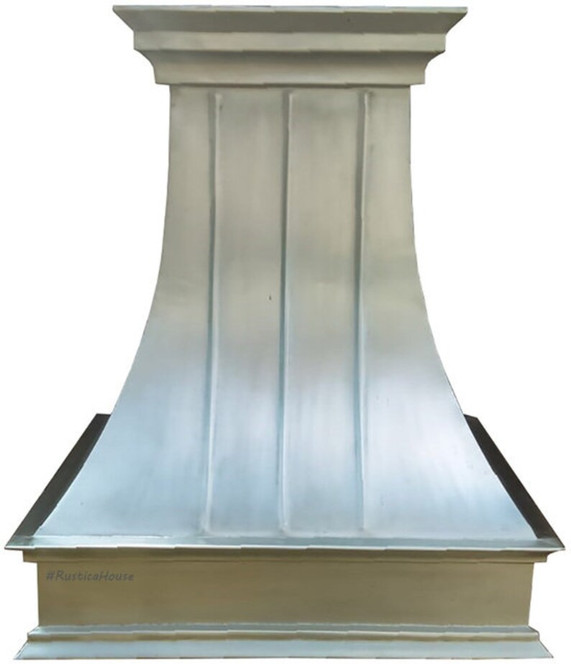
The Natural Zinc Range Hood with Crown Molding is shown in these lifestyle images as a refined metal focal point for farmhouse, modern European, minimalist, transitional, and organic modern kitchens. Its natural zinc finish, tall flared canopy, three-panel front, stepped crown molding, deep molded apron, and restrained surface character create a range-wall feature that feels architectural without becoming ornate. The hood has enough classical detail to support traditional cabinetry, yet its monochromatic zinc tone keeps the design quiet, clean, and adaptable for updated interiors. Explore the natural zinc range hood with crown molding to compare its shape, finish, crown detail, and kitchen style applications. For product-specific design context, read the natural zinc range hood crown molding guide.
Blog Summary
- Focus: lifestyle image guide
- Product: natural zinc range hood
- Feature: stepped crown molding
- Shape: tall flared canopy
- Scenes: five kitchen styles
- Look: refined and architectural
Natural Zinc Hood Images
Lifestyle images help show how this natural zinc range hood looks inside finished kitchens rather than as a standalone product photo. Cabinet color, backsplash material, stone selection, ceiling height, wall finish, flooring, lighting, and hardware all affect how the zinc tone appears. In one kitchen, the hood can feel refined farmhouse and softly traditional. In another, the same crown-molded zinc profile can support modern European, minimalist, transitional, or organic modern interiors.
This hood stands out because it combines a classic upper crown with a calm natural zinc surface. The crown molding gives the hood architectural finish, while the zinc keeps the overall palette cooler and more restrained than copper or brass. The front panels and molded apron add structure without using riveted straps, contrasting trim, or decorative scrollwork. For broader zinc inspiration, browse the zinc range hoods collection.
Design Highlights
- natural zinc range hood finish
- stepped crown molding detail
- tall flared canopy profile
- three-panel front composition
- deep molded lower apron
- cool gray metal character
- traditional to modern flexibility
Refined Farmhouse Kitchen Image
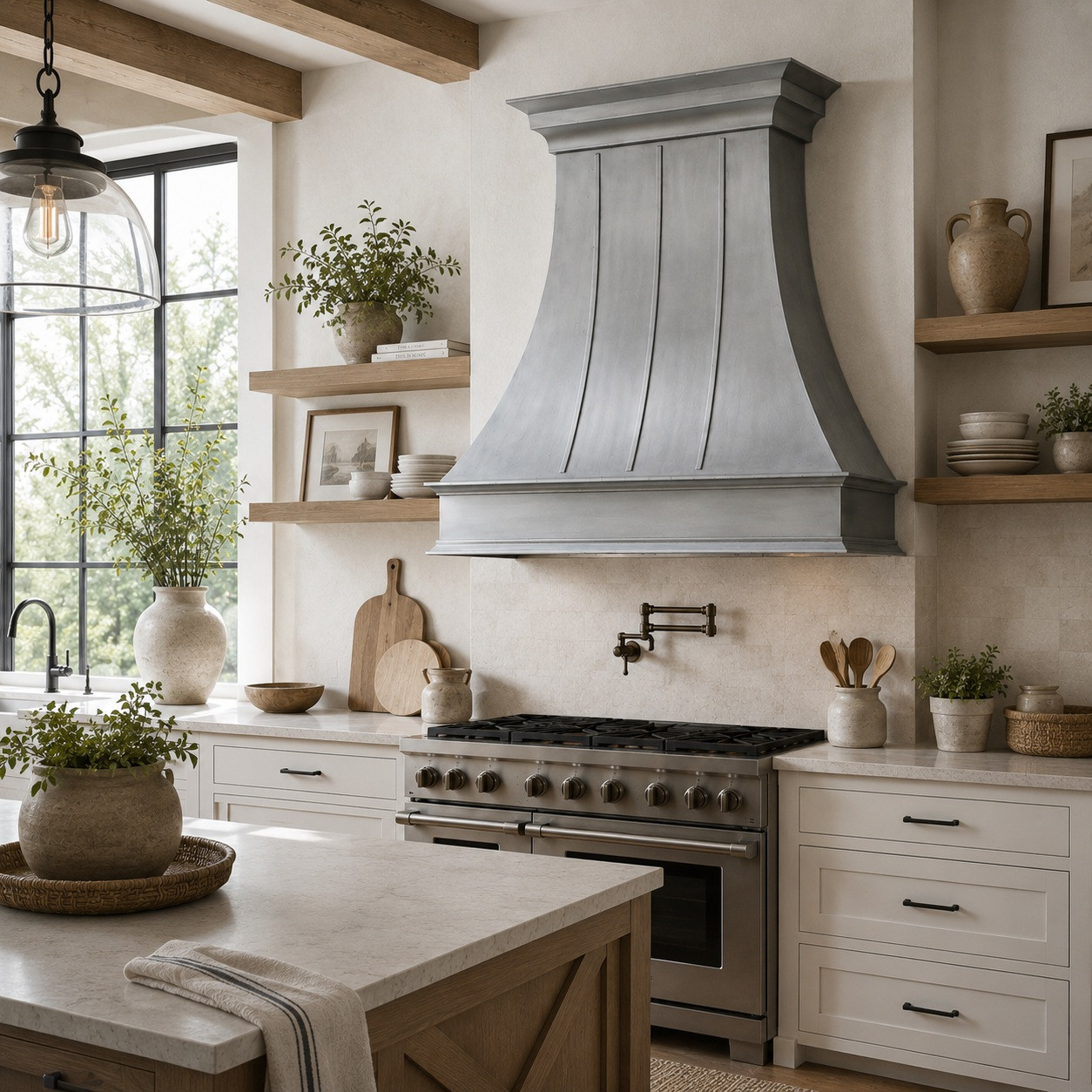
In a refined farmhouse kitchen, the natural zinc hood brings structure, softness, and metal character above the range. Refined farmhouse interiors often use painted cabinetry, warm wood, stone counters, handmade tile, classic hardware, and a cleaner interpretation of traditional details. The hood fits because the crown molding and molded apron feel familiar, while the smooth zinc tone keeps the design from becoming too rustic or heavy.
The tall flared canopy gives the range wall a clear focal point without needing decorative straps or rivets. The natural zinc finish also works well with white, cream, taupe, sage, charcoal, and natural wood cabinetry. It introduces a cooler gray metal note that can balance warmer farmhouse materials such as oak floors, butcher block, exposed beams, and aged brass hardware. The result is comfortable and handcrafted, but still polished enough for a more updated farmhouse kitchen.
Modern European Kitchen Image
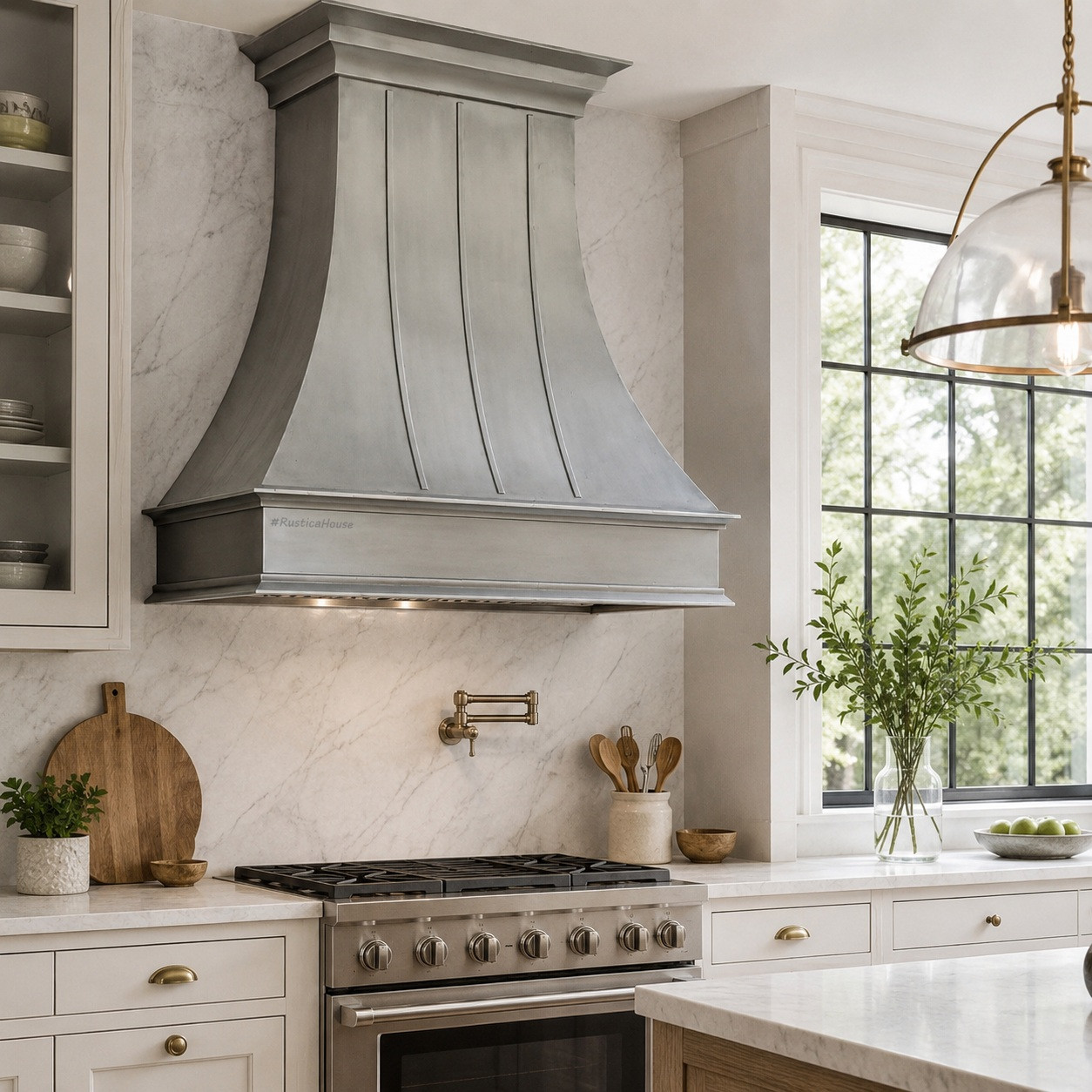
In a modern European kitchen, the hood’s restrained zinc finish and architectural silhouette work especially well. Modern European interiors often combine clean cabinetry, pale stone, integrated appliances, framed range walls, quiet hardware, and subtle traditional references. The crown molding gives the hood a finished built-in quality, while the monochromatic zinc keeps the look calm and current.
The bell-like flared body creates movement without looking overly decorative. The three-panel front adds order and proportion, helping the hood feel related to cabinet doors, wall paneling, or stone slab divisions. In this setting, the zinc can coordinate with brushed nickel, stainless steel, pewter, black hardware, gray stone, and soft plaster tones. For additional updated range hood inspiration, review the modern style range hoods guide.
Minimalist Kitchen Image

In a minimalist kitchen, the natural zinc hood becomes the main material feature while the surrounding room remains quiet. Minimalist interiors often rely on flat or simplified cabinetry, limited hardware, continuous stone, open space, soft light, and restrained color. This hood can work in that setting because the zinc finish is subtle and monochromatic, even though the silhouette has crown and apron details.
The key is contrast. A completely plain hood might disappear into the room, but this model has enough shape to create focus above the range. The crown molding, panel divisions, and molded apron introduce shadow lines, while the zinc surface prevents those details from feeling ornate. The hood gives the kitchen a handcrafted focal point without adding strong color or decorative metal contrast. For smooth and textured metal comparison, review the hammered and smooth metal hoods guide.
Transitional Kitchen Image
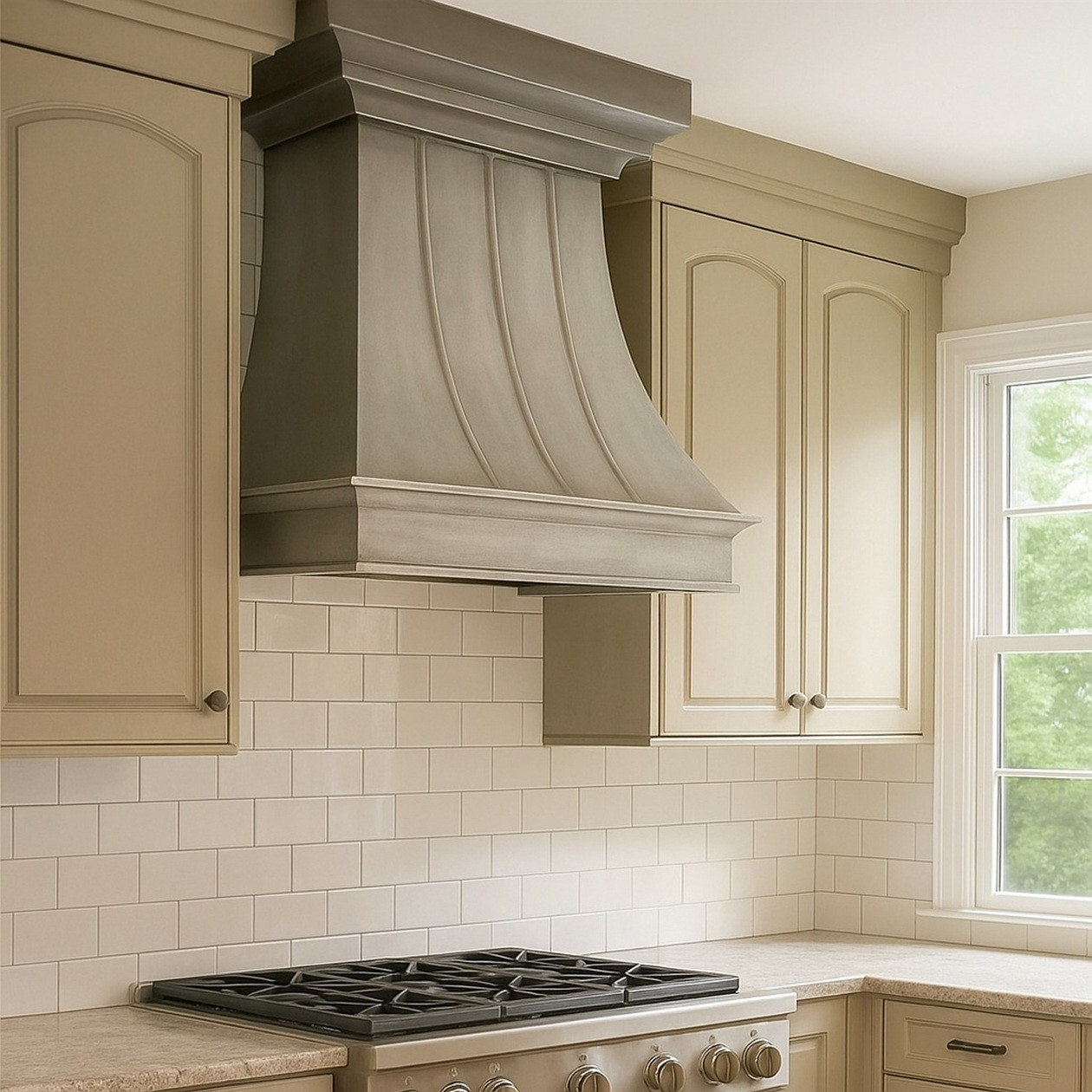
In a transitional kitchen, the hood bridges traditional architecture and cleaner contemporary finishes. Transitional kitchens often use shaker cabinetry, stone counters, subtle tile, mixed metals, neutral colors, and balanced proportions. The natural zinc hood fits this language because it has a classic crown and apron, but the surface remains quieter than dark patina copper or highly polished metal.
The front panel layout gives the hood enough visual structure to sit between detailed cabinets or above a framed backsplash. At the same time, the zinc tone can connect with cooler appliances, stainless accents, gray stone, nickel hardware, or soft white cabinetry. This makes the hood useful in kitchens that want something more custom than a painted cabinet hood, but less warm and rustic than copper. The result is tailored, balanced, and easy to integrate into mixed traditional-modern interiors.
Organic Modern Kitchen Image
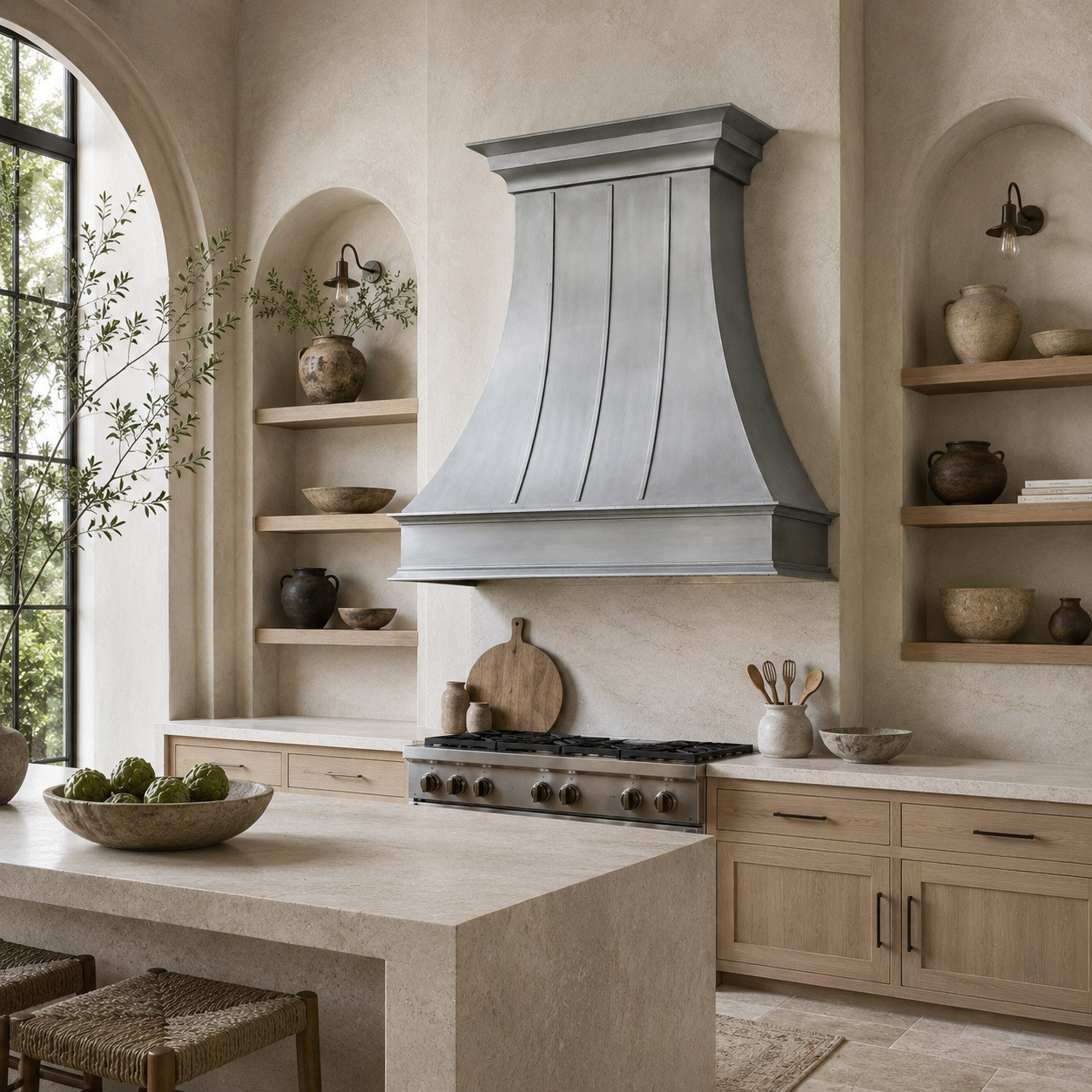
In an organic modern kitchen, the natural zinc hood works with tactile materials and a soft neutral palette. Organic modern interiors often include limewashed walls, honed limestone, pale oak, handmade ceramics, plaster, quiet stone, natural textures, and limited hardware. The hood’s zinc finish adds a cool mineral-like quality that pairs well with those surfaces without creating harsh contrast.
The flared canopy and crown molding bring shape to the range wall, while the restrained gray metal finish keeps the room calm. This is useful in organic modern kitchens because the goal is usually warmth, simplicity, and natural material depth rather than bright ornament. The zinc can sit comfortably beside limestone, travertine, oak, clay, plaster, and soft veined stone. For more zinc fabrication context, review the zinc range hood production article.
Crown Molding Detail
The crown molding is the feature that gives this hood its finished architectural character. It creates a stepped top edge that can relate to cabinet crown, ceiling trim, framed range walls, or traditional millwork. Unlike a plain chimney top, the crown helps the hood look built into the kitchen rather than simply mounted on the wall.
This detail is especially useful in refined farmhouse, transitional, and modern European kitchens, where classic proportions still matter. In minimalist and organic modern settings, the crown adds quiet structure while the zinc finish keeps the design from becoming overly decorative.
Natural Zinc Finish
The natural zinc finish gives this hood its cool gray metal identity. It offers a quieter alternative to copper and a softer alternative to stainless steel. Depending on light, nearby stone, cabinetry, and wall color, the zinc can appear pale gray, muted silver, slightly brushed, or more weathered.
Small differences in zinc tone, brushing, seam detail, crown shaping, panel spacing, apron edge, and artisan finishing should be expected in handmade metalwork. These variations help each hood feel individual rather than mass produced.
Flared Canopy Shape
The tall flared canopy gives the hood movement and presence. It widens as it descends toward the cooking area, creating a strong visual connection between the upper chimney and the lower apron. This shape gives the hood more personality than a flat box, while remaining more restrained than highly ornate historical metalwork.
The three-panel front adds structure across the face, and the molded apron gives the lower edge visual weight. Together, these features make the hood feel balanced, architectural, and suitable for both classic and updated kitchen styles.
Style Compatibility
This hood works across several interior styles because it balances traditional detailing with a quiet finish. In refined farmhouse kitchens, it supports painted cabinetry and warm wood. In modern European rooms, it adds classical structure without heavy ornament. In minimalist kitchens, it becomes a subtle metal focal point. In transitional kitchens, it bridges old and new details. In organic modern spaces, it connects with stone, plaster, and pale timber.
The design is most effective when the surrounding finishes stay intentional. Zinc can pair with cool hardware, warm wood, handmade tile, stone, plaster, and soft neutral cabinetry, but the room should allow the hood’s crown, panels, and apron to remain visible.
Conclusion
The natural zinc range hood with crown molding brings cool gray metal character, stepped architectural detail, a tall flared canopy, a paneled front, and a deep molded apron into the kitchen. These lifestyle images show how the hood adapts to refined farmhouse, modern European, minimalist, transitional, and organic modern interiors while keeping its design elegant, restrained, and handcrafted.