 US Dollar
 Euro
Euro
 Australian Dollar
 Canadian Dollar
 Polish Zloty
 British Pound

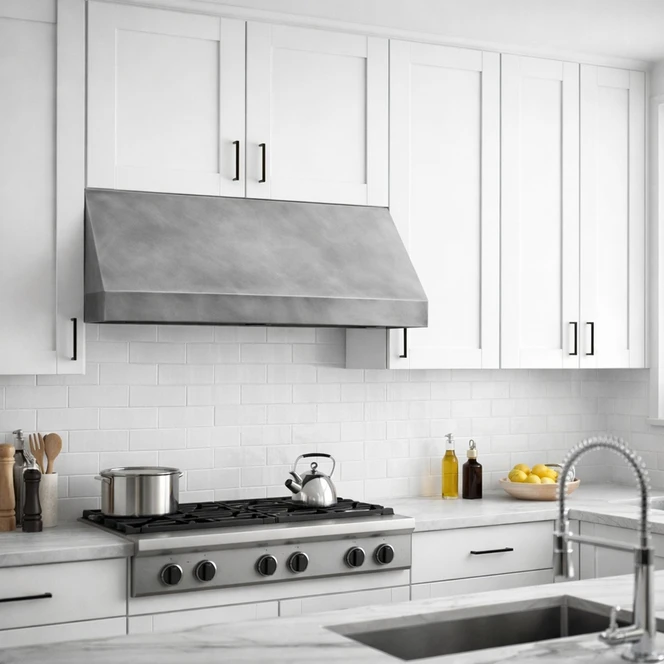
Smooth Zinc Range Hood with Clean Angled Silhouette Guide explains how a trim-free zinc hood with a straight upper body, broad sloping face, sharply folded transitions, and smooth architectural planes can support a modern or transitional kitchen. This smooth zinc range hood with clean angled silhouette is designed for buyers who want handcrafted metal character without straps, rivets, crown molding, or heavy ornament. Its natural zinc surface, folded geometry, custom sizing, and insert-ready preparation make it suitable for wall-mounted or island kitchen planning. Because each zinc hood is handmade, subtle surface variation, forming marks, finish movement, fold character, and artisan irregularities should be expected. No two pieces are identical, and those differences are part of the handcrafted finish. See this streamlined zinc design across different kitchen settings in our smooth zinc angled silhouette kitchen inspiration.
Blog Summary
- Material: Handcrafted zinc
- Shape: Clean angled silhouette
- Finish: Natural smooth zinc
- Details: Trim-free folded planes
- Planning: Custom insert-ready hood
- Style: Modern architectural design
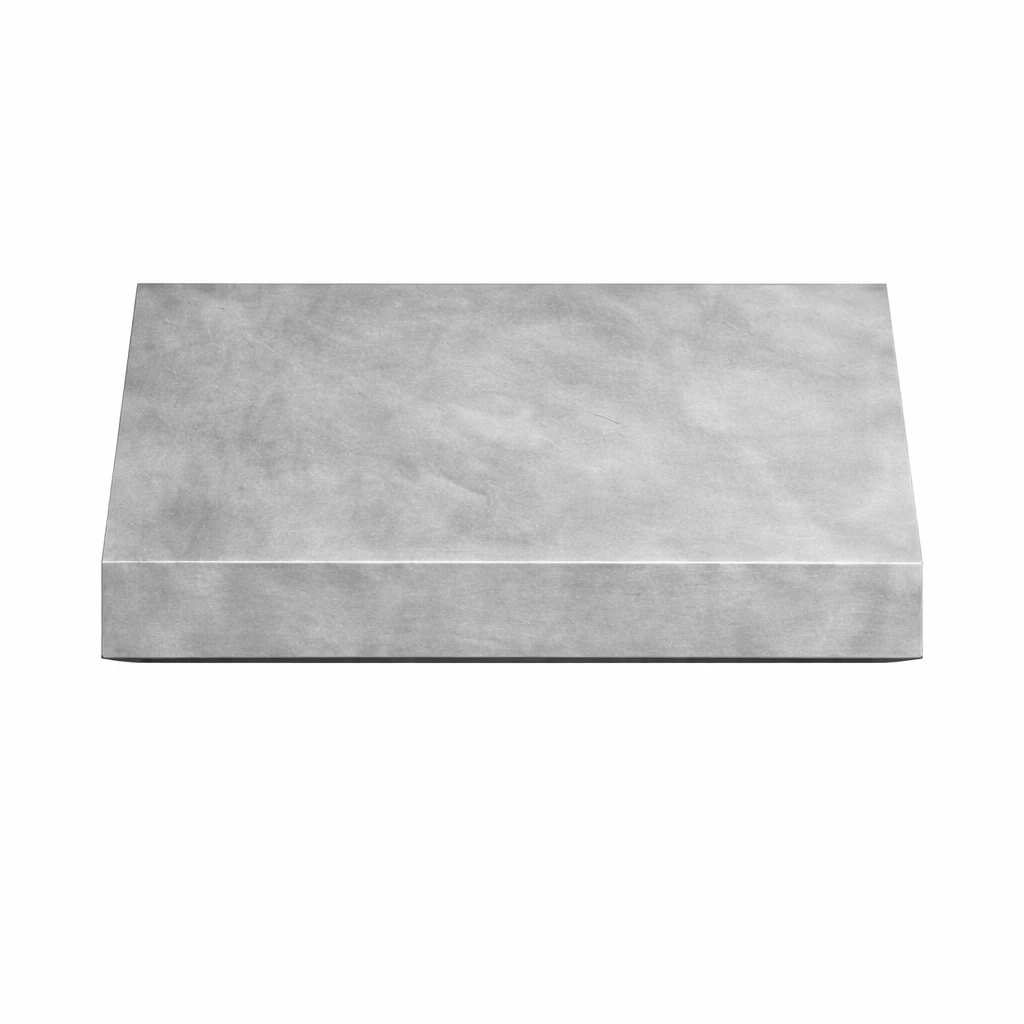
Planning a Smooth Zinc Range Hood
A smooth zinc range hood should be planned as a precise architectural feature. This design does not rely on straps, rivets, decorative molding, or heavy trim, so proportion, fold lines, finish selection, and placement matter more. The hood should align with the range, cabinetry, backsplash, ceiling height, and overall kitchen geometry. Buyers comparing related metal designs can review the broader zinc range hoods category and the larger metal range hoods collection for additional shapes and finishes.
Why Choose a Clean Angled Hood?
A clean angled hood is ideal when the kitchen needs a strong focal point without rustic decoration. The broad sloping face creates movement, while the straight upper section keeps the design controlled. Unlike bell-shaped or heavily ornamented hoods, this model depends on folded geometry and quiet metal planes. That makes it useful in kitchens with flat-panel cabinetry, large-format stone, simple backsplash tile, plaster walls, integrated appliances, or restrained hardware. The shape feels modern but still handmade because the zinc is formed, finished, and prepared by hand.
Custom Hood Specifications
- Material: Handcrafted zinc
- Finish: Smooth natural zinc
- Shape: Angled folded body
- Top: Straight upper section
- Face: Broad sloping plane
- Details: No straps or rivets
- Widths: 28 to 78 inches
- Heights: 24 to 72 inches
- Depth: Standard 24 inches
- Insert: Custom insert preparation
Angled Hood Design
The design is defined by simplicity. A straight upper body transitions into a wide sloping front face, then folds into the lower edge with crisp geometry. The lack of straps, rivets, and molding gives the hood a quiet, architectural identity. This makes the zinc surface more important because the finish itself becomes part of the design. The hood can feel modern, transitional, organic, or light industrial depending on the surrounding cabinetry, backsplash, stone, lighting, and hardware.
Smooth Zinc Finish
Smooth natural zinc has a soft silver-gray tone that feels less reflective than polished stainless steel and less warm than copper or brass. It works well when the kitchen needs metal presence without strong color. Natural zinc can appear cooler beside white cabinetry and warmer beside wood, limestone, plaster, or aged brass. Because the finish is handmade, product photography should be treated as guidance rather than an exact promise. Lighting and nearby materials can change how the zinc appears after installation.
Folded Silhouette
The folded silhouette gives this hood its main identity. Instead of rounded curves or ornate trim, the shape uses angled planes and sharp transitions. This creates a sculptural effect while keeping the front face calm and uncluttered. The broad angled section can help visually connect upper cabinetry with the cooking surface below. It also makes the hood suitable for kitchens where straight lines, stone slabs, slab-front doors, clean hardware, and restrained architectural details are already part of the design.
Minimal Decorative Detail
This hood is intentionally free from decorative straps, rivets, medallions, and crown molding. That restraint is useful in modern kitchens where too much metal detail can feel visually busy. The design still has handmade character, but it comes from proportion, zinc tone, surface finishing, and folded construction. Buyers who want a quieter focal point may prefer this model over vintage, riveted, bell-shaped, or heavily trimmed metal hoods.
Zinc Hood Dimensions
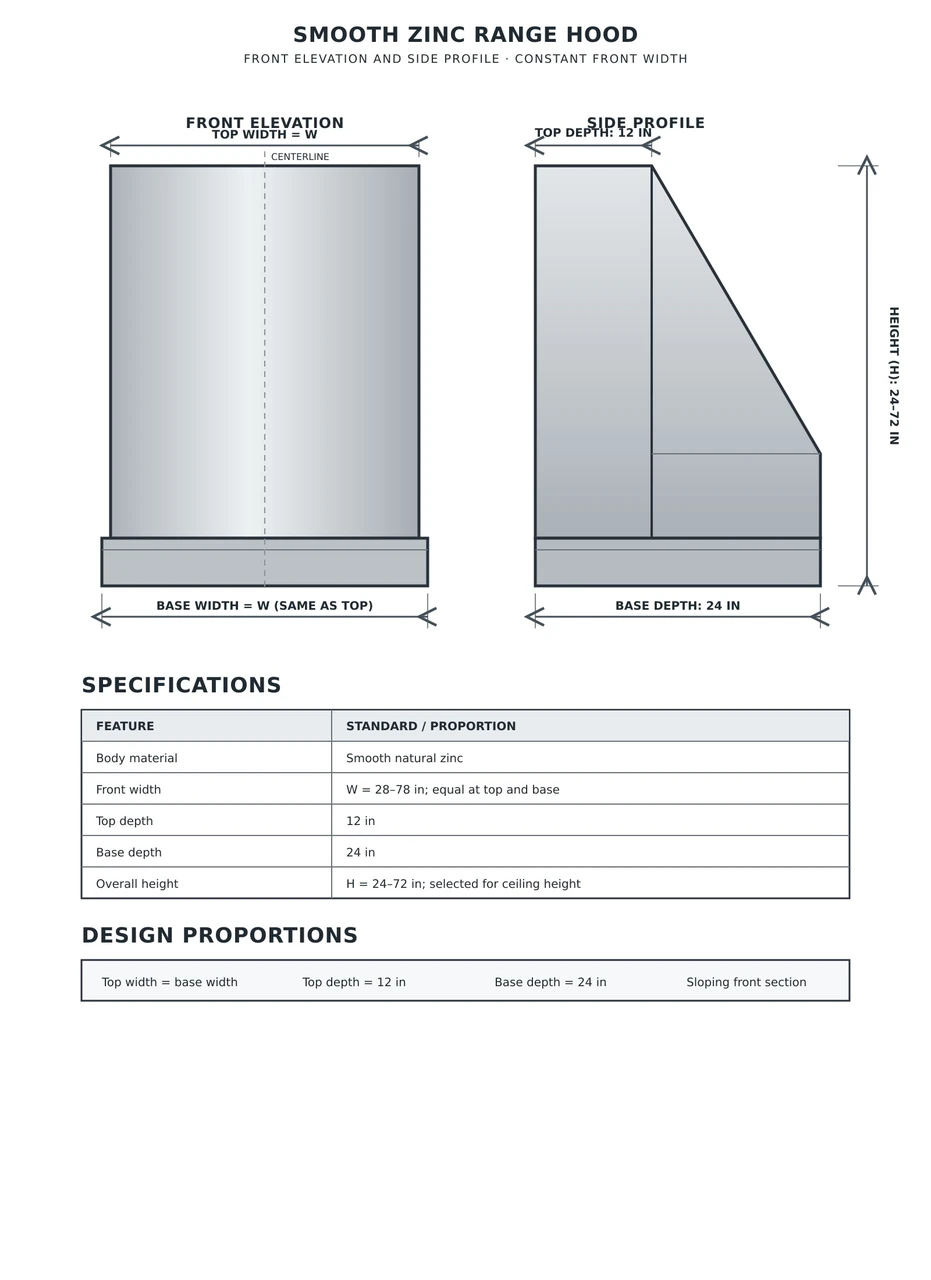
The technical drawing helps confirm the hood’s front proportion, side projection, lower depth, upper depth, sloping face, and overall silhouette. This is especially important for angled designs because the side profile affects how the hood projects from the wall or island. A hood that looks balanced from the front may feel too deep or too shallow from the side if dimensions are not reviewed carefully. Width, height, and depth should be coordinated before fabrication begins.
Width and Cooktop Planning
Hood width should be selected around the cooking surface and kitchen wall. Many layouts benefit from a hood that is wider than the range or cooktop when space allows. A wider hood can improve visual balance and support better capture, but it should not crowd cabinets, shelving, windows, or side walls. The clean design makes proportion easy to notice, so the final width should be reviewed with cabinetry, backsplash layout, ceiling height, appliance size, and insert requirements.
Height and Clearance
Installation height should follow the appliance and ventilation insert manufacturer’s requirements. The hood must allow safe cooking access while supporting effective capture. Since this hood has a straight upper body and sloping face, vertical proportion is important. In taller kitchens, additional height can help the hood feel more architectural. In lower kitchens, the dimensions should be adjusted so the angled face does not feel compressed between the range and ceiling.
Insert and Ventilation Planning
This zinc range hood is a custom metal enclosure that can be prepared for ventilation equipment. Rustica House can supply a 200 CFM insert only. Other internal inserts, liners, blowers, filters, lights, controls, and recirculating systems must be buyer-supplied with complete specifications before fabrication. Buyer-supplied internal inserts up to 1,260 CFM and external blowers up to 1,500 CFM may be supported when full technical details are provided before production. Final compatibility depends on hood dimensions, insert size, duct routing, mounting method, and local installation requirements.
CFM and Insert Fit
CFM needs depend on the range output, cooking habits, duct length, duct diameter, number of elbows, blower type, and local code. The insert must fit the underside opening and allow access to filters, controls, lights, and future service. Do not order the hood before confirming insert dimensions and mounting needs. For additional planning, review the range hood insert guide before finalizing the zinc hood dimensions.
Duct Routing
Duct routing should be planned before fabrication because it affects the chimney, ceiling connection, wall framing, and blower choice. Some kitchens vent upward through the ceiling, while others vent horizontally through an exterior wall. Long duct runs, tight elbows, narrow ducting, and transitions can reduce performance. If a recirculating insert is used, the buyer should provide complete filter and insert specifications before production. The hood should be built around the actual ventilation plan.
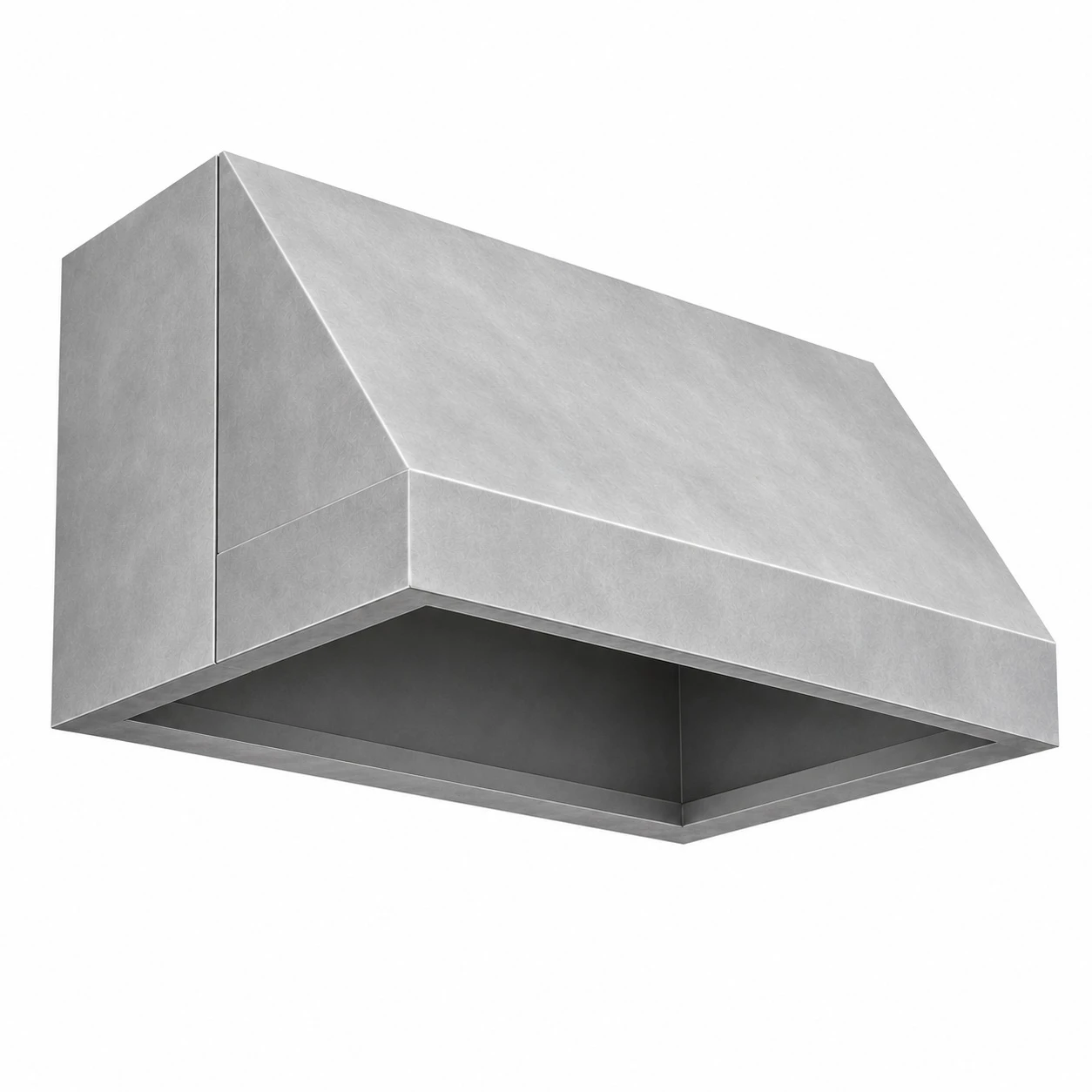
Underside Preparation
The underside view shows why insert planning should be finished before production. The lower opening, support structure, filter access, control location, lighting placement, and service clearance must coordinate with the selected ventilation equipment. If the buyer supplies an insert, provide drawings, dimensions, fastener locations, mounting requirements, electrical needs, and clearance details. The underside should support practical function while keeping the exterior clean, smooth, and architectural.
Zinc Finish Options
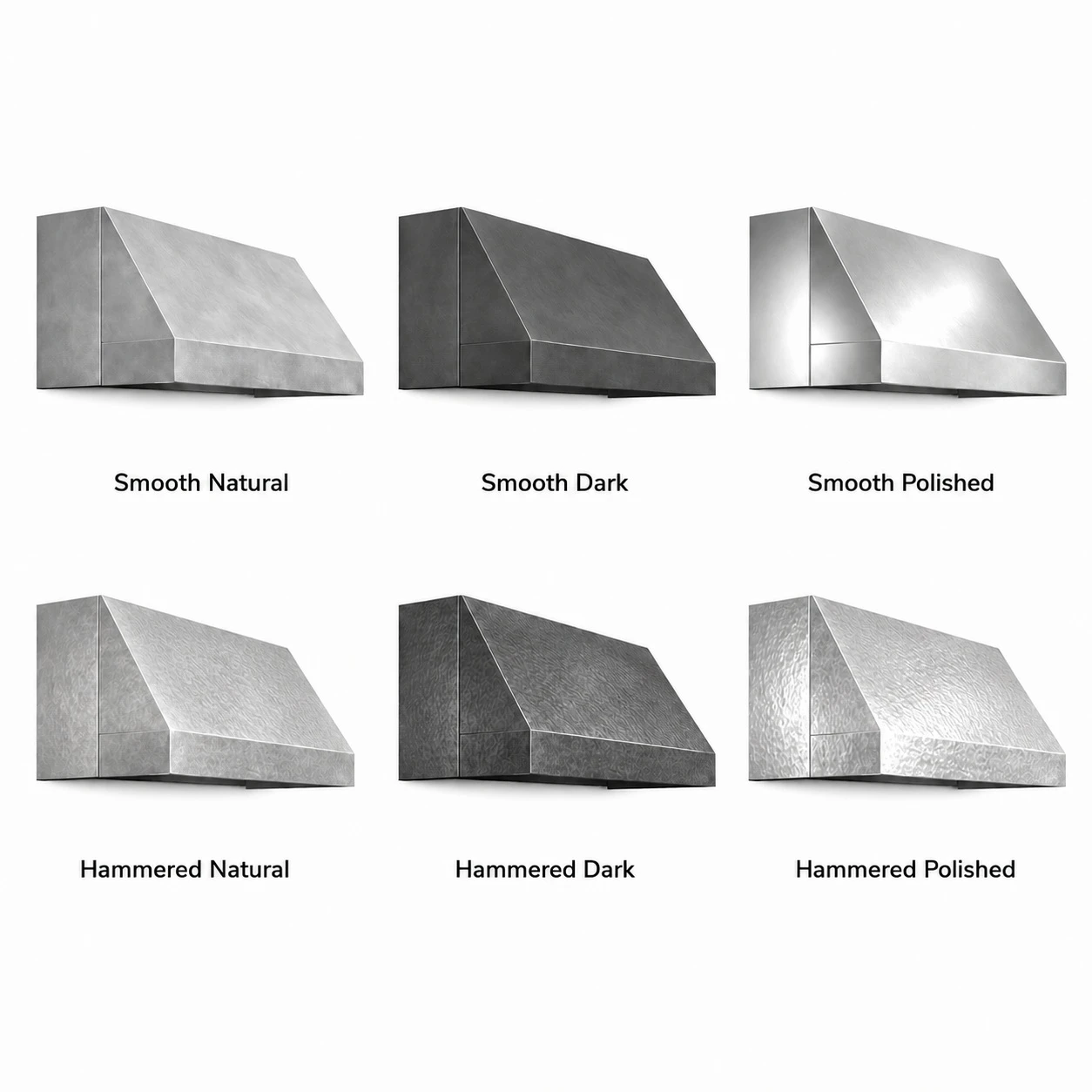
Finish options help the same hood adapt to different kitchen styles. Smooth natural zinc keeps the design clean and softly reflective. Smooth dark zinc can create stronger contrast against light cabinetry. Smooth polished zinc adds more brightness and reflection. Hand-hammered natural zinc, hammered dark zinc, and hammered polished zinc add more texture while preserving the angled shape. Because zinc finishes are handmade, final tone may vary from product photos. Kitchen lighting, stone, wood, paint, and tile also affect appearance.
Backsplash Planning
The backsplash should support the hood’s quiet geometry. Large-format stone, limestone, plaster, handmade tile, concrete-look porcelain, brick, or simple ceramic tile can all work. A highly decorative backsplash may compete with the clean angled face, while a calmer surface can make the zinc silhouette stronger. In modern kitchens, full-height slab stone often creates a refined backdrop. In transitional spaces, a simple tile layout can soften the hood without hiding its architectural form.
Cabinet Coordination
Cabinetry should be coordinated with the hood’s width, side clearance, height, and lower projection. Flat-panel cabinetry creates the most modern effect. Shaker cabinets move the design toward transitional style. White oak, walnut, painted cabinetry, and warm neutral finishes can all support natural zinc. Hardware should remain restrained because the hood already contributes a strong form. Brushed nickel, aged brass, black metal, pewter, and minimal integrated pulls can all work depending on the room.
Modern Kitchens
Modern kitchens are a natural setting for this hood because the design depends on folded geometry instead of decoration. Flat-panel cabinetry, integrated appliances, large-format stone, slab backsplashes, restrained hardware, and clean lighting all reinforce the angled silhouette. Smooth natural zinc introduces handmade variation without disrupting the modern structure. A polished or dark zinc finish can also work when the design calls for more contrast or reflection.
Transitional Kitchens
Transitional kitchens can use this hood to balance classic cabinetry with cleaner metal architecture. Shaker cabinets, natural stone, warm wood, simple tile, and understated traditional detailing work well around the angled profile. Natural zinc adds handmade character without the stronger rustic effect of straps, rivets, or heavy molding. The result is a hood that feels custom and crafted while still fitting a refined, current kitchen plan.
Light Industrial Kitchens
Light industrial kitchens can pair this zinc hood with steel windows, brick, concrete, open shelving, reclaimed timber, and darker hardware. The trim-free body avoids the heavier appearance of conventional strapped industrial hoods, while the zinc finish still feels connected to metalwork and workshop materials. A dark zinc or hammered finish can increase industrial character, while smooth natural zinc keeps the room lighter and more restrained.
Organic Modern Kitchens
Organic modern kitchens can use this hood with white oak, limestone, plaster, muted stone, warm neutral cabinetry, and soft natural light. The angled form gives the kitchen structure, while natural zinc keeps the metal tone calm. Smooth zinc works especially well in this style because it introduces artisan variation without interrupting the quiet material palette. Pair it with minimal hardware, soft lighting, and natural textures for a balanced look.
Other Compatible Kitchen Styles
- Minimalist kitchens
- Urban loft kitchens
- Scandinavian kitchens
- Contemporary farmhouse kitchens
Metalworker Perspective
A clean angled zinc hood requires careful forming because there are no decorative straps or rivets to distract from proportion. The folds, planes, side profile, and lower edge must align cleanly. Subtle surface movement is normal in handmade zinc, but the silhouette should remain visually controlled. This type of hood depends on metal shaping skill rather than ornament. For more background on production, read the Rustica House zinc range hood production article.
Zinc Care and Maintenance
Zinc should be cleaned gently with mild soap, warm water, and a soft cloth when needed. Dry the surface after cleaning to reduce water spots. Avoid abrasive pads, steel wool, bleach, ammonia, acidic cleaners, harsh degreasers, and aggressive polishing compounds because they can scratch or alter the finish. Cooking grease should be wiped before it builds up around the underside and lower edge. For more detailed care guidance, review the zinc range hood care guide.
Finish Expectations
Zinc can develop tonal movement over time from air, humidity, heat, touch, cooking residue, and cleaning habits. Natural zinc may soften or deepen subtly as the kitchen is used. Polished zinc may show fingerprints more readily, while darker zinc can make surface changes appear different than lighter finishes. Handmade zinc should not be expected to look like a plastic-coated factory surface. Its slight variation is part of the custom metalwork character.
Measurements Before Ordering
Before ordering, confirm cooktop width, cabinet opening, ceiling height, desired hood height, hood width, hood depth, installation height, backsplash thickness, duct route, insert dimensions, blower type, electrical needs, mounting conditions, and local code requirements. Photos of the cooking wall can help determine whether the hood should be wider, taller, or more restrained. If a buyer-supplied insert will be used, provide complete specifications before fabrication so the underside opening and internal preparation can be planned correctly.
Common Questions
What makes this zinc hood distinctive?
The smooth angled silhouette, straight upper body, broad sloping face, and trim-free folded construction create its clean architectural look.
What kitchen styles fit this hood?
It works well in modern, transitional, light industrial, organic modern, minimalist, urban loft, Scandinavian, and contemporary farmhouse kitchens.
Can this hood be custom sized?
Yes. Width, height, depth, mounting preparation, finish, texture, and insert opening can be planned before production.
Does the hood include ventilation?
Rustica House can supply a 200 CFM insert only. Other inserts, blowers, and ventilation systems must be buyer-supplied.
What blower support is possible?
Buyer-supplied internal inserts up to 1,260 CFM and external blowers up to 1,500 CFM may be supported with full specifications.
Is smooth zinc shiny?
Smooth natural zinc has a soft silver-gray appearance. Polished zinc is brighter, while dark zinc creates more contrast.
Can I order a hammered finish?
Yes. Hammered zinc finish options may be used when more texture and light movement are desired.
Will the zinc finish change?
Yes. Zinc can develop tonal movement from air, humidity, cooking conditions, cleaning habits, touch, and time.
How do you clean zinc?
Use mild soap, warm water, and a soft cloth. Avoid abrasives, bleach, ammonia, acidic cleaners, and steel wool.
Why provide insert specifications early?
The insert opening, mounting support, filter access, lighting placement, controls, and duct route must be planned before fabrication.
Final Design Guidance
Smooth Zinc Range Hood with Clean Angled Silhouette Guide shows how smooth natural zinc, folded geometry, a broad sloping face, custom sizing, insert planning, duct routing, and kitchen material coordination work together. Choose this hood when the cooking wall needs a clean handcrafted focal point without straps, rivets, or decorative molding. Confirm cooktop width, cabinet spacing, ceiling height, hood depth, duct route, insert specifications, blower plan, mounting type, and backsplash material before ordering. Explore the smooth zinc range hood, compare zinc range hoods, and review the range hood insert guide before finalizing your kitchen plan.