 US Dollar
 Euro
Euro
 Australian Dollar
 Canadian Dollar
 Polish Zloty
 British Pound

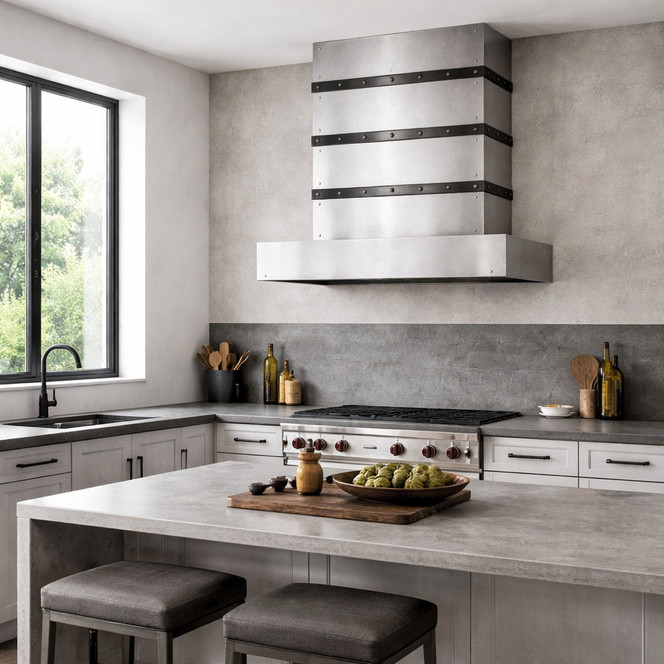
Modern metal range hoods combine ventilation performance with clean architectural form, carefully selected materials, and made-to-order proportions. In contemporary kitchens, the hood often becomes the primary focal point above the range or cooktop, especially when cabinetry, countertops, and backsplashes remain visually restrained. Copper introduces warmth, zinc provides soft blue-gray character, iron creates bold structure, brass adds controlled luxury, tin offers a lighter traditional metal surface, and pewter contributes quiet silvery depth. Each material responds differently to light, patina, texture, and surrounding finishes. Explore the complete collection of custom metal range hoods to compare wall-mounted, kitchen island, and under-cabinet designs. This guide explains how metal choice, hood shape, texture, finish, sizing, ventilation, installation, and maintenance influence a modern kitchen project.
Blog Summary
- Copper: Warm living metal
- Zinc: Soft blue-gray finish
- Iron: Bold structural presence
- Brass: Refined golden warmth
- Tin: Light silvery character
- Pewter: Quiet matte elegance
- Shapes: Clean modern profiles
- Planning: Size, insert and duct
Why Modern Kitchens Use Statement Hoods
Modern kitchen design depends on proportion, material quality, and visual clarity. Flat-panel cabinets, broad islands, integrated appliances, large-format stone, and minimal hardware create calm backgrounds that allow one architectural element to carry greater visual emphasis. The range hood naturally fills that role because it occupies the center of the cooking wall or hangs prominently above an island.
A custom metal hood introduces depth that painted cabinetry or a standard stainless appliance may not provide. Its surface reflects daylight, pendant lighting, cabinet colors, and stone movement differently throughout the day. Even a simple box or tapered shell can feel distinctive when fabricated from genuine copper, zinc, iron, brass, tin, or pewter.
The modern approach does not require complete minimalism. Subtle straps, narrow bands, measured rivet spacing, a plain crown, or a controlled apron can add definition without making the hood ornate. The modern range hood style guide provides additional ideas for matching hood architecture with contemporary cabinetry and open-plan interiors.
Modern Hood Shapes
Rectangular Box Hoods
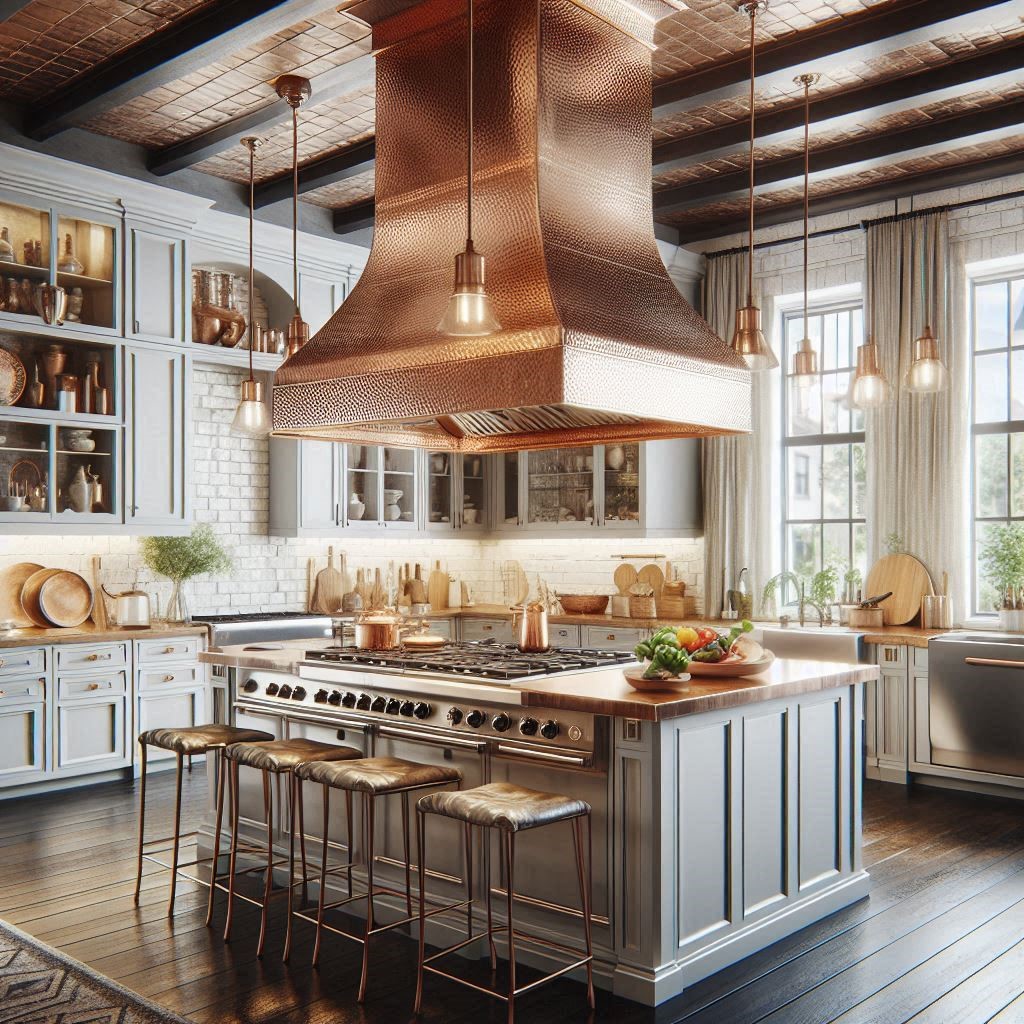
A box hood uses vertical sides, a flat front, and a strong horizontal profile. It is one of the most direct choices for minimalist, industrial, loft, and contemporary kitchens. Smooth metal emphasizes the geometry, while hammered texture introduces handcrafted movement without changing the basic silhouette.
Box hoods work especially well beneath cabinetry or as independent wall-mounted features. Their simple architecture also allows contrasting bands, rivets, seams, or apron details to remain visible without overwhelming the design.
Tapered and Pyramid Hoods
Tapered hoods widen toward the cooking surface and narrow toward the chimney. Their angled panels create a strong transition from the range to the ceiling while reducing visual bulk near eye level. This profile suits modern farmhouse, Scandinavian-inspired, California transitional, and luxury contemporary kitchens.
A pyramid hood uses similar geometry but often emphasizes straight symmetrical planes and a clearly defined chimney. Smooth copper, zinc, iron, brass, or pewter can make this form appear highly architectural.
Minimalist Bell Hoods
A bell hood introduces controlled curvature into a room dominated by straight cabinetry and rectangular stone. Modern versions remove heavy scrollwork, ornate moldings, and excessive straps, allowing the concave body to become the main visual feature.
Bell-shaped metal hoods work well in organic modern, soft contemporary, and transitional kitchens because they add movement without appearing overly traditional. Buyers comparing silhouettes can review the metal hood shape planning guide.
Copper Range Hoods
Copper adds warmth to modern kitchens that might otherwise rely heavily on white, gray, black, stone, glass, and stainless steel. Its reddish, amber, brown, and bronze tones pair naturally with white oak, walnut, quartzite, marble, concrete, and matte cabinetry.
Smooth copper emphasizes crisp edges and broad tonal gradients. Fine hammering adds surface movement and visible handwork. Natural copper can gradually deepen through normal exposure, while artisan patinas create established honey, antique, coffee, or dark brown coloration from the beginning.
A modern copper hood usually works best with restrained decoration. Plain panels, narrow seams, clean aprons, and limited straps allow the material to remain the focus. Explore custom copper range hoods to compare minimalist bell, tapered, box, sloping, and island configurations.
Best Copper Pairings
- Cabinets: White oak or walnut
- Stone: Quartzite or marble
- Hardware: Black or aged brass
- Texture: Smooth or fine hammered
- Style: Warm modern interiors
Zinc Range Hoods
Zinc offers a cooler and quieter alternative to copper. Its blue-gray, charcoal, and silvery tones complement concrete, limestone, white plaster, natural wood, and dark cabinetry. The surface may be smooth, brushed, softly hammered, polished, or darkened according to the desired design direction.
Because zinc has a restrained appearance, it works well in kitchens where the hood should feel substantial without becoming brightly reflective. A simple box, tapered canopy, or gently curved profile can appear industrial, European, transitional, or contemporary depending on the surrounding materials.
Zinc also combines effectively with copper, brass, or iron details. Narrow copper straps add warmth, while blackened bands reinforce an industrial composition. Browse handcrafted zinc range hoods for wall-mounted and island designs with smooth or textured surfaces.
Iron Range Hoods
Iron and steel hoods create the strongest visual weight among common kitchen metals. Blackened, charcoal, brushed, or dark brown finishes work particularly well with concrete, brick, pale stone, reclaimed timber, black window frames, and slab cabinetry.
A modern iron hood may use crisp corners, flat planes, riveted straps, or visible seam bands. These details can introduce industrial character without making the design excessively rustic. A plain iron box hood can feel minimalist and architectural, while a tapered profile with narrow riveted straps suits loft, modern rustic, or transitional interiors.
Because dark metal absorbs more light than polished copper or brass, proportion is important. A very large black hood can dominate a compact kitchen, while the same design may provide necessary balance in a room with tall ceilings and broad cabinetry. Explore custom iron range hoods for restrained and riveted configurations.
Brass Range Hoods
Brass introduces golden warmth and a refined metallic presence. Modern kitchens generally use brushed, satin, antiqued, or softly hammered finishes rather than highly ornate polished surfaces. The metal pairs especially well with black, navy, charcoal, walnut, cream stone, and strongly veined marble.
A brass hood can serve as the principal luxury element in an otherwise minimal kitchen. Flat panels, a simple tapered body, or a smooth bell form allow the color to remain prominent without requiring decorative scrollwork. Narrow black or zinc bands can add contrast and connect the hood with darker hardware or appliances.
Unlacquered brass may deepen and develop tonal variation over time, while protected finishes retain a more controlled appearance. Buyers should decide whether they prefer a living surface or greater finish stability before ordering. Compare options in the brass range hood collection.
Tin Range Hoods
Tin provides a lighter silvery appearance that can feel cleaner and less visually heavy than iron. Smooth polished tin reflects more light, while natural or hammered finishes create a softer handmade surface. Hammering can also reduce glare and make the hood easier to coordinate with rustic-modern or transitional materials.
Modern tin hoods often use flared, tapered, box, or bell-shaped bodies with restrained seam bands. They work well with white cabinetry, natural wood, gray stone, brushed nickel, and black accents. Tin can also support mixed-metal designs when paired with zinc, brass, or copper trim.
Explore custom tin range hoods for smooth, hammered, natural, and polished surface options.
Pewter Range Hoods
Pewter offers a quiet gray finish with less shine than polished stainless steel or bright brass. Its soft metallic tone works well in Scandinavian, organic modern, soft contemporary, and restrained luxury kitchens. The material complements pale oak, limestone, travertine, matte tile, cream cabinetry, and warm neutral palettes.
A pewter hood can remain visually subtle even when the body is large. Smooth panels create a calm architectural surface, while light texture introduces gentle tonal variation. Because the color is neutral, the hood can bridge warm wood and cooler stone without requiring an exact match to nearby hardware.
Browse pewter range hood designs for contemporary wall-mounted and island applications.
Comparing Modern Hood Metals
| Metal | Visual Character | Common Finish | Modern Application |
|---|---|---|---|
| Copper | Warm and expressive | Natural or dark patina | Warm minimalism |
| Zinc | Soft blue-gray | Brushed or matte | Industrial contemporary |
| Iron | Dark and structural | Blackened or sealed | Loft and modern rustic |
| Brass | Golden and refined | Brushed or antique | Luxury contemporary |
| Tin | Light and silvery | Natural or hammered | Transitional modern |
| Pewter | Quiet and understated | Satin or matte | Organic modern |
Selecting the Right Finish
Finish selection should begin with the kitchen’s dominant materials. Warm wood and cream stone often pair naturally with copper, brass, and antique tin. Concrete, black cabinetry, and gray stone work well with zinc, iron, and pewter. Mixed palettes can use one contrasting metal to establish a focal point.
Smooth surfaces emphasize architecture and show broader reflections. Hammered surfaces create smaller highlights and stronger evidence of hand fabrication. Brushed finishes reduce glare, while polished metal creates a brighter statement. Dark patinas can make a wide hood feel visually quieter, whereas reflective finishes increase prominence.
Samples are useful, but a small metal piece cannot reproduce the complete tonal variation of a large handcrafted canopy. Room lighting, windows, backsplash color, and cabinet finishes will influence the final appearance.
Wall-Mount, Island, and Under-Cabinet Hoods
A wall-mounted hood has a flat back and attaches to structural support within the cooking wall. It may extend to the ceiling or stop below it with a short chimney or crown. This configuration works well between cabinets, open shelves, or broad stone backsplash panels.
An island hood is finished on all four sides and suspended from reinforced ceiling framing. Because it is visible throughout an open room, symmetry and proportion become especially important. The duct and electrical supply normally rise through the ceiling connection.
An under-cabinet hood fits beneath upper cabinetry and preserves storage above the range. Its body is shorter than a standard wall canopy, so insert dimensions, ducting, cabinet reinforcement, and service access must be coordinated carefully.
Custom Size and Proportion
The hood should generally be at least as wide as the cooking appliance. Additional width may improve capture and create stronger visual balance when cabinet or ceiling space permits. A 36-inch range may use a 36- or 42-inch hood, while professional appliances may benefit from broader coverage.
Height depends on ceiling dimensions, mounting clearance, chimney proportions, and the selected shape. Depth influences both visual mass and capture area. Reducing depth for appearance alone may allow steam and smoke to escape around the front edge.
The final design should be reviewed as an elevation that includes the range, hood, cabinets, backsplash, ceiling, lighting, and nearby architectural details. This prevents the hood from appearing too small, too tall, or visually disconnected from the room.
Ventilation Insert Planning
The handcrafted shell creates the exterior design, while the insert supplies airflow, filters, lights, controls, and the duct connection. Rustica House can supply the optional 200 CFM insert only. It includes a two-speed fan, lighting, and filters and may suit lighter residential cooking.
Custom metal hood shells can also be prepared for buyer-supplied internal inserts up to 1,260 CFM and external blowers up to 1,500 CFM when complete specifications are provided before production. Required information includes the manufacturer, model, housing dimensions, cutout, mounting flange, duct outlet, controls, lighting, and filter access.
The appropriate capacity depends on the appliance, fuel type, cooking habits, hood dimensions, duct route, and applicable local requirements. The custom range hood insert guide explains how to coordinate the functional equipment with a made-to-order metal enclosure.
Installation Planning
Professional installation is recommended for custom metal hoods. Structural blocking, wall framing, ceiling reinforcement, ductwork, electrical service, backsplash thickness, and appliance position should be confirmed before the hood is delivered.
The hood must attach to structural framing rather than drywall, thin cabinet panels, or decorative ceiling finishes. Island models require especially careful support because all weight transfers to the ceiling structure.
Ductwork should follow the insert manufacturer’s specifications. Avoid undersized ducts, flexible exhaust runs, abrupt reductions, and unnecessary elbows. High-capacity systems may also require make-up air, depending on local regulations and building conditions.
Care and Finish Changes
Use mild soap, warm water, and a soft cloth for routine cleaning. Avoid abrasive pads, bleach, ammonia, acidic cleaners, powdered products, harsh degreasers, and unapproved metal polish. These products may scratch the surface or disturb the patina.
Copper, zinc, brass, iron, tin, and pewter respond differently to age and use. Natural copper, zinc, and unlacquered brass may develop visible tonal changes. Sealed finishes generally remain more stable, although heat, moisture, lighting, and handling can still influence their appearance.
Handmade variation in texture, seams, patina, rivets, bends, and tool marks is expected. These characteristics distinguish artisan fabrication from mass-produced appliance shells.
FAQ - Modern Metal Range Hoods
A: The best material depends on the room palette and desired contrast. Copper adds warmth, zinc and pewter provide quiet gray tones, iron creates bold structure, brass introduces luxury, and tin offers a lighter silvery appearance.
A: Yes. Fine or controlled hammering adds handcrafted texture while remaining contemporary when the hood shape, apron, bands, and other details stay simple.
A: Rectangular box, tapered, pyramid, sloping, and minimalist bell hoods work especially well because their architecture remains clear and easy to coordinate with contemporary cabinetry.
A: Yes. Copper bodies may use zinc or iron straps, zinc hoods may include brass bands, and dark iron may use copper rivets. Contrasting details should relate to hardware, lighting, or appliances elsewhere in the room.
A: Exact matching is unnecessary. The metals should relate by tone, repetition, or contrast so the room feels coordinated rather than artificially identical.
A: The cooking appliance location determines the mounting style. Wall hoods suit ranges against a wall, while island hoods are suspended above central cooktops and require reinforced ceiling support.
A: The hood should generally be at least as wide as the cooking surface. Additional width may improve capture and visual balance when the kitchen layout allows it.
A: Yes. Buyer-supplied internal inserts up to 1,260 CFM and external blowers up to 1,500 CFM may be accommodated when complete equipment specifications are submitted before fabrication.
A: Dark zinc, pewter, hammered tin, and sealed iron generally conceal fingerprints and small surface changes better than highly polished copper or brass. All finishes still require gentle cleaning.
A: No. Tonal variation, tool marks, hammering differences, seams, and changing patina are normal characteristics of handcrafted metal range hoods.
Choose a Modern Metal Hood
A modern metal range hood should support both the kitchen architecture and the selected ventilation system. Begin with the range size, mounting type, ceiling height, cabinet layout, and duct route. Then choose a hood silhouette and metal that provide the desired warmth, contrast, or visual weight.
Copper supports warm minimalism, zinc creates industrial softness, iron adds graphic structure, brass introduces refined color, tin offers versatile silvery texture, and pewter provides understated elegance. When size, finish, texture, insert preparation, and installation are planned together, the hood becomes more than a functional enclosure. It establishes the cooking area as the architectural center of the modern kitchen while preserving the individuality of handcrafted metalwork.