 US Dollar
 Euro
Euro
 Australian Dollar
 Canadian Dollar
 Polish Zloty
 British Pound

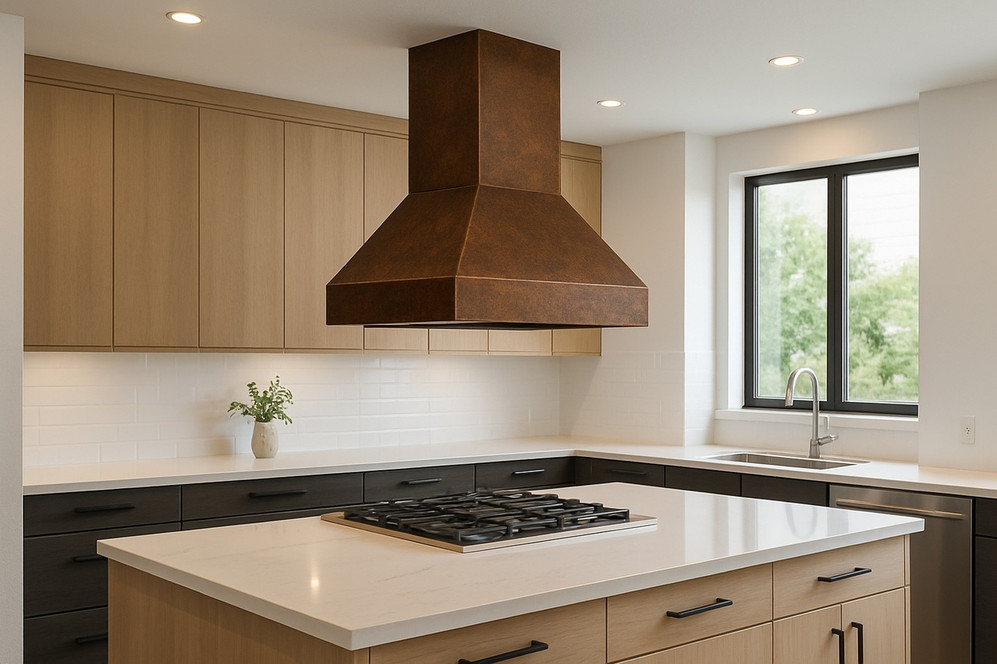
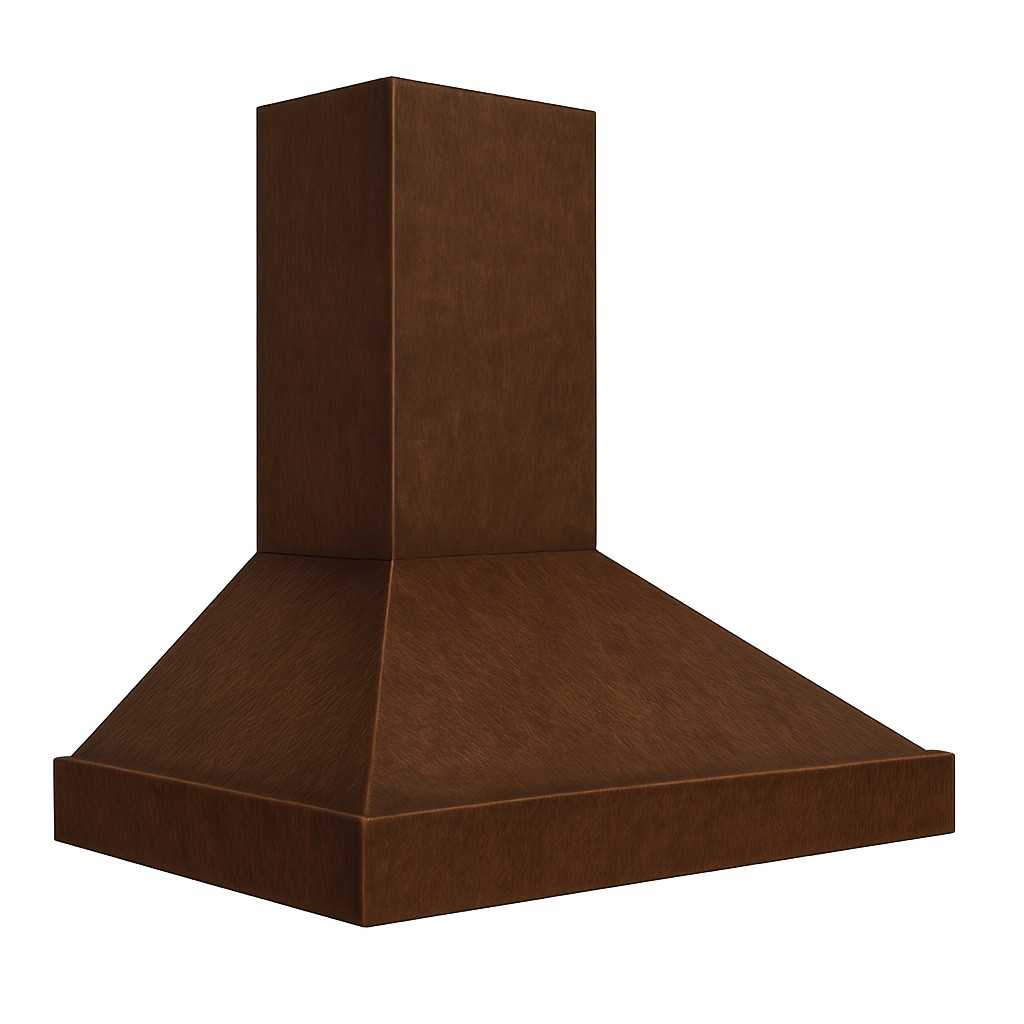
Modern Pyramid Copper Range Hood with Tall Chimney Guide explains how a clean tapered canopy, extended rectangular chimney, plain box apron, and handcrafted copper surface can create a strong vertical focal point in retro, modular, Scandinavian, contemporary, and transitional kitchens. Unlike ornate copper hoods with straps, rivets, scrollwork, or layered crown moulding, this design depends on geometry, proportion, and finish. The broad pyramid canopy narrows toward a tall chimney, while the straight lower apron gives the hood a controlled architectural base above the cooking area. Explore the modern pyramid copper range hood with tall chimney to review its product details, made-to-order dimensions, surface options, and ventilation preparation.
Blog Summary
- Shape: Tapered pyramid canopy
- Chimney: Tall rectangular profile
- Apron: Plain box construction
- Style: Retro to contemporary
- Finish: Smooth or hammered
- Planning: Size, insert and duct
Modern Pyramid Design
A pyramid range hood uses straight tapered panels that widen from the chimney toward the cooking surface. The profile is geometric rather than curved, giving the hood a cleaner appearance than a bell, dome, barrel, or curved-apron model. The front and side planes remain visually simple, allowing the copper texture and patina to become part of the architecture instead of supporting applied ornament. Browse kitchen inspiration in our modern pyramid copper hood with tall chimney lifestyle images.
This shape is especially useful when the kitchen needs a handcrafted metal focal point without an Old World appearance. The tapered canopy provides enough visual presence for a large range wall, yet the straight lines coordinate naturally with slab cabinetry, modular storage, rectangular tile, linear lighting, and contemporary appliances. For a broader comparison of this profile with other materials and silhouettes, review the pyramid-shaped range hood guide.
Tall Chimney Proportions
The tall chimney is one of the most important features of this hood. It extends the visual line toward the ceiling and gives the design a more architectural presence than a compact canopy with a short neck. In rooms with high ceilings, the extended chimney prevents the hood from looking undersized or disconnected from the upper wall. In standard-height kitchens, careful proportioning can make the range wall feel taller and more deliberate.
Chimney height should be planned around the ceiling, mounting height, canopy size, cabinetry, backsplash, and duct route. A chimney that is too short can make the hood appear compressed, while an unnecessarily narrow or excessively tall chimney may feel out of scale with the canopy. Because the hood is made to order, these relationships should be reviewed as one composition rather than as separate dimensions.
Chimney Planning
- Ceiling: Measure finished height
- Canopy: Balance width and height
- Duct: Confirm route before order
- Cabinets: Check upper alignment
- Scale: Review full elevation
Plain Box Apron
The lower apron gives the pyramid canopy a straight architectural base. Instead of using a curved edge, ornamental moulding, riveted band, or decorative relief, the box apron remains clean and uninterrupted. This simplicity makes the hood easier to coordinate with modern cabinetry and keeps attention on the overall silhouette.
The apron also helps conceal the lower edge of the ventilation liner, filters, and lighting from normal standing height. Its depth and height should be planned with the selected insert so service access remains practical. A proportionally deep apron can strengthen the design, but it should not visually overpower the tapered canopy above.
Handcrafted Copper Surface
Copper prevents the simple pyramid shape from feeling cold or generic. Even without decorative straps or rivets, the metal brings warm amber, brown, bronze, and reddish undertones to the range wall. Handcrafted variation gives the hood more depth than a painted enclosure or mass-produced stainless-steel shell.
A smooth surface emphasizes the uninterrupted canopy, crisp panel transitions, and modern geometry. A hammered texture adds small highlights and shadows across the broad sloping planes. The correct choice depends on whether the room needs a cleaner architectural object or a more visibly handmade focal point.
Surface Comparison
| Surface | Visual Effect | Best Use |
|---|---|---|
| Smooth copper | Crisp and uninterrupted | Modern and modular kitchens |
| Light hammering | Soft artisan movement | Transitional interiors |
| Deep hammering | Strong handcrafted texture | Rustic-modern spaces |
Choosing a Copper Patina
Patina changes how the tall chimney, tapered canopy, and plain apron read together. Hand-polished copper creates the brightest and most reflective result, making the hood suitable for colourful retro kitchens or refined contemporary interiors. Natural fired copper provides warmer variation across the broad panels. Honey patina softens the metal with golden tones, while antique and coffee finishes introduce deeper brown contrast.
Darker finishes generally make the hood feel heavier and more dramatic. Lighter finishes emphasize its clean geometry and help the tall chimney remain visually open. Cabinet colour, backsplash material, countertop veining, hardware, flooring, and lighting temperature should all be considered before selecting the finish. The copper patina finish guide provides additional comparisons for planning the colour direction.
1950s-Inspired Kitchens
The tall chimney and uninterrupted canopy can work surprisingly well in a 1950s-inspired kitchen. Pair the hood with flat-front cabinets, pastel doors, chrome details, terrazzo, checkerboard floors, or colourful laminate. Smooth copper or a lightly hammered texture keeps the silhouette crisp and prevents the design from feeling overly rustic.
Hand-polished copper creates the brightest retro effect and can echo chrome, glass, and glossy ceramic finishes. A light warm patina offers a softer alternative beside mint, cream, coral, pale blue, or butter-yellow cabinetry. Keep the apron plain so the hood complements the clean cabinet geometry associated with mid-century kitchen design.
Modular and IKEA-Style Kitchens
The pyramid canopy suits modular cabinetry because its straight lines relate naturally to slab doors, open shelving, integrated handles, and standardized cabinet grids. White, grey, black, or pale wood fronts create a controlled background for copper without requiring decorative millwork.
A smooth finish makes the hood feel more integrated with contemporary cabinetry, while restrained hammering adds warmth to a room dominated by engineered surfaces. Align the chimney with cabinet divisions, the range centreline, and backsplash joints. These small relationships help a custom hood feel intentional within a modular layout.
Scandinavian Kitchens
Scandinavian interiors benefit from the warmth of copper when the surrounding palette is quiet. Pale oak, ash, white cabinetry, soft grey stone, matte tile, and simple lighting allow the hood to add colour without introducing heavy decoration. The pyramid profile preserves the clean lines associated with Nordic design, while the handcrafted surface prevents the kitchen from feeling sterile.
Natural, honey, or lightly antique copper works particularly well with light wood. Keep the backsplash restrained and avoid excessive mixed-metal accents. The hood should appear as one warm focal point within a calm field of practical materials.
Luxury Contemporary Kitchens
In a luxury contemporary kitchen, the tall chimney can act as a vertical sculpture above a large range. Pair it with flat-panel cabinetry, a full-height stone slab, integrated appliances, wide drawers, and carefully layered lighting. The plain apron and uninterrupted canopy keep the design refined enough for a minimalist room.
A dark coffee patina can create contrast against pale stone or white cabinetry. Hand-polished copper can become a brighter statement against charcoal, black, or walnut surfaces. The most successful installation gives the hood sufficient negative space rather than crowding it between highly decorative cabinets.
Industrial and Urban Interiors
The geometric shape also works in industrial kitchens with concrete, exposed brick, blackened steel, dark cabinetry, and open shelving. Copper provides a warmer alternative to stainless steel while retaining a strong metal presence. A darker patina and hammered texture can make the canopy feel substantial, while smooth natural copper creates a cleaner urban interpretation.
Because the hood has no applied ornament, it can coordinate with industrial details without imitating historic factory equipment. Simple hardware, linear pendants, steel-framed glazing, and restrained backsplash materials reinforce the architectural character.
Wall-Mount and Island Options
The modern pyramid hood can be prepared for wall-mounted or island installation. A wall version is viewed mainly from the front and sides, allowing it to anchor a backsplash or cabinet elevation. An island version must appear balanced from every direction because the rear panel and side planes remain visible from adjoining living and dining areas.
Island installation also requires ceiling support, electrical planning, duct routing, and careful alignment with the cooktop. The chimney should feel proportional within the open room and should not block important sightlines. For layout considerations, review the wall and island range hood guide.
Custom Size Planning
Width, height, depth, mounting position, and chimney proportions should be confirmed before production. The hood must relate properly to the cooking appliance while fitting the available wall or island space. Wider professional ranges generally need broader capture coverage and a canopy substantial enough to remain visually balanced.
Tall ceilings may support an extended chimney, but the canopy still needs enough height to preserve its pyramid form. A very short canopy beneath an excessively long chimney can look top-heavy. Compact kitchens require the opposite approach: the chimney and apron may need to be reduced so the hood does not dominate the wall. The copper range hood size guide can help establish initial proportions before final measurements are approved.
Measurements to Confirm
- Range: Width and fuel type
- Ceiling: Finished room height
- Hood: Width, height and depth
- Mounting: Wall or island
- Backsplash: Final thickness
- Insert: Make and model
Ventilation Insert Planning
The copper shell creates the visible architecture, but the insert performs the ventilation. Insert selection should account for cooking habits, appliance output, hood width, duct configuration, filter type, controls, lighting, and acceptable noise. The exact insert information must be supplied before fabrication when the buyer provides the equipment.
Confirm the complete liner dimensions, cutout, duct outlet, electrical requirements, service access, and control location. Do not rely only on the advertised insert width because mounting flanges and internal components may affect preparation. The custom metal hood insert guide explains these planning requirements in greater detail.
Installation Preparation
Before installation, confirm structural support, duct route, electrical supply, backsplash completion, mounting height, and finished appliance location. Large handcrafted hoods should be anchored to framing, blocking, masonry, or another suitable structural surface rather than decorative finish materials alone.
Protect the copper during construction and avoid placing tools, adhesive, grout, or abrasive materials against the finish. Test-fit the ventilation insert and verify duct alignment before lifting the shell into its final position. Additional preparation steps are outlined in the copper range hood installation guide.
Cleaning and Care
Use mild soap, warm water, and a soft cloth for routine cleaning. Avoid abrasive pads, steel wool, bleach, ammonia, acidic cleaners, and aggressive degreasers because they may scratch copper or disturb the patina. Wipe with the direction of the surface treatment and dry the metal after cleaning to reduce water spots.
Filters belong to the ventilation insert and should be maintained according to the equipment manufacturer’s instructions. Keeping them clean improves airflow and reduces grease accumulation inside the hood. For finish-specific recommendations, consult the copper range hood cleaning guide.
Final Design Guidance
A modern pyramid copper range hood with a tall chimney is best suited to kitchens that need vertical emphasis, clean geometry, and handcrafted metal warmth without ornate decoration. The tapered canopy creates a strong architectural transition from the range to the ceiling, while the plain box apron provides a controlled base. Smooth copper reinforces the modern silhouette, and hammered copper adds visible artisan depth.
Choose the hood after reviewing the entire range wall, not as an isolated object. Coordinate its width with the appliance, its height with the ceiling, its patina with cabinetry and stone, and its insert preparation with the selected ventilation equipment. When these elements are planned together, the hood can support retro, modular, Scandinavian, luxury contemporary, industrial, and transitional kitchens while remaining distinctively handcrafted.