 US Dollar
 Euro
Euro
 Australian Dollar
 Canadian Dollar
 Polish Zloty
 British Pound

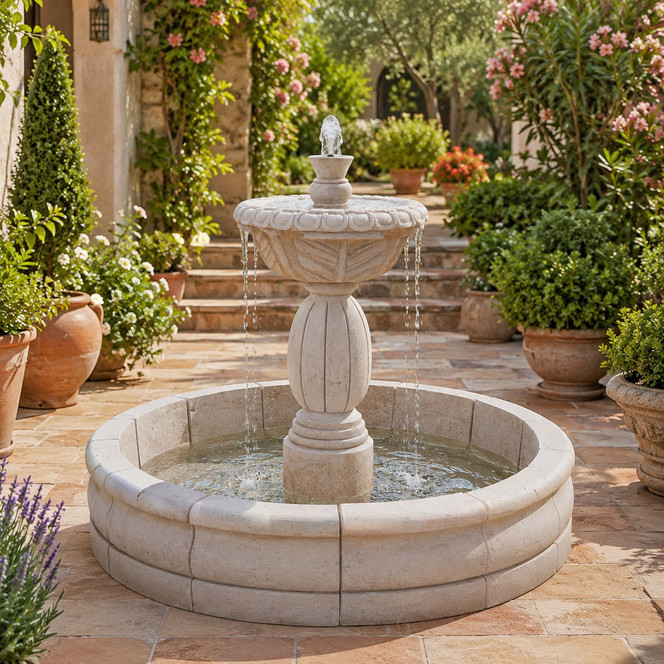
Mexican Stone Fountains: Hand-Carved Cantera Water Features for Timeless Outdoor Spaces
Mexican stone fountains bring movement, sound, natural texture, and architectural character to patios, courtyards, gardens, entryways, and outdoor dining areas. Hand-carved from Cantera, a volcanic stone traditionally used throughout Mexico, these fountains reflect the influence of Spanish Colonial, Hacienda, Mediterranean, and regional Mexican design. Their tiered basins, sculpted columns, carved details, and gently flowing water can transform an ordinary landscape into a more inviting and memorable retreat. Whether surrounded by greenery, terracotta flooring, wrought iron furniture, or colorful Talavera tiles, a Mexican stone fountain becomes a lasting centerpiece rooted in authentic material and artisan tradition.
Blog Summary
- Product: Mexican stone fountains
- Material: Natural Cantera stone
- Best For: Gardens and courtyards
- Style: Hacienda and Spanish Colonial
- Craft: Hand-carved in Mexico
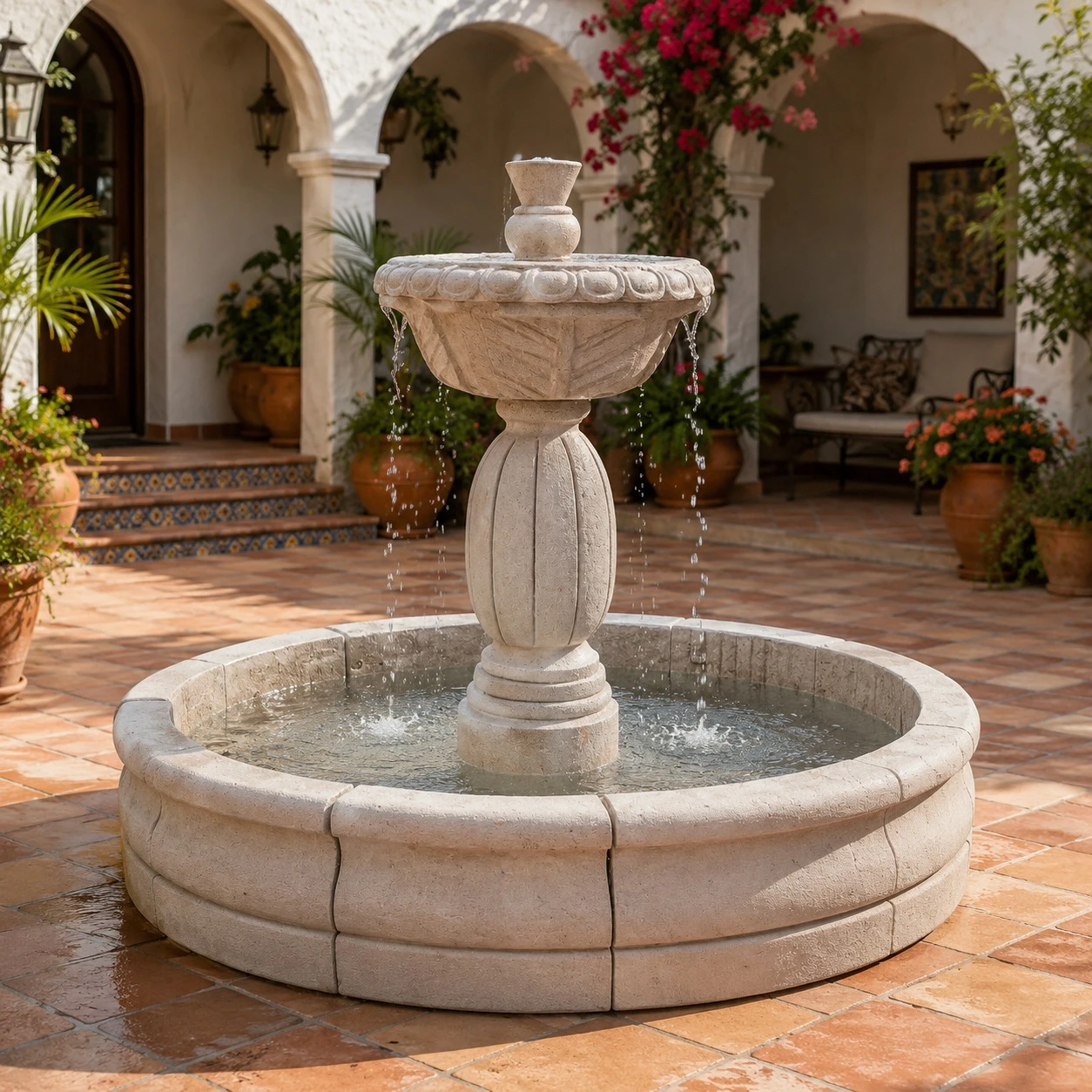
Why Add a Stone Fountain Outdoors?
A fountain introduces flowing water into the landscape, creating a sensory feature that can be enjoyed from patios, windows, walkways, and garden seating areas. The movement catches light, while the sound helps the outdoor environment feel more peaceful and private.
Unlike temporary garden decorations, a stone fountain becomes part of the architecture and can influence the placement of furniture, planting, lighting, and pathways.
The Natural Character of Cantera
Cantera stone is a natural volcanic material quarried in Mexico. Its relatively soft structure allows artisans to carve detailed forms, moldings, fluting, scrollwork, and sculptural ornament while preserving an earthy surface.
Natural pores, mineral marks, subtle color shifts, and surface variation make every fountain different from the next.
Cantera Stone Characteristics
- Volcanic: Naturally formed in Mexico
- Carvable: Suitable for detailed work
- Textured: Distinctive porous surface
- Varied: Natural color differences
- Architectural: Traditional building material
Hand-Carved Mexican Craftsmanship
Each fountain is shaped by experienced Mexican stone carvers who cut and refine the individual components by hand. A design may include the lower basin, central pedestal, upper bowls, finial, spouts, decorative moldings, and custom-carved details.
Small differences in carving, measurements, texture, and color are normal characteristics of artisan production.
A Tradition Rooted in Mexican Architecture
Stone fountains have long appeared in Mexican courtyards, plazas, monasteries, churches, hotels, restaurants, and private Hacienda homes. They traditionally provided practical access to water while helping organize the surrounding architecture.
Today, the same forms are used primarily for decoration, relaxation, and landscape design, but they continue carrying the visual language of historic Mexican spaces.
Spanish Colonial Influence
Spanish Colonial fountains often feature symmetrical proportions, tiered basins, carved columns, and broad lower pools. Their formal shapes contrast beautifully with the irregular surface of natural stone.
They pair especially well with stucco walls, arched openings, heavy wood doors, wrought iron lighting, terracotta paving, and tiled courtyards.
Colonial Design Features
- Symmetry: Balanced architectural form
- Tiered Basins: Cascading water movement
- Columns: Strong vertical emphasis
- Moldings: Traditional carved detail
- Wide Pools: Substantial lower base
Hacienda-Style Fountains
Hacienda fountains often have a substantial appearance that suits large courtyards, ranch-style properties, covered patios, and gardens surrounded by walls. Their carved stone surfaces reinforce a sense of permanence and connection to the surrounding architecture.
A Mexican fountain can become the central feature of an outdoor room designed around shade, dining, conversation, and greenery.
Spanish Revival Gardens
Spanish Revival landscapes frequently combine stone fountains with white stucco, clay roof tile, arched openings, iron gates, and Mediterranean planting. The fountain helps connect the house to the garden while reinforcing the historic style.
Neutral Cantera tones also prevent colorful tile and vegetation from overwhelming the composition.
Tiered Mexican Stone Fountains
Tiered designs create movement at several heights. Water flows from the upper finial or bowl into progressively larger basins before reaching the bottom pool.
The number and height of the tiers determine the fountain’s visual drama, sound level, and amount of splash.
Tiered Fountain Benefits
- Height: Strong vertical presence
- Movement: Multiple water levels
- Sound: Layered cascading effect
- Visibility: Seen across large gardens
- Formality: Traditional courtyard balance
Three-Tier Fountain Designs
A three-tier fountain creates a formal silhouette associated with traditional courtyards and public plazas. The upper sections provide movement and sound, while the broad lower basin gives the fountain visual stability.
This format works especially well in the center of a courtyard or at the intersection of garden pathways.
Single-Basin Fountains
Single-basin fountains offer a quieter, more restrained alternative. They may feature a central jet, carved pedestal, sculptural finial, or simple spout.
The smaller profile suits intimate patios, entry gardens, side yards, and outdoor spaces where circulation must remain open.
Wall-Mounted Stone Fountains
A wall fountain can provide the same soothing sound and natural material while occupying less floor space. These models usually include a carved back panel, water spout, and projecting basin.
They work especially well in enclosed courtyards, narrow patios, and areas beside outdoor dining furniture.
Fountain Configurations
- Tiered: Traditional cascading form
- Single Basin: Restrained central feature
- Wall Fountain: Space-saving design
- Pedestal: Sculptural raised profile
- Custom: Made for specific spaces
Choosing the Right Fountain Size
The fountain should remain proportionate to the surrounding landscape and architecture. A small fountain may disappear in a large lawn, while an oversized structure can limit movement in a compact patio.
Measure the full installation area and include room for access, maintenance, splash, pathways, and nearby seating.
Small Courtyard Fountains
Compact fountains can create strong impact in enclosed courtyards because the walls amplify water sound and frame the view. A wall model or narrow pedestal fountain often provides enough visual interest without consuming the central floor area.
Place it where it can be viewed from nearby doors, windows, or seating.
Large Garden Fountains
Broad landscapes can support fountains with wide lower basins, tall columns, and multiple tiers. A substantial design can anchor lawns, formal paths, circular drives, or symmetrical planting beds.
Align the fountain with an important window, entry axis, gate, or outdoor dining area so it remains visually connected to the property.
Scale Applications
- Balcony: Small wall fountain
- Patio: Compact pedestal model
- Courtyard: Centered tiered design
- Large Garden: Broad statement fountain
- Entry: Visible architectural feature
Creating an Outdoor Focal Point
A fountain naturally attracts attention because water moves and reflects light. It can be used to terminate a pathway, center a courtyard, anchor a seating area, or add structure to a large planting bed.
The surrounding design should support the fountain without competing with its scale and ornament.
Fountains Near Outdoor Dining Areas
A fountain near an outdoor dining set can make meals feel more relaxed and private. The sound of flowing water adds atmosphere during gatherings and may soften nearby traffic noise.
Allow enough distance to prevent excessive splash from reaching furniture, flooring, table settings, or cooking equipment.
Fountains Beside Patios and Decks
A fountain positioned near a patio or deck can be enjoyed even when guests remain under a covered structure. It provides a visual connection between the built environment and the surrounding garden.
Stone, terracotta, or tiled flooring can help integrate the feature into the rest of the outdoor space.
Entry Courtyards and Front Gardens
A stone fountain creates a strong first impression when placed near a front gate, courtyard entrance, circular drive, or covered porch. The material communicates craftsmanship and permanence before visitors enter the home.
Lighting, planters, and symmetrical planting can reinforce the entry composition.
Entryway Pairings
- Iron Lanterns: Architectural illumination
- Carved Doors: Traditional craftsmanship
- Talavera Pots: Colorful planted accents
- Terracotta: Warm paving material
- Stucco Walls: Soft neutral backdrop
Talavera Tile and Stone Fountains
Hand-painted Talavera tile creates a vivid contrast against neutral volcanic stone. Tile may be installed inside the basin, along the rim, behind a wall fountain, or across the surrounding patio.
The combination reflects one of the most recognizable material pairings in Mexican and Spanish Colonial design.
Adding Color Around the Fountain
A limited amount of patterned tile may be enough to establish a Mexican character. Blue-and-white tile produces a classic appearance, while yellow, terracotta, green, and cobalt patterns create a more expressive setting.
Use solid-color pieces between detailed patterns to prevent the installation from feeling visually crowded.
Talavera Applications
- Basin Interior: Color beneath water
- Rim Border: Decorative edge
- Wall Backdrop: Framed fountain setting
- Patio Floor: Coordinated outdoor design
- Accent Panels: Controlled pattern placement
Waterproofing and Tile Installation
Tile alone does not waterproof a fountain. The basin and surrounding structure must be prepared using materials suitable for continuous water exposure.
A qualified installer should select the waterproofing membrane, adhesive, grout, sealant, and expansion details appropriate for the stone, tile, climate, and water conditions.
Planting Around Cantera Fountains
Natural stone combines easily with ferns, succulents, citrus trees, ornamental grasses, flowering shrubs, palms, and climbing vines. Plants soften the carved geometry and help the fountain appear established within the garden.
Choose species suited to local sunlight, humidity, and irrigation conditions.
Using Planters for Structure
Large planters can frame the fountain and define nearby paths or seating areas. Matching pairs reinforce formal symmetry, while mixed shapes create a more relaxed Mexican courtyard appearance.
Repeat colors found in Talavera tile, upholstery, or surrounding architecture for visual continuity.
Planting Ideas
- Ferns: Soft shaded texture
- Succulents: Drought-tolerant character
- Climbing Vines: Vertical greenery
- Citrus Trees: Mediterranean influence
- Flowers: Seasonal color
Choosing the Stone Color
Cantera appears in several color directions, including cream, gray, brown, pink, mustard, black, and other earth tones. The best option depends on the exterior walls, paving, tile, roofing, furniture, and surrounding landscape.
Lighter colors stand out in shaded courtyards, while deeper tones create stronger visual weight in open gardens.
Cantera Color Options
- Cream: Light traditional tone
- Gray: Neutral architectural color
- Pink: Warm regional character
- Coffee: Deep earthy appearance
- Mustard: Golden Mexican warmth
Natural Stone Variation
Cantera may include pores, mineral marks, small cavities, color variation, and differences in texture. These features are inherent to natural volcanic stone.
They should be distinguished from cracks caused by impact, improper installation, or structural movement.
Custom Fountain Design
Made-to-order fountains can be adjusted in height, basin diameter, number of tiers, column shape, carving, and stone color. Customization is especially useful when the fountain must fit an established courtyard or landscape plan.
The proportions of each section should remain balanced so the structure appears intentional and stable.
Custom Options
- Height: Adapted to location
- Basin Size: Sized for available space
- Tier Count: Selected water effect
- Carving: Decorative stone detail
- Color: Chosen Cantera tone
How the Fountain Circulates Water
Most decorative fountains use a recirculating pump located in the lower basin. The pump sends water through internal tubing to the upper outlet, where it begins flowing back through the structure.
The same water continues circulating until evaporation, splash, or cleaning lowers the basin level.
Does a Stone Fountain Need Water Pressure?
A recirculating fountain does not normally require constant municipal water pressure once it has been filled. The pump moves water through the system independently.
A nearby hose connection or automatic fill valve can make topping off the basin easier.
Electricity and Pump Power
The pump requires an outdoor-rated electrical source unless the system is specifically designed for another power method. Wiring, outlets, covers, and grounding must comply with local wet-location requirements.
A licensed electrician should prepare or verify the electrical installation.
Fountain Components
- Pump: Recirculates water
- Tubing: Carries water upward
- Outlet: Begins visible flow
- Power: Runs the pump
- Fill: Replaces evaporation loss
Selecting the Right Pump
The pump capacity should match the fountain height, number of tiers, desired flow, tubing diameter, and basin volume. Too little flow may make the fountain appear inactive, while excessive flow can produce splash and water loss.
An adjustable pump allows the owner to refine the appearance and sound after installation.
Controlling Water Sound
The sound depends on the height of the water drop, number of tiers, basin depth, surrounding walls, and pump setting. Enclosed courtyards may amplify sound more than open gardens.
Adjust the flow gradually until the fountain provides pleasant movement without becoming disruptive.
Preparing a Stable Foundation
Stone fountains are heavy before water is added. The installation area must support the combined weight of the fountain sections, basin water, pump, tile, and any surrounding masonry.
A reinforced concrete pad may be required depending on the soil, fountain dimensions, and local conditions.
Foundation Requirements
- Level: Supports even water flow
- Stable: Prevents settlement
- Strong: Carries stone and water
- Accessible: Allows pump service
- Drained: Manages splash and rain
Why Level Installation Matters
If the foundation is not level, water may flow unevenly from one side of a basin. The fountain may also appear visually tilted even when the individual stone components were carved correctly.
Leveling should be confirmed during every stage of assembly.
Assembly in Multiple Sections
Large fountains are commonly shipped as separate stone components to reduce handling difficulty and freight risk. These may include the bottom basin, base, pedestal, bowls, column sections, and top finial.
The installation team must align, stabilize, and connect the pieces according to the design.
Professional Installation
Installing a Cantera fountain involves heavy lifting, foundation work, plumbing, electrical planning, leveling, and sometimes tile or masonry work. Professional installation is strongly recommended.
The contractor should review the component sizes, weights, pump access, water route, and final orientation before assembly begins.
Installation Checklist
- Foundation: Prepare structural support
- Sections: Align stone components
- Pump: Maintain service access
- Electrical: Use wet-rated equipment
- Testing: Balance water flow
Delivery and Unloading
Mexican stone fountains generally require freight shipping because of their size and weight. Buyers should confirm driveway access, gate width, unloading equipment, ground conditions, and the route to the final installation area.
Depending on the fountain, a lift gate, pallet jack, forklift, machinery, or several workers may be needed.
Inspecting the Shipment
Inspect the crate and visible fountain sections before accepting delivery. Freight damage should be documented with photographs and noted on the carrier paperwork whenever possible.
Natural pores, texture, and color variation are normal features of Cantera and should not be mistaken for impact damage.
Cleaning the Stone
Remove leaves, insects, dirt, and organic debris from the basin regularly. Use clean water and a soft brush when additional cleaning is needed.
Avoid harsh acids and aggressive chemicals that may damage the stone, surrounding tile, pump, plants, or nearby surfaces.
Routine Maintenance
- Debris: Remove leaves and insects
- Water: Maintain proper level
- Pump: Clear the intake
- Stone: Clean gently
- Flow: Check blocked outlets
Algae Control
Warm water, sunlight, and organic matter may encourage algae growth. Shaded placement, regular cleaning, and good circulation can help reduce accumulation.
Use only water treatments compatible with natural stone, the pump, surrounding vegetation, and any wildlife that may visit the fountain.
Mineral Deposits
Hard water can leave white or chalky mineral deposits along the basin rim and water path. Prompt cleaning may reduce buildup before it becomes difficult to remove.
Avoid aggressive descaling products unless they are approved for the specific Cantera and installation materials.
Maintaining the Basin Level
Evaporation can lower the water quickly during hot, windy, or dry weather. The pump must remain submerged according to the manufacturer’s instructions.
Running the pump with insufficient water may overheat or damage it.
Cold-Weather Protection
Freezing water can expand inside the pump, tubing, joints, basins, and stone pores. In cold climates, the fountain should be drained and winterized before temperatures fall below freezing.
The pump may need to be disconnected, cleaned, and stored indoors.
Winterization Steps
- Drain: Remove standing water
- Pump: Disconnect and store
- Tubing: Clear trapped moisture
- Cover: Use breathable protection
- Inspect: Review before restarting
Using the Fountain in Mild Climates
In warmer regions, the fountain may operate during much of the year. Regular pump cleaning, water replacement, and debris removal help maintain reliable circulation.
Even when not operating, the carved stone remains a valuable architectural garden feature.
Water and Energy Use
A recirculating system reuses the water already contained in the basin. Fresh water is only required to replace evaporation, splash, cleaning loss, or leakage.
An appropriately sized pump prevents unnecessary energy use while maintaining the intended flow.
Wildlife and Garden Ecology
Birds and small animals may use the fountain for drinking and bathing. Accessible shallow edges and clean water can make the feature part of a more active garden environment.
Avoid chemicals that could harm wildlife when animals regularly visit the basin.
Restaurants and Hotels
Mexican fountains can create memorable outdoor dining areas, hotel courtyards, resort entrances, winery patios, and event spaces. The sound of flowing water adds atmosphere and can help separate guest areas from surrounding noise.
Commercial designs should account for safety, daily maintenance, pump access, lighting, and high pedestrian traffic.
Commercial Applications
- Hotels: Courtyard centerpiece
- Restaurants: Outdoor dining atmosphere
- Resorts: Arrival feature
- Wineries: Landscape focal point
- Event Venues: Decorative gathering space
Why Natural Stone Stands Apart
Resin and fiberglass fountains can imitate stone while reducing weight, but they do not provide the same mineral texture, natural color variation, or architectural permanence as Cantera.
A hand-carved fountain becomes more visually integrated with masonry, landscaping, and traditional construction as it ages.
Coordinating Other Cantera Elements
Columns, benches, fireplaces, table bases, balustrades, and architectural trim can repeat the fountain’s stone throughout the property. Related Cantera colors help connect separate outdoor areas.
Additional carved stone pieces should complement the fountain without making the landscape feel overcrowded.
Ordering and Project Planning
Before ordering, confirm the fountain height, basin diameter, number of tiers, stone color, pump requirements, foundation, electrical supply, water access, climate, freight delivery, unloading equipment, and installation team.
Review the Mexican stone fountain collection, explore more Cantera fountain ideas, and compare additional handmade Mexican stone water fountains before finalizing the landscape plan.
Conclusion
Mexican stone fountains combine natural volcanic material, flowing water, traditional architecture, and skilled hand carving in features suited to gardens, patios, courtyards, restaurants, hotels, and entry landscapes. Available in tiered, wall-mounted, pedestal, single-basin, and custom configurations, Cantera fountains can be coordinated with Talavera tile, iron lighting, terracotta paving, greenery, and outdoor furniture. With careful planning for scale, foundation, pump performance, delivery, installation, maintenance, and winter protection, a handmade Mexican fountain becomes a lasting focal point that adds serenity, cultural depth, and architectural beauty to the outdoors.