 US Dollar
 Euro
Euro
 Australian Dollar
 Canadian Dollar
 Polish Zloty
 British Pound

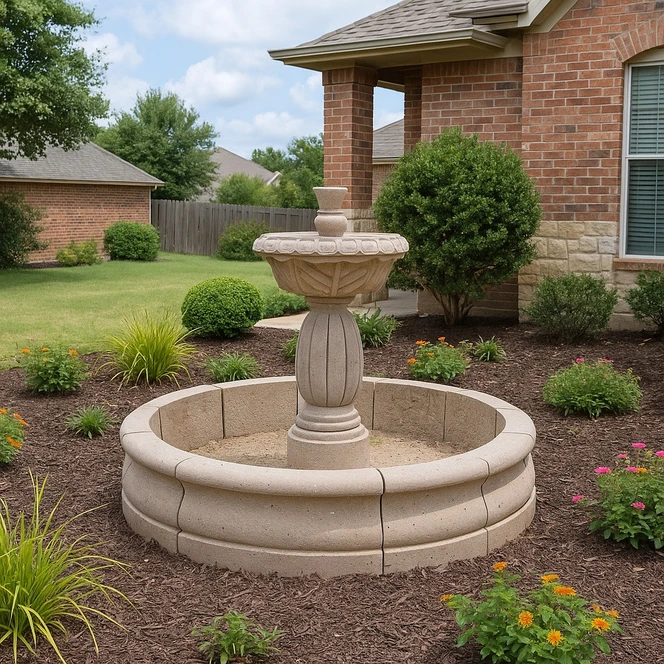
Mexican stone water fountains bring movement, sound, and handcrafted architectural beauty to gardens, courtyards, patios, parks, and Hacienda-style outdoor spaces. A well-placed fountain can transform an ordinary landscape into a peaceful retreat by adding the soothing sound of flowing water and the timeless presence of carved stone. While not every home can be located near the coast, a garden fountain can create a similar sense of calm and relaxation in a private outdoor setting. Handmade in Mexico using traditional stone-carving techniques, these fountains combine rustic charm, old-world character, and long-lasting outdoor appeal for residential and commercial environments.
The Beauty of Water in Outdoor Design
Water has always played an important role in landscape design. The gentle sound of a fountain can make a garden feel calmer, cooler, and more inviting. In patios and courtyards, moving water softens hard surfaces such as stone walls, tile floors, stucco, and brick pathways.
Our collection of handmade Mexican stone fountains is designed to bring that peaceful atmosphere into residential and commercial outdoor spaces. Whether the fountain is small and simple or large and architectural, it becomes a natural focal point that draws attention and encourages relaxation.
Many homeowners use fountains to create a private oasis where they can enjoy morning coffee, evening gatherings, or quiet moments outdoors. The combination of carved stone, flowing water, and surrounding plants creates a timeless atmosphere that feels connected to nature.
Why Add a Water Fountain?
- Sound: Creates peaceful ambiance
- Beauty: Adds stone detail
- Focus: Defines outdoor areas
- Comfort: Softens patios
- Style: Enhances garden design
Handmade Stone Fountains from Mexico
Mexican stone fountains are valued for their artisan craftsmanship and traditional appearance. Each piece is shaped by skilled stoneworkers who understand how to create fountains that are both decorative and functional.
Our handmade stone fountains are inspired by old European and Mexican traditions, where carved fountains were used in courtyards, plazas, estates, churches, and public gardens.
Today, these same influences can be adapted for private homes, restaurants, hotels, parks, and commercial landscapes. The result is a fountain that feels historic while still meeting modern outdoor design needs.
Because each fountain is handmade, subtle variations in carving, surface texture, and stone color contribute to its authentic character.
Mexican Fountain Traditions
Travel through Mexico and you will see stone fountains in town squares, private patios, church courtyards, public parks, gardens, and hacienda estates. These water features are an important part of Mexican outdoor architecture because they combine beauty, sound, and social gathering.
In traditional Hacienda homes, fountains often serve as the center of a courtyard. In public spaces, they create meeting points and visual landmarks. In private gardens, they help organize the landscape while adding a sense of calm.
This long tradition explains why Mexican artisans continue producing fountains in many sizes, shapes, and styles. The craft remains closely connected to the country's architectural heritage and love of outdoor living.
Traditional Fountain Settings
- Courtyards: Hacienda focal points
- Parks: Public gathering areas
- Gardens: Private retreats
- Patios: Outdoor living spaces
- Plazas: Historic landmarks
Cantera Stone and Outdoor Character
Cantera stone is one of the most traditional materials used for Mexican fountains. This volcanic stone is appreciated for its workable texture, natural color variations, and ability to be carved into detailed architectural forms.
Because Cantera is easier to carve than many harder stones, artisans can create columns, basins, bowls, wall panels, decorative borders, and sculptural figures with impressive detail.
Handcrafted Mexican fountains from cantera rock offer a natural rustic appearance that blends beautifully with gardens, patios, courtyards, and Spanish Colonial architecture.
The stone's organic surface gives every fountain a timeless quality that improves the visual character of outdoor spaces.
Classic Three-Tier Fountain Designs
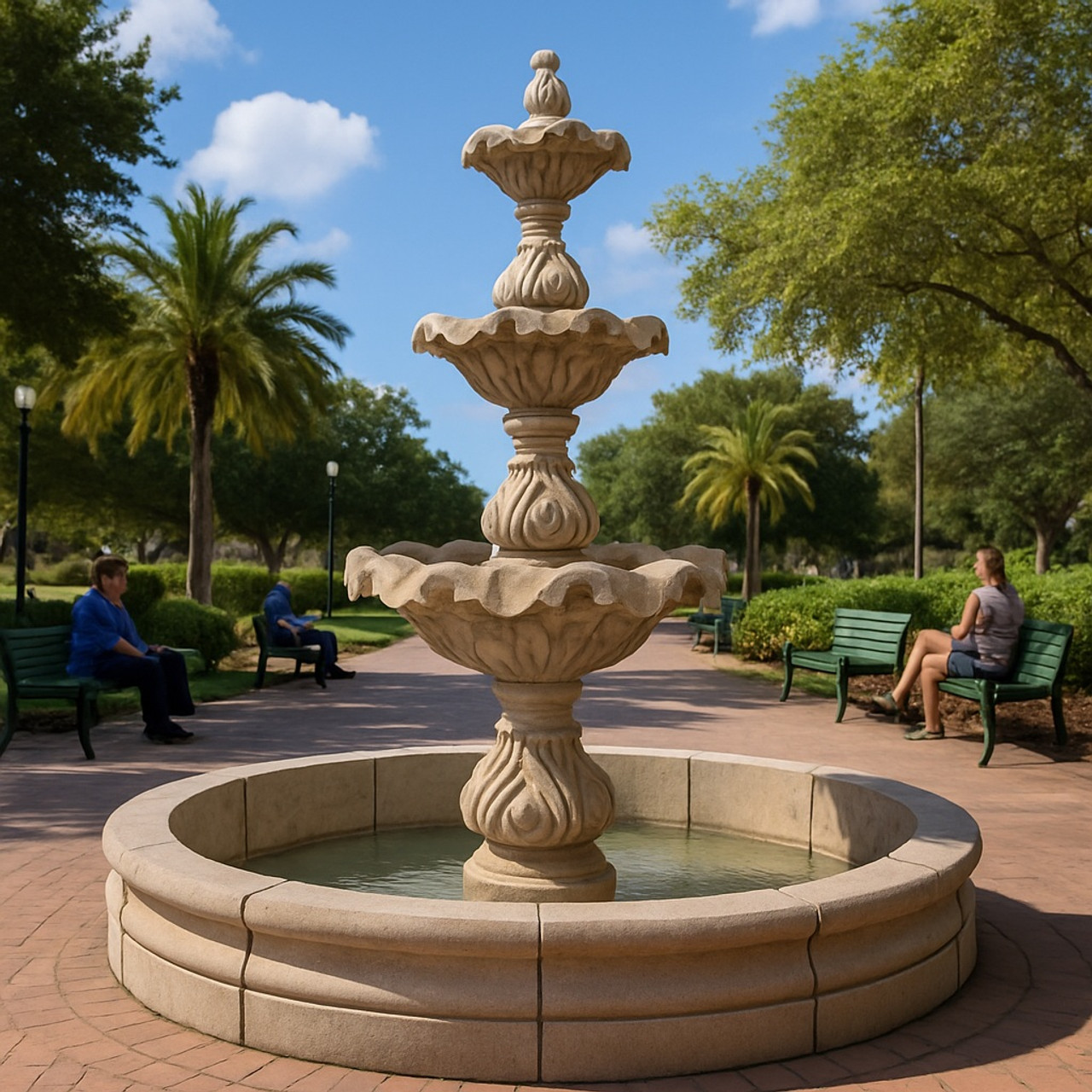
One of the most recognizable styles of Mexican stone water fountains is the classic three-tier design. These fountains usually feature a central column, several water bowls or plates, and a larger basin below where the water collects before recirculating.
The tiered structure creates both visual height and pleasant water movement. As water falls from one level to the next, it produces a relaxing sound that can be heard throughout the garden.
Three-tier fountains are especially effective in open courtyards, large patios, gardens, parks, and circular driveways where the fountain can be viewed from multiple sides.
Their balanced form makes them suitable for both residential and commercial landscapes.
Classic Fountain Features
- Column: Central support detail
- Tiers: Layered water movement
- Basin: Strong lower foundation
- Sound: Gentle water flow
- Scale: Ideal centerpiece
Wall-Mounted Fountain Options
Wall-mounted fountains are excellent choices for smaller spaces, narrow patios, courtyards, garden walls, and entry areas. Because they sit against a wall, they provide the beauty and sound of flowing water without requiring as much floor space as a freestanding fountain.
These designs work especially well against stucco, brick, stone, or plaster walls. A wall fountain can turn a plain vertical surface into an elegant architectural feature.
Wall fountains are also popular near outdoor dining areas and covered patios because they create atmosphere without interrupting the layout of furniture and walkways.
For homeowners with compact gardens or urban patios, this style provides a practical and beautiful way to include water in the design.
Decorating Fountains with Talavera Tile
Stone fountains become even more colorful and expressive when decorated with hand-painted ceramic tile. Talavera accents add Spanish Colonial charm and create a beautiful contrast against the neutral tones of carved stone.
Decorative talavera tiles can be used on basins, borders, back panels, and fountain surrounds. The combination of carved stone and colorful ceramic creates a strong Mexican design identity.
In gardens filled with flowers, greenery, and clay planters, tile details help connect the fountain to the surrounding landscape. The colors of the ceramics can echo plants, patio furniture, exterior walls, or other decorative accents.
This approach is especially effective in Hacienda-style patios and Spanish Colonial courtyards.
Tile Accent Ideas
- Borders: Frame the fountain
- Basins: Add ceramic color
- Back Panels: Create a focal point
- Steps: Coordinate nearby areas
- Walls: Extend the pattern
Spanish Ceramic Tile and Stone
The combination of stone and ceramic has deep roots in Spanish and Mexican architecture. Carved stone provides structure and permanence, while ceramic tile introduces color, pattern, and decorative energy.
Fountains decorated with Spanish ceramic tiles tiles bring extra visual richness to patios and gardens. This pairing is especially successful in exterior spaces where sunlight, plants, and water movement enhance the colors and textures.
When used thoughtfully, tile should support the fountain design rather than overpower it. A border, basin detail, or central panel may be enough to create the desired effect.
The result is a water feature that feels both traditional and highly decorative.
Figurative and Decorative Fountain Designs
For homeowners who want a fountain with more personality, figurative designs offer a playful and artistic alternative to classic forms. Mexican stoneworkers can create sculptural fountains featuring people, animals, plants, or imaginative compositions.
Designs such as a couple standing beneath an umbrella, a carved palm tree, or a decorative garden figure can become memorable conversation pieces. These fountains work especially well in themed gardens, boutique hotels, parks, and private courtyards where a unique focal point is desired.
More elaborate carvings require additional craftsmanship, but they also provide a stronger sense of individuality.
A custom decorative fountain can become one of the most distinctive features of the entire landscape.
Decorative Fountain Ideas
- Figures: Artistic stone forms
- Palm Trees: Tropical inspiration
- Animals: Garden character
- Scenes: Storytelling designs
- Custom: Personalized carving
Corner Fountains for Smaller Spaces
Not every garden or patio has room for a large freestanding fountain. Corner fountains offer an efficient solution for smaller outdoor spaces while still providing the relaxing sound and visual appeal of flowing water.
A corner fountain can fit into patios, side yards, balconies, small courtyards, and compact garden layouts. It uses space efficiently while softening hard corners and adding architectural interest.
This style is especially useful in urban homes, townhouses, and smaller properties where every square foot matters.
With the right plants and lighting, even a small corner fountain can create a peaceful outdoor retreat.
Pairing Fountains with Mexican Columns
Stone fountains often coordinate beautifully with architectural stone elements such as columns, arches, benches, and carved garden accents. These details help create a complete outdoor environment rather than a single isolated feature.
Handcrafted mexican columns can be used to frame patios, support verandas, define entrances, or add structure around a fountain area.
When the same stone color and carving style are repeated throughout the landscape, the design feels more intentional and cohesive.
This approach is especially effective for Hacienda homes, Spanish Revival residences, restaurants, boutique hotels, and public garden spaces.
Coordinating Stone Elements
- Columns: Architectural support
- Benches: Garden seating
- Arches: Entrance definition
- Planters: Decorative planting
- Steps: Stone continuity
Choosing the Right Fountain for Your Space
Selecting the ideal fountain begins with the size and function of the outdoor area. A large central courtyard may benefit from a freestanding tiered fountain, while a narrow patio may require a wall-mounted or corner design.
Consider where people will sit, walk, dine, and gather. The fountain should enhance the layout without blocking movement or overwhelming the space.
Sound is also important. A larger fountain can create stronger water music, while a smaller design produces a softer effect appropriate for intimate seating areas.
When properly selected, a Mexican stone fountain becomes a natural extension of the architecture and landscape.
Conclusion
Mexican Stone Water Fountains add beauty, sound, and timeless craftsmanship to gardens, courtyards, patios, parks, and Hacienda-style outdoor spaces. Handmade from carved stone and inspired by centuries of European and Mexican tradition, these fountains can be designed as wall-mounted features, freestanding tiered centerpieces, corner fountains, or custom sculptural works. With options for Talavera tile accents, decorative carvings, and coordinating stone columns, a Mexican stone fountain creates a peaceful outdoor focal point that transforms any landscape into a relaxing retreat.