 US Dollar
 Euro
Euro
 Australian Dollar
 Canadian Dollar
 Polish Zloty
 British Pound

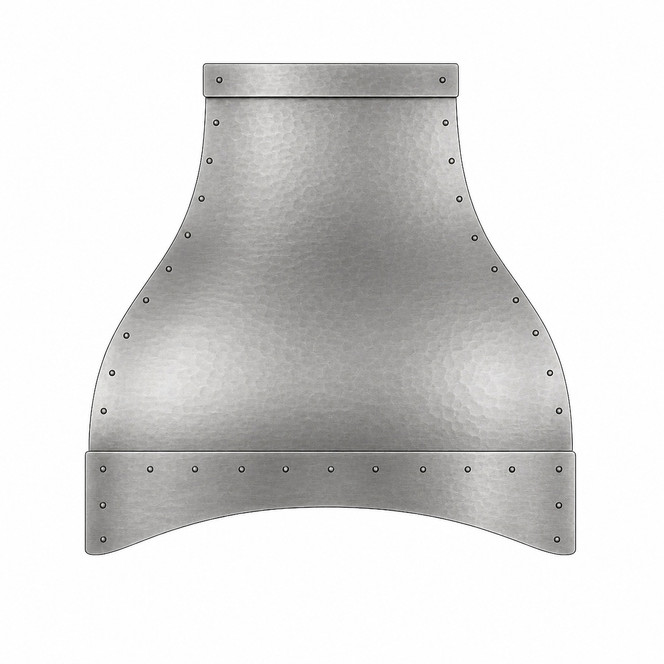
Hammered Zinc Bell Range Hood with Curved Apron Lifestyle Images shows how a soft gray metal hood can work in French country, European farmhouse, Spanish Colonial, and rustic transitional kitchens. This handcrafted zinc hood combines a bell-shaped canopy, curved lower apron, compact chimney, and hammered surface for rooms that need sculptural metalwork without the warmth of copper or the weight of dark iron. Explore the hammered zinc bell range hood with curved apron for product details, and read the hammered zinc bell range hood guide for shape, sizing, finish, ventilation, and customization planning.
Blog Summary
- Product: Zinc bell range hood
- Apron: Curved lower profile
- Images: Four kitchen styles
- Finish: Hammered gray zinc
- Planning: Insert and blower support
French Country Kitchen View

The French country kitchen image shows how the hammered zinc bell hood can feel graceful, traditional, and restrained at the same time. French country interiors often rely on painted cabinetry, limestone, plaster, oak beams, unlacquered brass, handmade tile, and soft neutral color. The zinc finish supports that palette because it feels lighter and quieter than dark iron or deeply patinated copper. The curved apron adds a furniture-like lower edge, while the compact chimney keeps the hood from feeling too formal. The result is a range wall that feels custom without becoming overly ornate.
Why the French Country Image Works
This setting works because the hood brings shape and texture instead of heavy decoration. The bell canopy has enough curve to soften cabinetry and stone, while the hammered zinc surface adds handmade character in a subtle way. The lower apron can echo shaped cabinet rails, arched openings, or softened plaster details. Since zinc is cooler in tone, it pairs especially well with pale stone, cream cabinets, gray veining, pewter accents, and aged brass hardware. The hood becomes a quiet focal point rather than a high-contrast centerpiece.
French Country Pairings
- Cabinets: Painted inset or shaker
- Stone: Limestone or quartzite
- Walls: Plaster or soft tile
- Hardware: Brass or pewter
- Finish: Natural hammered zinc
European Farmhouse Kitchen View

The European farmhouse kitchen image highlights the hood’s natural connection to stone, wood, plaster, and practical handmade finishes. European farmhouse design often feels collected rather than polished, with aged surfaces, simple cabinetry, open shelving, natural floors, and quiet metal accents. The zinc hood works well because it has enough artisan texture to feel authentic, but the design remains clean. The bell body gives the range area softness, while the curved apron adds a shaped lower edge that feels more architectural than a standard straight hood.
European Farmhouse Material Balance
In this type of kitchen, the hood should look integrated with the room rather than applied as a shiny appliance. Hammered zinc helps because the surface has gentle tone movement and a muted gray character. It can connect with limestone, marble, soapstone, stainless steel, pewter hardware, and gray stone veining. White oak, walnut, reclaimed wood, and painted cabinetry add warmth against the cool metal. Because each hood is handmade, zinc tone movement, hammering variation, seam detail, tool marks, and small artisan differences should be expected. No two hoods are identical, and those variations add character rather than defects.
European Pairings
- Wood: Oak, walnut or reclaimed
- Backsplash: Plaster or handmade tile
- Flooring: Stone or wide plank wood
- Metal: Pewter or stainless accents
- Look: Calm handmade texture
Spanish Colonial Kitchen View

The Spanish Colonial kitchen image shows a cooler alternative to the traditional copper hood. Spanish Colonial kitchens often use plaster walls, arched openings, dark wood, handmade tile, black iron lighting, bronze hardware, and terracotta or stone floors. A zinc hood can still work in this setting when the room needs sculptural metalwork but the designer wants a softer gray focal point. The curved apron relates to arched architectural lines, while the hammered surface keeps the hood from feeling too modern or flat. For broader style comparison, review Spanish-style range hood ideas.
Spanish Colonial With Zinc
Zinc changes the mood of a Spanish Colonial kitchen. Instead of adding strong copper warmth, it introduces a quieter metal tone that can balance dark beams, colorful tile, and black iron details. The hood can work especially well when the backsplash includes gray, cream, blue, green, charcoal, or muted handmade tile. The bell shape has enough traditional softness for the style, while the lack of heavy straps or rivets keeps the range wall cleaner. A darker zinc finish can add contrast, while natural zinc creates a lighter old-world effect.
Spanish Colonial Pairings
- Walls: Plaster or stucco
- Tile: Handmade or Talavera
- Wood: Dark beams or cabinets
- Metal: Iron, bronze or pewter
- Shape: Curved apron detail
Rustic Transitional Kitchen View
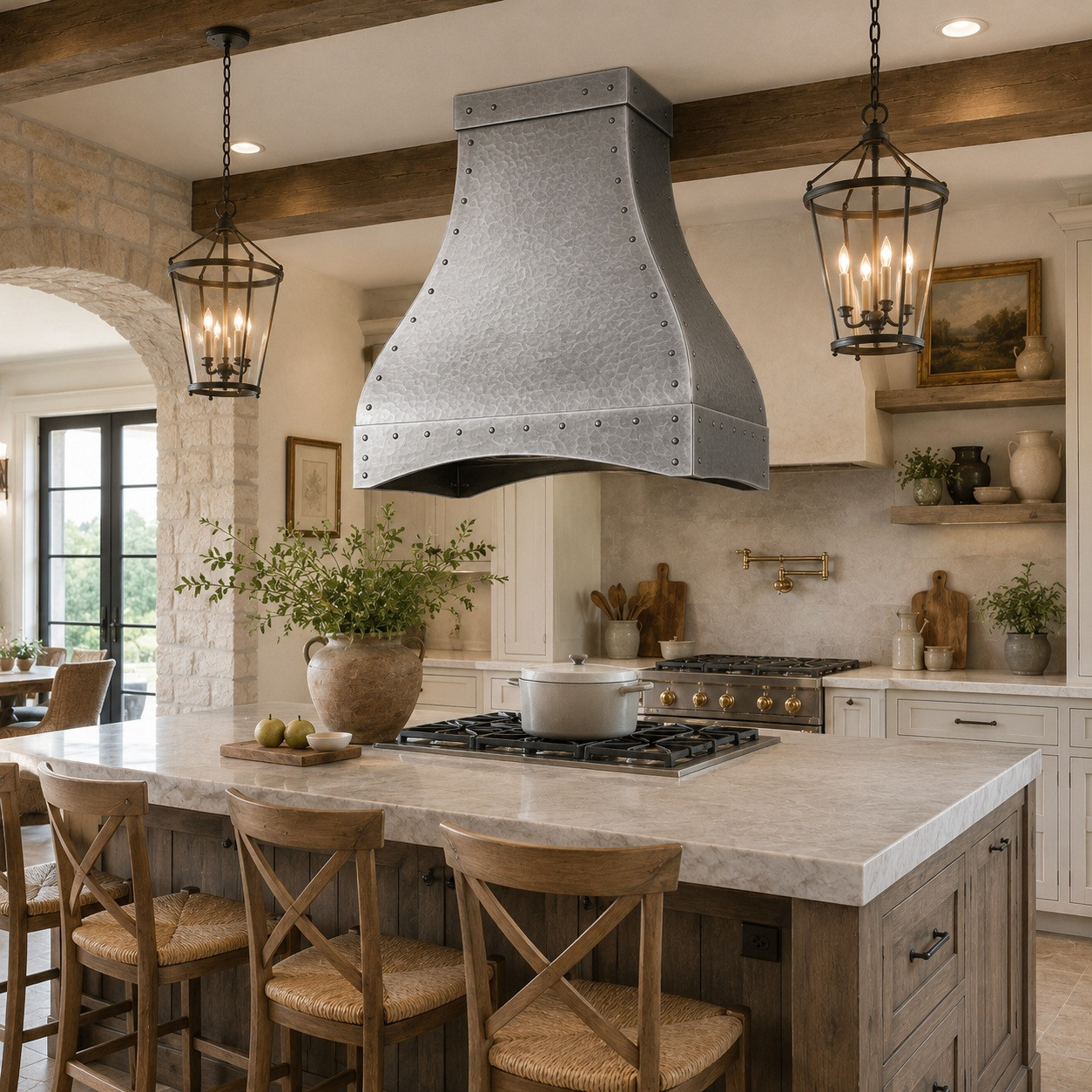
The rustic transitional kitchen image shows the hood in a setting that blends natural texture with cleaner design. Rustic transitional interiors often include wood cabinetry, painted cabinets, lightly veined stone, simple hardware, plaster-style walls, and controlled contrast. The hammered zinc hood fits this balance because it has handmade texture without the stronger color statement of copper. The bell body softens the room, while the curved apron adds enough custom detail to make the range wall feel designed. This makes the hood useful for kitchens that need warmth, structure, and restraint at the same time.
Rustic Transitional Balance
In this image, the hood works best when surrounding materials stay edited. White oak, walnut, stone slab, simple tile, black hardware, bronze accents, and warm neutral cabinetry can all support the zinc finish. A busy backsplash may compete with the hammered surface and curved apron, while a calmer background lets the hood shape read clearly. The design can lean rustic with darker wood and textured tile, or more transitional with pale cabinetry and clean stone. The key is to let the hood remain the main handmade metal feature.
Transitional Pairings
- Cabinets: Wood, shaker or painted
- Counters: Quartzite or limestone
- Backsplash: Quiet slab or tile
- Hardware: Black, bronze or nickel
- Style: Rustic but refined
Curved Apron in Lifestyle Images
The lifestyle images show why the curved apron is important. It gives the lower edge movement and helps the hood feel more handcrafted than a plain straight-bottom canopy. In French country and European farmhouse kitchens, the apron feels graceful and furniture-like. In Spanish Colonial kitchens, it relates to arches and shaped plaster forms. In rustic transitional kitchens, it adds a custom detail without making the design too ornate. Buyers comparing other profiles can review the range hood shapes guide for bell, dome, tapered, box, and sloping forms.
Finish and Surface Character
Hammered zinc has a quiet finish that changes with light. Natural zinc creates soft gray movement, dark zinc can add stronger contrast, and hand-polished zinc can introduce brighter highlights. The hammered texture makes the hood feel artisan-made from close range, while the overall gray tone keeps it refined from across the room. Zinc works especially well with plaster, limestone, marble, oak, walnut, concrete, stainless steel, handmade tile, pewter, and neutral cabinetry. Buyers comparing broader material options can browse the zinc range hood collection.
Scale and Placement
Scale should be reviewed before ordering because the bell body and curved apron both need enough room to read clearly. Width should relate to the range or cooktop, while height should suit the ceiling, backsplash, cabinetry, and chimney proportion. The curved apron should be visible without lowering the hood too much over the cooking surface. A hood that is too narrow may look decorative rather than architectural, while one that is too large can overpower the range wall. For measurement planning, use the range hood size guide.
Ventilation Planning
Even in a lifestyle image post, ventilation affects the final design. The zinc shell creates the visible hood, while the insert, blower, and ducting provide smoke, steam, grease, and odor removal. Rustica House can supply the 200 CFM insert only. Buyer-supplied internal inserts are supported up to 1,260 CFM, and buyer-supplied external blowers are supported up to 1,500 CFM when complete specifications are provided before production. Any insert, liner, blower, lighting, filter system, or recirculating setup beyond the Rustica House 200 CFM insert must be supplied by the buyer. For details, review the range hood insert guide.
Ordering Notes
Before production, send range width, ceiling height, wall or island layout, desired hood width, desired hood height, depth, duct route, backsplash material, cabinet spacing, and ventilation equipment details. If using a buyer-supplied internal insert or external blower, send the brand, model, cutout dimensions, liner requirements, duct size, discharge direction, controls, lights, filters, and service-access information. Photos of the range wall help Rustica House review bell proportion, apron curve, chimney height, zinc finish, and surrounding materials. For project questions, contact Rustica House.
Common Questions
What makes these lifestyle images useful?
They show how the same hammered zinc bell hood can work in French country, European farmhouse, Spanish Colonial, and rustic transitional kitchens. Each image highlights a different balance of shape, finish, texture, and surrounding materials.
Does zinc work in traditional kitchens?
Yes. Zinc can work in traditional kitchens when the shape has enough softness and architectural detail. The bell canopy and curved apron help this hood feel appropriate in French country, European farmhouse, and Spanish Colonial interiors.
Will every hood look exactly like the images?
No. Each hood is handmade, so no two pieces are identical. Zinc tone movement, hammering variation, seam detail, tool marks, apron differences, and artisan surface details are normal.
What ventilation systems are supported?
Rustica House can supply the 200 CFM insert only. The hood shell can support buyer-supplied internal inserts up to 1,260 CFM and buyer-supplied external blowers up to 1,500 CFM when complete specifications are provided before production.
Design Summary
The hammered zinc bell range hood with curved apron lifestyle images show how one soft gray metal hood can adapt to several kitchen styles. The French country image highlights grace and pale finishes. The European farmhouse image emphasizes plaster, wood, stone, and quiet handmade texture. The Spanish Colonial image shows how zinc can offer a cooler alternative to copper, while the rustic transitional image balances handmade metalwork with cleaner design. Across all four settings, the same principles apply: keep the hood properly scaled, choose the right zinc finish, coordinate the backsplash and cabinets, and confirm ventilation details before production.
Final Design Guidance
Hammered Zinc Bell Range Hood with Curved Apron Lifestyle Images helps buyers imagine this handcrafted zinc hood in French country, European farmhouse, Spanish Colonial, and rustic transitional kitchens. Choose this design when the range area needs a sculptural gray metal focal point with a soft bell body, curved lower apron, compact chimney, hammered texture, and restrained handmade character. Pair it with plaster, limestone, handmade tile, white oak, walnut, cream cabinetry, dark wood, black iron, pewter, bronze, stainless steel, or warm neutral surfaces. Confirm width, height, depth, wall or island mounting, insert details, blower specifications, duct route, backsplash conditions, and zinc finish before production. Customize the hammered zinc bell range hood with curved apron with Rustica House for a made-to-order kitchen centerpiece.