 US Dollar
 Euro
Euro
 Australian Dollar
 Canadian Dollar
 Polish Zloty
 British Pound

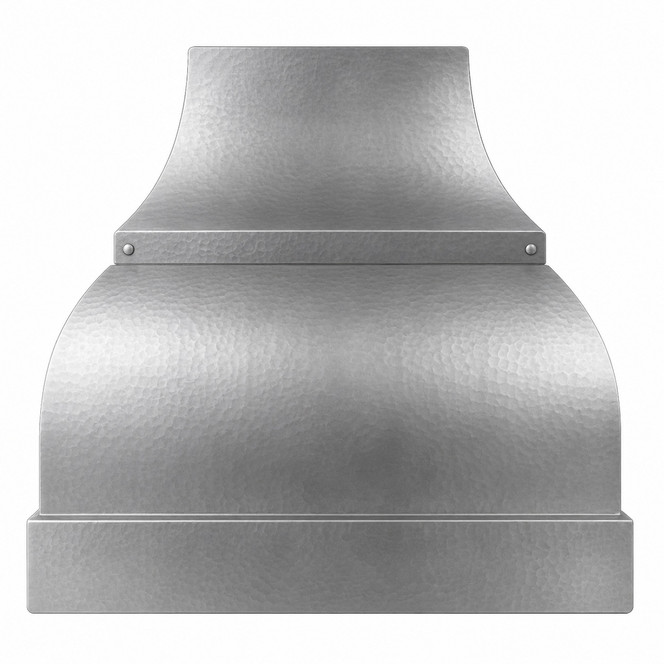
The Hammered Zinc Bell Range Hood with Band and Boxed Apron is shown in these kitchen images as a softly curved zinc focal point for European, minimalist, transitional, organic modern, and industrial loft kitchens. Its bell-shaped canopy, horizontal waist band, deep boxed apron, hand-hammered zinc texture, and calm gray metal tone create a refined architectural presence without heavy ornament. The hood has more movement than a flat box hood but remains cleaner than strap-heavy or heavily riveted statement designs, making it useful for kitchens that need shape, texture, and restraint in one handcrafted feature. Explore the hammered zinc bell range hood with band and boxed apron to compare its curved profile, boxed apron, hammered finish, and kitchen style applications.
Blog Summary
- Focus: zinc hood kitchen images
- Product: hammered zinc bell hood
- Shape: curved bell canopy
- Detail: band and boxed apron
- Scenes: five kitchen styles
- Finish: soft hammered zinc
Zinc Bell Range Hood Images
Kitchen images help show how this hammered zinc bell range hood looks inside finished kitchens rather than as a standalone product photo. Cabinet color, wall texture, backsplash material, counter tone, flooring, hardware, lighting, and ceiling height all affect how the zinc surface appears. In a European kitchen, the hood can feel classic and architectural. In a minimalist kitchen, it becomes a quiet sculptural feature. In a transitional kitchen, it bridges traditional shape and modern restraint. In an organic modern kitchen, the hammered zinc surface works with tactile natural materials. In an industrial loft kitchen, the same hood can feel strong, practical, and metal-focused. Learn more about the bell form, band detailing, and substantial boxed apron in our zinc bell range hood band boxed apron guide.
The design stands out because the lower boxed apron gives the hood visual weight while the curved canopy keeps the shape graceful. The horizontal band separates the upper body from the apron, giving the hood a layered profile without adding heavy decoration. For broader material comparison, browse the zinc range hoods collection or review the hammered and smooth metal range hoods guide.
Design Highlights
- hammered zinc bell canopy
- horizontal waist band detail
- deep boxed lower apron
- soft gray metal character
- curved architectural profile
- clean face without heavy trim
- European to loft flexibility
European Kitchen with Zinc Bell Hood
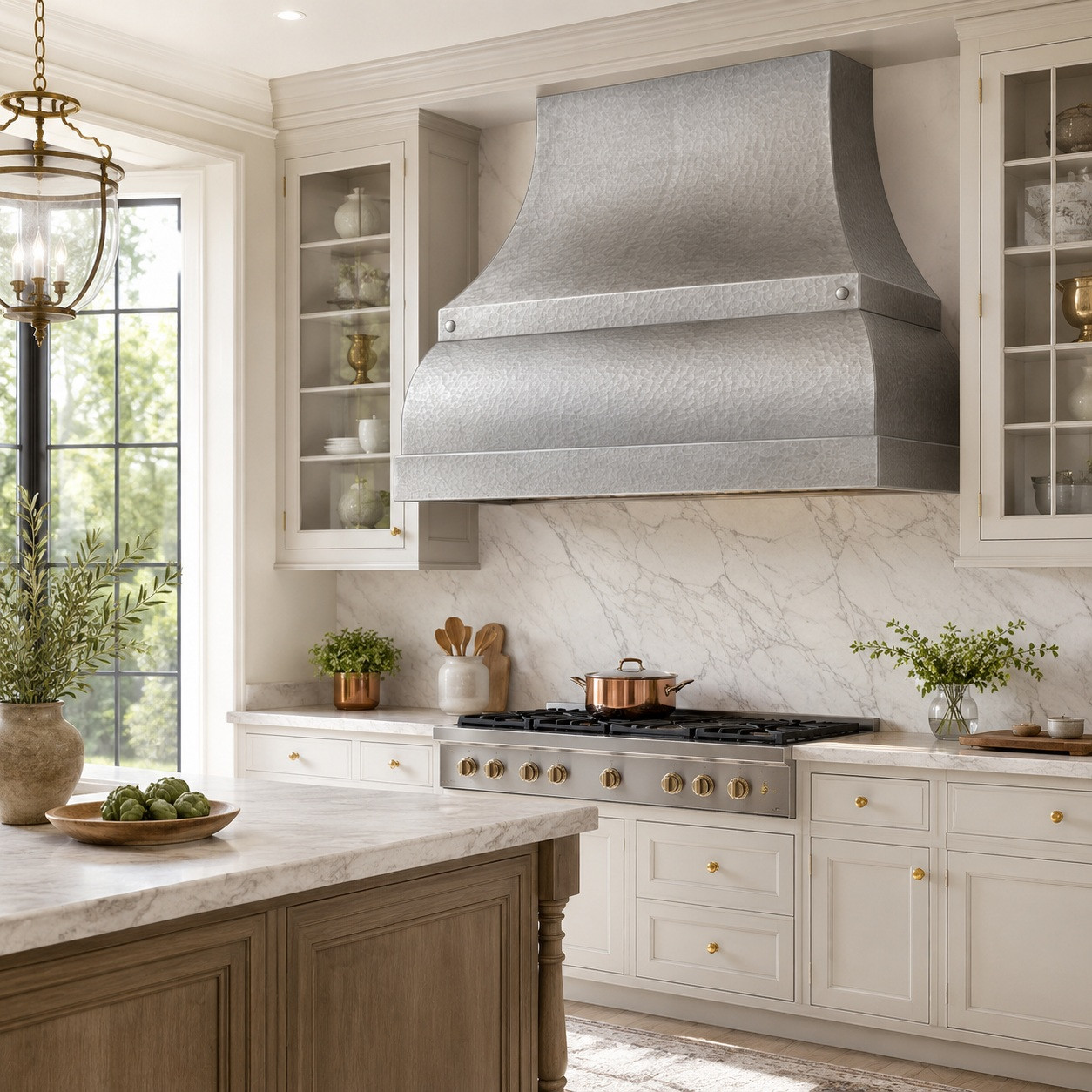
In a European kitchen, the hammered zinc bell range hood feels architectural without looking overly decorated. The curved canopy gives the range wall a softer profile, while the boxed apron creates a strong lower edge above the cooking surface. This balance works well with inset cabinetry, plaster walls, limestone, marble, honed stone, wood floors, brass hardware, and muted tile.
The zinc finish is especially useful in European-inspired kitchens because it feels quieter than bright stainless steel and cooler than copper. The hand-hammered surface adds subtle movement, so the hood does not appear flat against refined materials. The waist band helps separate the upper canopy from the apron, giving the design a layered furniture-like quality.
Minimalist Kitchen with Zinc Bell Hood

In a minimalist kitchen, this zinc hood works because the ornament is controlled and built into the shape. The bell canopy introduces movement, but the face remains free of straps, scrolls, heavy crown molding, and raised appliqués. The hammered zinc texture gives the room handmade depth without disrupting the clean composition.
Pair the hood with flat-panel cabinetry, pale stone, slab backsplashes, concealed hardware, white oak, concrete, or quiet plaster surfaces. The boxed apron is important because it gives the minimalist range wall a clear stopping point and prevents the hood from looking too soft or weightless. For related clean-lined planning, review the modern style range hoods guide.
Transitional Kitchen with Zinc Bell Hood
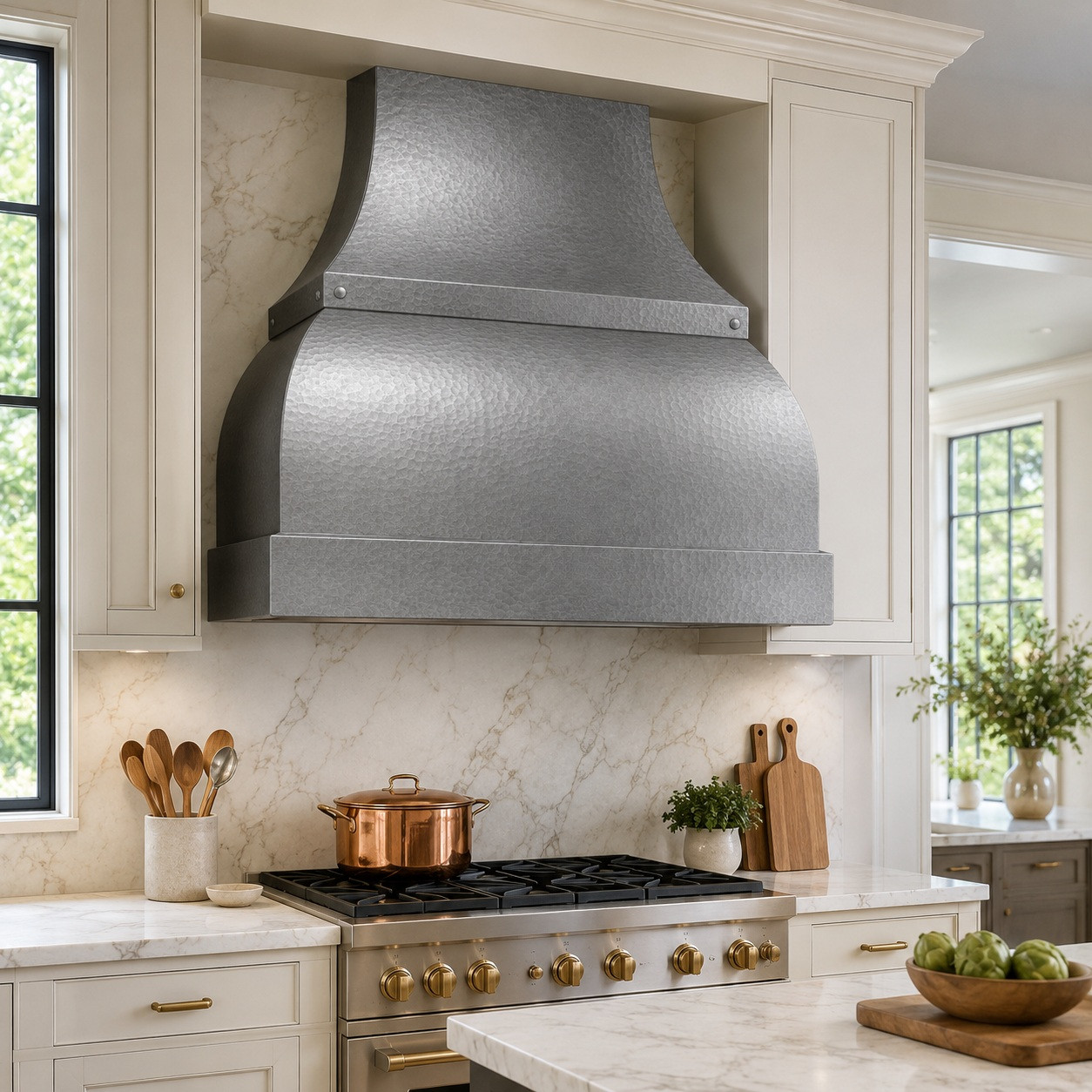
In a transitional kitchen, the hammered zinc bell hood connects traditional curve with modern restraint. Transitional interiors often combine shaker or inset cabinets, stone counters, neutral colors, simple tile, polished lighting, and restrained hardware. This hood fits that mix because the bell shape feels classic, while the zinc finish and clean face keep the look updated.
The horizontal band gives the body structure, and the boxed apron helps the hood feel substantial over the range. The hammered surface softens surrounding straight lines, including cabinet rails, stone edges, rectangular tile, and appliance fronts. This image is useful for homeowners who want something warmer and more handcrafted than stainless steel but less rustic than dark copper or iron.
Organic Modern Kitchen with Zinc Bell Hood
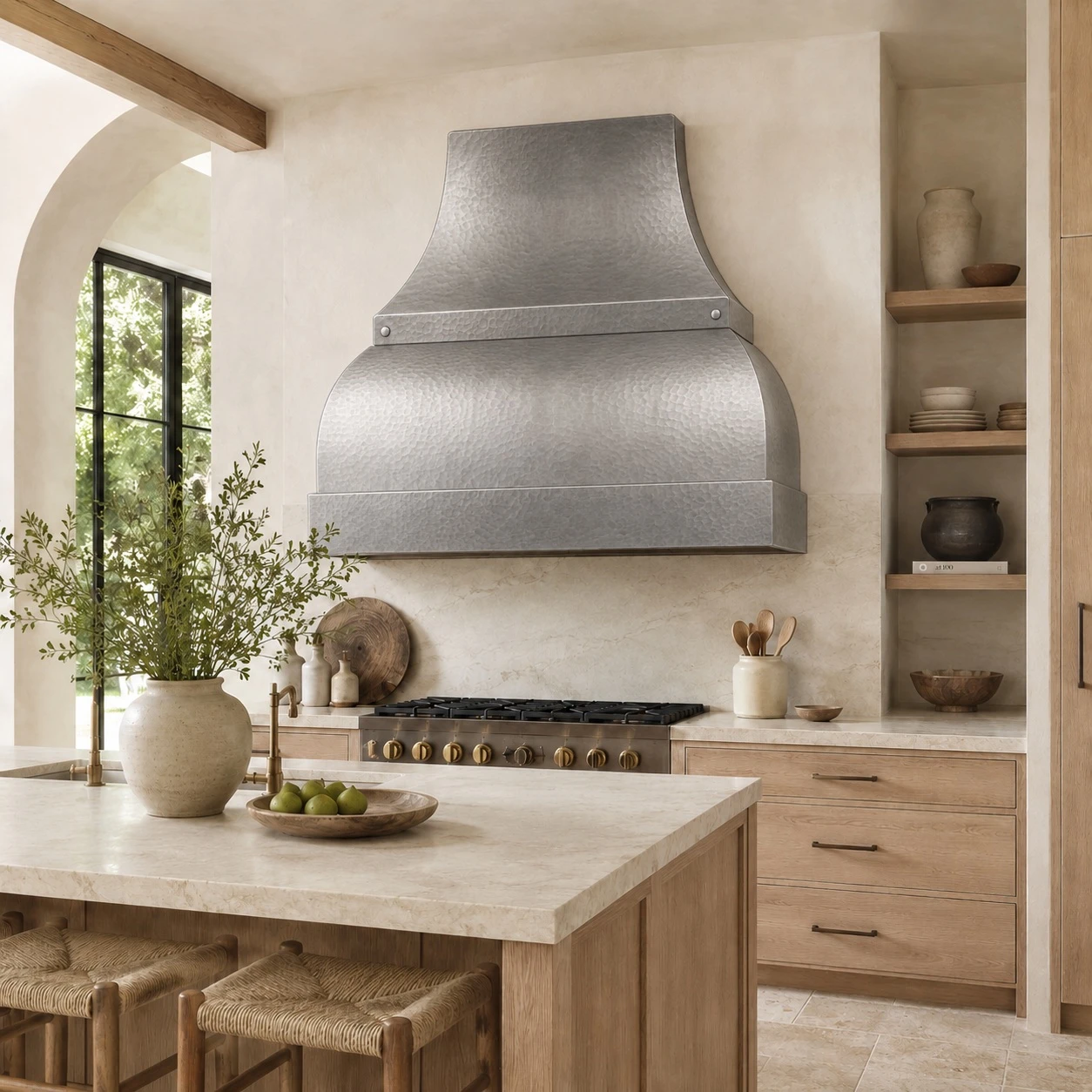
In an organic modern kitchen, the hammered zinc hood works with tactile natural materials rather than glossy decoration. Limewashed walls, white oak, honed limestone, lightly veined stone, plaster, handmade ceramics, woven accents, and soft neutral colors all support the zinc’s quiet gray tone. The bell shape keeps the range wall from feeling too rigid, while the boxed apron gives the design enough structure to anchor the cooktop.
The hammering is important in this setting because organic modern rooms depend on surface variation, not heavy ornament. Light moves gently across the zinc, highlighting small marks and softened edges. The result is calm but not plain. This scene shows how the hood can become a sculptural metal element that feels connected to stone, wood, and plaster rather than standing apart as a shiny appliance.
Industrial Loft Kitchen with Zinc Bell Hood
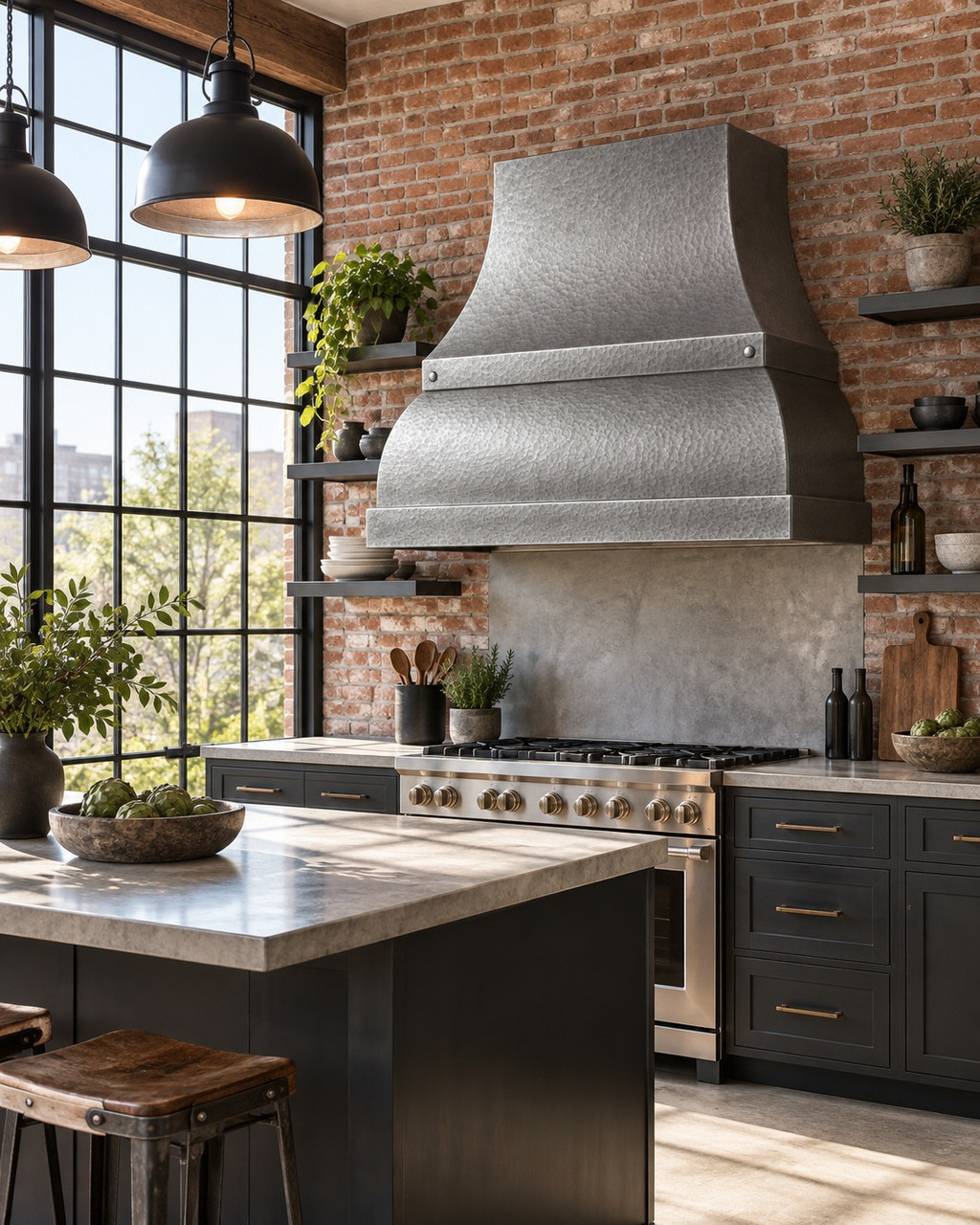
In an industrial loft kitchen, the hammered zinc bell range hood brings handcrafted metal character to brick, concrete, steel-framed details, exposed shelving, reclaimed wood, dark hardware, and simplified cabinetry. Industrial interiors often need a hood that feels architectural and durable, but not overly polished. The zinc finish works well because it has a cooler gray tone and a softer handmade appearance than stainless steel.
The boxed apron gives the lower section strength above the cooking area, while the curved bell canopy prevents the hood from looking too rigid. Hammered texture adds surface movement that relates naturally to aged brick, blackened metal, stone, and wood grain. This image shows how the hood can support an industrial loft setting while still keeping a refined, crafted profile.
Band and Boxed Apron Detail
The horizontal band and boxed apron are the main architectural details on this hood. The band creates a visual break in the bell body, while the apron gives the lower section weight and definition. Together, they make the hood feel more structured than a plain curved canopy.
This detail is useful in kitchens where the range wall needs a clear focal point but not heavy ornament. The boxed apron can align visually with counter edges, cabinet rails, backsplash borders, or appliance width, helping the hood feel integrated into the room.
Hammered Zinc Surface
The hammered zinc surface gives the hood texture, depth, and natural variation. Each mark catches light differently, so the finish can appear softer in indirect light and more detailed under brighter task lighting. Zinc also develops character over time, which suits interiors built around honest materials and handmade surfaces.
Small differences in hammering, zinc tone, seams, apron definition, band placement, edge shaping, and artisan finishing should be expected in handmade metalwork. For more background on how Rustica House zinc hoods are made, read the Rustica House zinc range hood production article.
Zinc Hood Placement
Placement matters because the hood has both a curved bell body and a strong boxed apron. The design should feel centered above the cooking surface and proportionate to the surrounding cabinetry, backsplash, stone, and wall height. The apron gives the hood a clear lower edge, so it works especially well where the range wall needs a defined architectural anchor.
For detailed sizing, insert planning, and ventilation information, the companion guide is the better reference. This image post is focused on how the hood looks in finished kitchens, how its surface interacts with surrounding materials, and how the bell shape adapts to different interior styles.
Metalworker Perspective
A hammered zinc bell hood with a band and boxed apron requires careful control of shape and proportion. The curved canopy must remain smooth, the waist band needs to sit evenly around the body, and the apron has to feel deep enough to anchor the hood without making it look heavy. Hammering and finishing then affect how light moves across the zinc surface.
Slight differences in hammer marks, zinc tone, seams, apron depth, band alignment, folded edges, and surface movement are part of handmade metal construction. These variations help distinguish a custom zinc range hood from a flat factory-made appliance cover.
Other Kitchen Styles
- Modern farmhouse
- Soft industrial
- Rustic contemporary
- Modern European
Conclusion
The hammered zinc bell range hood with band and boxed apron brings curved architecture, soft gray metal tone, hammered texture, a horizontal waist band, and strong lower structure into the kitchen. These images show how the hood adapts to European, minimalist, transitional, organic modern, and industrial loft interiors while keeping its handcrafted zinc identity refined, tactile, and balanced.