 US Dollar
 Euro
 Australian Dollar
 Canadian Dollar
 Polish Zloty
 British Pound

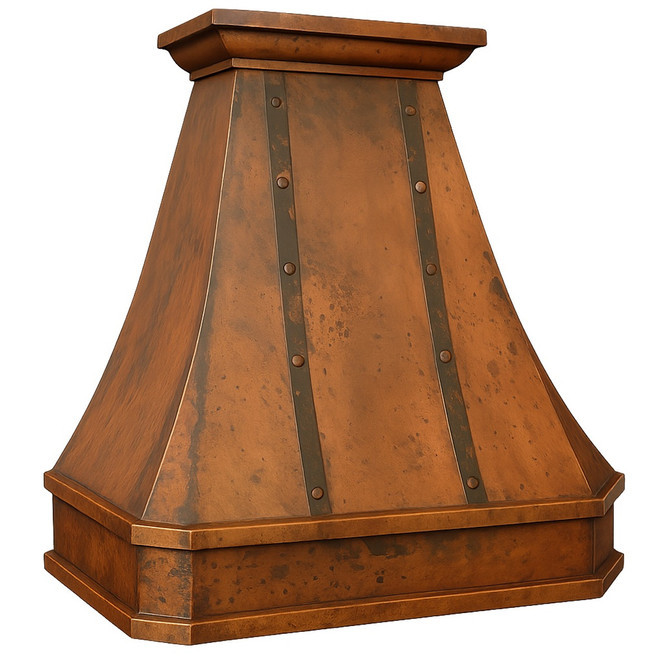
The 36-inch copper range hood combines a compact 36-inch width with a handcrafted sloping silhouette, hammered copper surface, decorative crown molding, clean-lined apron, and architectural strap details. Designed as a made-to-order focal point for kitchens built around a 36-inch cooking area, this model uses its flared lower canopy and narrowing upper body to create stronger visual presence than its width alone suggests. The design can be configured for wall-mount or island installation and coordinated with different copper patinas, kitchen materials, and ventilation requirements. Its combination of hand-hammered texture, pronounced metal framework, and restrained molding works especially well in Spanish Colonial, Southwestern, Spanish Revival, transitional, traditional, and rustic interiors. This guide examines the hood's architecture, copper craftsmanship, finish options, sizing, kitchen applications, ventilation planning, installation, and maintenance.
Blog Summary
- Width: 36-inch focal point
- Shape: Sloping flared canopy
- Texture: Hand-hammered copper
- Crown: Decorative upper molding
- Apron: Clean lower profile
- Details: Architectural copper straps
- Mounting: Wall or island
- Finish: Custom copper patinas
Architecture of the 36-Inch Copper Range Hood
The defining feature of this hood is its sloping silhouette. A narrower upper section transitions outward toward the cooking surface, creating a flared canopy that gives the 36-inch body more architectural presence without requiring the deeply curved sides of a bell-shaped hood.
The shape also establishes a clear vertical hierarchy. Decorative molding defines the top, the expanding copper body forms the central volume, and the apron creates a strong horizontal termination at the bottom. This combination allows the hood to function visually as a complete architectural element rather than simply a metal enclosure around a ventilation insert.
For comparisons with bell, dome, box, tapered, and other silhouettes, see the copper range hood shapes guide.
Why the 36-Inch Width Matters
A 36-inch hood is particularly relevant to kitchens designed around a similarly scaled cooking zone. Its relatively compact width can work where a substantially larger decorative hood would interfere with cabinetry, windows, shelving, or the proportions of a smaller cooking wall.
Width should never be selected from appearance alone, however. The cooking appliance, manufacturer requirements, hood depth, installation height, ventilation system, surrounding cabinets, and applicable codes all affect the final specification. The nominal 36-inch dimension describes the architectural width of this model rather than guaranteeing suitability for every 36-inch range or cooktop.
Hand-Hammered Copper Surface
Hammering gives the broad copper planes a textured surface that responds to changing kitchen light. Individual impressions create small highlights and shadows rather than the more continuous reflections associated with smooth sheet copper.
This treatment is particularly effective on a sloping canopy because the changing angles of the body receive light differently from the crown and apron. The result emphasizes the three-dimensional form without requiring elaborate relief ornament.
Because the texture is produced by hand, hammer impressions are not mechanically identical. Subtle differences in tool marks, seams, tonal movement, and surface texture are expected characteristics of handcrafted copper. The copper hammering techniques guide explains this artisan surface treatment in greater detail.
Architectural Crown Molding
The upper crown provides a deliberate transition between the copper body and the wall or ceiling area above it. Instead of allowing the chimney to terminate as a plain rectangular section, the molding adds depth and a more furniture-like architectural finish.
This detail helps explain why the hood can move between regional and traditional interiors. Crown molding relates naturally to paneled cabinetry, ceiling trim, carved woodwork, and other architectural elements frequently found in Spanish Colonial, traditional, and transitional kitchens.
Apron and Strap Details
The lower apron visually anchors the hood above the cooking surface. Its comparatively restrained profile prevents the lower section from competing with the hammered canopy and crown molding.
Vertical and horizontal copper straps organize the front into defined sections and reinforce the hood's architectural character. Rather than functioning as separate decorative motifs, the straps follow the geometry of the body and create a framework across the hammered copper surface.
This combination of texture and structural-looking metalwork is particularly useful when coordinating the hood with dark cabinet hardware, forged lighting, exposed beams, handmade tile, or other artisan materials.
Copper Patina Options
Patina changes how strongly the hood contrasts with cabinetry, backsplash materials, countertops, and surrounding metals. Natural Fired copper emphasizes varied copper, bronze, and brown coloration, while Dark Coffee creates a deeper and more subdued surface. Antique introduces an aged character, and Honey moves toward warmer golden-brown tones.
| Patina | Visual Direction | Kitchen Pairing |
|---|---|---|
| Natural Fired | Varied copper and brown | Rustic and Spanish |
| Dark Coffee | Deep brown copper | Traditional and Old World |
| Antique | Aged copper character | Spanish Colonial and rustic |
| Honey | Warm golden-brown | Transitional interiors |
Lighting, monitor settings, hammering, and natural variation can affect perceived color. Review the copper patina finish options when coordinating the hood with cabinetry, tile, stone, flooring, and hardware.
Spanish Colonial Kitchen
This hood's hammered copper, pronounced straps, crown molding, and substantial flared form align naturally with Spanish Colonial interiors. White or softly aged plaster can provide a quiet background, while dark timber, handmade tile, stone, and forged iron reinforce the handcrafted material palette.
The hood can become the central architectural feature above the cooking area without requiring additional ornamental relief. Its copper surface already provides enough variation to coordinate with the irregular textures commonly found in Spanish Colonial kitchens.
Southwestern Kitchen
Southwestern interiors often combine warm plaster, Saltillo-style flooring, timber beams, colorful tile, stone, and iron. Hammered copper fits naturally within this palette because its warm coloration relates to earth-toned materials while its metal surface provides contrast against wood and masonry.
A darker or naturally varied patina can strengthen this relationship without making the hood visually uniform. The architectural straps also complement kitchens that incorporate visible iron or dark metal details.
Spanish Revival Kitchen
Spanish Revival kitchens can use the hood as a bridge between decorative architecture and functional metalwork. Arches, plaster, patterned tile, dark cabinetry, and wrought-iron lighting provide an appropriate setting for the sloping body and crown molding.
The hood's relatively controlled ornament is useful where the backsplash or surrounding architecture already contains strong patterns. Hammered texture adds depth without introducing another competing motif.
Transitional Kitchen
A transitional kitchen benefits from the hood's combination of traditional detailing and straightforward geometry. Crown molding and hammered copper provide historical character, while the clean apron and disciplined sloping form keep the composition from becoming excessively ornate.
Pairing the hood with simplified cabinetry, understated stone, restrained hardware, and a relatively neutral backsplash can make copper the principal warm material in the cooking area.
Traditional Kitchen
Traditional cabinetry with framed doors, crown molding, stone countertops, and carefully proportioned millwork can accommodate the hood's more architectural upper treatment. The copper adds surface variation while the straps create a clear structure across the canopy.
A Dark Coffee or Antique direction can reduce brightness and integrate the hood with darker woods and traditional finishes, while warmer copper can create contrast against painted cabinetry.
Modern and Rustic Applications
The hood can also move beyond its strongest Spanish influences. In a rustic kitchen, hammered copper, visible straps, natural stone, and heavy timber create a cohesive handcrafted palette. In a cleaner contemporary setting, the same hood becomes a deliberate contrast against flat cabinetry and simplified surfaces.
For a strongly minimalist kitchen, a simpler hood may be more appropriate. This particular model works best when the design can accommodate its crown molding, straps, texture, and clearly articulated architecture rather than attempting to disguise those features.
Other Kitchen Styles
- Tuscan style kitchen
- Hacienda style kitchen
- Rustic farmhouse kitchen
- Eclectic Mediterranean kitchen
Wall-Mount Installation
Wall mounting places the hood against the cooking wall, allowing its symmetrical front elevation to become part of the cabinetry and backsplash composition. This configuration can work particularly well when the 36-inch hood is framed by cabinets or positioned within a dedicated cooking zone.
Wall installations may allow vertical ducting and, depending on the selected ventilation equipment and construction, other approved routing arrangements. Duct direction should be established before fabrication rather than decided after the copper shell arrives.
Island Installation
The model can also be configured for island use. Because an island hood is visible from several directions, backside finishing, symmetry, ceiling attachment, duct routing, and overall proportions become more prominent design considerations.
Island installations generally require vertical duct routing and secure overhead support. The wall and island range hood guide explains the planning differences between the two configurations.
Insert and Ventilation Planning
The copper hood is the decorative enclosure; the ventilation insert supplies airflow, filtration, lighting, and controls. These components should be coordinated before fabrication so the interior of the hood can be prepared for the actual equipment.
Rustica House can supply an optional 200 CFM insert with a two-speed fan, lights, and filters. A custom copper enclosure can also be prepared for a buyer-supplied internal insert up to 1,260 CFM or an external blower system up to 1,500 CFM when complete equipment specifications are provided before production.
Buyer-Supplied Insert Information
- Brand: Manufacturer name
- Model: Exact insert number
- Housing: Overall dimensions
- Cutout: Required opening size
- Flange: Mounting dimensions
- Duct: Outlet size and position
- Controls: Operating configuration
- Access: Filter service requirements
Required airflow depends on the cooking equipment, fuel type, hood geometry, mounting height, duct system, installation conditions, and applicable codes. See the range hood insert guide before selecting buyer-supplied ventilation equipment.
Duct Routing and Cabinet Clearance
Duct diameter, total run length, elbows, transitions, and termination can materially affect ventilation performance. The duct system should follow the requirements of the selected blower rather than being sized from the decorative hood dimensions alone.
Installation height and surrounding clearances should likewise follow the cooking appliance manufacturer, ventilation-equipment manufacturer, local requirements, and project conditions. Avoid choosing a mounting height solely according to appearance.
Buyer Planning Table
| Planning | What to Confirm |
|---|---|
| Width | 36-inch hood and appliance relationship |
| Mounting | Wall or island configuration |
| Height | Ceiling and installation conditions |
| Insert | Exact equipment specifications |
| Duct | Size, route, and termination |
| Support | Structural attachment points |
| Patina | Cabinet and backsplash coordination |
| Texture | Hand-hammered surface character |
Cleaning and Copper Care
Routine cleaning should be gentle. Use mild soap, warm water, and a soft cloth, then dry the surface. Avoid steel wool, abrasive pads, bleach, ammonia, acidic cleaners, and aggressive degreasers because they can scratch the copper or alter the patina.
Copper is a living material, so its coloration can continue changing naturally with time, moisture, heat, handling, and the kitchen environment. Wax may be used when appropriate to slow some surface changes, but it is not mandatory for every patina. Filters should be maintained according to the ventilation insert manufacturer's instructions.
For more detailed maintenance information, see the copper range hood cleaning guide.
Coppersmith Perspective
A 36-inch hood leaves less horizontal space for architectural details than a substantially wider custom hood. Crown molding, straps, apron height, chimney width, and the slope of the canopy therefore need to remain carefully proportioned so individual features do not visually crowd the front elevation.
Hand hammering adds depth without increasing the physical size of the enclosure. Because the surface is worked by artisans, minor differences in hammer impressions, seams, tool marks, dimensions, and patina are normal. No two handcrafted copper hoods should be expected to reproduce every surface detail identically.
FAQ - 36-Inch Copper Range Hood
A: Its combination of a sloping hammered copper canopy, decorative crown molding, clean apron, and architectural strap details gives the compact hood a strong handcrafted presence.
A: This model is designed around a 36-inch nominal width. Confirm final production dimensions and installation tolerances for the specific order before preparing cabinetry or adjacent finishes.
A: Yes. The model uses hand-hammered copper, producing natural variation in texture, reflected light, and individual tool impressions.
A: Its strongest applications include Spanish Colonial, Southwestern, Spanish Revival, traditional, transitional, Hacienda, Tuscan, and rustic kitchens.
A: Yes. The model can be configured for wall-mount installation when the project is planned for the appropriate support, clearances, insert, and ductwork.
A: Yes. Island configuration is possible, with ceiling attachment, backside appearance, vertical duct routing, and ventilation equipment coordinated before fabrication.
A: Rustica House can supply an optional 200 CFM insert with a two-speed fan, lights, and filters.
A: Yes. Custom fabrication can accommodate buyer-supplied internal inserts up to 1,260 CFM or external blower systems up to 1,500 CFM when complete specifications are supplied before production.
A: Use mild soap, warm water, and a soft cloth. Dry the copper afterward and avoid abrasives, acids, bleach, ammonia, steel wool, and aggressive cleaners.
A: No. Hammer impressions, tool marks, seams, slight dimensional differences, tonal variation, and patina movement are natural characteristics of handcrafted copper metalwork.
A Handcrafted 36-Inch Focal Point
The 36-inch format gives this hood a relatively compact footprint, while its hammered copper surface, flared sloping body, crown molding, apron, and strap framework provide the architectural character normally associated with larger custom metal hoods. Those features make it particularly suitable for kitchens that combine handcrafted materials with carefully defined cabinetry and cooking areas.
Before ordering, coordinate the hood with the cooking appliance, installation height, wall or island mounting, ventilation insert, duct route, structural support, and surrounding finishes. Once the technical requirements are established, patina and complementary materials can be selected around the intended kitchen style. Explore the 36-inch copper range hood or compare additional designs in the Rustica House copper range hood collection.